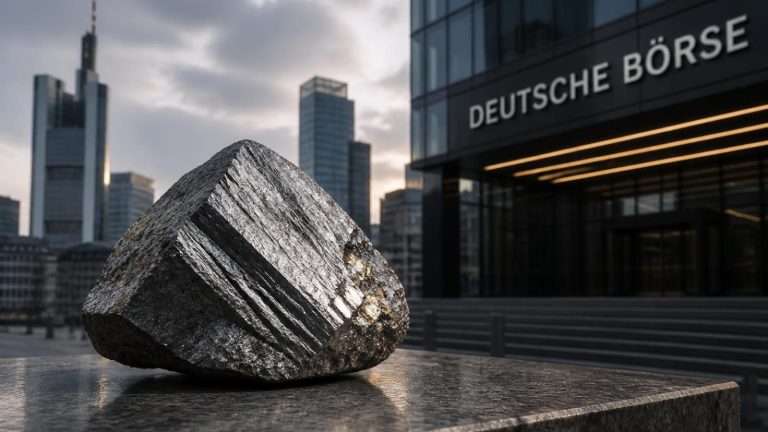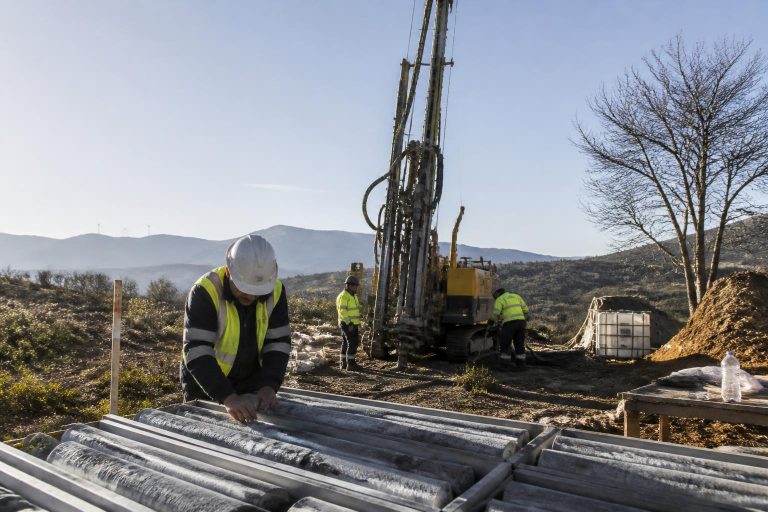
AMG Critical Materials N.V. has announced plans to apply for a secondary listing of its shares on the Frankfurt Stock Exchange, expected to take effect in 2026. This strategic move aims to broaden the company’s investor base and enhance liquidity for its shares. Dr. Heinz Schimmelbusch, Chairman and CEO of AMG, highlighted that Germany has been integral to AMG’s industrial and technological heritage for over a century. The company operates nine production sites in Germany and has invested significantly in critical materials and technologies, including lithium and catalyst recycling. The Frankfurt listing will complement AMG’s existing primary listing on Euronext Amsterdam, where it has been publicly traded since 2007. AMG does not intend to issue new shares in conjunction with this secondary listing. The company is committed to providing critical materials and technologies to support a less carbon-intensive world, focusing on energy storage materials and advanced metallurgy. With approximately 3,500 employees and operations worldwide, AMG continues to strengthen its position in the critical materials sector, particularly in the lithium and vanadium markets. The company will also provide an information document in compliance with EU regulations regarding the listing.
Tag: Critical Materials
-

China Rebukes G7 and EU Over Rare Earth Criticism and Trade Policy Tensions
China has strongly condemned the Group of Seven (G7) nations and European Commission President Ursula von der Leyen for what it described as interference in its internal affairs and unfair criticism of its economic practices. The backlash follows a G7 statement issued after the summit in Alberta, where Canadian Prime Minister Mark Carney urged China to curb “market distortions and harmful overcapacity.”
Chinese Foreign Ministry spokesperson Guo Jiakun labeled the remarks “irresponsible” and “manipulative,” asserting that accusations of overcapacity were a pretext for trade protectionism. He also rejected claims that China’s rare earth dominance was being weaponized, calling such allegations a smear on China’s industrial policy.
Von der Leyen had warned of a new “China Shock,” accusing Beijing of flooding global markets with subsidized goods and leveraging its control over critical materials to undermine competitors. Her comments coincided with the EU’s decision to postpone an economic dialogue with China due to stalled trade progress.
Guo defended China’s subsidy policies as fair and transparent, and called for cooperation with the EU to foster a non-discriminatory business environment. Von der Leyen is expected to visit China for a summit next month.
-

Kazakhstan to Auction 50 Mineral Deposits Including Gold, Copper, and Rare Earth Metals
Kazakhstan is set to hold a large-scale electronic auction in June 2025, offering 50 solid mineral deposits, including gold, copper, coal, polymetals, and rare earth elements, according to Almas Kushumov, Director of the Subsoil Use Department at the Ministry of Industry and Construction. He made the announcement during the MINEX Kazakhstan forum.
The rights will be granted for both exploration and extraction, with deposits containing balance reserves to be auctioned directly for mining. The full list of deposits is expected to be published in the coming days.
Kushumov noted that 117 deposits were auctioned via e-auctions in 2023–2024, bringing in over 20 billion tenge in signing bonuses for the state. In 2024, 43 new deposits were officially registered, including 22 solid mineral sites. Resource growth figures include:
-
20 tons of gold
-
9,000 tons of silver
-
48,000 tons of copper
Kazakhstan’s current reserve lifespan is estimated at 33 years for gold and 44 years for copper, based on current production levels.
Minister of Industry and Construction Kanat Sharlapayev previously stated that companies from the United States, the European Union, and China would be able to participate in the auctions for rare and rare earth metal rights. He emphasized that competition among major players in the global critical materials market—used in dual-use goods, renewable energy tech, electric vehicles, and more—could help maximize Kazakhstan’s revenues.
Quote:
“This will be a high-interest auction. The competition between Western countries and China in the rare earth sector gives us the opportunity to attract the best offers,” Sharlapayev said.
-
-

Ukraine’s Strategic Mineral Reserves Key to US-Ukraine Military and Economic Collaboration
Ukraine’s vast reserves of critical minerals are becoming a cornerstone of its growing partnership with the United States. Recently, former US President Donald Trump initiated discussions to secure Ukraine’s access to these minerals in exchange for US military aid amid the ongoing conflict with Russia. The initiative aligns with Ukraine’s “Victory Plan,” spearheaded by President Volodymyr Zelensky, which aims to attract international investors to develop the nation’s mineral-rich deposits.
Ukraine holds 23 of the 50 minerals identified as critical by the US and 26 out of 34 deemed vital by the European Union. Notable minerals include titanium, graphite, lithium, beryllium, and rare earth elements (REEs). Although partially developed, these resources remain largely untapped for high-value manufacturing purposes. The Ukrainian government has already issued 30 licenses for mineral exploration and holds numerous unlicensed deposits with vast potential.
Titanium and beryllium, essential for the aerospace and defense industries, are especially critical. Ukraine boasts the largest titanium reserves in Europe, capable of meeting US and EU demand for more than 25 years. Developing these resources is vital to reducing Western dependence on China and Russia, which dominate the global titanium supply chain. Additionally, Ukraine has significant potential in beryllium mining, with one key deposit discovered and licensed for private development.
In the energy storage sector, Ukraine is well-positioned to supply lithium and graphite for battery manufacturing. Despite its relatively small global lithium reserves, Ukraine has the potential to play a key role in Europe’s battery supply chain. Several graphite deposits are already in operation, with the necessary investment estimated at $650 million to modernize and expand production facilities.
Ukraine’s rare earth metal reserves also hold promise for semiconductor manufacturing. However, many key deposits remain in Russian-occupied regions. Efforts are underway to revitalize germanium and gallium production, which previously flourished during Soviet times. Ukraine also aims to restart silicon production to supply global semiconductor markets.
For Ukraine to fully harness its mineral wealth, significant foreign investment is needed. The government has been working to create a favorable regulatory environment to attract foreign partners. Several international firms, including Australian Volt Resources and Turkish Onur Group, have already secured mining rights. The strategic partnership between Ukraine and the US is poised to drive further investment and innovation in high-tech sectors, solidifying Ukraine’s role in global supply chains.
-

Japan negotiates potential investment into Ukrainian titanium industry
In February 2024, Vitalii Koval, the Head of the Ukrainian State Property Fund, travelled to Tokyo for discussions with JICA and Toho Titanium representatives regarding potential Japanese investment in Ukraine’s titanium industry. Ukraine possesses significant heavy mineral sand mines and its titanium sponge producer, ZTMP, making it an attractive investment opportunity. Koval emphasised the need for investment and technological advancement to safeguard the industry from Russian influence. Previously, Toho Titanium had invested in titanium operations, such as a joint venture in Saudi Arabia.
Outside of China, Japan and Russia represent the largest titanium sponge producers, however, since the start of the Russia-Ukraine war, Russian sponge production has been diminished. This is driven by a lack of access to raw material feedstocks that it used to source from Ukraine. Furthermore, the Russian titanium industry is also a large-scale producer of aerospace-grade titanium, with companies like VSMPO-Avisma producing both sponge and metal that has been supplied to Airbus and Boeing. Given that titanium demand in the aerospace sector is set to more than double its 2023 volume by 2034, and the ongoing Russian-Ukraine conflict, this investment may have the potential to develop new supply chains of titanium. This will secure titanium alloys for the aerospace industry as air travel recovers beyond its 2018 peak towards the latter half of the decade.
-

Central Asia at a crossroads to Breaking China’s Rare Earth Monopoly
The study by the U.S.-based International Tax and Investment Center warns that a failure to act could leave China with a “decisive advantage” in the sector, which is crucial to green energy, many new weapons systems and other advanced technologies.
“As the uses for these minerals has expanded, so too has global competition for them in a time of sharply increasing geostrategic and geo-economic tension,” the report says.
“Advanced economies with secure, reliable access to REEs enjoy economic advantages in manufacturing, and corresponding economic disadvantages accrue for those without this access.”
China, which accounts for most of the world’s rare earth mining within its own borders, has not yet had to seek additional supplies from Central Asia, which enjoys plentiful reserves of minerals ranging from iron and nonferrous metals to uranium.
But, the report says, “the massive size of the Chinese economy and the Chinese Communist Party’s conscious efforts to dominate the REE sector globally means such increases are a matter of time.”
Oil-rich Kazakhstan, the region’s economic giant, holds the world’s largest chromium reserves and the second-largest stocks of uranium, while also possessing other critical elements.
Report co-author Ariel Cohen says it is up to the governments of Central Asia to create the investment climate for the development of these resources.
“They may be the next big thing in Central Asia as the engine of economic growth,” Cohen said this week during a panel discussion at the Atlantic Council, a Washington think tank.
Across Central Asia, experts note, REEs are found in substantial volumes in the Kazakh steppe and uplands as well as in the Tien Shan mountains across Kazakhstan, Kyrgyzstan and Uzbekistan, and in the Pamir Mountains in Tajikistan.
Monazite, zircon, apatite, xenotime, pyrochlore, allanite and columbite are among Central Asia’s most abundant rare metals and minerals.
In 2016, the U.S. Geological Survey listed 384 REE occurrences in the region: 160 in Kazakhstan, 87 in Uzbekistan, 75 in Kyrgyzstan, 60 in Tajikistan, and two in Turkmenistan.
US Ambassador to Kazakhstan Outlines US Engagement in Central Asia
Wesley Hill, another expert on Central Asia’s mineral reserves, says production of rare earths at present “is almost wholly monopolized by China.”
“Depending on how you count, between 80 to 90% of REE refining is controlled by China and done directly inside of China,” Hill said.
But, he argued, despite China’s heavy involvement in Central Asia, it has yet to fully take over the region’s rare earth sector. “So, this means that Central Asia is very much at a crossroads,” he said. “Central Asia has the opportunity to expand its REE production without being wholly dependent on China.”
Central Asia is currently in a position where it can develop its REE refining capacities both for its national development strategies and to break the Chinese monopoly, Hill said.
“But this is only going to happen with good policy, both from the American side and the Central Asian side.”
Ambassador John Herbst, Washington’s former top diplomat in Uzbekistan and Ukraine, says the region’s REE assets are “simply another reason for enhanced engagement by the West.”
He said he is not sure that Central Asian governments appreciate how important rare earths can be to their development. “But I do know that the countries of Central Asia want a closer relationship with the United States, and that is one important part of their maintaining their hard-won independence.”
Herbst added that the United States and Central Asia have a common interest in working together to develop the region’s rare earths “for the economy of the future.”
“We have an ability to innovate that far exceeds [China’s]. Their innovation is based largely on taking our technology.”
Central Asian Trade Corridor Gains Interest Amid Regional Tensions
Suriya Evans-Pritchard Jayanti, who serves as energy transition counsel at the U.S. Department of Commerce, says the region is eager for investment.
“It is a development opportunity. Particularly with the geostrategic energy realignment after the Russian invasion of Ukraine, but also, because of the energy transition. Lithium and other REE are necessary for different parts of that transition. So that’s primarily an economic incentive,” she said.
She pointed to the Mineral Strategic Partnership Initiative run by the U.S. State Department’s Bureau on Energy Resources, which is able to promote foreign direct investment in the region while providing technical assistance in the mining sector.
Cohen said the Central Asian countries cannot wait long to develop their rare earths. “There is a competition, and the African countries, Latin American countries and others will compete increasingly.”
Wilder Alejandro Sanchez, who heads a consultancy called Second Floor Strategies, says Central Asia needs a rare earth research center that can provide timely information to prospective customers and investors.
Transportation is key, Sanchez said. “It’s not just about finding and mining them. You have to get them to the international market.”
Access from the landlocked region at present is limited to China’s Belt and Road infrastructure or routes through Russia. Sanchez and others recommend using the Middle Corridor, also called the Trans-Caspian International Transport Route, which can carry goods to Europe across the Caspian and Black seas.
These experts also say progress will depend on regional governments overcoming their traditional secretiveness regarding natural resources. They emphasize the importance of transparency, the rule of law, adherence to best practices and compliance with international norms if they hope to attract Western investment.