Tag: mining

  • Bridging Nuclear Technology and Mining: Turkey’s Strategic Role in Critical Minerals Supply Chains

    Bridging Nuclear Technology and Mining: Turkey’s Strategic Role in Critical Minerals Supply Chains

    In a recent presentation, Dr. Kantarcıoğlu, a competence development manager at the Secretariat of Defense Industries and a member of the Nuclear Engineers Society, highlighted the growing interconnection between the nuclear technology and mining sectors. With a background in nuclear engineering, she expressed her surprise at the insights gained from previous speakers and framed her talk as an effort to foster collaboration between these two industries. She posited that critical minerals have transcended their traditional mining context, becoming pivotal to energy security, industrial competitiveness, and technological independence.

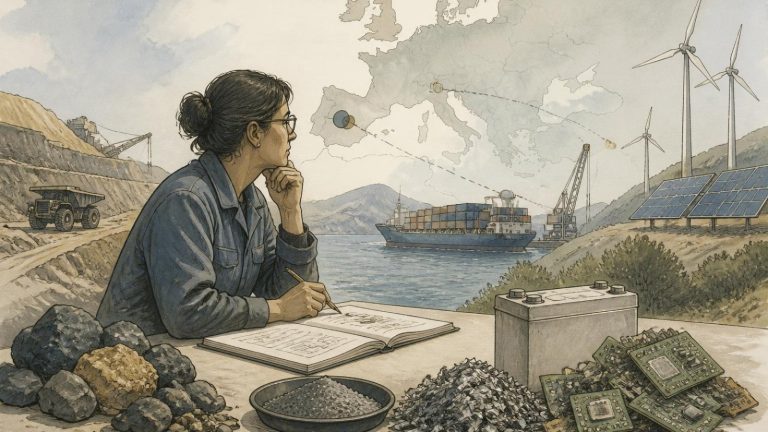
    Dr. Kantarcıoğlu emphasised the potential for cooperation among Turkey, the UK, Europe, and Central Asian countries, suggesting that the conversation should extend beyond mere raw material supply to encompass technology and energy infrastructure. She advocated for the evolution of the Middle Corridor, traditionally viewed as a transport route, into a strategic supply line that integrates mineral resources with processing capabilities and global markets. Turkey’s geographical advantages, including its ports and industrial zones, position it as a key player in this emerging corridor.

    The urgency of this positioning is underscored by the rising global demand for critical minerals such as lithium, nickel, and rare earth elements, which are essential for future energy systems and advanced technologies. Dr. Kantarcıoğlu argued that Europe requires a secure and diversified critical mineral supply chain, while Turkey has the opportunity to leverage its resources and industrial capacity to meet this demand. She called for a shift from simple raw material trading to joint investments in processing and technology development.

    A significant aspect of her argument was the role of nuclear technology in the mining sector. She noted that nuclear technology is not only reliant on secure mineral supplies but also actively supports mining operations through various applications. These include exploration analysis, process control, and safety monitoring, with nuclear energy offering a low-carbon power alternative for mining operations, particularly in remote locations that currently depend on costly diesel fuel.

    Dr. Kantarcıoğlu highlighted the potential of small modular reactors (SMRs) and micro reactors to meet the diverse energy needs of mining operations, suggesting that these technologies could provide reliable, long-term energy solutions tailored to specific site requirements. She pointed out that many remote mines face logistical challenges with conventional fuel supplies, making nuclear energy an attractive option.

    Despite the promising prospects, she acknowledged the practical barriers to deploying advanced nuclear technology in mining, including regulatory frameworks, financing, and workforce capacity. However, she argued that a symbiotic relationship could develop, where mining supplies uranium and other critical minerals needed for nuclear systems, while nuclear energy enhances the efficiency of mineral extraction.

    In closing, Dr. Kantarcıoğlu tied her insights back to Turkey’s national context, noting the country’s ambitions to expand its nuclear energy capacity and develop local expertise. She stressed the importance of building coordinated national competencies in the nuclear sector to realise the potential benefits of this convergence. Ultimately, she concluded that the future of the nuclear and mining sectors is intertwined, and Turkey’s strategic positioning could enable it to become a vital industrial anchor in the region, moving beyond its role as merely a transit country.


  • Uzbekistan’s Technological Metals Complex: A Strategic Vision for Critical Raw Materials

    Uzbekistan’s Technological Metals Complex: A Strategic Vision for Critical Raw Materials

    In a recent presentation, Khikmatullaev introduced the Uzbekistan Technological Metals Complex (TMK), outlining a state-backed strategy aimed at unlocking the country’s potential in critical raw materials. He emphasised Uzbekistan’s advantageous geographic position, providing access to major global markets including the EU, the United States, and Asia. The country has experienced consistent economic growth of approximately 5–7% annually, driven by structural reforms that liberalise the economy and enhance the investment climate, making it an attractive destination for foreign capital. The mining sector plays a crucial role, contributing about 24% to the country’s industrial output, indicative of a robust natural resource base and significant industrial potential.

    Khikmatullaev highlighted the immense mineral resource base of Uzbekistan, estimated at around $3 trillion under the C2 category, supported by a national register of over 2,500 distinct deposits. This positions Uzbekistan among the top global holders of key reserves, including being the third-largest globally for one resource category and eighth for copper reserves. Notably, only about a third of the country’s territory has been geologically explored, suggesting substantial untapped discovery potential. The country also boasts significant reserves of uranium, lithium, tungsten, and molybdenum, reinforcing its strategic importance as a supplier of critical raw materials.

    The presentation detailed TMK’s institutional history and mandate, tracing its roots back to 1956 with a legacy in molybdenum production. Established as a modern corporate entity in 2024, TMK aims to integrate exploration and downstream processing to produce higher value-added products. The company’s strategic objective is to become a trusted global leader in the secure and responsible supply of critical raw materials, aligning with the standards demanded by Western buyers and financiers.

    Khikmatullaev elaborated on TMK’s resource bases and active projects, particularly focusing on tungsten, where Uzbekistan’s resource base includes 14 deposits with proven reserves of approximately 188,000 tons. Ongoing exploration is expected to increase total tungsten reserves significantly by 2030. TMK operates a fully integrated supply chain, encompassing geological exploration, refining, and processing, rather than merely functioning as an upstream extraction company.

    Looking ahead, TMK plans to implement over 70 distinct investment projects between 2026 and 2030, with an estimated investment of $1.6 to $2 billion, strongly supported by the Uzbek government. A critical aspect of this strategy is the development of a critical raw materials hub connecting mining projects to processing centres in Tashkent and Samarkand, aimed at transforming raw ore into high-purity metals. The government has announced incentives for investors who establish full-cycle operations, including a 10-year tax refund and additional benefits for projects located in special economic zones.

    Several flagship projects were highlighted, including a $151 million hydrometallurgical plant in the Samarkand region for processing tungsten concentrate, and plans for a molybdenum cluster with a $25 million investment. Other significant projects include the preparation of the Muskon copper deposit, the Nurkum lithium deposit, and the Tosin graphite deposit, with investments planned in the hundreds of millions. Collectively, these initiatives position TMK as a rapidly scaling industrial operator with a defined project pipeline, government-aligned incentives, and specific production targets across multiple critical minerals, establishing Uzbekistan as a leading opportunity in the global mining landscape.


  • Altai Resources Secures Subsoil Use Licence in Kazakhstan

    Altai Resources Secures Subsoil Use Licence in Kazakhstan

    Altai Resources Limited has announced a significant regulatory achievement with the receipt of a formal notification of intent from the Ministry of Industry and Construction of the Republic of Kazakhstan. This notification paves the way for the company to be granted a subsoil use licence adjacent to the Maksut South copper-nickel mine. This development is crucial for Altai Resources as it expands their exploration footprint within the highly prospective magmatic sulphide belt located in East Kazakhstan.

    The acquisition of this licence represents a strategic move for Altai Resources, allowing the company to enhance its exploration activities in a region known for its rich mineral deposits. The magmatic sulphide belt is particularly noted for its potential to yield significant copper and nickel resources, which are essential for various industries, including electric vehicle manufacturing and renewable energy technologies.

    As the demand for these metals continues to rise globally, particularly in the context of the green energy transition, Altai Resources is positioning itself to capitalize on the growing market. The expansion into this new area not only increases the company’s resource potential but also strengthens its overall portfolio in the mining sector.

    This milestone is expected to attract further investment and interest in the region, highlighting Kazakhstan’s role as a key player in the global mining industry. The company is now poised to advance its exploration initiatives, which could lead to new discoveries and contribute to the sustainable development of the local economy.

    Overall, the granting of the subsoil use licence marks a promising step forward for Altai Resources Limited, reinforcing its commitment to exploring and developing mineral resources in Kazakhstan’s rich mining landscape.


  • Uzbekistan’s Strategic Shift: Opening Mining Sector to International Capital Markets

    Uzbekistan’s Strategic Shift: Opening Mining Sector to International Capital Markets

    Uzbekistan is taking significant steps to modernise its mining sector by moving state-owned companies like NMMC and AMMC towards international capital markets. This initiative aims to attract global investors and incorporate international management practices, thereby partially opening its ownership of strategically important mineral assets. This shift is more than just an initial public offering (IPO); it represents a fundamental revaluation of Uzbekistan’s resource strategy.

    The potential advantages of this move are substantial. Firstly, by exchanging equity for capital, Uzbekistan can secure the necessary funding to develop critical minerals such as copper, lithium, and tungsten. These projects require vast investments, and access to global capital markets could alleviate the country’s reliance on government borrowing, facilitating faster investment in mining operations, smelting facilities, and downstream processing.

    Secondly, the influx of international capital could bring advanced technology and management expertise to Uzbekistan’s mining sector. This collaboration could enable the country to transition from merely exporting raw minerals to establishing a more integrated mine-to-metal value chain, enhancing its economic prospects.

    Moreover, the involvement of international shareholders is likely to improve corporate governance within Uzbekistan’s state-owned mining companies. Public listings typically introduce stricter disclosure, auditing, and environmental, social, and governance (ESG) requirements, which can drive these companies towards greater efficiency and transparency.

    Additionally, establishing partnerships with Western investors could create a more secure supply chain for Uzbekistan’s critical minerals. As these investors gain significant stakes in local projects, their interests will become intertwined with the country’s long-term political and economic stability.

    However, this strategy is not without its risks. Sharing equity means relinquishing a portion of future resource revenues and potentially compromising strategic control over mineral assets. If the anticipated benefits of international investment do not materialise—specifically, if technology and market access remain elusive—Uzbekistan may find itself merely exchanging the export of raw materials for the export of ownership.

    The central question remains: who will ultimately dictate the pace of resource development, the allocation of profits, and the direction of downstream industrial investment? The key metric is not merely the amount of equity sold but whether Uzbekistan can leverage minority stakes to gain capital, technology, and a stronger position in global supply chains. If successful, this approach could pave the way for a new model for resource-rich nations seeking to overcome the traditional ‘resource curse.’


  • Mundoro Capital Inc. Reports Positive Exploration Results and Financial Update for Q2 2026

    Mundoro Capital Inc. Reports Positive Exploration Results and Financial Update for Q2 2026

    Mundoro Capital Inc., a Vancouver-based mining company, has released an update on its exploration program results and financial performance for the second quarter and six-month period ending June 30, 2026. The company is focusing on generating new property opportunities, particularly in Serbia, while also reducing corporate expenses by 24%. CEO Teo Dechev highlighted the strategic shift towards their Arizona copper assets, with upcoming drill tests planned for the Vitanovac target and advancements in the Borsko drill target in Bulgaria.

    The exploration highlights include the completion of drilling at Skorusa East, with assays received for two significant drill holes, 26-SKO-08 and 26-SKO-09. The company has also initiated new hyperspectral core scanning and petrophysical sampling to enhance their geological understanding. Formal drill proposals have been established for three prospective areas: Borsko, Skoursa East, and Skorusa West, with a focus on refining targets and delineating potential porphyry sources.

    In terms of financial performance, Mundoro reported a fee income of $251,009 for Q2 2026, a significant increase compared to $120,497 in the same quarter of the previous year. Exploration expenditures rose to $2,513,992, reflecting the company’s commitment to advancing its exploration projects. Corporate expenses decreased to $281,162, contributing to a net loss of $325,340 for the quarter, which is an improvement from the previous year’s loss of $540,377.

    Mundoro’s exploration efforts are primarily concentrated in Eastern Serbia, particularly within the Timok Magmatic Complex, known for its copper-gold deposits. The company is also advancing its projects in Arizona, where it has identified several prospective intrusions. The ongoing generative work aims to create long-term royalty opportunities and further property payments through the optioning of mineral projects.

    The company remains focused on refining its geological models and establishing formal drill proposals for its various targets, including the Borsko, Trstenik, and South Timok Corridor projects. Despite facing delays in the permitting process for its EE1 Project in Bulgaria, Mundoro is committed to advancing its exploration initiatives and unlocking the potential of its mineral properties.


  • Kazakhstan’s Industrial Growth Highlights Diverging Trends in Manufacturing and Mining Sectors

    Kazakhstan’s Industrial Growth Highlights Diverging Trends in Manufacturing and Mining Sectors

    Kazakhstan’s industrial landscape is undergoing significant changes, as recent reports reveal a divergence in growth trajectories between the manufacturing and mining sectors. While the mining industry, a cornerstone of the Kazakh economy, continues to face challenges, the manufacturing sector is witnessing a robust expansion driven by increased domestic demand and foreign investment. This shift is indicative of broader economic trends in the region, where countries are increasingly focusing on diversifying their economies away from traditional resource dependence.

    The mining sector, which has historically been a major contributor to Kazakhstan’s GDP, is grappling with fluctuating global commodity prices and regulatory hurdles. Despite these challenges, the sector remains vital, particularly in the extraction of critical minerals essential for modern technologies. However, the lack of investment in infrastructure and technology has hindered its potential growth.

    In contrast, the manufacturing sector is thriving, bolstered by government initiatives aimed at fostering innovation and attracting foreign capital. This growth is evident in various industries, including machinery, food processing, and textiles, which are benefiting from improved supply chains and a skilled workforce. The government’s focus on industrialisation is expected to continue, with plans to enhance production capabilities and expand export markets.

    As Kazakhstan navigates these divergent paths, the interplay between mining and manufacturing will be crucial. Policymakers are urged to create a balanced approach that supports both sectors, ensuring sustainable economic growth. The future of Kazakhstan’s industrial landscape will depend on how effectively these sectors can adapt to changing global dynamics and local demands. Stakeholders in the mining industry are particularly encouraged to innovate and invest in sustainable practices to remain competitive in an evolving market.

    In conclusion, Kazakhstan’s industrial growth narrative is one of contrasts, with the mining sector needing to adapt to a rapidly changing environment while the manufacturing sector capitalises on new opportunities. This duality presents both challenges and opportunities for the nation’s economic future, highlighting the importance of strategic planning and investment in both areas.


  • Altai Resources Secures Subsoil Use Licence in Kazakhstan

    Altai Resources Secures Subsoil Use Licence in Kazakhstan

    Altai Resources Limited has announced a significant regulatory achievement with the receipt of a formal notification of intent from the Ministry of Industry and Construction of the Republic of Kazakhstan. This notification paves the way for the company to be granted a subsoil use licence adjacent to the Maksut South copper-nickel mine. This development is a pivotal moment for Altai Resources, as it not only enhances their operational capabilities but also expands their exploration footprint within the highly prospective magmatic sulphide belt located in East Kazakhstan.

    The acquisition of this licence is expected to bolster the company’s position in the region, which is known for its rich mineral deposits, particularly in copper and nickel. The magmatic sulphide belt in East Kazakhstan has been identified as a significant area for exploration, and Altai Resources aims to leverage this opportunity to enhance its resource base and contribute to the local mining sector.

    As the demand for copper and nickel continues to rise globally, driven by the transition to renewable energy and electric vehicles, Altai Resources is strategically positioning itself to meet this demand. The company’s expansion into this area aligns with broader industry trends, where mining companies are increasingly seeking to secure access to critical minerals that are essential for modern technologies.

    This development not only reflects Altai Resources’ commitment to growth and exploration but also highlights the supportive regulatory environment in Kazakhstan, which is working to attract foreign investment in its mining sector. The successful acquisition of the subsoil use licence is a testament to the company’s strategic planning and operational execution, setting the stage for future exploration and potential discoveries in the region.

  • Gennadii Butkevych Awarded Order of Merit for Contributions to Ukraine

    Gennadii Butkevych Awarded Order of Merit for Contributions to Ukraine

    Gennadii Butkevych, the founder of BGV Group Management, has been awarded the Order of Merit, Third Class, by President Volodymyr Zelenskyy in recognition of his significant contributions to Ukraine’s statehood and public life. This honour comes as Ukraine celebrates its 35th anniversary of independence. Butkevych’s dedication to defending the sovereignty and territorial integrity of Ukraine, alongside his professional achievements, has been acknowledged through this prestigious award.

    BGV Group Management, which operates across five key sectors including mining, energy, infrastructure, retail, and education, plays a crucial role in supporting the Ukrainian economy during challenging times. The company has been instrumental in fostering development and advocating for national interests, showcasing the resilience and commitment of Ukrainian businesses.

    In addition to his business ventures, Butkevych is also known for his philanthropic efforts through the BGV Charity Fund, which has provided substantial support to military, community, and humanitarian initiatives since the onset of the full-scale invasion. Over UAH 1.6 billion has been allocated to charitable activities, including assistance to Ukraine’s Defense Forces and various educational and sports projects.

    The recognition of Butkevych with the Order of Merit underscores the importance of individual contributions to national development, particularly in times of crisis. His work exemplifies the spirit of Ukrainian entrepreneurship and the vital role that business leaders play in the country’s ongoing struggle for sovereignty and stability.

  • Critical Metals Corp Advances Acquisition of European Lithium Limited

    Critical Metals Corp Advances Acquisition of European Lithium Limited

    Critical Metals Corp (Nasdaq: CRML), a prominent player in the critical minerals sector, has provided an update regarding its proposed acquisition of European Lithium Limited (ASX: EUR, FRA: PF8, OTC: EULIF). The acquisition aims to secure 100% of the issued share capital of European Lithium, alongside its listed options, through court-approved schemes of arrangement under the Australian Corporations Act 2001. This strategic move is designed to enhance Critical Metals’ portfolio and strengthen its position in the critical minerals market.

    The process commenced with the lodgement of a draft explanatory statement, known as the Scheme Booklet, with the Australian Securities and Investments Commission (ASIC) on August 26, 2026. This document is crucial as it will provide European Lithium’s securityholders with essential information regarding the proposed schemes. The first court hearing is set for September 15, 2026, where European Lithium will seek orders from the Supreme Court of Western Australia to convene meetings for shareholders and optionholders to consider and vote on the schemes.

    If the court grants the necessary approvals, the Scheme Meetings are expected to take place in mid-October 2026, followed by a general meeting of shareholders to discuss resolutions related to the schemes. The implementation of these schemes is anticipated for early November 2026, contingent upon the satisfaction of all conditions, including approvals from shareholders and the court.

    Mike Hanson, a board director at Critical Metals Corp, expressed optimism regarding the progress of the acquisition, highlighting the importance of the Scheme Booklet’s lodgement as a significant step forward. He noted that both companies are making steady progress towards the completion of the transaction, which aims to integrate European Lithium and its assets into the Critical Metals group.

    Critical Metals Corp is focused on developing critical minerals essential for electrification and next-generation technologies. Its flagship project, Tanbreez, located in Southern Greenland, is one of the largest rare earth deposits globally, with advantageous shipping access. Additionally, the Wolfsberg Lithium Project in Austria is poised to become a major producer of lithium products, further solidifying Critical Metals’ role as a key supplier in the European market.

    This acquisition aligns with the growing demand for critical minerals, driven by the clean energy transition and advancements in technology. As the mining industry continues to evolve, Critical Metals Corp is strategically positioning itself to meet the needs of the Western world, ensuring a reliable and sustainable supply of essential resources.

  • Uzbekistan and China Set Ambitious $30 Billion Trade Target Amid Strengthening Economic Ties

    Uzbekistan and China Set Ambitious $30 Billion Trade Target Amid Strengthening Economic Ties

    Uzbekistan and China are moving to deepen cooperation across mining, mineral processing, and nuclear energy, as President Shavkat Mirziyoyev and Chinese President Xi Jinping discussed a broader economic partnership at the Shanghai Cooperation Organization summit in Bishkek. Alongside a shared ambition to raise bilateral trade from roughly $18 billion last year to $30 billion, the two leaders singled out mining and the extraction and processing of mineral resources as priority areas for expanded industrial cooperation.

    The resource-sector focus sits within a much larger investment relationship: an estimated $60 billion in ongoing joint investment projects and more than 6,000 joint ventures are already active in Uzbekistan. Metallurgy was named specifically among the priority industrial sectors, alongside energy, chemicals, and high technologies — a signal that Chinese capital and technical expertise are expected to flow further into Uzbekistan’s mining and metals value chain, from raw extraction through to processing and downstream materials.

    On the nuclear side, Uzbekistan reiterated its intent to attract Chinese companies into peaceful nuclear energy projects, positioning this alongside conventional and renewable power as part of a broader energy diversification strategy. This comes as Tashkent has been actively courting international partners for both large-scale and small modular reactor projects, and China’s inclusion in that mix points to growing competition among global nuclear vendors for a foothold in Central Asia’s emerging civil nuclear market.

    Supporting infrastructure for these ambitions is also advancing: the China-Kyrgyzstan-Uzbekistan railway, currently under construction, is expected to strengthen Eurasian transport connectivity under the Belt and Road Initiative — a corridor that would also serve as a logistics backbone for moving mined and processed materials to Chinese and regional markets.

    Taken together, the mining and nuclear commitments reflect a shift in the Uzbekistan-China relationship beyond trade volumes and consumer manufacturing (such as the BYD electric vehicle partnership) toward deeper integration in resource extraction, materials processing, and energy security — areas where China’s demand for critical minerals and Uzbekistan’s mineral wealth and nuclear ambitions increasingly align.