Tag: tungsten

  • Spain Accelerates Critical Minerals Strategy with €414 Million Investment

    Spain Accelerates Critical Minerals Strategy with €414 Million Investment

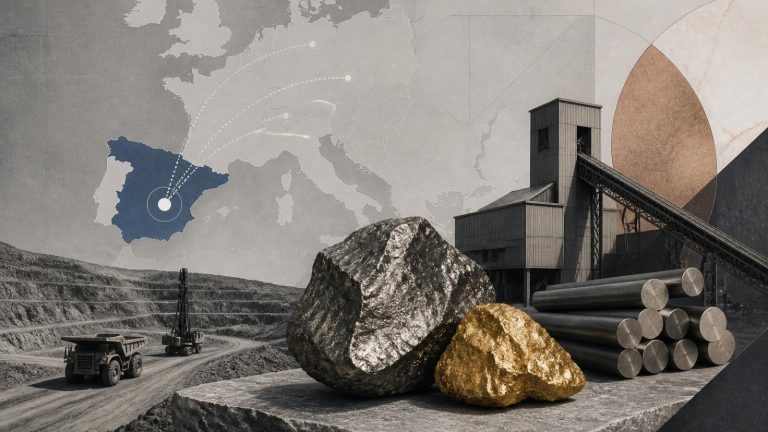
    Spain is strengthening its position in the European critical minerals supply chain through a new 2026-2030 Action Plan for the Sustainable Management of Mineral Raw Materials, backed by €414 million in public investment to support exploration, mining, processing and innovation.

    The initiative includes the launch of the National Mineral Exploration Program (PNEM), with €182 million allocated to mineral exploration aimed at unlocking the country’s resource potential and supporting exploration companies. The strategy also introduces 34 measures covering regulatory reform, institutional coordination, research, innovation and the development of the domestic mining value chain.

    The plan aligns with the EU Critical Raw Materials Act (CRMA), which seeks to increase domestic extraction, processing and recycling of strategic minerals to reduce Europe’s dependence on external suppliers.

    Tin project advances in Andalucía

    Among the projects expected to benefit is Elementos’ Oropesa Tin Project in the Andalucía region, Spain’s largest mining jurisdiction, which accounts for around 90% of the country’s metallic mining production.

    The project has been designated as being of “Overriding Public Interest” by the regional government and has been included in Andalucía’s Project Accelerator Unit, recognising its economic, environmental and social importance.

    Elementos believes Oropesa could eventually supply around 10% of the European Union’s tin demand, while a proposed domestic smelting facility would allow more than 10% of EU tin consumption to be processed within Spain. The company has signed an option agreement to acquire up to a 50% interest in the nearby Robledallano tin smelter, supporting downstream processing and reducing transport costs and emissions.

    The Oropesa project hosts an ore reserve of 15.9 million tonnes grading 0.36% tin and a mineral resource of 19.6 million tonnes at 0.39% tin, with a definitive feasibility study outlining a projected 12-year mine life.

    Tungsten production expands

    EQ Resources is also strengthening Spain’s strategic minerals sector through its Barruecopardo tungsten mine, one of the largest tungsten operations outside China, Russia and North Korea.

    The company produced approximately 1,680 tonnes of tungsten trioxide (WO₃) concentrate during FY2025 and aims to increase annual production to 3,000-3,500 tonnes across its operations in Spain and Australia.

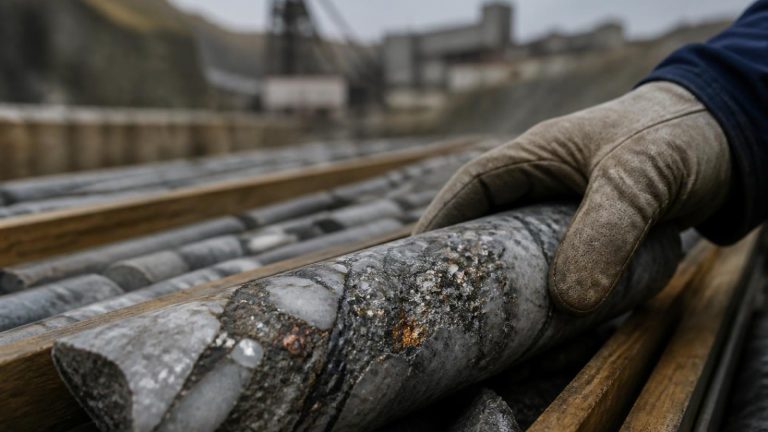
    In June 2026, EQ Resources launched a 36-hole drilling programme at Barruecopardo to extend the mine’s life and evaluate deeper mineralisation. The project currently hosts a 22.9 million tonne resource grading 0.2% WO₃ with an estimated mine life of approximately nine years.

    With around 85% of global tungsten supply currently originating from China, Spain’s expanding production is expected to contribute to efforts to diversify global supply chains for this critical mineral.

    Spain’s new investment programme, together with ongoing permitting reforms and support for downstream processing, is expected to strengthen the country’s role as a strategic supplier of critical minerals within the European Union.

  • Central Asia’s Economic Ascent: The Mining Industry at the Heart of Regional Growth

    Central Asia’s Economic Ascent: The Mining Industry at the Heart of Regional Growth

    Central Asia and Mongolia will remain resilient to geopolitical shocks and record the highest growth rates of the EBRD countries of operation in 2026 and 2027, according to the latest Regional Economic Prospects report published on 3 June 2026, by the European Bank for Reconstruction and Development (EBRD). The combined economies of Kazakhstan, the Kyrgyz Republic, Mongolia, Tajikistan, Turkmenistan, and Uzbekistan are projected to grow by 5.6% in 2026 and 5.3% in 2027.

    These are compelling headline figures. Yet beneath them lies a more consequential story—one that the OECD’s March 2026 report, Advancing Security and Transparency for the Governance of Critical Raw Materials in Central Asia, articulates with rare precision: the region is not merely growing; it is repositioning itself at the very heart of the global critical raw materials race.

    The mining sector is no longer a background variable in Central Asia’s development story. It is the plot itself.


    Article content

    MINEX Asia 2026 is where it gets real. Join EBRD and OECD peers presenting on Kazakhstan’s scale, Tajikistan’s green pivot, Uzbekistan’s processing ambitions—and the governance gaps that determine success.

    🗓️ 24-25 June | Ankara: https://2026.minexasia.com


    The Regional Narrative: Resilience With Structural Depth


    Growth prospects remain robust but are increasingly dependent on the pace of domestic reforms and efforts to strengthen resilience to external shocks. Strong domestic consumption, rising real wages, and robust capital investment are real. But so are the fault lines: downside risks include energy price volatility, supply-chain disruptions, economic sanctions, and slower growth in the region’s largest trading and economic partners, Russia and China.

    The OECD note adds a structural dimension that the growth forecasts alone cannot convey. Central Asia’s substantial yet untapped resource base, combined with its location between major markets in Europe and Asia, raises the region’s relevance in CRM geopolitics and efforts to diversify global supply chains. This is a geostrategic statement. The region holds extraordinary assets: Kazakhstan, already the world’s largest producer of uranium, produces and processes around twenty of the 34 CRMs included on the European Union’s official list. The Kyrgyz Republic and Tajikistan both host some of the world’s largest antimony reserves. Uzbekistan possesses some of the largest copper reserves globally and is advancing lithium and molybdenum production.

    Taken together, these endowments amount to a critical minerals portfolio of exceptional strategic depth. Whether the region can translate that portfolio into durable prosperity is the central question of the coming decade.

    Country by Country: Where the Headlines Don’t Tell the Full Story


    Tajikistan: Gold and Strategic Minerals

    Article content


    Tajikistan: Gold and Strategic Minerals

    Tajikistan’s economic performance continues to confound those who underestimate it. In March 2026, Moody’s upgraded Tajikistan’s sovereign credit rating to B2 with a stable outlook, citing the country’s continued economic resilience. The EBRD projects growth easing to 7.9 per cent in 2026 — still remarkable for a landlocked, remittance-dependent economy navigating elevated regional volatility.

    The mining dimension is crucial. Gold remains the cornerstone of export revenue and fiscal stability, and Tajikistan’s antimony sector is poised for a structural step-change. Tajikistan possesses the world’s second largest antimony reserves, and China’s effective ban on antimony exports to the US and EU provides a significant window of opportunity. Together, France and Belgium accounted for 77% of Tajikistan’s antimony exports in 2024. With TALCO nearing completion of a new antimony metallurgical plant, Dushanbe is finally beginning to capture processing value rather than simply shipping raw material.

    Article content


    But what I find most intriguing about Tajikistan’s trajectory is the emerging convergence of green energy and artificial intelligence with its mining ambitions. The Rogun Hydropower Project — set to have an annual capacity of over 3,600 megawatts once fully operational — would cover most of Tajikistan’s domestic consumption and create the conditions for green aluminium production, with approximately 70 per cent of output earmarked for export to Kazakhstan and Uzbekistan. Cheap, clean electricity is not merely an industrial asset — it is the foundation for competitive mining, smelting, and increasingly, data infrastructure.

    Tajikistan has initiated groundbreaking infrastructure projects, including the launch of “Area AI” — the world’s first dedicated AI Zone — a technopark and cluster designed to serve as a hub for research, development, and application of AI technologies. The country has forged partnerships with international tech firms including Perplexity AI, Google DeepMind, Yotta and Presight to accelerate technology transfer and innovation. The government has declared 2025–2030 the “Years of Digital Economy and Innovation Development.” Taken alongside the Rogun-powered industrial ambitions, this is Tajikistan’s bid to become not just a minerals supplier but a genuinely integrated green industrial economy — using AI and clean energy together to escape the extractive trap.

    The key vulnerability remains Tajikistan’s dependence on Russia, where a slowdown would depress the remittance inflows that underpin household incomes. That risk is real and should not be minimised. But the strategic direction of travel is clear — and it is more ambitious than most Western observers appreciate.

    Article content

    Kyrgyzstan: The Kumtor Imperative and Exploration Needs

    Kyrgyzstan remains the region’s most dramatic case study in resource-dependent growth. Kumtor Gold Company — nationalised in 2022 after nearly three decades of Canadian stewardship — generated net profit exceeding USD 706 million in 2025, contributes 10–15 per cent of GDP, and represents nearly two-thirds of the country’s mineral exports. The March 2025 discovery of an additional 147 tonnes of gold reserves extended the mine’s productive life to at least another 17 years.

    Underground mining operations, launched in August 2025, are transformative. At current gold prices hovering above USD 4,500 per ounce, Kumtor’s economics are exceptional — and the government’s plan to process tailings estimated to contain over 100 tonnes of gold adds further upside. Fixed capital investment rose by 25.5 per cent year on year thanks to strong investment in infrastructure, energy and housing.

    Article content

    Yet the near-term outlook has darkened. The European Union’s 20th sanctions package, announced in late April, restricts exports of dual-use goods to Kyrgyzstan and tightens controls on its financial and logistics sectors. The EBRD has revised its 2026 growth forecast down to 8.7 per cent as a result. This is a significant geopolitical constraint on what would otherwise be an exceptionally strong growth story — and it underscores the OECD’s broader finding that regulatory unpredictability and governance gaps impose real costs on the region’s investment attractiveness.

    The OECD note also flags a structural vulnerability that sits beneath the Kumtor euphoria: limited exploration since independence means that the Kumtor mine, accounting for 90% of the Kyrgyz gold exports, is set to close in 2031 due to reserves depletion — and the lack of exploration since independence will make it harder to offset this decline quickly. The reserve discovery of 2025 has bought time but not resolved the underlying fragility.

    Kazakhstan: Scale, Strategy, and Industrial Output

    Kazakhstan’s mining profile is defined by scale and global strategic significance. The country holds the world’s largest chromium reserves, accounts for roughly 40 per cent of global uranium output, and produces massive quantities of refined copper, largely exported to major industrial buyers like China and Türkiye.

    Graphite is a high-potential sector for Kazakhstan. With the exploitation of its Sarytogan deposit — added to the EU’s list of strategic raw material projects and reported to contain 30% of the world’s graphite reserves — Kazakhstan is expecting to become a crucial player on the world graphite market.

    The tungsten story is equally striking. Kazakhstan holds roughly 2 million tonnes of tungsten resources out of approximately 3.6 million tonnes of global reserves. A joint venture between Kazakhstan’s Tau-Ken Samruk and US-based Cove Kaz Capital Group has been formed to develop the Severniy Katpar tungsten project, with the US International Development Finance Corporation issuing Letters of Interest for up to USD 700 million in potential financing — marking Washington’s most significant entry yet into the region’s critical minerals sector.

    Yet the near-term picture carries a real cautionary note. In Kazakhstan, the extractive industry contracted by 11.4 per cent year on year in Q1 2026 following disruptions to the Caspian Pipeline Consortium pipeline and an incident at the Tengiz oil field. The EBRD projects Kazakhstan’s GDP growth moderating to 4.7 per cent in 2026 and 4.5 per cent in 2027 — the lowest in the region, reflecting the inherent vulnerability of commodity-led economies to infrastructure and logistics shocks.

    Article content

    Uzbekistan: The Ambitious Reformer

    Uzbekistan’s ambitions deserve particular attention. The country is the world’s fifth-largest uranium supplier, a top-ten gold producer, and is rapidly positioning itself as a critical minerals investment destination. Uzbekistan has actively signed Memorandums of Understanding with Western partners, including the United States, for securing supply chains in the mining and processing of Critical Minerals and Rare Earths. The government has also launched massive industrial initiatives to bolster its critical minerals sector.

    The Almalyk Mining and Metallurgical Complex (AMMC) and its specialised subsidiaries targeting tungsten, molybdenum, rhenium, lithium, and graphite signal a genuine strategic shift from raw extraction towards value-added processing. Whether governance and transparency standards keep pace with ambition will be the decisive variable.

    Article content

    The Structural Challenge: From Resource Extraction to Value Creation

    Both the EBRD and the OECD converge on a single, uncomfortable truth: Central Asia’s growth is impressive, but its mining sectors remain structurally exposed. The OECD note identifies several systemic vulnerabilities that macro-growth figures obscure.


    • On reserves reporting: Most countries still operate on Soviet-era GKZ classification systems that differ fundamentally from international CRIRSCO standards — creating information asymmetries that deter sophisticated investors and complicate due diligence. Kazakhstan has made progress through its KAZRC system; other regional peers have barely started.
    • On foreign investment dynamics: Foreign actors, predominantly Chinese, actively invest in Central Asia’s mining industry. China has been a primary investor in the mining sectors of the Kyrgyz Republic and Tajikistan, and is increasing its presence in Kazakhstan and Uzbekistan, not only by investing in extraction facilities but also by supporting the development of initial processing capabilities. This creates a strong strategic dependency that the region’s governments are increasingly aware of — and that Western partners, including the EU, UK, and US, are now actively looking to balance through alternative commercial partnerships.
    • On the Trans-Caspian International Transport Route (TITR): Traffic along the corridor (the Middle Corridor) has increased dramatically as exporters seek reliable East–West trade alternatives. Kazakhstan in particular has long relied on the corridor for its mineral, chemical, and agricultural exports, with a substantial portion of its uranium exports to Western markets utilising this bypass route. This corridor is central to the region’s ability to diversify export markets.
    • On ESG and governance: The OECD is frank: mining in the region is still heavily influenced by large state-owned enterprises with overlapping regulatory and commercial roles, needing stronger occupational health and safety oversight and remediation of legacy environmental risks. These are not peripheral concerns — they are the conditions on which Western investment and international supply chain partnerships will ultimately be conditioned.


    Article content

    The Strategic Opportunity

    The OECD projects global demand for many critical raw materials to increase multifold over the coming decades to meet the needs of the green and digital transitions. Central Asia sits atop a significant share of the reserves that will need to come online to meet that demand. The region holds massive global shares of manganese ore, chromium, lead, zinc, titanium, aluminium, copper, cobalt, and molybdenum.

    That is an extraordinary endowment. Translating it into durable prosperity requires three things that remain in genuinely short supply across the region: transparent governance, world-class ESG practice, and the institutional capacity to negotiate from strength with both regional and global partners.

    This is precisely why platforms like the MINEX Forum matter. The conversation between producers, investors, policymakers, and development finance institutions that happens at these gatherings is not peripheral to the critical minerals agenda. It is where the terms of engagement are shaped.


    Conclusion: Cautious Optimism, Clear Conditions

    The EBRD’s projection of robust regional growth is credible. The OECD’s assessment of the region’s critical minerals potential is genuinely exciting. But both institutions are equally clear-eyed about the conditions that must be met for that potential to be realised responsibly.

    Central Asia’s mining sectors are not simply economic contributors. They are strategic assets in the most consequential industrial transformation of our era. Their management — balancing extraction with environmental stewardship, concentrating revenue into productive capital formation, building institutional capacity, and securing diversified partnerships — will determine whether current growth translates into sustainable prosperity or rehearses the resource curse that has constrained other commodity-rich regions.

    The next chapter will be written in mining offices, government ministries, and international forums across Dushanbe, Bishkek, Astana, Tashkent, and Ulaanbaatar. We should be not merely watching — we should be in the room.

    Article content

    References:


    Central Asia and Mongolia to see highest economic growth in the EBRD regions

    https://www.ebrd.com/home/news-and-events/news/2026/central-asia-and-mongolia-to-see-highest-economic-growth-in-the-ebrd-regions.html

    The OECD report “Advancing Security and Transparency for the Governance of Critical Raw Materials in Central Asia”

    https://www.oecd.org/en/publications/2026/03/advancing-security-and-transparency-for-the-governance-of-critical-raw-materials-in-central-asia_09ced3e9.html

    Big dams, big dreams: Rogun and Central Asia’s geo-economics of green energy

    https://lossi36.com/2025/02/20/big-dams-big-dreams-central-asias-geo-economics-of-green-energy/

    Tajikistan’s: Pioneering AI Leadership in Central Asia and Beyond

    https://www.newscentralasia.net/2025/10/28/tajikistans-pioneering-ai-leadership-in-central-asia-and-beyond/

    EBRD Forecasts 6.5% GDP Growth for Uzbekistan in 2026

    https://www.uzdaily.uz/en/ebrd-forecasts-65-gdp-growth-for-uzbekistan-in-2026/

    About the Author:


    Arthur Poliakov is the Managing Director of the United Kingdom-based company Advantix Ltd and the Executive Chairman and founder of the MINEX Forum. He has over 30 years of experience in international business communications, event management, and natural resource markets.

    He is currently organising the upcoming 12th MINEX Asia Forum (24–25 June 2026, Ankara, Turkey), the 10th MINEX Europe Forum (28–30 October 2026, Trim, Ireland), and the 14th MINEX Eurasia Conference (30 November 2026, London, United Kingdom).

  • Unpacking Kazakhstan’s $25 Billion Mining and Critical Minerals Revolution

    Unpacking Kazakhstan’s $25 Billion Mining and Critical Minerals Revolution

    On 18 March the US Commercial Service hosted a webinar featuring experts from the Kazakh government and industry. The central message was clear: Kazakhstan is no longer presenting itself simply as a resource-rich country. It is actively seeking to become a more significant destination for investment, processing, industrial partnerships and long-term supply chain co-operation.

    If you are tracking the global energy transition and supply chain security, this is a market that demands your attention. Here are my biggest takeaways from the session:

    A market defined by scale, ambition and strategic importance

    Kazakhstan’s resource base remains one of its greatest strengths. Speakers highlighted that mining and metallurgy continue to play a major role in the national economy, while reforms are being introduced to improve transparency, modernise infrastructure and create a more attractive environment for foreign investors.

    Particular attention was given to coal, mining and critical minerals as sectors with major growth potential. Kazakhstan is pursuing a pragmatic approach to energy development, combining its natural resource base with efforts to attract technology, financing and international partners. For U.S. companies, this is increasingly being framed not only as a commercial opportunity, but also as a chance to help build more resilient allied supply chains.

    The Sheer Scale of the Resource Opportunity

    Kazakhstan holds a formidable position on the global energy map, but it’s the untapped potential that is most striking:

    • Massive Reserves: The country sits on 33 billion tonnes of coal reserves, ranking 8th globally—enough to sustain production for over 300 years.
    • Cost Advantages: Kazakh coal prices hover around $25 to $50 per tonne—a fraction of the cost in other global markets. Furthermore, the cost of geological exploration is incredibly low at just $11 per square kilometre, compared to $167 in Australia and $203 in Canada.
    • The Coal Chemistry Boom: Currently, only 3% of Kazakhstan’s coal is processed. Shifting towards deep processing (synthetic fuels, ammonia, urea, methanol) represents a $25 billion untapped market.

    Modernising the Energy Grid

    As power demand surges—driven by industrialisation and the rise of AI—Kazakhstan is heavily focussed on modernising its infrastructure. The Ministry of Energy plans to introduce 26 gigawatts of new power capacity over the next decade. This includes a near-term plan to add 7.6 GW of new coal-fired capacity, requiring an estimated $16 billion in investment by 2030. The government is actively seeking technological partnerships for carbon capture and storage (CCS) and ultra-supercritical boiler technologies to ensure this growth aligns with clean energy standards.

    Critical minerals are becoming central to the conversation

    One of the most interesting aspects of the discussion was the growing focus on critical minerals and rare earth-related opportunities.

    Kazakhstan is developing a more comprehensive strategy for critical raw materials, with plans to define priority minerals, support processing and encourage higher-value production. The direction of travel is clear: the country wants to move further up the value chain and become more than simply an exporter of raw materials.

    This was particularly relevant in light of the tungsten discussion that followed.

    Resources:

    Looking ahead to 14-16 April: MINEX Kazakhstan Forum in Astana

    The next important date in the calendar is 15 April, when Julie M. Stufft , U.S. Ambassador to the Republic of Kazakhstan, will speak at the strategy session on Critical Minerals and Global Strategic Alliances at the 16th MINEX Kazakhstan Forum in Astana.

    Also speaking will be Dominic Heaton Dominic Heaton, CEO of Cove Kaz Capital Group, who will present the Severniy Katpar case study.

    This is especially significant because Severniy Katpar and Verkhnee Kairakty together hold 1.4 million tonnes of tungsten trioxide under JORC standards, representing around 70% of Kazakhstan’s total tungsten reserves. The project involves an estimated $1.1 billion joint venture investment, with potential support from U.S. EXIM and the U.S. International Development Finance Corporation totalling up to $1.6 billion.

    That level of financial and diplomatic backing underlines how strategically important this project could become, not only for Kazakhstan, but also for broader allied efforts to secure critical mineral supply chains.

    Why these matters

    What stood out most from the 18 March webinar was the alignment now emerging between Kazakhstan’s resource ambitions and international demand for secure, diversified supply chains.

    Kazakhstan offers scale, geological potential and a strategic location between major markets. The United States and other partners bring financing, technology and industrial expertise. If those elements come together effectively, the result could be a new phase of co-operation built around mining, processing, infrastructure and critical minerals development.

    For anyone following energy security, industrial policy or strategic resource investment, Kazakhstan is becoming increasingly difficult to ignore.

    The webinar made that case convincingly. The 15 April MINEX Forun sessions should offer an important next step in showing how these opportunities may translate into practical projects and partnerships.

  • Kazakhstan Rises to Third Place in Global Tungsten Production Amid Price Surge

    Kazakhstan Rises to Third Place in Global Tungsten Production Amid Price Surge

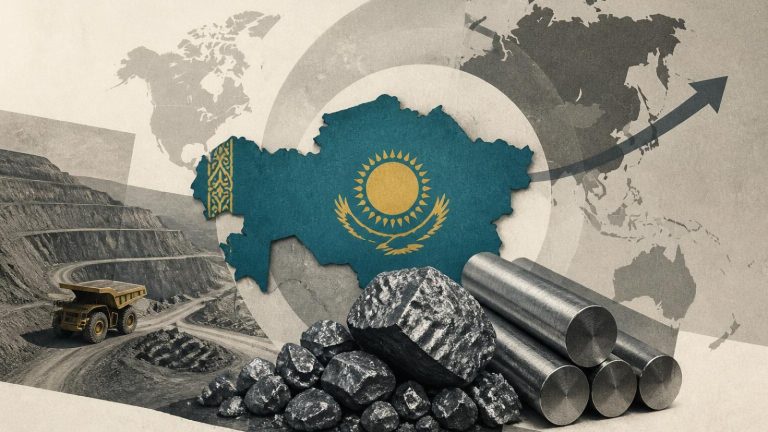
    Kazakhstan has emerged as the world’s third-largest tungsten producer following the launch of the Bogutinskoye deposit, marking a significant shift in global supply dynamics. The development comes amid a sharp increase in tungsten prices, which surged by 557% by early March 2026 after China imposed export restrictions on the metal in February 2025.

    According to recent analysis by Kursiv Research, tungsten concentrates entered Kazakhstan’s export portfolio for the first time in 2025. The country exported 3.7 thousand tonnes of tungsten ore and concentrates, generating $71 million in revenue, with all shipments directed to China. Despite its relatively modest ranking at 71st place in Kazakhstan’s export structure, tungsten has quickly become a strategically important commodity.

    The Bogutinskoye project, operated by Zhetysu Tungsten and backed by Hong Kong-based Jiaxin International Resources Investment, has played a central role in this development. The processing plant produces a 65% concentrate, with total investment commitments reaching $450 million. Plans are also underway to develop downstream processing capacity, including a $100 million project to produce ammonium paratungstate, a higher-value tungsten product.

    Data from the US Geological Survey confirms Kazakhstan’s rapid ascent in the sector. In 2025, the country produced approximately 2.4 thousand tonnes of tungsten (in metal equivalent), placing it behind China and Vietnam. The expansion of production capacity and ongoing investment projects are expected to further strengthen Kazakhstan’s position in the global market.

    Tungsten’s strategic importance has grown significantly in recent years, particularly in the context of geopolitical tensions. The metal remains on the US list of critical minerals, essential for defence, construction, and high-tech manufacturing. China continues to dominate global supply, accounting for nearly 79% of production in 2025, while also tightening export controls in response to trade measures from the United States.

    In response, the US has intensified efforts to diversify supply chains through international partnerships. A key development is the joint venture between Kazakhstan’s Tau-Ken Samruk and US-based Cove Capital to develop the Upper Kairakty and Northern Katpar deposits. The project, with an estimated investment of $1.1 billion, is expected to significantly boost Kazakhstan’s production of ammonium paratungstate and could position the country as the world’s second-largest producer of this material.

    The agreement reflects broader geopolitical competition over critical minerals, with both Western and Chinese companies seeking access to Kazakhstan’s resource base. Analysts note that rising prices and supply restrictions have accelerated investment activity and heightened strategic interest in the region.

    In parallel, Kazakhstan is strengthening state control over critical mineral resources, with legislative changes expected in 2026 to grant priority extraction rights to the national mining company. Private sector players are also advancing new projects, including the development of the Drozhilovskoye deposit with financing from the US Export-Import Bank.

    As global demand for critical minerals continues to rise, Kazakhstan is positioning itself as a key supplier in an increasingly competitive and politically sensitive market.

  • US EXIM Signals Up to $240m Financing for QazMoly’s Drozhi­lovskoye Tungsten-Molybdenum Project in Kazakhstan

    US EXIM Signals Up to $240m Financing for QazMoly’s Drozhi­lovskoye Tungsten-Molybdenum Project in Kazakhstan

    QazMoly Limited, part of Kazakhstan-based mining and energy group AltynGroup controlled by the Asaubayev family, said it has received indicative interest from the Export-Import Bank of the United States (US EXIM) for financing of up to $240 million to advance the Drozhi­lovskoye tungsten-molybdenum deposit in the Denisov district of Kostanay region.

    According to the company, the Drozhi­lovskoye deposit contains significant resources of critical minerals including tungsten, beryllium and molybdenum, metals widely used in high-technology manufacturing and applications across engineering, aerospace and defence industries. The announcement positions the project within broader US and European efforts to diversify critical mineral supply chains away from China, which remains a dominant supplier of many strategic raw materials.

    Under the proposed structure, the financing would be conditional on 100% of Kazakhstan’s tungsten concentrate output from the project being supplied to the US market, reflecting Washington’s classification of tungsten as a strategic material. QazMoly said Fosbury Capital is expected to act as the exclusive buyer and financial partner for the project.

    The potential EXIM support remains subject to completion of QazMoly’s feasibility studies and the lender’s full legal, commercial and technical due diligence. QazMoly said the project benefits from competitive production costs, government support, and macro tailwinds from expected growth in global tungsten demand, which market estimates suggest could rise by an average of around 8% per year and push the sector toward a value of $10 billion by the mid-2030s.

    Aidar Asaubayev, chairman of QazMoly’s board, said the indicative backing could help move the Drozhi­lovskoye development forward, supporting job creation and strengthening critical mineral supply chains. The company expects the financing, if finalised, to cover a significant share of capital expenditure and could become one of the largest examples of US export credit participation in Kazakhstan’s mining industry.

    Earlier plans disclosed in the early 2020s by Qaz Mining Company envisaged development of the 5.86 km² Drozhi­lovskoye licence area over 2022–2034, with a reported resource base of 125.2 million tonnes of ore and a targeted mining and processing capacity of 11 million tonnes per year. However, public sources have not confirmed the start of full-scale operations.

    QazMoly’s 2024 financial reporting cited estimated tungsten trioxide mineral resources at Drozhi­lovskoye of 126,400 tonnes at a grade of 0.116%, with the licence valid until 2034. The company previously indicated plans to build a concentrator designed to process molybdenum-tungsten ores at a capacity of 200,000 tonnes per year by 2025.

    The company also disclosed it holds an exploration contract for the Smirnovskoye molybdenum project in Kostanay region. QazMoly reported a loss of £213,000 for the 2024 reporting period.

  • Allied Critical Metals Posts Strong PEA Economics for Borralha Tungsten Project as 20,000 m Drill Program Gets Underway

    Allied Critical Metals Posts Strong PEA Economics for Borralha Tungsten Project as 20,000 m Drill Program Gets Underway

    Allied Critical Metals Inc. has released the results of an initial Preliminary Economic Assessment (PEA) for its 100%-owned Borralha Tungsten Project in northern Portugal, outlining an underground development concept with strong returns across multiple tungsten price scenarios and a fully funded drilling campaign aimed at expanding resources beyond the initial mine plan.

    In the study’s medium case using a tungsten price of USD 1,000/mtu WO₃, the project delivers an after-tax NPV(8%) of C$473.4 million (USD 346.6 million) and an after-tax IRR of 48.8%, with an estimated payback period of 4.2 years. Under the base case aligned with an Argus long-term average price assumption of roughly USD 704/mtu WO₃, the after-tax NPV(8%) is C$182.7 million (USD 134.0 million) and the after-tax IRR is 27.2%, with a payback of 5.8 years. A high-price sensitivity case at USD 1,500/mtu WO₃ increases the after-tax NPV(8%) to C$963.8 million (USD 706.4 million) and the IRR to 78.4%, shortening payback to 3.2 years.

    The PEA estimates initial capital at approximately USD 91 million (C$124.2 million) and sustaining capital at about USD 87 million (C$118.8 million), for total life-of-mine capital of roughly USD 178 million (C$243.1 million). The mine plan covers an 11-year operating life, based on the Santa Helena Breccia deposit, with a nominal processing rate of 1.4 million tonnes per annum and average mill feed grade of about 0.20% WO₃. Average annual recovered production is estimated at approximately 1,708 tonnes WO₃, with peak annual output of 2,388 tonnes WO₃. The company reported an all-in sustaining cost estimate of around USD 303/mtu WO₃.

    Allied said the economic model was built on conservative design assumptions, including mine design and cut-off grade selection developed using USD 659/mtu WO₃. The company highlighted that reported spot market pricing for tungsten has recently been materially higher than the study’s sensitivity cases.

    The company also reported several de-risking milestones and strategic positioning factors. Borralha has received a favourable Environmental Impact Declaration (DIA) from Portugal’s environment agency, subject to standard regulatory conditions, and the project has been endorsed by idD Portugal Defence as a strategic initiative of national importance.

    To support growth beyond the initial 11-year plan, Allied has begun a fully funded 20,000-metre drill program targeting resource expansion, conversion of inferred material into higher-confidence categories, potential mine life extension, and possible throughput and scale optimisation. The PEA does not include Allied’s other tungsten project at Vila Verde.

  • White & Case Advises on $1.6 Billion-Backed Tungsten JV Between Cove Kaz and Tau-Ken Samruk

    White & Case Advises on $1.6 Billion-Backed Tungsten JV Between Cove Kaz and Tau-Ken Samruk

    Global law firm White & Case LLP has advised Cove Kaz Capital Group, a portfolio company of Cove Capital LLC, on the signing of definitive agreements with Tau-Ken Samruk National Mining Company to advance the Northern Katpar and Upper Kairakty tungsten projects in Kazakhstan.

    The transaction includes a share purchase agreement and shareholders’ agreement establishing a joint venture structure in which Cove Kaz will hold a 70 percent stake and Tau-Ken Samruk will retain 30 percent ownership in Severniy Katpar LLP.

    The two projects are described as the largest undeveloped tungsten resource globally, with a planned combined annual production target of 12,000 metric tons, equivalent to approximately 15 percent of current global output.

    Following execution of the agreements, Cove Kaz will proceed with a definitive feasibility study and downstream refining plans. The development is expected to create around 2,000 jobs and enhance Kazakhstan’s position in the global critical minerals supply chain.

    The project has received backing from both the US and Kazakh governments. Letters of interest have been issued for up to $1.6 billion in potential financing from the Export-Import Bank of the United States and the US International Development Finance Corporation.

    The White & Case advisory team was led by partners Carolyn Lamm in Washington, DC and Maxim Telemtayev in Astana, alongside partners Martin Menski, John Vetterli, Keith Hallam and Morgan Hollins.

  • Tau-Ken Samruk and Cove Capital Sign Agreements on Northern Katpar and Verkhneye Kairakty Tungsten Projects

    Tau-Ken Samruk and Cove Capital Sign Agreements on Northern Katpar and Verkhneye Kairakty Tungsten Projects

    Kazakhstan’s state mining company Tau-Ken Samruk has signed a series of agreements with US-based Cove Capital for the joint development of the Northern Katpar and Verkhneye Kairakty deposits, according to a press release from Samruk-Kazyna.

    The projects are expected to form the raw-material base for establishing deep tungsten processing in Kazakhstan. As part of the Northern Katpar project, the partners plan to produce ammonium paratungstate, a key intermediate product used in high-tech and industrial applications.

    To implement the projects, Cove Capital will secure no less than $1.1 billion in financing. Of this amount, $900 million is expected to be provided by the Export-Import Bank of the United States. In addition to financing, the American side will provide technological support for mining, processing, and beneficiation operations. The US will also facilitate exports to global markets, including arranging offtake contracts with US authorities.

    The two deposits contain an estimated 410,000 tonnes of tungsten. According to the mine development plan presented this week by Northern Katpar, sales of tungsten trioxide, molybdenum, copper, and bismuth are projected to generate more than 1 trillion tenge (approximately $2 billion) in revenue between 2030 and 2048.

    The parties initially agreed on joint development of the deposits in November last year. According to Reuters, Cove Capital will hold a 70 percent stake in the joint venture, while Tau-Ken Samruk will retain 30 percent.

  • Allied Critical Metals Launches 20,000 m Drilling Campaign at Borralha Tungsten Project in Portugal

    Allied Critical Metals Launches 20,000 m Drilling Campaign at Borralha Tungsten Project in Portugal

    Allied Critical Metals has launched a fully funded 20,000 metre drilling programme at its wholly owned Borralha Tungsten Project in northern Portugal, marking the company’s most ambitious exploration campaign at the site to date.

    The 2026 programme is designed to build on strong drill results delivered in 2025 and to further define the scale and grade of tungsten mineralisation ahead of economic studies and potential resource expansion. Drilling will combine core and reverse circulation methods across several priority target zones within the Borralha licence area.

    The campaign will focus on step-out and infill drilling aimed at expanding and upgrading the existing mineral resource estimate, which was significantly increased in late 2025. Additional work will test extensions of the Santa Helena Breccia and other prospective zones identified during recent exploration, while also targeting the Venise Breccia north of Santa Helena, a historically recognised high-grade structure associated with wolframite and molybdenum mineralisation.

    Material collected during drilling will also be used for advanced metallurgical testing to support prefeasibility work and economic modelling. The programme is expected to generate key inputs for a Preliminary Economic Assessment that the company is targeting for completion in the first quarter of 2026.

    According to Allied, recent exploration has confirmed both bulk-style mineralisation and higher-grade corridors that could be suitable for future underground mining. The project has already passed several regulatory milestones, allowing it to advance through detailed engineering and permitting stages alongside ongoing drilling.

    The Borralha project is considered one of the more advanced undeveloped tungsten assets in Western Europe. Tungsten is classified as a critical raw material in both the European Union and the United States, highlighting the strategic importance of projects that can contribute to supply diversification away from dominant producers.

  • Uzbekistan Positions Itself as a Global Tungsten Leader Through Major Expansion of the Technological Metals Complex

    Uzbekistan Positions Itself as a Global Tungsten Leader Through Major Expansion of the Technological Metals Complex

    Uzbekistan is accelerating its ambition to become a major force in the global tungsten industry, with the Uzbekistan Technological Metals Complex (TMK) spearheading a comprehensive value-chain strategy supported by advanced technologies and large-scale mining projects. Tungsten, increasingly regarded as the “energy currency” of the global economy, is essential for sectors including green energy, aerospace, automotive, mechanical engineering, chemicals, and space technologies.

    TMK, established under the initiative of President Shavkat Mirziyoyev, has already become the first plant in Central Asia to join the International Tungsten Association—marking a significant step toward integrating Uzbekistan into advanced industrial supply chains. Today, TMK operates across the full tungsten production chain: upstream, midstream, and downstream.

    Upstream activities include geological exploration and development of key deposits. The flagship Sarikul project in the Samarkand region holds an estimated 30,000 tonnes of tungsten metal and is designed to process up to 1 million tonnes of ore annually. The operation is expected to produce 4,000 tonnes of tungsten concentrate per year—meeting 65% of international quality standards—and sustain up to 20 years of production. Over 400 jobs will be created as part of this project.

    TMK is also boosting tungsten recovery from mining waste at the Ingichka deposit through a partnership with China’s Xinhai, increasing concentrate output to 1,050 tonnes and generating projected revenues of $18.4 million. Additional cooperation with Chinese investor Red Persimmon will expand ore extraction to 900,000 tonnes annually, enabling production of up to 5,040 tonnes of concentrate. A separate joint project with Turkey’s International Gold Madencilik at the Sautbay deposit aims to produce 4,811 tonnes of concentrate.

    Midstream development includes the construction of a new hydrometallurgical facility in the Samarkand region, leveraging engineering expertise from Canada, Australia, Finland, and Turkey. Once completed, the plant will process 5,000 tonnes of concentrate by 2027, scaling to 15,000 tonnes by 2030—bringing the value of processed products to more than $300 million.

    TMK’s downstream operations target high-value finished products that elevate the “Made in Uzbekistan” brand. The company is already producing tungsten briquettes, ingots, carbide drill bits, milling tools, electrodes, and drilling equipment, with production increasingly automated and aligned with ESG and IRMA standards. Finished tungsten products are currently being exported to major industrial markets in Europe and the United States, with expansion into Japan and South Korea underway.

    Upon full implementation of its industrial program, TMK expects tungsten concentrate production in Uzbekistan to rise from 300 tonnes to 14,950 tonnes—an increase of nearly 50-fold. Output of tungsten anhydride will grow from 76 tonnes to 4,860 tonnes, while metallic tungsten production will expand from 58 tonnes to 1,860 tonnes.

    These projects are set to reshape the country’s economic landscape. Investment in the tungsten sector will reach $103.9 million, annual production value will climb from $5.5 million to nearly $280 million, and export volumes will soar from $2.4 million to $181.5 million. More than 5,000 new jobs are expected to be created.

    With these advances, Uzbekistan’s global tungsten reserves share is projected to rise from 2% to 5.1% by 2030, while its share of global tungsten extraction will jump from 0.05% to 14.8%.

    As the world seeks reliable and sustainable sources of critical minerals, Uzbekistan is positioning itself as a transparent, technologically advanced, and trustworthy partner. Through TMK’s fully integrated value-chain model, the country aims to secure a prominent role on the global industrial map and support the future of high-tech and green industries worldwide.