Tag: Spain

  • Transforming a Coal Mine into Spain’s Largest Artificial Lake: The As Pontes Success Story

    Transforming a Coal Mine into Spain’s Largest Artificial Lake: The As Pontes Success Story

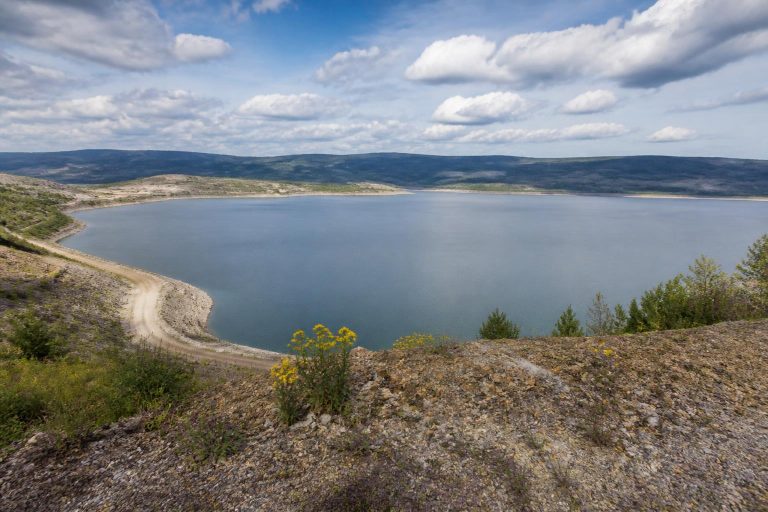
    In northwest Spain, the As Pontes coal mine has undergone a remarkable transformation from a deep pit left by nearly 60 years of lignite extraction to one of the country’s largest artificial lakes. This change began in 2008 when engineers filled the massive pit, which had reached depths of over 300 metres and covered an area equivalent to 1,600 American football fields, with approximately 547 billion litres of water. The mine, initially operated by a state-run company since the 1940s and later by Endesa, Spain’s largest coal-fired power station, extracted around 260 million tonnes of lignite before its closure in 2007 due to stricter EU air pollution regulations.

    The process of filling the pit was not straightforward; it required careful planning to determine the water sources, the rate of filling, and the chemical implications of the water settling into the pit. A study published in the journal Boletín Geológico y Minero details this engineering feat, highlighting the challenges faced and the innovative solutions developed by the research team from the University of A Coruña. The filling was completed in April 2012, and subsequent studies revealed the formation of two distinct layers within the lake: a top layer that is mildly acidic and oxygen-rich, and a deeper layer that is more acidic and devoid of oxygen, separated by a chemocline.

    Today, the As Pontes lake spans 865 hectares and features recreational facilities such as sandy beaches and nature trails. It has received Blue Flag certification, indicating high water quality and safety standards. The surrounding area has seen the emergence of diverse habitats, including meadows and woodlands, and the local economy has shifted from reliance on mining to tourism, with activities like kayaking and canoeing now popular in the area.

    The As Pontes case serves as a significant example of successful mine rehabilitation, showcasing how old mining sites can be transformed into valuable recreational spaces. This transformation is not unique to Spain; similar mining sites around the world, from Germany to the United States, face the challenge of rehabilitation. As more coal mines are closed globally, the lessons learned from As Pontes could guide future efforts to manage and repurpose former mining operations, turning environmental scars into thriving ecosystems and community assets.


  • Berkeley Energia Seeks $1.25 Billion From Spain Over Blocked Salamanca Uranium Project

    Berkeley Energia Seeks $1.25 Billion From Spain Over Blocked Salamanca Uranium Project

    Australia’s Berkeley Energia said on Friday it has filed a memorial of claim worth about $1.25 billion against Spain at the World Bank’s arbitration tribunal, escalating its long-running dispute over the stalled Salamanca uranium project.

    The company said its subsidiary, Berkeley Exploration, submitted the claim to the International Centre for Settlement of Investment Disputes. The filing includes detailed factual background on the project and the dispute, witness statements, an assessment of damages, and supporting expert reports.

    Berkeley initially launched arbitration proceedings in May 2024, seeking $1 billion in damages after the Spanish government declined to grant final approval for the uranium mine. The Salamanca project, located near the city of Salamanca in western Spain, received preliminary approval in 2013. However, Spain’s Energy Ministry refused to issue final approval in 2021 and again in 2023.

    In 2024, Berkeley accused Spain of breaching its obligations under the Energy Charter Treaty, an international framework intended to promote energy security through open and competitive energy markets.

    Spain now has until July 2026 to submit its response to the memorial of claim, Berkeley said. The announcement weighed on investor sentiment, with Berkeley shares falling as much as 8.8% to A$0.52, broadly in line with weakness across the mining sector, where the sub-index was down 2.8% at the same time.

  • Japan, Spain and South Korea Warn of Unsustainable Copper Market as Smelting Fees Collapse

    Japan, Spain and South Korea Warn of Unsustainable Copper Market as Smelting Fees Collapse

    Japan, Spain, and South Korea have issued a rare joint statement voicing alarm over the steep decline in copper treatment and refining charges (TC/RCs), warning that the current market conditions threaten the sustainability of both smelters and miners.

    The statement — released following an online meeting of the three countries’ industry ministries — comes amid mounting pressure on global copper smelters, who face shrinking profit margins due to tight concentrate supplies and growing smelting capacity in China.

    In June, several Chinese smelters agreed to process copper concentrate for Chilean miner Antofagasta at no charge, underscoring the severity of the downturn.

    “We are deeply concerned that this deterioration in TC/RCs is prompting a reassessment of copper smelting operations worldwide, with several companies already indicating intentions to scale down or withdraw from copper concentrate smelting,” the ministries said.

    TC/RCs — fees paid by miners to smelters for processing copper concentrate into refined metal — have traditionally been a key revenue stream for smelters. However, in some spot deals this year, TC/RCs have turned negative, forcing smelters to pay miners to secure feedstock.

    The ministries warned that this imbalance undermines the sustainable coexistence of smelting and mining industries and increases dependency on a narrow group of supplier countries, a scenario they described as “undesirable” for both producers and consumers.

    “We hope TC/RCs will return to sustainable levels for copper concentrate trading,” the statement said, adding that the three countries would continue engaging with stakeholders to establish a resilient and sustainable copper supply chain.

    Naoki Kobayashi, deputy director of Japan’s Ministry of Economy, Trade and Industry (METI), said the issue will be raised during LME Week in London, one of the global metals industry’s key gatherings.

    Japan’s leading copper smelters, including JX Advanced Metals and Mitsubishi Materials, have already announced plans to scale back concentrate processing due to eroding margins, reflecting a broader trend of contraction across the global smelting sector.

  • Pan Global Advances Escacena and Cármenes Projects in Spain

    Pan Global Advances Escacena and Cármenes Projects in Spain

    Pan Global Resources Inc. has announced significant progress at its Escacena and Cármenes projects in Spain. The company’s exploration programs in 2024 resulted in major milestones, including the extension of near-surface mineralization at the La Romana target by over 300 meters and the identification of over 15 new geophysical and geochemical anomalies at the Escacena project.

    The advanced copper metallurgical tests delivered industry-leading results, with excellent copper recoveries and low deleterious elements. The La Romana metallurgical testwork also confirmed potential for higher grades and recoveries for copper compared to other advanced projects and mines on the Iberian Pyrite Belt.

    In addition, Pan Global completed an 11-hole step-out drilling program at the Cañada Honda target, indicating large size potential with most of the target untested. The company also announced the commencement of exploration for copper-nickel-cobalt-gold hosted within pipe-like breccia bodies at the Cármenes Project.

    The company raised C$7.2 million in a non-brokered private placement financing in November, with strong support from existing investors and the addition of two new major investors.

    Pan Global’s flagship Escacena Project is located in the Iberian Pyrite Belt in southern Spain, a tier-one low-risk jurisdiction for mining investment with a favorable permitting track record, excellent infrastructure, and mining and professional expertise. The company is committed to operating under the principles of the United Nations Global Compact.

  • Megado Minerals Secures Major Stake in Spain’s Iberian Copper Project

    Megado Minerals Secures Major Stake in Spain’s Iberian Copper Project

    Megado Minerals, an Australian mining company, has unveiled plans for a significant acquisition in northern Spain, aiming to acquire an 80% stake in the Iberian Copper Project. Covering 956 square kilometers, this expansive project includes 12 permits and houses at least 12 historic copper mines.

    The acquisition will proceed through a share swap agreement with Iberian Copper (ICPL) shareholders. In return for their stake, Megado will issue 175 million shares, 175 million Class A performance rights, and 175 million Class B performance rights. These performance rights are convertible into shares on a one-to-one basis, pending the achievement of key project-related milestones.

    Megado directors Anthony Hall and Aaron Bertolatti are non-controlling shareholders of ICPL, which may raise potential conflicts of interest; however, both directors are expected to recuse themselves from decisions directly affecting the acquisition.

    To finance the acquisition, Megado will initiate a non-renounceable rights issue, offering one share for every two shares held at A$0.012 per share. This rights issue could potentially raise A$1.53 million to support the acquisition and future developments.

    The deal marks a significant expansion for Megado in the copper sector, presenting strong growth potential if project milestones are met and as global copper demand continues to rise.

  • Untapped Gold Reserves at Europe’s Largest Mine in Asturias, Spain

    Untapped Gold Reserves at Europe’s Largest Mine in Asturias, Spain

    Underneath the Salave Lagoon in Asturias, Spain, lies Europe’s largest untouched gold mine, holding 30 tonnes of gold, equal to about 10% of Spain’s gold reserves. Despite private interest in mining the site and extensive exploration over decades, the local community remains divided on allowing the project to proceed. Explotaciones Mineras del Cantábrico, which holds the mining rights, plans to invest over €100 million, creating direct and indirect jobs while ensuring minimal disruption to the town. However, opposition groups, such as Oro No, argue that the project poses significant environmental risks and legal issues.

  • Pan Global Resources posts Honda and Zarcita drill results, Spain

    Pan Global Resources posts Honda and Zarcita drill results, Spain

    Both targets are located 4km north of the La Romana copper-tin-silver discovery where ongoing drilling is extending mineralization at Romana West. Three follow-up drill holes have been completed at the Cañada Honda copper-gold target and an additional 13 drill holes have been completed at the Zarcita copper target.

    “The follow-up drilling at Cañada Honda confirms copper-gold mineralization coincident with a gravity anomaly, and extends the copper-gold mineralization from surface to 600m down-dip where it remains wide open. The new results highlight additional gold potential in the hanging wall. The drilling is at the eastern end of a 2km long east-west gravity target, indicating potential for the mineralization to significantly expand, making this a compelling, high priority target for additional drilling,” said Tim Moody, president & CEO.

    Currently, drilling at Escacena is focused along the highly prospective western extension (Romana West) of the La Romana copper-tin-silver discovery. In addition to the 12 geophysical targets that are being sequentially prioritized for drill testing, exploration on the 5,760-hectare Escacena Project continues to identify new drill targets. Initial assay results from the first set of drill holes at Romana West are expected soon.

    Cañada Honda Highlights – New drill hole results include drill hole CHD05 that returned 20 metres at 0.5% copper, 0.8 g/t gold, 1.9 g/t silver, including 5.1 metres at 1.3% copper, 0.5 g/t gold, 3.9 g/t silver (reported July 4, 2023); and new results including 2 metres at 1.6 g/t gold.

    CHD06 returned 7 metres at 0.6% Cu, 0.8 g/t Au, 6.5 g/t Ag, including 3 metres at 1.1 g/t Au, 5.5 g/t Ag. CHD07 returned 5 metres at 1.1 g/t Au, 0.2% Cu, 2.3 g/t Ag.

    Surface rock samples ranged  up to 9g/t gold. There are new untested DHEM conductor anomalies

    The follow-up drill program included holes CHD05, CHD06 and CHD07. Drill hole CHD05, testing 150 metres down-dip from previous drill hole CHD04 and approximately 330 metres down-dip from a historical mine tunnel, confirmed copper-gold mineralization coincident with the targeted gravity anomaly. CHD06, located 100m east of CHD05, intersected copper-gold mineralization coincident with a DHEM target. Hole CHD07 tested a resistivity low anomaly 190 metres down-dip from CHD05. Each of the drill holes also intersected additional gold mineralization in the hanging wall.

    DHEM in holes CHD06 and CHD07 confirmed new off-hole conductor anomalies for future drilling to test the potential for stronger sulphide mineralization.

    Anomalous gold assays from 28 rock grab samples at Cañada Honda indicate a gold anomaly extending 200 metres west of the historical mine tunnel and up-dip from the recent drilling, with several samples reporting >0.1 g/t Au up to 9.0 g/t Au.

    “The recent exploration drilling and mapping at Zarcita has highlighted a 2.1km long trend with anomalous copper, lead, zinc, gold and silver. The highest potential remains centered on the historical Zarcita mine workings where drilling has intersected narrow intervals of higher-grade copper within a wider zone of stockwork and alteration. While untested down-hole electromagnetic (DHEM) conductors, gravity and IP anomalies define prospective targets for future campaigns at Zarcita, the Romana West and Cañada Honda targets are key near-term priorities,” said Tim Moody, president & CEO.

    New Zarcita drill hole results include drill hole ZAD05 that intersected copper mineralization from surface, including 14.45 metres at 0.2% copper before entering a 10.5-metre assumed historical mine cavity. ZAD06 returned 5.5 metres at 0.7% Cu from 106.2 metres, including 1.85 metres at 1.6% Cu, 0.15 g/t Au, 2.4 g/t Ag.

    The most promising results are from a 600-metre section of the 2.1km trend, coincident with the Zarcita mine workings. This includes thin bands of semi-massive and massive sulphide intervals within a wider zone of stockwork veining and chlorite-sericite alteration. DHEM in holes ZAD01 and ZAD05 identified untested off-hole and below-hole anomalies, representing potential nearby stronger sulphide mineralization.

    The Escacena Project comprises a large, contiguous, 5,760-hectare land package controlled 100% by Pan Global in the east of the Iberian Pyrite Belt. Escacena is located near operating mines at Las Cruces and Riotinto and is immediately adjacent to the former Aznalcóllar and Los Frailes mines where Minera Los Frailes/Grupo Mexico is in the final permitting stage with construction anticipated to start in 2023. The Escacena Project hosts the La Romana copper-tin-silver discovery and a number of other prospective targets, including, Romana West, Cañada Honda, Bravo, Barbacena, El Pozo, Zarcita, Hornitos, La Jarosa, Romana Deep, Romana North, and San Pablo.