Tag: Uzbekistan

  • Navoi Mining Secures $500M Eurobond Placement Ahead of IPO

    Navoi Mining Secures $500M Eurobond Placement Ahead of IPO

    Navoi Mining & Metallurgical Company (NMMC) has successfully completed a $500 million corporate bond placement in London, marking a significant step in its financial strategy as it prepares for a stock listing.

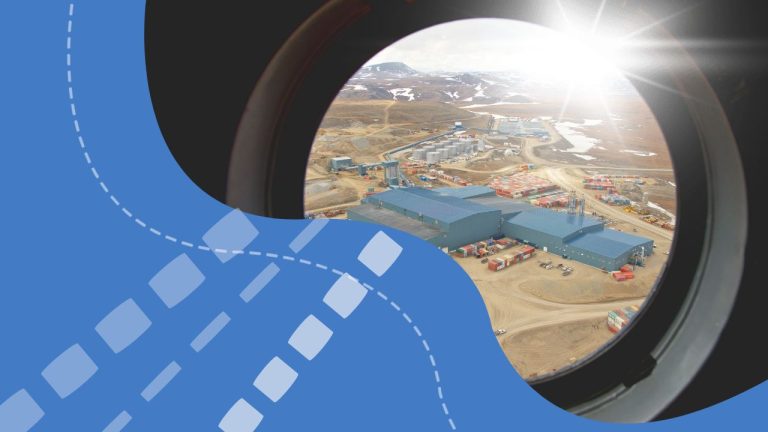
    The Uzbekistan state-owned enterprise, ranked as the fourth-largest gold producer globally, operates its vast resources primarily from the Muruntau deposit in the Kyzylkum Desert, which holds an estimated 150 million ounces of gold.

    The newly issued bonds, backed by favourable capital market conditions, carry a five-year tenor with an annual coupon rate of 6.75%. The offering was made available under Regulation S and Rule 144A of the US Securities Act, ensuring broader investor participation.

    Leading financial institutions, including Citi, JP Morgan, Société Générale, and MUFG, acted as joint bookrunners and lead managers for the transaction. Demand for the notes was robust, peaking at over $2.3 billion, making the issue more than 4.6 times oversubscribed.

    “The success of this bond placement reflects strong investor confidence in Uzbekistan’s economic reforms and NMMC’s sustainable growth prospects,” the company said in a statement.

    The proceeds will be directed towards optimising and diversifying NMMC’s credit portfolio under improved terms, as it moves towards its planned initial public offering (IPO) later this year. The Uzbek government has proposed selling up to 5% of the company in the IPO, positioning NMMC for further expansion in international markets.

  • Uzbekistan Focuses on Supporting Construction Material Producers

    Uzbekistan Focuses on Supporting Construction Material Producers

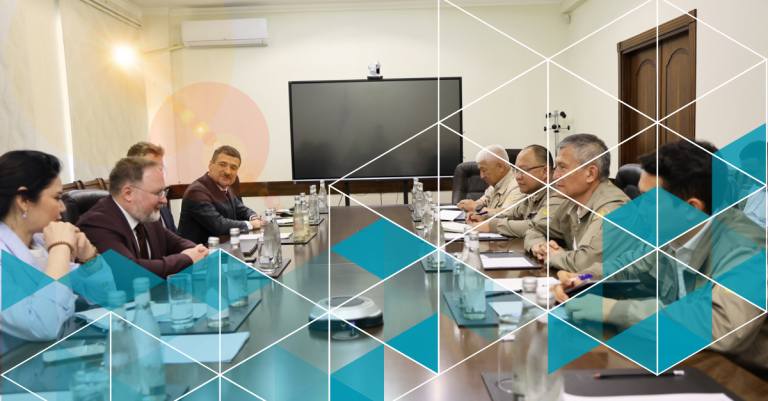
    A meeting was held with construction material producers of Uzbekistan under the leadership of Deputy Prosecutor General S.I. Samadov and Minister of Mining Industry and Geology B.F. Islamov. The event brought together representatives of responsible departments to address existing challenges in the sector.

    Key issues discussed included operational problems faced by producers, particularly in cement manufacturing, and strategies for overcoming these obstacles. A major point of concern was the availability of coal required for production.

    Officials informed entrepreneurs that coal deposits are actively being developed in the Surkhandarya region, presenting an opportunity for local coal fuel to be supplied to manufacturers. This initiative aims to improve the reliability and quality of fuel for construction material production, reducing dependence on external sources.

    The meeting underscored the government’s commitment to supporting local industries and enhancing the efficiency of Uzbekistan’s construction material sector.

  • Uzbekistan’s Mining Ministry Discusses Cooperation with SinoPowell Capital

    Uzbekistan’s Mining Ministry Discusses Cooperation with SinoPowell Capital

    The Ministry of Mining Industry and Geology of Uzbekistan hosted a meeting between First Deputy Minister O. Nasritdinkhodjaev and Steve Powell, Managing Director of SinoPowell Capital (USA).

    During the discussion, the parties reviewed recent reforms in the mining and geological sectors, as well as key projects led by JSC “Uzbek Technological Metals Plant.” They also explored opportunities for strengthening long-term cooperation in the industry.

    The meeting highlighted Uzbekistan’s commitment to modernizing its mining sector and attracting foreign investment, with SinoPowell Capital expressing interest in potential projects and joint initiatives aimed at enhancing technological advancements and production efficiency.

    Both sides agreed on the importance of continued dialogue to facilitate mutual growth and innovation in the field of technological metals.

  • Navoi Mining and Metallurgical Combine Expands Capacity at Zarmitan Mine in Uzbekistan

    Navoi Mining and Metallurgical Combine Expands Capacity at Zarmitan Mine in Uzbekistan

    Navoi Mining and Metallurgical Combine (NMMC) has announced the expansion of its operations at the Zarmitan mine, part of its Southern Mining Department. Earlier this May, the company launched a new skip shaft at the site, as reported by the news agency Uza.

    NMMC has been implementing an investment project titled “Development of Lower Horizons of the Mining Complex Based on the Deposits of the Zarmitan Gold Ore Zone” for several years. Mine Construction Alliance s.r.o. was selected as the contractor for the construction of the vertical mine shaft. The same company is also responsible for deepening the “Main” shaft at Zarmitan.

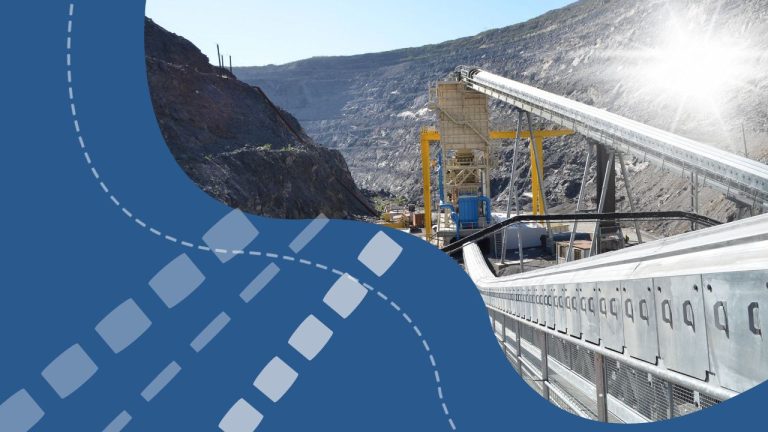
    The shaft, with a diameter of 6.5 meters, has been extended to a depth of 1,000 meters. Ore extracted from various underground levels of the mine will now be lifted to the surface using the new shaft and then sent for processing at the fourth hydrometallurgical plant. Estimates indicate that up to 1.4 million tons of gold-bearing ore will pass through the facility annually.

    The annual economic impact of the skip shaft’s launch is projected at 19.2 billion UZS. Notably, the company expects to save on fuel costs for dump trucks, which would have otherwise spent more time transporting raw materials.

    The mine shaft is equipped with various automation systems, with all operations managed from a central control panel. NMMC claims that this project marks a significant breakthrough for Uzbekistan’s mining and metallurgical sector, highlighting advanced engineering and digital solutions.

  • Uzbekistan and Slovakia Hold Inaugural Intergovernmental Meeting to Boost Economic Cooperation

    Uzbekistan and Slovakia Hold Inaugural Intergovernmental Meeting to Boost Economic Cooperation

    The first meeting of the Uzbek-Slovak Intergovernmental Commission on Economic Cooperation took place in Tashkent, according to Trend, citing Uzbekistan’s Ministry of Investment, Industry, and Trade. The session was co-chaired by Vladimir Simonek, Slovakia’s Deputy Minister of Economy, and Shokhrukh Gulamov, Uzbekistan’s Deputy Minister of Investment, Industry, and Trade.

    The discussions focused on deepening economic collaboration in key sectors, particularly renewable energy, agriculture, and critical raw materials. Special attention was given to geological exploration, development, and processing of rare and rare earth minerals, indicating both countries’ commitment to enhancing resource-based cooperation.

    At the conclusion of the meeting, both sides signed a final protocol that outlined the agreements reached and reaffirmed their commitment to furthering bilateral relations. They also agreed to hold the next session of the Commission in Bratislava, Slovakia.

    Additionally, during a separate meeting in March 2025, Uzbekistan and Slovakia reached an agreement to establish a Business Council aimed at strengthening trade and economic relations between the two nations. This initiative is expected to facilitate more effective business cooperation and open new opportunities for mutual investment.

  • Uzbekistan Recognised as a Country with Low Digitalization and Digital Skills

    Uzbekistan Recognised as a Country with Low Digitalization and Digital Skills

    The Asian Development Bank (ADB), in its report “Harnessing Digital Transformation for Good,” has identified Uzbekistan as a country with low levels of digitalization and digital skills. Despite developing countries in the Asia-Pacific region showing rapid digital development, the benefits are distributed unevenly. In Uzbekistan, for instance, 13% more urban residents have internet access compared to rural areas, and the speed of mobile internet in cities is 38% higher.

    ADB emphasizes the need to accelerate digital transformation in low-digitalization countries like Cambodia, Bangladesh, Mongolia, Pakistan, and Uzbekistan. To achieve this, investments in digital infrastructure, skill development, and digital literacy are recommended. Economically efficient solutions such as shared use of radio spectrum, infrastructure, cloud solutions, and new technologies like low-Earth orbit satellites and fixed 5G access are also proposed.

    According to UNESCAP data, Uzbekistan ranked 9th among 11 countries in the region in terms of digital skills as of 2023. Only 15% of the population possesses basic skills (such as typing and copying files), while 7−8% have standard skills (software use and application installation). There is no data available for advanced skills. In comparison, Kazakhstan has 30% of its population with basic skills, 25% with standard skills, and 8% with advanced skills.

    ADB also highlights that the low level of digitalization is accompanied by digital inequality. In urban areas, the average mobile internet speed is around 50 Mbps, while in rural areas, it is approximately 35 Mbps. Fixed internet is faster than mobile, with speeds reaching 70 Mbps in cities and 50 Mbps in rural areas.

    ADB experts stress the importance of investing in digital skills development at all levels to ensure equal access to digital opportunities and prepare the population for future job requirements.

  • Uzbekistan’s Ministry of Mining and Geology Holds Seminar on Anti-Corruption Efforts

    Uzbekistan’s Ministry of Mining and Geology Holds Seminar on Anti-Corruption Efforts

    On May 6, the Ministry of Mining and Geology of Uzbekistan conducted a seminar aimed at reinforcing anti-corruption awareness among its employees and affiliated enterprises, promoting zero tolerance for corruption within the sector.

    The seminar brought together officials from the Ministry’s central office as well as directors and heads of departments from over 20 subordinate organizations. Ministry Advisor M. Pirozhkov briefed participants on the ongoing internal initiatives to combat corruption, highlighting the Ministry’s recent achievement—placing second among 102 government agencies in a national anti-corruption effectiveness rating published by Uzbekistan’s Anti-Corruption Agency in March 2025. The Ministry scored an impressive 95 out of 100 points.

    One of the seminar’s key speakers, I. Achilov, PhD in Law and Prosecutor at the General Prosecutor’s Office’s Anti-Corruption Coordination Department, delivered a lecture titled “Mechanisms for Combating Corruption in Uzbekistan and Their Legal Foundations.”

    The session also included a review of current legislation, including Presidential Decree No. UP-71 of April 21, 2025, on strengthening anti-corruption systems, and Resolution No. PP-147, aimed at ensuring the independence and efficiency of internal anti-corruption divisions within state institutions.

    The event concluded with a Q&A session, where participants received comprehensive answers to their questions, reinforcing practical understanding and encouraging active engagement in anti-corruption efforts.

  • Uzbek Geologists Discover New Coal Seams at Urikli Site

    Uzbek Geologists Discover New Coal Seams at Urikli Site

    Specialists from the Surkhandarya Field Expedition, part of the Hissar Central Geological Exploration Expedition under JSC “Uzbekgeologorazvedka,” are conducting underground and surface tunneling operations to assess coal reserves at the Urikli site.

    During the course of the underground exploration, coal seams numbered 3, 4, 5, and 6 were identified. Geological exploration continues, with further assessments underway to determine the full extent and potential of the deposit.

    These efforts form part of a broader initiative to explore and utilize Uzbekistan’s mineral resources more effectively.

  • Uzbekistan Approves Technical Regulation on Mine Hoisting Equipment Safety

    Uzbekistan Approves Technical Regulation on Mine Hoisting Equipment Safety

    The Cabinet of Ministers of Uzbekistan has adopted Resolution No. 269, officially approving the General Technical Regulation on the Safety of Mine Hoisting Equipment. This decision follows Presidential Decree No. PP-91 from February 28, 2024, aimed at organizing the activities of the Agency for Technical Regulation and enhancing safety standards in the industrial sector.

    The regulation sets unified requirements for the design, packaging, labeling, and identification of mine hoisting equipment, as well as outlines procedures for conformity assessment. It also includes a roadmap for the phased implementation of the regulation.

    These updated safety standards are crucial for ensuring the reliability of industrial operations, environmental protection, and the safety of workers.

    According to the resolution, the new regulation will come into force six months after its official publication.

  • Gold Drives Uzbekistan’s Export Surge in Q1 2025, Making Up Nearly Half of Total Shipments

    Gold Drives Uzbekistan’s Export Surge in Q1 2025, Making Up Nearly Half of Total Shipments

    Uzbekistan’s National Statistics Committee has released its foreign trade data for the first quarter of 2025, revealing that gold remains the country’s top export commodity. According to the report, gold accounted for 44% of total export value, with shipments totaling $3.65 billion—an increase of 36.8% compared to the same period last year.

    The majority of these exports occurred in February and March, a trend driven by rising global demand and soaring gold prices.

    Other notable export figures include coal, coke, and briquettes, which tripled to $400,000, and natural gas, which grew to $94.3 million in value. However, exports of oil and oil products dropped by 16.7% year-on-year to $109.5 million.

    On the import side, Uzbekistan brought in $48.8 million worth of coal, down 7.1% from a year ago. Oil imports also declined to $443.1 million, marking a 16% decrease. The most significant drop was seen in gas imports, which plummeted 8.5-fold to just $38.5 million during the reporting period.