Tag: Uzbekistan

  • Uzbekistan Opens Nation’s First 1,000-Meter Skip Shaft at Zarmitan Mine

    Uzbekistan Opens Nation’s First 1,000-Meter Skip Shaft at Zarmitan Mine

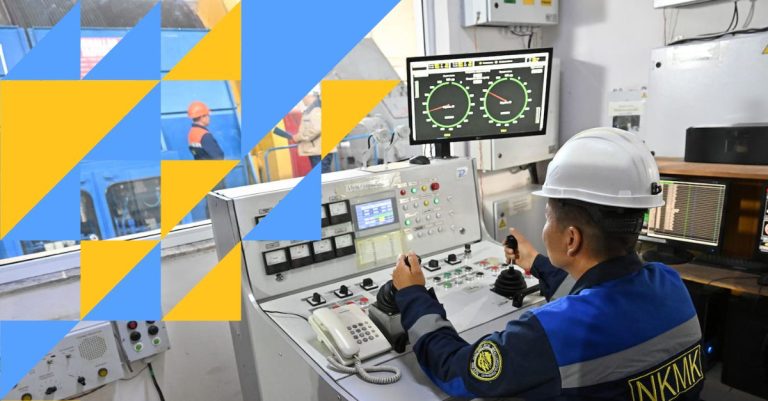
    On April 30, 2025, Uzbekistan marked a historic milestone in its mining industry with the inauguration of the country’s first 1,000-meter-deep skip shaft. The event was held at the Zarmitan deposit, part of the Southern Mining Department in the Koshrabot district of Samarkand Region, under the investment project “Development of Lower Horizons of the Zarmitan Deposit.”

    The ceremonial launch was attended by Deputy Minister of Mining and Geology U. Yusupov, Chairman of the Board of NMMC JSC K. Sanakulov, leaders of the plant’s enterprises, representatives of Mine Construction Alliance S.r.o, media personnel, plant workers, and industry veterans.

    As part of the project, the skip shaft—measuring 6.5 meters in diameter—was deepened to 1,000 meters. This engineering achievement, which incorporates innovative construction solutions and digital technologies, will significantly boost ore transport efficiency, reduce operational costs, and create 90 new jobs. The projected annual economic benefit is estimated at 19.2 billion Uzbek soums.

  • Uzbekistan’s Mining Minister Meets Traxys North America to Boost Investment and Cooperation

    Uzbekistan’s Mining Minister Meets Traxys North America to Boost Investment and Cooperation

    The Minister of Mining Industry and Geology of Uzbekistan, B. Islamov, held a meeting with a delegation led by Mark Kristoff, President of Traxys North America LLC.


    During the discussions, the delegation was briefed on Uzbekistan’s ongoing reforms aimed at modernizing its mining and geological sectors. The meeting focused on opportunities to strengthen international cooperation, attract foreign investment into mineral exploration, and improve production processes.


    Both parties expressed mutual interest in expanding collaboration, with emphasis on leveraging Traxys’s global experience and capital in support of Uzbekistan’s resource development goals.

  • Production of Rhenium Launched at AGMK

    Production of Rhenium Launched at AGMK

    The Almalyk Mining and Metallurgical Complex (AGMK) has officially commenced the industrial-scale production of rhenium, marking a significant milestone for the Uzbek metallurgical industry. Following years of meticulous research and development, AGMK succeeded in producing rhenium with an impressive purity of 99.9% as early as 2021. This rare and valuable element is extracted from ammonium perrhenate, derived at the copper-smelting plant through hydrogen reduction.

    According to AGMK’s business plan, the launch of large-scale rhenium production was scheduled for 2025. To achieve this goal, the Uzbek Metallurgical Technologies Complex has established a specialised production facility equipped with state-of-the-art German technology. The raw materials required for production are supplied by the copper-smelting plant and other domestic enterprises. AGMK is poised to produce up to three tonnes of rhenium annually.

    A Rare and Versatile Metal

    Rhenium, the 75th element on Mendeleev’s periodic table, boasts exceptional physical and chemical properties, making it indispensable across various industries. As one of the densest and hardest metals, rhenium is integral to:

    • Oil Refining: It serves as a key component in catalysts.
    • Aerospace and Electronics: Critical for advanced manufacturing.
    • Nuclear Industry: Used in thermocouples to measure high temperatures in reactors.
    • Medical Equipment: Vital for the production of devices addressing severe illnesses.
    • Jewellery: Applied as a premium coating for decorative pieces.

    Currently, the global market price for rhenium averages around $2,000 per kilogram, with demand remaining consistently high.

    This new development strengthens AGMK’s position as a significant player in the global market for strategic metals.

  • Uzbekistan’s Navoiuran Signs €9 Million Uranium Transport Deal with Kazakhstan’s Logistic Centre

    Uzbekistan’s Navoiuran Signs €9 Million Uranium Transport Deal with Kazakhstan’s Logistic Centre

    Navoiuran, a leading uranium producer from Uzbekistan, has signed a €9 million contract with Kazakhstan’s TOO Logistic Centre for the transportation of uranium concentrate to France, according to inbusiness.kz citing EURASIA TODAY.


    Under the agreement, TOO Logistic Centre will transport 500 containers of uranium concentrate from the port of St. Petersburg to the commune of Malvési in southern France. The total cargo volume is expected to reach up to 6,000 tons.


    Deliveries are scheduled to continue until the end of the first quarter of 2026, with each shipment required to reach its destination within 15 days of departing the Russian port.


    In addition to the French deliveries, Navoiuran plans to export uranium through Russia to the United States and Canada and is currently seeking contractors for transportation to processing facilities in those countries.

  • China Deepens Grip on Uzbekistan’s Mineral Sector Amid Global Race for Critical Resources

    China Deepens Grip on Uzbekistan’s Mineral Sector Amid Global Race for Critical Resources

    As global powers intensify their pursuit of critical minerals, Central Asia has emerged as a strategic pivot. Among its nations, Uzbekistan stands out—not only for its rich deposits of copper, tungsten, molybdenum, and rare earth elements, but also for its increasingly central role in China’s mineral strategy.

    Already heavily involved in the region’s energy and infrastructure sectors, China has taken a proactive investment stance in Uzbekistan’s mining industry. In 2024, Limaomaoli Metal Company launched construction of the Syurenata mining complex in Parkent, aimed at processing 1 million tons of iron ore concentrate annually. Simultaneously, China Baoli Technologies is investing $200 million in a non-ferrous metal facility in the Ipak Yuli Free Economic Zone, targeting up to 45,000 tons of annual output with $18 million in export potential.

    Copper, a linchpin in global energy transition efforts, is another key focus. China Mining Energy Group is spearheading a $200 million copper mining project in Chust (Namangan region), expected to yield 30,000 tons per year and create 420 local jobs. Additionally, Boi Yi Da is planning a new copper processing plant in the same region, while a $2.7 billion project to tap copper and silver reserves in Bobotog is under negotiation.

    For Uzbekistan, these ventures promise significant job creation, technological transfer, and a move up the value chain—critical steps toward its goal of becoming a producer of value-added mineral products. They also reflect Tashkent’s broader push to localize mineral processing, boost exports, and attract FDI into downstream sectors.

    For Beijing, meanwhile, these deals help secure raw materials essential for its green economy and industrial resilience, while also reducing reliance on vulnerable maritime supply routes. The copper and iron ore flowing from Uzbekistan may soon become vital to China’s supply diversification strategy.

    Yet, the growing Chinese footprint is not without challenges. Concerns around environmental degradation and transparency in resource deals are mounting. Public unease over Chinese firms acquiring mineral rights is increasingly voiced in Uzbek media and civil society. Moreover, critics warn that unless Chinese investments support advanced processing, Uzbekistan risks becoming locked into the role of a mid-tier raw exporter.

    There’s also increasing Western interest. France has inked uranium deals with Tashkent, and the U.S. recently signed a critical minerals investment agreement. China’s accelerated moves may reflect efforts to edge out competitors and reinforce dominance over global mineral supply chains.

    Ultimately, China’s growing influence in Uzbekistan’s mining sector presents both a strategic opportunity and a test. A long-term, mutually beneficial partnership will require more than capital—it will demand transparency, environmental responsibility, and alignment with Uzbekistan’s industrial transformation goals.

  • Uzbekistan and Saudi Arabia Explore Deeper Cooperation in Mining Sector Reforms

    Uzbekistan and Saudi Arabia Explore Deeper Cooperation in Mining Sector Reforms

    Officials from Uzbekistan and Saudi Arabia held high-level talks this week to discuss expanding cooperation in the mining sector, with a focus on reform, localization, and industrial collaboration.

    On 23 April, Uzbekistan’s Ministry of Mining Industry and Geology hosted a delegation led by Nasser Albakran, Director at Saudi Arabia’s Ministry of Energy. The meeting in Tashkent was attended by First Deputy Minister Oybek Nasritdinkhodjaev, Deputy Minister Ulugbek Yusupov, and other Uzbek mining officials, including Director Mirabdulla Ilkhamov of the State Scientific-Practical Center for Localization and Industrial Cooperation Development.

    The discussions centered on Uzbekistan’s ongoing reforms in mining and geology, and the country’s aim to enhance local content in investment projects. Both sides expressed interest in strengthening bilateral ties and sharing experience in industrial localization and cooperation.

    The talks underscore growing regional interest in Uzbekistan’s mineral wealth and its strategy to attract foreign partners for technology transfer, sustainable development, and local industry growth.

  • Navoi Mining and Metallurgical Combine Expands Capacity at Tech Waste Recycling Plant

    Navoi Mining and Metallurgical Combine Expands Capacity at Tech Waste Recycling Plant

    Navoi Mining and Metallurgical Combine (NGMC) continues its ambitious expansion drive with significant progress reported at Hydrometallurgical Plant 7 (GMZ-7) – a facility specializing in processing technogenic waste.

    Located in the Kyzylkum Desert, GMZ-7 stands as a testament to NGMC’s commitment to sustainable development. Unlike other hydrometallurgical plants in the combine, GMZ-7 boasts the unique advantage of eliminating the costs associated with ore mining, processing, sorting, and transportation.

    Having processed 16 million tonnes of technogenic waste in 2024, GMZ-7 aims to reach 19 million tonnes this year. Further cementing this commitment, NGMC has initiated a major investment project: “Expansion of Processing Capacity of Hydrometallurgical Plant No. 7,” slated for completion in 2030.

    “Within the framework of the Sustainable Development Programme of JSC ‘NGMK’, construction work is underway for installing four new mills, each with a capacity to process 10 million tonnes of technogenic waste annually. These additions will bring the total number of mills on site to ten. Two of the new mills have already been commissioned. Essential equipment and spare parts are being localised and manufactured by Navoi Machine-Building Plant and Zarqush Repair and Mechanical Plant,” explained Olzhon Akhatov, Deputy Chief Engineer at GMZ-7.

    Further expansion plans include extending several factory sections, marking a crucial step towards boosting production volumes.

    These investments underline NGMC’s dedication to technological innovation and responsible resource management, showcasing its position as a leader in sustainable industrial practices.

  • Transformation is Shaping Almalyk Mining and Metallurgical Complex

    Transformation is Shaping Almalyk Mining and Metallurgical Complex

    Uzbekistan is witnessing the emergence of a new industrial identity — one grounded in sustainability, efficiency, and global competitiveness. At the heart of this transformation stands the Almalyk Mining and Metallurgical Complex (AMMC), which is rapidly evolving from a traditional industrial flagship into a high-tech, responsible enterprise meeting international standards.

    The ongoing transformation at AMMC spans several key areas: finance, corporate governance, environmental responsibility, and digitalisation. This ambitious programme represents a strategic initiative poised to significantly influence the pace and quality of the company’s development in the years ahead.


    Transparency Through Numbers

    Openness begins with accurate reporting. Since 2019, AMMC has adopted International Financial Reporting Standards (IFRS), a critical step towards improving transparency and boosting the company’s investment appeal.

    “The transition to IFRS enabled AMMC to obtain international credit ratings from the world’s leading agencies. These ratings were instrumental in successfully securing nearly $2 billion in funding from international financial institutions and banks — directly, without intermediaries,” said Boburjon Siddiqjonov, Head of the Project Office for Transformation, ESG, and International Ratings.

    This achievement has helped reduce the company’s debt burden and freed up resources for strategic investment in AMMC’s continued development.


    Corporate Governance: From Compliance to Excellence

    A critical part of AMMC’s transformation lies in rethinking its management practices. To ensure the enterprise is not only efficient but also sustainable and globally competitive, a dedicated project office for transformation, ESG, and international ratings has been established. This team is tasked with implementing global best practices — from transparent reporting to strategic planning.

    “Key reforms were carried out in collaboration with leading consultancy firms. For example, AMMC’s mineral reserves were re-evaluated using the globally recognised JORC Code. In parallel, a comprehensive development strategy was drawn up through to 2030,” Siddiqjonov added.

    Efforts have also been made to combat corruption and ensure procurement transparency. A thorough audit conducted with major international firms identified vulnerabilities and offered corrective measures. Additionally, the entire “copper chain” — from open-pit mining to the smelting plant — underwent an in-depth evaluation, resulting in a new roadmap to optimise production processes.


    Environmental Responsibility: A Mark of Global Standards

    AMMC is currently pursuing certification under The Copper Mark, an international seal of approval for responsible copper producers. This certification is crucial to enhancing global competitiveness. It allows the company to sell its products at a premium, attract green financing — particularly in Europe — and take part in environmentally focused investment programmes.

    AMMC has also received an ESG rating of ‘3’ with a score of 56 from Sustainable Fitch — the highest among Uzbekistan’s mining and metallurgical enterprises and one of the top ratings in Central Asia.

    This year, AMMC plans to unveil a greenhouse gas emissions reduction strategy, aiming to cut emissions by at least 15% by 2030. In addition, it will plant 370,000 trees annually as part of its broader ecological initiative.


    Digital Transformation in Action

    Digitalisation is another cornerstone of AMMC’s transformation. Financial and accounting reports are now generated automatically using the 1C:ERP system, halving the time needed to prepare documents.

    Warehouse, fuel, and weighing operations have all been automated. At the copper concentration plant, digital weighing systems with 99.8% accuracy have been installed. Moreover, a contactless fuelling system has been introduced — drivers now use ID cards instead of relying on operators, streamlining the process and mitigating corruption risks. These improvements have already saved 89 billion Uzbek soms in diesel costs alone.

    “Digitalisation is already generating an annual economic return of 9.1 billion soms for the company,” Siddiqjonov noted.


    What’s Next for AMMC?

    2025 is set to be a pivotal year. AMMC plans to secure a climate strategy grant from the Asian Development Bank and to begin reporting under the new IFRS S1 and S2 climate standards.

    “Our team faces ambitious goals: complete The Copper Mark certification, publish the first climate report, prepare for a Eurobond issuance, and obtain ISO certification in information security,” said the company representative.

    AMMC’s transformation is far more than a company-wide initiative — it’s a reflection of a broader national agenda aimed at building a modern, resilient, and competitive economy. By embracing global best practices and pursuing strategic long-term priorities, AMMC is helping to shape Uzbekistan’s industrial future.

  • U.S. Strengthens Critical Minerals Alliance with Uzbekistan in Bid to Counter China

    U.S. Strengthens Critical Minerals Alliance with Uzbekistan in Bid to Counter China

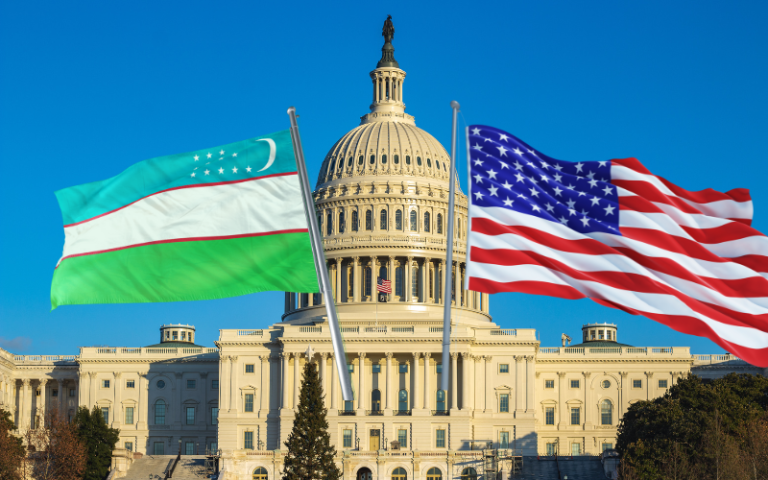
    The United States has ramped up its efforts to secure critical mineral supplies by signing a new cooperation agreement with Uzbekistan, focused on boosting American mining investments in the Central Asian nation.

    The announcement follows a series of high-level meetings in Washington, where an Uzbek delegation engaged with U.S. business leaders. While specific companies and investment figures were not disclosed, Uzbekistan’s government confirmed that the deal includes commitments to invest in mineral exploration and extraction, the construction of grinding equipment, and specialist training for Uzbek workers.

    The initiative builds on a September memorandum of understanding aimed at enhancing collaboration in the critical minerals sector. On Wednesday, U.S. Secretary of State Marco Rubio met with Uzbek Foreign Minister Bakhtiyor Saidov, underscoring Washington’s intent to strengthen strategic ties in mineral-rich Central Asia.

    “There’s great potential ahead for investments between our countries and cooperation in the critical minerals and other sectors,” Rubio posted on social media following the meeting.

    Uzbekistan, with its extensive deposits of key elements such as rare earths, lithium, and uranium, has been actively courting foreign investors. In early 2025, President Shavkat Mirziyoyev launched a $2.6 billion national program to develop 76 mining projects targeting 28 different elements. The initiative focuses on utilizing advanced technologies to extract raw materials, improve mineral purity, and produce higher value-added products.

    For the U.S., Uzbekistan represents a vital link in reshaping global supply chains away from China’s dominance. The Trump administration has also expanded its critical mineral diplomacy beyond Central Asia, initiating talks with Pakistan, Ukraine, and the Democratic Republic of Congo. These countries hold strategic reserves of minerals essential for defence, battery manufacturing, and clean energy technologies.

    As competition intensifies for access to global mineral reserves, Uzbekistan’s alignment with U.S. strategic goals may position it as a key player in future resource security initiatives.

  • Uzbekistan to Launch IPOs of Major State-Owned Companies from 2025 to 2028

    Uzbekistan to Launch IPOs of Major State-Owned Companies from 2025 to 2028

    Uzbekistan will offer shares of key state-owned enterprises on both domestic and international stock exchanges between 2025 and 2028, according to a presidential decree published on Lex.uz.

    The privatization plan includes initial public offerings (IPOs) and secondary public offerings (SPOs) of minority stakes in several strategic companies. These are:

    • Navoi Mining and Metallurgical Company (NMMC) – 10–15% (IPO)

    • Uzbekistan National Investment Fund JSC – 25% (IPO)

    • Navoiuran State Enterprise – 10–15% (IPO)

    • Uzbekistan Airways JSC – 15–20% (IPO)

    • Almalyk Mining and Metallurgical Complex (AMMC) – 10–15% (IPO)

    • National Electric Grids of Uzbekistan JSC – 10–20% (IPO)

    • Uzbektelecom JSC – 10–15% (SPO)

    • Uzbekhydroenergo JSC – 15–20% (IPO)

    • Regional Electric Grids JSC – 20–25% (IPO)

    • Uztransgaz JSC – 15–20% (IPO)

    • Uzbekistan Airports JSC – 15–20% (IPO)

    • Hududgazta’minot JSC – 15–20% (IPO)

    The IPO process will be conducted in partnership with Franklin Templeton Asset Management, a major U.S.-based investment firm. The move is expected to attract international investors and foster greater transparency and modernization in Uzbekistan’s economic sectors.

    The State Commission for Privatization and Coordination of State Asset Privatization Processes has been granted the authority to adjust the size of the share packages, sales formats, and timing of the offerings as needed.