Tag: Uzbekistan

  • Almalyk MMC expands copper processing capacity at Concentrator No. 2

    Almalyk MMC expands copper processing capacity at Concentrator No. 2

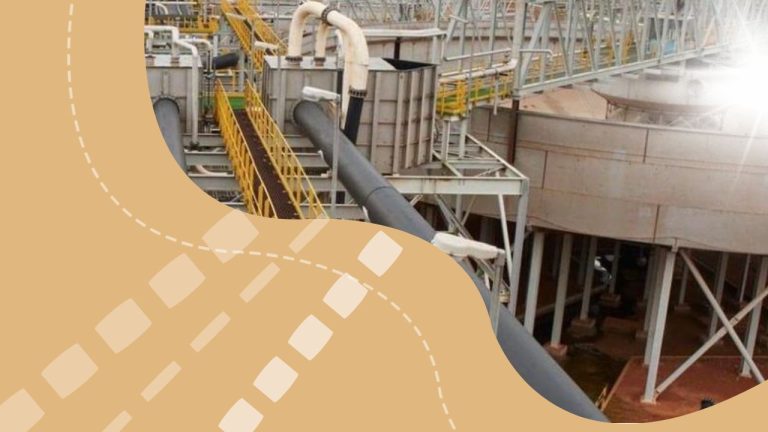
    Almalyk Mining and Metallurgical Complex (AGMK) is constructing new beneficiation facilities at its Copper Concentrator No. 2 to increase ore processing capacity. The new complex will cover an area of 3.1 hectares and is designed to process up to 5 million tonnes of ore per year from the Yoshlik I deposit, producing 74,200 tonnes of copper concentrate, the company’s press service said.

    Construction is being carried out by the Olmalikmetallurgkurilish trust, which is part of AGMK. The project is currently at the earthworks stage, while the design documentation for the new production unit was prepared by the complex’s internal project management division.

    The facility will be equipped with modern crushing, grinding, flotation, filtration and thickening units, as well as compressor stations. Key equipment will be manufactured at AGMK’s central repair and mechanical plant, with installation handled by its specialised maintenance unit.

    Around 600 jobs will be created at the new complex. Once commissioned, AGMK’s total ore processing capacity is expected to reach nearly 10 million tonnes per year.

  • Central Asia Emerges as a Strategic Critical Minerals Hub, but Investment, Governance and Long Timelines Remain Major Hurdles

    Central Asia Emerges as a Strategic Critical Minerals Hub, but Investment, Governance and Long Timelines Remain Major Hurdles

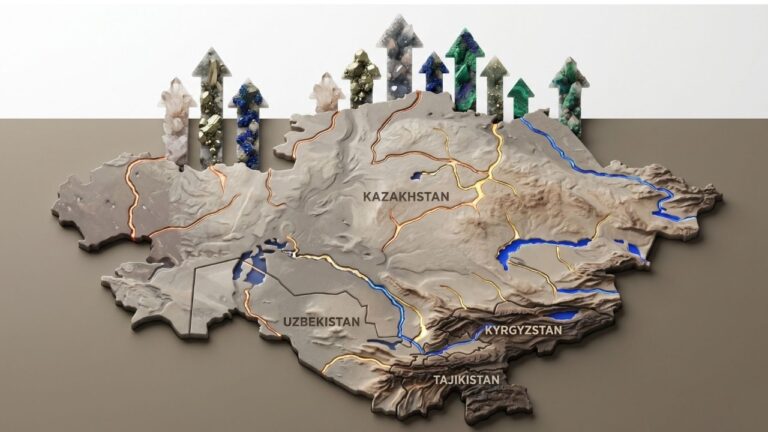
    The opening session of MINEX EURASIA 2025 — “The New Resource Frontier: Unlocking Central Asia’s Critical Minerals Powerhouse” — delivered a clear message: Central Asia has moved from a region of geological promise to a globally contested arena for critical minerals, but a substantial gap remains between ambition and execution. Speakers highlighted that while the region holds world-class deposits of lithium, tungsten, rare earth elements and other strategic minerals, underinvestment, governance challenges and slow project development continue to restrain advancement.

    The session began with a review of the region’s natural endowment. Kazakhstan — the world’s ninth-largest country — dominates regional exploration budgets, yet overall exploration spending across Central Asia remains modest compared with mature mining jurisdictions. Western participation is strikingly low, and despite a handful of standout projects, experts argued that far more risk capital is needed to convert geological maps into operating mines.

    A major theme was the mismatch between political urgency and the slow pace of mine development. Globally, the average time from discovery to commercial production now exceeds 16 years, and Central Asia is no exception. Speakers cautioned that “good geology” alone does not guarantee quick results. Long permitting timelines, regulatory uncertainty, environmental and social assessments and technical complexity remain significant barriers — all of which underscore the need for stable rules and predictable permitting systems to attract investors.

    Governance emerged as a decisive factor in Central Asia’s critical minerals trajectory. Kazakhstan was cited as a regional leader in implementing international-aligned mining reforms, including adoption of the KAZRC reporting code, a national register of qualified persons and a modernised mineral cadastre. Environmental and subsoil reforms are gradually shifting the sector away from legacy “pay-to-pollute” models toward best-available technologies and lower-impact mining. Uzbekistan, meanwhile, is rapidly implementing its own modern mining code and has expanded joint geological initiatives with Kazakhstan, signalling growing regional alignment.

    However, Kazakhstan and Uzbekistan are pursuing distinct strategies. Kazakhstan initially expected private investors to lead in critical minerals but found they instead focused on established copper and gold assets. As a result, the Development Bank of Kazakhstan has launched a multi-year, billion-dollar programme to directly support rare earth and critical mineral projects. Uzbekistan, in contrast, has adopted a state-anchored industrial model through its Technological Metals Company (TMK), which is developing more than 100 projects across 25 minerals. Its plans include large-scale tungsten development, lithium and graphite exploration and integrated upstream–midstream–downstream industrialisation.

    Both countries are shifting from exporting raw concentrates to capturing domestic value. Kazakhstan aims to seed new industries in semiconductors, batteries, permanent magnets and heat-resistant alloys, building on existing capacity such as the Ulba Metallurgical Plant. Uzbekistan’s TMK strategy links mining projects with processing plants, technology parks and industrial clusters — many in partnership with Chinese engineering and mining groups, whose turnkey project delivery capability remains unmatched.

    The geopolitical landscape is increasingly crowded. China remains the dominant external player thanks to long-term planning, Belt and Road infrastructure, strong engineering capacity and patient capital. U.S. engagement is growing, primarily through offtake-driven agreements intended to secure supply for defence and energy industries. The EU is active but constrained by scale and speed of investment, while South Korea, Japan, Türkiye and the UK are carving out niches as specialised technology and standards partners.

    Presentations from the OECD stressed that unlocking Central Asia’s mineral wealth must go hand-in-hand with governance reforms, responsible business conduct and fair taxation frameworks. A multi-year regional programme is now under way to address environmental risks, reduce illicit financial flows and build due diligence systems, with final recommendations expected in 2026.

    The UK outlined its ambition to become a key partner in Central Asia’s critical minerals sector through new bilateral agreements, export credit tools and technical support for responsible mining. Case studies demonstrated British expertise across the full lifecycle — from exploration to mine rehabilitation.

    The session concluded with cautious optimism. Central Asia has firmly entered the global critical minerals spotlight, supported by geological potential, ongoing reforms and geopolitical attention from major economies. But speakers emphasised that turning opportunity into reality will require sustained investment, credible governance, transparent partnerships and a long-term view that balances foreign capital with local development and environmental protection.

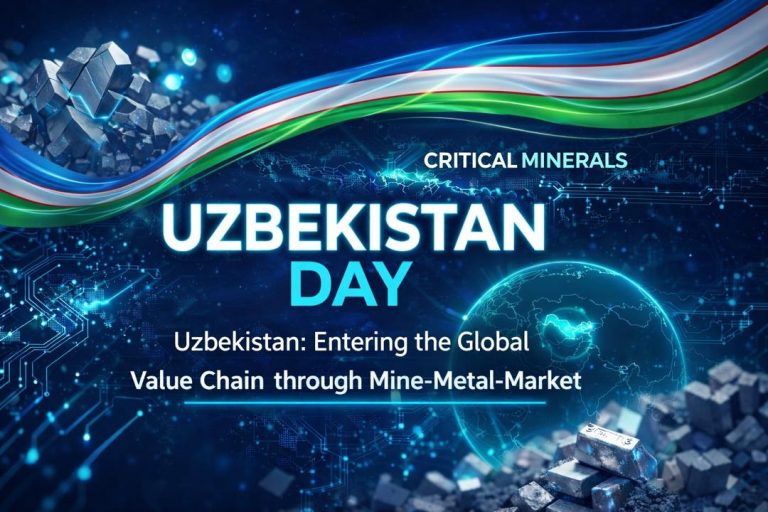
  • Uzbekistan Positions Itself as a Global Critical Minerals Hub Through New “Mine-Metal-Market” Model

    Uzbekistan Positions Itself as a Global Critical Minerals Hub Through New “Mine-Metal-Market” Model

    Uzbekistan is rapidly emerging as a major industrial force in Central Asia, leveraging its rich geological endowment and newly modernized mineral sector to join the global critical minerals value chain. With the country ranked third worldwide in gold reserves and eighth in copper, but with only one-third of its territory fully explored, officials say the potential for new discoveries remains vast.

    Under President Shavkat Mirziyoyev, Uzbekistan has overhauled its geological and industrial policies, launching modern exploration programs and implementing advanced digital tools such as 3D modeling, JORC-compliant reporting and an updated subsoil management system aligned with international standards. A new law on the use of subsoil resources, which came into force in February 2025, is reshaping the regulatory environment to prioritize sustainability, investor protection and the development of high value-added industries.

    At the center of this transformation is the Uzbekistan Technological Metals Complex (TMK), established in 2024 and tasked with demonstrating the country’s capabilities in critical raw materials and strengthening its role in global markets. TMK operates across the entire value chain — from mining to refined metals to finished industrial products — forming a fully integrated “mine-metal-market” ecosystem that includes exploration, processing, R&D and manufacturing.

    The company is currently advancing more than 100 projects across over 25 strategic raw materials, including tungsten, molybdenum, lithium, cobalt and graphite. As Uzbekistan expands its critical minerals ambitions, TMK has become a focal point of international cooperation, with the country signing strategic agreements with the United States, the European Union, Germany, the United Kingdom, Korea and several Central Asian neighbors. TMK itself now works with more than 50 global companies and has joined nine leading international industry associations, positioning it as an emerging player in shaping global standards and accessing cutting-edge technologies.

    Innovation and education have become key pillars of TMK’s strategy. The company has forged partnerships with top-tier institutions such as MIT in the United States and KU Leuven in Belgium to promote joint research, industrial PhD programs and technology transfer. In 2025, TMK launched the Higher School of Technological Metals — Uzbekistan’s first specialized educational institution meeting international standards for the critical minerals sector — developed in cooperation with the University of Pisa and the China University of Geosciences.

    TMK has also implemented globally recognized compliance and ESG practices, including ISO certifications in anti-corruption, compliance management and environmental management. Its initiatives are showcased at nearly 20 major international forums and exhibitions each year, including the Future Minerals Forum, PDAC and MINEX Europe, as the company seeks to expand engagement with global investors and industry leaders.

    As demand for critical minerals accelerates worldwide, Uzbekistan is positioning itself as a new strategic center anchored by a modern regulatory framework, substantial geological potential and a diversified value chain. Through TMK’s integrated approach and global cooperation network, the country aims to become a stable and reliable partner in the international critical minerals market.

  • Uzbekistan Positions Itself as a Global Tungsten Leader Through Major Expansion of the Technological Metals Complex

    Uzbekistan Positions Itself as a Global Tungsten Leader Through Major Expansion of the Technological Metals Complex

    Uzbekistan is accelerating its ambition to become a major force in the global tungsten industry, with the Uzbekistan Technological Metals Complex (TMK) spearheading a comprehensive value-chain strategy supported by advanced technologies and large-scale mining projects. Tungsten, increasingly regarded as the “energy currency” of the global economy, is essential for sectors including green energy, aerospace, automotive, mechanical engineering, chemicals, and space technologies.

    TMK, established under the initiative of President Shavkat Mirziyoyev, has already become the first plant in Central Asia to join the International Tungsten Association—marking a significant step toward integrating Uzbekistan into advanced industrial supply chains. Today, TMK operates across the full tungsten production chain: upstream, midstream, and downstream.

    Upstream activities include geological exploration and development of key deposits. The flagship Sarikul project in the Samarkand region holds an estimated 30,000 tonnes of tungsten metal and is designed to process up to 1 million tonnes of ore annually. The operation is expected to produce 4,000 tonnes of tungsten concentrate per year—meeting 65% of international quality standards—and sustain up to 20 years of production. Over 400 jobs will be created as part of this project.

    TMK is also boosting tungsten recovery from mining waste at the Ingichka deposit through a partnership with China’s Xinhai, increasing concentrate output to 1,050 tonnes and generating projected revenues of $18.4 million. Additional cooperation with Chinese investor Red Persimmon will expand ore extraction to 900,000 tonnes annually, enabling production of up to 5,040 tonnes of concentrate. A separate joint project with Turkey’s International Gold Madencilik at the Sautbay deposit aims to produce 4,811 tonnes of concentrate.

    Midstream development includes the construction of a new hydrometallurgical facility in the Samarkand region, leveraging engineering expertise from Canada, Australia, Finland, and Turkey. Once completed, the plant will process 5,000 tonnes of concentrate by 2027, scaling to 15,000 tonnes by 2030—bringing the value of processed products to more than $300 million.

    TMK’s downstream operations target high-value finished products that elevate the “Made in Uzbekistan” brand. The company is already producing tungsten briquettes, ingots, carbide drill bits, milling tools, electrodes, and drilling equipment, with production increasingly automated and aligned with ESG and IRMA standards. Finished tungsten products are currently being exported to major industrial markets in Europe and the United States, with expansion into Japan and South Korea underway.

    Upon full implementation of its industrial program, TMK expects tungsten concentrate production in Uzbekistan to rise from 300 tonnes to 14,950 tonnes—an increase of nearly 50-fold. Output of tungsten anhydride will grow from 76 tonnes to 4,860 tonnes, while metallic tungsten production will expand from 58 tonnes to 1,860 tonnes.

    These projects are set to reshape the country’s economic landscape. Investment in the tungsten sector will reach $103.9 million, annual production value will climb from $5.5 million to nearly $280 million, and export volumes will soar from $2.4 million to $181.5 million. More than 5,000 new jobs are expected to be created.

    With these advances, Uzbekistan’s global tungsten reserves share is projected to rise from 2% to 5.1% by 2030, while its share of global tungsten extraction will jump from 0.05% to 14.8%.

    As the world seeks reliable and sustainable sources of critical minerals, Uzbekistan is positioning itself as a transparent, technologically advanced, and trustworthy partner. Through TMK’s fully integrated value-chain model, the country aims to secure a prominent role on the global industrial map and support the future of high-tech and green industries worldwide.

  • Uzbekistan’s Akfa Group Launches Construction of $600 Million Manufacturing Complex in the United States

    Uzbekistan’s Akfa Group Launches Construction of $600 Million Manufacturing Complex in the United States

    Uzbekistan’s Akfa Group has begun construction of a major manufacturing facility in Kentucky, marking one of the largest US industrial investments by a Central Asian company to date. Founder and former Tashkent mayor Jakhongir Artikkhodjayev said the project, developed jointly with a Turkish partner, will produce aluminum goods, automotive components, and parts for solar panels and window systems.

    Artikkhodjayev confirmed that $105 million will be invested during the first year of construction, with total project funding expected to reach $600 million. The Kentucky complex is intended to strengthen Akfa’s industrial footprint abroad while supporting US demand for specialized aluminum and renewable energy components.

    The businessman, who leads a diversified portfolio including Artel Electronics, Akfa Aluminium, Akfa Logistics and other companies, has been expanding domestic and international projects since leaving his post as Tashkent mayor in 2023. In Uzbekistan, he recently announced plans to launch six new hotels and develop a large medical clinic in partnership with a US healthcare provider.

  • TMK and KU Leuven Launch Official Cooperation at EU Critical Raw Materials Week 2025

    TMK and KU Leuven Launch Official Cooperation at EU Critical Raw Materials Week 2025

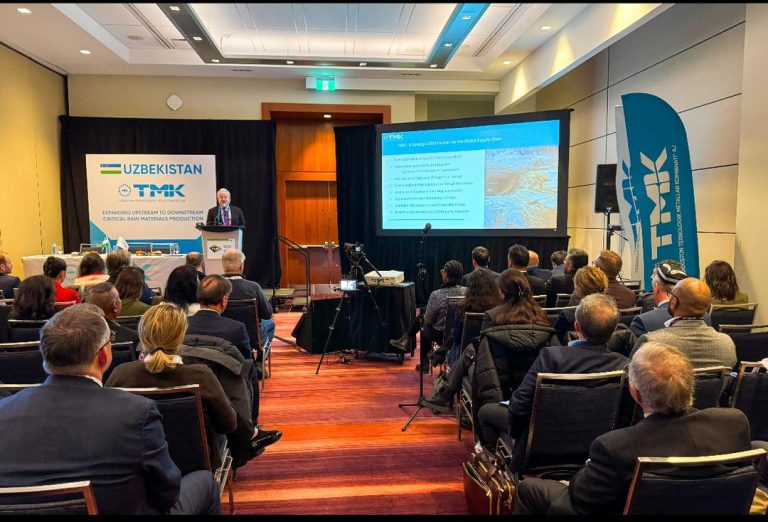
    TMK (Uzbekistan Technological Metals Complex) and KU Leuven formally launched a landmark scientific-industrial partnership during the EU’s Critical Raw Materials Week 2025 in Brussels. The high-level session, organized by the European Commission and dedicated to investment opportunities in Uzbekistan’s critical minerals sector, featured detailed presentations on the country’s mining potential and expanding processing capabilities.

    Han Ilhan, Advisor to TMK’s Chairman, outlined new investment opportunities in Uzbekistan’s critical minerals sector, while Deputy Chairman Amir Abidov presented the company’s major ongoing and future industrial projects.

    The event’s central outcome was the signing of a cooperation agreement between TMK and KU Leuven’s SOLVOMET R&I Centre — recognized globally as the leading hydrometallurgy research institution. The partnership will enable TMK to integrate advanced hydrometallurgical technologies to expand production of rhenium metal salts and improve extraction of rare and rare-earth elements.

    This collaboration marks the beginning of TMK’s systematic adoption of European scientific expertise and aligns with President Shavkat Mirziyoyev’s national strategy to build a modern science-industry-education ecosystem. TMK’s participation in Raw Materials Week 2025 reinforced Uzbekistan’s position as a stable and reliable long-term partner for European industry.

  • Uzbekistan Opens First National Center for Critical Minerals Research

    Uzbekistan Opens First National Center for Critical Minerals Research

    Uzbekistan has launched a new scientific center dedicated to critical minerals, established on the initiative of the Technological Metals Combine (TMK) and located inside the National Library. According to the company, this is the country’s first innovation hub designed to connect science with industrial development and serve as a national analytical platform for critical raw materials.

    The center will operate as an open-access facility for researchers, students, and industry specialists. TMK plans to implement more than 50 projects related to strategic minerals between 2025 and 2027, including 13 new production facilities.

    The Ministry of Mining and Geology reports that Uzbekistan holds deposits containing 28 types of critical minerals, including copper, lithium, graphite, germanium, tungsten, vanadium, tantalum, niobium, and rare-earth elements.

    By 2028, the country aims to complete 70 projects focused on developing strategically important mineral resources, with a total investment portfolio exceeding $1.6 billion.

  • Kazakhstan and Uzbekistan Strengthen Cooperation with New Agreements on Geology, Rare Metals and Energy Projects

    Kazakhstan and Uzbekistan Strengthen Cooperation with New Agreements on Geology, Rare Metals and Energy Projects

    Kazakhstan’s President Kassym-Jomart Tokayev and Uzbekistan’s President Shavkat Mirziyoyev met on November 15 at the Kuksaroy residence near Tashkent, where the two leaders advanced bilateral cooperation across key industrial sectors. According to lsm.kz, the talks focused on joint initiatives in the oil and gas industry, as well as mining and metallurgy.

    Among the signed documents was a decision by the Higher Interstate Council to establish a bilateral working group on geology and the extraction of rare and rare earth metals. The presidents also endorsed a Memorandum of Understanding between Kazakhstan’s Ministry of Industry and Construction and Uzbekistan’s Ministry of Mining and Geology to expand collaboration in the sector.

    The countries additionally approved a framework agreement to launch joint projects in the oil and gas chemical industry. One of the major initiatives under consideration is a partnership between KazMunayGas and Uzbekneftegaz to build a new linear alkylbenzene production complex in Uzbekistan’s Kashkadarya region, with a planned output capacity of up to 50,000 tonnes per year. A final investment decision will be made after completion of the project design phase.

  • Uzbekistan Eyes Kazakh Tungsten as Global Powers Compete for Strategic Metal

    Uzbekistan Eyes Kazakh Tungsten as Global Powers Compete for Strategic Metal

    Uzbekistan is plotting a tighter grip on critical minerals by seeking to purchase tungsten concentrate from Kazakhstan, as Uzbekistan’s government-led Uzbek Metal Processing Plant (TMK) prepares to ramp up production. Metin Alemder, TMK’s technical adviser, told inbusiness.kz at the China Mining summit in Tianjin that TMK is in talks with Kazakh colleagues to secure tungsten concentrate, signaling a strategic push to source raw materials locally for its expanding operations.

    Kazakhstan has been developing tungsten at the Boguty mine in the Almaty region near the Charyn Canyon. The project is led by Zhetyсу Wolfram LLC, in which Chinese-backed Jiaxin International Resources Investment Limited is a major shareholder. Boguty is regarded as one of the world’s larger tungsten deposits, with a mining licence valid through 2040. Early projections estimated an annual processing capacity of 3.3 million tonnes of ore to produce about 10,000 tonnes of 65% tungsten oxide concentrate, primarily destined for China. The site also contains molybdenum, bismuth, and beryllium, with plans to raise tungsten extraction to nearly 5 million tonnes of ore by 2027.

    Other Kazakh tungsten prospects include Aksoran at the SCO-Akmola border, as well as Northern Katpar and Verkhnee Kairakty in Karaganda. Notably, the last two are set to be developed via a joint venture in which Cove Capital (70%) partners with state mining firm Tau-Ken Samruk (30%) in a project budget of about $1.1 billion, with production expected to start in roughly 3.5 years. Cove Capital also has interests in Uzbekistan.

    Alemder notes that China already controls more than 80% of global tungsten production and leads fundamental research in this strategic metal, which Czech-like knowledge in Uzbekistan could help leverage. Tungsten is not a rare earth metal, but it remains a critical material due to its unique properties and supply concentration.

    TMK currently relies largely on local tungsten concentrates, with Uzbekistan able to produce tungsten using both hydrometallurgical and pyrometallurgical methods. The company’s plant in Chirchik is expanding capabilities, and a new hydrometallurgical workshop in Samarkand is slated to begin in 2027, targeting 5,000 tonnes of tungsten oxide annually. By 2030, production is expected to reach 15,000 tonnes per year, requiring growing external ore supplies. In the interim, the plant utilises residual tailings from an older deposit.

    In addition to tungsten, TMK is expanding molybdenum production from tailings from the Almalyk Mining and Metallurgical Complex and is developing tellurium and osmium. A sulfuric acid plant with a capacity of 500,000 tonnes annually is under construction, feeding consumables for the chemical sector, fertiliser production, and uranium mining via in-situ leaching, using sulfur supplied by Uzbekneftegaz and local gas-processing facilities.

  • Pipelines and Rare Elements: How Central Asia Became America’s New Geo-economic Frontier

    Pipelines and Rare Elements: How Central Asia Became America’s New Geo-economic Frontier

    The C5+1 summit held in Washington on November 6, 2025, marks a new chapter in U.S.–Central Asia relations, shifting the focus from energy pipelines to strategic mineral resources. Rare earth elements are now central to Washington’s strategy against China, which dominates mining and processing globally.

    Recent agreements—highlighted by substantial investments in Kazakhstan’s tungsten mines and commitments to Uzbekistan—illustrate a strategy that blends economic aims with national security, defense modernization, and leadership in green technologies. By partnering with Kazakhstan, Uzbekistan, and Turkmenistan, the U.S. seeks to counter China’s and Russia’s longstanding influence, establishing a “new resource-centered” framework for engagement. Rare earths are becoming tools of strategic power, supplanting traditional energy diplomacy and strengthening supply chains for renewable energy.

    This shift extends beyond resource access; mining investments are shaping political, economic, and diplomatic orientations across Central Asia, challenging China’s Belt and Road Initiative through economic means. The U.S. approach converts energy diplomacy into “mining diplomacy,” turning Central Asia into a global geo-economic crossroads.

    America’s renewed focus reflects a broader repositioning—building “strategic balancing” structures rather than pursuing mere economic or military dominance. The C5+1 format has become the central mechanism for promoting a model of regional integration that excludes Russia and China, offering a “third way” rooted in soft power, sustainable development, and technological partnerships.

    Strengthening transport routes like the Trans-Caspian corridor aims to liberate Central Asia from Russia’s logistical grip and curtail China’s influence over the Middle Corridor. Moscow and Beijing view these moves as containment strategies, intensifying geopolitical competition while granting Central Asian states greater autonomy through multilateral diplomacy.

    Ultimately, America’s strategy is about establishing a new Eurasian power architecture. Its success will depend on delivering sustainable investments and on Central Asian states maintaining independent balancing acts amid great-power competition.