Tag: Uzbekistan

  • Trump Hails “Incredible $100 Billion Deal” Between the U.S. and Uzbekistan

    Trump Hails “Incredible $100 Billion Deal” Between the U.S. and Uzbekistan

    The United States and Uzbekistan have signed a series of major agreements covering critical minerals, agriculture, infrastructure, aviation, and technology, marking what U.S. President Donald Trump called an “incredible trade and economic deal worth $100 billion.”

    The signing ceremony took place on November 6 in Washington, D.C., following a business roundtable attended by Uzbek President Shavkat Mirziyoyev and U.S. Secretary of Commerce Howard Lutnick. The deals involve both government bodies and major American corporations, signaling a new phase of strategic economic cooperation between the two nations.


    Key Agreements Signed

    • Rare Earth Elements Cooperation:
      Agreement between the Uzbek Ministry of Geology and Denali Exploration Group on the exploration and production of rare earth elements.

    • Critical Minerals Projects:
      The Uzbek Reconstruction and Development Fund signed an accord with Re Element Technologies to develop rare earth and critical metals projects.

    • Pumping Station Modernization:
      Partnership between the Ministry of Investment, Industry, and Trade and Flowserve Corporation to modernize Uzbekistan’s water infrastructure.

    • Water-Saving Technologies:
      Agreement between the Ministry of Agriculture and Valmont Industries Inc. on implementing advanced irrigation and water-efficient technologies.

    • Artificial Intelligence Cooperation:
      Memorandum between the Ministry of Digital Technologies and Palo Alto Networks to expand collaboration in artificial intelligence and cybersecurity.

    • Aviation Contract:
      Uzbekistan Airways signed a major expansion deal with Boeing, increasing its firm order for 787-9 Dreamliner aircraft from 14 to 22 jets.

    • Agricultural Trade:

      • Contract between Datacrop (Uzbekistan) and Louis Dreyfus Company (U.S.) for the supply of soybeans and soybean meal.

      • Agreement between Uzsanatexport and Cargill for the supply of cotton.


    Trump’s Statement

    On his Truth Social page, President Donald Trump announced the deal, calling it “one of the most significant trade achievements” between the two countries:

    “I am pleased to announce an incredible trade and economic agreement between the United States and Uzbekistan. Over the next three years, Uzbekistan will purchase and invest nearly $35 billion, and over the following decade more than $100 billion, in key U.S. industries including critical minerals, aviation, automotive components, infrastructure, agriculture, energy, chemicals, and information technology,” Trump wrote.

    He also thanked President Shavkat Mirziyoyev for his leadership and partnership:

    “I want to thank the highly respected President of Uzbekistan, Shavkat Mirziyoyev. We look forward to a long and fruitful relationship between our nations.”


    Strategic Context

    The landmark agreements underline Uzbekistan’s expanding cooperation with U.S. industries as it pursues rapid modernization across its energy, mining, and technology sectors.

    For Washington, the deal strengthens access to critical raw materials such as rare earths and lithium, aligning with broader U.S. efforts to diversify supply chains away from China.

  • Uzbek President Mirziyoyev Meets U.S. Business Leaders in Washington to Deepen Economic Partnership

    Uzbek President Mirziyoyev Meets U.S. Business Leaders in Washington to Deepen Economic Partnership

    At the conclusion of his working visit to Washington, D.C., President of Uzbekistan Shavkat Mirziyoyev met with representatives of major U.S. corporations, investment funds, and financial institutions to discuss expanding economic cooperation between the two countries.

    The meeting was attended by U.S. Secretary of Commerce Howard Lutnick, Special Assistant to the President Ricky Gill, Special Envoy Paolo Zampolli, and Deputy Secretary of Agriculture Stephen Vaden. Senior executives from leading American companies — including Traxys, FLSmidth, McKinsey, Meta, Google, Amazon, Boeing, Air Products, Axiom Space, Cove Capital, Freeport-McMoRan, Orion CMC, Cargill Cotton, John Deere, Honeywell, Valmont Industries, and Flowserve Corporation — also took part in the discussions.

    President Mirziyoyev highlighted that trade turnover between Uzbekistan and the United States has quadrupled over the past eight years, with more than 300 American companies now operating in Uzbekistan. He emphasized that this growth marks only the beginning of a new stage in bilateral cooperation, and that specific projects would be further discussed during his upcoming meeting with U.S. President Donald Trump.

    The Uzbek leader outlined priority areas for strategic partnership, including renewable energy, critical minerals, and digital transformation. By 2030, Uzbekistan aims to build a next-generation energy system with 18–20 gigawatts of renewable capacity, generating more than half of its electricity from solar and wind sources.

    In partnership with the United States, Uzbekistan plans to develop extraction and advanced processing of uranium, copper, tungsten, molybdenum, and graphite, establishing secure supply chains and adopting U.S. technologies in resource processing.

    The President also highlighted Uzbekistan’s ambitious transport infrastructure modernization program, with $12 billion in planned investments by 2030 to upgrade roads, railways, terminals, and airports.

    Digital cooperation is also expanding through joint initiatives with Google, Meta, and NVIDIA, including the launch of Apple Pay and Google Pay, the creation of a Digital Academy, and a nationwide startup hub network.

    Financial support for these initiatives will involve the U.S. International Development Finance Corporation (DFC) and the U.S. Export-Import Bank (Exim Bank).

    Concluding the meeting, President Mirziyoyev reaffirmed Uzbekistan’s commitment to support American investors and maintain the country’s reputation as a reliable and stable partner.

    “Uzbekistan remains a dependable partner and a guarantor of success for foreign investors,” the President said.

  • Standard Chartered Arranges €132.5 Million Loan to Boost Uzbekistan’s Steel Production

    Standard Chartered Arranges €132.5 Million Loan to Boost Uzbekistan’s Steel Production

    Standard Chartered Bank has arranged a €132.5 million financing package for Joint-Stock Company “O’zbekiston Metallurgiya Kombinat” (Uzmetkombinat), Uzbekistan’s largest steel producer, to support the completion of its new Casting and Rolling Complex in Bekabad, southern Uzbekistan.

    The transaction is backed by the Islamic Corporation for the Insurance of Investment and Export Credit (ICIEC), which is providing insurance coverage to mitigate investment risks. Standard Chartered acted as Global Coordinator, Facility Agent, and Mandated Lead Arranger.

    The proceeds will finance the construction of Uzbekistan’s first facility for producing hot-rolled coils (HRCs) — a major step toward import substitution in the country’s steel industry. The new plant will supply HRCs for pipe manufacturing and construction companies, reducing costs and improving supply chain efficiency for domestic consumers.

    Uzmetkombinat employs over 8,000 people and is one of the largest industrial employers in Bekabad, a town of 100,000 residents. The company accounts for more than one-third of Uzbekistan’s ferrous metal consumption, playing a vital role in national infrastructure and industrial development.

    Desislava Radeva, Executive Director, Development and Agency Finance at Standard Chartered, said the deal demonstrates the bank’s commitment to driving sustainable industrial growth in emerging markets.

    “Steel production is a key strategic industry for Uzbekistan, and the domestic sourcing of HRCs represents a huge leap forward for the country,” she said. “This project is a strong example of Standard Chartered’s expertise in driving prosperity in some of the world’s most dynamic markets.”

    Dr. Khalid Khalafalla, CEO of ICIEC, emphasized that the project will enhance Uzbekistan’s self-sufficiency and supply chain resilience:

    “By providing insurance coverage for this facility, we are enabling Uzbekistan to expand its domestic steel capacity, reduce import dependency, and strengthen its industrial base while creating jobs and uplifting local communities.”

    Bakhodir Abdullaev, CEO of Uzmetkombinat, said the project marks a “new chapter” for the company and the country’s industrial sector.

    “The launch of the first domestic hot-rolled coil production will reinforce local supply chains and inject new momentum into Uzbekistan’s economy,” Abdullaev stated.

    This marks Standard Chartered’s second project with ICIEC in Uzbekistan, following a €160.4 million Islamic financing facility extended to Agrobank to support small and medium-sized enterprise (SME) growth.

  • Uzbekistan Plans to Double Copper Production to 500,000 Tonnes by 2030

    Uzbekistan Plans to Double Copper Production to 500,000 Tonnes by 2030

    Uzbekistan aims to double its copper output to 500,000 tonnes annually by 2030, according to a statement from the press service of President Shavkat Mirziyoyev. The country is strengthening its raw material base to support the development of high-tech sectors such as electrical engineering, electronics, and the semiconductor industry.

    Currently, products with high added value make up about 60% of Uzbekistan’s copper exports, reflecting steady progress toward deeper industrial processing. The government reports that the sector’s investment portfolio includes 157 projects worth $2.1 billion, covering new mining, processing, and manufacturing initiatives.

    Plans are also underway to increase domestic copper refining capacity to 300,000 tonnes, with new enterprises and industrial clusters being established to produce finished copper products.

    One of the key projects is the Ahangaran Copper Cluster in Tashkent Region, where facilities will be set up to manufacture semiconductors, microelectronic components, and other high-tech copper-based products in cooperation with the Almalyk Mining and Metallurgical Complex (AMMC).

    The initiative is part of Uzbekistan’s broader industrial policy to expand value-added production, reduce dependence on raw material exports, and position the country as a regional hub for advanced manufacturing in Central Asia.

  • Uzbekistan’s Asaka Motors and Rosatom Sign Agreement on Lithium-Ion Battery Production

    Uzbekistan’s Asaka Motors and Rosatom Sign Agreement on Lithium-Ion Battery Production

    Asaka Motors International (Uzbekistan) and Rosatom’s Fuel Division (Russia) have signed a cooperation agreement to develop lithium-ion battery and energy storage system production, Rosatom announced. The deal was concluded on September 25 during World Nuclear Week in Moscow.

    The partnership will focus on launching localized production of traction batteries for electric vehicles and stationary energy storage systems in Uzbekistan. The companies plan to define assembly line capacities, design a localization program for components, identify potential customers, and explore export opportunities to Central Asia and other international markets.

    Founded in 2019, Asaka Motors International specializes in wholesale vehicle imports from the UAE, South Korea, and China, while also developing industrial and high-tech projects in Uzbekistan.

    Rosatom’s Fuel Division, managed by TVEL JSC, supplies nuclear fuel for over 70 power reactors in 15 countries, research reactors in nine states, and Russia’s nuclear fleet. Beyond nuclear fuel, the division is also expanding into new businesses in chemistry, metallurgy, energy storage technologies, 3D printing, digital solutions, and nuclear decommissioning.

  • President of Uzbekistan discusses critical minerals partnership with US firms

    President of Uzbekistan discusses critical minerals partnership with US firms

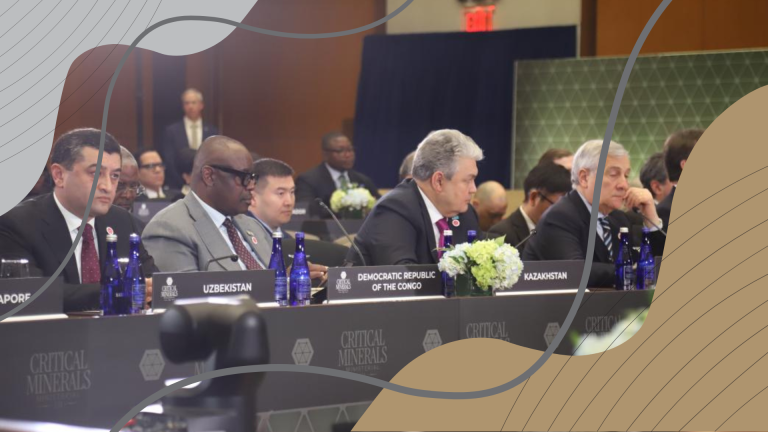
    On 22 September 2025, during his visit to New York, President Shavkat Mirziyoyev of Uzbekistan held a meeting with the heads of major American companies to advance cooperation in the field of critical minerals.

    The meeting focused on reviewing practical aspects of further expanding mutually beneficial cooperation between Uzbekistan and these leading US companies and organisations. The discussions centered on the development of a joint working group and the adoption of a “roadmap” to accelerate projects and prepare new proposals.

    Traxys, one of the world’s leading suppliers of critical raw materials and minerals, has a portfolio of promising projects worth $1 billion in the field of geological exploration and development of deposits. The company has agreed to introduce advanced technologies and expertise in the extraction, processing, and creation of sustainable supply chains of critical minerals.

    The Colorado School of Mines, a leading engineering university for training specialists in the mining industry, is working with Uzbekistan to create a Competence center at the University of Geological Sciences. FLSmidth, engaged in the development of technologies and equipment for the mining and processing industry, is actively involved in the development of the copper industry in Uzbekistan.

    McKinsey, a leading company in the field of management, consulting, and strategic development of enterprises in the mining industry, has developed a strategy with Uzbekistan for the development of the resource base, capacity expansion, and deep transformation of the country’s mining sector. Go Green Partners, specializing in investments in the extraction and processing of critical minerals for “green” energy, plans to conduct geological exploration in promising areas.

    The total capitalization of these companies exceeds $20 billion, demonstrating the significant potential for cooperation between Uzbekistan and these leading American companies. The meeting marked an important step forward in developing a strong partnership between the two nations, with the goal of accelerating projects and preparing new proposals in the sphere of critical minerals.

  • Uzbekistan and US Expand Critical Minerals Cooperation with $1 Billion Investment

    Uzbekistan and US Expand Critical Minerals Cooperation with $1 Billion Investment

    During his visit to the United States, President of Uzbekistan Shavkat Mirziyoyev reached agreements to establish a joint working group aimed at accelerating existing projects and developing new initiatives in the field of critical minerals, according to the presidential press service.

    A key partner will be Traxys, one of the world’s largest suppliers of raw materials. The parties signed an agreement for exploration and joint development of deposits, with a total investment volume estimated at $1 billion. The deal also includes the transfer of advanced technologies and expertise in mining, processing, and ensuring stable supplies of critical raw materials.

    Plans are also underway to establish a Competence Center at the University of Geological Sciences in Tashkent, in cooperation with the Colorado School of Mines, to train world-class specialists for Uzbekistan’s mining sector.

    In addition, McKinsey has developed a comprehensive strategy for Uzbekistan covering subsoil studies, expansion of the mineral resource base, and deep transformation of the mining industry. Go Green Partners will carry out exploration works at prospective sites.

    Several Uzbek-American project agreements were also signed, including:

    • a joint venture between Technopark LLC and FLSmidth to produce mineral processing equipment;

    • geological exploration on new sites with Cove Capital;

    • cooperation between Yangi Kon LLC and SLB on a drilling project in the Ustyurt oil and gas region.

  • Uzbekistan to Boost Gold and Uranium Output Through New Exploration Methods

    Uzbekistan to Boost Gold and Uranium Output Through New Exploration Methods

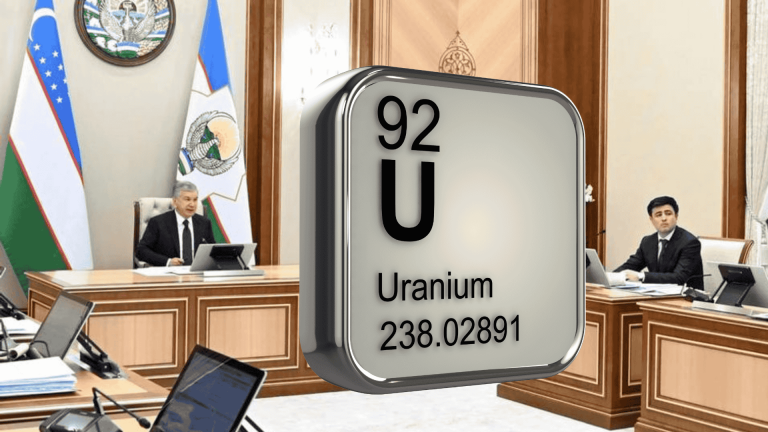
    Uzbekistan plans to increase production of gold and uranium this year by introducing new approaches in geological exploration, President Shavkat Mirziyoyev told national broadcaster Uzbekistan 24.

    According to the president, the country’s total gold output stood at 86 tonnes in 2016, while by the end of 2025 it is expected to reach 118 tonnes. Uranium production volumes, he noted, have doubled over the same period.

    Figures from the World Gold Council show that Uzbekistan produced more than 129 tonnes of gold in 2024, placing it among the world’s top ten producers of the precious metal.

    In the first seven months of this year, Uzbekistan increased gold exports to $7.6 billion — 1.8 times higher than in the same period of 2024. Gold accounted for nearly 38% of the country’s total export revenues.

    Navoi Mining and Metallurgical Company (NMMC), the country’s largest producer, raised its gold output in 2024 to 3.10 million ounces (96.4 tonnes), up 5.4% compared to 2023. The growth was attributed to the launch of new processing facilities.

  • Online Auction for Gold-Bearing Pirali Site in Navoi Region Closes with Record Bid

    Online Auction for Gold-Bearing Pirali Site in Navoi Region Closes with Record Bid

    Tashkent, Uzbekistan — An online auction for the right to conduct geological exploration at the gold-bearing Pirali site in Navoi region has concluded with a record-breaking bid, according to the official website of the E-auksion platform.

    The bidding process, which began on the morning of August 21, lasted 23 hours and 29 minutes, with a total of 461 bids placed. The winning bid was submitted by NBK 111, offering 99.09 billion soums—24 times higher than the starting price.

    Winner and Company Background

    According to the Unified State Register of Enterprises and Organizations (EGRPO), NBK 111 was registered in Tashkent in May 2024 and specializes in the mining of non-ferrous metal ores. The company’s charter capital stands at 1.005 billion soums. A 40% stake in NBK 111 is owned by Chinese citizen Zhang Qian, while the remaining 60% is controlled by Nurmahmad Pulatov. Pulatov also holds significant stakes in other enterprises, including a 90.7% share in Quwwatt Group (glass production in Jizzakh) and a 100% stake in BEEK Electro (electrical appliance manufacturing). All three companies share the same contact phone number, indicating potential business ties.

    Site Details and Gold Reserves

    The Pirali site covers an area of 484 hectares and is located in the Navbahor district, approximately 20.5 kilometers northwest of Zafarabad settlement and 38.5 kilometers north of the city of Navoi. Preliminary estimates suggest that the site contains gold reserves of around 2.4 tons.

    Recent Auction Activity

    This week has seen significant activity in the auctioning of major gold deposits in Uzbekistan. The Temirchi site in Navoi region was sold for 67.78 billion soums, while the Terekli site near Almalyk saw its price surge nearly 20-fold to 81.8 billion soums.

    The successful auction of the Pirali site underscores the growing interest in Uzbekistan’s mineral resources and the competitive nature of the country’s mining sector.

  • Uzbekistan Boosts Uranium and Rare Material Exports with Greener Mining Push

    Uzbekistan Boosts Uranium and Rare Material Exports with Greener Mining Push

    Uzbekistan is accelerating its efforts to become a key player in the global energy transition supply chain by expanding exports of uranium, copper, and rare earth elements. The Central Asian country is adopting cleaner mining methods and forging international partnerships to position itself as a reliable and responsible supplier of critical raw materials.

    A standout initiative is underway in the Navoi region, where a French-Uzbek-Japanese joint venture — involving France’s Orano and Uzbekistan’s state-owned Navoiyuran — is deploying in-situ leaching. This method offers an environmentally friendlier alternative to traditional open-pit mining and is expected to yield 10,000 tonnes of uranium.

    The move comes as global demand soars for strategic materials essential to renewable energy, electric vehicles, and other green technologies. Uzbek officials are aligning their practices with OECD standards and international environmental benchmarks to boost transparency and win the confidence of Western investors.

    By integrating greener extraction techniques and international oversight, Uzbekistan is not only increasing its export potential but also improving its standing in the global raw materials market. The country is actively seeking to deepen ties with European partners and attract foreign capital to scale up sustainable mining operations.