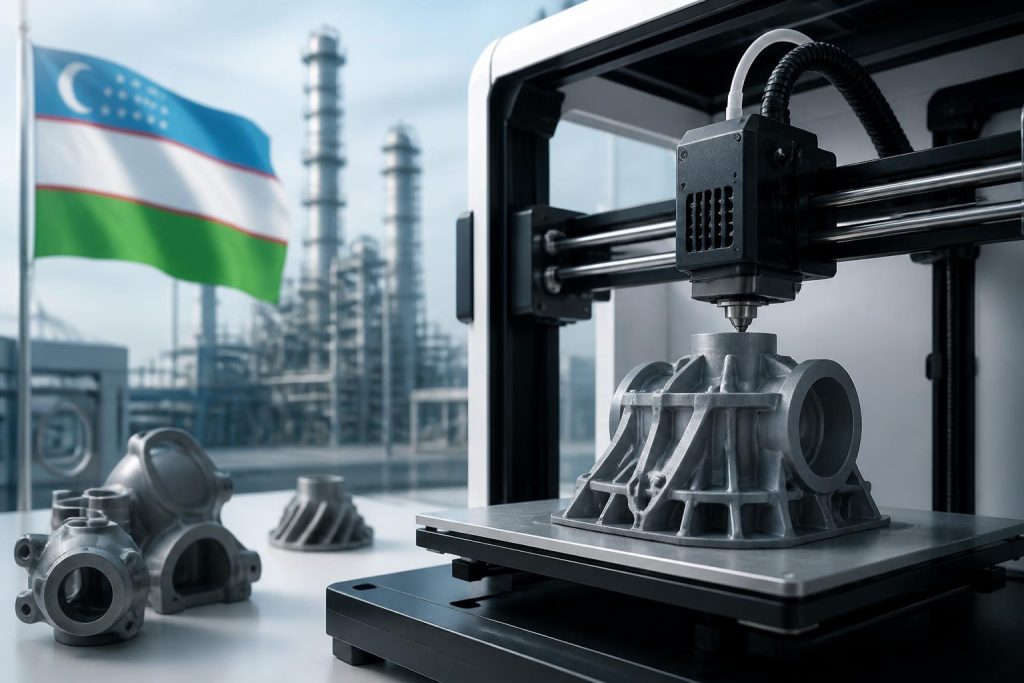
In a move towards modernising industrial capabilities in Uzbekistan, Rosatom, the Russian state atomic energy corporation, has proposed the establishment of a dedicated 3D printing centre in the country. This initiative was discussed during a specialised seminar held in Tashkent, which focused on the implementation of additive technologies in various sectors, including mining, automotive, and chemicals. The seminar was organised by the Additive Technologies division of Rosatom’s Fuel Division and saw participation from around 30 representatives from key industries, including the Navoi Mining and Metallurgical Combinat and UzAuto Motors.
Russian experts showcased innovative solutions in additive manufacturing aimed at enhancing production efficiency and enabling the creation of complex products. Technologies discussed included wire arc additive manufacturing, direct laser deposition, and reverse engineering methods. The proposed Centre for Additive Technologies (CAT) aims to form working groups, conduct audits of production capabilities, identify prospective product lines, and develop state support measures to foster the centre’s growth.
Ilya Kavelashvili, General Director of the Additive Technologies division, emphasised that the advancement of additive manufacturing in Uzbekistan could expedite the repair and modernisation of industrial equipment, reduce reliance on imports, and broaden the technological capabilities of local enterprises. According to Rosatom, global trends indicate a shift in additive technologies from prototyping to serial production, suggesting a promising future for this sector in Uzbekistan.
The introduction of 3D printing is expected to lower production costs for Uzbek companies, replace a portion of imported products, and enhance the competitiveness of the local industry. This initiative aligns with Uzbekistan’s broader goals of industrial development and technological advancement, positioning the country as a potential hub for innovative manufacturing solutions in the region.