Tag: supply chain

  • US Extends Critical Minerals Lead With $46B Push

    US Extends Critical Minerals Lead With $46B Push

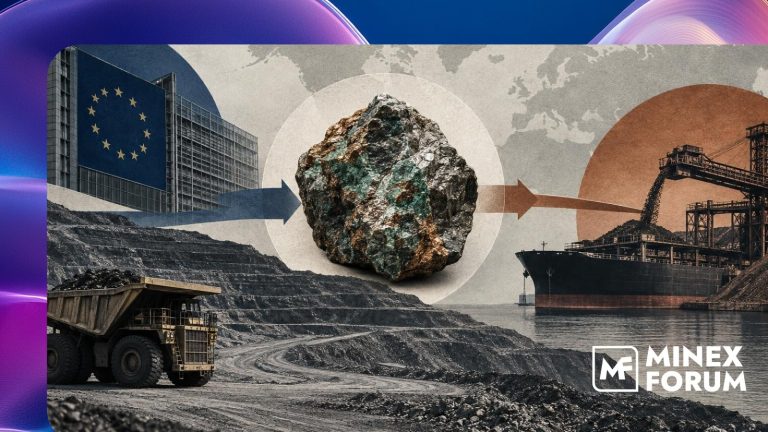
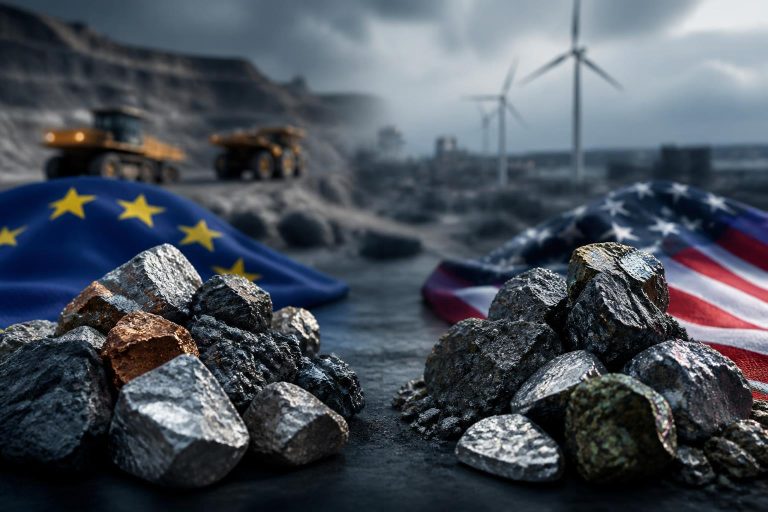
    The United States is significantly outpacing Europe in securing critical minerals outside China, raising concerns about potential European dependence on Chinese supplies for years to come. According to analysis by the French Institute of International Relations cited by The Wall Street Journal, Washington has committed approximately $46 billion to critical raw materials projects over the past five years through a combination of grants, loans, and tax incentives – roughly eight times the amount allocated by the European Union during the same period. This substantial funding disparity underscores the strategic importance both superpowers place on securing reliable supplies of essential minerals needed for clean energy transition, defence applications, and advanced manufacturing.

    The aggressive US strategy extends beyond domestic investment, with Washington actively negotiating preferential access to mineral resources in key countries including the Democratic Republic of Congo and Ukraine, whilst simultaneously backing overseas projects through comprehensive financing programmes. This multi-faceted approach has already begun to disrupt European efforts to establish independent supply chains. London-based rare earth developer Pensana, which is developing the Longonjo project in Angola, has shifted its plans for a processing plant from Britain to the United States to pursue Export-Import Bank financing. Similarly, Brazilian rare earth producer Serra Verde, which operates a mine in Goiás state, secured US government-backed financing and subsequently agreed to sell its magnetic rare earth production under a long-term arrangement supported by Washington. These high-profile shifts demonstrate the competitive advantage the US financing ecosystem provides to critical minerals projects globally.

    European industry leaders have expressed significant concerns about the implications of this trend, with some warning that the US could come to dominate emerging non-Chinese supply chains. Pensana founder Paul Atherley characterised the situation as “friendly fire” to other Western countries, highlighting the tension between allied nations competing for the same resources. In response, the European Union is mobilising its own resources and diplomatic efforts. The bloc has announced plans for a €3-billion ($3.4 billion) financing hub, strategic stockpiles, and strategic partnerships with countries including Canada, Argentina, Norway, and South Africa. By 2030, the EU aims to ensure that no single country supplies more than 65 per cent of its strategic raw material needs, representing a comprehensive approach to reducing supply chain vulnerability and building resilience in critical minerals sourcing.


  • EU Forms Emergency Task Force to Mitigate Risks of China Rare Earths Trade Disruption

    EU Forms Emergency Task Force to Mitigate Risks of China Rare Earths Trade Disruption

    The European Commission is establishing a cross-departmental emergency task force to prepare for potential disruptions in rare earths supply from China, as current export arrangements are set to expire in October. This proactive measure underscores the EU’s growing concern over strategic dependencies on critical materials essential for manufacturing, including rare earths, chips, and other industrial inputs. China dominates the global rare earths market, supplying 66% of mined and 88% of refined supply, leaving European industries highly vulnerable to any trade restrictions. The task force, which will bring together staff from departments covering industry, trade, financial services, development aid, and the economy, aims to improve the EU’s ability to identify problems early and respond swiftly. Its work will include finding alternative supply sources and potentially deploying EU funding to maintain access to critical materials. The first meeting is expected in September, coinciding with the Commission’s anticipated proposal on supply chain dependencies. This proposal may include an export tax on aluminium scrap to boost domestic recycling, measures to expand rare earth magnet recycling within the EU, and a diversification law requiring companies to reduce reliance on single suppliers for key inputs. The move comes amid broader trade tensions with China, as EU Trade Commissioner Maroš Šefčovič has warned Beijing that the bloc will act unless progress is made in reversing the EU’s €1 billion-a-day trade deficit. The EU’s dependence on Chinese suppliers extends beyond rare earths to semiconductors used in automotive and other sectors, with a recent chip supply squeeze forcing temporary sanctions adjustments. While officials remain hopeful that the current one-year truce on rare earth exports, agreed after a meeting between Chinese President Xi Jinping and U.S. President Donald Trump, will be renewed, the licensing system imposed by China adds uncertainty. The task force represents a strategic shift toward greater resilience and self-sufficiency in critical mineral supply chains, aligning with broader EU efforts to decarbonize industry and secure raw material access.

  • Middle East Conflict Disrupts Supply of Aluminum, Sulfur, and Critical Minerals Raw Materials

    Middle East Conflict Disrupts Supply of Aluminum, Sulfur, and Critical Minerals Raw Materials

    The ongoing Middle East conflict has triggered significant disruptions in the supply of aluminum, sulfur, and raw materials essential for critical mineral production, according to the International Energy Agency’s (IEA) ‘Global Critical Minerals Market Review 2026’ report. While the primary focus of the conflict has been on oil and gas markets, the closure of the Strait of Hormuz has severely impacted mineral and metal markets. Middle Eastern countries account for approximately 8% of global aluminum production, and production restrictions at several regional plants have intensified market pressures. The region also supplies about a quarter of the world’s sulfur, with half of global seaborne shipments passing through the Strait of Hormuz. Sulfur is a critical input for producing sulfuric acid, which is vital for fertilizer manufacturing and processing a range of critical minerals, including copper, lithium, cobalt, nickel, and rare earth elements. The supply disruptions prompted China to restrict sulfuric acid exports in May 2026, further straining supply chains in both the critical minerals and fertilizer sectors. The resulting rise in sulfuric acid prices has increased production costs for industries reliant on critical minerals, with sulfuric acid expenses in some cases surpassing energy costs to become the largest component of production expenses. This development underscores the vulnerability of global critical mineral supply chains to geopolitical instability and highlights the strategic importance of the Strait of Hormuz for mineral trade.

  • TETHYS and Hartree Announce Life‑of‑Mine Offtake Agreement for the Cataltepe Polymetallic Project in Türkiye

    TETHYS and Hartree Announce Life‑of‑Mine Offtake Agreement for the Cataltepe Polymetallic Project in Türkiye

    TETHYS, a Turkish-incorporated critical minerals and strategic infrastructure platform with projects across Eurasia, and Hartree Metals LLC, a subsidiary of the global commodities firm Hartree Partners LP — a leading independent commodities trading and asset management company — have entered into a life-of-mine offtake and commercial prepayment arrangement to support concentrate exports from the Cataltepe polymetallic mining project in north-western Türkiye.

    The agreement establishes a long-term commercial partnership between the two companies, anchored on the Cataltepe operation. Production from the mine is expected to be processed at the Kalkım flotation facility, generating zinc, lead, and copper concentrates for export to international smelting markets.

    Under the arrangement, Hartree Metals has provided a commercial advance payment to support the restart of operations and ongoing production activities, and will purchase and export 100% of the zinc, lead, and copper concentrates produced for the life of the operation. Production at Cataltepe is expected to commence shortly, with monthly shipments increasing progressively as operations ramp up.

    The transaction demonstrates a shared commercial understanding of the project and a mutual commitment to establishing reliable concentrate supply chains in Türkiye. For TETHYS, the agreement represents the commercial activation of its flagship Turkish operation and a significant milestone in its broader strategy to develop a multi-country portfolio of critical mineral assets across Eurasia. For Hartree Metals, it signifies a deepening of its commercial engagement with Türkiye’s expanding mining sector.

    Prof. Dr Leyla Keser, Chairperson of TETHYS Gateway Trading LLC, said: “The Cataltepe offtake agreement is a landmark transaction for TETHYS and a strong endorsement of the project’s commercial potential. We are delighted to be partnering with Hartree Metals as our long-term trading partner and look forward to building on this relationship as TETHYS continues to develop its portfolio of mineral assets across the region.”

  • EU Prepares New RESourceEU Strategy to Secure Critical Raw Materials and Reduce Dependence on China

    EU Prepares New RESourceEU Strategy to Secure Critical Raw Materials and Reduce Dependence on China

    The European Union is preparing to unveil a new economic security package next week, with a central component focused on safeguarding access to critical raw materials needed for clean technology and advanced industries. The initiative, known as RESourceEU, will form the bloc’s latest strategy to diversify supplies of essential inputs such as lithium, copper and nickel, and to reduce reliance on third-country suppliers — particularly China, which continues to dominate global clean-tech value chains and has tightened export controls on key materials.

    Modelled after the EU’s REPowerEU energy programme, RESourceEU is being developed against a backdrop of geopolitical uncertainty and shifting global competition. The European Commission plans to use the strategy to forge new partnerships with resource-rich countries including Australia, Kazakhstan, Uzbekistan and others, strengthening supply chains through long-term cooperation agreements.

    Recycling is set to play a central role. Brussels aims to significantly expand the EU’s capacity to recover critical materials from products reaching end-of-life, reducing the need for primary extraction. This dovetails with the Critical Raw Materials Act, which sets ambitious 2030 benchmarks: 10% of EU consumption of strategic minerals must come from domestic extraction, 40% from domestic processing and 25% from recycling. While many industry observers question whether these targets are achievable in time, they have nonetheless prompted European manufacturers to rethink business models and strengthen sourcing resilience.

    Additional EU initiatives are feeding into the strategy — from state aid tools supporting cross-border projects, to satellite-based exploration programmes designed to identify new raw material deposits. Financial support for battery manufacturing across Europe is also helping build internal value chains.

    Beyond Europe’s borders, the EU’s Global Gateway programme is funding major infrastructure and resource projects, particularly in Africa, with the intention of boosting local development while also ensuring stable supply routes for the EU. However, critics warn that the approach risks echoing historical patterns of extraction that disproportionately benefited Europe. EU officials insist the new strategy will prioritise equitable partnerships and avoid repeating colonial-era dynamics.

    RESourceEU is expected to outline a broad framework combining supply diversification, strategic investment, recycling expansion and international cooperation — all aimed at ensuring that Europe remains competitive and secure in an increasingly contested global market for critical raw materials.

  • Solvay Signs Two US Supply Deals to Boost Rare Earth Processing Capacity in France

    Solvay Signs Two US Supply Deals to Boost Rare Earth Processing Capacity in France

    Chemicals group Solvay has secured two new supply agreements with US magnet manufacturers as it accelerates efforts to scale up rare earth processing at its La Rochelle plant in France. The company, one of the few outside China capable of performing complex rare earth separation, began limited processing in April and has been seeking commercial commitments from industry and government partners to expand production.

    Solvay will supply neodymium, praseodymium, dysprosium and terbium (NdPr and DyTb) to Texas-based Noveon Magnetics under the first agreement. These elements are essential for neodymium-iron-boron (NdFeB) permanent magnets used in electric vehicles, defence systems, consumer electronics, and wind turbines. Noveon began commercial production of sintered NdFeB magnets in 2023.

    A second agreement with Permag covers the supply of samarium oxide, which will be converted into samarium metal by UK-based Less Common Metals. Samarium-based magnets can withstand extremely high temperatures and are widely used in defence and nuclear applications.

    Solvay CEO Philippe Kehren said the initial deliveries involve limited volumes but noted that the La Rochelle facility could rapidly increase output. Production of NdPr and samarium oxide will begin shortly, while DyTb output is expected to start in 2026.

    Kehren also indicated that Solvay is exploring the possibility of building a rare earths processing plant in the United States, where financial support for strategic materials is stronger than in Europe. Company executives said US customers are already willing to sign long-term contracts, while European buyers are still moving more slowly despite recognizing the need for supply chain independence.

  • Pipelines and Rare Elements: How Central Asia Became America’s New Geo-economic Frontier

    Pipelines and Rare Elements: How Central Asia Became America’s New Geo-economic Frontier

    The C5+1 summit held in Washington on November 6, 2025, marks a new chapter in U.S.–Central Asia relations, shifting the focus from energy pipelines to strategic mineral resources. Rare earth elements are now central to Washington’s strategy against China, which dominates mining and processing globally.

    Recent agreements—highlighted by substantial investments in Kazakhstan’s tungsten mines and commitments to Uzbekistan—illustrate a strategy that blends economic aims with national security, defense modernization, and leadership in green technologies. By partnering with Kazakhstan, Uzbekistan, and Turkmenistan, the U.S. seeks to counter China’s and Russia’s longstanding influence, establishing a “new resource-centered” framework for engagement. Rare earths are becoming tools of strategic power, supplanting traditional energy diplomacy and strengthening supply chains for renewable energy.

    This shift extends beyond resource access; mining investments are shaping political, economic, and diplomatic orientations across Central Asia, challenging China’s Belt and Road Initiative through economic means. The U.S. approach converts energy diplomacy into “mining diplomacy,” turning Central Asia into a global geo-economic crossroads.

    America’s renewed focus reflects a broader repositioning—building “strategic balancing” structures rather than pursuing mere economic or military dominance. The C5+1 format has become the central mechanism for promoting a model of regional integration that excludes Russia and China, offering a “third way” rooted in soft power, sustainable development, and technological partnerships.

    Strengthening transport routes like the Trans-Caspian corridor aims to liberate Central Asia from Russia’s logistical grip and curtail China’s influence over the Middle Corridor. Moscow and Beijing view these moves as containment strategies, intensifying geopolitical competition while granting Central Asian states greater autonomy through multilateral diplomacy.

    Ultimately, America’s strategy is about establishing a new Eurasian power architecture. Its success will depend on delivering sustainable investments and on Central Asian states maintaining independent balancing acts amid great-power competition.

  • China’s Mineral Export Curbs Could Shave Over $1 Billion from US GDP — Macquarie

    China’s Mineral Export Curbs Could Shave Over $1 Billion from US GDP — Macquarie

    China’s export restrictions on a handful of critical minerals could cost the United States more than $1 billion annually in GDP losses, according to new research by Macquarie Group.

    The analysis, led by chief economist Ric Deverell, modeled the potential impact of Beijing’s export controls on four rare earth elements — samarium, lutetium, terbium, and dysprosium — along with gallium, all of which appear on the US government’s updated list of 60 critical minerals, which now also includes copper and silver.

    While the direct trade exposure may appear limited, Macquarie’s study highlights how supply disruptions to these small but indispensable materials could ripple through the defense, semiconductor, and clean-tech sectors, amplifying the economic impact far beyond their raw import value.


    The Numbers Behind the Risk

    In 2024, the US mined $17.5 billion worth of minerals domestically but imported $65 billion, Macquarie reported. Although China accounted for just $2 billion, or 3% of total US mineral imports, the concentration of value-added processing and material specialization in China means even a limited export ban could have disproportionate effects.

    Macquarie found that the US was:

    • 100% import reliant on 12 critical minerals, and

    • over 50% dependent on imports for another 33.

    For rare earths, the dependency is especially acute. The US relies on imports for around 80% of its rare earth compounds and metals, and about 70% of that supply originates from China.

    While the nominal import value of these materials is small — around $170 million in 2024, with $120 million sourced from China — the knock-on effects of an export halt could dent US GDP by over $1 billion in a single year, Macquarie estimated.

    The report also flagged gallium — a key input in semiconductors, LEDs, and defense electronics — as another potential choke point.


    Strategic, Not Just Economic, Damage

    Beyond direct losses, Macquarie warned that the strategic cost of supply disruption would be significant. Rare earths and gallium underpin advanced manufacturing, defense systems, and energy technologies, sectors that are difficult to substitute or reshore quickly.

    “Even a temporary interruption in these supply chains would carry lasting industrial and strategic repercussions,” the report noted.


    Australia’s Emerging Role

    Macquarie analysts also pointed to Australia as a potential replacement source for US critical mineral imports currently coming from China.

    Australia, which recently signed a Critical Minerals Framework agreement with the US, holds over 15% of the world’s critical mineral reserves and already produces nearly half of the minerals on Washington’s critical list.

    Although Australian exports currently account for just 2% of US critical mineral imports, investment in the sector is accelerating. As of October 2024, more than $50 billion in new projects were in the pipeline, positioning Australia to play a much larger role in diversifying Western supply chains.

    “Over time, Australia could feasibly replace all Chinese-origin critical minerals in the US import mix,” Macquarie said.

  • U.S. and Kazakhstan Forge Joint Venture to Secure Global Tungsten Supply

    U.S. and Kazakhstan Forge Joint Venture to Secure Global Tungsten Supply

    Following the announcement of the joint venture between US-based Cove Capital LLC and Kazakhstan’s National Mining Company, JSC Tau-Ken Samruk, further details have emerged regarding the development timeline and scale of the Northern Katpar and Upper Kairakty tungsten projects.

    Cove Kaz Capital Group LLC (“Cove Kaz”), a portfolio company of U.S.-based Cove Capital LLC, will hold a 70 per cent interest, with Tau-Ken Samruk retaining 30 per cent ownership of Severniy Katpar LLP, which owns the Northern Katpar and Upper Kairakty tungsten projects.

    Cove Kaz will oversee marketing of 100 per cent of project output and has entered into a Letter of Intent with the International Trade Administration at the U.S. Department of Commerce to prioritise supply for U.S. government and commercial needs.

    The announcement was made in Washington, D.C., during the C5+1 Leaders’ Summit by U.S. President Donald J. Trump and Kazakhstan President Kassym-Jomart Tokayev.

    Total development costs for the Northern Katpar and Upper Kairakty projects are estimated at USD $1.1 billion. The Export-Import Bank of the United States has issued a Letter of Interest for USD $900 million in financing, complemented by a similar commitment from the U.S. International Development Finance Corporation.

    Cove Kaz’s project team will be led by Dominic Heaton, who previously oversaw development of the Nui Phao integrated tungsten mine and refinery in Vietnam – the world’s largest tungsten operation outside China. Preparatory work has already commenced to support a Definitive Feasibility Study for Northern Katpar, including the establishment of downstream refining capacity in Kazakhstan to produce ammonium paratungstate (APT) and other tungsten compounds.

    Pini Althaus, Chief Executive Officer of Cove Capital and Cove Kaz Capital, expressed gratitude for U.S. and Kazakh government support:

    “On behalf of Cove Capital and Cove Kaz, I wish to thank President Donald J. Trump, Secretary of Commerce Howard Lutnick, and the U.S. Trade Advocacy Center for their exceptional engagement. Their efforts have aligned financing, offtake pathways, and policy support to deliver a secure, allied tungsten supply for America’s industrial and defence needs.

    “I also wish to thank President Kassym-Jomart Tokayev for his leadership and partnership. This collaboration is a win for both nations—strengthening U.S. supply chains while fostering investment and long-term prosperity in Kazakhstan.”

    Tungsten – A Critical Industrial and Defence Mineral

    Tungsten is ranked by the U.S. Defense Logistics Agency as a “material of interest” and by the European Union as the raw material of highest economic importance due to its unique physical properties: the highest tensile strength at high temperatures, the highest melting point of any metal, and exceptional corrosion resistance.

    Its density and durability make tungsten indispensable in high-performance cutting and drilling tools, aerospace alloys, semiconductor contacts, and radiation shielding. In defence applications, tungsten is used in armour-piercing munitions, missile components, aircraft ballast, and other high-stress environments.

    Currently, China controls over 80 per cent of global tungsten production and processing. In February 2025, China imposed new export restrictions on tungsten and tungsten-containing products to the United States.

    Severniy Katpar LLP

    Severniy Katpar LLP holds licences for two projects—Northern Katpar and Upper Kairakty—located approximately 30 kilometres apart in the established Karaganda mining district of central Kazakhstan, less than 160 kilometres south of the city of Karaganda.

    Feasibility studies completed in April 2023 report total JORC-compliant mineral resources of 1.4 million tonnes of tungsten trioxide (WO₃), accounting for around 70 per cent of Kazakhstan’s total tungsten resources. For comparison, the U.S. Geological Survey estimates China’s reserves at 2.4 million tonnes.

    Combined production from both projects is expected to reach 12,000 metric tonnes per annum (mtpa) of tungsten trioxide—approximately 15 per cent of current global output.

    Cove Capital’s Broader Commitment in Kazakhstan

    Cove Capital’s portfolio company, Kaz Resources LLC, became in 2023 the first U.S. entity to receive critical minerals and rare earth concessions in Kazakhstan. These include licences for 13 minerals such as lithium, tantalum, beryllium, niobium, and rare earth elements.

    In 2024, Cove Capital and Tau-Ken Samruk formalised a joint venture for exploration of rare earths at the Akbulak project in the Kostanay region, with Cove holding 75 per cent and “Qazgeology” JSC 25 per cent. Cove is fully financing exploration activities until reserves are booked.

    About Cove Capital LLC

    Founded in 2015, Cove Capital is a mining-focused investment and development firm headquartered in New York and Melbourne. Since 2018, the company has focused on critical minerals projects that enhance U.S. and allied supply chains. Led by CEO Pini Althaus, Cove Capital brings extensive expertise across exploration, mining, processing, and offtake structuring.

    About Tau-Ken Samruk

    Tau-Ken Samruk, Kazakhstan’s national mining company, manages the sustainable development of the nation’s mineral wealth. Through partnerships with international investors, it aims to strengthen Kazakhstan’s mining sector and support the country’s long-term economic growth.

  • EU to Establish Critical Raw Materials Center for Joint Purchasing and Stockpiling Amid Rising Supply Risks

    EU to Establish Critical Raw Materials Center for Joint Purchasing and Stockpiling Amid Rising Supply Risks

    The European Union will set up a Critical Raw Materials Center to coordinate the joint purchasing and stockpiling of key minerals vital to industries such as defense, automotive manufacturing, and clean energy, under a new 2026 work plan unveiled by the European Commission on Tuesday.

    The initiative, described as part of Europe’s quest for “industrial sovereignty,” seeks to safeguard supplies of critical minerals and metals amid intensifying global competition and geopolitical uncertainty.

    “Our regional and global order is being redrawn. And Europe must fight for its place in a world where some major powers are either ambivalent or hostile to us,” said European Commission President Ursula von der Leyen in an address to the European Parliament.

    The planned Critical Raw Materials Center will monitor market flows, coordinate collective EU purchases, and maintain strategic reserves of essential resources — including rare earths, lithium, cobalt, and nickel — ensuring supply stability for strategic industries.

    The plan follows China’s announcement earlier this month of expanded export controls on rare-earth magnets and raw materials, citing national security concerns. Those restrictions have triggered alarm across global supply chains and prompted urgent discussions between EU trade chief Maroš Šefčovič and his Chinese counterpart to seek a path forward.

    The move also builds on the EU’s 2023 Critical Raw Materials Act, which laid the foundation for diversifying mineral imports away from China and expanding domestic extraction, refining, and recycling capacity.

    Von der Leyen said the bloc must ensure autonomy not only in raw materials but also in “critical technologies that will shape the economy of tomorrow”, citing batteries, cloud computing, artificial intelligence, and advanced materials.

    As part of the broader 2026 European Work Plan, the Commission outlined six strategic pillars:

    Sustainable prosperity and competitiveness

    Defense and security

    Social model and innovation

    Quality of life

    Democracy and rule of law

    Global engagement

    Other measures include a new “European Product Act”, updates to public procurement rules, taxation and energy deregulation, and a European anti-corruption initiative. A new action plan against cyberbullying will also be introduced.

    In parallel, the EU announced plans to withdraw 25 stalled legislative proposals in 2026 to reduce bureaucratic burdens and respond to business pressure for faster, more flexible regulatory frameworks.

    Context: China’s Dominance and Europe’s Strategic Response
    China currently controls the majority of global refining capacity for rare earths and other critical minerals. The new export restrictions — and the risk of further escalation — have pushed Europe to accelerate diversification efforts through partnerships with countries such as Kazakhstan, Canada, and Australia.

    By pooling resources and centralizing strategic oversight, Brussels hopes to shield European industries from supply shocks while strengthening its negotiating position in a more fragmented global economy.