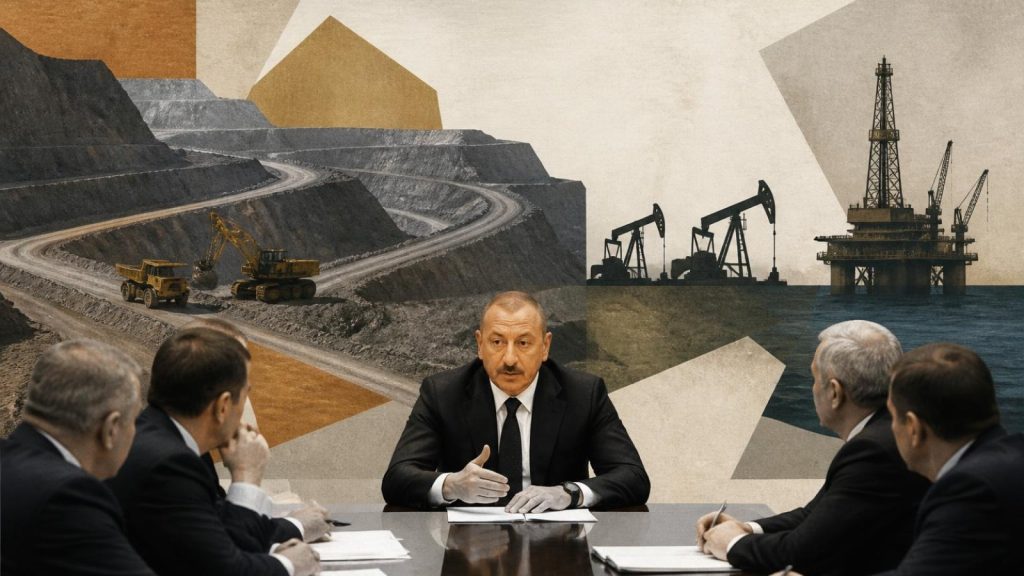
In Baku on 22 September, President Ilham Aliyev chaired a meeting on a State Program for mining and metallurgy for 2027–2030. The figures are impressive: more than 5,000 permanent jobs, an annual financial impact he said should exceed one billion manats (approximately 650 million USD), and delivery in just four years. The numbers are the smaller part of the story. What matters is what this programme tells about where Azerbaijan is heading, and how it intends to deal with foreign capital and investment.
The President admitted that headline growth is weak. GDP rose just 1.2 percent, which he put down to the natural decline of the Azeri-Chirag-Gunashli oil field after nearly 30 years of production. Non-oil growth, by contrast, reached 5.4 percent in the first eight months of the year. Baku is not treating the oil decline as a passing dip. It is treating it as structural, and metals are being positioned as a long-term source of export earnings and regional employment to fill the gap. The timing helps. The President noted that precious metal prices are high and likely to stay around current levels, which improves the economics of a sector he himself called capital-intensive.
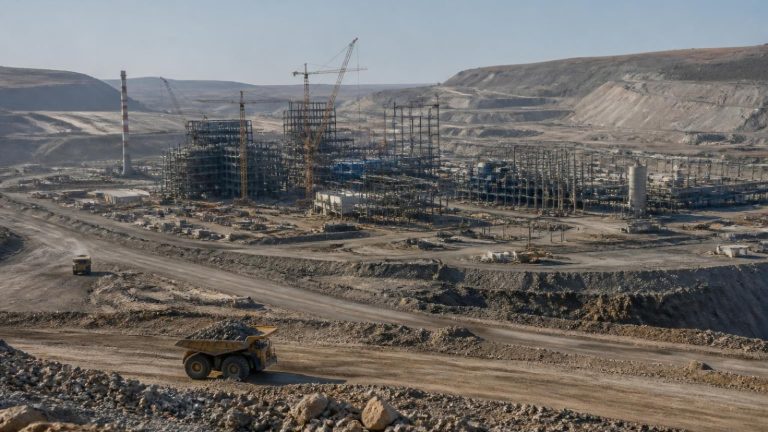
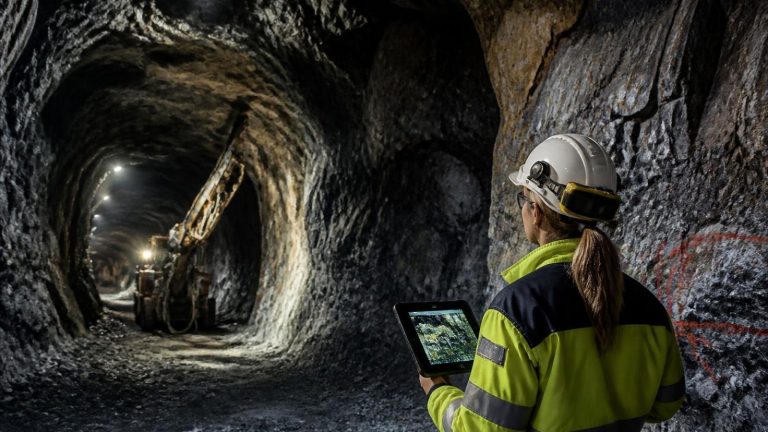
The second point is sequencing. The first phase is not greenfield discovery but bringing known gold, copper and molybdenum deposits in Kalbajar, Aghdara and Zangilan into production, with work already under way in Aghdara. The President was frank that reserve data in many places dates from the Soviet era, some 40 years ago. This matters for any international investor. Foreign partners will want modern resource estimates before they commit, so the reassessment he announced is a precondition for capital as much as a technical exercise. The plan to begin exploration in Nakhchivan next year follows a similar logic, and it also carries a clear message about the development of the liberated territories.
The third point, and the most instructive, is control. Filizchay, which the President described as one of the most promising deposits on the European continent, will be 100 percent owned by state company AzerGold, with foreign participation possible only later, at a certain percentage, once the asset has risen in value. On aluminium, he said earlier foreign proposals did not offer enough value for the national economy, and that Azerbaijan should build capacity itself, targeting 100,000 tonnes by the end of 2030.
Taken together, we do not see a closed door. Investors are invited, but as minority participants, on terms set by the state, and after the state has captured the early value. Environmental compliance is part of that deal, with penalties promised for foreign partners who fall short.
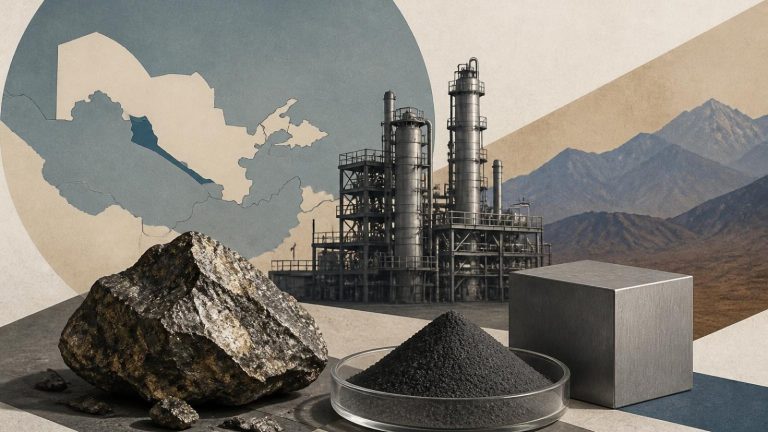
The fourth point is value-added. The President said it would be a mistake to export raw ore, and the West Industrial Park, serving the Dashkasan deposit, is the vehicle for that. Beneficiation, pelletising and hot briquetted iron plants are all planned, along with tariff concessions on ore transport. That puts Azerbaijan alongside Kazakhstan and Uzbekistan in pursuing processing at home rather than simple extraction. It also brings the country into the wider conversation about the Middle Corridor, where transport tariffs and rail capacity will help decide whether new metal supply can reach Europe competitively.
There are real questions still to answer, and we will be pressing on them. Four years is tight for a programme that includes exploration, feasibility work, infrastructure and new processing plants. The Filizchay feasibility study and final investment decision are still to come. No budget was given in the President’s remarks, though he said funding has been agreed. And the room for foreign investors, while welcome, appears to be a bounded one.
For our industry, the takeaway is that Azerbaijan is entering the Eurasian minerals landscape as a state-led producer, not as an open frontier. Companies that can bring exploration expertise, processing technology and international reporting standards, and that accept minority roles, will find the door open. Those looking for control will not.
We will continue following the programme closely and bring you our analysis as it emerges at the MINEX Eurasia conference scheduled on 30 November in London.