Tag: rare earths

  • Ionic Rare Earths Secures UK Grant Offer for Belfast Magnet Recycling Plant

    Ionic Rare Earths Secures UK Grant Offer for Belfast Magnet Recycling Plant

    Australian-listed Ionic Rare Earths announced on Tuesday that its subsidiary has been offered a £12 million ($16.4 million) capital grant from the UK government to support the development of a rare earth magnet recycling facility in Belfast.

    The funding, offered under the UK’s DRIVE35 programme, would contribute to the capital costs of the plant operated by Ionic Technologies, the company’s recycling arm. The grant remains subject to due diligence and standard funding conditions.

    DRIVE35 is a government-backed initiative aimed at accelerating the industrialisation of zero-emission vehicle technologies and strengthening domestic supply chains for critical materials. The UK, in line with other major economies, is seeking to expand domestic production and recycling of critical minerals as part of its strategy to reduce dependence on overseas suppliers by 2035.

    Once operational, the Belfast facility is expected to produce around 400 tonnes per year of high-purity separated rare earth oxides recovered from end-of-life permanent magnets. The plant will use Ionic Technologies’ proprietary long-loop recycling process, designed to return recycled materials directly into high-value magnet applications.

    Ian Constance, chief executive of the Advanced Propulsion Centre UK, one of the bodies involved in administering DRIVE35 funding, said the project would support the UK’s automotive and advanced manufacturing sectors by strengthening access to strategically important materials.

    Ionic Rare Earths said it continues to engage with multiple potential partners and financiers as it works to secure the remaining funding required for the £85 million project.

  • EU Backs Sweden’s Largest Rare Earth Project but Faces Legal Barriers of Its Own Making

    EU Backs Sweden’s Largest Rare Earth Project but Faces Legal Barriers of Its Own Making

    The European Union is channelling significant financial support into LKAB’s Per Geijer rare earth project in northern Sweden as part of its strategy to reduce dependence on China for critical raw materials. However, the same EU legal framework designed to protect the environment and Indigenous rights is emerging as a major obstacle to the project’s progress.

    The Per Geijer deposit near Kiruna has been granted Strategic Project status under the EU’s Critical Raw Materials Act (CRMA), making it eligible for EU-backed loans, guarantees and other de-risking instruments. The designation reflects the project’s importance to Europe’s green transition, defence capabilities and electric vehicle supply chains. Under the CRMA, the EU aims to mine at least 10% of its strategic raw materials domestically and process 40% within the bloc by 2030.

    To support these targets, Brussels is deploying financing through tools such as InvestEU, the Innovation Fund and European Investment Bank lending, with nearly €3 billion earmarked for mining, processing and recycling projects. Northern Sweden has been identified as a priority region, and Per Geijer is seen as a flagship initiative.

    Despite this political and financial backing, the project remains subject to Sweden’s Environmental Code and EU environmental legislation, including the Environmental Impact Assessment Directive and the Habitats and Birds Directives. These rules require extensive assessments of impacts on biodiversity, water resources, emissions and climate, and allow for legal appeals that can delay projects for years. Strategic status does not provide exemptions from these requirements.

    Additional complexity arises from Indigenous rights considerations. The Per Geijer deposit overlaps with traditional reindeer-herding land used by the Sami people, triggering legal obligations under Swedish law, EU law and international human rights conventions. Requirements for meaningful consultation and protection of minority rights sit uneasily alongside the CRMA’s push for faster permitting.

    Per Geijer is part of a broader LKAB value chain that includes rare earth extraction at Malmberget and processing facilities in Luleå, all of which have also received Strategic Project status. However, the European Commission retains the right to withdraw this status if sustainability criteria are not met or if projects fail to deliver.

    The case highlights a structural tension within EU policy. While Brussels is accelerating funding and political support to secure raw material autonomy, its environmental and rights-based legal framework gives courts and civil society strong tools to slow or block projects. The outcome in Kiruna is increasingly seen as a test of whether the EU can reconcile its industrial ambitions with the legal principles at the core of the Green Deal.

  • USA Rare Earth plans French metal and alloy plant alongside Carester oxide facility

    USA Rare Earth plans French metal and alloy plant alongside Carester oxide facility

    USA Rare Earth (Nasdaq: USAR), through its Less Common Metals (LCM) subsidiary, plans to build a rare earth metal and alloy production facility in France next to an oxide processing plant being developed by Carester.

    Carester is currently constructing a 1,600-tonne-per-year oxide processing facility in Lacq, with commissioning scheduled for late 2026. USA Rare Earth’s proposed plant, with a capacity of 3,750 tonnes per annum, will be co-located at the Caremag site, creating an integrated European platform for rare earth processing, metal and alloy production.

    The French government has committed to partially funding the project, including credits covering up to 45% of eligible equipment costs and support of up to €130 million for real estate, according to the company.

    Shares of USA Rare Earth jumped by double digits following the announcement, amid broader gains across the rare earth sector driven by rising geopolitical tensions between the United States and Europe over Greenland. By midday trading in New York, the company’s shares were around $20, valuing it at more than $2.7 billion.

    USAR CEO Barbara Humpton said the French development would strengthen the company’s integrated rare earth value chain and benefit the United States and its allies. In parallel, USA Rare Earth is advancing a domestic mine-to-magnet strategy in the US anchored by its Round Top project in Texas, alongside a magnet manufacturing plant in Oklahoma and processing facilities in Colorado.

  • Mkango opens UK’s first commercial rare earth magnet recycling plant in 25 years

    Mkango opens UK’s first commercial rare earth magnet recycling plant in 25 years

    Canadian rare earths company Mkango Resources has opened Britain’s first commercial facility in a quarter of a century to produce permanent magnets, marking a milestone in efforts to reduce Western dependence on China for critical minerals.

    The new plant, located in Birmingham and operated by Mkango’s subsidiary HyProMag, produces permanent magnets from recycled materials rather than newly mined ore. It uses a hydrogen-based recycling technology developed at the University of Birmingham, which enables rare earth magnets to be recovered from end-of-life products and converted into new magnetic material with significantly lower emissions than traditional mining and refining processes.

    The launch comes as Western governments seek to loosen China’s dominance in the rare earths supply chain. China currently accounts for around 70% of global rare earth mining and about 90% of refining, making alternative supply sources difficult to scale up quickly. Recycling has therefore emerged as one of the fastest ways to expand access to rare earth materials in the near term.

    Speaking to Reuters at the opening, UK Industry Minister Chris McDonald said breaking China’s grip on the supply chain was a strategic priority. The Birmingham plant supports Britain’s critical minerals strategy, which targets meeting 10% of domestic demand through local mining and 20% through recycling by 2035, supported by up to £50 million in government funding.

    The facility has an annual production capacity of 100 to 300 tonnes of permanent magnets, depending on shift patterns. According to Mkango, the plant is already attracting strong interest from automotive manufacturers. The company is also progressing plans to replicate the technology in the United States and Germany, expanding the recycling-based supply of rare earth magnets beyond the UK.

    Britain previously had magnet manufacturing capacity, but this disappeared roughly 25 years ago as production shifted overseas. The opening of the HyProMag plant represents a step toward rebuilding domestic capability in a sector seen as vital for electric vehicles, wind turbines and other clean energy technologies.

  • Critical Metals shares jump on Tanbreez upgrades and renewed US focus on Greenland

    Critical Metals shares jump on Tanbreez upgrades and renewed US focus on Greenland

    Shares of Critical Metals surged to their highest level in nearly three months after the company announced further upgrades to its flagship Tanbreez rare earth project in southern Greenland, amid renewed geopolitical attention on the Arctic territory from the United States.

    Earlier this week, the Nasdaq-listed company said it will acquire a fully integrated, mobile assay laboratory to support its Tanbreez project, which hosts one of the world’s largest known rare earth deposits. The laboratory, developed by mining solutions provider Bromet, will enable real-time, on-site geochemical analysis of drill core and pilot plant samples, strengthening data collection and accelerating decision-making as the project advances toward pilot-scale operations.

    Critical Metals CEO Tony Sage described the acquisition as a transformative step in moving Tanbreez from exploration into pre-mining development. The company is expected to pay around $1 million for the mobile laboratory. The move follows a recent decision to construct an Arctic-grade storage and pilot facility in Qaqortoq, scheduled for completion by mid-2026, and comes alongside potential logistics improvements linked to the planned opening of a new international airport near the project site.

    The upgrades are part of a modular, turnkey development strategy aimed at fast-tracking Tanbreez into production as early as this year. A preliminary economic assessment released last year outlined an initial production target of approximately 85,000 tonnes of rare earth oxides per year, with potential expansion to 425,000 tonnes annually. The assessment estimated a pre-tax net present value of about $3 billion and an internal rate of return of 180%, based on resources of at least 45 million tonnes within the largely underexplored kakortokite unit.

    Investor interest has also been boosted by rising geopolitical tensions surrounding Greenland. US President Donald Trump reiterated his desire for US control of Greenland this week, citing national security concerns, and senior US, Danish and Greenlandic officials held discussions in Washington on the issue. Analysts view Greenland’s vast untapped mineral resources, including rare earths, as a key driver behind Washington’s intensified interest.

    Following the announcements and geopolitical developments, shares of Critical Metals jumped as much as 35% in New York trading, lifting the company’s market capitalization to around $2.1 billion.

  • Greenland’s Kvanefjeld rare earth project highlights Europe’s late scramble for strategic minerals

    Greenland’s Kvanefjeld rare earth project highlights Europe’s late scramble for strategic minerals

    On Greenland’s southern tip, the Kvanefjeld mining project has become a symbol of both vast opportunity and prolonged paralysis. Beneath its icy terrain lies one of the world’s most significant deposits of neodymium and praseodymium, rare earth elements essential for wind turbines, electric vehicles and advanced military technologies. If developed, Greenland, a semi-autonomous territory within the Kingdom of Denmark, would become the first European source of these critical materials.

    The project is led by Energy Transition Minerals, which has long signaled readiness to move into production. However, progress stalled after the Greenlandic government imposed a ban on uranium mining in 2021, citing environmental and public health concerns. Because rare earths at Kvanefjeld are geologically associated with uranium, the ban effectively froze the project, triggering legal disputes that continue to delay development.

    Former Danish foreign minister Jeppe Kofod, now a strategic adviser to Energy Transition Minerals, said the case illustrates how regulatory uncertainty, geopolitics and high capital requirements can obstruct even strategically vital projects. Despite Greenland holding rare earth resources estimated to cover up to a quarter of global demand, alongside substantial oil, gas and other mineral potential, only two small mines are currently operating on the island.

    European interest has increased only recently. In 2023, the European Union signed a memorandum of understanding with Greenland to cooperate on mining projects, followed by the adoption of the EU Critical Raw Materials Act, which explicitly recognizes Greenland’s strategic importance. The European Commission has since committed funding to Greenland’s Malmbjerg molybdenum project to support defense-related supply chains.

    Analysts warn, however, that Europe may have moved too slowly. With the United States and China intensifying their focus on Greenland’s resources and U.S. President Donald Trump openly signaling aggressive ambitions toward the island, European policymakers risk being sidelined. Greenland’s harsh climate, limited infrastructure, small population and strict environmental rules further complicate development, even as climate change gradually improves access to previously icebound regions.

    While Brussels maintains that the future of Greenland’s resources rests solely with its people and elected authorities, growing geopolitical pressure suggests that external powers may play an increasingly decisive role in shaping the island’s mining future.

  • Deep beneath Kiruna, Sweden pushes forward in Europe’s race to mine rare earths

    Deep beneath Kiruna, Sweden pushes forward in Europe’s race to mine rare earths

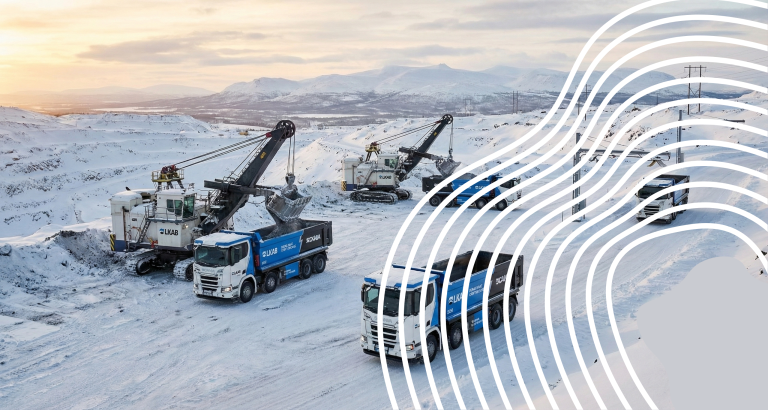
    In the depths of Arctic winter, with temperatures plunging to minus 20 degrees Celsius and daylight reduced to a few hours of twilight, a team of miners is advancing one of Europe’s most strategically important resource projects beneath the Swedish town of Kiruna. Around 900 metres underground, workers at the state-owned LKAB are tunnelling toward the Per Geijer deposit, regarded as one of the continent’s largest known concentrations of rare earth elements.

    Europe currently has no operating rare earth mines, despite rising demand for materials critical to electric vehicles, renewable energy systems, consumer electronics and defence technologies. The push to develop domestic supply has intensified as geopolitical tensions grow and China maintains near-total dominance over rare earth processing and magnet production.

    At Kiruna, the rare earths occur alongside iron ore in a magnetite-hematite-phosphate formation identified more than a century ago. Teams work at depths of up to 1.3 kilometres, drilling, blasting and reinforcing tunnels that will eventually link the existing iron ore mine with the Per Geijer resource roughly two kilometres away. Progress is incremental, averaging about five metres per day, reflecting both the technical complexity and environmental sensitivity of the operation.

    LKAB’s strategy differs from earlier mining approaches. Rather than exposing the entire deposit at once, the company plans phased development, gradually integrating rare earth extraction into the established iron ore system. Chief executive Jan Moström has said this approach is essential to manage risk, control costs and accelerate learning as Europe rebuilds lost mining and processing capabilities.

    To shorten timelines, LKAB has invested €80 million in a demonstration plant in Luleå to test separation technologies ahead of full-scale mining. The company has also taken a stake in Norway-based REEtec to develop cleaner refining methods, aiming to meet strict European environmental standards.

    Industry experts note that even with favourable geology, moving from resource discovery to refined rare earth products can take a decade or more. Still, Kiruna is widely viewed as Europe’s strongest near-term opportunity to reduce dependence on Chinese supply chains, which currently account for around 85% of global rare earth processing and virtually all heavy rare earth refining.

    European officials, including EU industry commissioner Stéphane Séjourné, have visited the site, underlining its strategic importance as the bloc seeks greater resource autonomy. While China is expected to retain dominance for years, projects like Kiruna are seen as critical first steps toward a more resilient European supply chain.

  • Critical Metals approves Arctic pilot facility to advance Tanbreez rare earth project in Greenland

    Critical Metals approves Arctic pilot facility to advance Tanbreez rare earth project in Greenland

    Rare earth developer Critical Metals has approved the construction of a multi-use storage and pilot facility in Qaqortoq, Greenland, a move that sent its shares sharply higher on Wednesday. The new infrastructure is intended to support the company’s flagship Tanbreez project as it moves toward development.

    The company said the facility will be delivered under a full turnkey contract covering engineering, permitting, logistics, construction and commissioning. Designed specifically for Arctic conditions, the site is expected to be completed and operational by May 2026. In parallel, Critical Metals has acquired a residential property in Qaqortoq, which will be converted into a permanent local office and operational base.

    Chief executive Tony Sage said the project provides a clear and structured pathway to deploy pilot-scale infrastructure in a challenging Arctic environment, while also demonstrating the company’s commitment to responsible local operations.

    Investors reacted positively to the announcement, with Critical Metals’ stock rising as much as 16% to its highest level in more than two months, lifting the company’s market capitalization to around $1.5 billion.

    The Tanbreez project is regarded as one of the world’s largest rare earth deposits, hosting at least 45 million tonnes of resources within a largely underexplored kakortokite unit. Earlier this year, Critical Metals published a preliminary economic assessment outlining a phased development plan, with initial annual production of about 85,000 tonnes of rare earth oxides, potentially scaling up to 425,000 tonnes following modular expansion. The company has already secured offtake agreements covering roughly three-quarters of expected output and aims to finalize the remainder in the near term.

  • Kazakhstan to explore new areas for lithium extraction with state-funded geological studies

    Kazakhstan to explore new areas for lithium extraction with state-funded geological studies

    Kazakhstan plans to expand its search for lithium resources by launching new geological studies across several regions of the country, the Ministry of Industry and Construction of Kazakhstan told LS Media.

    According to the ministry, state-funded exploration works are scheduled for 2027–2029 and will focus on mineralized brines, saline lake waters and salt flats in the Caspian and Aral Sea regions, as well as hard-rock formations in the Bayankol ore district. The objective is to determine whether these areas are suitable for commercial lithium extraction. The studies will be carried out as part of the national geological exploration program, with funding of 600 million tenge allocated from the state budget.

    In parallel, authorities expect to complete an assessment of Central Kalba in 2026. The work there is aimed at identifying areas prospective for lithium-bearing mineralization, as well as complex rare-metal and rare-earth mineralization within the Kalba–Narym zone.

    The ministry also highlighted significant potential for discovering new rare-earth deposits hosted in rare-metal granites and pegmatites. Promising targets include northern Kazakhstan near the Kokshetau rare-metal province, western Kazakhstan within the Mugodzhar rare-metal province, and eastern Kazakhstan at the southeastern end of the Chingiz–Tarbagatai rare-earth metallogenic zone.

    In addition, lithium occurrences have already been identified in salt flats across the Aral Sea region, Betpak-Dala and other parts of southern Kazakhstan, reinforcing expectations that the country could expand its role in the supply of critical battery minerals.

  • Kyrgyzstan reviews major mining projects launched over the past year

    Kyrgyzstan reviews major mining projects launched over the past year

    At the start of the new year, Kyrgyzstan is taking stock of major mining projects implemented by domestic companies over the past period. One of the most significant developments came in August, when Kumtor Gold Company, one of the country’s largest subsoil users, launched underground gold mining at the Kumtor deposit in the Issyk-Kul region.

    At the same time, 147 tonnes of gold were added to the company’s balance sheet, providing enough reserves for 17 years of underground operations, which are being carried out alongside open-pit mining. Overall, the Kumtor mine is expected to remain in operation for at least another 40–50 years. The underground project is designed to minimize waste rock extraction and reduce environmental impact, including protecting local glaciers.

    Last year, Kumtor Gold Company also began processing tailings from the Kumtor tailings storage facility, expanding resource utilization. In August, several other mining enterprises were launched, including the Shah Tal gold mine in the Naryn region and the Kozho Kelen and Besh-Burkhan coal mines in the Osh region.

    In October, Kyrgyzgeology obtained a license to develop the Nasonovskoye polymetallic deposit in the Chui region, which is estimated to contain 751,000 tonnes of ore, 5.6 tonnes of gold and 4,600 tonnes of copper.

    Projects related to strategically important metals have received less public attention, though local media reported that a Kyrgyz-Chinese company for rare metals development was registered in April. At the INFOCM 2025 international forum on critical minerals in May, a representative of the Ministry of Natural Resources said Kyrgyzstan has 11 rare earth deposits, with Kutessay II among the largest, holding reserves of 63,300 tonnes.