Tag: rare earths

  • Tau-Ken Samruk and Rwanda’s Ngali Holdings Sign Agreement to Develop Rare Earth Deposits

    Tau-Ken Samruk and Rwanda’s Ngali Holdings Sign Agreement to Develop Rare Earth Deposits

    Kazakhstan’s national mining company Tau-Ken Samruk, a subsidiary of the sovereign wealth fund Samruk-Kazyna, has signed an agreement to jointly develop rare and rare-earth metal deposits in Rwanda in partnership with local investment group Ngali Holdings.

    The agreement was formalised during meetings in Kigali between Samruk-Kazyna chief executive Nurlan Zhakupov and representatives of Rwanda’s mining authorities and investment institutions. Participants included Jean-Guy Afrika, CEO of the Rwanda Development Board, Alice Uwase, CEO of the Rwanda Mines, Petroleum and Gas Board, and Joseph Butera, CEO of Ngali Holdings.

    According to Samruk-Kazyna, the parties signed a Term Sheet outlining plans for joint exploration and development of rare and rare-earth metal deposits in Rwanda. The cooperation will focus on geological exploration and potential mining projects aimed at unlocking the country’s mineral resources.

    Officials from both countries also discussed broader opportunities for collaboration in the mining sector, including the expansion of geological exploration activities and technology exchange.

    Zhakupov noted that relations between Kazakhstan and Rwanda have strengthened following the visit of Rwandan President Paul Kagame to Kazakhstan in 2025, which helped open new avenues for economic cooperation.

    The planned projects highlight growing international interest in rare-earth minerals, which are critical for modern technologies including electronics, renewable energy systems and defence applications. Through the partnership, Tau-Ken Samruk aims to expand its international mining footprint while contributing technical expertise to the development of Rwanda’s mineral sector.

  • Fen Deposit in Norway Expands 81%, Strengthening Europe’s Rare Earth Ambitions

    Fen Deposit in Norway Expands 81%, Strengthening Europe’s Rare Earth Ambitions

    Rare Earths Norway has announced a substantial upgrade to mineral resources at its Fen project, describing the deposit as Europe’s largest rare earth accumulation and a potential cornerstone of the continent’s strategic supply chain.

    According to a revised estimate prepared by consulting firm WSP, indicated and inferred resources at Fen now total 15.9 million tonnes of rare earth oxides, an 81 percent increase from the 8.8 million tonnes reported in 2024. The updated figures place Fen well ahead of Sweden’s Per Geijer deposit, previously cited by LKAB as Europe’s largest rare earth discovery.

    Bernd Schaefer, CEO of EIT RawMaterials, said the resource expansion elevates Fen from a promising discovery to what he described as a world-class strategic asset. He noted the project could serve as the foundation for a compact “mine-to-magnet” value chain within Europe, supporting industrial resilience and long-term raw material security.

    Europe currently has no operating rare earth mines, leaving the region heavily dependent on imports. Eurostat data show that in 2024, 95 percent of the European Union’s rare earth imports originated from China, Malaysia and Russia. The development of Fen would support EU efforts to diversify supply and reduce strategic vulnerability.

    Rare earth elements are essential for advanced defence systems, including precision motors and sensors used in naval vessels, fighter aircraft and drones, as well as permanent magnets required for electric vehicles, wind turbines and consumer electronics. The latest resource estimate indicates that approximately 19 percent of Fen’s oxides consist of neodymium and praseodymium, key materials for high-performance magnets. The deposit also contains notable quantities of niobium and thorium.

    Rare Earths Norway has previously outlined plans to commence production in late 2031, targeting annual output of 800 tonnes of NdPr by 2032, equivalent to roughly 5 percent of projected EU demand. While the company holds an extraction permit, it still requires an operating permit before mining can begin. The latest announcement did not revise projected timelines or production targets.

    The project aligns with the EU’s ResourceEU action plan adopted in December 2025, which seeks to accelerate domestic extraction, processing and recycling of critical minerals. However, current EU policy does not restrict the export destinations of rare earths mined within the bloc, meaning production could still be sold to non-European markets.

  • Sweden’s Per Geijer Deposit Emerges as One of Europe’s Largest Rare Earth Discoveries

    Sweden’s Per Geijer Deposit Emerges as One of Europe’s Largest Rare Earth Discoveries

    A major rare earth discovery linked to Sweden’s long-established Kiruna iron mining district is positioning northern Europe as a potential future supplier of critical minerals essential for electric vehicles, renewable energy and advanced technologies.

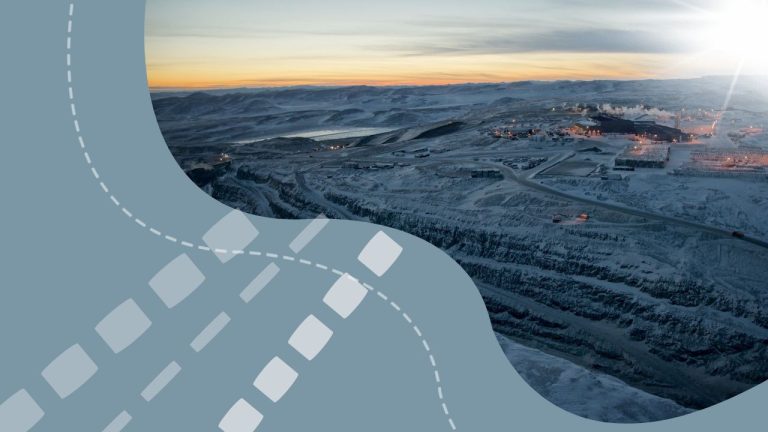
    State-owned miner LKAB has confirmed that the Per Geijer deposit, located near Kiruna above the Arctic Circle, contains an estimated 2.2 million tonnes of rare earth oxides alongside substantial volumes of iron ore and phosphorus. The updated resource estimate places the site among the largest known rare earth deposits in Europe.

    Rare earth elements are vital components in permanent magnets used in electric vehicle motors, wind turbines and consumer electronics. Europe currently relies heavily on imports, with China responsible for processing nearly 90 percent of global rare earth supply, creating strategic vulnerabilities across industrial and energy transition supply chains.

    LKAB estimates that once fully developed, Per Geijer could eventually meet up to 18 percent of Europe’s rare earth demand. The deposit also contains approximately 1.2 billion tonnes of iron ore and phosphorus, with rare earth minerals primarily hosted in apatite, allowing recovery alongside existing iron mining operations.

    The project forms part of a broader European effort to strengthen domestic raw material production under the EU Critical Raw Materials Act, which aims to reduce reliance on single external suppliers and expand regional mining and processing capacity by 2030. Per Geijer, together with LKAB’s related developments in Malmberget and Luleå, has received strategic project status, enabling accelerated permitting procedures and improved access to financing.

    Rather than developing a standalone rare earth mine, LKAB plans an integrated industrial chain linking iron ore extraction in Kiruna with downstream processing facilities. Concentrates produced at Malmberget would be transported to a new industrial hub in Luleå, where hydrometallurgical processing will separate rare earth oxides, phosphoric acid for fertiliser production and gypsum by-products.

    To support final separation of individual rare earth elements, LKAB has also invested in Norwegian technology company REEtec, which is developing alternative refining methods aimed at reducing dependence on Chinese processing technologies.

    Despite its strategic importance, the project faces social and environmental challenges. Mining activity has already forced the gradual relocation of Kiruna due to ground subsidence, while Indigenous Sámi communities have raised concerns that expanded mining could disrupt traditional reindeer herding routes and fragile Arctic ecosystems.

    LKAB emphasises that Per Geijer remains a mineral resource rather than an approved mining reserve, with further exploration, technical studies and permitting required. Industry analysts expect large-scale rare earth production to take between 10 and 15 years before material from the project reaches European manufacturing supply chains.

    Even at full capacity, experts note that the deposit will complement rather than replace global supply networks. However, the presence of a major domestic rare earth source marks a significant shift in Europe’s long-term strategy to secure materials underpinning the green and digital transition.

  • US Energy Secretary Says Greenland Interest Driven by Security, Not Mining

    US Energy Secretary Says Greenland Interest Driven by Security, Not Mining

    The Trump administration’s primary interest in Greenland is rooted in national security rather than the development of its rare earth or energy resources, US Energy Secretary Chris Wright said at a conference in Paris hosted by the French Institute of International Relations.

    President Donald Trump has repeatedly expressed interest in expanding US influence in Greenland and has explored potential mineral supply agreements as part of a broader strategy to reduce reliance on China for critical raw materials. However, Wright clarified that mineral development is secondary to security considerations, particularly in the context of expanding the US military presence on the Arctic island.

    “We’ve got all sorts of places to mine rare earth metals and produce oil and gas,” Wright said, adding that while resource development might benefit Greenland economically, the United States’ core objective is strategic security.

    Rare earth elements have been central to Washington’s geopolitical strategy, as the US seeks to challenge China’s dominance in the supply of critical minerals used in technologies ranging from smartphones and renewable energy systems to advanced defence applications.

    During the early months of his second term, Trump pursued mineral supply discussions with Greenland and Ukraine. More recently, however, the administration has shifted focus toward downstream processing, widely regarded as the key bottleneck in building alternative supply chains outside China.

    Wright also downplayed the scarcity narrative surrounding rare earth elements, noting that the materials are geographically widespread and that more commercially attractive mining jurisdictions exist elsewhere.

  • Romania Eyes Rare Earth Refining Capacity to Become Global Critical Materials Player

    Romania Eyes Rare Earth Refining Capacity to Become Global Critical Materials Player

    Romania could emerge as a global force in the rare metals industry as it moves to develop domestic refining capacity, Energy Minister Bogdan Ivan said in an interview with Antena 3.

    Ivan argued that Romania already possesses strong industrial foundations, including major automotive and industrial wiring manufacturers that currently import refined copper from countries such as India, China and Turkey, despite much of the raw ore being mined domestically. He said the establishment of a rare earths refinery would encourage high-tech manufacturers, including aerospace component producers, to relocate closer to Romanian industrial hubs such as Brasov, Sibiu and Feldioara.

    According to the minister, three Romanian projects involving critical raw materials were recognised by the European Union as strategically significant in April 2025. One of them is a €300 million investment to build the country’s first copper refinery in Hunedoara county. The project is being developed by a private Romanian company in partnership with state-owned copper miner CupruMin. Currently, copper ore extracted in Hunedoara is exported for refining in Turkey and Asia before being re-imported for use in domestic manufacturing.

    Two additional projects, worth a combined €315 million, focus on metallic magnesium extraction in Bihor county and battery-grade graphite extraction in Gorj county. The Bihor project involves companies from the United States and Canada, while the graphite project in Baia de Fier is operated by majority state-owned company Salrom.

    Ivan also confirmed ongoing discussions with a US-based mining company holding licences for rare earth deposits in Greenland. By mid-April, Romania expects to finalise the terms of what would become its first fully integrated project covering extraction, refining and downstream consumption of rare earth materials. The minister said the US company already holds contracts with major aerospace firms.

    In December, the Energy Ministry announced that the Feldioara Uranium Concentrate Processing Plant, a subsidiary of Nuclearelectrica, would establish a joint venture with US-based Critical Metals Corp. Under the plan, 50% of rare earths extracted from a major Greenland deposit would be processed at the Feldioara facility. The initiative could position Romania as a stable supplier of strategic materials for microprocessors, aerospace and defence industries.

    The project may receive financing under the European RESourceEU Action Plan, which has a budget of up to €3 billion.

  • Romania Claims EU Leadership in Critical Raw Materials as US Partnerships Advance

    Romania Claims EU Leadership in Critical Raw Materials as US Partnerships Advance

    Romania holds 16 of the 32 critical raw materials designated at EU level and ranks first in the bloc in terms of subsoil resources for rare earths and strategic minerals, Energy Minister Bogdan Ivan has said.

    Speaking to local media, Ivan stated that Romania possesses half of the critical elements Europe considers essential, with some found only in Romania and at most one other EU member state. The minister argued that this positions the country as a key pillar of Europe’s resource security strategy.

    Romania is already working with what Ivan described as an “extremely important” American company in efforts to reduce dependence on Chinese critical minerals. According to local reports, this partner is likely Critical Metals Corp, which has links to investor Frank Timiș.

    Ivan acknowledged, however, that Romania currently lacks an integrated processing and refining chain for these materials. Developing such infrastructure would, he said, create the first fully integrated rare earth processing chain in the western hemisphere, potentially supplying strategic industries including aerospace and advanced technology manufacturers such as SpaceX.

    Discussions are also reportedly under way regarding cooperation between Critical Metals Corp and Nuclearelectrica (BVB: SNN). The proposal involves transforming the uranium processing facility at Feldioara into a plant capable of refining rare earth elements sourced from Greenland.

    In parallel, Ivan highlighted three Romanian projects included under the EU’s Critical Raw Materials Act, with a combined value of around EUR 615 million. According to European Commission data, these projects are being developed by Euro Sun Mining (copper), Salrom (graphite), and Verde Magnesium (magnesium). One of the projects, Euro Sun Mining’s copper development, currently lacks a valid environmental permit.

    The minister’s remarks come as the European Union intensifies efforts to diversify supply chains and reduce reliance on external suppliers amid geopolitical tensions and rising demand from the energy transition and defense sectors.

  • Türkiye and Uzbekistan Sign Mining Cooperation MoU Focused on Critical Minerals

    Türkiye and Uzbekistan Sign Mining Cooperation MoU Focused on Critical Minerals

    Türkiye and Uzbekistan have signed a memorandum of understanding aimed at strengthening bilateral cooperation in the mining sector, with a particular focus on critical minerals and rare earth elements, officials said on Thursday.

    The document was signed by Turkish Minister of Energy and Natural Resources Alparslan Bayraktar and Uzbekistan’s Minister of Mining Industry and Geology Bobir Islamov. The signing took place following high-level talks in Ankara between Recep Tayyip Erdogan and Shavkat Mirziyoyev.

    According to Bayraktar, the agreement is intended to promote information exchange, research and development, and the implementation of concrete joint projects in the mining sector. He said the memorandum would help advance cooperation in strategically important minerals and support broader economic ties between the two countries.

    Writing on Türkiye’s NSosyal platform, Bayraktar described the agreement as an important step toward achieving the bilateral trade volume targets set by the two presidents, expressing confidence that it would deliver mutual benefits.

    The signing coincided with the Fourth Meeting of the Türkiye–Uzbekistan High-Level Strategic Cooperation Council, chaired by Erdogan and Mirziyoyev at the presidential complex in Ankara. Beyond mining, the two countries concluded a series of additional agreements and memoranda covering cooperation in health, education, culture, transport corridors, energy, higher education, free and special economic zones, as well as economic and financial affairs.

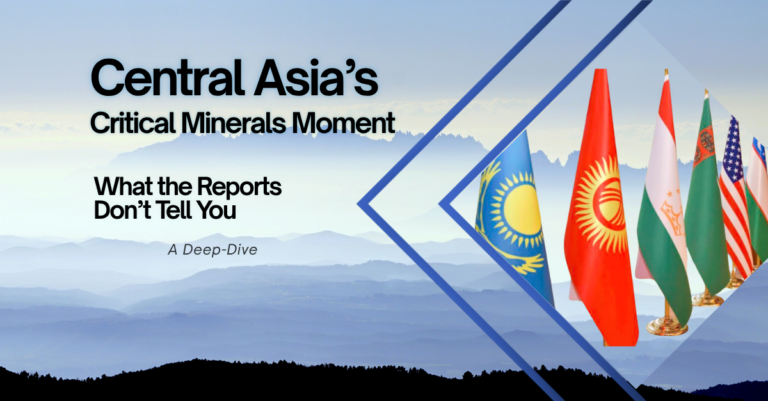
  • A Strategic Assessment of Promise vs. Reality in Central Asia’s Mineral Development

    A Strategic Assessment of Promise vs. Reality in Central Asia’s Mineral Development

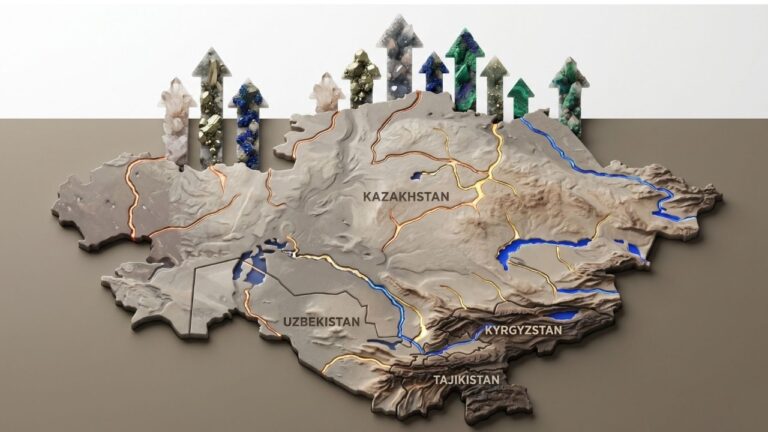
    Central Asia’s role in global critical minerals took a decisive turn at the 4 February 2026 Critical Minerals Ministerial in Washington, where officials from more than 50 countries acknowledged the region as a strategic hub rather than a geopolitical buffer.

    While Washington presented an ambitious framework to advance mineral sovereignty, analysts caution that the region—not the U.S.—must drive implementation to avoid becoming a passive arena for major‑power competition.

    U.S. Strategy: A Vertical Integration “New Order”

    The U.S. vision, centred on the FORGE initiative and the concept of “Pax Silica,” positions minerals and energy as shared strategic assets among trusted partners and offers an alternative to dependency on China.
    Washington differentiates its value proposition in three areas:

    1. Market Stability Through Price Floors
      Proposed tariff‑backed price floors aim to counter predatory market dumping and protect investments in assets such as Kazakhstan’s rare earth reserves.
    2. Vertical Value Integration
      The U.S. framework prioritises domestic processing and refining over raw‑ore exports, enabling Central Asian states to capture more value across the supply chain.
    3. Connectivity Autonomy
      By incorporating the Middle Corridor into initiatives like TRIPP, the West presents routes that bypass Russia and China, reducing geopolitical transit pressures.

    Kazakhstan and Uzbekistan have responded quickly—Kazakhstan has declared critical minerals the “new oil” and joined the Abraham Accords to strengthen supply‑chain integration, while Uzbekistan has pursued strategic MOUs to modernise mining and secure battery‑metal supply chains.

    Reality Check: Gaps Between Intent and Implementation

    Despite strong rhetoric, Western engagement has largely taken the form of frameworks and MoUs—not operational projects.

    Three challenges persist:

    • Operational Disparity – China continues to deliver turnkey, financed projects backed by contractors and long‑term offtake agreements, while Western partners emphasise declarations.
    • U.S. Inward Focus – Washington’s drive for techno‑economic sovereignty favours selective, de‑risked engagements rather than proactive industrial development in the region.
    • Execution Gaps – Uzbekistan’s $2.6bn program covering 76 projects illustrates regional ambition, but real progress requires partners capable of building at scale.

    Strategic Imperative: Central Asian Agency

    Experts argue that relying on future U.S. demand is a strategic mistake.
    To convert high‑level dialogue into economic gains, Central Asia must prioritise:

    1. Midstream Capabilities

    Refining and producing intermediary products offer higher margins and reduce reliance on long‑distance transport of low‑value raw ore.

    2. Direct Private‑Sector Engagement

    Regional firms should proactively present project‑ready opportunities to U.S. companies rather than depending on government‑to‑government frameworks.

    Conclusion

    The U.S. “New Order” provides Central Asia with a potential pathway to diversify away from Beijing and Moscow while improving price stability and long‑term sovereignty.
    But success hinges on regional execution. Astana and Tashkent must convert diplomatic signals into tangible midstream capacity—and do so quickly—to secure their strategic autonomy before the current window closes.

  • EU to Offer US Critical Minerals Partnership to Counter China’s Dominance

    EU to Offer US Critical Minerals Partnership to Counter China’s Dominance

    The European Union is set to offer the United States a critical minerals partnership designed to curb China’s influence over global supply chains, according to people familiar with the matter.

    Brussels is preparing a memorandum of understanding to create a “Strategic Partnership Roadmap” within three months, which would guide joint efforts to source and refine essential materials for modern technologies—ranging from batteries to semiconductors—without heavy reliance on Beijing.

    The proposal includes initiatives such as joint mineral projects, price support mechanisms, and safeguards against market manipulation. It also encourages building reciprocal supply chains between the two economies while maintaining mutual respect for territorial integrity—a pointed reference after tensions rose when U.S. President Donald Trump signaled interest in purchasing Greenland, an autonomous territory of Denmark.

    The renewed cooperation effort comes ahead of a major U.S.-led meeting of foreign ministers and senior officials this week aimed at forming global alliances to reduce Chinese mineral dominance. Washington’s sense of urgency follows Beijing’s export restrictions on rare earth elements last year, temporarily eased under a deal between Trump and Chinese President Xi Jinping.

    Underlining its seriousness, the Trump administration this week launched a $12 billion national critical mineral stockpile. The EU’s draft mirrors this approach, suggesting both sides could coordinate stockpiling and rapid response measures to supply disruptions.

    Key pillars of the EU proposal include cooperation on securing supply chains, developing international premium markets, and sharing information to boost market transparency. It also envisions exemptions from mutual export restrictions, collaboration on innovation and research, and the creation of a joint EU-U.S. response group to manage potential shortages.

    Despite concerns over the pace of negotiations, EU officials called the talks “vital to diversify our supplies away from any single country,” indicating that the transatlantic allies are increasingly aligned in reshaping critical mineral dependencies.

  • France’s Carester and Malaysia’s Malaco Join Forces on Rare Earth Processing

    France’s Carester and Malaysia’s Malaco Join Forces on Rare Earth Processing

    French rare earth technology company Carester and Malaysia’s Malaco Mining Group have agreed to cooperate on the development of a rare earth separation plant and to explore broader collaboration in rare earth mining, marking a new step in international efforts to diversify critical mineral supply chains.

    The partnership, currently at a pilot stage, will focus on building a rare earth separation facility in Malaysia. According to Benjamin Gallezot, adviser to French President Emmanuel Macron on strategic minerals, the agreement предусматривает передачу технологий Malaco, а также поддержку в вопросах экологического соответствия и соблюдения международных стандартов.

    The project comes as Western economies intensify efforts to reduce dependence on China, which dominates global rare earth production and processing. Rare earth elements are essential inputs for electric vehicles, renewable energy technologies, smartphones and other high-tech applications.

    Malaysia holds an estimated 16.1 million tonnes of rare earth resources but has so far lacked the technological capability to mine and process them domestically. Cooperation with Carester is expected to help close this gap, particularly in separation technologies required before rare earths can be used in permanent magnets and clean technology manufacturing.

    Gallezot said Malaco is already in discussions with several European magnet manufacturers, though specific companies were not named. He also noted interest from Japan, suggesting the project could attract a wider group of international partners.

    In parallel, Gallezot said G7 countries plan to engage with partners outside the group on critical minerals during meetings this year, underlining the growing role of international cooperation in securing diversified and resilient supply chains.