Tag: Kazakhstan

  • Kazakhstan Faces Geologist Shortage Due to Gap in Specialist Training

    Kazakhstan Faces Geologist Shortage Due to Gap in Specialist Training

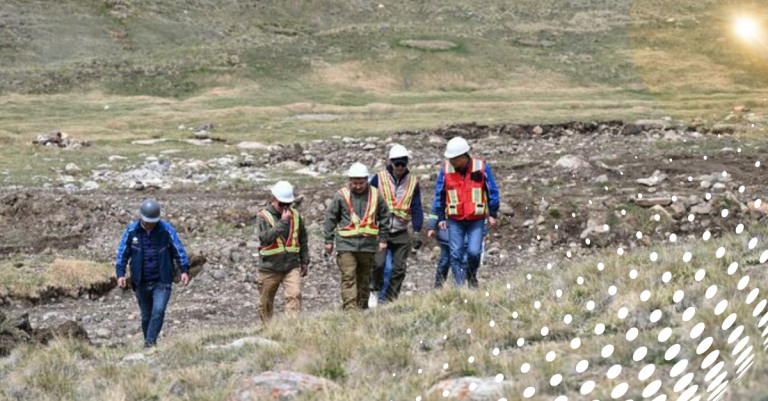
    Kazakhstan is experiencing a severe shortage of geologists due to a long pause in the development of the profession. This was reported by Margulan Baibatyrov, Deputy Chairman of the Committee of Geology at the Ministry of Industry and Construction, according to Kazinform News Agency.

    According to him, despite the high salaries and the prestige of the profession, there was a period in Kazakhstan’s geological exploration history when the work of geologists was not in demand. This led to a significant gap of about 30 years between generations of specialists.

    The exact number of geologists currently needed in the country was not specified, but Baibatyrov noted that all graduates from universities specializing in this field are successfully employed.

    The issue of the shortage of qualified geologists was previously raised by Rashid Zhaksylykov, Chairman of the Board of the Association of Legal Entities “Union of Oilfield Service Companies of Kazakhstan.” In an interview with Kazinform in March 2025, he emphasized the need to intensify the training of specialists in this area.

  • Kazatomprom and Romania’s SN Nuclearelectrica Discuss Expanding Uranium Supply Cooperation

    Kazatomprom and Romania’s SN Nuclearelectrica Discuss Expanding Uranium Supply Cooperation

    Kazatomprom, Kazakhstan’s national atomic company, held discussions with Romania’s Ministry of Energy and state-owned company SN Nuclearelectrica S.A. regarding the expansion of natural uranium supplies and the development of the beryllium industry.

    A key outcome of the talks was the discussion of terms for a ten-year contract to supply Kazakhstani natural uranium for Romania’s current and planned nuclear power plants. Kazatomprom anticipates that the contract will strengthen long-term cooperation between the two countries and provide reliable raw material supplies for Romania’s nuclear energy sector.

    Additionally, the Ulba Metallurgical Plant (UMP), a subsidiary of Kazatomprom, may begin processing Romanian beryllium. Romanian representatives expressed interest in scientific and technical cooperation with UMP and further exploration of processing beryllium raw materials from Romanian deposits. UMP specializes in processing beryllium and tantalum and exports its products globally.

    In Kazatomprom’s 2024 report, uranium production (proportional to its ownership share) reached 12.3 thousand tons, marking a 10% increase from 11.1 thousand tons in 2023 and 11.4 thousand tons in 2022. This growth was mainly driven by joint ventures Budenovskoye, Akbastau, and Karatau.

    However, production of beryllium products fell to 735.1 tons in 2024, down from 842.8 tons in 2023 and 1,295.4 tons in 2022. Tantalum production also declined, with 135.1 tons produced in 2024 compared to 153.8 tons in 2023 and 165.3 tons in 2022.

    Kazatomprom’s 2024 financial report stated that revenue reached 1.81 trillion tenge (up from 1.43 trillion tenge in 2023). The largest consumers of Kazakh uranium and other products included:

    • China: 663.7 billion tenge (522.5 billion tenge in 2023)

    • Kazakhstan: 336.6 billion tenge (182.6 billion tenge)

    • Russia: 253.2 billion tenge (215 billion tenge)

    • Canada: 164.9 billion tenge (131.1 billion tenge)

    • USA: 140.9 billion tenge (152.5 billion tenge)

    • France: 110.9 billion tenge (82.6 billion tenge)

    • United Kingdom: 44.7 billion tenge (40.6 billion tenge)

    • UAE: 29.3 billion tenge (no imports in 2023)

    Other countries purchased Kazakh products worth 69.2 billion tenge, down from 107.6 billion tenge in 2023. Although Romania was not among the largest consumers, Kazatomprom confirmed it continues to supply its products to the country.

  • Kazakhstan Strengthens Position in Global Rare Earth Metals Market

    Kazakhstan Strengthens Position in Global Rare Earth Metals Market

    Kazakhstan is reaffirming its status as a key player in the global market for rare and rare earth metals by actively expanding its mineral resource base and fostering a favourable investment climate for processing and high-tech production.

    The country currently hosts over 100 identified deposits of rare and rare earth elements, including major sites such as Kurumsak, Bala-Sauskandyk, Akbulak, Kundybai, and Verkhnee-Espe. Kazakhstan extracts 19 of the 34 rare earth elements deemed critical to the European Union’s economy, including beryllium, tantalum, niobium, and rhenium – metals in high demand across sectors such as electronics, defence, energy, and telecommunications.

    Kazakhstan’s mineral resource base includes significant reserves of:

    • Tungsten – 2.4 million tonnes
    • Molybdenum – 1 million tonnes
    • Lithium – 226.9 thousand tonnes
    • Tantalum – 4.6 thousand tonnes
    • Niobium – 27.2 thousand tonnes
    • Beryllium – 117.5 thousand tonnes

    Particularly valuable are the so-called dispersed elements, such as selenium, tellurium, germanium, gallium, and scandium, which are extracted through integrated mineral processing.

    A central focus of state policy is the advancement of domestic processing of rare and rare earth metals (RMs and REMs), the development of new production facilities, and the manufacture of export-oriented, competitive products. The government is proactively engaging international partners through a “raw materials in exchange for investment and technology” framework.

    With global demand for critical materials projected to quadruple by 2040, Kazakhstan is consolidating its role as a reliable and stable supplier of strategic raw materials to the world’s high-tech industries.

  • Kazakhstan Extends Export Bans to Boost Domestic Processing of Raw Materials

    Kazakhstan Extends Export Bans to Boost Domestic Processing of Raw Materials

    Kazakhstan’s Interagency Commission on Foreign Trade Policy and Participation in International Economic Organizations has continued to drive the domestic processing of raw materials by extending export bans. The government outlined the results of a recent meeting on the official website of the Prime Minister of the Republic.

    The government has decided to extend the ban on the transportation of liquefied gas, a measure initially implemented to prevent fuel shortages on the domestic market.

    Additionally, a six-month export ban has been imposed on steel billets and semi-finished products. This measure is not new but has already yielded positive results. According to the Interagency Commission, domestic metallurgical plants have shifted their focus to deeper processing of raw materials and have increased rebar exports by 30,000 tons.

    The authorities also plan to support the metallurgy sector with anti-dumping duties on seamless pipes from China and galvanized steel from Ukrainian producers.

    Another import restriction will apply to stone products and drywall from countries outside the Eurasian Economic Union, with local companies’ capacities deemed sufficient to meet domestic demand.

  • Solidcore Reports Sharp Drop in Gold Output and Revenue Due to Sanctions and Delays

    Solidcore Reports Sharp Drop in Gold Output and Revenue Due to Sanctions and Delays

    Solidcore Resources reported a significant decline in gold-equivalent output for Q1 2025, producing 68,000 ounces — a 42% decrease compared to the same period last year. The company attributed the shortfall to delays in shipping concentrates from the Bakyrchik deposit (part of the Kyzyl project) to the Amur Hydrometallurgical Plant.
    In its statement, Solidcore highlighted ongoing “operational challenges” at the plant in Russia’s Khabarovsk region due to international sanctions. Last year, the company divested its Russian assets to Mangazeya Mining.
    As Solidcore prepares to launch the Irtysh Hydrometallurgical Complex in Kazakhstan’s Pavlodar region, it remains reliant on Russian facilities for processing its complex refractory and double-refractory ores. As a result, 41,000 ounces of gold in concentrate have accumulated over the quarter, with shipments to Amursk now expected to resume in May.
    The production drop was accompanied by a steep fall in sales: only 38,000 ounces of finished product were sold in Q1, down 67% year-on-year. Revenue shrank 2.7 times to $109 million.
    Despite these setbacks, ore extraction rose by 13% to 1.32 million tonnes, mainly due to the Kyzyl project. Total ore processing remained stable at 1.57 million tonnes. At the Varvarinskoye site, ore grades declined as expected, while Bakyrchik saw an improvement.

  • Solidcore Resources Reports Q1 2025 Production Results, Reaffirms Full-Year Outlook

    Solidcore Resources Reports Q1 2025 Production Results, Reaffirms Full-Year Outlook

    Solidcore Resources plc (“Solidcore” or the “Company”) announced its production results for the first quarter ended 31 March 2025. Despite facing temporary shipment delays that impacted sales, the Company reaffirmed its full-year production and cost guidance, citing confidence in a strong recovery during the second half of the year.

    Chief Executive Officer Vitaly Nesis commented, “While sales have been deferred due to shipment delays, the fundamentals of our business remain solid. We expect a meaningful recovery beginning in May as concentrate stockpiles start to unwind.”

    Operational Highlights:

    • Solidcore recorded no fatalities or lost time injuries among its employees and contractors during the quarter.

    • Gold equivalent (GE) production totaled 68 thousand ounces (Koz), a 42% decrease year-on-year, largely due to delays in concentrate shipments from the Kyzyl mine to Amursk POX, impacted by operational challenges linked to international sanctions.

    • Kyzyl’s production of gold in concentrate rose 6% to 97 Koz due to higher ore grades, though shipment delays led to a stockpile of 41 Koz of payable metal.

    • At Varvara, production fell 10% year-on-year as planned, reflecting lower grades and reduced third-party processing.

    • Sales were notably down to 38 GE Koz from 116 GE Koz a year earlier, resulting in revenue of US$ 109 million, a 63% decline year-on-year. A strong rebound is anticipated in the second half as operations normalize.

    Strategic Developments:

    • Solidcore announced the acquisition of the Tokhtar gold property, located near its Varvara hub. The property adds 1.1 million ounces of JORC-compliant Mineral Resources at an average head grade of 2.4 g/t, bolstering the Company’s long-term growth pipeline.

    • The acquisition of the initial 51% interest is on track to complete in Q3 2025, pending regulatory approvals.

    Outlook: The Company reiterated its full-year guidance of 470 GE Koz in production, with Total Cash Costs (TCC) and All-In Sustaining Costs (AISC) expected within the ranges of US$ 1,000–1,100/oz and US$ 1,350–1,450/oz, respectively.

    Solidcore remains well-positioned to navigate near-term operational hurdles and capitalize on favorable gold market dynamics.

  • Uzbekistan’s Navoiuran Signs €9 Million Uranium Transport Deal with Kazakhstan’s Logistic Centre

    Uzbekistan’s Navoiuran Signs €9 Million Uranium Transport Deal with Kazakhstan’s Logistic Centre

    Navoiuran, a leading uranium producer from Uzbekistan, has signed a €9 million contract with Kazakhstan’s TOO Logistic Centre for the transportation of uranium concentrate to France, according to inbusiness.kz citing EURASIA TODAY.


    Under the agreement, TOO Logistic Centre will transport 500 containers of uranium concentrate from the port of St. Petersburg to the commune of Malvési in southern France. The total cargo volume is expected to reach up to 6,000 tons.


    Deliveries are scheduled to continue until the end of the first quarter of 2026, with each shipment required to reach its destination within 15 days of departing the Russian port.


    In addition to the French deliveries, Navoiuran plans to export uranium through Russia to the United States and Canada and is currently seeking contractors for transportation to processing facilities in those countries.

  • Kazakh Authorities Shut Down Five Companies Engaged in Illegal Gold Mining

    Kazakh Authorities Shut Down Five Companies Engaged in Illegal Gold Mining

    Kazakhstan’s Ministry of Internal Affairs (MIA) and National Security Committee (KNB), coordinated by the General Prosecutor’s Office, have shut down the operations of five companies involved in illegal mining and processing of gold-bearing materials in the Abai, Zhetysu, East Kazakhstan, and Turkestan regions, according to inbusiness.kz citing Polisia.kz.

    Authorities found that the companies held licenses only for geological exploration but were in fact conducting large-scale illegal extraction of gold-bearing ore using specialized equipment and machinery. During the raids, over 6,700 tons of gold-bearing ore, 300 tons of ore slurry, 120 tons of ammonium nitrate, explosives, and detonators were seized. In addition, 45 pieces of specialized equipment were confiscated on-site.

    A total of 62 individuals, including directors and founders of several limited liability partnerships (LLPs), were detained. Five criminal cases have been registered related to the illegal circulation of precious metals and raw materials containing precious metals. The damage to the state has been assessed as particularly large.

    Kuanlyk Alpis, a representative of the MIA’s Department for Combating Organized Crime, emphasized the importance of the operation in protecting the country’s natural resources and fighting organized crime in the precious metals sector.

  • ERG is Definitely Not for Sale

    ERG is Definitely Not for Sale

    Amid recent media speculation regarding the possible sale of Eurasian Resources Group (ERG), including reports of a $5 billion proposal from US investor James Cameron, Shukhrat Ibragimov—Chairman of the Board of Directors and Chief Executive Officer of ERG—has firmly denied any such negotiations.

    “ERG is definitely not for sale,” stated Ibragimov, emphasiaing that there are no ongoing discussions about the sale of the company.

    Ibragimov also reaffirmed the Group’s strategic direction, noting the management’s full commitment to “further consistent, sustainable development” and confirming there are “no changes to business as usual.” At the end of 2024, ERG’s Board of Directors adopted a new strategy aimed at further development and investment across the company’s enterprises, which has since been actively implemented.

    The company’s focus on long-term growth and creating value for all stakeholders remains unchanged, with ongoing initiatives supporting both sustainable development and ERG’s position as a key player in Kazakhstan and Africa.

  • Kazakhstan to Auction 50 Gold and Rare Metal Deposits in June 2025

    Kazakhstan to Auction 50 Gold and Rare Metal Deposits in June 2025

    Kazakhstan’s Ministry of Industry and Construction has announced that 50 deposits containing gold and rare metals will be made available for exploration and production rights via an electronic auction set for June 2025.

    Almas Kushumov, Director of the Ministry’s Department of Subsoil Use, revealed the plans during the MINEX Kazakhstan forum. According to Kushumov, the auction will include deposits with confirmed balance reserves of gold, coal, rare metals, and polymetals.

    The auction will take place through the Unified Subsoil Use Platform (minerals.e-qazyna.kz), and all procedures — including document submission — will be handled online. Licenses granted through this process will cover both exploration and production, with the latter valid for 25 years.

    Companies from the United States, European Union, and China have already expressed interest and submitted applications. The Ministry expects to publish the full list of 50 available deposits in the coming days.

    Between 2023 and 2024, Kazakhstan successfully awarded 117 deposits through similar electronic auctions, raising more than KZT29 billion (approximately $55.9 million) in signing bonuses.

    Kazakhstan currently has over 9,000 registered deposits, including 987 solid mineral sites. Due to outdated geological data—some of it over 30 years old—the government is putting strong emphasis on both exploration and production.

    The 2018 introduction of the Code on Subsoil and Subsoil Use has notably improved the investment environment, reportedly tripling private capital inflow into the sector.

    The state mining firm Tau-Ken Samruk is also pushing forward with exploration at the Kuirektykol rare earth site, where recent studies suggest the potential for significant new reserves that could elevate Kazakhstan’s standing as a global rare earth leader.