Tag: Geopolitics

  • Central Asia’s Uranium Endowment Turns Into a Strategic Test of Governance and Geopolitics

    Central Asia’s Uranium Endowment Turns Into a Strategic Test of Governance and Geopolitics

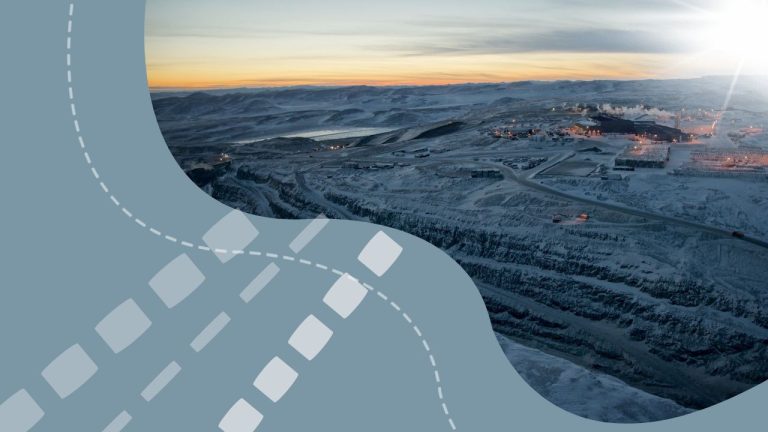
    Central Asia occupies a pivotal position in the global uranium market, combining vast geological resources with a legacy of extraction that continues to shape policy, public trust and international interest. The region holds one of the world’s largest concentrations of economically recoverable uranium, with Kazakhstan alone accounting for roughly 12–15% of known global resources and producing about 40% of annual world output. Uzbekistan ranks among the top ten global producers and holds the second-largest uranium reserves in the post-Soviet space, while smaller but sensitive deposits remain in Kyrgyzstan and Tajikistan.

    This resource wealth is inseparable from history. Uranium mining under the Soviet nuclear program was carried out with minimal environmental safeguards or community consultation. Sites such as Taboshar in northern Tajikistan and Mailuu-Suu in southern Kyrgyzstan remain contaminated decades after closure, with exposed tailings posing long-term health and environmental risks. These legacies continue to influence public attitudes toward new uranium projects, making transparency, safety and governance as critical as geology itself.

    As nuclear power regains prominence in the global energy transition, uranium has shifted from a technical commodity to a strategic asset. This transformation has intensified great-power competition in Central Asia, where Russia, China and Western actors pursue distinct strategies across the uranium and nuclear value chain.

    Russia remains the most deeply embedded external player. Through Rosatom, it offers a vertically integrated model that spans mining partnerships, reactor construction, fuel supply and long-term operation. In Kazakhstan, Rosatom is leading the consortium for the country’s first nuclear power plant, while discussions on a second plant could further entrench Russian technical standards. In Uzbekistan, agreements to build small modular reactors would significantly increase domestic uranium demand and lock in long-term reliance on Russian technology and fuel services. While this turnkey approach offers speed and financing, it also creates structural dependence and exposes projects to sanctions and governance risks.

    China has taken a more upstream-focused approach, prioritizing access to uranium resources rather than immediate reactor exports. Chinese state-owned firms hold stakes in Kazakh uranium ventures and maintain long-term offtake agreements to supply China’s rapidly expanding nuclear fleet. Beijing has also revisited uranium potential in Tajikistan, reflecting a patient, resource-first strategy tied to broader infrastructure investments. For Central Asian governments, Chinese involvement offers diversification and capital, but raises concerns over transparency, environmental oversight and debt exposure.

    Western engagement follows a different path. Rather than dominating mining or reactor construction, the United States and its allies focus on diversifying global supply chains, supporting high environmental and governance standards, and strengthening downstream and regulatory capacity. Companies such as France’s Orano and Japan’s ITOCHU have partnered with Uzbekistan’s uranium sector, emphasizing international safety norms. Western and allied reactor vendors have also participated in tenders and discussions in Kazakhstan and Uzbekistan, while broader cooperation extends to nuclear safety regulation, workforce training and remediation of legacy sites.

    For Central Asian states, this competition offers leverage rather than inevitability. By sequencing projects, maintaining competitive procurement and separating mining decisions from reactor build-outs, governments can avoid exclusive dependence and negotiate better terms. The primary risk lies not in geopolitical rivalry but in weak governance. Fragmented regulation, limited institutional independence, opaque licensing and underfunded remediation frameworks threaten to recreate the long-term liabilities of the past.

    Globally, uranium demand is rising as more than 60 reactors are under construction and over 100 additional units are planned. In this context, Central Asia is not a marginal supplier but a systemically important pillar of the nuclear fuel cycle. Kazakhstan’s low-cost in-situ leaching operations place it at the bottom of the global cost curve, while Uzbekistan’s expansion plans could further consolidate the region’s role.

    The economic upside, however, depends on moving beyond mining alone. International experience shows that the greatest benefits come from integrating across the value chain, supported by strong regulation and openness to high-standard investors. Without this, new projects risk repeating Soviet-era mistakes: environmental damage, social opposition and fiscal burdens that persist long after production ends.

    Ultimately, uranium development in Central Asia is a governance challenge as much as a geological one. Independent regulators, transparent licensing, enforceable financial guarantees for closure and remediation, and regional cooperation on transboundary risks are essential. Aligning national frameworks with international safety and ESG standards would not only protect communities and ecosystems, but also expand access to long-term, high-quality investment. In a sector where reputational risk is high and capital is mobile, governance quality is not a constraint on growth, it is the condition for sustainable participation in the global nuclear economy.

  • Germany Faces Renewed Calls to Repatriate Gold Stored in the United States

    Germany Faces Renewed Calls to Repatriate Gold Stored in the United States

    Germany is once again under political and public pressure to reconsider the location of its gold reserves, as shifting transatlantic relations and geopolitical uncertainty revive concerns over assets held in the United States.

    The country holds the world’s second-largest official gold reserves and keeps roughly one-third of them, about 1,200 tonnes, in the vaults of the New York Federal Reserve. This storage strategy dates back to the Cold War, when placing bullion abroad was intended to guarantee rapid access in the event of a major global conflict. In addition to New York, Germany also stores gold in London and Paris.

    However, the return of US President Donald Trump to office and the escalation of trade and geopolitical tensions have prompted fresh debate in Berlin. Since April last year, German politicians and fiscal commentators have increasingly questioned whether the United States remains a reliable custodian for such a large share of the country’s reserves.

    Emanuel Mönch, a former senior research official at the Bundesbank, said recently that Germany should reassess its long-standing approach. Speaking to the financial newspaper Handelsblatt, he argued that greater strategic autonomy would justify bringing more gold back to domestic vaults.

    Similar views have been voiced by Michael Jäger, head of the European Taxpayers Association, who has repeatedly urged German authorities to accelerate repatriation plans. This month, he renewed his call after the United States increased pressure over Greenland, warning that political unpredictability could put foreign-held reserves at risk.

    The debate is unfolding against the backdrop of a historic rally in gold prices. The metal has surged to record levels above $5,100 per ounce, up around 80% over the past year. At current prices, Germany’s gold stored in New York alone would be valued at roughly $128 billion.

    Not all economists support the idea. Clemens Fuest, president of the Ifo Institute for Economic Research, cautioned that repatriation could strain diplomatic relations with Washington and potentially trigger unintended economic or political consequences.

    Germany is not alone in facing such pressure. Italy, which ranks as the world’s third-largest holder of gold reserves, has also seen renewed calls to bring home bullion stored in New York.

  • EU’s Push for Critical Minerals Raises Concerns Over Securitization and Democratic Backsliding

    EU’s Push for Critical Minerals Raises Concerns Over Securitization and Democratic Backsliding

    The European Union’s drive to secure access to critical raw materials is increasingly being framed as a matter of security, a shift that critics warn could undermine environmental protections, democratic processes, and the rights of local communities.

    Despite accounting for around 5% of the global population, the European Union consumes close to 20% of the world’s mineral resources, a gap that is widening as renewable energy, electric vehicles, digital technologies, and defence needs expand. This imbalance, analysts argue, has encouraged what they describe as a new form of “green imperialism,” aimed at maintaining mineral flows from the Global South and Europe’s periphery to major industrial centres.

    Over the past two decades, access to minerals has shifted from a trade and industrial policy issue to one increasingly treated as an existential security concern. The process accelerated after Russia’s invasion of Ukraine in 2022 and culminated in the EU’s Critical Raw Materials Regulation, adopted in 2024. The regulation designates “Strategic Projects” that benefit from faster permitting, privileged access to funding, and exemptions from certain environmental safeguards, with the stated goal of strengthening Europe’s strategic autonomy.

    Supporters argue the approach is necessary as demand for minerals such as copper, lithium, and rare earth elements is projected to multiply several times by 2030, while global production remains concentrated in a handful of countries. Critics counter that securitization has allowed industrial and political actors to push through projects by weakening environmental oversight, accelerating approvals, and marginalizing opposition.

    Concerns have grown following the European Commission’s designation of dozens of strategic projects through processes that critics describe as opaque and lacking public participation. Civil society organisations report that requests for environmental information have been denied on national security grounds, marking an unprecedented application of defence-related exemptions in environmental governance. In several member states, officials have also portrayed opposition from local communities and environmental groups as threats to public security or economic stability.

    Observers warn that this narrative risks fostering democratic erosion by restricting access to information, delegitimizing environmental activism, and prioritizing industrial interests over public participation. They argue that mining-related conflicts long associated with the “resource curse” in developing countries, such as social polarization, corruption, and weakened rule of law, are now emerging within Europe itself.

    While EU institutions maintain that strategic mineral development is essential for the green transition, defence, and industrial resilience, critics say the current approach reflects a structural contradiction. Efforts to accelerate extraction and processing are colliding with the EU’s own legal commitments to environmental protection, human rights, and transparency.

    As Europe moves to expand domestic mining and overseas supply chains, the outcome of this securitized approach to raw materials policy may determine whether the EU can reconcile strategic autonomy with its democratic and environmental foundations.

  • Critical Mineral Stockpiles Would Last Only Weeks in a Global Supply Shock

    Critical Mineral Stockpiles Would Last Only Weeks in a Global Supply Shock

    Most economies would struggle to keep industry running for more than a few weeks if global supplies of critical minerals were suddenly disrupted, highlighting a major vulnerability at the heart of the modern economy.

    Critical minerals underpin everything from electric vehicles and renewable energy systems to electronics and defence equipment. Yet their production and processing are highly concentrated in a small number of countries, leaving supply chains exposed to geopolitical tensions, trade restrictions and conflict, according to the International Energy Agency.

    In response, governments have begun building strategic stockpiles intended to buffer industries against shocks. However, a review of publicly disclosed reserves shows that most countries remain poorly prepared. Outside a small group of exceptions, stockpiles are generally insufficient to sustain even priority sectors for more than a few months during a major disruption. In several cases, governments do not publish data at all, citing national security concerns.

    China stands out as the most resilient player. It not only dominates mining and processing for many critical minerals but also holds the world’s largest known state reserves. Industry estimates suggest China could support domestic demand for months in minerals such as rare earths and battery metals. Recent export controls on materials including gallium, germanium and graphite demonstrated how quickly this leverage can be exercised.

    Among major importers, Japan and South Korea are the most advanced. Japan overhauled its approach after a rare earth supply crisis in 2010 and now maintains reserves covering several months of demand for minerals such as cobalt and nickel. South Korea has built stockpiles equivalent to roughly two months of consumption, with systems designed for rapid release during emergencies.

    By contrast, the United States and Europe appear more exposed than commonly assumed. US reserves are largely focused on defence needs and would likely cover only weeks of broader economic demand in a large-scale disruption, despite recent efforts to rebuild stocks of rare earths, cobalt and antimony. Europe is still debating coordinated stockpiling under the Critical Raw Materials Act, leaving its industrial base vulnerable in the near term.

    Australia is pursuing a producer-led strategy, developing reserves based on domestically mined materials such as rare earths, antimony and gallium, both to improve national resilience and support allied supply chains. India, meanwhile, has acknowledged the need for stockpiles in its critical minerals strategy but remains at an early stage of implementation.

    The reality is stark: if global production halted tomorrow, most economies would be counting their remaining buffer in weeks rather than years. Governments would be forced to prioritise defence, energy and essential manufacturing, while other sectors would face immediate shortages.

    Stockpile size alone, however, does not determine resilience. Effectiveness depends on how well reserves match real demand, how quickly they can be released, and whether alternative supplies or substitutes are available. Small but targeted stockpiles, combined with diversified sourcing, can sometimes offer more protection than large but poorly aligned reserves.

    For mining companies and investors, this shift underscores a broader change. Critical minerals are no longer viewed solely as commodities but as strategic assets, with their value increasingly shaped by geopolitics, security and resilience as much as by traditional supply and demand dynamics.

  • Poland’s central bank plans to boost gold reserves by 150 tonnes amid geopolitical risks

    Poland’s central bank plans to boost gold reserves by 150 tonnes amid geopolitical risks

    National Bank of Poland (NBP), the world’s largest reported buyer of gold, plans to increase its bullion holdings by a further 150 tonnes, lifting total reserves to 700 tonnes as it prepares for prolonged geopolitical instability.

    Management board member Artur Sobon told Bloomberg that the central bank recently approved the higher target, stressing that record-high gold prices would not deter purchases. Gold has surged to historic highs as investors seek safe havens amid rising tensions between the United States and Europe, including disputes over Greenland.

    “Our primary goal is to build an appropriate portfolio for these unstable geopolitical times, one that will guarantee Poland stability, security, and credibility,” Sobon said, adding that price considerations are secondary.

    At current market prices, acquiring 150 tonnes of gold would cost more than $23 billion. Central bank demand has been a major driver of gold’s rally, with prices doubling over the past 18 months. Buying accelerated globally after Russia’s reserves were frozen following its invasion of Ukraine, highlighting gold’s appeal as an asset that cannot be easily sanctioned.

    NBP purchased 100 tonnes of gold last year, the largest amount officially reported by any central bank. Analysts note that some countries, particularly China, may also be buying gold without fully disclosing their activity.

    Poland’s push to expand gold holdings has been led by central bank governor Adam Glapinski, with reserves standing at about 550 tonnes at the end of 2025. Until now, gold allocations were capped at 30% of total reserves, a threshold that soaring prices have brought close to being reached.

    Sobon said the timing and pace of future purchases would be determined by NBP traders and could vary month to month. Poland’s growing foreign-exchange reserves, bolstered by inflows of EU funds, give the country room to finance the expanded gold strategy. Total official reserves now stand at roughly $271 billion, compared with $36 billion when Poland joined the EU in 2004.

  • Critical Metals shares jump on Tanbreez upgrades and renewed US focus on Greenland

    Critical Metals shares jump on Tanbreez upgrades and renewed US focus on Greenland

    Shares of Critical Metals surged to their highest level in nearly three months after the company announced further upgrades to its flagship Tanbreez rare earth project in southern Greenland, amid renewed geopolitical attention on the Arctic territory from the United States.

    Earlier this week, the Nasdaq-listed company said it will acquire a fully integrated, mobile assay laboratory to support its Tanbreez project, which hosts one of the world’s largest known rare earth deposits. The laboratory, developed by mining solutions provider Bromet, will enable real-time, on-site geochemical analysis of drill core and pilot plant samples, strengthening data collection and accelerating decision-making as the project advances toward pilot-scale operations.

    Critical Metals CEO Tony Sage described the acquisition as a transformative step in moving Tanbreez from exploration into pre-mining development. The company is expected to pay around $1 million for the mobile laboratory. The move follows a recent decision to construct an Arctic-grade storage and pilot facility in Qaqortoq, scheduled for completion by mid-2026, and comes alongside potential logistics improvements linked to the planned opening of a new international airport near the project site.

    The upgrades are part of a modular, turnkey development strategy aimed at fast-tracking Tanbreez into production as early as this year. A preliminary economic assessment released last year outlined an initial production target of approximately 85,000 tonnes of rare earth oxides per year, with potential expansion to 425,000 tonnes annually. The assessment estimated a pre-tax net present value of about $3 billion and an internal rate of return of 180%, based on resources of at least 45 million tonnes within the largely underexplored kakortokite unit.

    Investor interest has also been boosted by rising geopolitical tensions surrounding Greenland. US President Donald Trump reiterated his desire for US control of Greenland this week, citing national security concerns, and senior US, Danish and Greenlandic officials held discussions in Washington on the issue. Analysts view Greenland’s vast untapped mineral resources, including rare earths, as a key driver behind Washington’s intensified interest.

    Following the announcements and geopolitical developments, shares of Critical Metals jumped as much as 35% in New York trading, lifting the company’s market capitalization to around $2.1 billion.

  • Greenland’s Kvanefjeld rare earth project highlights Europe’s late scramble for strategic minerals

    Greenland’s Kvanefjeld rare earth project highlights Europe’s late scramble for strategic minerals

    On Greenland’s southern tip, the Kvanefjeld mining project has become a symbol of both vast opportunity and prolonged paralysis. Beneath its icy terrain lies one of the world’s most significant deposits of neodymium and praseodymium, rare earth elements essential for wind turbines, electric vehicles and advanced military technologies. If developed, Greenland, a semi-autonomous territory within the Kingdom of Denmark, would become the first European source of these critical materials.

    The project is led by Energy Transition Minerals, which has long signaled readiness to move into production. However, progress stalled after the Greenlandic government imposed a ban on uranium mining in 2021, citing environmental and public health concerns. Because rare earths at Kvanefjeld are geologically associated with uranium, the ban effectively froze the project, triggering legal disputes that continue to delay development.

    Former Danish foreign minister Jeppe Kofod, now a strategic adviser to Energy Transition Minerals, said the case illustrates how regulatory uncertainty, geopolitics and high capital requirements can obstruct even strategically vital projects. Despite Greenland holding rare earth resources estimated to cover up to a quarter of global demand, alongside substantial oil, gas and other mineral potential, only two small mines are currently operating on the island.

    European interest has increased only recently. In 2023, the European Union signed a memorandum of understanding with Greenland to cooperate on mining projects, followed by the adoption of the EU Critical Raw Materials Act, which explicitly recognizes Greenland’s strategic importance. The European Commission has since committed funding to Greenland’s Malmbjerg molybdenum project to support defense-related supply chains.

    Analysts warn, however, that Europe may have moved too slowly. With the United States and China intensifying their focus on Greenland’s resources and U.S. President Donald Trump openly signaling aggressive ambitions toward the island, European policymakers risk being sidelined. Greenland’s harsh climate, limited infrastructure, small population and strict environmental rules further complicate development, even as climate change gradually improves access to previously icebound regions.

    While Brussels maintains that the future of Greenland’s resources rests solely with its people and elected authorities, growing geopolitical pressure suggests that external powers may play an increasingly decisive role in shaping the island’s mining future.

  • Germany calls for stronger cooperation on critical raw materials ahead of Washington talks

    Germany calls for stronger cooperation on critical raw materials ahead of Washington talks

    German Finance Minister Lars Klingbeil on Sunday urged closer international cooperation on critical raw materials as he prepared to travel to Washington for high-level talks with counterparts from major industrialized nations.

    Speaking before his departure from Berlin, Klingbeil, who also serves as vice chancellor and leader of the Social Democratic Party (SPD), said Germany and the European Union remain committed to fair, rule-based and reliable trade. He emphasized that access to critical raw materials such as lithium, cobalt and rare earths is essential for economic growth, technological development and job security.

    The United States has invited finance ministers from several leading economies to discuss securing access to these materials, whose global supply chains are highly concentrated and largely dependent on a small number of countries, including China.

    “Access to critical raw materials and reliable supply chains is of utmost importance for the economy and jobs,” Klingbeil said, adding that Germany has a strong interest in expanding international cooperation to strengthen supply security, reduce strategic dependencies and ensure stable economic conditions. He stressed that joint action should be taken wherever possible.

  • EU Unveils New Raw-Materials Security Doctrine to Cut Foreign Dependence

    EU Unveils New Raw-Materials Security Doctrine to Cut Foreign Dependence

    The European Union has unveiled a new raw-materials security doctrine that marks a significant shift in its industrial and geopolitical strategy, moving from high-level policy guidance to execution-focused industrial governance.

    The doctrine sets quantified targets to reduce Europe’s reliance on foreign raw-material supplies by 50% within the next decade, acknowledging that full self-sufficiency is unrealistic but stressing the need for redundancy, diversification and domestic capacity. The strategy prioritises critical and strategic materials across extraction, processing and recycling, aligning Europe more closely with approaches taken by the United States and parts of Asia, while accounting for Europe’s stricter environmental and permitting frameworks.

    A central pillar of the doctrine is the recognition that Europe’s main vulnerability lies not only in limited mining, but in weak midstream capabilities. Insufficient refining, metallurgical transformation and component production have left European industry exposed to supply disruptions. The new approach seeks to strengthen these segments through financial incentives for processing plants, expanded recycling infrastructure and the creation of coordinated industrial clusters spanning automotive, aerospace, energy and defence sectors.

    Implementation speed is expected to be decisive. EU institutions acknowledge that lengthy permitting processes, local opposition and regulatory complexity have historically delayed strategic projects. To meet the doctrine’s ambitions, Brussels is expected to prioritise critical-project designation, streamline approvals and deploy stronger investment de-risking tools to accelerate development timelines.

    The doctrine underscores a broader shift in EU thinking, framing raw materials as a frontline industrial and security issue rather than a background commodity concern. By reinforcing domestic processing, recycling and midstream integration, the EU aims to position itself as a more resilient and competitive hub for strategic materials amid an increasingly contested global resource landscape.

  • China Deepens Grip on Uzbekistan’s Mineral Sector Amid Global Race for Critical Resources

    China Deepens Grip on Uzbekistan’s Mineral Sector Amid Global Race for Critical Resources

    As global powers intensify their pursuit of critical minerals, Central Asia has emerged as a strategic pivot. Among its nations, Uzbekistan stands out—not only for its rich deposits of copper, tungsten, molybdenum, and rare earth elements, but also for its increasingly central role in China’s mineral strategy.

    Already heavily involved in the region’s energy and infrastructure sectors, China has taken a proactive investment stance in Uzbekistan’s mining industry. In 2024, Limaomaoli Metal Company launched construction of the Syurenata mining complex in Parkent, aimed at processing 1 million tons of iron ore concentrate annually. Simultaneously, China Baoli Technologies is investing $200 million in a non-ferrous metal facility in the Ipak Yuli Free Economic Zone, targeting up to 45,000 tons of annual output with $18 million in export potential.

    Copper, a linchpin in global energy transition efforts, is another key focus. China Mining Energy Group is spearheading a $200 million copper mining project in Chust (Namangan region), expected to yield 30,000 tons per year and create 420 local jobs. Additionally, Boi Yi Da is planning a new copper processing plant in the same region, while a $2.7 billion project to tap copper and silver reserves in Bobotog is under negotiation.

    For Uzbekistan, these ventures promise significant job creation, technological transfer, and a move up the value chain—critical steps toward its goal of becoming a producer of value-added mineral products. They also reflect Tashkent’s broader push to localize mineral processing, boost exports, and attract FDI into downstream sectors.

    For Beijing, meanwhile, these deals help secure raw materials essential for its green economy and industrial resilience, while also reducing reliance on vulnerable maritime supply routes. The copper and iron ore flowing from Uzbekistan may soon become vital to China’s supply diversification strategy.

    Yet, the growing Chinese footprint is not without challenges. Concerns around environmental degradation and transparency in resource deals are mounting. Public unease over Chinese firms acquiring mineral rights is increasingly voiced in Uzbek media and civil society. Moreover, critics warn that unless Chinese investments support advanced processing, Uzbekistan risks becoming locked into the role of a mid-tier raw exporter.

    There’s also increasing Western interest. France has inked uranium deals with Tashkent, and the U.S. recently signed a critical minerals investment agreement. China’s accelerated moves may reflect efforts to edge out competitors and reinforce dominance over global mineral supply chains.

    Ultimately, China’s growing influence in Uzbekistan’s mining sector presents both a strategic opportunity and a test. A long-term, mutually beneficial partnership will require more than capital—it will demand transparency, environmental responsibility, and alignment with Uzbekistan’s industrial transformation goals.