Tag: Geopolitics

  • Kazakhstan Discovers Massive Rare Earth Metals Deposit, Potentially Reshaping Global Market

    Kazakhstan Discovers Massive Rare Earth Metals Deposit, Potentially Reshaping Global Market

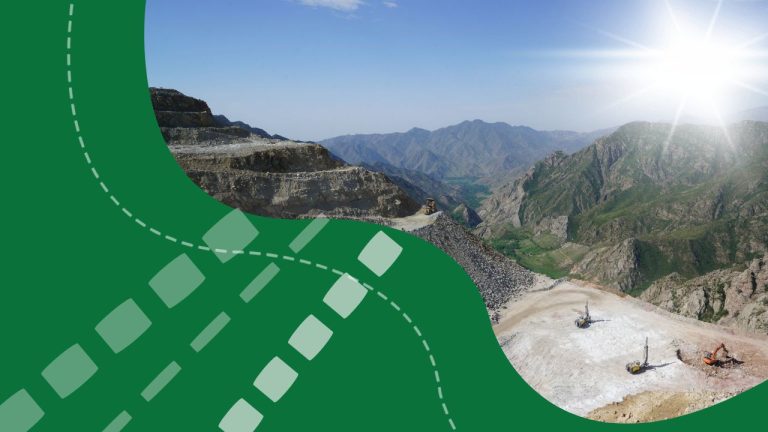
    Kazakhstan has uncovered significant rare earth metal deposits during exploration work at the Kuyrektikol site, according to an official statement. The Central Geological Survey Company (Centrgeolsyomka) identified several promising areas with total resources estimated at one million tons, positioning the country as a potential global leader in rare earth elements (REEs).

    Located 300 km southeast of Astana in the Karkaraly district, the Kuyrektikol site features ancient volcanic formations rich in REEs, with the Irgyz and Dos 2 areas showing particularly high concentrations exceeding 0.1%, and in some samples reaching 0.25%. Preliminary estimates suggest 800,000 tons of metals in the Irgyz block alone, with drilling indicating continuous ore bodies.

    Additionally, a newly identified prospective zone, named “Zhana Kazakhstan” (New Kazakhstan), extends the mineralized area and is estimated to hold over 20 million tons of REEs at an average grade of 700 grams per ton. Authorities claim this deposit represents a new industrial type of rare earth mineralization, unprecedented in Kazakhstan.

    The discovery could propel Kazakhstan to the forefront of the global rare earth market, boosting its high-tech industry. Meanwhile, geopolitical tensions over REEs continue, as US President Donald Trump recently linked military aid to Ukraine to access to its rare earth resources. Ukrainian President Volodymyr Zelensky initially rejected such a deal, citing lack of guarantees, but negotiations continue with a revised US proposal.

  • Zelenskyy Rejects US Proposal to Control 50% of Ukraine’s Critical Minerals

    Zelenskyy Rejects US Proposal to Control 50% of Ukraine’s Critical Minerals

    Ukrainian President Volodymyr Zelenskyy has reportedly rejected an initial proposal by the United States to secure 50% ownership of Ukraine’s critical minerals as part of a deal for continued military and economic aid in its ongoing war with Russia. According to three sources cited by Reuters, the US made the offer, which Zelenskyy did not outright dismiss but stated lacked the necessary security provisions required by Kyiv.

    Critical minerals, which include metals like cobalt, copper, lithium, and nickel, are essential for producing hi-tech products, green energy technologies, consumer electronics, artificial intelligence infrastructure, and weapons. These materials are in high demand due to the global push for energy transition and climate change mitigation. The International Energy Agency (IEA)estimates that the market for these minerals reached £320 billion in 2022, with demand expected to more than double by 2030 if countries meet their clean energy pledges.

    The term critical minerals is politically defined, with different countries prioritizing materials based on their national security, economic, and geopolitical goals. In 2022, the US Geological Survey (USGS) identified 50 minerals, including aluminium, zirconium, arsenic, beryllium, cobalt, lithium, graphite, indium, and tellurium, as vital for renewable energy, defense, and infrastructure development.

    The US proposal highlights the growing geopolitical competition for access to these resources, which are crucial for technological advancement and military capabilities.

  • Serbia Launches the Lithium-Turbo Project in Partnership with the EU

    Serbia Launches the Lithium-Turbo Project in Partnership with the EU

    Serbia has embarked on the Lithium-Turbo project, capitalizing on its rich lithium reserves. The initiative marks a significant step in Serbia’s growing economic ties with the European Union, facilitated by a new raw material agreement. This partnership aims to exploit the lithium deposits in the Serbian Jadar Valley, potentially making Serbia the first European country to manage the entire value chain from mining to electric vehicle production. Michael Harms, Managing Director at the Eastern Committee of German Business, highlighted the geopolitical importance of the deal, noting that it diminishes China’s role in the region. The EU stands to benefit from reduced dependence on Chinese lithium and shorter transport routes. However, the project is not without political complications, as Serbia continues to maintain complex relationships with Russia, China, and the EU. Additionally, domestic opposition persists, with Serbian environmental activists expressing concerns over potential impacts on arable land and groundwater.

  • British Concrete Canvas Ltd. to Establish Concrete Production Plant in Kazakhstan

    British Concrete Canvas Ltd. to Establish Concrete Production Plant in Kazakhstan

    British company Concrete Canvas Ltd. has revealed plans to construct a concrete slab manufacturing plant in Kazakhstan, as reported by Kazakh Invest. Originally intending to build the facility in Russia, geopolitical circumstances led to the decision to opt for Kazakhstan. The envisioned project, according to British investors, is poised to address critical challenges in the construction and renovation of irrigation systems in the country. The initiative is expected to significantly enhance the operational reliability of irrigation systems, eliminate water loss within the country’s agro-industrial complex, and reduce budgetary expenditures on canal renovation programs, protective dams, and other civil infrastructure assets. Concrete Canvas, known for producing geosynthetic cement composite mats that prevent water loss during filtration while maintaining material durability, has already established a presence in Almaty. The company is currently assessing market needs, engaging in discussions with relevant ministries and local executive bodies. Concrete Canvas Ltd. was among the 21 companies relocating to Kazakhstan from Russia and Belarus, as announced by the government in late December 2022. Furthermore, in November 2023, during a working trip to the United Kingdom, Kyrgyzstan’s Prime Minister, Akylbek Zaparov, proposed that Concrete Canvas consider establishing a plant in the republic.

  • EU Commission President Visits Greenland Amid Rising Strategic Importance

    EU Commission President Visits Greenland Amid Rising Strategic Importance

    Ursula von der Leyen, President of the European Commission, is embarking on a significant journey to Greenland, reflecting the escalating significance of the region due to factors like melting Arctic ice, the demand for green-technology raw materials, and growing competition from China. Despite not being a part of the EU, Greenland holds substantial interest for Brussels, particularly for its abundance of raw materials, believed to encompass 25 out of the 34 materials deemed essential by the EU.

    Von der Leyen’s visit, alongside Danish Prime Minister Mette Frederiksen, entails stops in the Faroe Islands before heading to Greenland to inaugurate a new EU Commission office in Nuuk. This diplomatic excursion aligns with Von der Leyen’s reelection aspirations and follows calls for accelerated green efforts within the EU after recent elections, as highlighted by the EU’s climate chief, Wopke Hoekstra.

    Tomas Baert, Von der Leyen’s special adviser on trade and international partnerships, emphasized Greenland’s significance in providing critical raw materials essential for the EU’s green transition. He underscored the need for partnerships to harness Greenland’s vast potential, acknowledging the geopolitical implications of China’s extraction-focused approach in contrast to the EU’s collaborative model.

    The establishment of the EU Commission office in Greenland underscores the EU’s commitment to bilateral cooperation, as articulated by Naaja H Nathanielsen, Greenland’s minister for business, trade, and raw materials. Nathanielsen highlighted the mutual benefits of cooperation, emphasizing Greenland’s need for external support to develop its mineral sector, crucial for economic diversification alongside traditional sectors like fishing.

    Amidst this geopolitical backdrop, the visit also coincides with critical developments in Denmark’s relationship with Greenland, amidst a growing independence movement and concerns over historical violations, including the forced sterilization of women and girls. While addressing these sensitive issues remains unresolved, the trip underscores the complex dynamics shaping the region’s future.

  • Global Efforts to Reduce Dependence on China’s Rare Earth Elements Dominance

    Global Efforts to Reduce Dependence on China’s Rare Earth Elements Dominance

    The article underscores the global reliance on China for rare earth elements (REEs), essential components in various high-tech applications, particularly amid the burgeoning shift towards green energy technologies. China’s stranglehold on REE production and its monopoly over the entire supply chain have sparked apprehensions regarding supply chain vulnerabilities and geopolitical ramifications for other nations.

    China’s dominance in the REE market is fueled by factors such as its control over critical materials for electric vehicle (EV) batteries and its vertically integrated production chain. Nevertheless, concerns over the environmental repercussions of REE extraction and processing, coupled with geopolitical risks associated with overreliance on a single supplier, have prompted Western nations to explore alternatives and diminish their dependence on China.

    The article delves into initiatives by the United States, Europe, and other regions to diversify their sources of REEs. Tesla’s strategy to incorporate rare earths-free magnets in next-gen motors and collaborative efforts between US and European rare earth companies exemplify these endeavors. Furthermore, the US Department of Defense’s agreement with Australia’s Lynas Rare Earths to establish a heavy rare earths separation facility in Texas is perceived as a stride towards bolstering domestic industrial capabilities and reducing dependency on China.

    Japan’s strategic maneuver to lessen its rare earth dependency on China by increasing investments in Lynas underscores a broader trend of nations endeavoring to secure their rare earth supply chains.

    The article accentuates the imperative for China to embrace more sustainable and environmentally responsible practices in REE mining and processing. It advocates for transparency in supply chains and a commitment to social and environmental responsibility to sustain China’s dominance in the carbon market and REEs sector.

    In conclusion, Western concerns, driven by environmental and geopolitical apprehensions, are propelling nations to explore alternatives and diminish reliance on China for rare earth elements. Collaborative ventures, investments, and technological advancements are being pursued to diversify supply chains and ensure a more secure and sustainable future for the global REE market.

  • Navigating Global Geopolitics: Germany and the EU’s Quest for Raw Materials

    Navigating Global Geopolitics: Germany and the EU’s Quest for Raw Materials

    As the demand for energy transition, electromobility, and digitalization surges globally, Germany finds itself at the forefront, recognizing the critical importance of a steady supply of minerals and metals. Essential for sectors like automotive, mechanical engineering, and chemicals, raw materials form the backbone of Germany’s industrial prowess. The complexities of metal supply chains, coupled with the escalating global appetite for these resources, heighten the significance of securing a stable supply.

    Germany’s current reliance on imported raw materials is pronounced, with only a fraction sourced domestically. The German Mineral Resources Agency highlights that in 2022, the country imported metals worth €121.7 billion, reflecting the challenges of achieving self-sufficiency. The geopolitical dimension adds another layer, with China emerging as a central hub in global metal supply chains. China’s role as a major supplier, especially in providing rare earths to the European Union, underscores the vulnerabilities created by high dependencies.

    In response, the European Commission has proposed the Critical Raw Materials Act (CRMA) in March 2023 to address these challenges. The CRMA seeks to boost domestic mining, expand recycling capacities, and diversify imports of critical raw materials. The European Union aims to establish new partnerships and reduce dependency on individual countries to ensure a resilient supply chain.

    Globally, the competition for raw materials is escalating. The United States, through initiatives like the Inflation Reduction Act and the Minerals Security Partnership, actively secures its raw material supply chains. China, on the other hand, extends its influence through industrialization projects in Africa and the solar industry.

    In this race, even Saudi Arabia, with its “Vision 2030,” is investing significantly in mineral resource development. Resource-rich countries in the Global South see the geopolitical competition as an opportunity to move beyond being mere suppliers and establish stages of industrial production within their borders.

    The EU responds by forging strategic raw materials partnerships with various countries, recognizing the need for a coordinated approach among member states. However, the global race necessitates careful navigation of international cooperation complexities.

    While financial resources are crucial, strategic foreign policy decisions take center stage. The EU must engage in meaningful dialogues with potential raw material partners, considering economic and industrial policy interests. The competition for raw materials extends beyond monetary transactions, requiring a nuanced and proactive foreign policy approach to secure Europe’s access to essential resources.