Kazakhstan is navigating a complex geopolitical landscape in the global uranium market, which has seen significant shifts due to rising demand for green energy and geopolitical tensions. As the country accounts for nearly 40% of the world’s uranium supply, its strategic decisions are under scrutiny. Political analyst Komron Rahimov discusses the delicate balance Kazakhstan is attempting to maintain between asserting control over its resources and engaging with Russian state corporation Rosatom.
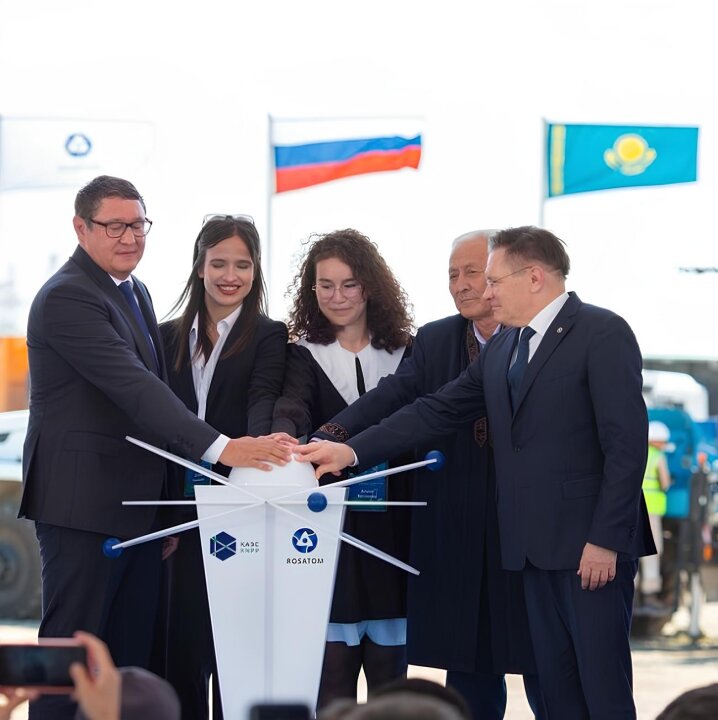
In recent developments, Kazakhstan has unilaterally reclaimed control over the Akdala uranium deposit from Rosatom while simultaneously awarding the construction of its first nuclear power plant, the Balkhash Nuclear Power Plant, to the Russian corporation. This dual approach raises questions about whether Kazakhstan is losing control over its resources or if it is executing a calculated strategy to enhance its sovereignty. Rahimov argues that the current dynamics reflect a nuanced compromise rather than a straightforward expansion by Rosatom.
Kazakhstan’s recent amendments to its subsoil code require that up to 90% of uranium contract renewals be allocated to the state-owned Kazatomprom, reinforcing the country’s commitment to reclaiming its natural resources. This shift has already resulted in the loss of Rosatom’s control over the Akdala deposit, which transitioned entirely to Kazakh ownership in March 2026.
Despite these gains, Kazakhstan’s relationship with Russia remains significant, particularly in high-tech sectors. The agreement for the Balkhash Nuclear Power Plant, valued at over $14 billion, sees Russia financing 85% of the project, ensuring its technological influence in the region. This dependency on Russian expertise and nuclear fuel could pose long-term challenges for Kazakhstan’s energy independence.
Rahimov highlights that while Kazakhstan is enhancing its economic sovereignty by reclaiming resources, it is also entering a strategic alliance with Russia that could bind it to Russian technology and services for decades. The construction of the Balkhash plant is expected to take around ten years, further solidifying Russia’s presence in Kazakhstan’s energy sector.
The geopolitical landscape is further complicated by sanctions against Rosatom from the United States, which could impact Kazakhstan’s access to Western financial markets. However, Kazakhstan is actively diversifying its uranium export routes, with China emerging as a significant buyer, accounting for 44% of its revenue. The development of the Trans-Caspian route aims to mitigate risks associated with reliance on Russian supply chains, although its capacity limitations present challenges.
In conclusion, Kazakhstan’s multi-faceted strategy reflects a sophisticated balancing act between asserting its resource sovereignty and maintaining essential partnerships. The country is poised to navigate a complex geopolitical environment while striving to secure its long-term interests in the uranium market.
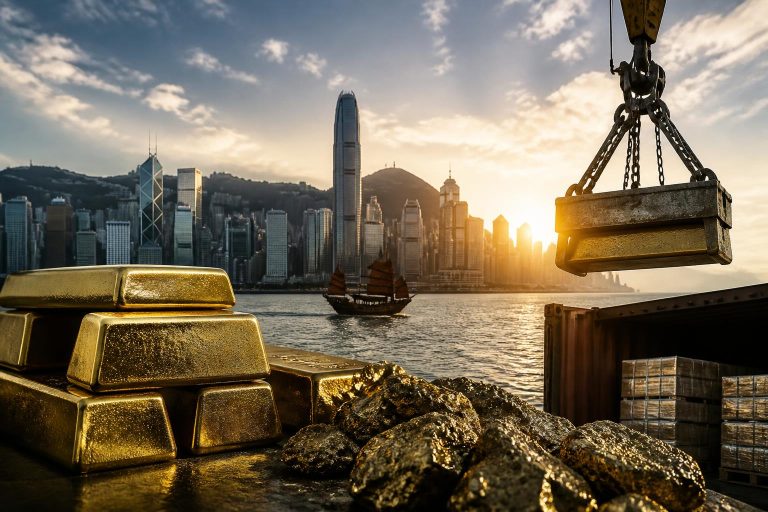
This summer marked a significant shift in the global gold market as Hong Kong initiated trial trading under a new centralized settlement system for precious metals. This development is poised to alter the dynamics of gold trading worldwide, as China continues to establish a sovereign mechanism for trading and settling transactions in physical gold. In January 2026, the Hong Kong government and the Shanghai Gold Exchange signed a cooperation agreement to create a government-owned entity, the Hong Kong Precious Metals Centralized Settlement Company, known as ‘Gondzin Settlements’. This system offers a comprehensive range of gold-related services, from the deposit and withdrawal of physical gold to the settlement of transactions, including over-the-counter deals.
The Gondzin Settlements system is seamlessly integrated with a network of certified vaults, allowing for efficient management of both cash balances and physical gold operations. A massive certified vault capable of holding 2,000 tonnes of gold is set to be constructed in Hong Kong, significantly surpassing the UK’s gold reserves, which were approximately 310 tonnes this spring. Establishing such a vault is a complex task, requiring robust physical security and risk management systems, but China appears undeterred.
The urgency of establishing a gold hub in Hong Kong has been amplified by recent geopolitical tensions, particularly the ongoing conflict in the Persian Gulf, which has threatened the stability of existing gold trading hubs in the United Arab Emirates. Experts suggest that the creation of the Hong Kong gold hub is part of a long-term strategy by Beijing to enhance the yuan’s status as a global reserve currency, backed by physical gold, reminiscent of the Bretton Woods system.
Interestingly, the recent five-year socio-economic development plan for Hong Kong, which extends to 2030, notably omits any mention of the gold hub, raising questions about its future integration into the broader economic strategy. The system also offers clients the option to operate through ‘unallocated’ accounts, allowing for faster transactions without the need to physically move gold bars.
In partnership with the Shanghai Gold Exchange, the ‘Delivery Connect’ service has been launched to facilitate cross-border transactions and gold movement between Hong Kong and mainland China. The Gondzin Settlements has become an international member of the Shanghai Gold Exchange, enabling market participants to store physical gold in designated warehouses in Hong Kong, ensuring its free movement.
China is effectively creating its own ecosystem for precious metal trading, attracting participation from major global banks, including JPMorgan, HSBC, and UBS. One potential outcome of this system is the decoupling of gold prices from the traditional London fixing, which has been dominated by the London Bullion Market Association (LBMA) for the past decade. The Hong Kong hub is being positioned as an alternative to London, with the potential to establish its own pricing mechanism if it achieves sufficient trading volumes.
The status of ‘Good Delivery’, a standard set by the LBMA for gold and silver bars, is also a topic of interest. Currently, only bars from refineries with Good Delivery status are accepted in the new Chinese system, but there is potential for Gondzin Settlements to develop its own standards in the future. This ambitious Chinese initiative increases the demand for gold imports, particularly from Russia, which has seen a significant rise in gold exports to Hong Kong, from under $1 billion in 2022 to $10.8 billion last year. This trend not only reflects rising gold prices but also growing physical volumes.
The establishment of the Hong Kong gold hub opens up new avenues for Russian companies and banks, particularly in circumventing sanctions through alternative payment methods. Despite Western threats of secondary sanctions, China has not turned away from Russian gold, indicating a complex interplay of geopolitical and economic factors that will shape the future of the global gold market.
Central Asia and Mongolia will remain resilient to geopolitical shocks and record the highest growth rates of the EBRD countries of operation in 2026 and 2027, according to the latest Regional Economic Prospects report published on 3 June 2026, by the European Bank for Reconstruction and Development (EBRD). The combined economies of Kazakhstan, the Kyrgyz Republic, Mongolia, Tajikistan, Turkmenistan, and Uzbekistan are projected to grow by 5.6% in 2026 and 5.3% in 2027.
These are compelling headline figures. Yet beneath them lies a more consequential story—one that the OECD’s March 2026 report, Advancing Security and Transparency for the Governance of Critical Raw Materials in Central Asia, articulates with rare precision: the region is not merely growing; it is repositioning itself at the very heart of the global critical raw materials race.
The mining sector is no longer a background variable in Central Asia’s development story. It is the plot itself.
MINEX Asia 2026 is where it gets real. Join EBRD and OECD peers presenting on Kazakhstan’s scale, Tajikistan’s green pivot, Uzbekistan’s processing ambitions—and the governance gaps that determine success.
The Regional Narrative: Resilience With Structural Depth
Growth prospects remain robust but are increasingly dependent on the pace of domestic reforms and efforts to strengthen resilience to external shocks. Strong domestic consumption, rising real wages, and robust capital investment are real. But so are the fault lines: downside risks include energy price volatility, supply-chain disruptions, economic sanctions, and slower growth in the region’s largest trading and economic partners, Russia and China.
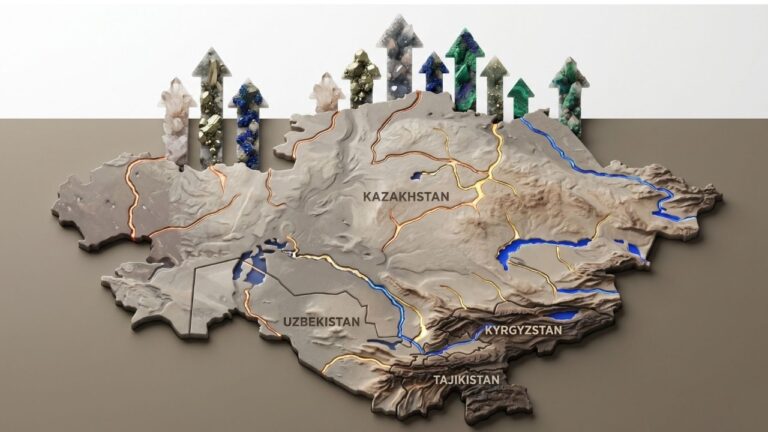
The OECD note adds a structural dimension that the growth forecasts alone cannot convey. Central Asia’s substantial yet untapped resource base, combined with its location between major markets in Europe and Asia, raises the region’s relevance in CRM geopolitics and efforts to diversify global supply chains. This is a geostrategic statement. The region holds extraordinary assets: Kazakhstan, already the world’s largest producer of uranium, produces and processes around twenty of the 34 CRMs included on the European Union’s official list. The Kyrgyz Republic and Tajikistan both host some of the world’s largest antimony reserves. Uzbekistan possesses some of the largest copper reserves globally and is advancing lithium and molybdenum production.
Taken together, these endowments amount to a critical minerals portfolio of exceptional strategic depth. Whether the region can translate that portfolio into durable prosperity is the central question of the coming decade.
Country by Country: Where the Headlines Don’t Tell the Full Story
Tajikistan: Gold and Strategic Minerals
Tajikistan’s economic performance continues to confound those who underestimate it. In March 2026, Moody’s upgraded Tajikistan’s sovereign credit rating to B2 with a stable outlook, citing the country’s continued economic resilience. The EBRD projects growth easing to 7.9 per cent in 2026 — still remarkable for a landlocked, remittance-dependent economy navigating elevated regional volatility.
The mining dimension is crucial. Gold remains the cornerstone of export revenue and fiscal stability, and Tajikistan’s antimony sector is poised for a structural step-change. Tajikistan possesses the world’s second largest antimony reserves, and China’s effective ban on antimony exports to the US and EU provides a significant window of opportunity. Together, France and Belgium accounted for 77% of Tajikistan’s antimony exports in 2024. With TALCO nearing completion of a new antimony metallurgical plant, Dushanbe is finally beginning to capture processing value rather than simply shipping raw material.
But what I find most intriguing about Tajikistan’s trajectory is the emerging convergence of green energy and artificial intelligence with its mining ambitions. The Rogun Hydropower Project — set to have an annual capacity of over 3,600 megawatts once fully operational — would cover most of Tajikistan’s domestic consumption and create the conditions for green aluminium production, with approximately 70 per cent of output earmarked for export to Kazakhstan and Uzbekistan. Cheap, clean electricity is not merely an industrial asset — it is the foundation for competitive mining, smelting, and increasingly, data infrastructure.
Tajikistan has initiated groundbreaking infrastructure projects, including the launch of “Area AI” — the world’s first dedicated AI Zone — a technopark and cluster designed to serve as a hub for research, development, and application of AI technologies. The country has forged partnerships with international tech firms including Perplexity AI, Google DeepMind, Yotta and Presight to accelerate technology transfer and innovation. The government has declared 2025–2030 the “Years of Digital Economy and Innovation Development.” Taken alongside the Rogun-powered industrial ambitions, this is Tajikistan’s bid to become not just a minerals supplier but a genuinely integrated green industrial economy — using AI and clean energy together to escape the extractive trap.
The key vulnerability remains Tajikistan’s dependence on Russia, where a slowdown would depress the remittance inflows that underpin household incomes. That risk is real and should not be minimised. But the strategic direction of travel is clear — and it is more ambitious than most Western observers appreciate.
Kyrgyzstan: The Kumtor Imperative and Exploration Needs
Kyrgyzstan remains the region’s most dramatic case study in resource-dependent growth. Kumtor Gold Company — nationalised in 2022 after nearly three decades of Canadian stewardship — generated net profit exceeding USD 706 million in 2025, contributes 10–15 per cent of GDP, and represents nearly two-thirds of the country’s mineral exports. The March 2025 discovery of an additional 147 tonnes of gold reserves extended the mine’s productive life to at least another 17 years.
Underground mining operations, launched in August 2025, are transformative. At current gold prices hovering above USD 4,500 per ounce, Kumtor’s economics are exceptional — and the government’s plan to process tailings estimated to contain over 100 tonnes of gold adds further upside. Fixed capital investment rose by 25.5 per cent year on year thanks to strong investment in infrastructure, energy and housing.
Yet the near-term outlook has darkened. The European Union’s 20th sanctions package, announced in late April, restricts exports of dual-use goods to Kyrgyzstan and tightens controls on its financial and logistics sectors. The EBRD has revised its 2026 growth forecast down to 8.7 per cent as a result. This is a significant geopolitical constraint on what would otherwise be an exceptionally strong growth story — and it underscores the OECD’s broader finding that regulatory unpredictability and governance gaps impose real costs on the region’s investment attractiveness.
The OECD note also flags a structural vulnerability that sits beneath the Kumtor euphoria: limited exploration since independence means that the Kumtor mine, accounting for 90% of the Kyrgyz gold exports, is set to close in 2031 due to reserves depletion — and the lack of exploration since independence will make it harder to offset this decline quickly. The reserve discovery of 2025 has bought time but not resolved the underlying fragility.
Kazakhstan: Scale, Strategy, and Industrial Output
Kazakhstan’s mining profile is defined by scale and global strategic significance. The country holds the world’s largest chromium reserves, accounts for roughly 40 per cent of global uranium output, and produces massive quantities of refined copper, largely exported to major industrial buyers like China and Türkiye.
Graphite is a high-potential sector for Kazakhstan. With the exploitation of its Sarytogan deposit — added to the EU’s list of strategic raw material projects and reported to contain 30% of the world’s graphite reserves — Kazakhstan is expecting to become a crucial player on the world graphite market.
The tungsten story is equally striking. Kazakhstan holds roughly 2 million tonnes of tungsten resources out of approximately 3.6 million tonnes of global reserves. A joint venture between Kazakhstan’s Tau-Ken Samruk and US-based Cove Kaz Capital Group has been formed to develop the Severniy Katpar tungsten project, with the US International Development Finance Corporation issuing Letters of Interest for up to USD 700 million in potential financing — marking Washington’s most significant entry yet into the region’s critical minerals sector.
Yet the near-term picture carries a real cautionary note. In Kazakhstan, the extractive industry contracted by 11.4 per cent year on year in Q1 2026 following disruptions to the Caspian Pipeline Consortium pipeline and an incident at the Tengiz oil field. The EBRD projects Kazakhstan’s GDP growth moderating to 4.7 per cent in 2026 and 4.5 per cent in 2027 — the lowest in the region, reflecting the inherent vulnerability of commodity-led economies to infrastructure and logistics shocks.
Uzbekistan: The Ambitious Reformer
Uzbekistan’s ambitions deserve particular attention. The country is the world’s fifth-largest uranium supplier, a top-ten gold producer, and is rapidly positioning itself as a critical minerals investment destination. Uzbekistan has actively signed Memorandums of Understanding with Western partners, including the United States, for securing supply chains in the mining and processing of Critical Minerals and Rare Earths. The government has also launched massive industrial initiatives to bolster its critical minerals sector.
The Almalyk Mining and Metallurgical Complex (AMMC) and its specialised subsidiaries targeting tungsten, molybdenum, rhenium, lithium, and graphite signal a genuine strategic shift from raw extraction towards value-added processing. Whether governance and transparency standards keep pace with ambition will be the decisive variable.
The Structural Challenge: From Resource Extraction to Value Creation
Both the EBRD and the OECD converge on a single, uncomfortable truth: Central Asia’s growth is impressive, but its mining sectors remain structurally exposed. The OECD note identifies several systemic vulnerabilities that macro-growth figures obscure.
On reserves reporting: Most countries still operate on Soviet-era GKZ classification systems that differ fundamentally from international CRIRSCO standards — creating information asymmetries that deter sophisticated investors and complicate due diligence. Kazakhstan has made progress through its KAZRC system; other regional peers have barely started.
On foreign investment dynamics: Foreign actors, predominantly Chinese, actively invest in Central Asia’s mining industry. China has been a primary investor in the mining sectors of the Kyrgyz Republic and Tajikistan, and is increasing its presence in Kazakhstan and Uzbekistan, not only by investing in extraction facilities but also by supporting the development of initial processing capabilities. This creates a strong strategic dependency that the region’s governments are increasingly aware of — and that Western partners, including the EU, UK, and US, are now actively looking to balance through alternative commercial partnerships.
On the Trans-Caspian International Transport Route (TITR): Traffic along the corridor (the Middle Corridor) has increased dramatically as exporters seek reliable East–West trade alternatives. Kazakhstan in particular has long relied on the corridor for its mineral, chemical, and agricultural exports, with a substantial portion of its uranium exports to Western markets utilising this bypass route. This corridor is central to the region’s ability to diversify export markets.
On ESG and governance: The OECD is frank: mining in the region is still heavily influenced by large state-owned enterprises with overlapping regulatory and commercial roles, needing stronger occupational health and safety oversight and remediation of legacy environmental risks. These are not peripheral concerns — they are the conditions on which Western investment and international supply chain partnerships will ultimately be conditioned.
The Strategic Opportunity
The OECD projects global demand for many critical raw materials to increase multifold over the coming decades to meet the needs of the green and digital transitions. Central Asia sits atop a significant share of the reserves that will need to come online to meet that demand. The region holds massive global shares of manganese ore, chromium, lead, zinc, titanium, aluminium, copper, cobalt, and molybdenum.
That is an extraordinary endowment. Translating it into durable prosperity requires three things that remain in genuinely short supply across the region: transparent governance, world-class ESG practice, and the institutional capacity to negotiate from strength with both regional and global partners.
This is precisely why platforms like the MINEX Forum matter. The conversation between producers, investors, policymakers, and development finance institutions that happens at these gatherings is not peripheral to the critical minerals agenda. It is where the terms of engagement are shaped.
Conclusion: Cautious Optimism, Clear Conditions
The EBRD’s projection of robust regional growth is credible. The OECD’s assessment of the region’s critical minerals potential is genuinely exciting. But both institutions are equally clear-eyed about the conditions that must be met for that potential to be realised responsibly.
Central Asia’s mining sectors are not simply economic contributors. They are strategic assets in the most consequential industrial transformation of our era. Their management — balancing extraction with environmental stewardship, concentrating revenue into productive capital formation, building institutional capacity, and securing diversified partnerships — will determine whether current growth translates into sustainable prosperity or rehearses the resource curse that has constrained other commodity-rich regions.
The next chapter will be written in mining offices, government ministries, and international forums across Dushanbe, Bishkek, Astana, Tashkent, and Ulaanbaatar. We should be not merely watching — we should be in the room.
References:
Central Asia and Mongolia to see highest economic growth in the EBRD regions
Arthur Poliakov is the Managing Director of the United Kingdom-based company Advantix Ltd and the Executive Chairman and founder of the MINEX Forum. He has over 30 years of experience in international business communications, event management, and natural resource markets.
He is currently organising the upcoming 12th MINEX Asia Forum (24–25 June 2026, Ankara, Turkey), the 10th MINEX Europe Forum (28–30 October 2026, Trim, Ireland), and the 14th MINEX Eurasia Conference (30 November 2026, London, United Kingdom).
Türkiye is navigating successive global energy crises through a coordinated mix of policy planning, infrastructure investment, and strategic resource development, according to Energy and Natural Resources Minister Alparslan Bayraktar.
In an article published in Turkish daily Sabah ahead of the second Istanbul Natural Resources Summit (INRES 2026), Bayraktar said the country has managed to transform recent geopolitical and market disruptions into opportunities under what he described as a long-term “new energy architecture.”
He pointed to the last six years as a period defined by overlapping global energy shocks, including conflict-driven disruptions in key regions, arguing that Türkiye has been able to maintain stability through strong leadership, established infrastructure, and coordinated policy execution.
Bayraktar highlighted milestones in Türkiye’s National Energy and Mining Policy, including the major 2020 natural gas discovery in the Black Sea region and subsequent development efforts that now supply domestic gas to millions of households. He also referenced oil production expansion in Şırnak’s Gabar region, where output has reached tens of thousands of barrels per day.
The minister said Türkiye’s broader strategy is built on a “crisis-opportunity” framework, combining domestic resource development with international exploration efforts. These include ongoing drilling activities in Somalia and planned operations in Pakistan and Libya, alongside unconventional oil exploration projects within Türkiye.
A key pillar of the strategy is the expansion of critical mineral production, particularly boron and rare earth elements. Bayraktar said Türkiye aims to strengthen its position as a global leader in boron exports while advancing refining capabilities in rare earths, with the goal of increasing value-added production and reducing reliance on raw material exports.
He also outlined plans to diversify energy supply routes, strengthen infrastructure resilience, and expand international partnerships across natural gas, oil, and mining sectors. Electrification was described as a central element of Türkiye’s evolving energy system, intended to create a more flexible and integrated market structure.
Bayraktar emphasized that the INRES 2026 summit will serve as a platform for international cooperation in energy diplomacy, bringing together officials and stakeholders from Europe, Asia, and Africa. The event is expected to focus on energy security, investment, and financing strategies amid ongoing geopolitical tensions.
Türkiye continues to position itself as a regional energy hub through expanded infrastructure, cross-border cooperation, and increased domestic production across hydrocarbons and strategic minerals.
In the early 1990s, while the West was celebrating the “End of History” and the triumph of globalized trade, Deng Xiaoping issued a quiet prophecy: “The Middle East has oil; China has rare earths.”
For three decades, that statement was treated as an industrial footnote. Today, it has become the defining thesis of a new, colder era of geopolitics. In the latest episode of the Raw Matters podcast, hosts Peter Tom Jones and Julia Poliscanova sat down with Albéric Mongrenier, Executive Director of the European Initiative for Energy Security (EIES), to peel back the layers of Europe’s strategic “naivety.”
The verdict? Europe’s transition to clean energy isn’t just an environmental project—it is a massive transfer of strategic dependency that could, if left unmanaged, leave the continent’s power grids and military hardware under the remote control of Beijing.
The Cyber Trojan Horse in the Power Grid
The conversation begins with a startling reality check regarding the hardware of the energy transition. We often talk about “critical minerals” as raw commodities—lithium, cobalt, copper. But Mongrenier points to a more immediate, digital threat: the inverter.
Every solar panel, wind turbine, and EV charger requires an inverter to convert DC power to AC. Today, approximately 80% of new solar installations in Europe use Chinese inverters, with a massive share provided by a single company: Huawei.
“These devices are connected to the internet,” Mongrenier warns. “They are entry doors for cyberattacks.” This creates two distinct levels of vulnerability:
Intelligence Harvesting: By controlling the inverters, external actors can map Europe’s energy consumption and grid behavior with more granularity than European governments themselves.
The “Kill Switch”: Mongrenier references reports from the US and UK regarding hidden “kill switches” discovered in Chinese-made components. In a conflict scenario, the theoretical ability to remotely disable Europe’s energy system—shutting down wind farms and solar arrays at the click of a button—is no longer science fiction.
Dual-Use: The F-35 and the Wind Turbine
One of the most persistent myths of the “Green Deal” is that critical minerals are purely “clean tech” materials. In reality, the minerals powering the energy transition are the exact same materials required for modern warfare.
“NATO came up with its own list of 12 defense-critical minerals late in 2024,” Mongrenier notes. The overlap is nearly total:
Rare Earths: Essential for the permanent magnets in EV motors, but also for the guidance systems of missiles and the engines of F-35 fighter jets.
Graphite: Used in battery anodes, but also vital for the hulls of submarines.
Titanium & Cobalt: The bread and butter of both high-performance turbines and military superalloys.
This dual-use nature has created a “Mineral Security Trap.” If Europe cannot secure its own supply of these minerals, it loses more than just its ability to hit climate targets—it loses the industrial base required to defend itself.
A Tale of Two Strategies: The US Stick vs. The EU Paper
The podcast highlights a widening gap between how Washington and Brussels are reacting to the Chinese monopoly.
The American “All-of-Government” Blitz
Under both the Biden and now the Trump administrations, the US has moved with aggressive speed. The US has set a hard deadline: January 2027. By then, defense contractors must purge Chinese rare earths, titanium, and tantalum from their supply chains.
“The US uses a big stick,” says Mongrenier. They aren’t just asking for change; they are mandating it while simultaneously throwing tens of billions of dollars in subsidies and equity stakes at domestic projects like MP Materials.
The European “Silo” Problem
In contrast, Europe’s response remains “timid.” Poliscanova points out that Europe is still hampered by siloed decision-making. While the US treats mineral security as a singular mission across all departments, the EU is split between various Directorates-General (DGs) that often fail to communicate.
Furthermore, Europe remains obsessed with the “business case.” “Strategic infrastructure does not always have a business case,” Poliscanova argues. “Sometimes you just invest because it’s a critical asset. We need to forget about the short-term profit and think about resilience.”
The Axis of Minerals: Russia, Iran, and China
The discussion takes a darker turn when addressing the current conflict in the Middle East. Mongrenier points out that the “axis” of Russia, Iran, and China is not a loose association—it is a functional industrial alliance.
Take the drones currently saturating battlefields in Ukraine and the Middle East. Whether they are Iranian Shahed drones or Russian variants, their supply chains lead back to China. “90% of these drones are battery-powered,” Mongrenier says. “If we build a ‘European Drone Wall’ for our own defense, but the batteries and minerals come from China, have we actually improved our security?”
The Path Forward: Ending the Naivety
As the episode concludes, the hosts and guest outline a roadmap for a more resilient Europe:
Aggregating Demand: Europe must connect the car industry and the defense sector to send a massive, unified “demand signal” to miners and refiners outside of China.
The “Carrot and the Stick”: Europe needs to provide the financial “carrots” (subsidies and public procurement) while wielding the “stick” (vetting components for cyber risks and mandating non-Chinese supply chains for critical defense hardware).
Industrial Sovereignty: 2026 and 2027 are viewed as the “midterm” years for European leadership to finally treat energy and mineral security as the same issue.
The message is clear: Europe’s “naivety” has been a luxury of a more stable world. In 2026, as missiles fly and megawatts become the new currency of power, that luxury has officially run out. To save its climate, Europe must first secure its minerals—and to secure its minerals, it must finally learn to play the game of “Realpolitik.”
Kazakhstan’s national uranium producer Kazatomprom has reported stable operations and financial performance despite ongoing geopolitical tensions, including conflicts in Ukraine and the Middle East.
In its financial results for the year ended 31 December, the London-listed company stated that its production, exports and overall business activities remain unaffected. Uranium deliveries continue without disruption via both the Russian Federation and the Trans-Caspian International Transport Route, with no restrictions currently impacting shipments to customers.
However, the company cautioned that broader geopolitical uncertainty and volatility in global capital markets could influence commodity prices and market conditions in the future.
Chief Executive Officer Meirzhan Yussupov noted that the global nuclear energy sector is entering a more mature phase, with uranium increasingly recognised as a strategic resource within national energy security frameworks. According to him, major consumers are shifting focus from short-term price considerations to securing reliable long-term supply, entering contracts that extend well into the next decade.
Despite this trend, Kazatomprom indicated that overall contracting activity in 2025 remained below actual demand levels, suggesting continued tightening in the uranium market.
During the reporting period, the company expanded its international presence, adding Switzerland and the Czech Republic to its customer base, signing a supply agreement with a Japanese utility, and establishing a new long-term partnership with India.
Kazatomprom also highlighted that the majority of its revenues and financing are denominated in US dollars, which provides a natural hedge against exchange rate fluctuations and supports financial stability.
The company said it will continue to closely monitor global developments while maintaining operational resilience in a complex geopolitical environment.
A reported restructuring of ownership at Eurasian Resources Group (ERG) is drawing attention from analysts and policymakers due to potential geopolitical implications involving sanctions enforcement, Russian financial influence and the control of critical mineral assets.
ERG is one of the largest mining groups operating across Eurasia and Africa, with major copper and cobalt operations in the Democratic Republic of Congo. These minerals are essential for battery production, defence technologies and advanced manufacturing, placing the company within supply chains considered strategically important by Western governments.
According to media reports and industry sources, Kazakh businessman Shakhmurat Mutalip is expected to acquire a significant stake in ERG in a transaction estimated at around $1.4 billion. The move has been interpreted by some observers as part of a broader effort by Kazakhstan’s leadership to reshape ownership structures among major domestic industrial assets.
However, questions have emerged regarding the potential sources of financing and the broader network of business relationships connected to the proposed transaction. Some reports have suggested possible links between Mutalip and Russian banking institutions including VTB and Sberbank, both of which are subject to Western sanctions. If confirmed, such connections could raise concerns among regulators about exposure to secondary sanctions risks.
Additional scrutiny has focused on ERG’s chief executive, Shukhrat Ibragimov. Ukrainian authorities have imposed a travel ban on Ibragimov on national security grounds, citing alleged concerns about possible involvement in facilitating sanctions circumvention by individuals connected to Russia. He has not been publicly included in Ukraine’s formal sanctions list.
Observers have also highlighted business ties between Ibragimov and Kazakh investor Kenes Rakishev, a prominent figure in Kazakhstan’s financial sector. Rakishev is known for longstanding relationships within Kazakhstan’s political and business circles and has previously been associated with networks linked to Chechen leader Ramzan Kadyrov.
Some reports have further drawn attention to allegations involving Kazakhstan Paramount Engineering, a defence manufacturing company reportedly linked to Rakishev through leaked communications referenced by the Kazakhstani Initiative on Asset Recovery. According to those claims, vehicles produced by the company were later observed in areas of Ukraine during the conflict. These allegations remain a subject of debate and scrutiny.
The broader concern for policymakers lies in the strategic significance of ERG’s mineral assets. Copper and cobalt resources controlled by the group are central to global supply chains for energy transition technologies, defence systems and advanced industrial production.
Analysts note that any ownership restructuring that increases exposure to sanctioned financial networks could potentially attract attention from regulators in the United States and the European Union. Western authorities have previously taken enforcement actions where indirect ownership structures were used to bypass sanctions.
The situation also reflects wider dynamics within Kazakhstan’s political and economic landscape. In recent years, President Kassym-Jomart Tokayev has pursued efforts to reshape elite ownership structures that emerged during the Nazarbayev era. However, analysts note that shifts in corporate control do not necessarily eliminate the influence of longstanding financial and political networks operating across the region.
Analysis of the Germany-Kazakhstan Strategic Partnership
The Kazakhstan Investment Day, held on 24 February 2026, at the KfW Bankengruppe headquarters in Frankfurt, highlighted a pivotal shift in Eurasian trade dynamics. The event centered on the deepening energy and mining alliance between Germany and Kazakhstan, a relationship that has gained strategic urgency as Kazakhstan effectively replaces Russian oil volumes and leverages deep-rooted cultural ties to strengthen bilateral cooperation.
Financial and Strategic Framework
The scale of this partnership is substantial, with bilateral trade recently seeing a 10% increase to reach €4 billion. Kazakhstan is currently positioned to supply 21 of the 34 critical raw materials (CRMs) identified on the EU’s strategic list.
To facilitate this, several financial and logistical mechanisms have been established:
The Development Bank of Kazakhstan (DBK): A $1 billion financing program (2025–2030) has been launched, specifically dedicated to the extraction and processing of rare and critical materials.
Foreign Direct Investment (FDI): Kazakhstan aims to attract $400 billion in FDI by 2029, supported by Germany’s raw materials fund and backing from institutions like KfW IPEX and DEG.
The Middle Corridor: The Trans-Caspian International Transport Route is being developed as a highly efficient logistical artery connecting Central Asia to Europe, bypassing sanctioned territories.
Operational Success vs. Bureaucratic Hurdles
There is a notable contrast between engineering achievements and administrative delays. Industry leaders from Thyssen Schachtbau and Qazaq Kalium have demonstrated successful deep-shaft mining projects, proving that German technology is effectively unlocking Kazakh resources. Furthermore, the German development agency GIZ is pivoting its strategy by forming a dedicated in-country team focused exclusively on CRM partnerships.
However, several impediments remain:
The “Bearocracy”: Despite the strategic need, Kazakh businesses face extreme delays and bureaucratic hurdles regarding German visa regimes, a point acknowledged by German officials.
Sanction Compliance: German leadership maintains a hard line, stating there will be zero support for any trade or logistics involving Russia or sanctioned companies.
Implementation Lag: While the financial architecture is in place, the actual development of new mining projects remains slowed by EU-wide bureaucratic processes.
A Shifting Global Context
The global competition for resources is accelerating. Coinciding with these discussions in Frankfurt, China introduced a supply ban of critical minerals to 40 major Japanese industrial firms over “remilitarisation” concerns. This geopolitical shift forces Japan to seek immediate alternative suppliers, placing Kazakhstan and the broader Central Asian region directly in their sights. The consensus is clear: while the foundations for a Euro-Kazakh partnership are solid, the slow pace of European administration may cause the EU to lose ground in an increasingly aggressive global race for resources.
Senior officials from more than 50 countries gathered at the White House on February 4 for the United States’ first Critical Minerals Ministerial, marking a symbolic moment for Central Asia’s engagement in global resource diplomacy. Delegations from Kazakhstan and Uzbekistan underscored the region’s long-standing “multi-vector” foreign policy ambitions, but the meeting also highlighted a persistent challenge: turning diplomatic visibility into tangible industrial outcomes.
While Washington’s message focused on openness and coordination, the imbalance between intent and execution remains stark. China has consistently converted engagement into financed, operational mining and processing projects, typically combining contractors, concessional financing, and long-term offtake agreements. By contrast, Western engagement has largely taken the form of memoranda of understanding and strategic frameworks that signal political alignment but stop short of delivering mines, refineries, or downstream capacity.
Uzbekistan offers a contrasting model of what project readiness can look like. In March 2025, Tashkent unveiled a $2.6 billion, three-year programme encompassing 76 projects across 28 minerals, with a clear objective of moving beyond extraction toward processing and finished products. The initiative is structured for partners capable of execution at scale, rather than symbolic cooperation.
The evolving US approach further complicates expectations. Washington is increasingly pursuing techno-economic sovereignty, integrating supply chain security, energy systems, advanced manufacturing, and artificial intelligence into a tightly coordinated industrial policy. Dependencies are reframed as vulnerabilities, and resilience has become a central organising principle. In this context, US engagement abroad is likely to be selective, focusing on de-risked, compliant projects that directly support domestic resilience goals rather than driving industrialisation in partner regions.
This creates both a constraint and an opportunity for Central Asia. High-level political gestures, including the first-ever C5+1 Presidential Summit in Washington in 2025, have raised the region’s profile. Yet momentum will not emerge automatically from diplomacy alone. To shape outcomes, Central Asian governments and companies must proactively present bankable, project-ready opportunities, particularly through direct business-to-business engagement with US firms.
Developing midstream capabilities is critical. Exporting raw ore is capital-intensive, logistically exposed, and low-margin. By contrast, refined metals and intermediate products can anchor value locally, create skilled employment, and reduce vulnerability to external supply chain shocks. Without this shift, the region risks deeper path dependency and gradual absorption into China-centric production networks.
Ultimately, the future of Central Asia’s critical minerals sector will not be decided in Washington or Beijing alone. Strategic autonomy depends on the region’s ability to define priorities, structure viable projects, and act as the primary driver of its own industrial transformation.
Tungsten has emerged as one of the focal points of today’s geo-economic competition, as the disruption of traditional supply routes has reshaped the global market and intensified the search for alternative sources. The full-scale crisis that began in 2022 exposed the fragility of critical mineral supply chains, particularly for metals essential to defence and advanced manufacturing.
Before the war in Ukraine, a significant share of global tungsten supply came from Russia and China. Sanctions imposed on Moscow effectively halted Russian exports, forcing the closure of several mines and removing Russian material from Western markets. As a result, global supply became even more concentrated in China, deepening Western dependence on a single dominant producer.
The conflict also triggered a surge in defence production across NATO countries, driving higher demand for tungsten used in ammunition and military equipment. In response, G7 states agreed in 2023 on a mineral security agenda aimed at diversifying supply and countering monopolistic practices in critical raw materials markets. The United States moved particularly quickly, setting regulatory targets to eliminate tungsten purchases from China and Russia for defence needs by 2027. Pentagon procurement plans alone envisaged demand exceeding 2,000 tonnes in 2025. At the same time, Canada’s Almonty Industries accelerated the restart of South Korea’s Sangdong mine to supply the U.S. market.
China, which controls up to 83% of global tungsten production and more than half of confirmed reserves, has adjusted its strategy as relations with the West have deteriorated. After years of price dumping and oversupply that pushed competitors out of the market, Beijing tightened export controls. From February 2025, tungsten exports became subject to licensing by China’s Ministry of Commerce. While not a formal ban, the policy has increased supply risks. Chinese tungsten exports fell by nearly a quarter in the first half of 2025, while prices surged to record levels, with ammonium paratungstate exceeding $60,000 per tonne.
These shifts have pushed investors and governments to look more closely at deposits outside China, particularly in Central Asia. Chinese companies, seeking to retain influence, have also stepped up overseas resource investments. In Kazakhstan, a new tungsten processing plant backed by Chinese capital began operations in mid-2025, with an annual capacity of around 3.3 million tonnes of ore. Despite this, nearly all of Kazakhstan’s tungsten concentrates continue to be exported to China.
The return of Donald Trump to the White House in 2025 added fresh momentum to the scramble for strategic minerals. The new U.S. administration elevated critical metals to a foreign-policy priority and renewed its focus on Central Asia. In November 2025, Washington and Astana announced agreements to jointly develop the North Katpar and Upper Kairakty tungsten deposits in Kazakhstan’s Karaganda region. With resources estimated at 755 million tonnes of ore and around 854,000 tonnes of tungsten trioxide, Upper Kairakty is considered the largest tungsten deposit in the world.
A joint venture was established in which U.S.-based Cove Capital holds a 70% stake and Kazakhstan’s Tau-Ken Samruk 30%. The project targets initial production of about 12,000 tonnes of tungsten per year, equivalent to roughly 15% of current global output, with a mine life exceeding 50 years. If fully realized, Kazakhstan could emerge as the world’s second-largest tungsten producer after China.
Beyond Kazakhstan, other Central Asian states are also seeking to position themselves within new supply chains. Uzbekistan has begun engaging Western investors in rare earths and other critical minerals, while Kyrgyzstan and Tajikistan, though smaller in scale, hold geologically significant deposits. For the region, this represents an opportunity to diversify economies, attract capital and increase geopolitical relevance amid a global reconfiguration of mineral supply.
Despite these developments, the tungsten market remains far from multipolar. China continues to dominate mining, processing and pricing, and Western economies are likely to remain partially dependent on Chinese supply in the near term. Nevertheless, the foundations of an alternative supply architecture are being laid, with Central Asia emerging as a key pillar in efforts to rebalance the global tungsten market.