Tag: Energy Transition

  • Polish Coal Sector Faces Financial Strain Amid Energy Transition

    Polish Coal Sector Faces Financial Strain Amid Energy Transition

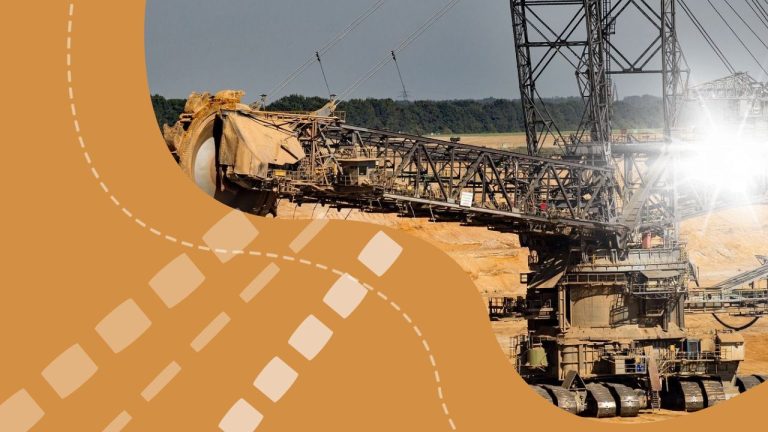
    Poland’s coal mining sector has reduced its losses since last year but still needs billions of złoty in state support to survive, according to Polish media.

    In the first half of 2025, the sector made a net loss of 4.059 billion złoty (€950 million), Industrial Development Agency data show, less than half of the 8.365 billion złoty (€1.97 billion) lost in the first six months of 2024. Over the whole of 2023, Polish coal mining turned a net profit of 4.8 billion złoty (€1.13 billion).

    Despite the improved performance, the industry needs shoring up from the state budget due to rising costs and falling output, one trade union leader told the wnp.pl business news site. Bogusław Ziętek, head of the Sierpień 80 miners’ union, said the high costs are a result of government policy.

    As part of its ‘green transition’ policy of diversifying energy production away from fossil fuels and toward renewables, the government has capped coal extraction. This year’s output is equal to that forecast for 2035, and this falling yield has pushed up the production price per ton, Ziętek said. Because of this, he argues, the government’s energy policy will cost the state billions.

    Polish online energy portal Wysokie Napięcie reports that the government has earmarked over 9 billion złoty (€2.12 billion) to support collieries in 2025, made up of 3.5 billion złoty (€820 million) in direct subsidies and up to a further 5.4 billion złoty (€1.27 billion) in loans.

    A ‘social agreement’ between the government and miners’ unions officially allocates around 29 billion złoty (€6.82 billion) for subsidies to unprofitable mining firms until 2031, though some sources have suggested the true cost may be as high as 42 billion złoty (€9.88 billion).

  • France’s EMILI Project: A Game-Changer for European Lithium Production

    France’s EMILI Project: A Game-Changer for European Lithium Production

    The EMILI project in Beauvoir, France, has taken a major step forward following the visit of Minister of Industry and Energy Marc Ferracci. Recognised as a project of major national interest, EMILI is home to Europe’s largest lithium deposit and the fourth largest globally.

    A recently completed pre-feasibility study revealed a higher-than-expected lithium grade, extending the project’s lifespan from 25 to 50 years. This long-term outlook cements EMILI’s role in bolstering European sovereignty over critical battery materials and supporting the continent’s electric vehicle ambitions.

    “Beneath our feet lies a lithium deposit recognised as a project of major national interest, the fourth largest in the world and the largest in Europe,” said Guillaume Delacroix, Senior Vice President Performance Minerals EMEA & APAC.

    EMILI benefits from France’s new regulatory framework that accelerates mining development, alongside eligibility for €200 million in tax credits once operations commence. With a focus on high environmental and social standards, the project is poised to become a cornerstone of Europe’s clean energy future.

    Learn more here.

  • Poland’s Coal Exit Stalls Amid Political Battles, But Economics Point to Faster Phase-Out

    Poland’s Coal Exit Stalls Amid Political Battles, But Economics Point to Faster Phase-Out

    In August 2023, Poland’s state-owned utility PGE stunned the nation by pledging to become carbon neutral by 2040 and quit coal entirely by 2030 — a decade earlier than planned. The move, in line with EU climate ambitions, was quickly reversed after fierce backlash from mining unions in Silesia, Poland’s coal heartland, and political pressure ahead of national elections.

    Eighteen months into the new pro-EU government of Prime Minister Donald Tusk, progress on the energy transition remains slow. A key reform to loosen restrictions on wind turbine construction passed parliament last week but faces an expected presidential veto from Karol Nawrocki, a coal supporter elected with backing from the previous ruling party.

    Poland’s reliance on coal is deeply rooted in its geology, economic history, and cultural identity. With 27.8 billion tonnes of reserves — the second-largest in the EU — coal still generates 57% of the country’s electricity, the highest share in Europe. Mining employs tens of thousands and carries strong political weight, particularly in Silesia, where miners are held in high public esteem.

    Economically, the sector is struggling. Domestic output has dropped from over 250 million tonnes annually in the 1980s to about 85 million today, with production costs among the highest in the world at over 900 złoty ($243) per tonne. Heavy subsidies keep the industry afloat, costing taxpayers 9 billion złoty in 2025 — about 600 złoty per household.

    Poland’s slow pace on clean energy has left it vulnerable to rising carbon costs under the EU Emissions Trading System, with new ETS2 rules set to extend carbon pricing to households from 2027. Around one-third of Polish homes still burn coal for heating, making them particularly exposed. Analysts warn that political resistance to ETS2 could delay implementation and stall the transition further.

    Despite delays, Poland’s draft National Energy and Climate Plan projects coal’s near-total disappearance by 2035. Energy experts argue this could happen sooner, as economics increasingly favour renewables. In April, coal’s share of monthly electricity generation dipped below 50% for the first time, and renewables now account for 29% of the energy mix, nearly double the share in 2020.

    Yet the political tug-of-war between coal defenders and clean energy advocates continues to shape policy — and Poland’s future competitiveness. Major investors, including Google, Amazon, and Mercedes, have warned that the country’s coal-heavy power mix could deter investment, while its fast-growing battery industry risks losing ground under new EU carbon footprint rules.

    “The energy market and society need this investment pathway to be implemented,” said Tobiasz Adamczewski of think tank Forum Energii, adding that a just transition for coal communities will be key.

  • Uzbekistan Boosts Uranium and Rare Material Exports with Greener Mining Push

    Uzbekistan Boosts Uranium and Rare Material Exports with Greener Mining Push

    Uzbekistan is accelerating its efforts to become a key player in the global energy transition supply chain by expanding exports of uranium, copper, and rare earth elements. The Central Asian country is adopting cleaner mining methods and forging international partnerships to position itself as a reliable and responsible supplier of critical raw materials.

    A standout initiative is underway in the Navoi region, where a French-Uzbek-Japanese joint venture — involving France’s Orano and Uzbekistan’s state-owned Navoiyuran — is deploying in-situ leaching. This method offers an environmentally friendlier alternative to traditional open-pit mining and is expected to yield 10,000 tonnes of uranium.

    The move comes as global demand soars for strategic materials essential to renewable energy, electric vehicles, and other green technologies. Uzbek officials are aligning their practices with OECD standards and international environmental benchmarks to boost transparency and win the confidence of Western investors.

    By integrating greener extraction techniques and international oversight, Uzbekistan is not only increasing its export potential but also improving its standing in the global raw materials market. The country is actively seeking to deepen ties with European partners and attract foreign capital to scale up sustainable mining operations.

  • North Macedonia’s ESM Plans to Open New Coal Mine Near Greek Border

    North Macedonia’s ESM Plans to Open New Coal Mine Near Greek Border

    North Macedonia’s state-owned power utility, Elektrani na Severna Makedonija (ESM), has announced plans to open a new coal mine in Zivojno, close to the Greek border, according to the Ministry of Environment and Physical Planning.

    The ministry is currently seeking public feedback on the environmental impact assessment study for the project, with submissions open until May 15.

    ESM intends to begin operations at the Zivojno mine in 2026, following a three-year preparatory phase. Despite its ambitious start, the mine is projected to have a relatively short operational life of just four years, local broadcaster Telma reported.

    The announcement comes amid North Macedonia’s broader strategy to phase out coal-fired energy production. The government has committed to closing its two existing coal plants, REK Bitola and Oslomej, by 2030, as part of its efforts to transition towards cleaner energy sources.

  • Kazakhstan Eyes Russian Participation in First Nuclear Power Plant Project

    Kazakhstan Eyes Russian Participation in First Nuclear Power Plant Project

    Kazakhstan’s Foreign Minister Murat Nurtleu has expressed hope that Russia will participate in building the country’s first nuclear power plant (NPP). The statement was made during his meeting with Russian Foreign Minister Sergey Lavrov, according to TASS.

    “We already have over 170 joint projects with Russian businesses, and the NPP construction is among the most strategic. I hope our respective ministries will move forward with the necessary work,” Nurtleu noted.

    The project has strong public support — a referendum held on October 6, 2024, showed 71.12% of Kazakhstani voters are in favor of building a nuclear power plant. Four international companies are currently under consideration to supply technology and lead construction:

    • Rosatom (Russia)

    • CNNC (China)

    • KHNP (South Korea)

    • EDF (France)

    According to Deputy Minister of Energy Sungat Yessimkhanov, the contractor selection will be completed by June 2025. President Kassym-Jomart Tokayev has previously confirmed that the NPP will be developed through an international consortium, should the public support it.

    The first NPP will be located in the village of Ulken, Almaty region. Preparatory work has already begun, with plans to create an industrial zone, social infrastructure, and to modernize local roads and water supply systems to support NPP operations.

    Speaking at the recent National Kurultai, a major national forum, President Tokayev revealed even more ambitious plans:

    “Kazakhstan will not stop at one NPP. We are preparing to establish three nuclear power plants, alongside the formation of a dedicated Nuclear Energy Agency.”

    The push for nuclear energy comes amid Kazakhstan’s broader strategy to diversify its energy mix, reduce emissions, and strengthen energy security in the region.

  • Poland’s JSW Reports Record €1.7 Billion Loss Amid Falling Coal Prices and One-Time Write-Off

    Poland’s JSW Reports Record €1.7 Billion Loss Amid Falling Coal Prices and One-Time Write-Off

    Jastrzębska Spółka Węglowa (JSW), the EU’s largest coking coal producer and a Polish state-owned firm, has posted a staggering net loss of nearly 7.3 billion zloty (€1.7 billion) for 2024 — its worst result since going public in 2011. The company’s revenue plunged by 26.2% year-on-year to 11.3 billion zloty, marking a sharp reversal from a profit of nearly 1 billion zloty in 2023.

    JSW attributed the record loss largely to a 6.4 billion zloty non-financial asset write-off, alongside lower coal production and declining global coal prices. Coal output dropped 9.3% to 12 million tonnes, while coke production fell 8.6% to 3 million tonnes, driven by geological challenges and operational setbacks.

    The average price for JSW’s coal fell 20%, with hard coking coal prices down 19% and thermal coal prices plummeting over 30%. JSW plans to cover 6.33 billion zloty of its 2024 loss using reserve capital and seeks to reclaim a 1.6 billion zloty “solidarity contribution” imposed under a 2023 windfall tax.

    With extraction costs in Poland averaging 820 zloty per tonne—over five times higher than in the US—the country’s coal mining industry remains heavily subsidised. Government support for the sector is set to increase from 7 billion zloty in 2024 to 9 billion zloty in 2025.

    Despite pledges to accelerate its coal phase-out, Poland’s new ruling coalition has made limited progress. Coal still powers roughly 57% of the country’s electricity and remains a key heating source in many homes.

  • Kazakhstan Urged to Develop Coal Chemistry Amid Surge in Rare Earth Interest

    Kazakhstan Urged to Develop Coal Chemistry Amid Surge in Rare Earth Interest

    As global demand for rare earth elements grows, Kazakhstan must not overlook the development of coal chemistry, said Nikolai Radostovets, Executive Director of the Republican Association of Mining and Metallurgical Enterprises (AGMP), at the MINEX Kazakhstan forum.

    “Technologies around the world are constantly evolving. First it was aluminum, then copper and steel. Now rare earths are in high demand. But we also want to see investment interest in the coal industry. Many have recently told Kazakhstan to phase out coal combustion — and we understand this,” Radostovets said.

    Despite global energy transition initiatives and the rise of renewables, coal remains a vital energy source, he emphasized. “You see how the situation is changing. Coal is still a very important product. We need concrete proposals and actions from the government to develop coal chemistry. We’re looking at stimulating cluster-based initiatives, and our industry is actively working on forming clusters with local manufacturers.”

    Discussions are also underway regarding the development of copper and aluminum clusters. “I believe the president and prime minister, by supporting our sector’s cluster initiatives, will create opportunities for processing and developing new products,” he added.

    Global coal giant China Energy is currently selecting a suitable deposit in Kazakhstan to develop coal chemistry. In January, Prime Minister Olzhas Bektenov confirmed the company’s $4 billion interest in coal chemical investment projects in the country.

    Kazakhstan ranks among the world’s top 10 countries in coal reserves, with an estimated 33.6 billion tons. At current consumption rates, that supply could last 300 years. Currently, coal generates about 70% of Kazakhstan’s electricity.

    Vice Minister of Energy Sungat Yesimkhanov previously announced that up to 5 GW of coal-based energy capacity is expected to be introduced by 2035. This includes several power blocks at Ekibastuz GRES-1 and GRES-2, as well as new thermal plants in Kokshetau, Semey, and Ust-Kamenogorsk. While the government forecasts coal’s share in electricity generation to decline to 34% by 2035, major infrastructure projects remain coal-dependent.

  • Kazakhstan Poised to Meet Global Demand for Critical Minerals Amid Energy Transition

    Kazakhstan Poised to Meet Global Demand for Critical Minerals Amid Energy Transition

    Kazakhstan has the potential to ensure uninterrupted supplies of critical minerals and help meet the growing global demand driven by the energy transition and the expansion of the electric vehicle market, according to the Astana International Financial Centre (AIFC). Experts at the center highlight that Kazakhstan possesses export potential in nine key commodity groups, including metals already being exported and others with untapped potential.

    The AIFC report emphasizes that the global shift toward low-carbon development and the rapid growth of the electric vehicle industry will significantly increase demand for critical minerals. Kazakhstan, with its vast resources, is well-positioned to play a pivotal role in this transition. The country has already demonstrated competitive advantages in exporting copper, zinc, aluminum, silver, and lead. Additionally, gold, nickel, lithium, and rare earth metals are identified as emerging export opportunities that could further strengthen Kazakhstan’s position in the global market.

    Kazakhstan holds a 5% share of the global zinc market, ranking seventh in reserves with 6.7 million tons in 2023. In 2022, 70% of its zinc exports went to Turkey, Russia, and China. The country also accounts for nearly 4% of the global copper market, with 20 million tons in reserves, and its top export destinations include China, Turkey, and the UAE.

    While Kazakhstan’s share in the global lead market is around 3%, its silver reserves rank third globally, with an annual demand of 26,000 tons. The country’s aluminum reserves, though less than 1% of the global market, are significant, with major exports going to Turkey, Italy, and Greece.

    Looking ahead, Kazakhstan is exploring opportunities in nickel, lithium, and rare earth metals. The country ranks among the top 20 globally in nickel reserves, with 1.5 million tons, and is collaborating with companies from Germany, South Korea, and the UK to develop lithium deposits. A recent discovery in March 2024 revealed a lithium deposit in Eastern Kazakhstan worth an estimated $15.7 billion.

    Furthermore, Kazakhstan has seen a 3.8-fold increase in rare earth metal exports since 2020. The government has adopted a comprehensive plan for 2024-2028, investing 2.4 billion tenge to develop this sector. With potential resources valued at $46 trillion, Kazakhstan is set to become a key supplier of critical raw materials to the European Union, as highlighted in a recent agreement worth 3 million euros.

  • Western Balkans Face Economic Strain as EU Green Tariffs Loom

    Western Balkans Face Economic Strain as EU Green Tariffs Loom

    The Western Balkans’ heavy reliance on coal-fired power could lead to a significant economic setback when the European Union’s new carbon border adjustment mechanism (CBAM) comes into effect next year. The eco-tariff will place a levy on carbon-intensive imports, making electricity exports from the region more costly.

    Coal accounts for between 60% and 95% of power generation across the region, with 60% of electricity exports heading to the EU. With close economic ties to the bloc, countries like Bosnia and Herzegovina could face annual revenue losses exceeding €220 million ($231.99 million), according to CEE Bankwatch.

    While some analysts see CBAM as an incentive for the Western Balkans to accelerate their green transition, a lack of renewable energy investment and continued government subsidies for aging coal plants have stalled progress. Many governments are now seeking delays or exemptions, but these would require substantial clean energy investments or carbon pricing reforms that are unlikely to be implemented in time.

    Switching to renewables presents significant social and economic challenges. Agora Energiewende estimates the cost of the energy transition at around €40 billion, excluding support for approximately 30,000 coal workers. Unlike EU nations, which have access to a €17.5 billion Just Transition Fund, the Western Balkans lack dedicated financial support to cushion the economic impact.

    The EU has allocated up to €9 billion for the region’s green and digital transition, along with €20 billion through the Western Balkan Guarantee Facility. However, experts argue that this funding is insufficient to drive a just transition. Ultimately, Western Balkan nations must take the lead in implementing energy reforms, as external support alone will not be enough.