During Finnish President Alexander Stubb’s official visit to Astana, Kazakhstan and Finland signed an agreement establishing cooperation between the nuclear energy regulators of both countries. The document outlines plans for experience exchange, joint research, and potential uranium fuel supply deals. The Finnish government will also consider the possibility of regular imports of nuclear fuel raw materials from Kazakhstan.
According to Almassadam Satkaliyev, head of Kazakhstan’s Atomic Energy Agency, the agreement creates a foundation for more detailed discussions on future volumes and conditions of uranium supplies to Finnish nuclear power plants. He emphasized that Finland holds a leading position in the field of peaceful nuclear energy, boasting significant achievements in operating nuclear technologies and conducting scientific and technical research.
Finland’s legislation is among the strictest in the world when it comes to regulating the extraction, management, and operation of nuclear facilities. Kazakhstan plans to adopt Finland’s best practices and conduct a joint audit of its own regulatory framework to align national standards with global benchmarks, Satkaliyev added.
Kazakh President Kassym-Jomart Tokayev has arrived in New York to take part in the 80th session of the UN General Assembly, beginning his working visit with a meeting with Tim Gitzel, president of multinational corporation Cameco, the Akorda press service reported.
The two sides discussed prospects for cooperation in the uranium sector. Tokayev stressed that Cameco has long been a reliable partner of Kazatomprom, having invested more than $500 million in Kazakhstan since entering the market and contributing to technology transfer.
The president noted that Kazakhstan is entering a new stage in its energy development, which includes plans to build three nuclear power plants. He said the country is interested in adopting innovative methods in the nuclear industry.
Gitzel provided an update on the operations of the Inkai joint venture, which has been developing the Inkai deposit in Turkestan Region for more than 25 years.
During his stay in New York, Tokayev will deliver remarks at the General Debate of the UNGA’s landmark 80th session, hold talks with world leaders and heads of international organisations, and take part in a roundtable with representatives of multinational companies to present Kazakhstan’s investment opportunities.
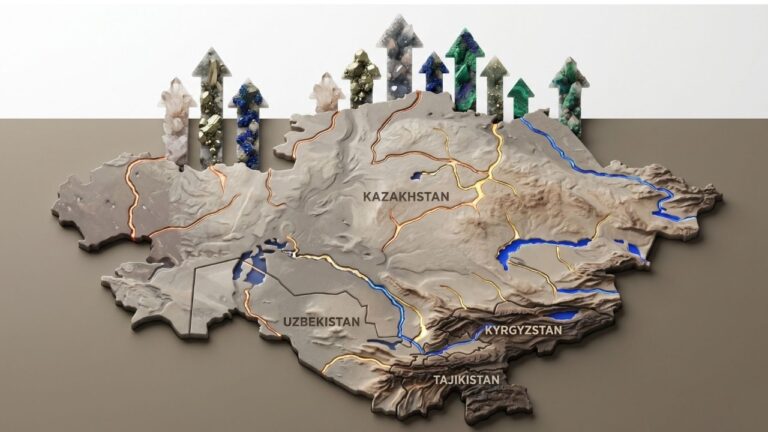
Kazakhstan’s ambition to transform itself into a linchpin of the global critical minerals supply was in sharp focus at the British-Kazakh Society’s (BKS) latest webinar, “Critical Minerals – A Closer Look at Kazakhstan and the Resource Base.”
Hosted online on 16 September, the event brought together government representatives, leading analysts, and industry insiders to scrutinise the nation’s mineral endowment, discuss its strategy for long-term sustainability, and evaluate opportunities for international partnership and investment.
Geological Promise and Policy Drive
In his welcome address, Yerlan Zeineshev, Economic Counsellor at the Kazakhstan Embassy in the UK, underscored the nation’s geological riches—including rare earths, lithium, copper, uranium, titanium, and vanadium—and signalled Kazakhstan’s determination to become “a key supplier for global critical mineral needs.” The country already produces 17 of the 34 critical minerals on the UK’s essential list, with potential to expand further given the right investment and technology.
Mr Zeineshev highlighted March 2024’s UK-Kazakhstan critical minerals roadmap, emphasising mutual aims for research, private investment, and technology transfer. He pledged continued reform to ensure an open, investor-friendly environment—citing adoption of international best practice in mining codes, long-term investment agreements, and digitalisation of geological data.
Supply Chain Resilience and Global Partnerships
Speakers and panellists closely examined how Kazakhstan’s neutral geopolitical stance and its position on the Trans-Caspian International Transport Route position the country as a reliable partner for nations seeking to diversify supply chains. As Enzo Grazella, Senior Analyst at the Critical Minerals Association, noted, this offers both Europe and the UK an alternative source to mitigate risk and reduce overreliance on a handful of global producers.
The UK government’s updated critical minerals strategy and increased focus on supply chain security were cited as drivers for stepped-up bilateral engagement, particularly in mining, refining, recycling, and advanced manufacturing. Initiatives backed by UK export finance, the European Bank for Reconstruction and Development (EBRD), and local reforms are fostering a more attractive investment climate.
Resource Development and Value Addition
Arkhat Kurmanbekov, Deputy Director General of Kazakhstan’s National Center for Technology Foresight, outlined the scale of Kazakhstan’s geological survey initiatives, with record levels of exploration funding and ambitious targets to increase the area surveyed to over 2.2 million km² by 2026. The nation aims not only to expand extraction but also to move up the value chain through domestic processing, production of battery materials, heat-resistant alloys, semiconductor materials, and recycling technologies. Industry success stories—such as providing titanium to Boeing and Airbus, or pioneering full-cycle beryllium plants—underline local expertise.
Market Dynamics, Price Volatility, and Sustainability Challenges
Caroline Messecar, Strategic Markets Editor at Fastmarkets Metals and Mining, discussed acute market vulnerability arising from concentrated global production—particularly for rare earth magnets vital to electric vehicles and wind turbines. China commands up to 89% of global magnet supply, and recent export controls have forced international markets to scramble for alternative sources, underscoring the strategic importance of new suppliers like Kazakhstan.
The panel noted that establishing downstream industries (such as magnet manufacturing) requires more than raw materials: it needs multidisciplinary technical skills, transparent and sustainable production, and robust ESG standards. Both Kazakh and UK speakers reaffirmed their commitments to high environmental and social standards, clarifying that responsible development can coexist with commercial viability.
Whatch the webinar recoding Video provided for the MINEX Forum readers by the British-Kazakh Society
Uzbekistan plans to increase production of gold and uranium this year by introducing new approaches in geological exploration, President Shavkat Mirziyoyev told national broadcaster Uzbekistan 24.
According to the president, the country’s total gold output stood at 86 tonnes in 2016, while by the end of 2025 it is expected to reach 118 tonnes. Uranium production volumes, he noted, have doubled over the same period.
Figures from the World Gold Council show that Uzbekistan produced more than 129 tonnes of gold in 2024, placing it among the world’s top ten producers of the precious metal.
In the first seven months of this year, Uzbekistan increased gold exports to $7.6 billion — 1.8 times higher than in the same period of 2024. Gold accounted for nearly 38% of the country’s total export revenues.
Navoi Mining and Metallurgical Company (NMMC), the country’s largest producer, raised its gold output in 2024 to 3.10 million ounces (96.4 tonnes), up 5.4% compared to 2023. The growth was attributed to the launch of new processing facilities.
Moody’s Ratings has confirmed JSC National Atomic Company Kazatomprom’s credit rating at ‘Baa1’ with a Stable outlook following a periodic review published on 10 September 2025. The agency underscored the company’s pivotal role in Kazakhstan’s economy, given state oversight via the sovereign wealth fund Samruk-Kazyna.
Kazatomprom’s rating reflects its robust financial metrics, low production costs, and dominance in uranium supply—accounting for roughly 20% of global output. Moody’s also noted its vast uranium reserves, operational diversification, and long-term client contracts as key strengths.
The review reiterated Kazatomprom’s alignment with Kazakhstan’s strategic interests, reinforcing investor confidence. For further details, refer to Moody’s press release.
Kazatomprom, the world’s largest uranium producer, has announced plans to significantly increase its exploration activities both in Kazakhstan and internationally, as the company seeks to capitalise on growing global demand for uranium. The state-controlled giant revealed that it will triple its exploration efforts in Kazakhstan while also pursuing new ventures abroad, following recent agreements with Jordan and Mongolia.
Currently, Kazatomprom produces all of its uranium domestically, but last week the company signed a landmark agreement with Jordan to develop the country’s uranium assets. Meirzhan Yussupov, the company’s CEO, addressed the World Nuclear Symposium in London, highlighting the company’s reputation in mining and its growing interest in international expansion. “We are acknowledged for our ability to do mining, and that’s why … we are also looking at opportunities abroad,” Yussupov said.
Kazatomprom has also made strides beyond Kazakhstan’s borders in recent years. Last year, the company signed a cooperation agreement with Mongolia’s state nuclear company, Mon-Atom, and Yussupov hinted that further international opportunities are being explored, although he did not provide specific details.
“We are trying to diversify our operations on a global scale geographically,” Yussupov explained, reinforcing the company’s strategy of global expansion.
The push for greater international expansion comes amid rising demand for uranium. The World Nuclear Association’s report, released on Friday, warned that global uranium demand for nuclear reactors is expected to more than double by 2040, necessitating the development of new mining operations. To meet this demand, Kazatomprom has launched an ambitious exploration programme in Kazakhstan, increasing its exploration capacity threefold.
The company, which supplies about 20% of the world’s primary uranium, has already seen growth in its output. In the first half of 2025, Kazatomprom boosted production by 13% and confirmed its production guidance for 2025. However, it also noted that it plans to scale back its output expansion in 2026 due to market conditions.
Uranium prices have been on the rise, more than doubling over the past five years to $76 per pound. However, prices are still well below the February 2024 peak of $106 per pound, which was the highest level seen since November 2007.
With increased exploration efforts and an eye on global diversification, Kazatomprom appears poised to strengthen its position as a key player in the uranium market, aligning with the long-term outlook of rising nuclear energy demand worldwide.
Kazakhstan and China are set to ink 60 agreements worth up to $25 billion as part of a sweeping strategic partnership, solidified during the China–Central Asia Industrial and Investment Cooperation Forum held in Astana. The deals mark a new phase of cooperation, particularly in nuclear energy, infrastructure, and mineral supply chains.
At the center of the new partnership is China National Nuclear Corporation (CNNC), which Kazakhstan has now officially designated as a strategic partner for its upcoming nuclear power plant projects. The two sides are also launching joint research into transboundary uranium ore belts, reinforcing Kazakhstan’s role as a global uranium powerhouse and a key nuclear fuel supplier to China.
“Kazakhstan considers CNNC a reliable strategic partner,” President Kassym-Jomart Tokayev stated, highlighting CNNC’s global track record and Kazakhstan’s own dominance in uranium supply. In 2022, the country supplied 25% of U.S. uranium imports, more than twice that of Russia.
Bilateral trade has also surged, hitting a record $44 billion in 2024, with Kazakhstan’s strategic location and mineral wealth serving as a cornerstone of China’s Belt and Road Initiative. The forum spotlighted plans to upgrade logistics corridors, expand border infrastructure, and simplify customs procedures, all part of Beijing’s wider ambition to make Kazakhstan Central Asia’s premier transit and supply hub.
The announcement comes at a pivotal time. China’s push to build 150 nuclear reactors by 2035 — 27 of which are already under construction — is setting a new global pace in nuclear energy. Its domestic capacity, innovation leadership, and fourth-generation reactor tech, such as the recently launched Shidaowan-1 plant, are positioning Beijing to dominate nuclear exports just as it has with electric vehicles and batteries.
This partnership could see Kazakhstan, which currently lacks any nuclear energy production, transform into a key node in China’s—and the world’s—nuclear future. With both countries leveraging uranium-rich geology and deepening geopolitical ties, this move further sidelines the West, especially the U.S., which remains heavily dependent on foreign uranium despite efforts to revive its own nuclear sector.
On June 13, 2025, Benoit Lemonne, CEO of Nurlikum Mining, announced that the South Jelken uranium deposit in Uzbekistan is expected to begin industrial development by the end of 2025. This statement was made during the Tashkent International Investment Forum.
Nurlikum Mining, a joint venture formed in late 2019 between France’s Orano and Uzbekistan’s Navoiuran, has conducted extensive geological exploration over the past five years, including over 200,000 meters of drilling and various pilot projects. Lemonne highlighted the rapid progress of the project, reaching the production phase in under six years, which he believes will attract further international investment in the mining sector.
In March 2025, Japanese corporation ITOCHU acquired a minority stake in Nurlikum Mining. The company currently holds two exploration licenses for uranium sites in the North and South Dzhetymbay areas of the Navoi region, granted in October 2020.
Kazakhstan’s leading uranium joint venture Inkai, operated by Kazatomprom and Canada’s Cameco, is distributing dividends based on production output—not shareholder equity—according to Kazatomprom’s Q1 financials. Although Kazatomprom holds a 60% stake and Cameco 40%, dividends for 2025 will be split 55.63% to Kazatomprom and 44.37% to Cameco, diverging from the nominal ownership structure.
The adjusted payout arrangement stems from a 2024 supplemental agreement, but the formula and justification remain undisclosed. This has fueled speculation following production shortfalls in 2024 due to operational issues, including a 23-day shutdown in January and disruptions in sulfuric acid supply following the switch from Russian imports.
For 2025, output at Inkai is expected at 8.3 million pounds (approx. 3,200 tonnes) of uranium oxide (U₃O₈), with Cameco receiving 3.7 million pounds, down from prior projections of 4.2 million. In 2024, actual production fell short at 2,992 tonnes, compared to 3,230 tonnes in 2023.
In 2023, output was evenly split between Kazatomprom and Cameco. However, in 2024, Kazatomprom received 1,619 tonnes, 246 tonnes more than Cameco. No official explanation has been offered for the shift, though Kazatomprom states that the distribution mechanism is mutually agreed upon, with no penalties or exceptions.
Kazatomprom emphasized it is not authorized to speak on behalf of Cameco and directed further questions to the Canadian partner, which did not respond to inquiries from inbusiness.kz.
Historically, the production share has fluctuated. Between 2020 and 2021, Cameco’s share peaked at 59.4%, highlighting the flexible, performance-based distribution model set in the 2016 restructuring agreement. The split is expected to align with equity once Inkai reaches 4,000 tonnes/year output.
Kazatomprom vs Cameco: A Comparative Glance
Analysts at Teniz Capital recently questioned why Cameco’s market capitalization exceeds that of Kazatomprom. Reasons include:
Higher asset quality in Canada (notably McArthur River and Cigar Lake, considered “Tier 1” uranium mines).
Geopolitical risk and limited geographic diversification on Kazatomprom’s side.
Lower trading liquidity of Kazatomprom shares.
Despite lower production costs, Kazatomprom’s average uranium sales price has been consistently below Cameco’s. In Q1 2025:
Kazatomprom: $54.69/lb
Cameco: $62.55/lb
This pricing gap cannot be explained by logistics alone.
Cost-wise, Kazatomprom’s ISR mining method allows for cash costs of $16.5–18/lb and AISC of $29–30.5/lb, while Cameco’s Canadian underground operations report:
Total production cost: C$32.69/lb (~$23.86 USD)
Cash cost: C$22.39/lb (~$16.34 USD)
Cameco produced 10,400 tonnes in 2024 including its Inkai share, while Kazatomprom’s total production across all JVs reached 12,286 tonnes. The national total was 23,270 tonnes, suggesting Kazatomprom’s scale but also raising questions about labor efficiency—Kazatomprom employs ~22,000 people vs Cameco’s 6,200.
State-owned enterprise Navoiuran has initiated a high-level international outreach campaign as it prepares to issue corporate eurobonds, seeking to attract global investment for its uranium sector development projects.
With the support of top-tier financial and legal advisors, Navoiuran has compiled a list of promising projects and developed a comprehensive investor presentation. A series of non-deal roadshows were held in Abu Dhabi and Dubai (UAE), as well as in New York and Boston (USA), to gauge market sentiment and build investor confidence.
The current favorable capital market environment has served as a key motivator for the upcoming issuance. By entering the eurobond market, Navoiuran aims to attract a wide range of investors and secure funding under competitive terms.
To ensure transparency and boost credibility, high-ranking company representatives participated directly in the roadshows, following recommendations from underwriter banks and international consultants.
Investor discussions included engagements with major financial institutions such as Abu Dhabi Investment Authority, First Abu Dhabi Bank, BREVAN HOWARD, Mashreq Capital, ENBD AM, BHM Capital, Q Market Maker, Market Securities, Emirates Investment Bank, UAB, Boston MFS, and FMR.
The underwriting consortium—Citi, ADCB, and Natixis—reported strong interest in the bond issuance, signaling investor confidence in both the enterprise and Uzbekistan’s broader economic outlook.