Tag: uranium

  • China Proposes $5.47B Nuclear Power Project in Kazakhstan, Halving Estimated Cost

    China Proposes $5.47B Nuclear Power Project in Kazakhstan, Halving Estimated Cost

    China National Nuclear Corporation (CNNC) has proposed constructing two nuclear power plant units in Kazakhstan with a combined capacity of 2.4 GW for a total cost of $5.47 billion—almost half the previously estimated cost of $10–15 billion, according to The Moscow Times.

    The proposal positions CNNC as a serious contender in Kazakhstan’s ongoing selection process, which also includes bids from Russia’s Rosatom, South Korea’s KHNP, and France’s EDF. CNNC’s offer stands out not only for its lower price, but also for its commitment to share technology and grant Kazakhstan full control over the nuclear fuel cycle.

    Kazakh authorities expressed strong interest in China’s approach, particularly its experience in nuclear and water-ecological safety at all stages of nuclear plant development. The International Atomic Energy Agency (IAEA) has also pledged its readiness to support Kazakhstan in the project.

    The proposed plant would mark Kazakhstan’s return to nuclear energy following the decommissioning of the Soviet-built Shevchenko plant in 1999, which was shut down due to proliferation concerns. Now, with global energy security concerns rising and Kazakhstan holding 43% of the world’s uranium production via Kazatomprom, the country is looking to tap its nuclear potential anew.

    Kazakhstan’s Ministry of Energy had previously warned that global inflation in materials and services could increase the cost of a nuclear plant by 1.5 times, underscoring the strategic appeal of CNNC’s more affordable and flexible proposal.

  • District Metals’ Viken Project Now Second Largest Uranium Deposit Globally Following Major Resource Update

    District Metals’ Viken Project Now Second Largest Uranium Deposit Globally Following Major Resource Update

    District Metals (TSXV: DMX) has unveiled a significant upgrade to its Viken uranium project in central Sweden, announcing a new resource estimate that positions the project as the second largest uranium deposit in the world. The update has driven a substantial increase in the company’s share price, reflecting investor enthusiasm.

    The updated resource now totals 456 million indicated tonnes with a grade of 175 parts per million (ppm) uranium oxide (U3O8), equating to 176 million contained pounds of U3O8. This marks an almost ninefold increase compared to the previous 2010 resource estimate. Inferred resources also saw a significant boost, growing by 44% to 4.33 billion tonnes at a grade of 161 ppm U3O8, yielding 1.53 billion contained pounds.

    District CEO Garrett Ainsworth expressed that the impressive growth in the resource estimate highlights the strong continuity in grade and thickness of the mineralized Alum Shale formation across the Viken deposit. He also mentioned the potential for further expansion of the inferred resource, further underscoring the project’s promising future.

    Following the announcement, District Metals’ shares surged by 23%, reaching C$0.35 per share in afternoon trading on Tuesday, giving the company a market capitalization of C$45.9 million.

    Sweden’s Uranium Revival
    The new resource estimate for Viken is bolstered by the growing momentum for uranium in Sweden. The country is on the cusp of lifting its 2018 ban on uranium exploration and mining. The Swedish government, led by Prime Minister Ulf Kristersson, has been pushing to overturn the ban since 2023, with legislative changes expected to come into effect by January 2024.

    While Sweden’s uranium output is small on the global stage, its resources represent 27% of Europe’s total, according to the Swedish Geological Survey. The global demand for uranium, driven by the need for zero-emission energy sources, is also creating a favorable environment for Sweden’s uranium projects.

    Global Ranking of Viken
    Viken’s resource estimate places it among the largest uranium projects in the world. District Metals’ analysis, compared to other global uranium projects, positions Viken just below BHP’s Olympic Dam polymetallic project in South Australia, based on the total contained uranium.

    Additional Critical Minerals
    In addition to uranium, the Viken deposit hosts significant amounts of other critical minerals. The indicated vanadium resource has increased more than 16 times, with 2.85 billion pounds of vanadium oxide (V2O5) at a grade of 2,836 ppm. The inferred vanadium resource has grown by 45% to 24.29 billion pounds at a grade of 2,543 ppm V2O5.

    The indicated zinc resource totals 413 million pounds, grading 411 ppm zinc, and the inferred resource adds 3.9 billion pounds at a grade of 417 ppm. The nickel resources are also notable, with 332 million pounds of nickel in the indicated category at a grade of 330 ppm, and 3 billion pounds in the inferred category at a grade of 321 ppm.

    Next Steps
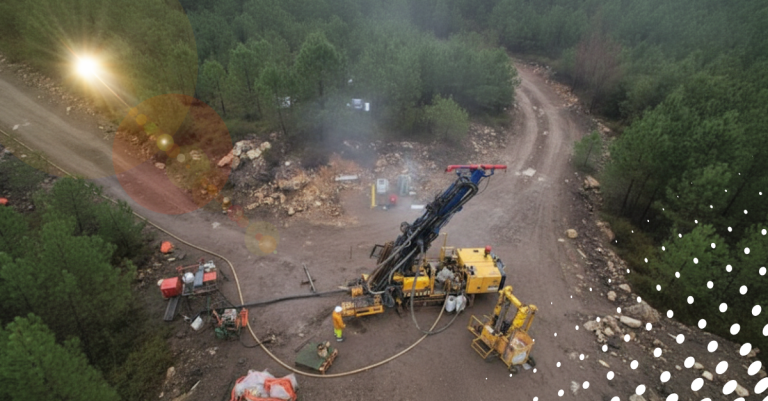
    The Swedish government’s plans to lift the uranium mining ban will influence District’s decision on whether to proceed with a preliminary economic assessment for Viken in the fourth quarter of 2023. The new resource estimate is based on 122 holes, including drilling data from previous operators between 2006 and 2012.

  • Uzbekistan’s Navoiuran Signs €9 Million Uranium Transport Deal with Kazakhstan’s Logistic Centre

    Uzbekistan’s Navoiuran Signs €9 Million Uranium Transport Deal with Kazakhstan’s Logistic Centre

    Navoiuran, a leading uranium producer from Uzbekistan, has signed a €9 million contract with Kazakhstan’s TOO Logistic Centre for the transportation of uranium concentrate to France, according to inbusiness.kz citing EURASIA TODAY.


    Under the agreement, TOO Logistic Centre will transport 500 containers of uranium concentrate from the port of St. Petersburg to the commune of Malvési in southern France. The total cargo volume is expected to reach up to 6,000 tons.


    Deliveries are scheduled to continue until the end of the first quarter of 2026, with each shipment required to reach its destination within 15 days of departing the Russian port.


    In addition to the French deliveries, Navoiuran plans to export uranium through Russia to the United States and Canada and is currently seeking contractors for transportation to processing facilities in those countries.

  • Kazakhstan Proposes Uranium Mining Contract to Turkey to Fuel Its Growing Nuclear Energy Program

    Kazakhstan Proposes Uranium Mining Contract to Turkey to Fuel Its Growing Nuclear Energy Program

    Kazakhstan has proposed a long-term partnership with Turkey in the nuclear fuel cycle, offering a contract for uranium mining within Kazakhstan to help meet Turkey’s rapidly growing demand for nuclear energy. The announcement was made by Bauyrzhan Duisebayev, Director General of the Chemical Engineering Design Bureau, during the MINEX Kazakhstan forum.

    Duisebayev highlighted that Turkey is emerging as a major nuclear player with four reactors under construction and four more planned. He emphasized that Kazakhstan, given its vast uranium reserves and experience, is a natural partner. He estimated that Turkey’s two existing nuclear plants alone will require 1,800 tonnes of uranium annually, and that future demand could reach 5,000 to 8,000 tonnes per year.

    A presentation prepared for Turkish officials outlined Kazakhstan’s proposed role in the entire nuclear fuel cycle — from uranium mining to fuel fabrication. Currently, Kazakhstan mines uranium in collaboration with Russia, where it is converted, enriched, and fabricated into nuclear fuel. Duisebayev suggested Kazakhstan could independently provide conversion services, potentially at facilities like the Ulba Metallurgical Plant or the Stepnogorsk Mining and Chemical Plant.

    He noted that Turkish officials had expressed interest in nuclear cooperation during President Erdoğan’s visit to Astana for the SCO summit in July 2024, but no uranium contracts have yet been signed. Duisebayev emphasized that Turkey could become involved in three stages of the nuclear cycle — mining, conversion, and fuel fabrication — and eventually, more, except for enrichment, which still requires time and development.

    He also outlined Kazakhstan’s long-term strategy to shift from selling natural uranium to offering higher-value products like uranium tetrafluoride and hexafluoride, enriched uranium, and eventually, only nuclear technologies and energy. This transition is driven by expectations that global uranium demand may decline by 2040 due to the rise of alternative reactors, such as thorium or fast reactors that do not rely on natural uranium.

    Duisebayev mentioned that conversion operations could be hosted not only in Stepnogorsk, now part of Rosatom’s structure, but also in Ust-Kamenogorsk or Uralsk. He expressed hope for progress with or without Turkish participation, including potential cooperation with Rosatom.

    Turkey’s first nuclear power plant, Akkuyu, is being built by Rosatom under a build-operate-transfer model. It will consist of four VVER-1200 reactors with a total capacity of 4,800 MW. The construction cost is estimated at $24–25 billion, with Russia providing both the fuel and the handling of spent nuclear material.

  • Kazakhstan Launches New Era of Resource Development at 15th MINEX Forum

    Kazakhstan Launches New Era of Resource Development at 15th MINEX Forum

    Date: April 9, 2025

    The 15th MINEX Kazakhstan Mining and Geological Forum is underway today in Astana under the theme: “A New Era of Kazakhstan’s Mineral Resource Development: From Exploration to Processing.”

    The event brings together around 100 speakers, 450 delegates, and 40 exhibitors from across Central Asia, Europe, North America, Africa, the Middle East, Australia, China, India, Malaysia, and Singapore.

    In her keynote address, Zhannat Dubirova, Vice Minister of Industry and Construction, highlighted recent digitalization milestones achieved in the country’s resource sectors:

    “Since the beginning of this year, we have launched the Unified Subsoil Use Platform, which now provides 22 digitized public services. So far, it has processed 506 applications. Investors can now apply directly through the portal to participate in auctions. In January, this led to $40 million in investments across 21 sites.”

    She also announced that manual oversight of more than 3,000 licenses and contracts related to solid mineral resources had been fully digitized.

    Almas Kushumov, Director of the Subsoil Use Department at the ministry, presented the results of state-led geological surveys:

    “There is growing business interest in resource development. Over the last two years, 117 subsoil plots and deposits were auctioned electronically, generating more than 29 billion tenge in subscription bonuses. In June 2025, we plan to auction 50 gold, silver, coal, and rare metal deposits.”

    The forum is also addressing pressing issues such as Kazakhstan’s role in global critical mineral supply chains, investment climate improvements, uranium sector development, and nuclear energy expansion.

    The event will conclude with a session on talent development and national capacity building, followed by a gala awards ceremony honoring achievements in the mining sector, hosted by the Mining Chamber of Kazakhstan.

    Kazakhstan’s mineral sector is undergoing a significant transformation, driven by government initiatives aimed at boosting economic growth, industrial diversification, and expanding geological exploration.

  • Uzbekistan and France Strengthen Economic Partnership Through Uranium Mining Initiatives

    Uzbekistan and France Strengthen Economic Partnership Through Uranium Mining Initiatives

    (Paris, France) – Uzbekistan and France are deepening their economic partnership, forging new trade agreements and collaborations that could reshape the energy landscape of Central Asia. French nuclear giant Orano signed a major agreement during President Shavkat Mirziyoyev’s state visit to Paris earlier this month, signifying a significant leap forward in uranium mining cooperation between the two nations.

    The details of the agreement, estimated to be worth billions of euros, remain undisclosed. However, sources indicate it involves Orano increasing its current uranium mining operations in Uzbekistan and potentially expanding into new areas. Uzbekistan, holding significant uranium reserves, is keen to develop its nuclear energy sector and position itself as a key supplier to international markets.

    This multi-million-euro deal builds on a series of agreements signed during President Mirziyoyev’s visit, totaling up to €12 billion in investments across diverse sectors like infrastructure, energy, and water management.

    “Uzbekistan views France as a key strategic partner in its drive to modernize its economy and transition towards cleaner energy sources,” said a senior Uzbek government official, speaking on condition of anonymity. “This partnership opens doors for significant technological transfer and investment in Uzbekistan’s nuclear sector.”

    French companies, including Suez and Orano, are already actively investing in Uzbekistan, contributing to key sectors like utilities and resource development. The France-Uzbekistan Chamber of Commerce, launched last year, further underscores the growing bilateral economic ties.

    Critics, however, raise concerns regarding the environmental and social impacts of expanding uranium mining operations in Uzbekistan. They call for greater transparency and stringent safety regulations to ensure responsible resource development and protect local communities.

  • Kazatomprom Reports Record Production and Revenue in 2024

    Kazatomprom Reports Record Production and Revenue in 2024

    Astana, March 20, 2025 – President Kassym-Jomart Tokayev recently held a meeting with Meirzhan Yusupov, Chairman of the Board of JSC “National Atomic Company Kazatomprom.” The discussion revolved around the company’s 2024 operational results, as well as its short- and mid-term goals.

    During the meeting, it was reported that uranium production exceeded 23,000 tons last year, with over 16,600 tons sold across the group. Kazatomprom’s consolidated revenue reached a record-breaking 1.8 trillion tenge, marking a 26% increase from 2023. Tax contributions to the national budget surged to 720 billion tenge, representing a 58% rise compared to the previous year.

    The President was briefed on global market developments, new contracts for the supply of natural uranium concentrate, and progress on several investment projects. Notably, the Ulba-TVS plant achieved its full production capacity of 200 tons of low-enriched uranium annually in 2024, marking a significant milestone for the industry.

    A key point of discussion was Kazatomprom’s new development strategy for 2025-2034. This initiative focuses on expanding and efficiently utilizing the nation’s mineral resource base. Licenses for uranium exploration in promising areas with an estimated resource potential of 170,000 tons were acquired last year.

    Mr. Yusupov highlighted recent international collaborations, including agreements with Tajikistan on rare and rare-earth metal processing, with France on workforce training for the nuclear sector, and with Mongolia and Jordan on joint uranium exploration projects.

    Additionally, the President was informed about Kazatomprom’s socially significant initiatives aimed at regional development and support. In 2024, over 3.7 billion tenge was allocated for these projects.

    At the conclusion of the meeting, President Tokayev set forth tasks to further enhance Kazatomprom’s operations and its participation in implementing socially impactful projects.

  • Kazatomprom aims to Strengthen Position in Uranium Joint Ventures

    Kazatomprom aims to Strengthen Position in Uranium Joint Ventures

    Kazakhstan’s national atomic company Kazatomprom is seeking to increase its stake in joint uranium mining ventures as existing contracts come up for renewal.

    A representative from Kazatomprom presented proposed amendments to Kazakhstan’s Subsoil and Subsoil Use Code to members of parliament this week. The changes would require the state-owned company to obtain at least a 90% share when extending contracts for uranium mining projects.

    “Currently our stake in various projects ranges from 50% and higher. However, many contracts were signed in the late 1990s and early 2000s under fixed terms. We believe it is necessary to revise these parameters,” the Kazatomprom official stated.

    If approved, the amendments could impact agreements with Kazatomprom’s major foreign partners, including companies from China, Canada, France and Japan.

    The company argues the changes will allow Kazakhstan to maximize benefits from its uranium resources as global demand for nuclear fuel grows. However, some analysts caution it may deter future foreign investment in the country’s mining sector.

    Kazatomprom is the world’s largest uranium producer, accounting for around 24% of global primary uranium production. The company operates 26 deposits grouped into 14 uranium mining assets, with foreign partners holding stakes in many key projects.

    The proposed legislation will now be debated in parliament before potentially being signed into law. Kazatomprom says it is open to negotiations with existing partners to ensure a smooth transition if the changes are enacted.

  • Kazatomprom Organizes Press Tour to Inkai Uranium Deposit: Safety, Technology, and Social Responsibility

    Kazatomprom Organizes Press Tour to Inkai Uranium Deposit: Safety, Technology, and Social Responsibility

    Kazatomprom JSC held a press tour at the Inkai uranium deposit, operated by Inkai LLP, located in the Turkestan region. Journalists were shown the company’s uranium extraction and processing technologies, as well as its environmental safety measures and social responsibility initiatives.

    Kazakhstan remains the world’s leader in uranium production, supplying about 40% of the global nuclear energy market. Inkai is one of the country’s key deposits, known for its low extraction costs. Kazatomprom owns 60% of the joint venture’s shares, while Canada’s Cameco holds the remaining 40%.

    Technology and Safety
    Stepan Tretyakov, Head of Mining, highlighted the use of in-situ recovery (ISR) technology, which is considered the safest and most environmentally friendly method of uranium extraction. “We conduct a five-year monitoring program after extraction is complete, ensuring the ore horizons return to their natural state,” he explained.

    At the “Satellite-2” processing facility, Aybek Aidymbekov, Head of Processing, outlined the uranium processing stages, including clarification, sorption using special resin, extraction, and packaging into barrels. Annually, 30 million cubic meters of solution are processed, producing over 11,000 barrels of uranium peroxide.

    Operator Beksyltan Ilyas emphasized the importance of radiation protection and automated monitoring at all stages. Meanwhile, Evgeniy Madzhara, Head of the Laboratory, noted that 24/7 quality control ensures no deviations from the technology and guarantees product quality.

    Social Support and Employee Comfort
    The company is actively investing in regional development, allocating 475.4 million tenge in 2024 for social needs in the Turkestan region. Acting Akim Bolat Esenkabyl shared that the company has lit streets, built sports fields, supported schools, and provided internet access in the village of Taykonur.

    Comfortable conditions have been created for employees in the rotational camp, including a multifunctional sports complex, gym facilities, and recreational zones with entertainment options like billiards, table tennis, and PlayStation consoles.

    Environmental Initiatives
    The press tour concluded with an elm tree planting initiative. Inkai actively supports environmental projects and provides assistance to veterans, children, and low-income families.

    The press tour demonstrated that Kazakhstan’s uranium industry is a high-tech, safe, and socially responsible sector.

  • Kazakhstan Set to Join Nuclear Club: Nation Builds First Power Plant

    Kazakhstan Set to Join Nuclear Club: Nation Builds First Power Plant

    Kazakhstan, a key ally of Russia and responsible for 43% of global uranium production in 2022, is embarking on a significant step towards nuclear power generation. Possessing 12% of the world’s uranium resources and previously operating a now-decommissioned Russian-built reactor, the nation is now actively pursuing its first nuclear power plant (NPP). This development, as reported by the World Nuclear Association, signals a potential shift in the global nuclear landscape.

    Currently, Kazakhstan focuses on producing nuclear fuel pellets, adding value to its uranium output. A new fuel fabrication plant, with 49% Chinese investment, is also under construction. In 2023, uranium production reached 21,112 tonnes, with projections of 21,000-22,500 tonnes for 2024. Kazatomprom, the national atomic company, manages 13 uranium mining projects, some in joint ventures with foreign entities.

    President Kassym-Jumart Tokayev recently emphasised the urgent need for the NPP, citing growing energy shortages and the country’s development goals. He instructed the government to create long-term plans for the nuclear industry and identify suitable locations for future plants, prioritising modern, safe technologies. The Almaty region is likely to host the first NPP, according to Kazakh news outlet Vlast.kz, quoting Prime Minister Olzhas Bektenov. President Tokayev reiterated the commitment to carbon neutrality, but with a more “rational” approach.

    The government aims for complete energy self-sufficiency and reserves of 15-20%, targeting an additional three gigawatts of energy capacity within two years. Strengthening the Western Zone’s electrical networks by 2027 is also planned.

    While Kazakhstan has considered nuclear power for decades, the legacy of Chernobyl and the Semipalatinsk nuclear test site has bred public scepticism. Concerns about nuclear safety, corruption, and dependence on foreign infrastructure remain. A recent referendum, however, reportedly saw 70% of voters support the construction of NPPs.

    Choosing a reactor vendor presents a geopolitical challenge. Russia, France, China, and South Korea are all potential suppliers, and balancing technical and commercial factors with international relations will be complex. Financing and localising the projects are also critical. Some fear Russian influence via Rosatom, but Kazakhstan’s growing capabilities, including fuel assembly production with French technology and Chinese investment, offer more options. Carnegie Politika suggests that Kazakhstan’s sovereign wealth fund and increasing availability of foreign loans can address financial needs.

    This move could mark the beginning of Kazakhstan’s nuclear era. While nuclear energy for civilian use is accepted in theory, its potential for dual use raises concerns. Kazakhstan’s development will make it the first Central Asian nation with a nuclear power programme, impacting the entire region. With both China and Russia having vested interests in Central Asia, particularly Kazakhstan, it is vital that this resource-rich region, seen as a bridge between East and West, does not become a stage for superpower rivalry.


    Prof. KN Pandita (Padma Shri) is the former director of the Center of Central Asian Studies at Kashmir University. This article reflects the author’s personal views and not necessarily those of EurAsian Times. He can be contacted at knp627 (at) gmail.com.