Tag: Ukraine

  • Gennadii Butkevych Awarded Order of Merit for Contributions to Ukraine

    Gennadii Butkevych Awarded Order of Merit for Contributions to Ukraine

    Gennadii Butkevych, the founder of BGV Group Management, has been awarded the Order of Merit, Third Class, by President Volodymyr Zelenskyy in recognition of his significant contributions to Ukraine’s statehood and public life. This honour comes as Ukraine celebrates its 35th anniversary of independence. Butkevych’s dedication to defending the sovereignty and territorial integrity of Ukraine, alongside his professional achievements, has been acknowledged through this prestigious award.

    BGV Group Management, which operates across five key sectors including mining, energy, infrastructure, retail, and education, plays a crucial role in supporting the Ukrainian economy during challenging times. The company has been instrumental in fostering development and advocating for national interests, showcasing the resilience and commitment of Ukrainian businesses.

    In addition to his business ventures, Butkevych is also known for his philanthropic efforts through the BGV Charity Fund, which has provided substantial support to military, community, and humanitarian initiatives since the onset of the full-scale invasion. Over UAH 1.6 billion has been allocated to charitable activities, including assistance to Ukraine’s Defense Forces and various educational and sports projects.

    The recognition of Butkevych with the Order of Merit underscores the importance of individual contributions to national development, particularly in times of crisis. His work exemplifies the spirit of Ukrainian entrepreneurship and the vital role that business leaders play in the country’s ongoing struggle for sovereignty and stability.

  • Challenges Facing Ferrexpo and Metinvest Amid Black Sea Port Blockade

    Challenges Facing Ferrexpo and Metinvest Amid Black Sea Port Blockade

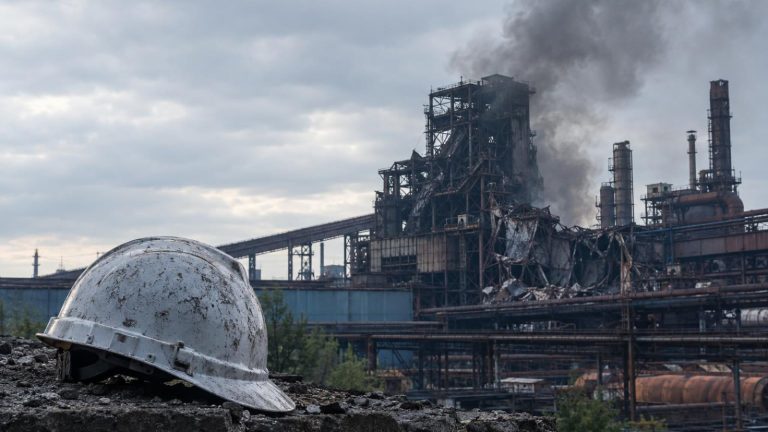
    The ongoing blockade of the Black Sea ports has severely impacted Ukraine’s mining and metallurgy sectors, particularly affecting major players like Ferrexpo and Metinvest. The closure of these ports has not only disrupted agricultural exports but has also halted the maritime export of iron ore, which is crucial for the economy. Ferrexpo has been forced to suspend production at its Poltava mining and processing plant, while Metinvest has temporarily halted operations at its Southern Mining and Processing Plant (Southern GOK).

    Before the war, Ukraine produced a record 81.2 million tonnes of iron ore in 2021, with a significant portion exported to China. However, the onset of the conflict led to a drastic decline in production and exports, dropping nearly 2.5 times due to the loss of key domestic buyers and the blockade of maritime routes. The only alternative has been to redirect iron ore exports via rail to the European Union, but this has proven economically unfeasible due to high logistics costs.

    The situation briefly improved in late 2023 when a maritime corridor reopened, allowing for a resurgence in exports. However, this recovery was short-lived, as Russian attacks on energy infrastructure led to rising electricity costs, which account for a significant portion of production expenses. The combination of low global iron ore prices and high transportation costs has made it difficult for Ukrainian companies to compete with Australian and Brazilian producers.

    As of early 2026, the situation remains dire, with exports dropping by 27.3% in the first half of the year. Ferrexpo, lacking its own steel production facilities in Ukraine, is particularly vulnerable, relying entirely on exports. The company has warned that without additional funding and the resumption of full-scale shipments, it may only have enough resources to operate until mid-September. Meanwhile, Metinvest, which has its own steel mills, is also facing challenges, including a significant reduction in production and increased transportation costs due to the blockade.

    Experts warn that the continued closure of maritime routes threatens the macroeconomic stability of Ukraine, with the potential for widespread plant shutdowns if the situation does not improve soon. The reliance on European markets is not a viable long-term solution, as the logistics and costs associated with land transport are prohibitive. The Ukrainian mining sector is at a critical juncture, with the need for government intervention and support to mitigate the impact of these challenges on the industry and the economy as a whole.


  • Austrian Lawmakers Seek Probe Into Ferrexpo’s Corporate Structure and Financial Transactions

    Austrian Lawmakers Seek Probe Into Ferrexpo’s Corporate Structure and Financial Transactions

    Austrian lawmakers have submitted a parliamentary inquiry calling for an investigation into the business activities and financial structures linked to Ferrexpo plc and its major shareholder, Konstantin Zhevago, following allegations concerning transfer pricing, corporate transactions and asset ownership.

    The inquiry names several Ferrexpo-related entities, including Ferrexpo AGThe Minco TrustFirst-DDSG Logistics Holding GmbHMAG Handels- und Transport GmbHMAGferr GmbHEliomys Vermögensverwaltung KGOxanikus Vermögensverwaltung KG and Luxembourg-based Calexco S.a.r.l. Authorities have also been asked to examine potential business links involving several individuals connected to the companies.

    The request follows reports published by Austrian magazine Profil, Zhevago’s arrest in France in 2022 and Ukrainian sanctions imposed against him in February 2025.

    One of the main issues under review concerns the marketing of iron ore pellets produced by Poltava Mining and Processing Plant. According to allegations cited in the inquiry, pellets were sold through Ferrexpo AG in Switzerland rather than directly to European steelmakers, including VoestalpineSalzgitter and Thyssenkrupp, at below-market prices, allowing profits to be shifted outside Ukraine. The alleged outstanding debt to the Poltava operation is estimated at more than US$500 million. Ferrexpo has rejected the allegations, stating that all transactions were conducted on market terms and complied with applicable transfer pricing regulations.

    The parliamentary inquiry also requests an examination of Ferrexpo’s historical relationship with Voestalpine, including the sale of interests in VA Intertrading AG to Calexco S.a.r.l., existing commercial agreements and whether any insider information may have been used in securities trading. Austrian financial regulators have been asked to clarify whether investigations into potential market manipulation or insider trading have been conducted.

    Separately, lawmakers are reviewing the activities of First-DDSG Logistics Holding GmbH, which transported Ferrexpo products. The inquiry notes that the logistics company reported losses of €44.8 million in 2022€42.3 million in 2023 and €41 million in 2024, prompting questions over transfer pricing arrangements and management decisions.

    The inquiry further seeks information regarding four luxury properties in Austria, including Villa Schwarzenfels in Maria-Wörth, two villas in Vienna and another in Pressbaum, to determine whether they are connected to Zhevago and to establish the origin of the funds used for their acquisition.

    The investigation comes as Ferrexpo faces financial pressures. According to the company, it held approximately US$20 million in cash as of April 2026, while awaiting US$90.3 million in outstanding VAT refunds from the Ukrainian government. The company has announced plans to raise at least US$100 million through a share issue, sell the vessel Iron Destiny for US$7.7 million, implement cost reductions and has warned of potential insolvency risks if its financial position does not improve.

  • Velta Agrees Sale to U.S. Investor CRML as Part of Strategic Relaunch Plan

    Velta Agrees Sale to U.S. Investor CRML as Part of Strategic Relaunch Plan

    Ukrainian titanium producer Velta is entering a new phase of development after its owner, businessman Andriy Brodsky, agreed in early 2026 to sell the company to U.S.-based investment group CRML in what market sources describe as a “survival and relaunch” transaction.

    The deal is designed to secure fresh capital and reposition the company within global titanium supply chains. Under the agreement, Velta is expected to strengthen integration with major Western industrial partners and expand its footprint in the international titanium market.

    As part of its transformation strategy, Velta signed an agreement with European Lithium and initiated a due diligence process, a key step before further structural decisions are taken. Following the audit, the partners may consider spinning off Velta as a standalone entity and pursuing a listing on the NASDAQ stock exchange in the United States.

    A NASDAQ listing would provide access to one of the world’s deepest pools of technology-focused capital and could support large-scale fundraising. The company intends to channel new investment into building a metallic titanium plant based on its proprietary technology, as well as expanding research and development capabilities.

    Industry observers say the transaction opens new financing pathways and positions Velta to evolve into a vertically integrated titanium player with advanced technological expertise. The strategy also includes investment in in-house power generation to lower operating costs and improve efficiency.

    If completed, a U.S. stock market listing would mark one of the most notable Ukrainian M&A developments in the post-2022 period, highlighting the ability of export-oriented, high-tech manufacturers to attract Western investment despite challenging market conditions.

    The transaction signals more than a change in ownership, potentially marking a broader reset for Ukraine’s titanium industry and its integration into global supply chains.

  • Ukraine Reviews PSA Tenders for Four Uranium Deposits Linked to BGV Group

    Ukraine Reviews PSA Tenders for Four Uranium Deposits Linked to BGV Group

    Ukraine’s interagency commission on production-sharing agreements (PSAs) is reviewing a request to launch competitive tenders for uranium development at four deposits in Mykolaiv and Kirovohrad oblasts, according to Nadra.Info.

    The initiative was submitted by Atomic Energy Systems of Ukraine LLC (AESU), part of businessman Hennadii Butkevych’s BGV Group Management. Butkevych is also a co-owner of the ATB retail chain. AESU is seeking to initiate PSA tenders for the Safonivska site, the Sadova area, the Severynske deposit and the Pidhaitsivske deposit.

    The application was formally submitted in late November 2025 and considered at a commission meeting on Dec. 15, 2025, the same day authorities opened applications for a PSA tender for the Dobra lithium deposit. However, as of January, no final decision had been taken.

    “But so far, they’re saying nothing. The ball is in their court, and it has been for a long time,” Butkevych said, commenting on the delay. He attributed the slow progress to a degree of state caution toward private-sector initiatives in uranium mining.

    The four subsoil plots are included on Ukraine’s list of strategically important deposits to be developed through competitive PSA mechanisms. The Pidhaitsivske and Severynske deposits are located in Kirovohrad Oblast’s Kropyvnytskyi district, while the Sadova area and Safonivska site are situated in Mykolaiv Oblast.

    BGV Group Management plans to develop the projects in partnership with foreign investors, although potential partners have not yet been disclosed. Butkevych has stated that, once permits are granted, uranium production could begin within 1.5 to 2 years.

    The review comes amid broader activity in Ukraine’s strategic minerals sector. On Jan. 12, the Cabinet of Ministers selected Dobra Lithium Holdings JV, LLC — backed by TechMet and The Rock Holdings — as the winner of the PSA tender for the Dobra lithium deposit in Kirovohrad Oblast.

    According to Butkevych, uranium development has also been discussed at the highest political level, including with President Volodymyr Zelenskyy.

  • Poland Urges Brussels to Act Over Ukraine’s Steel Scrap Export Ban

    Poland Urges Brussels to Act Over Ukraine’s Steel Scrap Export Ban

    Poland has asked the European Commission to intervene after Ukraine introduced measures that effectively halt exports of steel scrap to the European Union, a move Warsaw warns could undermine the competitiveness of its steel industry.

    The dispute highlights growing trade frictions between the two close partners at a time when the EU continues to provide political, financial and military support to Ukraine following Russia’s full-scale invasion. While Poland remains one of Kyiv’s strongest allies, tensions have mounted over trade flows, including agricultural products, transit corridors and now scrap metal.

    From January 1, Ukraine set export quotas for ferrous scrap at zero, effectively blocking shipments of a key input for electric arc furnaces. Poland’s Ministry of Development and Technology said the restrictions are already disrupting supply chains and risk driving up costs for domestic steelmakers.

    Roughly half of Poland’s steel output is produced using electric arc furnaces, which rely heavily on scrap as their primary raw material. In recent years, Poland has been the main destination for Ukrainian scrap exports. According to the ministry, a prolonged shortage could lead to higher production costs, weaker competitiveness and a real risk of output cuts and job losses in the sector.

    Kyiv has defended the measure as a wartime necessity, arguing that limiting exports helps support Ukraine’s own steel industry. Polish industry representatives counter that the policy lowers input costs for Ukrainian producers while increasing prices for manufacturers in the EU.

    Warsaw says it attempted to avert the restrictions before they took effect. On December 18, 2025, the Polish ministry sent a formal letter to Ukraine’s deputy economy minister urging the government to reconsider plans that would block scrap exports. With no response and the zero quotas now in force, Poland escalated the issue to Brussels.

    Following the Ukrainian government’s decision, the ministry formally requested urgent intervention from the European Commission, describing the quotas as a de facto export ban. Polish officials added that the matter will also be raised during upcoming bilateral talks with Ukrainian counterparts.

  • Ukraine selects U.S.-linked consortium to develop Dobra lithium deposit

    Ukraine selects U.S.-linked consortium to develop Dobra lithium deposit

    Ukraine has chosen a consortium that includes U.S.-connected investors as the preferred bidder to develop the Dobra lithium deposit in Kirovohrad Oblast, according to a report by The New York Times. The decision was taken on January 8 by a government commission and is expected to receive formal approval from the Cabinet of Ministers, though officials say the outcome is effectively settled.

    The winning consortium includes TechMet, an energy investment company partly owned by a U.S. government-backed investment agency, and billionaire Ronald Lauder, a long-time associate of U.S. President Donald Trump. Commission members cited the consortium’s strong technical and financial proposal, saying it met most of the tender’s criteria and denying allegations of favoritism.

    The Dobra deposit is one of Ukraine’s largest known lithium resources and is considered strategically important for technologies such as electric vehicle batteries. Development will take place under a production-sharing agreement, allowing investors to extract lithium in exchange for sharing output with the Ukrainian state.

    Under a broader U.S.-Ukraine minerals framework, half of the revenue generated for Ukraine from the project is to be channelled into a joint investment fund. Companies seeking to develop mineral deposits are also required to first present their projects to this fund, a mechanism designed to attract U.S. investment.

    While the minimum investment threshold for the tender was set at $179 million, officials indicated that the consortium’s pledged investment exceeds that figure. The agreement предусматривает spending at least $12 million on geological exploration and $167 million on launching extraction and processing, alongside compliance with environmental standards, use of Ukrainian labour and goods, and investment in local communities.

    Before mining can begin, the consortium must complete detailed geological studies to confirm the deposit’s commercial value and then finance the necessary infrastructure. Industry experts note that moving from exploration to full-scale production typically takes more than a decade.

    The Dobra project is expected to become one of the first initiatives implemented under the U.S.-Ukraine minerals partnership, following the launch of a joint reconstruction investment fund earlier this year.

  • Ukrainian mining and steel sectors face weaker outlook than broader industry

    Ukrainian mining and steel sectors face weaker outlook than broader industry

    Ukraine’s mining and metallurgical industries are experiencing a more difficult economic situation than the country’s industrial sector on average, according to conjunctural assessments for November 2025. The balance of responses assessing current order volumes stood at minus 53% in metal ore mining and minus 46% in metallurgy, compared with minus 36% for industry as a whole, indicating a stronger prevalence of negative sentiment in these sectors.

    Despite the downturn, companies in mining and steel did not expect major changes in production volumes over the following three months. However, guaranteed capacity utilization continues to decline. Since the beginning of 2025, the order backlog at steel enterprises has fallen from 2.5 months to 1.9 months, while in metal ore mining it dropped from 3.2 months to 1.8 months. By contrast, the average backlog across Ukrainian industry in November exceeded four months.

    Labor market expectations also point to mounting pressure. In November, the balance of responses on expected employment changes over the next three months was minus 53% in metal ore mining, compared with minus 11% in metallurgy and minus 7% across industry, signaling a high risk of workforce reductions in the mining segment.

    Investment expectations mirror this trend. The balance of responses regarding future investment was minus 20% in metal ore mining and minus 5% in metallurgy, both well below the industry-wide average of 4%, suggesting weaker investment prospects for 2026.

    Industry representatives cite several factors behind the deterioration, including declining global raw material prices, high electricity tariffs that have already forced some operations to suspend activity, and reduced output at Ferrexpo linked to delayed VAT reimbursements.

    Under wartime conditions, mining and steel companies are prioritizing the maintenance of existing production capacities rather than expansion. With steel prices remaining low on global markets, companies report limited financial capacity for long-term investment, while surveys show that even medium-term business planning has become increasingly difficult.

  • Ukraine’s Lithium Ambitions: Opportunities and Challenges as Kyiv Seeks a Role in the Global Battery Metals Market

    Ukraine’s Lithium Ambitions: Opportunities and Challenges as Kyiv Seeks a Role in the Global Battery Metals Market

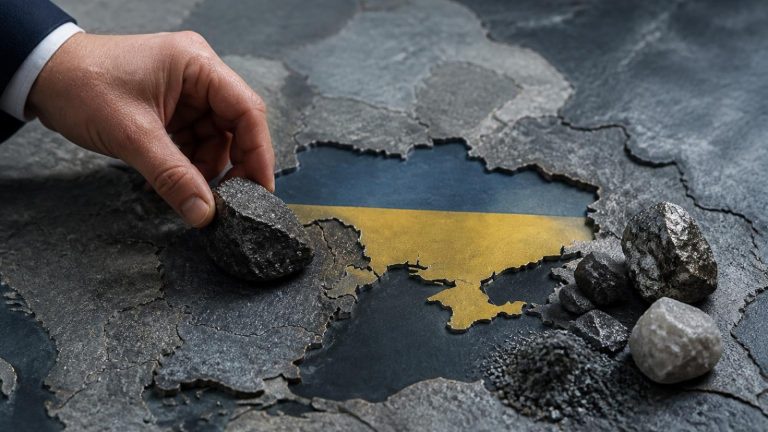
    Ukraine is positioning itself to enter the global lithium industry as the country prepares to close applications on December 12 for its first-ever lithium Production Sharing Agreement, covering the “Dobra” hard-rock deposit. The tender comes as Kyiv seeks to revive its mining and processing base, re-launch geological exploration and build a broader critical minerals sector that could anchor Ukraine more firmly within Western supply chains.

    The discussion follows earlier analysis of Ukraine’s role in the titanium value chain, where the country has long-standing expertise, an established presence in chloride-process feedstock and a historically strong resource base. Supporters argue that many of these strengths can be leveraged as Ukraine moves toward lithium — a metal undergoing rapid transformation and increasing geopolitical scrutiny.

    Over the past five years, lithium has shifted from a niche commodity to a key industrial material, underpinning electric vehicles, energy storage, digital infrastructure and AI-related growth. The sector has already weathered a full boom–bust cycle, marked by a dramatic 2022 price spike followed by a steep crash in 2023–2024. Market volatility, combined with the bankruptcy of battery producer Northvolt, production curtailments in Australia, the rise of South American brines and China’s entrenched dominance in refining, has reshaped the landscape for emerging producers.

    Despite turbulence, analysts expect demand to expand sharply. Forecasts from the IEA, Benchmark Mineral Intelligence and others project global lithium demand in 2035 at 3.5–4 million tonnes of LCE — three to four times current levels — driven largely by electric vehicles, grid-scale energy storage and the rapid growth of AI data centres. Evolving battery chemistries, including the rise of LFP, sodium-ion and eventual solid-state technologies, are not expected to displace lithium, only alter consumption patterns.

    On paper, the supply pipeline appears abundant, but industry experts warn that cost pressures, permitting delays and technology risks significantly constrain real-world output. Many high-cost projects failed as prices retreated to $10,000–$15,000 per tonne, underscoring the importance of cost-competitive Tier-1 and Tier-2 operations. These categories, which encompass top South American brines and efficient hard-rock mines, remain profitable even in downturns. Higher-cost Tier-3 and Tier-4 projects, including complex clays and power-intensive operations, cycle in and out of production, contributing to recurring price shocks.

    This tight supply environment supports long-term price expectations of $15,000–$20,000 per tonne, reinforcing the need for new jurisdictions to create competitive conditions for investment. For Ukraine, this means stable permitting, predictable policy and investment frameworks that allow the development of mid-tier, cost-competitive projects.

    Any discussion of future lithium supply also centers on China, which refines around two-thirds of global lithium chemicals and manufactures more than 70% of battery cells. Analysts expect China’s geographically domestic market share to shrink as new refining plants come online in Australia, Asia, the U.S. and the EU, but Chinese-controlled capacity abroad will remain substantial. Beijing is also expected to continue using state-backed tools to protect national champions during downturns, creating a competitive landscape that new producers must navigate.

    Experts highlight seven factors that determine success for emerging lithium producers: strong cost position, clear routes to market, fast permitting, robust governance and ESG frameworks, integration into geopolitical alliances, R&D capacity and development of human capital. Failure to meet these benchmarks has already sidelined many new entrants, given lithium’s cyclicality and the technological risks of unconventional extraction.

    For Ukraine, the “Dobra” PSA and other spodumene prospects offer pathways to enter European supply chains, especially with by-products such as rare metals bolstering project economics. As the world enters what many call the “New Age of Electricity,” Ukraine’s geological resources — whether lithium, graphite, copper, nickel or strategic metals such as titanium and zirconium — could elevate the country from a raw-material holder to a strategic partner.

    Analysts argue that the global race will favour countries able to combine strong geology with fast permitting, disciplined policy execution and deep integration into Western supply chains. For Ukraine, the choice is clear: remain a price-taking exporter exposed to market cycles or build the governance, investment environment and industrial partnerships needed to become a reliable supplier in a world increasingly defined by critical minerals competition.

  • Ukraine’s Lithium Push: Opportunities and Risks as Kyiv Seeks a Place in the Global Battery Metals Race

    Ukraine’s Lithium Push: Opportunities and Risks as Kyiv Seeks a Place in the Global Battery Metals Race

    Ukraine is moving to position itself as a future player in the global lithium industry, as the government races to revive its mining and processing sectors and build a broader critical minerals base. The country will close applications on 12 December for its first-ever lithium Production Sharing Agreement (PSA) tender, the “Dobra” hard-rock project, a test case for how Ukraine could integrate into Western battery supply chains.

    The tender comes as Kyiv seeks to leverage its geological legacy, long-standing mining expertise and high-quality resource base at a time when governments and companies worldwide are scrambling to secure critical raw materials. Ukraine already has a track record in other strategic metals, including titanium, and until 2021 produced titanium sponge. Supporters of Ukraine’s critical minerals strategy argue that these strengths, combined with proximity to European industrial hubs, make the country a natural diversification option for Western supply chains.

    The renewed focus on lithium follows a turbulent five years for the sector. Once a niche material, lithium has become a cornerstone of modern industry, particularly for electric vehicles (EVs), energy storage systems and digital infrastructure. Over that period, global markets have experienced a full boom–bust cycle, with a spectacular price spike in 2022 followed by a sharp correction in 2023–2024. At the same time, the bankruptcy of prominent battery maker Northvolt, production curtailments at Australian mines, the rise of South American brines and the entrenched dominance of Chinese refiners have exposed the vulnerabilities of geographically concentrated supply chains.

    Despite the price volatility, analysts broadly agree that demand growth is structural. Forecasts from organisations such as the IEA and leading market consultancies suggest that global lithium demand could reach 3.5–4 million tonnes of lithium carbonate equivalent (LCE) by 2035—roughly three to four times today’s levels. The main drivers remain EVs and stationary energy storage, with additional momentum from the rapid build-out of AI data centres and high-tech grid infrastructure.

    Technological developments are reshaping the landscape but are not expected to displace lithium. Lithium iron phosphate (LFP) chemistries have eaten into the market share of nickel-rich cathodes, sodium-ion batteries are emerging in low-cost applications and solid-state technologies could capture a slice of premium EVs by the mid-2030s. Yet these innovations mainly affect how much lithium is used per kilowatt-hour and in which segments, rather than removing the metal from the picture.

    On the supply side, the global project pipeline appears abundant on paper. If every announced brine, hard-rock, clay and direct lithium extraction (DLE) project were to proceed as planned, nameplate capacity could cover projected demand. In reality, sector observers highlight significant constraints, with many projects vulnerable to cost inflation, permitting delays and unproven technologies.

    Historically, lithium projects have tended to stumble for three main reasons: high operating and capital costs, slow and unpredictable permitting processes, and the technical challenges of scaling complex flowsheets such as DLE or clay leaching from pilot to commercial levels. The latest downturn, which saw prices fall from $70,000–80,000 per tonne in 2022 to around $10,000–15,000, quickly exposed high-cost operators and heavily leveraged projects. This has reinforced the view that, although global volumes may look sufficient over a decade-long horizon, availability in any given year can be tight, supporting long-term price expectations in the $15,000–20,000 per tonne LCE range.

    This dynamic is reflected in a sharply tiered cost curve. At the low end, Tier-1 producers—top-tier South American brines, the most efficient hard-rock operations and select DLE projects—can operate at $5,000–7,000 per tonne LCE and remain profitable even in deep downturns. Tier-2 operators, typically competitive hard-rock, some clay and maturing DLE projects, sit in the $7,000–10,000 range and can generate strong returns at mid-cycle prices if projects are well structured and debt is manageable. Tier-3 and Tier-4 projects, often involving complex clays, high-cost lepidolite or power-intensive flowsheets, form the marginal and speculative end of the market, entering only during price spikes and shutting down when conditions normalise.

    Price overshoots occur when demand growth or disruptions force the market to rely on these more expensive sources of supply, pushing prices far above long-term averages. For new entrants such as Ukraine, the central strategic question is where their projects will sit on this cost curve. Policymakers and investors are increasingly focused on creating conditions that allow new projects to land in Tier-1 or Tier-2, rather than relying on high-cost, short-lived capacity.

    Any assessment of Ukraine’s ambitions must also account for China’s entrenched position in the midstream. Chinese companies currently refine around two-thirds of the world’s lithium chemicals and produce more than 70% of battery cells, with domestic champions such as CATL and BYD dominating global markets. By 2035, some refining capacity will likely shift to Australia, East Asia, the US, Europe and the Gulf, but Chinese-owned or Chinese-financed plants are expected to remain deeply embedded across the value chain. Analysts note that Beijing has historically tolerated low margins and selective losses in parts of the chain when doing so secures long-term offtake or strengthens national champions.

    For new suppliers, this means they are competing not with a single “Chinese price” but with a spectrum of Chinese cost positions—from ultra-competitive assets to weaker Tier-4 operations—and with a system that can adapt quickly in downturns. Western governments have responded by pushing for “friendshoring” and diversification, expanding financing tools and promoting critical minerals partnerships. In that context, Ukraine is increasingly seen as a potential strategic partner, particularly for Europe.

    Experts argue that success for new lithium-producing countries hinges on several factors: a strong cost position, reliable routes to market and logistics, fast and predictable permitting, credible governance and ESG standards, integration into wider industrial and geopolitical blocs, access to R&D and technology alliances, and sustained investment in human capital. At the same time, they warn that many aspiring entrants will fall short due to capital constraints, policy volatility and over-reliance on unproven technologies.

    For Ukraine, the “Dobra” PSA and other prospective spodumene deposits could provide a foothold in the European market, particularly if lithium production can be coupled with by-product recovery of other rare and strategic metals. With titanium, zirconium, hafnium, germanium and gallium also part of its broader resource base, Ukraine hopes to evolve from a raw material holder into a strategic partner embedded in Western critical minerals supply chains.

    Analysts note that the coming decade, often described as a “New Age of Electricity”, will be driven by lithium, graphite, copper, nickel and uranium, alongside strategic metals such as titanium. Whether Ukraine can translate its geology into durable strategic capability will depend on its ability to deliver competitive Tier-2 projects, streamline permitting, maintain stable policy and deepen integration with Western alliances and investment frameworks. Otherwise, the country risks remaining a price-taking exporter, exposed to the cyclical swings that have defined the lithium market to date.