The United Mining and Chemical Company (UMCC) is set to draw approximately $70 million from NEQSOL Holding B.V. over the next two years, contingent on improvements in the regulatory environment. Since its privatisation in October 2024, UMCC has invested over UAH 2 billion in operational and capital improvements, with plans to reach breakeven by 2028. However, the company faces significant hurdles, particularly export restrictions on rutile and zirconium concentrates, which have hindered its ability to sell approximately 50% of its gross value products on international markets.
Rishad Aliyev, head of investor relations at NEQSOL Holding and UMCC’s first deputy general director, reported that production levels have surged since privatisation, with output in the first half of 2026 surpassing 84% of the total output for 2025. The company has successfully regained customers in the U.S., Mexico, and EU nations. Nevertheless, Aliyev noted that UMCC has lost around $35 million in foreign currency revenue due to the inability to export its main products, which could have been reinvested into production upgrades and capacity expansion.
The lifting of export restrictions is crucial not only for UMCC’s revenue but also for NEQSOL Holding’s participation in the upcoming auction for the Demurinsky mining and processing plant, scheduled for October 20. Dmytro Nataluha, head of the State Property Fund, acknowledged that new controls imposed after privatisation have negatively impacted UMCC’s investment appeal, as the conditions under which it was purchased have changed.
In addition to regulatory challenges, UMCC is grappling with logistical issues in exporting products from its Vilnohirsk mining and metallurgical plant (VMMP) to the U.S. Ongoing shelling and disruptions along the Odesa route have forced the company to explore alternative shipping options via rail to Romania or Poland, incurring significant additional costs. Operations director Valeriy Zakharenko highlighted that these logistical challenges have doubled transportation costs, effectively erasing profit margins.
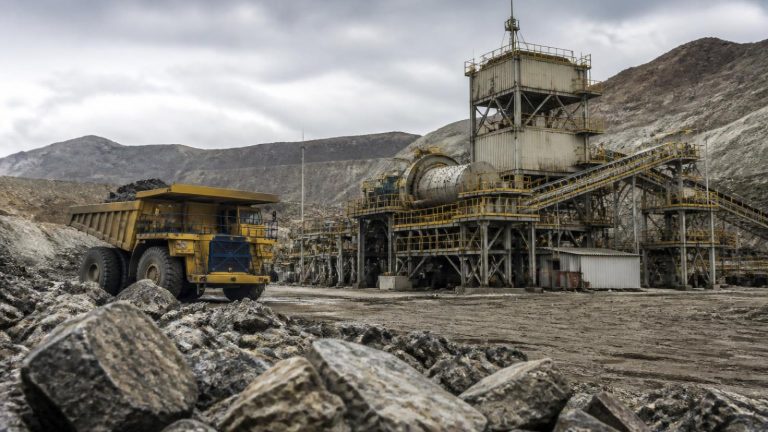
Other operational challenges include a shortage of skilled workers, proximity to conflict zones, and rising electricity costs. CEO Dimitri Kalandadze emphasised the need for stabilising production and modernising operations, with a strategic shift from exporting raw materials to producing higher value-added products in Ukraine. The company is also preparing to commence extraction at the “Phase II” section of the Yurske deposit in Zhytomyr region, while continuing operations at three quarries in “Phase I.”
Despite a 34.8% increase in revenue to UAH 1.1171 billion in the first half of 2026, UMCC’s net loss has grown 2.5-fold year-on-year to UAH 745.4 million. The previous year, the company reported a net loss of UAH 2.1182 billion, a stark contrast to a net profit of UAH 17.1 million in 2024. Aliyev attributed the negative financial results for 2025 to the transition to international financial accounting standards and the write-off of certain liabilities. UMCC, which operates two branches in Dnipropetrovsk and Zhytomyr regions, focuses on open-pit titanium ore mining and the production of titanium ore concentrates.