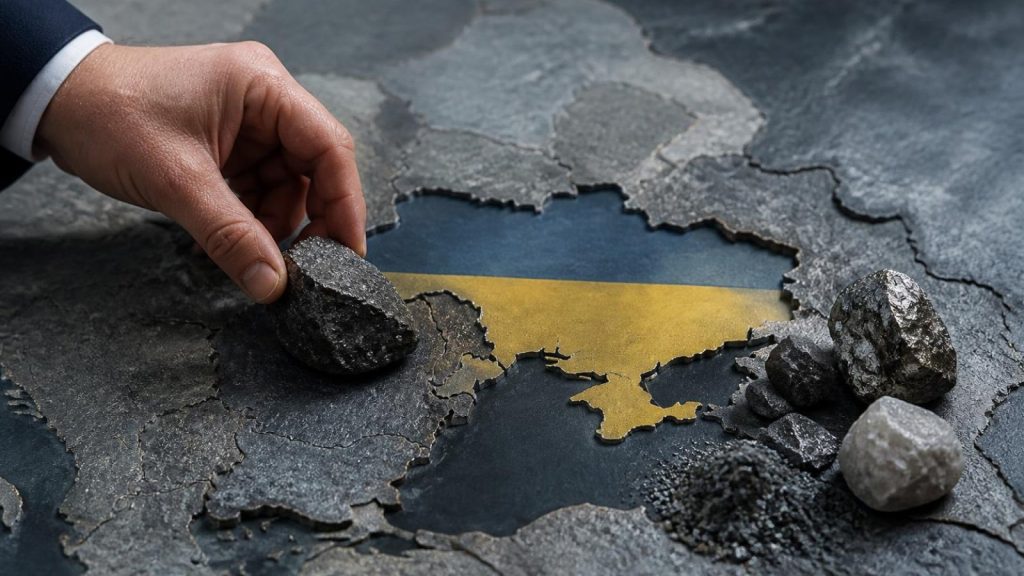
In a historical echo of Catherine the Great’s 1787 tour of New Russia, US Treasury Secretary Scott Bessent’s recent visit to Ukraine has sparked discussions around potential rare earth deals. President Volodymyr Zelenskyy is keen to leverage this interest, especially with former President Donald Trump expressing a desire for US military aid tied to Ukraine’s rare earth resources. However, the reality of Ukraine’s rare earth production capabilities raises significant doubts about the feasibility and value of such a deal.
Currently, Ukraine lacks any operational rare earth mines, proven reserves, or even projects in the commercial exploration stage. While geologists have identified formations that could theoretically be exploitable, they are not deemed more promising than similar formations globally. The economic justification for developing rare earth resources in Ukraine is weak, particularly given the current market conditions that favour established tier-one resources in stable jurisdictions.
For the US to gain access to Ukrainian rare earths, substantial investment would be required, either through direct funding for new mining operations or by providing significant tax incentives to US companies. Yet, the question remains: what would the US gain from such an investment? The Ukrainian state retains ownership of all mineral rights, meaning any concessions would be minimal, particularly given the low subsoil rents for non-ferrous metals in Ukraine.
Moreover, the rationale behind the US’s interest in Ukrainian rare earths is questionable. With US rare earth imports valued at approximately $200 million annually, Trump’s claims of a $500 billion deal appear inflated. The US military aid to Ukraine has already reached tens of billions since the onset of the war, and the financial figures associated with rare earths do not seem to align with reality.
The fixation on rare earths may stem from a misunderstanding of their market dynamics. Rare earths are not fundamentally different from other minor metals, and their supply chains are heavily concentrated in China, which also accounts for the majority of global demand. The US lacks a robust manufacturing sector capable of absorbing a significant portion of rare earth supplies, regardless of optimistic projections regarding future demand from sectors like renewable energy and electric vehicles.
Some analysts suggest that the US interest may actually extend to other critical minerals in Ukraine, such as lithium. However, Ukraine’s lithium resources are estimated at only 500,000 tonnes, a fraction of the US’s reserves. While Ukraine has a historically significant mineral sand industry, its overall mineral prospectivity does not present a compelling case for geopolitical leverage, aside from its coal and iron ore sectors, which have been severely impacted by the ongoing conflict.
As Ukraine seeks to negotiate peace, hopes are pinned on a potential rare earth deal. However, the implications for global minerals markets are likely to be minimal, if not entirely negligible.