Tag: Subsoil Use

  • Kazakhstan to Auction 50 Gold, Copper, Coal, and Rare Metal Deposits in June

    Kazakhstan to Auction 50 Gold, Copper, Coal, and Rare Metal Deposits in June

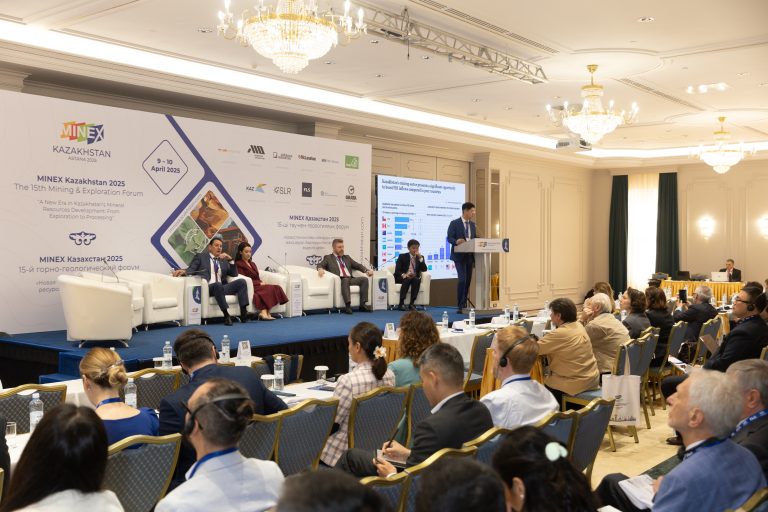
    Kazakhstan will auction 50 deposits of gold, copper, coal, and rare metals in June via its Unified Subsoil Use Platform, representatives from the Ministry of Industry and Construction announced at the 15th MINEX mining and geological forum.

    These deposits, which already have confirmed mineral reserves, will be offered for extraction under licenses valid for up to 25 years. Participating companies must develop a mining plan and specify the development timeline for each site.

    According to the ministry, companies from the United States, the European Union, and China have already applied to participate in the auction.

    Almas Kushumov, Director of the Subsoil Use Department at the Ministry of Industry and Construction of Kazakhstan:
    “These are deposits with proven reserves. We will auction them for extraction — gold, coal, rare and polymetallic deposits. Soon we will publish detailed information on the Unified Subsoil Use Platform. All interested parties will be able to submit documents online and take part in the auction.”

    Experts say that such auctions play a key role in attracting foreign investment to Kazakhstan’s resource sector — especially since some mineral-rich areas have yet to be announced due to incomplete documentation.

    Kushumov noted that in 2024 alone, 23 new deposits of solid minerals were officially added to the national register for the first time.

    “In terms of gold alone, state reserves increased by 20 tonnes. Every year, based on geological exploration results, new reserves are confirmed, added to the state balance, and then made available for extraction.”

  • 15th International Mining and Geology Forum MINEX Kazakhstan Kicks Off in Astana

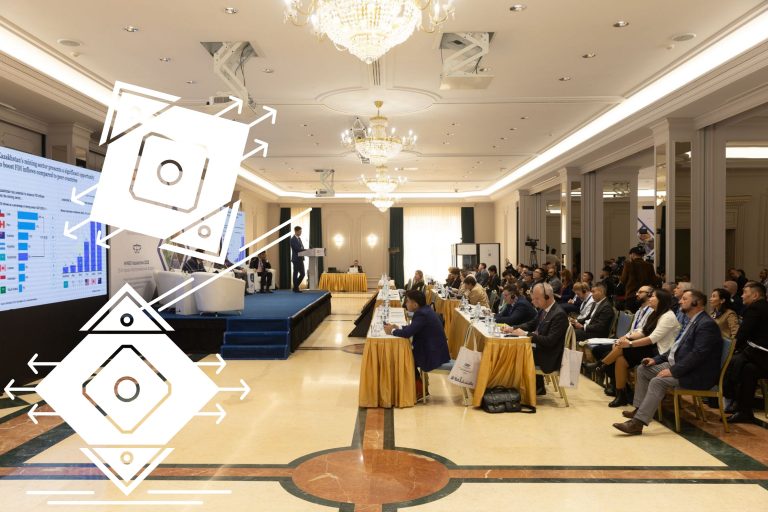
    15th International Mining and Geology Forum MINEX Kazakhstan Kicks Off in Astana

    The 15th anniversary of the International Mining and Geology Forum MINEX Kazakhstan has commenced in Astana, attracting over 100 leading speakers and 450 delegates from 30 countries, including Central Asia, Europe, North and South America, the Middle East, Southeast Asia, Africa, and Australia. The participation of global industry leaders highlights Kazakhstan’s growing significance as a key player in the global minerals market.

    The forum’s central theme, “A New Era in Kazakhstan’s Mineral Resource Development: From Exploration to Processing,” addressed critical industry topics such as sustainable development, ESG principles, technological innovation, digitalization, investment, exploration, and cross-border cooperation.

    During the plenary session, Nikolai Radostovets, Executive Director of the Association of Mining and Metallurgical Enterprises (AGMP), emphasized the need for continued reforms in subsoil use legislation and taxation. He noted that the Kazakhstani government is actively working to attract both foreign and domestic companies to geological exploration, with over 3,000 licenses already issued. A second phase of reforms in subsoil use is now anticipated.

    Radostovets highlighted that while the 2017 Subsoil Code initiated industry reforms—introducing a licensing system and establishing CRISCO Association—some issues remain unresolved. President Kassym-Jomart Tokayev has since stressed the importance of completing these reforms. Currently, the Ministry of Industry and Construction is reviewing over 60 amendments to the Subsoil Code, including proposals from AGMP.

    One key discussion point was the potential division of the Subsoil Code into separate codes for hydrocarbons and solid minerals, as seen in other countries, to address differing industry needs. Radostovets also underscored the importance of royalty rates for new deposits, stating that consultants are evaluating rates to align with international tax standards and encourage higher processing levels.

    Additionally, he called for public discussions on proposed amendments, noting that past legislative gaps in the Water and Land Codes had led to enforcement challenges. A working group under the Ministry will soon review amendments, with parliamentary consideration expected by September 2025.

    Radostovets also addressed the need for investment in coal, despite global shifts away from coal burning, emphasizing coal chemistry development and cluster initiatives for copper and aluminum. He expressed optimism that MINEX Kazakhstan would facilitate progress in the second phase of subsoil use reforms.

  • Kazakhstan’s Industry Minister Discusses Subsoil Use Reforms with Mining Chamber

    Kazakhstan’s Industry Minister Discusses Subsoil Use Reforms with Mining Chamber

    Kanat Sharlapaev, the Minister of Industry and Construction of Kazakhstan, held a quarterly meeting with members of the Kazakhstan Mining Chamber Association. The association unites 45 companies, both domestic and foreign investors.

    The Minister emphasized that junior and large international companies entered Kazakhstan after reforms in the subsoil use sector and are making significant contributions to the geological study of the country’s territory.

    He also underscored the importance of private investments and the introduction of advanced technologies in geological exploration.

    During an open dialogue, Kanat Sharlapaev and Chamber members discussed the further development of international reporting standards, taxation issues, and challenges affecting the investment climate.

    The Minister stressed the need to continue the reform process in the subsoil use sector and called for more active cooperation with the Association to develop Kazakhstan’s geological sector.

  • Kazakhstan Summarizes 2024 Results in Geology and Subsoil Use

    Kazakhstan Summarizes 2024 Results in Geology and Subsoil Use

    The Ministry of Industry and Construction of Kazakhstan has released its report on the results for 2024 in the fields of geology and subsoil use. A key objective for the Ministry is to increase the geological exploration of Kazakhstan’s territory to replenish the country’s mineral resource base, thus supporting the active development of all industrial sectors.

    Kazakhstan’s mineral resource base includes over 9,500 deposits, including 987 deposits of solid minerals, 355 hydrocarbon deposits, more than 3,500 deposits of common minerals, and over 4,500 groundwater deposits.

    In the past year, 23 new deposits were registered by subsoil users, and the exploration results showed an increase in reserves: 20 tons of gold, 48,000 tons of copper, 464,000 tons of chrome, and about 290,000 tons of lead and zinc.

    The average reserve fulfillment coefficient for gold, uranium, iron, and manganese has shown a 2% increase over the last decade.

    Efforts to attract investments into subsoil use are also ongoing, with the state geological exploration program identifying 38 promising areas for solid minerals, including rare earth metals (2.6 million tons), beryllium (23,800 tons), brown coal (1.1 billion tons), gold (19 tons), zirconium (2 million tons), niobium (500,000 tons), and tungsten (400,000 tons).

    Additionally, the Kuyretykol deposit has been discovered, with reserves of around 800,000 tons of rare earth metals, including cerium and lanthanoids.

    The opening of areas available for geological exploration has led to a significant rise in private investments for the exploration of solid minerals. In 2023, private investment increased 2.5 times compared to 2018, reaching 82 billion tenge.

    In 2024, 606 exploration licenses were issued, showing growth from previous years. For mining, 33 licenses were issued.

    Private investment in geological exploration is on the rise, as businesses show increased interest in searching for promising subsoil areas. In 2024, two electronic auctions took place, with major foreign companies such as Rio Tinto, Fortescue, Kratos Resources, and others competing with local companies like Kazakhmys and ERG Exploration for exploration rights.

    Foreign companies are already operating in Kazakhstan, investing in exploration with at least 41 billion tenge and social obligations totaling 7.8 billion tenge, covering an area of 25,000 km². The expected results from the exploration of these deposits are expected between 2026 and 2028.

    Growth in private investment in geological exploration is directly linked to the level of funding and effectiveness of early-stage geological studies that identify promising exploration areas. State geological exploration funding amounts to approximately 8 USD per square kilometer.

    From 2018 to 2023, the allocation for geological exploration amounted to 51.2 billion tenge, while investments in subsoil use exploration reached 357 billion tenge.

    In January 2025, an electronic auction for 21 plots took place, attracting over 50 companies. The total signing bonus amounted to 20 billion tenge, with investments of 40 million USD attracted.

    Stable funding for state geological exploration positively impacts private investments and stimulates further exploration. This is essential for expanding the country’s mineral resource base.

    On January 1, 2025, the Unified Subsoil Use Platform (minerals.e-qazyna.kz) was launched, providing open access to all geological data. The platform has digitized 22 government services, processing 506 applications since its launch. It contains a register of geological reports, including over 60,000 reports for free online access, and provides detailed information about licenses, contracts, occupied and free territories, and previous geological and geophysical studies.

    For specific geological materials, subsoil users can apply through the National Geological Service’s website, and requests are processed within five business days.

  • Kazakhstan Discusses Digitalization of Subsoil Use at Round Table Meeting

    Kazakhstan Discusses Digitalization of Subsoil Use at Round Table Meeting

    A round table was held in Astana at Maqsut Narikbayev University under the chairmanship of the Minister of Industry and Construction of Kazakhstan, Kanat Sharlapaev. The event brought together representatives of subsoil user companies to discuss key issues in the fields of geology and subsoil use.

    The Minister emphasized that one of the ministry’s priorities is to enhance geological exploration across Kazakhstan to replenish the country’s mineral resource base. He also reviewed the past year’s results and outlined plans for the current period.

    Deputy Minister Zhannat Dubirova presented projects aimed at digitalizing the sector, including the Unified Subsoil Use Platform (minerals.e-qazyna.kz). According to her, since its launch, the platform has processed 506 applications and provides users with open access to all geological data, including 60,000 reports.

    The platform’s interactive map enables subsoil users to analyze infrastructure, geological, and geophysical data for specific areas, as well as submit auction applications. Additionally, by April, an electronic system for monitoring compliance with license and contract obligations is set to be introduced.

    Round table participants also discussed the digitalization of primary geological reports and the need to integrate the platform into company operations.

  • Kazakhstan’s Unified Subsoil Use Platform Processes 506 Applications

    Kazakhstan’s Unified Subsoil Use Platform Processes 506 Applications

    Since the launch of minerals.e-qazyna.kz, authorities have processed 506 applications from subsoil users for geological exploration, mining, and other state services. This was announced during an expanded meeting of the Ministry of Industry and Construction of Kazakhstan.

    According to Vice Minister of Industry Zhanat Dubirova, by 2025, the Unified Subsoil Use Platform (USP) will offer a seamless process, from application submission to auction participation and license issuance for exploration or extraction.

    The official noted that the full launch of the USP in early 2024 was the result of extensive work since July 2024. Developers analyzed international geological portals from Canada, the UK, Finland, and the UAE, redesigned business processes, and restructured the platform’s architecture.

    Currently, the website provides 22 state services in geology and subsoil use. To facilitate transactions, an “electronic wallet” service has been introduced, allowing companies to pay subscription bonuses directly on the platform.

    The National Geological Service has digitized and uploaded approximately 56,200 secondary geological reports. Additionally, the monitoring of contractual obligations for solid mineral deposits and the submission of annual reports by exploration and mining companies has been automated.

    In January 2024, the USP auctioned 26 subsoil plots, with investors acquiring 21, generating 20.69 billion tenge in revenue.

  • Kazakhstan Issues 333 Licenses for Solid Minerals in 2024

    Kazakhstan Issues 333 Licenses for Solid Minerals in 2024

    From January to July 2024, Kazakhstan’s subsoil users received 333 licenses for solid minerals, reports the Ministry of Industry and Infrastructure Development of Kazakhstan. Most of these are exploration licenses, with only 13 issued for extraction. The total number of applications exceeded 800.

    According to the Ministry, auctions held in May alone added 89 million tenge to the budget. An auction was also held for the troubled Obukhovskoye deposit, where authorities expect the new owner to continue operating the processing plant and maintain jobs. The enterprise produces rutile-zirconium concentrate.

    On August 12, another 23 deposits of solid minerals will be put up for auction.

    The Ministry also monitors the fulfillment of obligations: since the beginning of the year, 32 licenses and 22 contractshave been terminated due to non-compliance with conditions.

    The Ministry emphasizes that a key task remains leveraging the country’s raw material potential to attract investments. To this end, amendments to the legislation are being made with the participation of the industry community.

  • Kazakhstan to Hold Auction for Solid Mineral Deposits, Including Bauxite, Coal, and Gold

    Kazakhstan to Hold Auction for Solid Mineral Deposits, Including Bauxite, Coal, and Gold

    The Ministry of Industry of Kazakhstan is set to announce an auction for deposits of solid minerals later this month, according to inbusiness.kz, citing Almas Kushumov, the head of the subsoil use department.
    The ministry plans to offer 23 new deposits to potential bidders, including sites with approved reserves of bauxite, coal, polymetallic ores, and gold.
    Mr. Kushumov stated that all the necessary information regarding the auction will be published on the official website of the Ministry of Industry, allowing interested parties to learn which deposits are available for exploration and licensing.
    He also noted that the state fund holds other valuable plots. However, as subsoil users failed to fulfill their obligations for these deposits, their licenses were revoked. Information about these areas will be made available to the public at a later date.

  • Junior Mining Companies in Kazakhstan to Transition from Mineral Extraction Tax to Royalties in 2025

    Junior Mining Companies in Kazakhstan to Transition from Mineral Extraction Tax to Royalties in 2025

    In a significant shift for Kazakhstan’s mining industry, junior mining companies that have already discovered solid minerals and confirmed their respective reserves will transition from the Mineral Extraction Tax (MET) to royalties starting in 2025, announced Vice Minister of Industry and Construction Iran Sharkan.

    “Everyone knows that the MET has long outlived its usefulness. It’s a cumbersome tool. We need to move to an internationally recognized and understood system of royalties. We support this transition. Fundamentally, we plan to start the phased transition in 2025, beginning with junior companies and then expanding to all entities,” Sharkan stated at the AMM-2024 forum. He emphasized that this reform in subsoil use marks the logical conclusion of a process that began in 2017.

    Sharkan elaborated that the ministry is collaborating with the Ministry of National Economy and the Ministry of Finance to ensure a smooth and environmentally responsible transition. Additionally, the ministry plans to discuss with the industry how to define junior companies, which he described as new players in subsoil use who have defended their reserves and are moving to the extraction phase.

    Furthermore, Sharkan highlighted that Kazakhstan will continue to adopt modern standards. Existing deposits protected under the GKZ (State Reserves Committee) standards will remain valid, while all new projects will adhere to the international reporting system.

    In October 2023, Maxim Kononov, the first deputy executive director of the Republican Association of Mining and Metallurgical Enterprises (AGMP), noted that the MET for technogenic mineral formations (TMF), residues left by subsoil users, should be set at 0.1 of the current rate to encourage investors to process TMFs. He advocated for synchronizing industry and tax legislation to ensure that TMFs, which do not constitute subsoil, are not subject to MET.

    Kononov argued that such measures would spur large-scale TMF processing projects in Kazakhstan. He criticized the current tax framework, stating that applying standard MET rates to TMFs makes such projects unprofitable. He also pointed out the ambiguity in taxing solid minerals extracted from TMFs owned by taxpayers and not considered subsoil under the Subsoil Code.

    With MET rates increased by 50% for exchange-traded metals and by 30% for others since early 2023, Kononov warned that any further tax burdens would harm the industry.

  • Ministry of Industry to Auction Off New Mining Sites This Month

    Ministry of Industry to Auction Off New Mining Sites This Month

    The Ministry of Industry will announce an auction for deposits of solid minerals in the middle of this month, reports inbusiness.kz, citing Almas Kushumov, head of the Subsoil Use Department. The ministry plans to offer subsoil users 23 new sites, all with confirmed reserves. These include deposits of bauxite, coal, polymetals, and gold.

    Mr. Kushumov stated that all necessary information will be available on the official website of the Ministry of Industry, where interested parties can learn which sites are open for exploration licenses. He also mentioned that the state fund holds other valuable sites. Licenses for these sites were annulled due to non-compliance with commitments by previous subsoil users, and information about these sites will be made publicly available later.