Tag: Subsoil Use

  • Senate Approves Amendments to Subsoil Code Strengthening Digitalization and Investment Incentives

    Senate Approves Amendments to Subsoil Code Strengthening Digitalization and Investment Incentives

    The Senate has approved amendments to the Code on Subsoil and Subsoil Use in two readings during a plenary session, endorsing a package of reforms aimed at modernizing regulation of the mining sector and boosting investment attractiveness.

    Presenting the document, Senator Sagyndyk Lukpanov said the amendments formally establish a unified subsoil use platform as the core digital infrastructure of the industry. The platform will operate with an open database of geological information and cover nearly all business processes and public services related to the exploration and extraction of solid and common minerals. The law also закрепляет статус национальной геологической службы and grants strategic investors priority rights to explore and mine solid minerals.

    The legislation provides for integration of the unified platform with the state fuel and energy management system, which collects, stores, and analyzes data on hydrocarbon resources. In addition, the national geological service is designated as the sole operator responsible for managing geological information. As a state body subordinate to the geology committee, it will not be subject to privatization and will ensure a centralized, standardized approach to studying the national subsoil fund, eliminating data duplication and fragmentation.

    A number of amendments introduce electronic auctions as a mechanism for granting subsoil use rights. These auctions will be used to allocate free subsoil plots as well as areas where subsoil use rights have previously been terminated. The reforms also raise the required share of domestic content in works and services from 50% to 70% for exploration and mining operations, including uranium projects.

    Additional provisions regulate the granting of subsoil use rights for facilities involving technogenic mineral formations located within populated areas. One of the licensing conditions for such activities is the mandatory removal of extracted technogenic mineral materials beyond settlement boundaries, followed by their processing.

    The amendments also expand investment incentives for subsoil users implementing projects to process solid minerals. These preferences, already reflected in the new Tax Code, include exemptions from corporate income tax and land tax for 10 years, property tax for 8 years, and VAT on imported equipment for 5 years. At the same time, the minimum investment threshold for such processing projects is increased tenfold, from 7 million to 70 million monthly calculation indices.

  • Kazakhstan Advances Digital Transformation of Geology: 83% of Historical Data Digitised, AI-Driven Big Data System to Accelerate Subsoil Analysis

    Kazakhstan Advances Digital Transformation of Geology: 83% of Historical Data Digitised, AI-Driven Big Data System to Accelerate Subsoil Analysis

    Kazakhstan is rapidly digitising its geological sector as the National Geological Service continues large-scale work to collect, store and convert primary geological materials into digital format — a key step in modernising the management of the country’s mineral resource base.

    According to the Ministry of Industry and Construction, 83% of geological archives accumulated over the past 80 years — more than 3.8 million units of geo-data — have already been digitised. By the end of 2025, this figure is expected to reach 97.5%, with a full transition to digital operations planned for 2026. The result will be a national digital geological information fund, providing fast online access to geological data.

    A central component of the digitalisation programme is the introduction of a Big Data system powered by artificial intelligence, which will be integrated into the Unified Subsoil Use Platform. This system will automate the analysis of geological materials, significantly speed up the processing and verification of historical datasets, and enhance the accuracy of geological interpretation.

    Using optical text recognition and machine-vision technologies, the platform will convert both archival and current geological documents into machine-readable format. Big Data tools will also support the creation of a structured geological database and an intelligent chatbot designed to help users search for and analyse information quickly and efficiently.

    Experts say the digital transformation will provide a stronger foundation for resource forecasting, attract investment into exploration, improve transparency, and enhance Kazakhstan’s competitiveness in the global critical minerals market.

  • Kyrgyzstan Unveils Critical Minerals Strategy at MINEX Eurasia Conference in London

    Kyrgyzstan Unveils Critical Minerals Strategy at MINEX Eurasia Conference in London

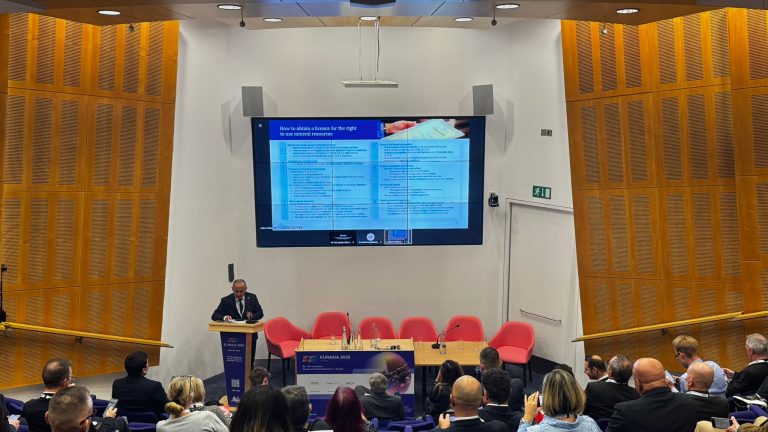
    London, 1 December 2025 – The MINEX Eurasia conference in London hosted a keynote address by H.E. Meder Mashiev, Minister of Natural Resources, Ecology, and Technical Supervision of Kyrgyzstan, outlining the country’s strategic vision for its critical minerals sector.

    Kyrgyzstan’s Strategic Minerals Vision

    The Minister outlined Kyrgyzstan’s methodical approach to prioritising and developing its critical minerals sector, identifying 21 key minerals based on global demand, local deposits, and resource concentrations. Kyrgyzstan’s analysis resulted in the selection of 4 priority projects, 5 promising deposits, and 16 prospective areas for further study and development. These assets, spread across antimony, beryllium, rare earths, molybdenum, bismuth, zinc, silver, and others, offer significant commercial and strategic potential for investors and end-users in energy, electronics, and high-value manufacturing.

    Investment and Development Framework

    State companies, notably Kyrgyzgeology, are driving exploration and project development, supported by government incentives and openness to international partnership. Strategic sites are being actively promoted for joint ventures or direct investment. Major domestic and international firms manage several large sites, while more than 100 mining enterprises operate in the country—spanning gold, copper, and polymetallic ores.

    Tax and Licensing Regime

    The session detailed Kyrgyzstan’s tax policy, which includes a mix of one-time bonuses for mining rights, royalties, profit tax, and VAT. The overall effective tax burden stands between 25–30%, complemented by social and environmental levies such as waste disposal, emissions, and water usage fees. Procedures for subsoil use licensing are harmonized with those in neighbouring countries, with initiatives being considered to simplify the processes and make it more transparent.

    ESG, Transparency, and Sustainable Mining

    Kyrgyzstan’s evolving strategy strongly emphasizes environmental, social, and governance (ESG) standards, aiming to foster responsible mineral development, minimize ecological impact, ensure transparency, and maximize benefits for local communities. The new strategy promotes the deployment of advanced technologies, environmental sustainability, and transparent investment processes, aligning with best practices to attract reliable, long-term partners.

    Opportunities for International Partnership

    Kyrgyzstan welcomes active collaboration with global investors and mining enterprises, seeking to leverage modern mining technologies, improve environmental outcomes, and maximize economic benefits. The country’s critical mineral strategy is closely linked to green growth targets and broader Eurasian supply chain integration.

  • Kazakhstan Prepares New Subsoil Use Reform Bill for Parliamentary Review

    Kazakhstan Prepares New Subsoil Use Reform Bill for Parliamentary Review

    Kazakh government agencies have approved a draft law on reforms in geological exploration and subsoil use, Industry and Construction Minister Yersayin Nagaspaev announced at a cabinet meeting. The bill is set to be submitted to Parliament for consideration in September.

    The accompanying Regulatory Policy Advisory Document (KDRP) was endorsed at the 681st meeting of the Interdepartmental Commission on Legislative Activities. The new draft replaces an earlier package of amendments to subsoil use regulations initiated by members of the Mazhilis, which is expected to be withdrawn once the updated version is formally introduced.

    The proposed legislation contains 39 amendments to Kazakhstan’s Code “On Subsoil and Subsoil Use.” President Kassym-Jomart Tokayev underscored the importance of these reforms in his address on September 8, highlighting the need to modernise the legal framework to improve resource efficiency and attract investment.

  • Kazakhstan Detects $1.9 Million in Subsoil Use Violations Through Digital Monitoring

    Kazakhstan Detects $1.9 Million in Subsoil Use Violations Through Digital Monitoring

    Since January 2025, Kazakhstan has operated a Unified Subsoil Use Platform, through which 2,443 operators have submitted electronic reports. The new digital monitoring tool has enabled regulators to uncover violations of subsoil use legislation.

    As a result, companies received notifications of breaches across 196 contracts and licenses, with total penalties amounting to 910 million tenge (approx. $1.9 million). In addition, 37 contracts were terminated — 30 for geological exploration, five for extraction, and two for combined activities. Authorities also revoked 61 licenses from non-compliant operators.

    The Ministry of Internal Affairs and the National Security Committee have halted illegal mining operations in four regions of the country. In the third quarter of this year, the agencies plan to issue about 350 notifications and conduct 65 on-site inspections.

    By the end of the year, a draft law on digitalization and auctions, along with amendments to allocate 50% of subscription bonuses to state geological exploration, will be submitted to the Parliament of Kazakhstan, Kazinform reports.

  • Audit Findings on Kazakhstan’s Geological Exploration and Subsoil Use Sector Reviewed by the Higher Audit Chamber

    Audit Findings on Kazakhstan’s Geological Exploration and Subsoil Use Sector Reviewed by the Higher Audit Chamber

    At a session of the Higher Audit Chamber of the Republic of Kazakhstan, the outcomes of a state audit on the utilisation of national resources in the fields of geological exploration and subsoil use were presented.

    📊 Currently, subsoil use contributes over 20% to the nation’s GDP. Kazakhstan possesses substantial reserves of mineral resources, including chrome, iron ore, lead, zinc, copper, uranium, gold, silver and others.

    📌 However, the audit identified several systemic shortcomings in the governance of the mineral resource sector.

    Among these is the high proportion of so-called “paper” resources—estimated but unconfirmed reserves not yet integrated into the economic cycle—particularly concerning as confirmed reserves become depleted. One key factor behind the slowdown in new reserve development is the lack of adequate funding for geological research. Despite the introduction of a licensing framework for exploration rights, investment activity among subsoil users remains low.

    Auditors observed that the Ministry of Industry and Construction had failed to implement initiatives involving the digitalisation of geological data, the creation of a digital database, updating of archives and promotion of private sector engagement. A lack of modern storage facilities poses risks of damage or loss of valuable geological records.

    Due to insufficient oversight by the Committee on Geology and poor compliance by contractors, the government paid 68.2 million tenge for incomplete works related to the digitalisation of geological materials.

    The Ministry of Industry permits amendments to subsoil users’ operational programmes without requiring tax expert review, allowing companies to interpret tax rules in their own favour—potentially avoiding budgetary contributions.

    Amid growing interest in Kazakhstan’s natural resources, demand is increasing for reliable laboratories that meet international standards. The lack of sufficient accredited laboratories weakens the quality control of precious metal and raw material exports.

    Auditors documented 81 procedural violations and 16 systemic flaws.

    As a result of the review, the Higher Audit Chamber issued a set of recommendations and directives aimed at developing the country’s geological exploration and subsoil use sector. Follow-up on these measures has been placed under active monitoring.

  • Kazakhstan to Auction 39 Strategic Mineral Sites, Including Gold and Polymetallic Deposits

    Kazakhstan to Auction 39 Strategic Mineral Sites, Including Gold and Polymetallic Deposits

    Kazakhstan’s Ministry of Industry and Construction has announced an upcoming electronic auction for 39 solid mineral deposits, scheduled for September 19, according to Kazinform. The auction will be conducted through the country’s unified digital platform, which currently provides 22 public services in geology and subsoil use.

    Applications for participation will be accepted until September 2, giving prospective investors and companies time to assess the geological potential and prepare bids.

    Among the listed sites are around ten deposits rich in precious metals, including Chandy-Bulak, Sever-Leonidovskoye, Senym, and alluvial gold at Chandy-Bulak. The auction also features high-potential areas for polymetallic, manganese, iron ore, and coal exploration.

    In parallel with the auction, the ministry plans to roll out an AI-powered system to process geological reports and build a comprehensive geological knowledge base by the end of the year. This marks a digital transformation push aimed at increasing efficiency and transparency in Kazakhstan’s subsoil sector.

  • 15th MINEX Kazakhstan Forum Highlights Second Phase of Mining Law Reform

    15th MINEX Kazakhstan Forum Highlights Second Phase of Mining Law Reform

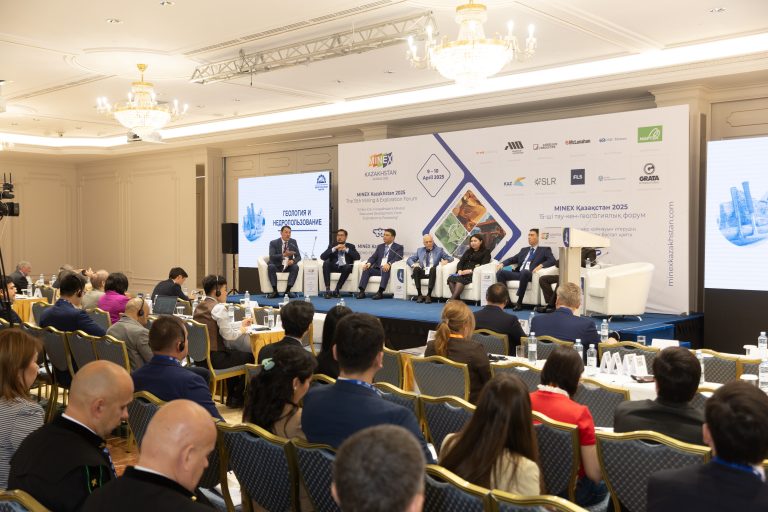
    The 15th anniversary MINEX Kazakhstan Forum has officially opened in Astana, bringing together over 450 delegates and more than 100 speakers from 30 countries, including Central Asia, Europe, the Americas, the Middle East, Southeast Asia, Africa, and Australia. The forum emphasizes Kazakhstan’s growing importance in the global mineral resource market.

    The central theme of the event is “A New Era in Kazakhstan’s Mineral Development: From Exploration to Processing.” Key discussions focused on sustainable development, ESG principles, technological innovation, digitization, investment, exploration, and cross-border cooperation.

    During the plenary session, Nikolai Radostovets, Executive Director of the Republican Association of Mining and Metallurgical Enterprises (AGMP), highlighted the need to continue reforms in subsoil use and taxation.

    He praised the government’s proactive efforts in attracting both domestic and foreign investment in geological exploration. Over 3,000 licenses have been issued, demonstrating momentum in the sector. However, Radostovets emphasized that a second phase of subsoil use reform is necessary to address remaining legislative gaps.

    Notably, he proposed splitting the current Subsoil Code into two separate laws — one for hydrocarbons and another for solid minerals — to better address the specific needs of each sector.

    Radostovets also outlined key priorities for transforming the sector:

    • Classifying exploration expenses as tax-deductible,

    • Introducing agreements for processing low-grade deposits,

    • Stimulating the processing of technogenic mineral formations,

    • Developing a new Tax Code with provisions tailored to the mining sector.

    One of the central issues is the introduction of royalties for new and existing deposits. While initial industry reactions were hesitant, similar to past transitions from contracts to licensing, Radostovets expressed optimism that fair and competitive royalty rates will encourage investment and higher value-added processing.

    The executive also called for greater alignment between the Subsoil Code and other legislation, such as the Water and Land Codes, to address legal inconsistencies.

    Legislative amendments — more than 60 proposals — are currently under review by the Ministry of Industry and Construction. A working group will begin public discussions in the coming weeks, and the finalized amendments are expected to be submitted to Parliament in September 2025.

    Radostovets stressed the importance of coal as a strategic resource, advocating for investment in coal chemistry despite global calls to move away from coal combustion. He also promoted the development of industrial clusters, including copper and aluminum clusters, to support local value-added production.

    “We are optimistic. The MINEX Kazakhstan Forum not only facilitates dialogue and debate but helps us move forward with meaningful reforms in Kazakhstan’s mining sector,” Radostovets concluded.

  • Kazakhstan to Use AI for Analyzing Soviet-Era Geological Data

    Kazakhstan to Use AI for Analyzing Soviet-Era Geological Data

    Kazakhstan’s Ministry of Industry and Construction is integrating artificial intelligence to analyze geological data collected between the 1950s and 1980s, Vice Minister Zhannat Dubirova announced at MINEX Kazakhstan. The digitization of this historic data is set to be completed by the end of the year, with AI tools helping to identify and interpret geological characteristics, create predictive models, and process even low-quality data using Big Data technologies.

    According to Dubirova, over 56,000 geological reports have already been digitized. The AI system currently recognizes up to 90% of information and allows for manual corrections where needed. By 2026, the ministry plans to fully convert all geological data into machine-readable formats, accessible via the Unified Subsoil Use Platform.

    This platform, launched earlier this year, streamlines the entire licensing process for exploration and extraction—from application to auction and licensing—and has already processed over 500 applications. It features an interactive map showing current and available subsoil plots and allows investors to participate directly in auctions without intermediaries.

    Digital control mechanisms are also in place to monitor compliance with issued licenses and contracts for solid mineral resources, replacing a manual system that tracked 3,000 agreements.

  • Kazakhstan to Auction 50 Mineral Deposits Including Gold, Copper, and Rare Earth Metals

    Kazakhstan to Auction 50 Mineral Deposits Including Gold, Copper, and Rare Earth Metals

    Kazakhstan is set to hold a large-scale electronic auction in June 2025, offering 50 solid mineral deposits, including gold, copper, coal, polymetals, and rare earth elements, according to Almas Kushumov, Director of the Subsoil Use Department at the Ministry of Industry and Construction. He made the announcement during the MINEX Kazakhstan forum.

    The rights will be granted for both exploration and extraction, with deposits containing balance reserves to be auctioned directly for mining. The full list of deposits is expected to be published in the coming days.

    Kushumov noted that 117 deposits were auctioned via e-auctions in 2023–2024, bringing in over 20 billion tenge in signing bonuses for the state. In 2024, 43 new deposits were officially registered, including 22 solid mineral sites. Resource growth figures include:

    • 20 tons of gold

    • 9,000 tons of silver

    • 48,000 tons of copper

    Kazakhstan’s current reserve lifespan is estimated at 33 years for gold and 44 years for copper, based on current production levels.

    Minister of Industry and Construction Kanat Sharlapayev previously stated that companies from the United States, the European Union, and China would be able to participate in the auctions for rare and rare earth metal rights. He emphasized that competition among major players in the global critical materials market—used in dual-use goods, renewable energy tech, electric vehicles, and more—could help maximize Kazakhstan’s revenues.

    Quote:

    “This will be a high-interest auction. The competition between Western countries and China in the rare earth sector gives us the opportunity to attract the best offers,” Sharlapayev said.