Tag: Rare Earth Elements

  • Global Tensions Rise as Nations Compete for Critical Minerals and Rare Earth Elements

    Global Tensions Rise as Nations Compete for Critical Minerals and Rare Earth Elements

    The world is on the verge of a new geopolitical conflict centered around rare earth elements (REEs)and critical minerals, which are essential for high-tech industries, clean energy, space exploration, and military technologies. These resources have become the focal point of global competition, driven by their strategic importance and economic value.

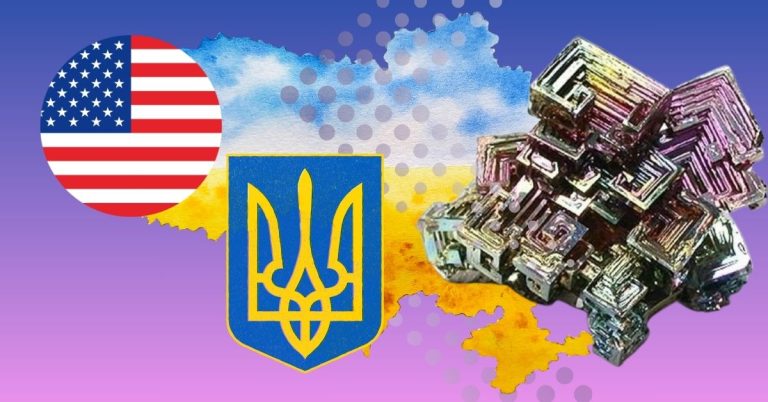
    Countries like the United States, China, and emerging powers such as Türkiye are aggressively positioning themselves to secure access to these minerals. For instance, former U.S. President Donald Trump has pursued aggressive policies toward Ukraine, Greenland, and Canada, aiming to leverage their mineral-rich territories. Ukraine, which holds 5% of global rare earth reserves and the largest titanium reserves in Europe, is being courted by the U.S. for a $500 billion REE deal in exchange for security guarantees.

    China currently dominates the REE market, controlling one-third to half of global reserves and nearly 95% of production capacity. This monopoly has raised concerns among Western nations, who are increasingly dependent on Chinese supplies. The U.S. Department of Energy and the European Commission have classified these materials as strategic commodities, prompting efforts to reduce reliance on China and diversify supply chains.

    Meanwhile, Türkiye is emerging as a key player, with significant boron reserves and the discovery of the Eskişehir REE reserve, positioning it second only to China. The Turkish government is investing heavily in mapping and securing its mineral resources to achieve strategic commodity independence.

    As demand for REEs surges due to advancements in green technologies, artificial intelligence, and defense systems, nations are scrambling to secure their share of these vital resources. The competition is not just about economic gain but also about geopolitical influence and national security.

  • European Lithium Announces Maiden 45M-Tonne Rare Earth Resource at Greenland’s Tanbreez, Positions as Critical Minerals Hub

    European Lithium Announces Maiden 45M-Tonne Rare Earth Resource at Greenland’s Tanbreez, Positions as Critical Minerals Hub

    ASX-listed European Lithium has unveiled a maiden mineral resource estimate (MRE) of 45-million tonnes grading 0.4% rare-earth oxide at its Tanbreez project in Greenland, marking a pivotal step in establishing the site as a major critical minerals supplier. The MRE, initially prepared in 2016 for Rimbal, was disclosed after European Lithium increased its stake in the project to 7.5% and deemed it a material asset following a partnership with Nasdaq-listed Critical Metals Corp (CMC).

    The Tanbreez project spans rare earth deposits at Tanbreez Fjord and Tanbreez Hill, hosted within a 270-meter-thick mineralized kakortokite unit covering 5 km by 2.5 km. While the broader host unit holds 4.7-billion tonnes, current drilling focuses on a fraction of the area. European Lithium and CMC now jointly own 49.5% of the project, with CMC completing extensive due diligence, including a recent drilling program to expand the resource.

    Executive Chairperson Tony Sage emphasized the project’s untapped potential: “Drilling has only covered 5% of the area—deeper and extension drilling will begin shortly to target a higher resource.” He highlighted Tanbreez’s role in delivering rare earth elements (REEs) to meet surging demand in North America and Europe, particularly for defense and next-generation technologies.

  • LKAB Commences Construction of Critical Minerals Facility – a First for Europe

    LKAB Commences Construction of Critical Minerals Facility – a First for Europe

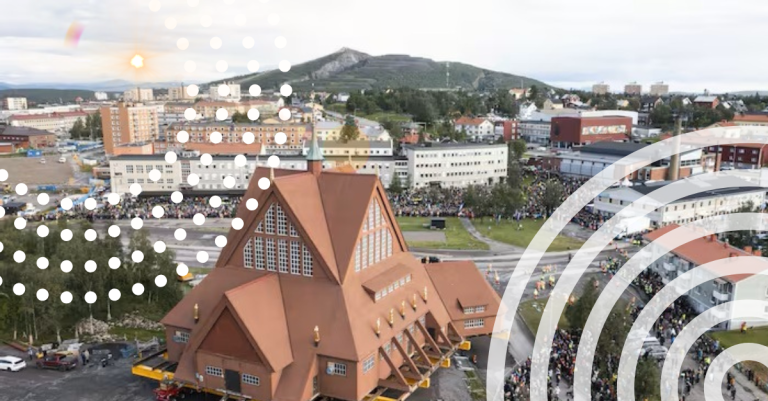
    LKAB has officially begun construction of its new Demonstration plant for processing phosphorus and rare earth elements in Luleå, Sweden. This facility will be the first of its kind in Europe and serves as a crucial building block in LKAB’s strategy to diversify its business with new minerals and improve resource utilisation.

    The construction of the demonstration plant is a major step forward for Europe’s critical minerals industry, as the continent currently relies heavily on imports for these essential materials. By extracting these minerals domestically, LKAB aims to strengthen Europe’s future competitiveness, improve security of supply, and enhance preparedness.

    Importance of Critical Minerals

    Phosphorus is a vital element for food security, as it is used in the production of mineral fertilisers. Rare earth elements are essential for the electrification and digitalisation of society, playing a crucial role in the production of permanent magnets for electric vehicles and wind turbines.

    LKAB’s demonstration plant is expected to meet approximately seven times Sweden’s needs and six percent of the EU’s demand for phosphorus in agriculture. The company also plans to extract rare earth elements from the facility, which are currently not mined in Europe.

    Government Support and Collaboration

    The Swedish government has recognized the importance of this project and has expressed its support for LKAB’s efforts. Minister for Energy, Business and Industry, Ebba Busch, emphasised the significance of the facility in reducing Europe’s import dependency and ensuring access to critical minerals for the future.  Several local and regional authorities have also welcomed the project, highlighting its potential benefits for the region’s economy and development.

    LKAB’s Investment and Future Plans

    LKAB has invested approximately 800 million SEK (approx 70 mln Euro) in establishing the demonstration plant, which is expected to be operational in 2026. The company plans to further develop and verify the process for utilising material flows from iron ore production in Gällivare, where apatite concentrate is produced for further refinement and production of critical minerals in Luleå.  The demonstration plant will also serve as a research and development center, providing an opportunity to explore and develop future potential sources for further refinement. LKAB has identified significant potential for extracting phosphorus and rare earth elements from other mineralizations, and the results from the plant will form the basis for future decisions on scaling up production.

    About LKAB

    LKAB is a leading international mining and minerals group that offers sustainable iron ore, minerals, and special products. The company is committed to developing carbon-free processes and products by 2045 and is driven by its vision of a sustainable future. With a workforce of over 5,200 employees in 12 countries, LKAB generated sales of about SEK 43 billion in 2023.

  • Transforming Raw Materials into Strategic Strength: EIT Raw Materials Advocates for Bold Action in FP10

    Transforming Raw Materials into Strategic Strength: EIT Raw Materials Advocates for Bold Action in FP10

    Berlin, Germany – EIT RawMaterials, a leading knowledge and innovation community, has issued a compelling call for Europe to transform its raw materials sector into a cornerstone of strategic strength. The organisation has outlined key recommendations for the upcoming Framework Programme 10 (FP10), urging the European Union to invest €4 billion to secure its raw materials future.

    The Challenge: Dependency on Imports

    Europe’s heavy reliance on imported critical and strategic raw materials (CRMs and SRMs) poses significant risks to its green and digital transformation goals. With nearly 100% dependence on external sources for key materials like lithium, magnesium, and rare earth elements, the EU is vulnerable to global supply chain disruptions.

    The Solution: Innovation and Resilience

    EIT RawMaterials proposes a multifaceted strategy to reduce dependency and build resilience:

    • Domestic Production: Increase mining to supply 10% of Europe’s CRM needs.
    • Advanced Processing: Expand processing capacity to 40%.
    • Circular Economy: Reclaim 25% of CRMs through recycling.
    • Global Diversification: Limit reliance on single-country sources to 65%.

    Strategic Investments

    To meet these ambitious targets, the organisation recommends focusing on:

    1. Disruptive Technologies: Develop cutting-edge solutions like Direct Lithium Extraction and advanced recycling.
    2. Circular Economy: Scale up industrial symbiosis and recycling initiatives to retain valuable materials.
    3. Public-Private Partnerships: Allocate €1 billion to foster collaboration between industry and academia.
    4. Workforce Development: Train 1.2 million workers by 2030 to address the sector’s growing demands.

    A Sustainable Future

    EIT RawMaterials emphasizes the transformative potential of the raw materials sector, predicting a €2 trillion economic impact and the creation of 32 million jobs by 2030. Their initiatives also align with the EU’s Critical Raw Materials Act, which sets ambitious targets for mining, processing, and recycling by the end of the decade.

    Leading Innovation

    Since its inception, EIT RawMaterials has mobilized €600 million in funding and unlocked €3.6 billion for research and innovation. Its initiatives have fostered a thriving ecosystem of over 300 partners and 750 alliance members, driving sustainable solutions and workforce development across Europe.

    “The time to act is now,” said a spokesperson from EIT RawMaterials. “With bold investments and strategic collaborations, Europe can secure its industrial competitiveness, lead the global green transition, and build a resilient future.”

  • Turkey and China Sign MOU to Boost Cooperation in Mining and Critical Minerals

    Turkey and China Sign MOU to Boost Cooperation in Mining and Critical Minerals

    Turkey and China have signed a memorandum of understanding (MOU) to enhance their cooperation in the mining sector, with a strong focus on critical minerals like rare earth elements. China, which dominates the global supply of rare earths, producing 70% of the world’s output and 90% of refined materials, has reinforced its strategic role in this partnership.

    The announcement was made during an international mining conference held in Tianjin, China, where Alparslan Bayraktar, Turkey’s Minister of Energy and Natural Resources, and his Chinese counterpart, Wang Guanghua, formalized the agreement. Bayraktar highlighted the significance of critical minerals in high-tech production and emphasized Turkey’s goal to process 570,000 tonnes of rare earth elements annually. This will allow Turkey to capitalize on its Eskişehir reserve, the second-largest in the world.

    This latest agreement follows a prior MOU focused on energy transformation, signed during Bayraktar’s visit to China in May. Turkey aims to attract investments from major Chinese companies, such as BYD, to support its electric vehicleand battery production sectors. Additionally, Bayraktar held discussions with CNOS, a key player in China’s nuclear industry, and SPIC, one of China’s largest energy companies, to explore partnerships in renewable energy and modular reactors.

    In a statement on his official X account, Bayraktar emphasized the potential of joint mining projects, stating that such collaborations could significantly impact the future of the global mining industry.

  • Critical Metals Corp Secures Extension for Greenland’s Largest Rare Earth Deposit

    Critical Metals Corp Secures Extension for Greenland’s Largest Rare Earth Deposit

    Critical Metals Corp.  announced on Tuesday that it has obtained an extension for the exploitation license of its Tanbreez project in Greenland, which holds the world’s largest rare earth deposit. The company is now required to submit exploitation and closure plans by the end of 2025, provide financial security and a company guarantee by June 30th, 2026, and start mining operations by the end of 2028.

    Chairman and CEO Tony Sage expressed that the extension is a “significant milestone,” reflecting strong local support and the potential for job creation in the region. The drilling program, which began in September, has concluded, with extracted rare earth material securely stored. A portion has been sent for analysis to ALS laboratory in Ireland, and the company expects to receive results in the coming months.

    Located in Southern Greenland, the Tanbreez project contains over 27% heavy rare earth elements (HREE), which are more valuable than lighter rare earth elements. Once operational, the mine will supply rare earth elements to Europeand North America, with year-round direct shipping access through deep-water fjords connecting to the North Atlantic. The orebody, Kakortokite, covers an 8 km by 5 km area and is 400 meters thick.

    In addition to Tanbreez, Critical Metals owns Europe’s first fully permitted lithium mine, the Wolfsberg lithium project in Austria, and debuted on the Nasdaq in March. Construction at Wolfsberg is expected to be completed by 2026, with supply commitments to BMW beginning in 2027. The company has also secured a partnership with Obeikan Investment Group to establish a lithium hydroxide plant in Saudi Arabia. Following this announcement, shares in Critical Metals rose over 2.8%, with the company’s market capitalization reaching $536.6 million.

  • Critical Metals Corp Launches Diamond Drilling Program at Tanbreez Rare Earth Project in Greenland

    Critical Metals Corp Launches Diamond Drilling Program at Tanbreez Rare Earth Project in Greenland

    Critical Metals Corp.  has commenced a diamond drilling program at the Tanbreez rare earth project in Greenland following its acquisition of a controlling stake in the project. The drilling aims to upgrade the resource estimates and assess the potential for increased mine throughput. The Tanbreez deposit, which hosts 28.2 million tonnes of total rare earth oxides (TREO) within 4.7 billion tonnes of material, is one of the largest known rare earth element (REE) projects globally, with more than 25% consisting of heavy rare earth elements (HREE).

    Critical Metals CEO Tony Sage emphasized the strategic importance of Tanbreez in reducing Western reliance on China for critical materials necessary for clean energy and defense sectors, enhancing national security. The company recently acquired a 42% stake in the project from geologist Gregory Barnes, who is overseeing the drilling program alongside two other rare earths experts.

    The 14-hole drilling program, totaling up to 2,200 metres, is expected to last 30 days and aims to convert the resource to US SEC standards. This initiative will assess the resource’s potential, projected lifespan, and contribute to a future feasibility study. Barnes noted the unique nature of the core samples, awaiting assay results with anticipation.

    In addition to the current program, Critical Metals will conduct percussion drilling to delineate mineralization, twin hole drilling for targeted areas, and evaluate the revised geophysical model. The company has made significant strides with pre-operational activities since receiving a key exploitation license four years ago. A substantial database of geological and geochemical information has already been compiled from 414 drill holes and more than 366,000 assays.

    Critical Metals’ stock saw a 3.0% increase on the Nasdaq, boosting the company’s market capitalization to $677.4 million.

  • Norway Reveals Europe’s Largest Rare Earth Element Deposit in Ancient Volcano

    Norway Reveals Europe’s Largest Rare Earth Element Deposit in Ancient Volcano

    The heart of an ancient volcano in Norway hosts Europe’s largest deposit of rare earth elements, as announced by the mining company Rare Earths Norway. On June 6, the company released a report estimating that the deposit contains 8.8 megatons of rare earth oxides, with approximately 1.5 megatons expected to be rare earth magnets used in wind turbines and electric vehicles.

    “The resource estimate underscores the potential of the deposit to be a truly transformative asset that can underpin a secure rare earths value chain for Europe,” said Rare Earths Norway CEO Alf Reistad in a statement. The deposit, known as the Fen Carbonatite Complex, is located southwest of Oslo near Lake Norsjø. Formed around 580 million years ago, the complex was the pipe of an active volcano that has since eroded, exposing a magma-filled pipe about 2 kilometers in diameter at the surface.

    The solidified magma, now carbonatite rock, is rich in minerals containing rare earth elements such as neodymium and praseodymium, which are vital for making magnets and other applications like aircraft engines. The mining company’s estimate focuses on the upper portion of the ancient volcano down to 1,535 feet below sea level, with likely deposits extending to about 3,300 feet.

    Rare Earths Norway plans to continue exploratory drilling and will construct a pilot plant near the outcrop to process the ore into pure rare earth elements. A 2023 report from the Oxford Institute for Energy Studies highlighted that while about 70% of the world’s supply of rare earth elements is mined in China and 90% is processed there, these elements are widely distributed globally. Countries are now striving to secure their own domestic supply chains for these critical minerals. In the U.S., for instance, researchers are investigating coal mines as potential sources for rare earth metals.


  • Critical Metals Corp. Acquires Controlling Interest in World’s Largest Rare Earth Deposit

    Critical Metals Corp. Acquires Controlling Interest in World’s Largest Rare Earth Deposit

    Critical Metals Corp. (Nasdaq: CRML) has announced an agreement to acquire a controlling interest in the Tanbreez project in Greenland, home to the largest rare earth deposit in the world. The Tanbreez deposit hosts 28.2 million tonnes of total rare earth oxides (TREO) within 4.7 billion tonnes of material, according to internal company estimates. Notably, the asset contains over 27% heavy rare earth elements (HREE), and Critical Metals is working to convert these internal estimates to U.S. SEC standards.

    Once operational, the mine is expected to supply rare earth elements to Europe and North America. The Tanbreez areaboasts year-round direct shipping access through deep-water fjords leading to the North Atlantic Ocean, providing key transportation outlets. The outcropping orebody, known as Kakortokite, spans 8 km by 5 km and is approximately 400 metres thick.

    Critical Metals acquired the project from Rimbal Pty. Ltd., controlled by geologist Gregory Barnes. CEO Tony Sagedescribed Tanbreez as a “game-changing rare earth mine for the West,” positioning Critical Metals Corp. as a leading supplier of critical minerals with a diversified portfolio spanning multiple geographies.

    In addition to the Tanbreez acquisition, Critical Metals owns Europe’s first fully permitted lithium mine, the Wolfsberg lithium project in Austria, which debuted on the Nasdaq in March. Upon completing construction at Wolfsberg by 2026, the company has committed to supplying BMW by 2027. Critical Metals has also secured a deal with Obeikan Investment Group to build a lithium hydroxide plant in Saudi Arabia.

    Shares of Critical Metals rose 4.6% by 12:00 p.m. EDT, with the company’s market capitalization reaching $877 million.

  • Kaz Critical Minerals LLP Begins Drilling Activities in East Kazakhstan

    Kaz Critical Minerals LLP Begins Drilling Activities in East Kazakhstan

    Kaz Critical Minerals LLP, a wholly-owned subsidiary of Kaz Resources LLC and a portfolio company of Cove Capital LLC—a leading player in the global critical minerals industry, has commenced drilling activities and its 2024 geological programs in East Kazakhstan. This marks a significant milestone in its exploration endeavors and underscores the Company’s commitment to developing Kazakhstan’s rich critical minerals potential.

    “We commend the cooperation between the United States and Kazakhstan on critical minerals development, and we anticipate very promising results from this phase of our operation. This initiative demonstrates the potential for successful U.S. foreign direct investment in Kazakhstan’s rare earth and critical minerals sector,” said Pini Althaus, Chief Executive Officer of Kaz Resources LLC. “Through extensive investments in exploration and eventual production, we aim to substantially contribute to the local Kazakh economy and the global transition to sustainable energy and advanced technology,” Mr. Althaus added.

    Kazakhstan possesses significant mineral wealth, including 17 critical materials on the U.S. Department of Energy’s Critical Materials List. In 2023, Kazakhstan and the United States signed a memorandum of cooperation on geology, and the active bilateral dialogue continues with a strong emphasis on geological exploration and critical minerals development.

    Cove Capital was an early entrant to the rare earths and critical minerals sector in East Kazakhstan, and we appreciate the ongoing and mutually beneficial cooperation at the highest levels of the U.S. and Kazakh governments,” said Mr. Althaus. “Kazakhstan is an abundantly mineral-rich country that can serve a multitude of manufacturing and industrial sectors. With the new approach and mandate President Kassym-Jomart Tokayev has led on the development of the country’s critical minerals reserves, Kazakhstan is well positioned to become a global leader in this sector,” added Mr. Althaus.

    Kaz Resources LLC & Cove Capital LLC in Kazakhstan
    In 2023, Kaz Resources LLC (through its wholly-owned subsidiary Kaz Critical Minerals LLP), became the first U.S. company to receive critical minerals and rare earths land concessions in Kazakhstan. These concessions include minerals such as rare earth elements, lithium, tantalum, beryllium, niobium, cesium, and tin.

    In September 2023, Cove Capital LLC entered into an MoU with Kazakhstan’s Sovereign Wealth Fund, Samruk Kazyna, as part of the cooperation on critical raw materials, specifically rare earth metals. On April 8, 2024, Cove Capital LLC announced a landmark collaboration with Tau-Ken Samruk, Kazakhstan’s national mining company, aimed at advancing the exploration and development of rare earth and critical metals within the Republic of Kazakhstan. This partnership demonstrates a significant milestone in Cove Capital’s mission to drive innovation and sustainable development in the rare earth industry.

    In the groundbreaking development, Tau-Ken Samruk (via “Kazgeology” JSC), entered into a binding joint venture agreement with Cove Capital for geological exploration on the Akbulak rare earth project in the Kostanay region of Kazakhstan. Historical reserves at the site include reserves of rare earth elements, including those used for permanent magnets. To carry out geological exploration work, a joint venture was created between Kazgeology JSC and Cove Capital with the parties’ participation shares: Cove Capital – 75% and Kazgeology JSC – 25%. Cove Capital will fully finance exploration work until reserves are listed on the balance sheet.

    This strategic alliance underscores Cove Capital’s commitment to leveraging its expertise and financial resources to unlock the potential of Kazakhstan’s rich mineral reserves.