Tag: Rare Earth Elements

  • United States Strengthens Rare Earth Supply Chains Through Partnership With Kazakhstan

    United States Strengthens Rare Earth Supply Chains Through Partnership With Kazakhstan

    The United States is moving to reinforce its supply of rare earth elements through cooperation with Kazakhstan, following the signing of non-binding long-term partnership agreements between US-based  and Kazakh mining company .

    The agreements were disclosed by , which is currently in the process of combining its business with REAlloys. Further details of the cooperation were reported by Mining Technology.

    The partnership is aimed at securing Kazakh raw materials for REAlloys’ processing facilities. The two companies plan to jointly explore and develop rare earth element deposits in Kazakhstan, with extracted material to be processed and refined before being shipped to REAlloys’ production sites in North America.

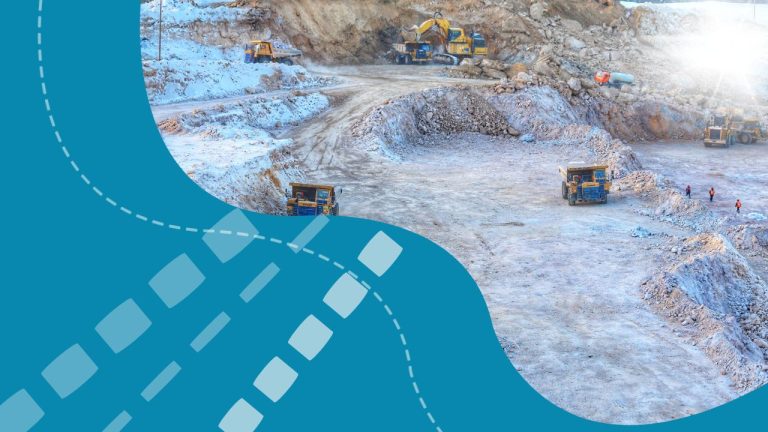
    Following around six months of negotiations, the partners identified several promising sites. A central element of the agreement relates to offtake from Altyn Group’s Kokbulak project. More than 350 million tonnes of iron ore are located across an area of roughly 127,000 square kilometres in Kazakhstan’s Karaganda and Kostanay regions. Processing of iron ore tailings is expected to yield concentrates rich in both light and heavy rare earth elements, including terbium and dysprosium.

    To support future deliveries, Altyn Group plans to invest in expanding REAlloys’ processing capacity in the United States, including the country’s only rare earth metallisation facility. The plant supplies a number of government-linked customers and supports demand from high-technology industries.

    Altyn Group Qazaqstan is registered in Kurchatov, Abai Region, and is a subsidiary of UK-based . The company is active in the exploration and mining of gold, silver and rare metal ores.

    From 2025, Altyn Group has also planned to begin development of the Ulken-Karashoky gold-copper deposit in the Abai Region, alongside reported plans to extract gold-silver ores at the Mailikara deposit in Pavlodar Region.

  • Kazakhstan’s Foreign Minister Heads to Washington for Critical Minerals Talks with the United States

    Kazakhstan’s Foreign Minister Heads to Washington for Critical Minerals Talks with the United States

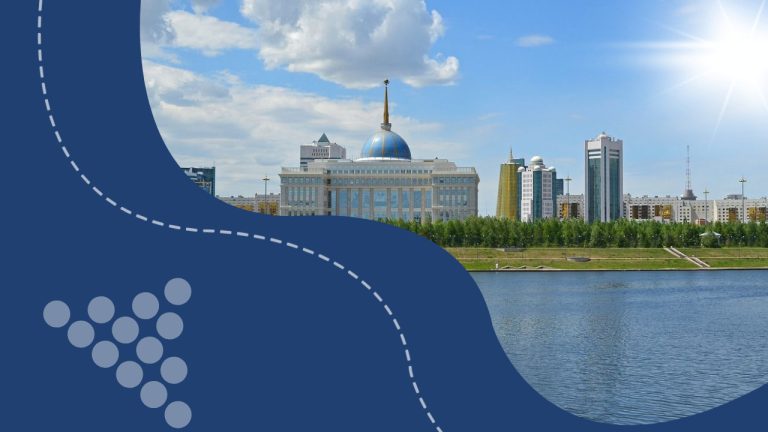
    Kazakhstan’s Foreign Minister Yermek Kosherbayev will travel to Washington DC on 3–4 February to take part in the Critical Minerals Ministerial, marking his first official visit to the United States since assuming office in September 2025. On 3 February, he is scheduled to meet with the United States Department of State and representatives of other rare earth element (REE) supplier countries.

    Kosherbayev, a career diplomat, previously served as Kazakhstan’s ambassador to Russia, governor of the East Kazakhstan Region, and deputy prime minister, combining diplomatic, regional and executive experience. His visit also includes engagement with Yerzhan Kazykhan, appointed in January as Kazakhstan’s first-ever Special Envoy to the United States, underscoring Astana’s emphasis on high-level engagement with Washington.

    The trip follows months of intensified diplomatic and economic contacts between Kazakhstan and the United States. Since November, President Kassym-Jomart Tokayev and US President Donald Trump have met twice in person and held a phone call, with discussions spanning trade, investment and global forums, including an invitation to the G20 meeting scheduled for December 2026.

    Critical minerals have emerged as a central pillar of this renewed engagement. Rare earth elements form a key part of Washington’s supply-chain diversification strategy, and Kazakhstan’s geological potential positions it as a relevant partner. This alignment has already been formalized through a memorandum of understanding on cooperation in critical minerals, signed by Tokayev, aimed at strengthening supply chains and expanding bilateral economic ties.

    Investor interest has begun to follow diplomatic signaling. US-backed initiatives and early-stage engagement from investors, including Cove Capital, as well as a letter of interest of up to $900 million from the Export-Import Bank of the United States, point to growing momentum, even as projects remain at an early phase.

    Unlike many emerging REE suppliers, Kazakhstan brings an existing industrial base to the table. Its established processing and refining capacity across metals such as uranium, copper, chromium and titanium allows the country to participate across the value chain rather than act solely as a raw-material exporter. Long-standing partnerships with global majors like Chevron and Exxon Mobil further reinforce Kazakhstan’s track record in delivering complex, capital-intensive projects.

    Still, translating strategic alignment into functioning supply chains will depend on execution. Regulatory clarity, permitting efficiency and coordination between mining and industrial policy remain key variables. The State Department–hosted meetings during Kosherbayev’s visit represent an initial step from diplomacy toward implementation, as Kazakhstan seeks to position itself as a credible long-term partner in US efforts to diversify rare earth and critical mineral supplies.

  • Greenland’s Vast Mineral Potential Draws Strategic Attention as Arctic Competition Intensifies

    Greenland’s Vast Mineral Potential Draws Strategic Attention as Arctic Competition Intensifies

    Greenland’s mineral resources are increasingly attracting international interest as competition over critical raw materials expands into the Arctic, according to Prof. Krzysztof Szamałek, director of the Polish Geological Institute in Warsaw. He noted that the island’s geological potential has gained prominence amid growing geopolitical rivalry and renewed debate over Arctic security.

    Greenland, an autonomous territory within the Kingdom of Denmark, has recently returned to the global spotlight following statements by US President Donald Trump emphasizing the island’s importance to American security. According to estimates cited by Poland’s state news agency PAP, the theoretical value of Greenland’s resource base could reach USD 4.4 trillion, including around USD 1.4 trillion in oil and approximately USD 1.5 trillion in rare earth elements.

    Szamałek explained that Greenland’s resources are strategically significant because they include critical raw materials essential for modern industry, where supply disruptions could severely constrain production. The European Union identified 34 critical raw materials two years ago, many of which are vital for advanced technologies and energy systems.

    However, he cautioned that current knowledge of Greenland’s mineral wealth remains preliminary. Most assessments confirm the presence of mineral-bearing formations rather than verified reserves. Detailed exploration, drilling, and resource calculations would still be required, and the island’s ice-covered interior could hold additional geological insights in the future.

    Potential deposits identified so far include graphite, molybdenum, niobium, tantalum, platinum group elements, and precious metals used in electronics and electrical engineering, as well as strontium, titanium, hafnium, and zirconium. Szamałek stressed that these resources are “estimated, not fully documented,” and that development would be a long and complex process.

    Most known deposits are located in offshore areas and along Greenland’s coastline, reflecting the fact that roughly 80 percent of the island is covered by an ice sheet. Of the EU’s 34 critical raw materials, Szamałek said 25 are believed to occur in Greenland, compared with only four or five in Poland, depending on classification.

    He also pointed out that China currently dominates the production of many rare earth elements, and that interest in Greenland is driven largely by efforts to diversify supply chains rather than by an immediate global shortage. Extracting minerals from beneath Greenland’s ice sheet, he added, remains technologically untested and unnecessary at this stage.

  • Kyrgyzstan Unveils Critical Minerals Strategy at MINEX Eurasia Conference in London

    Kyrgyzstan Unveils Critical Minerals Strategy at MINEX Eurasia Conference in London

    London, 1 December 2025 – The MINEX Eurasia conference in London hosted a keynote address by H.E. Meder Mashiev, Minister of Natural Resources, Ecology, and Technical Supervision of Kyrgyzstan, outlining the country’s strategic vision for its critical minerals sector.

    Kyrgyzstan’s Strategic Minerals Vision

    The Minister outlined Kyrgyzstan’s methodical approach to prioritising and developing its critical minerals sector, identifying 21 key minerals based on global demand, local deposits, and resource concentrations. Kyrgyzstan’s analysis resulted in the selection of 4 priority projects, 5 promising deposits, and 16 prospective areas for further study and development. These assets, spread across antimony, beryllium, rare earths, molybdenum, bismuth, zinc, silver, and others, offer significant commercial and strategic potential for investors and end-users in energy, electronics, and high-value manufacturing.

    Investment and Development Framework

    State companies, notably Kyrgyzgeology, are driving exploration and project development, supported by government incentives and openness to international partnership. Strategic sites are being actively promoted for joint ventures or direct investment. Major domestic and international firms manage several large sites, while more than 100 mining enterprises operate in the country—spanning gold, copper, and polymetallic ores.

    Tax and Licensing Regime

    The session detailed Kyrgyzstan’s tax policy, which includes a mix of one-time bonuses for mining rights, royalties, profit tax, and VAT. The overall effective tax burden stands between 25–30%, complemented by social and environmental levies such as waste disposal, emissions, and water usage fees. Procedures for subsoil use licensing are harmonized with those in neighbouring countries, with initiatives being considered to simplify the processes and make it more transparent.

    ESG, Transparency, and Sustainable Mining

    Kyrgyzstan’s evolving strategy strongly emphasizes environmental, social, and governance (ESG) standards, aiming to foster responsible mineral development, minimize ecological impact, ensure transparency, and maximize benefits for local communities. The new strategy promotes the deployment of advanced technologies, environmental sustainability, and transparent investment processes, aligning with best practices to attract reliable, long-term partners.

    Opportunities for International Partnership

    Kyrgyzstan welcomes active collaboration with global investors and mining enterprises, seeking to leverage modern mining technologies, improve environmental outcomes, and maximize economic benefits. The country’s critical mineral strategy is closely linked to green growth targets and broader Eurasian supply chain integration.

  • Kazakhstan to Open National Laboratory for Rare Earth and Precious Metal Export Control

    Kazakhstan to Open National Laboratory for Rare Earth and Precious Metal Export Control

    Kazakhstan will establish a new laboratory to strengthen oversight of exported raw materials and detect the presence of rare earth elements (REEs) and precious metals, Vice Minister of Industry and Construction Iran Sharkan announced at a briefing, according to Interfax-Kazakhstan.

    The facility will be created under the National Geological Service and accredited to international standards. Its role will be to analyze the composition of ores and concentrates leaving the country, preventing the uncontrolled export of materials that may contain valuable or scarce metals.

    Sharkan emphasized that unauthorized export of rare earths remains a pressing issue for Kazakhstan, and the government is actively working to address it. The new laboratory will ensure that shipments are properly assessed before crossing borders, closing gaps in current oversight.

    The initiative follows calls made in September by the Ak Zhol party, which proposed that all export shipments of ores and concentrates undergo chemical testing in independent accredited laboratories, alongside the creation of state-run labs. The party argued that existing procedures—where analyses are commissioned directly by subsoil users—leave results unchecked and unverifiable by government authorities.

    By establishing its own laboratory infrastructure, Kazakhstan aims to tighten control, safeguard strategic resources, and ensure transparency in the country’s mineral exports.

  • Kazakhstan and US Forge Strategic Alliance in Rare Earth Exploration

    Kazakhstan and US Forge Strategic Alliance in Rare Earth Exploration

    Kazakhstan’s state mining company, Tau-Ken Samruk, and US-based Cove Capital are set to begin geological exploration at the Akbulak site in the Kostanai Region, targeting the discovery of rare earth elements in a significant international venture.

    “This initiative reflects our commitment to modernising industry and infrastructure while building a research base capable of supporting high-technology sectors,” said a spokesperson for the Samruk Kazyna Sovereign Wealth Fund.

    The exploration forms part of a wider strategic partnership between the firms, focusing on advancing high-potential industries. In line with this, Kazakhstan aims to overhaul its production capabilities, introduce advanced processing technologies, and further strengthen its scientific foundation.

    According to the Ministry of Industry and Construction, rare and rare-earth metals contribute 2.4% of the nation’s metallurgy output. Since 2018, the government has allocated 67 billion tenge (£114 million) to support the industry. Large-scale geological surveys are ongoing, with 25 sites across 100,000 square kilometres and 38 promising mineral deposits identified in 2024 alone.

    Currently, Kazakhstan produces a wide array of strategic metals including beryllium, tantalum, niobium, scandium, titanium, rhenium, and osmium, with by-products such as bismuth, antimony, selenium, and tellurium. Technologies for extracting gallium and indium are also in place. Future economic opportunities are seen particularly in the production and recycling of battery materials, heat-resistant alloys, semiconductor materials, and permanent magnets.

  • Historic Swedish Church Completes Epic Relocation by LKAB

    Historic Swedish Church Completes Epic Relocation by LKAB

    In a meticulously orchestrated feat of engineering, the iconic Kiruna Kyrka, a 1912 red wooden church weighing 672 tonnes, arrived at its new location in the Arctic town of Kiruna on Wednesday after a two-day, five-kilometre (three-mile) journey. The relocation was necessitated by the expansion of Europe’s largest underground mine, operated by LKAB.

    The church, which began its journey on Tuesday, inched forward at a pace of half a kilometre per hour on two remote-controlled flatbed trailers. Its arrival around 2:30 pm (1230 GMT) was celebrated with a musical fanfare, marking the culmination of a complex logistical operation.

    Kiruna’s entire town centre is being relocated due to the LKAB iron ore mine’s deepening excavations, which have compromised the stability of the ground. The church’s new location, chosen to preserve its character and connection to its surroundings, has been rotated 180 degrees, positioning the altar to face west—a symbolic gesture towards the town and its residents.

    The relocation has captivated widespread attention, with large crowds gathering along the route to witness the historic event. Lisa Weber, a 26-year-old real estate agent from Germany, travelled to Kiruna specifically to see the relocation, describing it as a “historical” moment. “It’s something that you do once in your life, or see once in your life,” she told AFP.

    King Carl XVI Gustaf of Sweden participated in the festivities, engaging with the Argentinian driver, Sebastian Druker, who remotely controlled the trailers using a joystick. The king also joined an attempt to set a world record for the largest “kyrkkaffe” (a coffee break following a church service).

    The town’s relocation process, which began nearly two decades ago, is expected to continue for years. The new town centre was inaugurated in September 2022. LKAB has offered financial compensation or rebuilding services to those affected by the relocation, with 23 historic buildings already moved before the church.

    Despite the meticulous planning, not all residents are satisfied. Critics, including local podcast hosts Alex Johansson and Magnus Fredriksson, have expressed dissatisfaction with LKAB’s handling of the relocation. “LKAB maybe didn’t read the room so well when they destroyed the whole town and then they stage this huge street party for the people,” Fredriksson remarked to broadcaster SVT.

    LKAB’s discovery of Europe’s largest known deposit of rare earth elements near the Kiruna mine in 2023 has added another layer of complexity to the situation. These elements are crucial for the green transition, particularly in the manufacturing of electric vehicles. However, activists argue that mining operations are detrimental to the region’s pristine forests, lakes, and traditional Sami reindeer herding practices.

    The relocation of the church alone is estimated to cost LKAB 500 million kronor ($52 million). Designed by Swedish architect Gustaf Wickman, the church features a blend of architectural influences, including designs inspired by the Indigenous Sami people. The church’s handblown glass windows were removed before the move and replaced with painted plywood. The separate belltower will be relocated next week.

    As Kiruna continues to adapt to the demands of modern industry, the relocation of the Kiruna Kyrka stands as a testament to the town’s resilience and the intricate balance between progress and preservation.

  • Europe Eyes Low-Risk Rare Earth Deposits to Strengthen Green Energy Supply Chain

    Europe Eyes Low-Risk Rare Earth Deposits to Strengthen Green Energy Supply Chain

    Europe’s push toward a greener future is facing a critical supply chain dilemma: the continent’s heavy dependence on imported Rare Earth Elements (REEs). These materials are essential for technologies like electric vehicles and wind turbines, yet the global REE market remains largely controlled by China — a geopolitical and economic risk that has sparked alarm across the EU.

    To mitigate this, the EU-funded REEsilience project is charting a new course. Launched in 2022, the initiative has mapped 149 global REE deposits, evaluating them for both geological quality and ESG (Environmental, Social, Governance) risks. Its goal: to help Europe identify secure and sustainable alternatives to Chinese supply.

    “Just a handful of deposits, if chosen wisely, could secure the EU’s rare earth supply,” said Prof. Dr. Carlo Burkhardt, REEsilience coordinator. Norway’s Fen complex and Greenland’s REE resources were flagged as top prospects, offering strong political ties and low ESG risk alongside high-quality ore. Other low-risk candidates include Sweden, Finland, Canada, and Australia.

    By contrast, REE sources in parts of Southeast Asia, Central Africa, and Brazil were found to carry high environmental or social risk — making them less viable options for Europe’s sustainability ambitions.

    Beyond mining, the REEsilience project is also modelling future supply chain scenarios, factoring in price volatility, recycling efforts, and digitalisation. TU Delft’s Dr.ir. Willem Auping explained that simulation modelling is being used to explore “strategic resilience measures” such as recycling and extending product lifecycles.

    The initiative also focuses on localising production — including magnet manufacturing automation and ICT integration — and building a skilled workforce to drive innovation. With final results expected by June 2026, the project aims to pave the way for a robust, circular rare earth supply chain that aligns with Europe’s climate and security goals.

  • Central Asia Emerges as Strategic Battleground in Global Race for Rare Earths

    Central Asia Emerges as Strategic Battleground in Global Race for Rare Earths

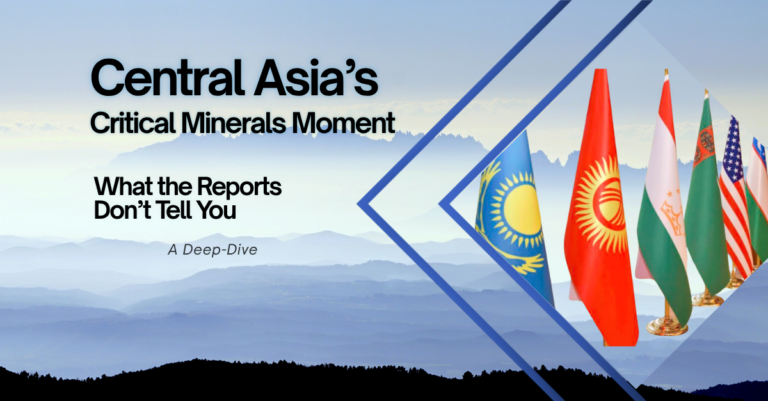
    Central Asia is rapidly gaining geopolitical significance due to its rich reserves of rare earth elements (REEs) and strategic minerals that are vital for modern technologies, green energy, and defense industries. As global powers intensify their competition for control over these critical resources, the region is transforming into a strategic focal point for economic and political influence.

    According to the U.S. Geological Survey, Central Asia holds a vast share of the world’s strategic minerals: 38.6% of global manganese ore, 30.07% of chromium, 20% of lead, 12.6% of zinc, and 8.7% of titanium. It also possesses essential rare earth elements like scandium, yttrium, and lanthanides. Kazakhstan’s President Kassym-Jomart Tokayev has described rare earths as the “new oil,” underlining their importance to economic transformation and energy independence.

    As the West seeks to reduce dependency on China, Central Asia has become a key alternative supply hub. The U.S. and EU are ramping up investments in the region’s mining sector. Initiatives like the Mineral Security Partnership (MSP), C5+1 Critical Minerals Dialogue, and Team Europe’s Global Gateway aim to build supply chain resilience. France’s Orano is investing $500 million in Uzbekistan, while the EU is backing green infrastructure and mining diversification projects in Kazakhstan and beyond.

    The U.S., through ERICEN and TIFA, is promoting trade diversification and infrastructure investment, while the G7 has committed to investing $200 billion in Central Asia by 2027, with a focus on Kazakhstan.

    Meanwhile, China continues to dominate with $63 billion in regional investments, primarily in mining and infrastructure. Through the Belt and Road Initiative (BRI), it holds strategic stakes in mining projects in Kazakhstan and Kyrgyzstan and is planning to build nuclear reactors to reinforce its grip on energy and resource supply chains. Russia maintains significant trade with Central Asia and leverages mining and energy collaborations to sustain its influence, including nuclear projects in Tajikistan.

    Central Asian states are trying to strike a balance among competing powers. By shifting from raw material suppliers to value-added economies, they aim to strengthen sovereignty while maximizing the benefits of global interest. However, this balancing act comes with risks: environmental degradation, economic overreliance on foreign powers, and exposure to volatile commodity markets.

    The sustainability of this multipolar strategy will shape the region’s economic future. Whether Central Asia can maintain autonomy amid intensifying competition or becomes caught between competing global giants remains a defining question for the coming decade.

  • President Zelenskiy Reveals US Proposed “Large, Comprehensive” Minerals Deal

    President Zelenskiy Reveals US Proposed “Large, Comprehensive” Minerals Deal

    Kyiv, Ukraine – Ukrainian President Volodymyr Zelenskiy announced on 25 March that the United States has presented a significantly expanded proposal for a minerals deal, moving beyond the initial framework agreed upon last month. This development follows President Donald Trump’s recent public statement indicating an imminent agreement between the two nations.

    The new proposal comes after a previously planned deal was derailed in February following a tense exchange between Trump and Zelenskiy at the White House. While the specific details of this “large, comprehensive agreement” remain confidential, Zelenskiy confirmed that it excludes US involvement in Ukraine’s nuclear power sector, a point previously raised by Trump.

    “Previously, we had a framework agreement, followed by the development of a full agreement. Now, the American side has proposed a grand agreement right away,” Zelenskiy stated to reporters.

    A Ukrainian official, speaking to the Financial Times, clarified that while the nuclear issue was discussed, it was ultimately omitted from the current proposal. Zelenskiy had previously acknowledged discussions regarding the Zaporizhzhia nuclear power plant, Europe’s largest, currently under Russian control, but maintained that these talks did not progress further.

    A US Treasury spokesperson, in a statement to the Financial Times, reiterated, “The United States remains committed to the quick conclusion of this vital agreement and to securing a lasting peace for both Ukraine and Russia.”

    The initial framework agreement outlined a fund where Ukraine would contribute 50% of future profits from the extraction of state-owned natural resources. Reports suggest that Ukraine possesses mineral deposits valued at upwards of $10 trillion, including crucial rare earth elements used in defense and high-tech industries. However, the economic viability of these deposits is yet to be internationally validated. Ukrainian data indicates the country holds deposits of 22 of the 34 minerals identified by the European Union as critical.

    This expanded proposal signifies a potential shift in the strategic partnership between the US and Ukraine, particularly concerning critical mineral resources, amidst ongoing geopolitical tensions in the region. The full implications of this “large, comprehensive” deal are expected to unfold as further details are released.