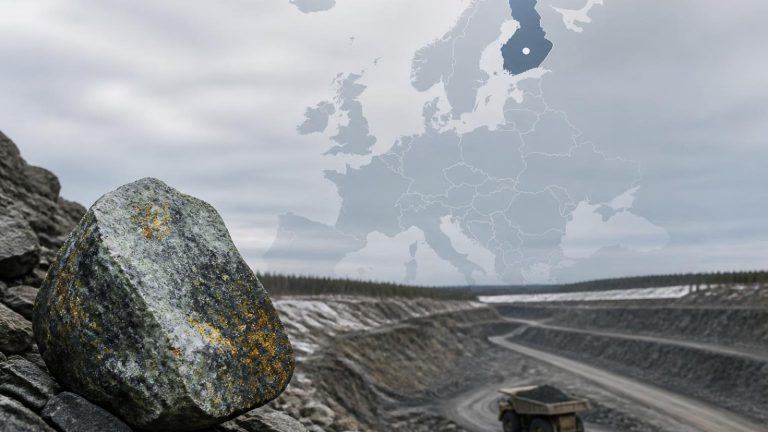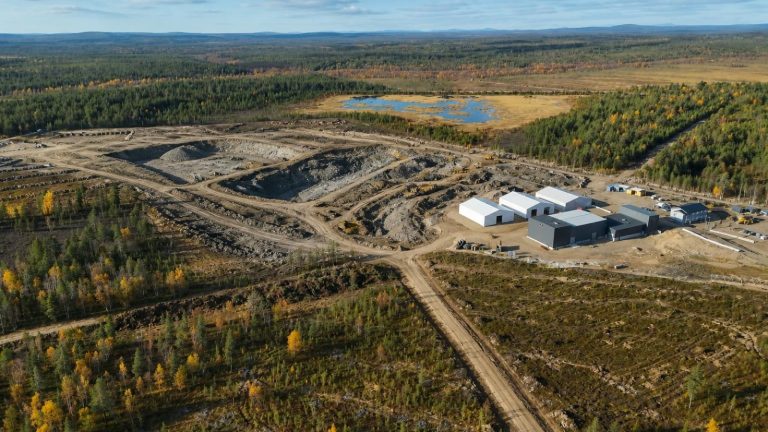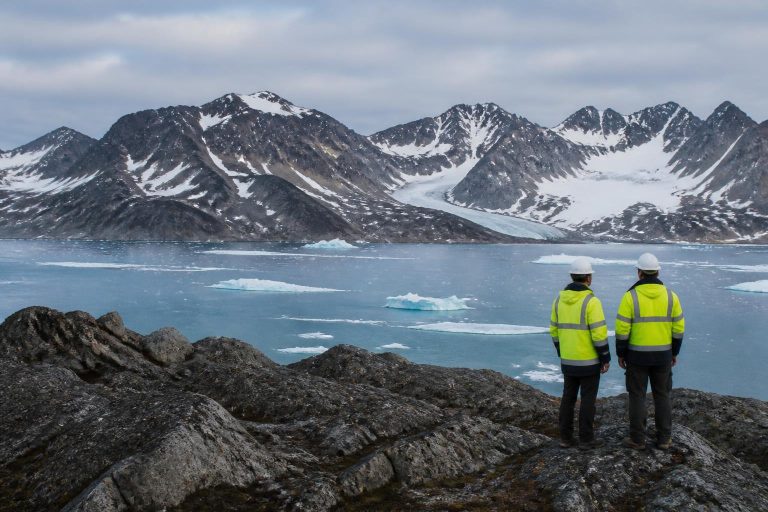
Neo Performance Materials Inc. has successfully completed the transfer of its interest in the Sarfartoq Project to Greenland Mines Ltd., following the approval from the Government of Greenland. The transaction, valued at US$35 million, includes US$20 million in cash and US$15 million in shares of Greenland Mines. Neo retains a significant equity stake and offtake rights for up to 60% of the ore or mineral concentrate produced from the Sarfartoq Carbonatite Complex, located in Southwest Greenland.
The merger, involving Neo’s wholly-owned subsidiary Neo North Star Holdings LLC and other shareholders of NNSR Holdings Inc., allows Greenland Mines to advance its leadership and investment in the Sarfartoq Project. Rahim Suleman, President and CEO of Neo, expressed confidence in the project’s future, highlighting Neo’s commitment as both a shareholder and an offtake partner. This strategic move aligns with Neo’s broader midstream and downstream growth strategy, ensuring that capital is effectively allocated to generate maximum value for customers and shareholders.
Neo Performance Materials is known for manufacturing advanced industrial materials that are essential for various technologies, particularly those aimed at enhancing efficiency and sustainability. The company’s product portfolio includes magnetic powders, rare earth magnets, specialty chemicals, and alloys, which are critical for the performance of many everyday products and emerging technologies. With operations spanning multiple countries, including Canada, Estonia, China, Germany, Thailand, and the UK, Neo is well-positioned to contribute to the global transition towards net-zero technologies.
This transaction marks a significant step for both Neo and Greenland Mines, as they look to leverage the potential of the Sarfartoq Project, which is expected to play a crucial role in the supply of critical minerals. The completion of this deal not only strengthens Neo’s position in the mining sector but also underscores the growing importance of sustainable practices in mineral extraction and processing. As the industry evolves, partnerships like this will be vital in meeting the increasing demand for rare earth elements and other critical materials necessary for modern technologies.
Energy Transition Minerals (ASX: ETM) has accused Greenland of effectively seizing one of the world’s largest rare earth deposits outside China by blocking development of the Kvanefjeld project and refusing to renew its exploration licence.
The Australian-listed company has invested approximately $150 million in the project since 2013, advancing it through resource definition, environmental studies, and public consultation before submitting a mining licence application in late 2020. However, Greenland’s coalition government subsequently enacted Act 20, legislation banning projects with uranium concentrations exceeding 100 parts per million, effectively halting Kvanefjeld’s application. Managing director Daniel Mamadou contends the legislation was specifically designed to stop the project after the government campaigned against its development. The dispute has escalated into a legal battle spanning more than three years of arbitration and court proceedings, with the central question being whether Act 20 applies retroactively to Kvanefjeld and whether such application constitutes expropriation. ETM argues that exploration results from 2025 identify rare earth mineralization with uranium levels well below the legal limit in unexplored areas, and proposes separating uranium from rare earth concentrate and permanently returning it underground. Kvanefjeld hosts critical rare earth elements including neodymium, praseodymium, dysprosium, and terbium, essential for permanent magnets used in electric vehicles, wind turbines, and defence technologies.
ETM previously estimated the project could supply up to 15% of global rare earth production, potentially providing Europe with a significant non-Chinese source of critical minerals. While pursuing Kvanefjeld through legal channels, ETM has diversified by acquiring the Penouta brownfield project in Spain, aiming to restart Europe’s only producing tantalum mine.
Europe faces an unprecedented raw materials crisis that policy targets systematically underestimate. By 2030, demand for energy metals will explode. Lithium demand will increase five-fold. Cobalt will rise nine-fold. Nickel, manganese, and graphite will need twelve to fifteen times current supply levels. Yet Europe produces zero rare earth elements, controls less than one per cent of global lithium output and depends on a single country (China) for all rare earth processing and 90 per cent of permanent magnets. In February 2026, the European Court of Auditors warned directly: under current plans, Europe’s 2030 critical raw materials targets “appear out of reach.” Many strategically designated projects, the Court found, will struggle to secure supply by 2030.
The crisis is not geological. Europe possesses abundant ore deposits. The crisis is not financial. The EU has committed 3 billion euros in 2026 alone. The crisis is political, regulatory, and social. It is a crisis of will, not of resources.
Europe’s Energy Metals Demand: The Trajectory (2025-2035)
Current Demand (2025) and Forecast Growth:
Lithium: Current global mining supply is dominated by Australia (approximately 50 per cent), Chile (25 per cent), and China (10 per cent), with additional production from Argentina, Indonesia, and other countries. Europe’s domestic mining share is less than 1 per cent. For EU imports, Chile is the dominant source, accounting for roughly 78 per cent of European lithium needs (2020-2025). European companies with significant lithium projects include Imerys (France-headquartered, EMILI project in France targeting 34,000 tonnes annually), Savannah Resources (UK-listed, operating the strategically designated Barroso Project in Portugal), and Vulcan Energy (developing Direct Lithium Extraction in Germany’s Upper Rhine Valley using geothermal brines, targeting 24,000 tonnes annually).
Rare Earth Elements: Europe’s domestic production is zero. Global supply shows China at 100 per cent of processing; 98 per cent of magnet demand is met by Chinese imports (as of 2024). Secondary suppliers include Malaysia and Russia. European producers include LKAB (Sweden, largest known European deposit), Rare Earths Norway (Fen Carbonatite Complex), and REMHub project (24-partner Horizon Europe initiative) still in early stage. Geopolitical exposure: China imposed rare earth export controls in 2009, 2012, and expanded controls 2023-2025.
Cobalt: Current global supply comes from Democratic Republic of Congo (largest, approximately 50 per cent global), Russia, Australia, and China. Europe’s share is less than 1 per cent production. EU import dependency focuses on DRC (major source); refining is concentrated in China. European producers include Boliden’s Harjavalta smelter (Finland, largest nickel/cobalt refinery in Western Europe, 60,000+ tonnes annual output) and Eurobattery Minerals (Hautalampi mine, Scandinavia, development stage).
Nickel: Current global supply comes from Indonesia and Philippines (laterite ore) and Russia and Australia (sulfide ore). Europe’s share is less than 1 per cent. Refining concentration shows significant Chinese capacity; some European refining at Boliden and Norway’s Glencore Nikkelverk. Chemical shift risk: Low-nickel and cobalt-free battery chemistries (LFP) are gaining share to reduce supply risk, but absolute nickel demand is still rising.
Copper: Current global supply comes from Chile (23 per cent of EU imports), Democratic Republic of Congo (17 per cent), and Brazil (15 per cent). Europe’s share is approximately 1 per cent production (Boliden’s Aitik mine in Sweden, 90,000+ tonnes annually). Global supply risk shows IEA projects 30 per cent supply deficit by 2035; mined supply from announced projects falls short of 2035 demand, and structural deficit is emerging. Forecast shortfall is 19 million tonnes by 2050 if new mines and recycling capacity are not developed.
Graphite: Current supply shows China dominates natural graphite (60 per cent) and synthetic graphite (90 per cent). Europe’s share is trace (less than 1 per cent). Future concentration risk: China is expanding synthetic graphite capacity, locking in control. Geopolitical exposure: China has export-restricted graphite since 2023.
Manganese: Current supply comes from South Africa, Australia, and China. Europe’s share is less than 1 per cent. Dependency is high, concentrated in South Africa with geopolitical instability risk.
Battery consumption in EU: 2025 shows 400 GWh; 2040 forecasts 4 times more (1,600 GWh). E-mobility share is 60 per cent (2025), rising to 80 per cent (2040).
Global Demand Growth Rates (2024): Lithium shows 30 per cent annual increase. Nickel, cobalt, graphite, and rare earths show 6-8 per cent annual increase.
Bottom line: Demand will outstrip supply for all raw materials beyond 2029-2030 unless new capacity is urgently built. Europe’s current domestic production covers less than one per cent of this demand. For copper and lithium specifically, structural deficits are already projected for the early 2030s.
Europe’s Mineral Dependency: The Uncomfortable Map
Europe possesses one of the world’s richest geological endowments of energy metals. Yet across the continent, projects representing years of exploration, millions in investment, and genuine transformational potential sit stalled at the threshold of development. The continent has become dangerously dependent on a handful of countries for critical minerals.
Lithium: Current global supply comes from Australia (53 per cent), Chile (21.5 per cent), and China (10 per cent). Europe’s share is less than 1 per cent. EU import source shows Chile dominates at 78 per cent of 2020 EU lithium needs. Non-European producers with European investment include Imerys (France-headquartered, operates globally), Savannah Resources (UK-listed, Portugal projects), and Vulcan Energy (Germany, Turkish geothermal partnerships).
Rare Earth Elements: Europe’s domestic production is zero. Global supply shows China at 100 per cent of processing; 98 per cent of magnet demand is met by Chinese imports (as of 2024). Secondary suppliers include Malaysia and Russia. European producers include LKAB (Sweden, largest known European deposit), Rare Earths Norway (Fen Carbonatite Complex), and REMHub project (24-partner Horizon Europe initiative) still in early stage. Geopolitical exposure: China imposed rare earth export controls in 2009, 2012, and expanded controls 2023-2025.
Cobalt: Current global supply comes from Democratic Republic of Congo (largest, approximately 50 per cent global), Russia, Australia, and China. Europe’s share is less than 1 per cent production. EU import dependency focuses on DRC (major source); refining is concentrated in China. European producers include Boliden’s Harjavalta smelter (Finland, largest nickel/cobalt refinery in Western Europe, 60,000+ tonnes annual output) and Eurobattery Minerals (Hautalampi mine, Scandinavia, development stage).
Nickel: Current global supply comes from Indonesia and Philippines (laterite ore) and Russia and Australia (sulfide ore). Europe’s share is less than 1 per cent. Refining concentration shows significant Chinese capacity; some European refining at Boliden and Norway’s Glencore Nikkelverk. Chemical shift risk: Low-nickel and cobalt-free battery chemistries (LFP) are gaining share to reduce supply risk, but absolute nickel demand is still rising.
Copper: Current global supply comes from Chile (23 per cent of EU imports), Democratic Republic of Congo (17 per cent), and Brazil (15 per cent). Europe’s share is approximately 1 per cent production (Boliden’s Aitik mine in Sweden, 90,000+ tonnes annually). Global supply risk shows IEA projects 30 per cent supply deficit by 2035; mined supply from announced projects falls short of 2035 demand, and structural deficit is emerging. Forecast shortfall is 19 million tonnes by 2050 if new mines and recycling capacity are not developed.
Graphite: Current supply shows China dominates natural graphite (60 per cent) and synthetic graphite (90 per cent). Europe’s share is trace (less than 1 per cent). Future concentration risk: China is expanding synthetic graphite capacity, locking in control. Geopolitical exposure: China has export-restricted graphite since 2023.
Manganese: Current supply comes from South Africa, Australia, and China. Europe’s share is less than 1 per cent. Dependency is high, concentrated in South Africa with geopolitical instability risk.
The Geopolitical Chokepoint: How One Country Controls the Transition
China’s dominance is not a detail in Europe’s minerals story; it is the story. Consider the architecture: Rare earths show 100 per cent of global processing with China holding over 98 per cent of magnet production. Graphite shows 60 per cent of natural graphite and 90 per cent of synthetic graphite capacity. Lithium processing shows substantial refining capacity with Chinese battery makers building supply chains inside the EU (gigafactories in Hungary, Germany, Spain; cell-to-cathode chains in Morocco targeting European carmakers under free-trade terms). Export controls have been weaponised: 2009 rare earth restrictions, 2012 repeat, 2023-2025 minerals and magnets. China’s expanded export controls continue to draw scrutiny from trading partners and may face re-examination. Pricing power is decisive: when the market is concentrated this severely, producers set terms. When one country controls 90+ per cent of processing, it controls supply security, not scarcity.
Europe’s minerals strategy is not a strategy for independence. It is a strategy for managed interdependence. Yet that interdependence is not being managed. It is being weaponised by others.
Portugal holds 60,000 tonnes of lithium reserves and hosts Savannah Resources’ strategically designated Barroso Project, poised for final investment decision by end of 2026. France’s EMILI project (Imerys) is positioned to deliver 34,000 tonnes of lithium hydroxide annually. The Cínovec project in the Czech Republic represents Europe’s largest hard-rock lithium resource (7.45 million tonnes) with an annual target of 29,380 tonnes of battery-grade lithium hydroxide. Slovakia has announced a commercial lithium refinery (Volt Resources) for 2026. Norway’s Fen Carbonatite Complex hosts a March 2026 resource upgrade of 15.9 million rare earth oxide tonnes. Sweden is home to Europe’s largest known rare earth deposit (over one million tonnes of oxides) sitting with LKAB. Finland, Norway, and Sweden hold 104 cobalt deposits under exploration, with the Hautalampi mine representing one of Scandinavia’s largest undeveloped cobalt and copper assets. The Balkans, particularly Serbia, contain substantial copper and nickel resources, while Austria and Ukrainian partners are examining titanium and graphite joint ventures.
This is not a geological problem. It is a political, financial, and social one.
The Uncomfortable Truth
The European Commission’s Critical Raw Materials Act (which entered force May 2024) designated 47 strategic projects in its first round. The second wave, closing recently, received over 160 applications, doubling the portfolio. Strategic status promises much: expedited permitting, priority access to RESourceEU financing, single contact points, UNFC classification for bankability. Yet ask developers privately: does the label move money or permitting timelines?
Germany’s Rock Tech Lithium secured all regulatory approvals and strategic designation. Yet it failed to secure the decisive subsidies from the German government. The pattern repeats across Europe. Policy creates narratives. Reality creates friction.
Here is what will determine whether Europe builds a minerals industry or assembles a filing cabinet of strategic designations:
The China Dilemma Will Not Wait. Europe now depends on a single country for all of its rare-earth processing and 90 per cent of its permanent magnets. As of 2026, Europe produces zero rare earth elements domestically; 98 per cent of rare earth magnet demand is met by Chinese imports. RESourceEU projections suggest that even if every strategic project delivers, Europe will sit near 80 per cent dependent on China for magnets in 2030. The bottleneck is not the mine. It is the mill. European ore is shipped to China for refining, for want of domestic capacity, then reimported as finished material. The Rare Earth Industry Association (REIA) and the REMHub Horizon Europe project are building digital platforms and exploring new extraction technologies, but these initiatives are in their infancy. Parallel to this, Chinese battery manufacturers are building the supply chain inside the EU (gigafactories in Hungary, Germany, Spain, and a full cell-to-cathode chain in Morocco aimed at European carmakers under free-trade terms). The timer is running. China’s expanded export controls on magnets, precursors, and rare-earth materials face re-examination. Easing restrictions invites dependence; narrowing them invites retaliation. This is not a technical problem. It is a strategic choice that Europe has not yet made honestly.
Social Licence Remains the Real Constraint. It is standard practice in European discourse to blame permitting delays and regulatory ambiguity. The real answer is more uncomfortable. Domestic projects continue to encounter resistance even when policymakers agree that critical raw materials are essential for climate, defence, and industry. Zinnwald, Jadar (Rio Tinto’s Serbian lithium project), and Cínovec have each faced or continue to face organised opposition, environmental scepticism, and community resistance. No permit timeline, no strategic label, no subsidy will materially shift that opposition unless mining regains public legitimacy on the ground. This requires radical rethinking: not communications management, but genuine commitment to shared value, transparency that admits unknowns rather than asserting certainty, and local participation that shapes projects from the earliest stages, not merely absorbs complaints at the end. Some European jurisdictions (Ireland among them) have moved further down this path than others. The question is whether the model can scale.
Financing Remains the Decisive Test. European mining and processing projects are being evaluated by investors on a fundamentally different calculus than their Australian, Canadian, or Chinese equivalents. Permitting uncertainty, cost inflation, timeline risk, commodity price exposure, power costs, technical complexity, and political durability are all on the table. Does strategic designation reduce that risk enough to attract institutional capital at scale? Evidence suggests it does not, at least not yet. Yet without that capital, without clear offtake agreements or government co-investment, projects advance to pilot stage and stall. The gap between a resource and a mine is not measured in metres of rock. It is measured in billions of euros and the willingness to risk them on European soil.
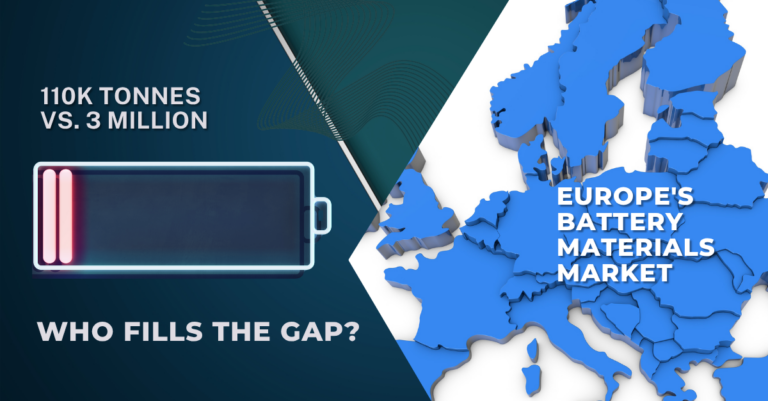
The Mid-Stream Is the Actual Constraint. Few commentators acknowledge this directly. Europe can develop lithium, cobalt, nickel, copper, and rare earths. It can build the mines. What it has not built, and what the Critical Raw Materials Act, for all its ambition, has not adequately addressed, is the refining, beneficiation, and mid-stream infrastructure. The European Court of Auditors confirmed this gap explicitly: planned European refining capacity will fall dramatically short of demand. Current plans show only 110,000 tonnes of lithium compounds annually on the drawing board, against demand of 3 million tonnes by 2030.
This gap is the market opportunity. The companies that move fastest on three fronts will dominate European battery material supply through the 2030s: securing permits in 36 months rather than 8 years, reaching cost parity with China through renewable energy or Direct Lithium Extraction, and locking in multi-year ore supplies from Australia and Chile. Green Lithium in the UK has announced UK refinery commissioning for 2026 (50,000 tonnes per year). Volt Resources refinery in Slovakia is timed for 2026. Vulcan Energy’s geothermal DLE project targets first production in 2026-2027. These are beginnings. The developers moving fastest in 2026 and 2027 will capture long-term offtake agreements with European gigafactory planners and build competitive moats that second and third movers cannot replicate. The battery gigafactories ramping across Europe will demand reliable, adjacent processing capacity to hit cost targets. The first wave of refiners that succeed will supply the continent’s entire gigafactory ecosystem for the next decade.
The Regulatory Trap Europe Is Walking Into
Europe is simultaneously accelerating mining projects whilst tightening environmental constraints and now proposing chemical hazard classifications that will make those same projects difficult to permit and uncompetitive. This paradox will define the next 18 months.
The Lithium Toxic Classification Crisis. In April 2026, the European Chemicals Agency (ECHA) released a scientific assessment proposing to classify lithium carbonate, hydroxide, and chloride as Toxic for Reproduction, Category 1A. The International Lithium Association responded publicly that it is “gravely concerned,” having lobbied privately against the proposal for two years. The concern is not scientific pedantry. An overly stringent classification would make EU member states substantially less attractive for lithium mining and refining projects compared with non-EU competitors. Australia, Canada, Chile, Argentina, and the UK have all submitted assessments disagreeing with ECHA’s classification, demonstrating there is no global scientific consensus on the hazard. Yet the public consultation period runs April to June 2026, with ATP 22 implementation post-2026.
The timing is devastating. European projects have not yet begun production. Capital markets are already sceptical of timelines and costs. A chemical classification that elevates occupational exposure limits or triggers new regulatory requirements for handling and transport could easily tip investment decisions toward non-European sources, especially when competitors offer lower-cost jurisdictions without such restrictions. This is not environmental regulation. This is competitive disadvantage encoded in hazard classification.
The Battery Regulation Timeline. By February 2027, every battery in the EU market must carry a digital product passport (QR code) containing supply chain information, carbon footprint data, and conflict minerals disclosures. By end of 2027, recycling recovery rates must hit 50 per cent. By 2031, recycled lithium content in new batteries must reach 6 per cent; by 2036, 12 per cent. These targets are mechanically demanding and require supply-chain transparency that many mining projects have not yet built.
The Self-Sufficiency Illusion. A peer-reviewed study in Nature npj Materials Sustainability (Nykvist, June 2026) assesses Europe’s lithium self-sufficiency targets with rigour. The findings are sobering: recycled batteries will contribute only modestly to self-sufficiency targets, falling far short of policymaker expectations. Even assuming all designated strategic projects commence as planned, by 2036 European self-sufficiency ranges from 31 per cent to 78 per cent, a wide range reflecting sensitivity to battery lifetime assumptions. The implication is uncomfortable: Europe will remain heavily import-dependent, and policy targets on recycling content will not substantially close that gap.
The Environmental Standards Conflict. The European Commission’s push to accelerate permitting for strategic projects directly conflicts with the strict environmental protections Europe also prizes. The Commission is, in effect, lowering the same environmental standards it built its reputation on. The European Court of Auditors identified “lengthy and complex permitting” as a decisive bottleneck constraining Europe’s minerals strategy. As of 2026, 11 of the EU’s strategic mining projects overlap land within one kilometre of Natura 2000 biodiversity-protected areas, with three projects directly overlapping protected land. Eighty-five per cent of known European mineral deposits lie within or near environmentally protected areas. Strategic designation does not grant permits, weaken environmental standards, or override rights protections. What it does is create expectations that permitting will accelerate, expectations that collide directly with the legal obligations under the Habitats Directive, Birds Directive, and national environmental law.
Community Opposition as Regulatory Reality. Community opposition has emerged as the decisive constraint on new mining projects, not legislation, not finance, not geology. The Portuguese Barroso lithium project is strategically designated, was granted a mining concession in 2020, and has become the subject of a European Court challenge on environmental grounds. Serbia’s Jadar project, backed by Rio Tinto’s capital and strategic designation, has encountered such sustained resistance that its feasibility is genuinely in question. These are not failures of regulation or finance. They are failures of legitimacy.
Supply Chain Due Diligence Requirements. By August 2025 (now passed), companies were required to disclose their corporate strategy on social and environmental risks in lithium, graphite, cobalt, and nickel supply chains, aligned with UN Guiding Principles and OECD Due Diligence frameworks. Miners will come under increasing scrutiny regarding operations, water use, tailings management, and community engagement. This is correct policy. It is also the kind of regulatory rigour that makes capital conservative and timelines uncertain.
The bitter irony: Europe has the geology, the strategic projects, the finance mechanisms, and the regulatory framework to build a domestic minerals industry. What it does not have is a coherent strategy for resolving the collision between the speed required to meet 2030 targets and the environmental rigour that European voters and courts demand.
Where Technology Might Break the Deadlock
Direct Lithium Extraction (DLE) offers a potential pathway through this regulatory trap. Unlike evaporation ponds, which consume roughly 500,000 gallons of water per tonne of lithium, DLE technologies aim to reduce water usage by up to 90 per cent, operating in closed-loop systems with zero liquid discharge. Vulcan Energy’s 250 million euro EIB-funded project in Germany’s Upper Rhine Valley exemplifies the model: extracting lithium from geothermal brines whilst co-producing renewable heat and power, lowering both carbon footprint and surface impact.
Yet DLE carries a critical caveat: the technology remains largely unproven at commercial scale. Fresh water consumption requirements, which some DLE methods may demand in larger volumes than evaporative alternatives, have not been adequately quantified. In water-scarce regions, this could replicate the environmental problems DLE was designed to solve. Projects in Alsace, France, and the Upper Rhine Valley offer early evidence of viability, but evidence alone will not satisfy permitting authorities or community concerns.
The point for developers is clear: technology can matter. But it matters only when the case for it is made transparently, when uncertainty is acknowledged rather than asserted away, and when communities see benefit in participating in its development. The International Lithium Association (lithium.org), established in 2021 as the industry’s voice on ESG and sustainability, has rightly prioritised uniform standards and sustainable practice across the global supply chain. The question is whether that commitment will translate into the kind of radical transparency and local engagement that European permitting now demands.
More importantly: the developers who move fastest on three fronts will dominate European battery material supply through the 2030s. These are the companies that simultaneously compress permitting timelines, reach cost parity with China through renewable energy or Direct Lithium Extraction, and secure long-term feedstock from Australia and Chile. The first wave of refiners that succeed in these three domains will capture long-term offtake agreements with European gigafactory planners and build competitive moats that second and third movers cannot replicate.
These are not comfortable questions. They require intellectual honesty from policymakers, capital providers, and developers alike.
Something significant has shifted. In the span of eighteen months, Central Asia has moved from a footnote in Washington and Brussels policy documents to a headline. The Caspian Policy Center’s new report — ‘Central Asia and the New Critical Minerals Frontier: Progress in Reshaping Global Supply Chains’ — is the latest in a wave of think-tank, government, and investor analyses arriving at the same conclusion: the region’s critical mineral resources are strategically indispensable.
This analysis cuts through the optimism to ask the harder questions. What has actually changed on the ground? Which players are genuinely committed versus which are signing MoUs for photo opportunities? And by 2030, what will Central Asia’s real role be in the global supply of critical raw materials?
This analysis draws on the CPC report, the EU Institute for Security Studies’ Chaillot Paper on China’s critical raw material weapon, the C5+1 Critical Minerals Dialogue in Astana on 10 June 2026, the Carnegie Endowment’s analysis of the Middle Corridor, the CFR’s report on leapfrogging China’s dominance, and the Forum’s accumulated perspective from running MINEX Asia, MINEX Europe, and MINEX Eurasia.
1. The Geopolitical Wake-Up: Real, But Overdue
The CPC report is unambiguous: critical mineral supply chains are no longer an economic issue — they are a national security and geopolitical issue. China controls approximately 90% of global rare earth refining, 60% of lithium processing, and over 70% of cobalt refining. By 2022, China controlled 100% of global graphite processing. These are not numbers that have crept up on policymakers. They have been visible for years. What has changed is the willingness to act — and the nature of Beijing’s own use of this leverage.
The EUISS Chaillot Paper published in May 2026 makes for sober reading. Beijing’s sharp reduction of critical raw material exports in 2025 — covering germanium, gallium, antimony, bismuth, and rare earths — was not a one-off retaliation against US semiconductor restrictions. It evolved into a systematic geo-economic weapon. The paper documents how China used its export licensing regime to extract information about Western defence-industrial networks, coerce EU trade policy on electric vehicle tariffs, and deter Japan from strengthening its defence posture on Taiwan.
What is less widely understood is how the apparent ‘détente’ of late 2025 conceals a structural tightening. The October 2025 rare earth export controls were suspended for one year as part of the Xi–Trump Busan summit deal — they are due to re-activate in November 2026. Critically, the April 2025 controls remain fully in force; only the October tranche was suspended. More consequentially, China’s export licensing architecture now includes extraterritorial provisions that allow Beijing to restrict re-exports of products containing Chinese-origin rare earth content even between third countries. The détente is not a resolution. It is a one-year suppression of symptoms while the structural disease remains untreated.
China does not merely hold rocks in the ground. It holds the refinery, the processing plant, the magnet manufacturer, and the pricing mechanism. Owning a deposit in Central Asia without access to non-Chinese processing is like owning an oil field with no pipeline.
This is the fundamental reality that too many Western policy documents still dance around. The CPC report is admirably direct about the midstream gap — the fact that even where Western investors enter Central Asian mining, the ore typically still travels east for processing. Closing that gap requires not just exploration investment but decades of patient capital in refining and processing infrastructure. That capital has not yet materialised at the required scale.
2. The MoU Inflation Problem
What should concern anyone serious about this sector is the following. The United States, the EU, Japan, South Korea, and Türkiye are all engaged in what the Forum terms ‘MoU inflation’ with Central Asian governments. The CPC report catalogues a remarkable number of bilateral frameworks, memoranda of understanding, and strategic partnerships signed since 2025. The C5+1 Critical Minerals Dialogue in Astana on 10 June produced more of the same.
These instruments are not worthless — they establish political will and create frameworks for future action. Kazakhstan’s Minister of Industry, Yersayin Nagaspayev, rightly highlighted that Kazakhstan has adopted a new Subsoil and Subsoil Use Code, implemented a ‘first come, first served’ licensing principle, launched a unified digital subsoil platform, and fully adopted CRIRSCO international reporting standards since 2024. Investment in geological exploration has tripled since 2018, exceeding one billion dollars. Western majors including BHP (via its Xplor programme), First Quantum Minerals, Ivanhoe Mines, Teck Resources, Fortescue, and US-based Cove Capital have entered the Kazakh market. Chinese companies are moving faster and at greater scale: Zijin Mining completed a $1.2 billion acquisition of Kazakhstan’s Raygorodok gold mine in October 2025, adding to its existing operations at the Taldybulak Levoberezhny mine in Kyrgyzstan and the Jilau and Taror gold mines in Tajikistan — a three-country “Gold Triangle” across Central Asia. East Hope Group — one of China’s largest private industrial conglomerates and a top-ten global aluminium producer — is advancing a $12.6 billion fully integrated aluminium cluster in Kazakhstan’s Kostanay and Aktobe regions: bauxite mining, a two million tonne per year alumina refinery, a one million tonne per year primary aluminium smelter, and a captive one-gigawatt power plant. The project framework was signed with the Kazakh government in February 2025 and geological exploration of eleven deposits is already under way. If delivered, it would be one of the largest single foreign direct investment projects in Kazakhstan’s industrial history. China National Gold Group has signed an MoU with Uzbekistan covering geological exploration and technology transfer. These are real signals of intent — though the Western and Chinese signals point in very different directions.
But the gap between MoU and mine is measured not in months but in decades. The CPC report states this plainly: developing a major mining project from inception to production can take twenty or more years. Processing and refining require additional capital beyond the mine gate. Political cycles — in Washington, in Brussels, and in Central Asian capitals — run on four-to-five-year horizons. China’s BRI financing runs on twenty-year horizons. This asymmetry is not a detail. It is the central challenge of Western engagement with Central Asia’s mineral sector.
The question is not whether Kazakhstan, Uzbekistan, Kyrgyzstan, or Tajikistan have the minerals. They do. The question is whether Western partners have the institutional patience, the risk appetite, and the financing instruments to compete with a counterparty that thinks in decades, not electoral cycles.
The US International Development Finance Corporation’s recent approval of USD 2.5 billion in strategic investments and the C5+1 roadmap for geological exploration, mining and processing, and global value chain integration are positive steps. But the gap between announced capital and deployed capital in this region remains historically wide. The Forum has documented this cycle repeatedly: enthusiasm peaks around major geopolitical events, and then the deals stall in permitting, due diligence, or financing committees.
3. Where the Real Business Opportunities Are
The following sets out where genuine commercial opportunities are opening up, rather than where the diplomatic activity is concentrated.
3.1 Midstream Processing — The Untapped Prize
The CPC report’s section on closing the midstream gap is the most commercially important part of the document. Central Asia produces raw ore and exports it, largely to China, which captures the value-added margin in processing and refining. The governments in the region know this and want to change it. Kazakhstan and Uzbekistan have explicitly stated they want to develop industrial clusters that capture more of the value chain domestically.
For investors and mining companies, this creates a specific opportunity: joint ventures in processing and refining that give Central Asian governments the industrial development they want and give Western offtake partners the supply chain security they need. This is not easy — it requires technology transfer, long-term offtake agreements, and patient capital — but it is where the alignment of interests is strongest. Companies with refining technology and Western governments with DFI instruments should be looking at this window seriously.
3.2 The Middle Corridor — A Structural Shift in Logistics, With a Named Weak Link
Freight along the Trans-Caspian International Transport Route has increased fivefold in seven years, reaching 4.1 million tonnes across the Caspian in 2024 alone. The war in Ukraine has accelerated this, but the trend is structural. For critical minerals, the Middle Corridor offers an alternative to Chinese-controlled logistics networks. Kazakhstan’s commitment to developing this route is serious, and the Hormuz blockade in place since February 2026 — with oil above $110 a barrel at the time of writing — is providing a live demonstration of exactly why overland alternatives to maritime choke points matter.
But the optimism around the corridor needs to be tempered by a specific and underreported vulnerability. Georgia is currently the corridor’s only gateway to Europe. Until the TRIPP route via Armenia and Azerbaijan’s Nakhchivan exclave becomes operational, Tbilisi is structurally irreplaceable. Yet the Georgian government has just cut funding for the Anaklia deep-sea port — identified by both the World Bank and the EU’s Trans-European Transport Network as the corridor’s central infrastructure priority — from 150 million lari to 50 million lari. Georgia’s existing port capacity is already nearing exhaustion.
The explanation for this decision is contested, but one strand is disturbing: after a Western-led consortium lost the Anaklia contract in 2020, the Georgian government selected as its preferred contractor a Chinese-Singaporean firm currently under US sanctions. There is a credible case that Beijing, which benefits from the Northern (Russian) Corridor and has no strategic interest in the Middle Corridor displacing it, is quietly applying pressure on Tbilisi to limit the western terminus’s capacity.
Kazakhstan’s position in this corridor is more structural than is commonly appreciated: approximately 80% of all rail cargo travelling between China and Europe already passes through Kazakhstan, making it not an emerging alternative route but the existing backbone of Eurasian overland trade. The commercial opportunity in the corridor’s logistics and infrastructure layer is real — port capacity at Aktau and Kuryk, rail and intermodal connectivity through Azerbaijan and Georgia to Türkiye — but companies positioning in this space need to price in the Georgia risk. Türkiye’s role as the corridor’s westernmost reliable node therefore becomes more, not less, strategically significant if Georgia continues to under-invest.
3.3 Uranium — The Quiet Giant
Central Asia produces approximately 50% of global uranium. Kazakhstan alone, through Kazatomprom, dominates global supply. The US Geological Survey has added uranium to its updated list of critical minerals. As the energy security debate in Europe and the US re-centres on nuclear power as a baseload complement to renewables, and as advanced reactor programmes (SMRs in particular) gather momentum, uranium supply security from non-Russian, non-Chinese sources becomes a premium.
The investment thesis for uranium in Kazakhstan is arguably more mature and more deliverable than for rare earths, precisely because the infrastructure already exists. The opportunity is in midstream — converting, enriching, and fabricating fuel outside of Russian-controlled supply chains — and in ensuring Western utilities have long-term offtake agreements with Kazakh producers.
3.3a Titanium — The Overlooked Aerospace Play
Titanium rarely features in critical minerals analysis focused on Central Asia, yet Kazakhstan accounts for approximately 20% of the global aerospace-grade titanium market — a concrete, active commercial relationship, not a geological aspiration. This matters because aerospace titanium supply has been severely disrupted by the Russia sanctions regime: VSMPO-AVISMA, previously the dominant Western supplier accounting for roughly 30% of global aerospace titanium, became inaccessible to Western manufacturers after 2022. Boeing, Airbus, and their tier-one suppliers have been seeking alternative sources ever since. Kazakhstan’s existing market position fills part of that gap and has been doing so quietly while the policy debate concentrates on rare earths and lithium. Titanium is now on both the EU and US critical minerals lists. For investors and industrial offtake partners, the titanium story in Kazakhstan differs from the rare earth story in one crucial respect: the supply chain is already functioning. The opportunity is in expanding and securing existing capacity, not in building it from scratch.
3.4 Kyrgyzstan and Tajikistan — Early-Stage, High-Risk, Potentially High-Reward
The CPC report and the C5+1 framework rightly include Kyrgyzstan and Tajikistan. Kumtor Gold in Kyrgyzstan and Zarafshon Gold in Tajikistan are the flagship projects, but the rare earth and critical mineral potential in both countries is largely unexplored. Legal frameworks are weaker, infrastructure is thinner, and political risk is higher. But for investors and juniors willing to absorb early-stage risk, the geological endowment is compelling.
The legal reform chapter of the CPC report is a necessary reality check here. As Dr. Ruchan Kaya argues directly: No Reform, No Mining. Without clear subsoil use codes, transparent licensing, independent dispute resolution, and ESG frameworks compatible with Western capital markets, foreign investment will remain shallow. Kyrgyzstan and Tajikistan have work to do.
3.5 Technology Transfer and Workforce Development
Central Asian governments are unanimous on one point: they do not want to be raw material exporters indefinitely. They want technology transfer, workforce development, and the creation of domestic industrial capacity. This creates a genuine market for mining engineering services, training, metallurgical technology, and environmental management expertise. European, Japanese, and South Korean companies with this expertise have an opening that pure extractive investors do not.
4. The Six-Party Chess Board: China, Russia, USA, EU, Türkiye, Japan/South Korea
China — The Incumbent with a Structural Advantage
China’s position in Central Asian critical minerals is not primarily about geology. It is about infrastructure, processing capacity, financing terms, and decades of relationship-building. The BRI has locked in logistical corridors, off-take agreements, and debt obligations that are difficult to unwind quickly. Chinese firms continue to invest at scale: Zijin Mining — now the world’s fourth-largest gold producer — has assembled a “Gold Triangle” across Kazakhstan (Raygorodok, $1.2 billion acquisition completed October 2025), Kyrgyzstan (Taldybulak Levoberezhny), and Tajikistan (Jilau and Taror mines, where it is the largest gold producer accounting for over 70% of national output). East Hope Group — one of China’s largest private industrial conglomerates and a top-ten global aluminium producer — is advancing a $12.6 billion fully integrated aluminium cluster in Kazakhstan: bauxite mining, a two million tonne per year alumina refinery, a one million tonne per year primary aluminium smelter, and a captive one-gigawatt power plant across the Kostanay and Aktobe regions. The framework agreement was signed with Astana in February 2025; geological exploration of eleven bauxite and coal deposits is already under way. If delivered, it would be one of the largest single foreign direct investment projects in Kazakhstan’s industrial history — and a textbook example of the integrated industrial model China deploys while Western investors are still circling at the MoU stage. China National Gold Group is advancing into Uzbekistan via government-level MoUs on exploration and technology transfer. Chinese cumulative investment in Central Asia reached $35.9 billion by mid-2025, a 1.5-fold increase since 2020, with Kazakhstan in the first half of 2025 alone attracting an estimated $23 billion in BRI-linked commitments — making it the single largest BRI capital recipient globally in that period. Any honest assessment must acknowledge that China will remain the dominant actor in Central Asian mineral supply chains throughout the 2020s.
The more important question is whether China’s dominance is vulnerable to a strategic discontinuity rather than gradual erosion. The CFR’s February 2026 report makes an argument that cuts against the grain of most current thinking: the United States cannot out-mine or out-process China, and attempting to do so is the wrong strategy. The correct approach is to leapfrog China’s dominance through innovation — scaling rare-earth-free magnets, mine tailings recovery, e-waste recycling, and AI-accelerated materials science. If this thesis is correct, the entire paradigm of building competing mine-to-magnet supply chains in Central Asia may be strategically secondary to the innovation race happening in US and allied laboratories. Central Asian governments and their Western partners should be alert to this possibility: the strategic premium on Central Asian deposits is real today, but it is not permanent if substitute materials technologies mature.
Russia — The Shadow Partner
Russia’s invasion of Ukraine has paradoxically accelerated Central Asia’s strategic importance to the West while complicating its own position in the region. Central Asian governments are navigating with care — they cannot afford to antagonise Moscow, which retains significant economic and security leverage, but they are actively diversifying. Russia’s ability to invest in and benefit from Central Asian critical mineral development is constrained by sanctions, capital flight, and the rerouting of its own economy. For the near term, Russia’s role is more that of a constraint than a competitor in the Western engagement story.
United States — Urgency Without Sustained Patience
Washington’s engagement since 2025 has been substantive. Project Vault (a USD 12 billion public-private reserve initiative), FORGE (the Forum on Resource Geostrategic Engagement), the Critical Minerals Ministerial with 54 countries, and the DFC’s Central Asia investment pipeline represent genuine institutional commitments. The C5+1 framework gives the US a multilateral architecture in the region.
However, it is important to understand what FORGE actually is — and what it is not. The Atlantic Council’s analysis makes a distinction that most coverage obscures: FORGE is structurally different from its predecessor, the Minerals Security Partnership. The MSP functioned primarily as a pooled investment co-ordination vehicle. FORGE is designed as a ‘membership by trade’ model — participation conditioned on adherence to shared market rules and price floors, rather than joint capital deployment. Investment remains bilateral. This means FORGE will not produce a multilateral investment fund for Kazakhstani or Uzbekistani mining projects. It will produce a shared pricing and trade architecture that in theory de-risks bilateral deals — but the capital mobilisation burden still falls on individual governments and DFIs acting separately. For Central Asian partners watching from Astana or Tashkent, this distinction matters enormously.
It is worth keeping the bilateral relationship in perspective: Kazakhstan has attracted more than $480 billion in cumulative foreign direct investment since independence, with gross FDI inflows reaching $20.5 billion in 2024 and investors from more than 120 countries currently active in the country. The US relationship is therefore being built onto an already diversified investment base, not into a vacuum. Kazakhstan signed USD 17 billion in new bilateral agreements with the US during President Tokayev’s November 2025 Washington visit, while Uzbekistan committed to investing up to USD 35 billion in the US over the next three years — directions of flow and deal structures that differ significantly, but which together signal that the C5+1 relationship has acquired genuine commercial weight. But commercial weight at the announcement stage and capital deployed in-country are different things.
The European Union — Engaged But Fragmented
The EU’s Critical Raw Materials Act and the selection of 60 Strategic Projects — including Kazakhstan and Ukraine as external partner countries — represent a serious policy commitment. But the EUISS Chaillot Paper is damning on Europe’s pace of execution: American, Japanese, and particularly European diversification efforts are not on track to replace the volume or range of China-dominated production over the next decade.
The EU’s problem goes deeper than slow bureaucracy or fragmented financing instruments. As of late 2025, despite all the summits, roadmaps, and declared billions, only five EU companies have actually invested in CRM projects in Central Asia. That is not a financing gap problem — it is a near-total absence of private sector engagement. EU policy documents treat Central Asia as five countries of strategic importance; EU commercial reality has concentrated almost entirely on Kazakhstan, which is the only fully recognised EU external strategic partner with both the resource base and the legal framework for large-scale collaboration. Kyrgyzstan, Tajikistan, and even Uzbekistan remain largely outside the EU’s actual investment footprint despite featuring prominently in its diplomatic declarations. Brussels risks building an elaborate architecture of frameworks and roadmaps that covers five countries on paper but delivers in one.
Türkiye — The Underappreciated Swing Player
Türkiye’s role in Central Asian critical minerals deserves far more analytical attention than it currently receives. Ankara’s position as a NATO member, a pragmatic economic partner to both Russia and China, and the institutional convener of the Organisation of Turkic States (OTS) gives it a combination of relationships that no other actor in this space possesses.
The OTS — which brings together Türkiye, Kazakhstan, Uzbekistan, Kyrgyzstan, Azerbaijan, and observer states — is an increasingly active institutional vehicle for economic co-operation amongst Turkic-speaking nations. For critical minerals specifically, it creates a framework for Türkiye to position itself not merely as a transit corridor but as a co-investor and processing ally for Central Asian governments that want to move up the value chain.
The strategic picture that emerges from available data is striking in its specificity. Türkiye’s mineral engagement operates across four distinct partner-and-material vectors:
Partner
Key Materials / Vectors
Türkiye’s Function
Central Asia
Boron, refined REEs, battery recyclables
Co-investor and institutional processing ally via the Organisation of Turkic States (OTS)
China
Manganese, chromium, lithium, copper
Supply chain alternative and competitor in REE midstream processing
Russia & Iran
Light and heavy rare earth oxides
Corridor guardian; bypassing northern routes via the Middle Corridor
Logistics vectors
Transport infrastructure, regional border security
Gateway and facilitator for Eurasian mineral freight flows
Read together, these vectors tell a coherent story. Türkiye is positioning itself simultaneously as a co-investor with Central Asian partners in boron and REE processing (leveraging the OTS institutional framework), as a competitive alternative to China in REE midstream capacity, and as the indispensable corridor guardian for the Middle Corridor route that bypasses both Russia and Iran.
What is new and underreported is the domestic industrial ambition underpinning this positioning. At the OECD Critical Minerals Forum in Istanbul in April 2026, Türkiye’s Energy and Natural Resources Minister Alparslan Bayraktar made a declaration that amounts to a strategic doctrine: “Having resources alone is no longer sufficient. You must be able to process them. Türkiye is building exactly that, combining extraction with deep processing capacity and high-tech industrial value creation.” The Beylikova REE project in Eskişehir province — described by Bayraktar as potentially one of the world’s largest deposits — already has a pilot facility operational, with plans for full industrial production including separation and processing of rare earth oxides for permanent magnets. A comprehensive Critical Raw Materials strategy is forthcoming from Ankara. This is not transit ambition. This is industrial policy.
The active Iran conflict and Hormuz disruption, which Bayraktar explicitly cited at the same forum, reinforces the Middle Corridor’s necessity. The corridor’s importance is no longer merely a response to the Ukraine war and the sanctioning of Russian routes — it is now being validated in real time by a second simultaneous crisis in maritime supply chains. Türkiye’s own boron endowment — approximately 73% of the world’s reserves — and the January 2026 mining sector MoU with Uzbekistan, which carries the weight of a presidential-level strategic council endorsement rather than a routine ministerial agreement, position Ankara as a co-architect of the post-Chinese supply chain rather than a passive transit facilitator.
The MINEX Asia Forum in Ankara on 24–25 June sits at exactly this intersection. Whether Türkiye chooses to deepen its processing and co-investment role, or remains primarily a corridor facilitator, will significantly shape the commercial geography of Central Asian mineral exports through 2030 and beyond.
Japan and South Korea — Quiet but Serious
Japan and South Korea have some of the most sophisticated critical mineral diversification programmes of any Western-aligned economies. Japan’s rare earth diversification after China’s 2010 export restriction was a decade-long institutional effort that produced real results. South Korea’s Korea Zinc committed USD 7.4 billion to new zinc refining in the US in 2025. Both countries are watching Central Asia closely and have existing relationships — South Korean companies are active in Kazakhstan’s energy and industrial sectors.
The EUISS paper notes that US and Japanese stockpiling and state-sponsored diversification efforts have been more successful than Europe’s — and that this risks disrupting the level playing field between downstream industries. Japan and South Korea’s engagement in Central Asia is likely to deepen significantly through 2030, and they may prove more reliable long-term partners than the US for the Central Asians, precisely because they have demonstrated institutional continuity in minerals diplomacy.
5. A 2030 Forecast: Honest Probabilities, Not Promotional Headlines
Based on the analysis above, the Forum’s assessment of where Central Asia is likely to stand in the global critical minerals picture by 2030 is as follows.
What Will Likely Have Happened
Kazakhstan will have advanced several significant critical mineral projects, particularly in uranium conversion and enrichment outside Russian supply chains, and in copper with one or two major Western-backed expansions. The Middle Corridor will carry materially higher volumes of goods, including mineral concentrates, with improved port and rail infrastructure — assuming the Georgia bottleneck is resolved, either through Tbilisi reversing course on Anaklia or through the TRIPP route becoming operational.
Uzbekistan will have attracted significant investment in gold and copper, building on its already-strong trajectory, and will have made progress on rare earth exploration, though commercial production at scale is unlikely before 2030.
Türkiye will have deepened its institutional role through the OTS and established at least one significant co-processing or co-investment arrangement with a Central Asian partner, most likely in boron derivatives or light rare earth oxides. The Beylikova project will have moved from pilot to initial industrial scale, giving Ankara credible processing capacity for the first time.
FORGE will have produced a shared pricing architecture and several concrete offtake agreements. However, because FORGE is a trade-rules framework rather than a pooled investment vehicle, the capital mobilisation it generates will be diffuse and bilateral rather than concentrated and strategic. The gap between FORGE’s institutional ambition and its actual investment footprint in Central Asia will remain a source of frustration.
Processing and refining capacity in Central Asia will have increased from its current low base, but will still represent a small fraction of what is needed to be genuinely China-independent. The midstream gap will have narrowed, not closed.
What Will Likely Not Have Happened
Central Asia will not have become a major supplier of processed rare earth materials to Western markets by 2030. The timeline from geological survey to commercial rare earth processing facility is typically fifteen to twenty years, and the clock has not been running long enough.
China’s dominance in processing will not have been broken. It may have been reduced at the margin — particularly for specific materials where Western-backed alternatives have been developed — but the structural advantage Beijing built over three decades cannot be unwound in five years.
A unified, coherent Western investment approach to Central Asia will not have materialised. The EU, US, Japan, South Korea, and Türkiye will continue to operate largely in parallel rather than in co-ordination, missing the synergies that a genuinely multilateral approach could generate.
The Wild Cards
Innovation as disruptor. The CFR’s February 2026 analysis argues that the US and its allies cannot out-mine or out-process China — and should not try. The alternative is to leapfrog China’s dominance through disruptive technologies: rare-earth-free magnets that eliminate the most geopolitically vulnerable inputs, mine tailings recovery that yields critical minerals from existing waste streams faster and more cheaply than new extraction, and e-waste recycling at industrial scale. If these technologies mature faster than expected, the strategic premium on Central Asian deposits could diminish even as geopolitical interest in the region remains high. For Central Asian governments, this is both a warning and an opportunity: the window in which their geological endowment commands maximum strategic attention may be narrower than current diplomatic momentum implies.
The China re-activation deadline. The October 2025 rare earth export controls suspended under the Xi–Trump deal are due to re-activate in November 2026 unless the deal is renewed. By the time of MINEX Eurasia in London on 30 November, this will be an immediate live issue. If Beijing re-activates, the urgency around alternative supply chains — including Central Asian ones — will intensify sharply. If it extends the suspension, the pressure on Western governments to maintain costly diversification programmes will ease, potentially slowing capital deployment.
Geopolitical escalation beyond Ukraine. The Hormuz blockade has already demonstrated that disruption can arrive simultaneously from multiple directions. Central Asia’s importance as both a resource base and a logistics corridor increases with every crisis in maritime routes. But escalation can also redirect capital and political attention away from the patient, long-horizon work of building supply chains.
Domestic political stability in Central Asia itself is not guaranteed. Kyrgyzstan in particular has experienced significant political turbulence. Investors will need to see sustained legal and regulatory reform to deploy long-term capital at scale.
Conclusion: The Window Is Open — But Not Indefinitely
Central Asia’s critical minerals moment is real. The geology is there. The geopolitical will is growing. The legal frameworks are improving in Kazakhstan and Uzbekistan. The Middle Corridor is becoming a genuine alternative logistics route — though its Georgian gateway is more fragile than most analyses acknowledge. And for the first time in a generation, Central Asian governments are actively seeking to diversify away from exclusive dependence on Chinese and Russian capital and markets.
But the picture is more complicated than the wave of optimistic policy documents suggests. FORGE is a trade-rules architecture, not a capital deployment machine — and the distinction matters for Central Asia. The EU has five companies on the ground despite its ambitious declarations. China’s export control détente has a hard expiry date in November 2026. And the CFR’s innovation thesis raises a genuinely uncomfortable question: what if the West’s best path to supply chain security runs through the laboratory rather than the mine shaft?
Türkiye’s OTS-anchored positioning adds a genuinely new dimension to this picture. An Ankara that is actively building REE processing capacity at Beylikova, institutionalising economic co-operation through the OTS, and serving as the corridor’s most reliable western terminus is not a passive transit hub. It is a co-architect of the post-Chinese critical mineral supply chain — if it chooses to be.
The businesses and investors who will win in this space are not those signing MoUs at ministerial summits. They are those who are currently doing the detailed geological work, building the processing partnerships, securing the offtake agreements, and positioning in the Middle Corridor logistics chain. They are thinking in fifteen-year horizons, not fifteen-month ones.
At MINEX Asia in Ankara, MINEX Europe in Ireland, and MINEX Eurasia in London, the Forum is convening these conversations — not about what Central Asia might become, but about what concrete steps, in what sequence, with what capital and what institutions, will make the difference between another wave of declarations and a genuine reorientation of global critical mineral supply chains.
The rocks are there. The question is whether the will, the capital, and the institutions are there too — and whether they will arrive before the window closes.
Kyrgyzstan’s Minister of Natural Resources, Ecology and Technical Supervision Akyl Toktobaev has met with a delegation from Turkish company MTA International Mining Inc., led by CEO Nail Yildirim, to discuss prospects for bilateral cooperation across the full mining value chain including geological exploration, mineral processing and critical minerals development.
The discussions focused on joint geological exploration, technology and knowledge sharing in exploration, production, beneficiation and mineral processing, personnel training, specialist internships and joint research projects in rare earth elements and critical minerals — areas of growing strategic priority as Western governments seek to diversify supply chains away from Chinese-dominated sources.
The meeting follows Toktobaev’s participation in April 2026 in the OECD Forum on Strategically Important Minerals in Istanbul, where he emphasised Kyrgyzstan’s ongoing implementation of international reporting standards and strengthened disclosure requirements in the subsoil use sector. “This contributes to increased transparency in the industry and strengthens investor and public confidence,” he said. On the sidelines of the Istanbul forum, Toktobaev also held a bilateral meeting with Turkish Energy and Natural Resources Minister Alparslan Bayraktar to discuss expanding subsoil use cooperation between the two countries.
Kyrgyzstan holds significant critical mineral endowment including approximately 13% of global antimony reserves and substantial gold, copper and rare metal resources, and has been working to position itself as an investable jurisdiction as Western and allied interest in Central Asian mineral assets intensifies. Turkey’s MTA International Mining is the international arm of the Turkish state geological survey, giving the cooperation discussions an institutional rather than purely commercial character.
In the early 1990s, while the West was celebrating the “End of History” and the triumph of globalized trade, Deng Xiaoping issued a quiet prophecy: “The Middle East has oil; China has rare earths.”
For three decades, that statement was treated as an industrial footnote. Today, it has become the defining thesis of a new, colder era of geopolitics. In the latest episode of the Raw Matters podcast, hosts Peter Tom Jones and Julia Poliscanova sat down with Albéric Mongrenier, Executive Director of the European Initiative for Energy Security (EIES), to peel back the layers of Europe’s strategic “naivety.”
The verdict? Europe’s transition to clean energy isn’t just an environmental project—it is a massive transfer of strategic dependency that could, if left unmanaged, leave the continent’s power grids and military hardware under the remote control of Beijing.
The Cyber Trojan Horse in the Power Grid
The conversation begins with a startling reality check regarding the hardware of the energy transition. We often talk about “critical minerals” as raw commodities—lithium, cobalt, copper. But Mongrenier points to a more immediate, digital threat: the inverter.
Every solar panel, wind turbine, and EV charger requires an inverter to convert DC power to AC. Today, approximately 80% of new solar installations in Europe use Chinese inverters, with a massive share provided by a single company: Huawei.
“These devices are connected to the internet,” Mongrenier warns. “They are entry doors for cyberattacks.” This creates two distinct levels of vulnerability:
Intelligence Harvesting: By controlling the inverters, external actors can map Europe’s energy consumption and grid behavior with more granularity than European governments themselves.
The “Kill Switch”: Mongrenier references reports from the US and UK regarding hidden “kill switches” discovered in Chinese-made components. In a conflict scenario, the theoretical ability to remotely disable Europe’s energy system—shutting down wind farms and solar arrays at the click of a button—is no longer science fiction.
Dual-Use: The F-35 and the Wind Turbine
One of the most persistent myths of the “Green Deal” is that critical minerals are purely “clean tech” materials. In reality, the minerals powering the energy transition are the exact same materials required for modern warfare.
“NATO came up with its own list of 12 defense-critical minerals late in 2024,” Mongrenier notes. The overlap is nearly total:
Rare Earths: Essential for the permanent magnets in EV motors, but also for the guidance systems of missiles and the engines of F-35 fighter jets.
Graphite: Used in battery anodes, but also vital for the hulls of submarines.
Titanium & Cobalt: The bread and butter of both high-performance turbines and military superalloys.
This dual-use nature has created a “Mineral Security Trap.” If Europe cannot secure its own supply of these minerals, it loses more than just its ability to hit climate targets—it loses the industrial base required to defend itself.
A Tale of Two Strategies: The US Stick vs. The EU Paper
The podcast highlights a widening gap between how Washington and Brussels are reacting to the Chinese monopoly.
The American “All-of-Government” Blitz
Under both the Biden and now the Trump administrations, the US has moved with aggressive speed. The US has set a hard deadline: January 2027. By then, defense contractors must purge Chinese rare earths, titanium, and tantalum from their supply chains.
“The US uses a big stick,” says Mongrenier. They aren’t just asking for change; they are mandating it while simultaneously throwing tens of billions of dollars in subsidies and equity stakes at domestic projects like MP Materials.
The European “Silo” Problem
In contrast, Europe’s response remains “timid.” Poliscanova points out that Europe is still hampered by siloed decision-making. While the US treats mineral security as a singular mission across all departments, the EU is split between various Directorates-General (DGs) that often fail to communicate.
Furthermore, Europe remains obsessed with the “business case.” “Strategic infrastructure does not always have a business case,” Poliscanova argues. “Sometimes you just invest because it’s a critical asset. We need to forget about the short-term profit and think about resilience.”
The Axis of Minerals: Russia, Iran, and China
The discussion takes a darker turn when addressing the current conflict in the Middle East. Mongrenier points out that the “axis” of Russia, Iran, and China is not a loose association—it is a functional industrial alliance.
Take the drones currently saturating battlefields in Ukraine and the Middle East. Whether they are Iranian Shahed drones or Russian variants, their supply chains lead back to China. “90% of these drones are battery-powered,” Mongrenier says. “If we build a ‘European Drone Wall’ for our own defense, but the batteries and minerals come from China, have we actually improved our security?”
The Path Forward: Ending the Naivety
As the episode concludes, the hosts and guest outline a roadmap for a more resilient Europe:
Aggregating Demand: Europe must connect the car industry and the defense sector to send a massive, unified “demand signal” to miners and refiners outside of China.
The “Carrot and the Stick”: Europe needs to provide the financial “carrots” (subsidies and public procurement) while wielding the “stick” (vetting components for cyber risks and mandating non-Chinese supply chains for critical defense hardware).
Industrial Sovereignty: 2026 and 2027 are viewed as the “midterm” years for European leadership to finally treat energy and mineral security as the same issue.
The message is clear: Europe’s “naivety” has been a luxury of a more stable world. In 2026, as missiles fly and megawatts become the new currency of power, that luxury has officially run out. To save its climate, Europe must first secure its minerals—and to secure its minerals, it must finally learn to play the game of “Realpolitik.”
Kazakhstan is intensifying its geological exploration efforts as it adapts to shifting global demand and prepares for a gradual decline in oil production. While the country has long relied on its vast natural resources, current priorities are increasingly focused on rare and critical minerals, which are emerging as key drivers of future economic growth.
Over the past year alone, 17 new deposits have been discovered, underscoring the continued potential of the country’s subsoil. Exploration activity has expanded significantly, with geological survey coverage reaching more than 2 million square kilometres. Authorities plan to extend mapping across an additional 100 thousand square kilometres this year, supported by 20 approved project initiatives involving national and industry stakeholders.
Kazakhstan’s mineral base remains substantial, with approximately 10 thousand deposits identified across the country. Proven reserves include gold, silver, copper, and phosphorites, while total reserves across major resources exceed 2369 tonnes of gold, 4.3 billion tonnes of oil, 3.8 trillion cubic metres of gas, 33.5 billion tonnes of coal, and 26.7 billion tonnes of iron ore.
A key development is the creation of a certified laboratory complex under the National Geological Service, scheduled for completion by 2028. The facility, valued at 14 billion tenge, will enhance analytical capabilities and support more precise geological data processing.
According to officials, rising global demand for copper, gold, and rare earth elements is driving a strategic shift in the sector. Greater emphasis is now being placed on improving data accuracy, increasing transparency, and strengthening the investment climate. Over the next three years, the government plans to allocate approximately 240 billion tenge to geological exploration, while also preparing to auction new перспективные участки starting in 2027.
This renewed focus is partly driven by declining oil output in certain regions, where production has dropped significantly due to resource depletion. In response, exploration is expanding into underexplored sedimentary basins such as the Aral and Syrdarya regions.
Kazakhstan is also attracting growing private investment, with around 280 billion tenge injected into exploration over the past three years. Rare earth and rare metals are becoming central to this strategy, including deposits such as Kuyryktikol, discovered in 2025, which contains significant reserves of cerium, neodymium, and yttrium.
More than 100 known deposits across the country contain critical minerals such as tungsten, molybdenum, lithium, beryllium, niobium, tantalum, germanium, and gallium. These materials are essential for high-tech industries, including electric vehicles, electronics, and energy systems, further boosting Kazakhstan’s export potential.
The evolving structure of the mining sector reflects a broader transformation. Unlike in the past, when extraction often focused on individual elements, modern development requires integrated approaches and advanced technologies. This shift is increasing the sector’s reliance on innovation and international collaboration, as Kazakhstan positions itself as a key supplier in the global critical minerals market.
As global demand for digital technologies and electric mobility accelerates, the competition for critical minerals has intensified, placing Spain at the forefront of Europe’s resource strategy. With growing geopolitical tensions over supply chains, the European Union is increasingly looking inward, identifying Spain as a key player due to its significant geological potential.
Historically, Spain’s mining sector has contributed substantially to the national economy, generating nearly 3.5 billion euros annually. Today, attention has shifted to the Variscan Massif, a vast mineral-rich belt stretching from Galicia to Andalusia. This region holds promising deposits of rare earth elements and critical minerals, essential for modern technologies yet notoriously difficult to extract due to their low concentrations.
Experts highlight the geopolitical weight of these resources. With China dominating the rare earth market and supplying the majority of key materials such as magnesium to the EU, Europe’s dependence has raised strategic concerns. Recent warnings from the European Court of Auditors underline that progress in reducing this reliance remains insufficient.
Against this backdrop, Spain is positioning itself as a cornerstone of Europe’s mineral independence. The country holds 15% of global strontium reserves and is the sole producer of this mineral within the EU. It is also the continent’s second-largest copper producer. Notably, 20 of the 34 raw materials classified as critical by Brussels have been identified in Spain, including lithium, cobalt, and nickel.
To capitalise on this potential, the Spanish government approved the National Mining Exploration Program (2026–2030), allocating 182 million euros to assess and expand extractable resources. Simultaneously, the European Commission has endorsed a portfolio of strategic projects, seven of which are located in Spain, aimed at boosting domestic extraction, processing, and recycling capacities by 2030.
However, the development of these projects faces strict regulatory, technical, and environmental requirements. Authorities stress that operations must be sustainable, economically viable, and beneficial at a cross-border level. Public concern over environmental impacts remains significant, with local communities and watchdog organisations increasingly scrutinising mining activities.
In response, attention is also turning to innovative approaches such as recycling mining waste. Spain hosts over 21,000 mining ponds and dumps, presenting opportunities to recover valuable materials while reducing environmental harm. Research initiatives, including projects in the Río Tinto basin, are exploring methods to extract rare earth elements from mine drainage, offering a potential pathway toward more sustainable resource management.
While still in early stages, these efforts reflect a broader shift toward balancing economic opportunity with environmental responsibility. As Europe seeks to secure its supply of critical minerals, Spain’s role is set to become increasingly pivotal in shaping the continent’s industrial and geopolitical future.
Recent drilling results from the Korsnäs rare earth project in Finland are drawing attention to Europe’s geological potential in critical minerals, but they also highlight a deeper challenge for the continent: the lack of domestic processing capacity.
Exploration company European Resources reported its strongest rare earth intercept to date at the project, including a 31.5-metre interval averaging 4,902 parts per million total rare earth oxides (TREO). The mineralisation also contains a relatively high proportion of neodymium and praseodymium (NdPr), accounting for roughly 28–30% of the rare earth mix.
While encouraging, the results represent only an early stage of resource development. The next phase will require additional drilling and modelling to confirm the continuity and scale of the deposit.
NdPr is particularly important because it forms the foundation of permanent magnets used in electric vehicles, wind turbines, defence systems and other advanced technologies. These magnet rare earth elements are considered among the most strategically important minerals for Europe’s industrial and energy transition.
However, experts note that discovering deposits alone does not guarantee supply security. In the rare earth sector, the most complex and capital-intensive stage of development typically occurs after mining, during chemical processing, separation and waste management.
The Korsnäs project benefits from its location in Finland, a country with strong mining institutions, established infrastructure and relatively stable regulatory systems. This reduces certain development risks compared with projects in more uncertain jurisdictions.
Early mineralogical studies suggest the deposit contains monazite and apatite minerals, which can support certain processing routes. However, monazite often contains trace amounts of thorium or uranium, which can introduce stricter regulatory requirements related to residue handling and environmental protection.
Industry analysts say processing plants typically account for the largest share of capital expenditure in rare earth projects, often exceeding the cost of the mining operation itself. Complex processing flowsheets and environmental permitting requirements can significantly affect project economics and timelines.
European Resources has already begun metallurgical testing and downstream processing studies with the Australian Nuclear Science and Technology Organisation (ANSTO) to evaluate potential separation technologies and processing pathways.
Another notable feature of the Korsnäs results is the relatively high proportion of NdPr within the deposit. While TREO measures total rare earth content, economic value is usually concentrated in magnet elements such as neodymium and praseodymium, with smaller contributions from dysprosium and terbium. Deposits dominated by cerium and lanthanum, which are more abundant but less valuable, often face weaker economics.
The development of projects such as Korsnäs also intersects with broader European industrial policy. Under the EU’s Critical Raw Materials Act, the bloc aims by 2030 to extract at least 10% of its annual demand for strategic minerals domestically, process 40% within the EU and source 25% from recycling.
Achieving those targets will require major investment not only in mining but also in separation facilities, refining plants and downstream manufacturing. At present, China dominates the global rare earth processing sector, giving it significant influence over supply chains.
Analysts say that even if Europe develops new mines, the continent will remain vulnerable to supply disruptions unless it builds domestic separation and refining capacity.
The Korsnäs discovery therefore represents more than a geological milestone. It highlights Europe’s growing recognition that securing critical mineral supply will depend not only on discovering deposits, but also on developing the industrial infrastructure needed to process them.
Greenland holds vast reserves of rare earth elements and other critical minerals, but major infrastructure and logistical challenges mean large-scale production is likely at least a decade away.
The Arctic island, an autonomous territory within the Kingdom of Denmark since 2009, covers a vast area but has a population of just about 56 000 people, making it the least densely populated country in the world. Around 80% of the island is covered by permanent ice, with most residents living along the southwestern coast.
Greenland’s strategic importance extends beyond its resources. Located between North America, Europe and the Arctic Ocean, the island sits near the GIUK Gap — the Greenland-Iceland-United Kingdom maritime corridor — a key NATO chokepoint used to monitor naval movements between the Arctic and Atlantic. The United States also operates the Pituffik Space Base, formerly Thule Air Base, which supports missile warning systems and satellite surveillance.
Beneath Greenland’s ice lies substantial mineral wealth. The U.S. Geological Survey estimates the island holds about 1.5 million tonnes of proven rare earth reserves, ranking it among the world’s top resource holders. Several deposits are considered globally significant.
The Kvanefjeld deposit alone contains more than 11 million tonnes of rare earth resources, including around 370 000 tonnes of heavy rare earth elements. Another project, Tanbreez, may represent the world’s largest rare earth resource at approximately 28.2 million tonnes, with an unusually high proportion of heavy rare earths.
These minerals — including dysprosium, neodymium, terbium and gadolinium — are critical for manufacturing permanent magnets used in electric vehicles, wind turbines, advanced electronics and defence technologies.
Greenland also hosts 25 of the 34 critical minerals identified by the European Union and 43 of the 50 minerals classified as strategically important for U.S. national security. In addition to rare earths, the island has deposits of graphite, lithium, copper, zinc, gold and uranium, as well as an estimated 31 billion barrels of oil-equivalent hydrocarbon resources.
Despite this geological potential, Greenland currently has no commercial rare earth production. The main obstacles include extreme Arctic conditions, widespread ice cover, limited infrastructure, absence of power grids and ports, and very high logistics costs.
Projects have also faced regulatory and environmental challenges. The Kvanefjeld project, explored extensively since the late 2000s, was halted in 2021 after Greenland introduced a ban on uranium mining. Meanwhile, the Tanbreez project completed a preliminary economic assessment only in 2025 and remains years away from development.
Even under favourable conditions, mining projects typically require seven to fifteen years from discovery to production. Greenland’s lack of existing infrastructure means development timelines could be even longer.
Analysts note that while Greenland represents a significant long-term opportunity to diversify global supply chains for critical minerals, it cannot address immediate supply vulnerabilities. China currently dominates global processing capacity for many key materials, controlling roughly 95% of manganese processing, 65% of cobalt processing and about 35% of nickel processing.
As a result, governments are increasingly focusing on accelerating domestic or allied mining projects that could reach production sooner, while simultaneously investing in long-term strategic opportunities such as Greenland.
Experts say both approaches are necessary: developing Greenland’s resources will require sustained infrastructure investment and international cooperation, while near-term supply security will depend on faster development of projects in established mining jurisdictions.