Tag: Poland

  • Serbia to Retain Entire Gold Reserve on Home Soil, Snubbing Traditional Hubs

    Serbia to Retain Entire Gold Reserve on Home Soil, Snubbing Traditional Hubs

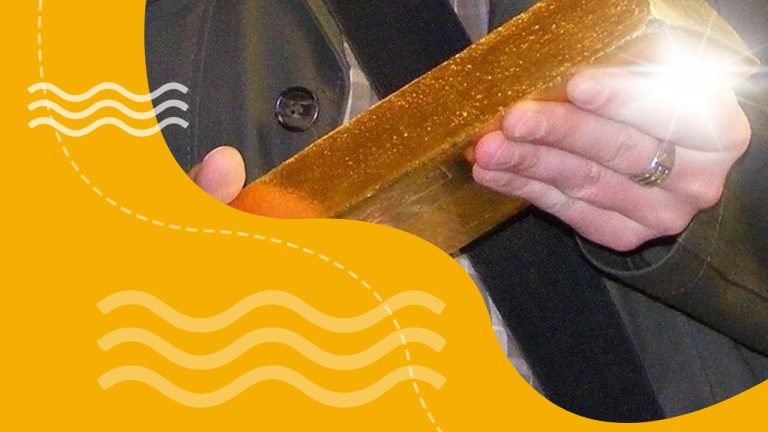
    Serbia’s central bank has revealed plans to relocate all of its gold reserves—valued at roughly £4.7 billion—back to its own territory, in a move aimed at safeguarding the stockpile during times of crisis.

    This would make Serbia the first country in Eastern Europe to entirely eschew established storage locations such as Switzerland, the United Kingdom, and the United States.

    “In bringing the gold back to Serbia, the National Bank sought to enhance both its accessibility and security during periods of instability,” the institution stated, noting that the repatriation effort had commenced in 2021 amid growing global uncertainty.

    Following the freezing of Russia’s foreign currency reserves in 2022, the rate of gold accumulation by central banks worldwide doubled, underscoring the political risk involved in holding reserves in US dollar and euro-denominated assets. Housing gold bars domestically reduces the threat of external interference.

    Between 2019 and the end of last year, Serbia acquired 17 tonnes of gold abroad and a further 19 tonnes from the local arm of Zijin Mining Group. This brought the total reserve to 50.5 tonnes, nearly all stored in Belgrade—except for five tonnes bought in 2024, which remain in Switzerland for now.

    Those final five tonnes will be brought back “as soon as possible,” according to Governor Jorgovanka Tabaković. Serbia’s neighbours hold differing proportions of their reserves domestically, ranging from 86% in Hungary to around 25% in Poland, as per data compiled by Bloomberg.

    The central bank said it had weighed the pros and cons before committing to full repatriation, admitting that while holding gold in global market hubs facilitates easier selling and lending, the risks outweighed those advantages.

    The Bank of England’s vault in London currently houses a significant portion of the world’s gold reserves—around £430 billion in value—cementing the UK’s position as the primary hub for precious metals trading. Similarly, the Federal Reserve in New York holds gold on behalf of nations including Germany and the Netherlands.

    Germany’s decision to bring gold back home over a decade ago sparked national debate and was driven by Cold War fears. Though the Soviet threat has since faded, the metal remained overseas until the repatriation effort was completed.

    Other countries, such as Poland and the Netherlands, have followed suit, while similar calls for domestic storage have echoed through Slovakia and Romania.

    The notion of storing gold within national borders has gained traction among rising populist movements, such as Germany’s Alternative für Deutschland, which regards it as a crucial safeguard against international political pressure.

  • EU Court Advisor Says Commission Wrongly Deducted €68M from Poland Over Turów Mine Dispute

    EU Court Advisor Says Commission Wrongly Deducted €68M from Poland Over Turów Mine Dispute

    The European Commission improperly withheld over €68 million from Poland’s EU funding in connection with the Turów coal mine dispute, according to a preliminary opinion issued Thursday by Advocate General Juliane Kokott of the EU Court of Justice.

    The legal dispute began in 2021 when Czechia filed a case against Poland, citing environmental and public health risks stemming from operations at the Turów coal mine, located near the Czech border. In response, the EU court ordered an immediate halt to mining. When Poland continued operations, the court imposed a daily fine of €500,000, which accumulated between 20 September 2021 and 3 February 2022.

    However, Thursday’s advisory opinion argues that a 2022 bilateral agreement between Poland and Czechia retroactively nullified the interim court measures and, by extension, the financial penalties. Under the agreement, Poland paid €45 million in compensation and agreed to implement environmental safeguards aimed at mitigating the mine’s cross-border impact.

    “The amicable agreement between the Czech Republic and Poland meant that the interim measures were cancelled retroactively,” Kokott wrote. “Therefore, the Commission wrongly offset the penalty payment against Poland’s claims against the EU budget.”

    While Kokott’s findings are non-binding, they are often followed by the Court of Justice in its final ruling.

  • JSW Seeks to Delay $345M in Social Security Payments Amid Deepening Cash Crunch

    JSW Seeks to Delay $345M in Social Security Payments Amid Deepening Cash Crunch

    JSW SA, the European Union’s largest producer of coking coal, has requested permission from Poland’s social security office to defer this year’s payments as it struggles with declining coal prices and rising operational costs. The company is asking to postpone the payment of 1.3 billion zloty ($345 million), proposing to settle the amount in installments starting January 2026.

    This marks the second plea for financial relief from the state by the state-controlled miner in a single week. On Monday, JSW also announced plans to seek a 1.6 billion zloty refund from Poland’s power price subsidy fund in a bid to stabilize its finances.

    JSW’s Deputy CEO Remigiusz Krzyzanowski stated during an earnings call that the board is “closely monitoring the financial and liquidity situation” and actively taking steps to prevent a cash shortfall. Despite initiating a cost-cutting and investment-trimming strategy in late 2024, the company has had to draw 2.2 billion zloty from its financial reserve fund this year alone to support cash flow.

    Analysts remain concerned. Erste Group’s Jakub Szkopek warned that JSW’s measures to reduce spending are “definitely too small,” forecasting that the miner will continue consuming significant reserves. He cautioned that if trends continue, JSW may deplete its cash reserves within two to three quarters.

    JSW, which employs over 32,000 people, is due to release its Q1 earnings report on May 20. On Friday, its shares rebounded slightly after an initial 3.6% dip, ending the week with a modest 2.1% gain.

  • Poland’s JSW Reports Record €1.7 Billion Loss Amid Falling Coal Prices and One-Time Write-Off

    Poland’s JSW Reports Record €1.7 Billion Loss Amid Falling Coal Prices and One-Time Write-Off

    Jastrzębska Spółka Węglowa (JSW), the EU’s largest coking coal producer and a Polish state-owned firm, has posted a staggering net loss of nearly 7.3 billion zloty (€1.7 billion) for 2024 — its worst result since going public in 2011. The company’s revenue plunged by 26.2% year-on-year to 11.3 billion zloty, marking a sharp reversal from a profit of nearly 1 billion zloty in 2023.

    JSW attributed the record loss largely to a 6.4 billion zloty non-financial asset write-off, alongside lower coal production and declining global coal prices. Coal output dropped 9.3% to 12 million tonnes, while coke production fell 8.6% to 3 million tonnes, driven by geological challenges and operational setbacks.

    The average price for JSW’s coal fell 20%, with hard coking coal prices down 19% and thermal coal prices plummeting over 30%. JSW plans to cover 6.33 billion zloty of its 2024 loss using reserve capital and seeks to reclaim a 1.6 billion zloty “solidarity contribution” imposed under a 2023 windfall tax.

    With extraction costs in Poland averaging 820 zloty per tonne—over five times higher than in the US—the country’s coal mining industry remains heavily subsidised. Government support for the sector is set to increase from 7 billion zloty in 2024 to 9 billion zloty in 2025.

    Despite pledges to accelerate its coal phase-out, Poland’s new ruling coalition has made limited progress. Coal still powers roughly 57% of the country’s electricity and remains a key heating source in many homes.

  • Mkango Resources Signs Revised Land Lease for Polish Rare Earths Plant

    Mkango Resources Signs Revised Land Lease for Polish Rare Earths Plant

    Mkango Resources Ltd has announced that its wholly owned subsidiary, Mkango Polska Sp. Z.o.o, has signed a revised exclusive land lease agreement with Grupa Azoty Pulawy for the development of a strategic rare earths separation plant in Poland. This agreement builds on their collaboration that began in 2021.

    The agreement covers an 8-hectare site adjacent to Grupa Azoty Pulawy’s fertilizer and chemicals complex in Pulawy, Poland. The location offers strong infrastructure, access to essential reagents and utilities, and significant expansion potential. Situated within a Polish Special Economic Zone, the site ensures direct access to European and global markets.

    The planned rare earths separation plant aims to enhance Europe’s supply chain security for critical materials used in electric vehicles, wind turbines, and green technologies. The project aligns with EU regulations on critical raw materials, supporting sustainable and diversified supply chains.

    Alexander Lemon, President of Mkango, expressed enthusiasm about the deal, emphasizing its role in facilitating the plant’s expansion and development. He highlighted Mkango’s strong partnership with Grupa Azoty and the upcoming definitive feasibility study leading to construction.

    Hubert Kamola, Vice-President of Grupa Azoty S.A, described the project as innovative, bringing job creation, technology transfer, and supply chain development for Europe and North America. He noted the synergies between both companies, including land availability, utilities, and chemical expertise.

    Mkango Resources continues its strategic expansion in the rare earths sector, leveraging its ownership in Maginito Limited to become a leader in rare earth magnet recycling and sustainable materials production. The company also holds an extensive exploration portfolio in Malawi and is progressing with the Songwe Hill rare earths project. Additionally, Mkango is pursuing a NASDAQ listing through a SPAC merger with Crown PropTech Acquisitions.

  • Poland May Extend Copper Output Tax Reduction Beyond 2027

    Poland May Extend Copper Output Tax Reduction Beyond 2027

    Poland’s Finance Minister, Andrzej Domański, announced on Monday that a planned reduction in the copper output tax could be extended beyond 2027. The government is considering prolonging tax relief measures to support the industry amid economic challenges.

    Earlier in the day, Domański confirmed that the tax cuts would lower government revenues by approximately 500 million zlotys ($123.4 million) in 2026 and 700 million zlotys in 2027. The move aims to provide financial relief to copper producers, ensuring competitiveness in the global market.

    The Polish government’s decision on whether to extend the tax reduction beyond 2027 will depend on economic conditions and industry performance in the coming years.

  • KGHM Launches Cost Optimisation Plan to Boost Profitability

    KGHM Launches Cost Optimisation Plan to Boost Profitability

    KGHM Polska Miedź SA, Europe’s leading copper producer, is launching a comprehensive Cost Optimisation Plan aimed at strengthening its investment capabilities for future growth. The initiative focuses on enhancing operational efficiency across the company’s core business processes.

    “As the Management Board, we are obliged to constantly seek opportunities for both efficiency and cost optimization. Current macroeconomic conditions, copper price levels and ongoing talks on a possible change to the copper tax formula create favorable conditions for intensifying investment activities. Our goal is to increase the resource base of domestic assets, which are the future of KGHM, in the long term,” said Andrzej Szydło, President of the Management Board of KGHM Polska Miedź SA. “In terms of employment, we will focus primarily on increasing work efficiency, and not on cost issues that are currently resolved,” he added.

    The optimisation program will initially target several key areas including procurement, technological processes, waste management, and water systems, with additional focus areas to be identified during the review process.

    As Europe’s largest copper producer, KGHM plays a vital role in both Poland’s economy and the European Union’s strategic raw materials sector, contributing approximately half of the EU’s copper mining output.

  • From Black Gold to Black Diamonds: Upper Silesia’s Coal Legacy

    From Black Gold to Black Diamonds: Upper Silesia’s Coal Legacy

    Situated in Southern Poland, Upper Silesia is steeped in hundreds of years of mining tradition. The region’s old workers’ neighbourhoods, through their architecture and use of local motifs, serve as a reminder to locals and visitors alike of a time when men worked arm in arm with machines, and when Upper Silesia functioned as the industrial heartland of Europe.

    More than 300 years ago, people travelled from across the country and beyond to access the so-called “black gold” found in Upper Silesia. Beneath this rugged exterior, however, lies a rich cultural history with roots stretching back centuries. The region boasts its own dialect, which was banned for many years in Poland but survives to this day. It also has a tangible material dimension in coal, which is being repurposed in modern times.

    As folklore revival gains popularity in Poland, coal has become a commodity of a different quality. Mined in Upper Silesia since the 17th century, coal played a crucial role not only in the Polish economy but also for the entire European continent. Today, it is being transformed into jewellery as a symbolic tribute to the land from which it came.

    In Katowice, the capital of Upper Silesia, several workshops are turning coal into a new type of precious commodity: delicate, hand-crafted jewellery. One such brand is I Coal You, owned and operated by Katarzyna Depa, who has deep ties to the region. Depa explains that coal jewellery symbolises mining hardships and carries significant sentimental value. Her clients include not only visitors seeking unique souvenirs but also locals who view the crafts as a way to represent their culture.

    While the trend of making jewellery from coal is relatively modern, it has deeper roots in Upper Silesian tradition. The first coal beads appeared in the region in the 19th century, made by miners as gifts for their wives and girlfriends. These simple decorative forms were quick but thoughtful presents.

    Coal jewellery has become a symbol of the region’s ties to its mining heritage. It represents the work ethic and respect associated with the industry that sustained Upper Silesia for generations. As Depa notes, “This respect for this raw material, which Upper Silesia fed itself and all of Poland with, is what it’s all about.”

    The transformation of coal into jewellery also serves as a reminder of the physical and cultural landscape shaped by the mining industry. Each piece of coal jewellery is unique, reflecting the distinctiveness of the material itself. This artform brings respect to work that is often undervalued and allows people to appreciate the region’s industrial heritage.

    In recent years, Upper Silesia has seen a resurgence of local pride and cultural expression. The once-banned Silesian dialect now appears on tote bags and shop signs. Statues of local folkloric figures adorn streets, and artists depict the mining landscape in their work. Even as coal extraction has diminished, the material remains a permanent feature of the Silesian identity.

    As Depa poignantly states, “Polish highlanders wear coral beads from Italy, there are pieces of turquoise from Turkish wars in the Wawel treasury, and amber comes from the sea. But we have coal here and now, we can dig it up. And that’s probably the most beautiful thing about it. Besides, coal is simply beautiful as a stone.”

    This transformation of coal into jewellery symbolises Upper Silesia’s ability to honour its past while embracing new forms of cultural expression and economic activity. It represents a unique way of preserving the region’s heritage and identity in a changing world.

  • Tremor at Polish Coal Mine Claims One Life, Injures Eleven

    Tremor at Polish Coal Mine Claims One Life, Injures Eleven

    A devastating underground tremor struck a coal mine operated by Polish mining group PGG in Radlin, southern Poland, early Monday morning, leading to the death of one miner and injuries to 11 others. The incident occurred at 2:06 AM GMT, roughly 800 meters underground.

    PGG Acting CEO Bartosz Kepa revealed that 29 workers were present in the affected zone during the tremor. Rescue efforts evacuated the area, and those injured were promptly transported to local hospitals. Among the hospitalized, four remain in serious condition, according to Lukasz Pach, head of emergency medical services in Katowice.

    Authorities are currently working to secure the damaged sections of the mine, with an assessment of material damage still underway. PGG’s Deputy Chief Executive for Production, Marek Skuza, stated that securing operations are critical to ensuring the safety of remaining workers and the integrity of the mine.

    This incident has raised renewed concerns about the safety of coal mining in Poland, a country heavily reliant on coal for energy and employment. Further investigations will aim to determine the exact cause of the tremor and evaluate safety measures in place to prevent such tragedies in the future.

  • Methane Ignition Injures 16 in Polish Coal Mine

    Methane Ignition Injures 16 in Polish Coal Mine

    A methane ignition in the Knurow-Szczyglowice coal mine in southern Poland left 16 miners injured on Wednesday, with 14 transported to local hospitals for treatment. The incident occurred at a depth of more than 850 meters, where 44 miners were present during the gas ignition. Emergency medical teams responded swiftly, providing assistance at the scene, while one miner, still underground, was awaiting helicopter transport to a hospital.

    Aleksander Chowaniec, deputy head of the State Mining Authority, confirmed that the affected miners had sustained burns. The operator of the mine, JSW, reported the accident, while its shares fell by 2.3% shortly after the news broke.

    The Knurow-Szczyglowice mine, known for its extensive underground operations, has faced challenges related to methane management, which is a common hazard in deep mining. Investigations are underway to determine the cause of the gas ignition, and rescue efforts for the remaining miner are ongoing. The incident has reignited discussions about safety protocols and the risks miners face in such hazardous environments.