Tag: Poland

  • Kalisz Set to Begin Geothermal Drilling Project with Major Funding Support

    Kalisz Set to Begin Geothermal Drilling Project with Major Funding Support

    Kalisz, a city in Poland, is preparing to launch exploratory drilling for geothermal resources by early 2025. This project aims to harness thermal water to provide heating for both municipal and residential buildings and supply recreational facilities in the area.

    The initiative has gained momentum following the signing of funding agreements with the National Fund for Environmental Protection and Water Management (NFOSiGW) and six other municipalities. Through this funding, Kalisz will receive PLN 15 million (around USD 3.72 million) to support the geothermal drilling efforts.

    The exploratory well in Kalisz will be drilled as a vertical borehole near Sportowa Street, Wal Jagiellonski, and the Swedrnia River, reaching a depth of 1,700 meters. Following the drilling, the project will conduct hydrogeological, geophysical, and laboratory tests to confirm the site’s viability, with full hydrogeological documentation anticipated by 2026.

    Experts suggest that Kalisz‘s geothermal resources may offer higher temperatures compared to Uniejow and Poddebice, cities where geothermal heating has successfully operated for several years. Mayor Krystian Kinastowski highlighted the potential of this clean energy source, stating, “Geothermal energy offers affordable heating solutions for Kalisz residents and will benefit both current and future housing developments.”

    The geothermal project is expected to provide not only cost-effective energy but also to stimulate economic growth, contributing significantly to Kalisz’s development.

  • Belchatow Faces Uncertain Future as Europe’s Largest Coal Plant Prepares to Close

    Belchatow Faces Uncertain Future as Europe’s Largest Coal Plant Prepares to Close

    In Belchatow, Poland, the PGE coal-fired power plant, Europe’s largest and one of the world’s top polluters, has powered local industries and provided 20% of Poland’s electricity for decades. With EU-driven goals pushing its closure by 2036, the city of 55,000 braces for significant economic shifts. Efforts to retrain workers for “green collar” jobs and build renewable energy projects are underway, though residents worry about a lack of clarity on future job prospects. The transition’s impact is already visible: youth are increasingly leaving Belchatow, and a new wave of political support has emerged for Patryk Marjan, the city’s first far-right mayor, who campaigned against the EU’s Green Deal. Locals express concern over the region’s future, and some fear the city could lose its vitality and identity post-coal, with some joking it could become “churches and kebab shops.” The question remains whether Belchatow can secure an economically sustainable future in the clean energy era.

  • Poland’s Coal Mine Leisure Lake Proposal Sparks Debate Over Economic Viability

    Poland’s Coal Mine Leisure Lake Proposal Sparks Debate Over Economic Viability

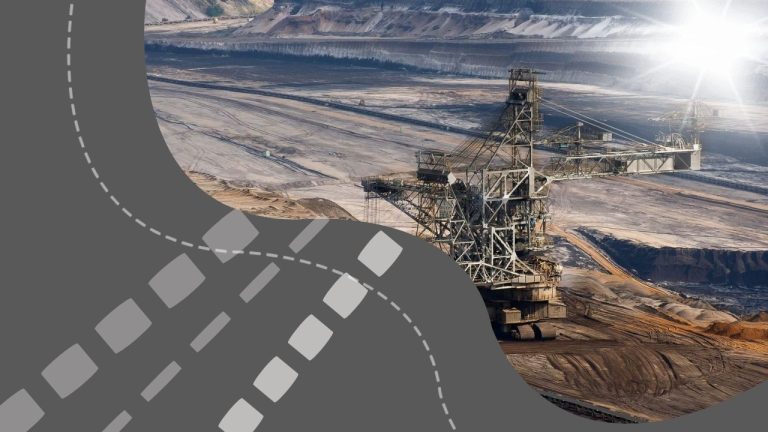
    Poland’s Bełchatów, Europe’s largest coal mine, is slated for a transformation into a leisure lake by 2070 under the state-owned utility PGE’s plan. While PGE views the lake as a way to reuse the land, critics argue the project diverts from urgently needed green energy infrastructure that could bring more immediate economic benefits. Local officials emphasize renewable energy would create more jobs and help the area transition economically, while the lake project’s timeline raises concerns in the coal-dependent community.

  • GreenX Wins £252 Million in Arbitration Case Against Poland, Share Price Soars

    GreenX Wins £252 Million in Arbitration Case Against Poland, Share Price Soars

    The share price of coal developer GreenX surged by nearly 40% on Tuesday following the company’s announcement of a significant victory in its arbitration case against Poland. GreenX, which is listed on both the London Stock Exchange (LSE) and the Australian Securities Exchange (ASX), has been awarded £252 million (A$490 million) in compensation and interest.

    The company, formerly known as Prairie Mining, had claimed that Poland violated its obligations under international treaties by obstructing the development of the Jan Karski and Dębieńsko coal mines. This, GreenX argued, deprived the company of the entire value of its investments in the country. The arbitration tribunal ruled in favor of GreenX regarding the Jan Karski project, awarding compensation for the breach. However, the tribunal did not uphold GreenX’s claim related to the Dębieńsko mine.

    As a result of the ruling, GreenX’s stock surged in London, closing at £48.45 per share, reflecting a nearly 40% increase. The announcement came after the markets had closed in Sydney.


  • Poland’s JSW Targets Higher Coal Production in 2025, Not Eyeing New Acquisitions

    Poland’s JSW Targets Higher Coal Production in 2025, Not Eyeing New Acquisitions

    Poland’s largest coking coal producer, JSW, announced that it is not currently considering acquiring any mining assets from Polska Grupa Gornicza (PGG). Adam Rozmus, JSW’s vice-president for technical matters, made the statement during a press conference on Monday, confirming that the company is focused on its own operations rather than new acquisitions.

    Rozmus also reiterated JSW’s coal production target for 2024, set at 12.45 million tonnes. He added that production in 2025 is expected to significantly surpass the 12 to 13 million tonne range, although specific figures were not provided.

    Ryszard Janta, JSW’s CEO, addressed questions about the company’s ongoing restructuring efforts, stating that detailed analyses are underway across all of JSW’s operations. He emphasized that simply returning to annual production levels of 14 to 15 million tonnes would not be sufficient to meet the company’s future goals. Janta also noted that the group is closely examining labor costs as part of its broader strategy.

  • Poland’s PGE to Phase Out Coal-Fired Power Units by 2025

    Poland’s PGE to Phase Out Coal-Fired Power Units by 2025

    Poland’s largest power utility, PGE, plans to cease electricity production at its four remaining coal-fired units at the Rybnik power plant by the end of 2025, according to a report from the Polish Press Agency. The units, which collectively generate 900 megawatts (MW), have capacity market contracts running until this deadline. While coalcontinues to dominate Poland’s electricity generation, profitability is declining as state-controlled utilities like PGE shift towards renewable energy. Additionally, banks are increasingly reluctant to finance coal-based operations.

    PGE has already phased out four coal-fired units at the Rybnik plant and is preparing to replace them with an 882 MW gas-fired unit, scheduled for commissioning by the end of 2026. The company reiterated that the decision to end coal production was made in 2020. The timeline for ending heat production at the coal-fired units has been extended to August 31, 2026.

  • Poland to Revise Coal Asset Spin-off Plans Amid Energy Transition Struggles

    Poland to Revise Coal Asset Spin-off Plans Amid Energy Transition Struggles

    Poland, the European Union’s most coal-dependent nation, is looking to revise its plans to separate coal assets from state utilities, according to Jakub Jaworowski, the Minister of State Assets. The country’s energy transition has faced challenges, with the previous government failing to finalize the creation of a new entity, known as NABE, to handle coal assets. Jaworowski described the NABE plan as a “nuclear option” and hinted at the possibility of alternative approaches without specifying details.

    Last week, shares of major utilities like PGE SA, Tauron Polska Energia SA, and Enea SA fell by as much as 7%following Finance Minister Andrzej Domanski’s statement that the next year’s budget has no provisions for the NABE spin-off. However, Jaworowski stressed that resolving the issue remains a priority for the current administration. He emphasized the need for a well-thought-out plan rather than rushing the process.

    Poland’s energy transition, estimated to cost over $300 billion, is reliant on external financing, but environmental concerns are making banks hesitant to participate. With more than 60% of Poland’s electricity coming from coal-fired plants, the government faces the challenge of balancing power demand, costs, environmental considerations, and the needs of affected communities and workers. Jaworowski acknowledged that coal plants will eventually be phased out but stressed the importance of finding the right timeline.

  • Poland’s Top Coal Producer Bogdanka Takes $305 Million Hit as Renewables Rise

    Poland’s Top Coal Producer Bogdanka Takes $305 Million Hit as Renewables Rise

    Poland’s most profitable coal producer, Lubelski Węgiel Bogdanka SA, announced a significant write-off of $305 million from the value of its assets due to the increasing influence of wind and solar power in the energy market. The company, which is under the control of state-run utility Enea SA, attributed the 1.17 billion zloty ($305 million) provision to “dynamic changes” in the domestic coal market, highlighting a “clear trend” toward growing renewable energy capacity.

    Last year, Bogdanka’s profit surged to a record 687 million zloty due to high coal prices. However, analysts predict a significant decrease in profit for 2024, even before considering the recent write-off. Despite Poland’s new government promoting clean energy, an official energy policy with specific targets for the upcoming decades has yet to be published. Nevertheless, coal’s share in the country’s electricity mix has already dropped to 66% last year, down from over 70% the previous year, as investments in photovoltaic and wind energy increase.

    The pressure on coal is expected to intensify with the introduction of the first offshore wind turbines and the completion of gas-fired power units in the coming years. Additionally, Poland plans to inaugurate its first nuclear power plant next decade, aligning with the European Union’s climate neutrality goal by mid-century. Bogdanka, listed on the Warsaw Stock Exchange, plans to revise its strategy by the end of 2024 in response to these changes. The company’s shares have dropped 27% this year, resulting in a market valuation of 846 million zloty, while the WIG20 Index has risen by 1.4%during the same period.

  • Poland’s Top Coal Producer Bogdanka Faces $305 Million Write-Off Amid Renewable Energy Surge

    Poland’s Top Coal Producer Bogdanka Faces $305 Million Write-Off Amid Renewable Energy Surge

    Poland’s leading coal producer, Lubelski Wegiel Bogdanka SA, has announced a substantial $305 million write-offfrom the value of its assets, as the rise of wind and solar energy accelerates the decline of coal in the market. Bogdanka, which is controlled by state-run utility Enea SA, cited “dynamic changes” in the domestic coal market and the increasing capacity of renewable energy sources as the primary reasons for this financial adjustment.

    The company’s profits had nearly tripled last year, reaching a record 687 million zloty, largely due to high coal prices. However, analysts predict a significant reduction in profits for 2024, even before accounting for the recent write-off.

    While Poland’s new government has been promoting clean energy, it has yet to release a formal energy policy with specific targets for the coming decade. Nonetheless, coal’s share in Poland’s electricity mix has already dropped to 66%last year, down from over 70% the previous year, as investments in photovoltaic and wind farms increase. The pressure on coal is expected to intensify as offshore wind turbines and gas-fired units become operational, and Poland looks towards establishing its first nuclear power plant in the next decade to align with the European Union’s climate neutrality goals.

    Bogdanka plans to revise its strategy in response to these new market conditions by the end of 2024. The company’s shares have dropped 27% this year, reducing its market valuation to 846 million zloty, while the WIG20 Index rose by 1.4% during the same period.

  • ArcelorMittal Reduces Emissions Significantly Through Environmental Investments in Poland

    ArcelorMittal Reduces Emissions Significantly Through Environmental Investments in Poland

    The global steel company ArcelorMittal has invested more than PLN 10.5 billion ($2.6 billion) in its Polish assets over the past 20 years, with a significant portion allocated to environmental projects. According to a press release from ArcelorMittal Poland, these investments have resulted in a 90% reduction in dust emissions and a 42% reduction in carbon dioxide emissions compared to 2004 levels.

    The company’s Polish division has undergone numerous changes in the past two decades, implementing new technologies in compliance with increasingly strict EU directives, decommissioning outdated installations, and modifying many production processes to minimize environmental impact. ArcelorMittal aims to achieve climate neutrality by 2050, with an interim goal of reducing CO2 emissions by 35% at its European plants by 2030 compared to 2018.

    Decarbonization is a huge challenge for the steel industry across Europe,” commented Sanjay Samaddar, President of the Board of ArcelorMittal Poland. “To make it successful, several conditions must be met, including access to large-scale, renewable energy at competitive prices. We know the transformation will be a long-term process, so we are already working intensively to limit our impact on the environment in our current processes.”

    In recent years, ArcelorMittal has invested about PLN 700 million in green projects at the Dąbrowa Górnicza plant. Modernization efforts have also been made at plants in Sosnowiec, Zdzieszowice (PLN 205 million), and Kraków (PLN 100 million), among others. ArcelorMittal Poland plans to invest an additional PLN 165 million ($40.9 million) in modernizing the coke plant in Zdzieszowice, with all work expected to be completed by 2026.

    As reported by GMK Center, in 2023, ArcelorMittal Poland invested PLN 1.5 billion ($363 million) in modernization and growth projects at three facilities to improve product quality, energy efficiency, and plant efficiency, with the largest investment directed towards modernizing the blast furnace in Dąbrowa Górnicza.