Tag: mining

  • Avrupa Minerals Regains Full Control of Sesmarias Project in Portugal

    Avrupa Minerals Regains Full Control of Sesmarias Project in Portugal

    Avrupa Minerals is reaffirming its commitment to the Sesmarias project in Portugal, even as it continues to expand its Finnish exploration portfolio. Sesmarias, the company’s flagship discovery since 2014, has seen significant progress through multiple joint ventures and self-funded efforts. Most recently, Sandfire MATSA supported exploration from 2020 to 2025, yielding impressive high-grade intercepts and expanding the project’s geological understanding.

    Despite these advancements, the project did not meet Sandfire MATSA’s internal criteria, leading to Avrupa regaining 100% ownership. With complex geology and promising mineralization—including intercepts like 26.95 meters @ 2.18% Cu and 28.60 meters @ 1.68% Cu—the company is now focused on securing a new strategic partner to advance towards a potential mining decision.

  • Labour Costs Climb in Kazakhstan’s Mining Sector Amid Industry Expansion

    Labour Costs Climb in Kazakhstan’s Mining Sector Amid Industry Expansion

    Kazakhstan’s mining industry is seeing a notable surge in labour costs as companies compete for skilled workers in a tight labour market. Official figures reveal that wages in the sector are outpacing the national average, a trend that is putting upward pressure on operational expenses for mining firms.

    According to data from the Bureau of National Statistics (BNS), the average nominal salary in the mining and quarrying sector reached 888,900 Tenge (approximately $1,650 USD) in the second quarter of 2025. This makes it the second-highest paying industry after the financial sector. This rise is particularly pronounced when compared to the broader economy, with nominal wages in mining increasing by 12.9% in the first half of the year, while the national average grew by 10.7%.

    This overall average, however, is skewed by high salaries in the oil and gas subsector. For example, workers in crude oil and natural gas extraction earn an average nominal salary of 1.4 million Tenge (approximately $2,600 USD). In contrast, those in coal mining and metal ore extraction earn significantly less, at 673,100 Tenge (approximately $1,250 USD) and 698,000 Tenge (approximately $1,290 USD), respectively.

    Mining companies are facing pressure to offer competitive salaries to attract and retain talent, especially in physically demanding and high-risk roles. Vacancies for underground miners on job sites like Enbek.kz and Hh.kz offer salaries ranging from 165,300 to 500,000 Tenge (approximately $300 to $925 USD), with experienced roles like mine foreman and driller commanding salaries between 400,000 and 500,000 Tenge.

    While nominal wages provide a statistical average, they often don’t reflect the reality for most workers. The most common or modal salary is typically much lower, often only 30-50% of the nominal figure. In 2024, the modal salary in the mining sector was 372,600 Tenge (approximately $690 USD), approximately 43% of the nominal average of 866,500 Tenge (approximately $1,600 USD), closely aligning with the current salary offers for entry-level positions.

    Despite the challenges of rising costs, the increase in wages also reflects a growth in purchasing power. Real wages in the mining industry grew by 2.3% in the first half of 2025, significantly higher than the 0.3% growth seen across the wider economy.

  • EU Urged to Prioritise ESG in Central Asia’s Raw Materials Push

    EU Urged to Prioritise ESG in Central Asia’s Raw Materials Push

    The EU must prioritize Environmental, Social, and Governance (ESG) principles in its dealings with Central Asia to secure its access to crucial raw materials, commentators warn.

    The bloc arrived in Samarkand this April with a hefty €13.2 billion Global Gateway package, signaling a desire to move beyond merely buying raw materials from the region. A significant portion, €2.5 billion, is earmarked for new mining and processing projects in Kazakhstan, Uzbekistan, and beyond. This drive is born out of necessity: the EU still relies entirely on China for its heavy rare-earth imports and faces the growing risk of vulnerability.

    While geographically late to the game, Europe has a unique advantage: a reputation for robust ESG practices. Local executives cite European partners as “a sign of quality” due to their unwavering adherence to these standards, something often lacking in Chinese or Russian counterparts. However, this edge relies on Brussels consistently embedding ESG into every euro invested. This means robust monitoring and auditing of remediation plans, transparent royalty structures, and genuine upfront consultation with local communities.

    The EU’s Critical Raw Materials Act (CRMA) sets ambitious goals: attaining 10 percent mining, 40 percent processing, and 25 percent recycling of Europe’s annual CRM demand domestically or in trusted partner states by 2030.

    Realising these goals in Central Asia necessitates investment in sustainable technologies. This includes financing water-efficient processing plants, closed-loop waste systems, and solar-powered smelters, rather than simply opening more exploitative mines.

    The EU’s efforts are beginning to take shape, with the spotlight falling on graphite. Kazakhstan’s Sarytogan deposit has been placed on the EU Commission’s list of “strategic projects” eligible for expedited permits and loan guarantees under the CRMA. Meanwhile, the European Bank for Reconstruction and Development has taken a significant stake in the mine operator, marking a direct investment in the region’s CRM sector. The EU is now actively seeking downstream investors to refine indigenous graphite into anode-grade product, capturing added value that historically flowed to Chinese refiners.

    Lithium development is following a similar trajectory. A partnership between HMS Bergbau and Kazakhstan’s Creada Corporation aims to unlock the potential of Kazakh spodumene through extraction, processing, and refining into battery-ready lithium hydroxide. This would be a direct response to the EU’s new battery-passport regulations, which require materials of a certain purity.

    However, Europe faces a formidable competitor: China. The PRC Mineral Resources Law mandates environmental remediation planning before mining commences, setting a new baseline for responsible resource extraction. While welcomed, the application details remain vague, lacking guarantees on local community engagement and enforcement mechanisms, potentially creating loopholes for exploitation.

    Adding to the pressure, Chinese capital is expanding downstream. East Hope Group’s landmark $12 billion investment in Kazakh non-ferrous metals signifies a vertical integration approach—from mining and smelting to fabrication and renewable power generation. This $12 billion vertical integration project in Kazakhstan showcases China’s willingness to build a fully controllable supply chain.

    Europe must act strategically to counter these challenges.

    Firstly, financial aid should be contingent on stringent ESG benchmarks. EU financing must go hand-in-hand with clear, enforceable standards – ISO-compliant tailings dams, methane monitoring, gender-balanced workforce plans, and robust penalties for non-compliance.

    Secondly, the EU should focus on fostering value-adding industries beyond mining. This means investing in processing plants and recycling facilities, not just mines. By creating domestic processing hubs for cathode powders or rare-earth magnets, the CRMA’s 40 percent processing target can be achieved, generating jobs, technology transfer, and increased tax revenue for beneficiary countries.

    Finally, the EU must simplify visa requirements for Central Asian technical personnel. A targeted visa-facilitation agreement could allow them to train in Europe and return, strengthening the region’s skilled workforce.

    Securing a stable and sustainable supply of raw materials is a critical challenge for the EU. While China’s economic clout is undeniable, Europe has the opportunity to win this race by leveraging its commitment to ESG principles and building a truly sustainable, transparent, and trust-based partnership with Central Asia.

    Time is of the essence. The next 18 months, before China’s revised mining law takes full effect and East Hope’s megaproject begins construction, provide a crucial window for the EU to demonstrate its commitment to ESG beyond rhetoric. The stakes are high, as the fate of Europe’s essential raw materials supply hangs in the balance.

  • Investors Flock to Central Asia’s Mining and Resources

    Investors Flock to Central Asia’s Mining and Resources

    The second annual edition of Montfort Eurasia’s Investor Perception Report on Central Asia and the Caucasus is out now!

    For the second consecutive year, Montfort Eurasia has conducted in-depth polling of international investors across the #UK and #US, revealing a surge in investor interest in #CentralAsia and the #Caucasus — with interest in the region tripling since 2023.

    This year’s report sheds light on both rising enthusiasm and persistent challenges, underscoring the importance of investor education and proactive engagement with governments and local markets as the region positions itself as a major emerging economic hub.

    🔑 Key Takeaways:

    • 66.7% of UK investors and 72.9% of US investors report strong interest in global emerging markets — a significant increase from last year.
    • Interest in Central Asia and the Caucasus has surged, with 47% of investors now actively exploring opportunities in the region (up from just 15.5% in 2023).
    • Mining and natural resources continue to draw strong interest, with 49.2% of foreign investors identifying the sector as one of the most attractive.
    • Other leading sectors include industrial and manufacturing (63.5%) and oil and gas (57.9%).
    • Security (76%) and political stability (65%) remain the top investor concerns.
    • International media (80%) and financial analysts (70%) are the most relied-upon sources for emerging market insights.
    • Kazakhstan, Armenia, Azerbaijan, and Uzbekistan emerge as the top investment destinations.

    As regional economies mature and open up, the report highlights a growing appetite for opportunity — but also a clear call for strategic communication and confidence-building measures.

    📘 Read the full Investor Perception Report here

  • Almalyk Mining and Metallurgical Combine Strengthens International Ties with Czech Company Draslovka

    Almalyk Mining and Metallurgical Combine Strengthens International Ties with Czech Company Draslovka

    Almalyk Mining and Metallurgical Complex (AGMK), one of Uzbekistan’s leading industrial enterprises, is not only a cornerstone of the nation’s economy but also a key player in expanding international industrial ties. The complex is actively collaborating with foreign companies, embracing modern technologies, boosting production efficiency, and committing to environmental sustainability.

    On May 29, AGMK hosted a significant meeting with representatives from the Czech company Draslovka to explore mutually beneficial cooperation.

    Draslovka, a family-owned company founded in 1906, specialises in chemical technologies, products, and services that enhance efficiency and sustainability across the mining, agricultural, and processing industries. With business units in seven countries and a presence in over 80 nations, Draslovka is the world’s largest producer of sodium cyanide, a chemical essential for gold extraction.

    However, the company’s most notable contribution to the industry is its patented glycine leaching technology. This innovative method offers a more stable and economical approach to the leaching process. Draslovka also produces other speciality chemicals and reagents, provides leading chemical application services for mining and pest control, and offers AI-powered support services.

    During their visit, the Draslovka representatives presented an overview of their operations to AGMK’s management. Discussions focused on the potential application of glycine leaching technology at AGMK’s facilities, culminating in an agreement to commence cooperation.

    The Czech delegation also had the opportunity to visit the viewing platforms of the Kalmakyr and Yoshlik I mines.

  • Greenland Grants 30-Year Mining Permit for Climate-Friendly Aluminium Alternative

    Greenland Grants 30-Year Mining Permit for Climate-Friendly Aluminium Alternative

    Greenland has issued a 30-year mining license to Greenland Anorthosite Mining (GAM), a Danish-French mining group, to extract anorthosite—an unusual white rock that could play a key role in climate-friendly aluminium production. The permit covers a project site in western Greenland and marks a significant step toward the island’s ambitions to become a major player in the global green minerals market.

    GAM, backed by the French investment firm Jean Boulle Group and state investment funds from both Denmark and Greenland, aims to begin mining operations within five years. The company plans to export crushed anorthosite to the fiberglass industry, where it could serve as a more sustainable replacement for kaolin. Longer-term, it may replace bauxite in aluminium production, reducing the carbon footprint of a metal critical to the aerospace, automotive, and defense industries.

    Anorthosite is geologically similar to material brought back from the Moon by NASA’s Apollo missions, and its unique composition—aluminium, micro silica, and calcium—offers promising industrial applications.

    Despite the global spotlight on Greenland’s natural resources, Mineral Resources Minister Naaja Nathanielsen stated that heightened U.S. interest in the Arctic island—especially following former President Donald Trump’s 2019 proposal to purchase it—has not yet resulted in direct American investment.

    “Right now, all the fuss has not resulted in increased appetite for investment directly in Greenland,” Nathanielsen told Reuters. While U.S. business delegations have visited the island, formal talks with the U.S. government remain on hold.

    In contrast, Nathanielsen noted smoother progress with European Union and Danish partners, citing years of intensified cooperation.

    Although Greenland is rich in minerals, oil, and gas, its mining sector remains underdeveloped due to investor caution, regulatory hurdles, and environmental concerns. At present, only two small mines are operational on the island.

  • Ministry of Mining in Uzbekistan and CNUC Discuss Cooperation in Geology and Mining Sector

    Ministry of Mining in Uzbekistan and CNUC Discuss Cooperation in Geology and Mining Sector

    The Ministry of Mining and Geology, under the leadership of Deputy Minister U. Yusupov, held a meeting with representatives from China National Uranium Corporation Limited (CNUC). The discussions focused on potential cooperation in the fields of geology and mining, including plans for joint geological exploration projects and the implementation of innovative technologies.

    Both parties expressed interest in launching mutually beneficial initiatives and expanding investment opportunities. The CNUC delegation shared insights from their international experience and highlighted their achievements in global projects. The meeting also included an exchange of views on potential collaborative research and further development within the geological sector.

  • Uzbek Geological Exploration Advances Across Multiple Sites with Coal, Polymetallic, and Non-Metallic Discoveries

    Uzbek Geological Exploration Advances Across Multiple Sites with Coal, Polymetallic, and Non-Metallic Discoveries

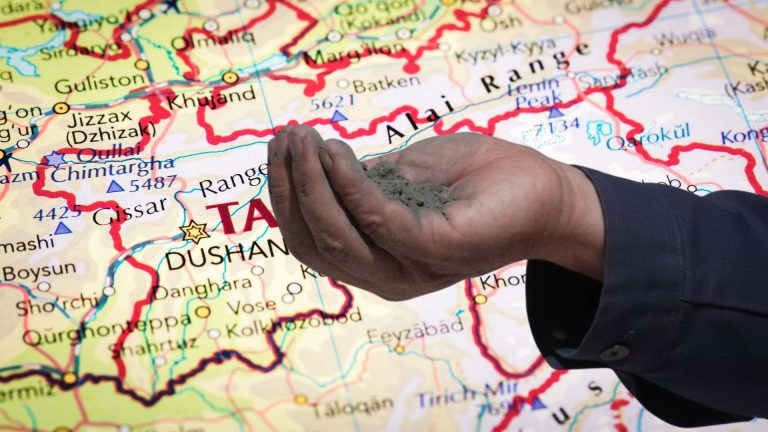
    Uzbek Geological Exploration JSC has reported significant progress across multiple exploration sites, highlighting ongoing developments in the country’s resource sector. At the Uriqli site, part of the Surkhandarya field expedition under the Gissar central geological exploration expedition, coal seams numbered 1 through 6 have been successfully identified as a result of recent mining works.

    Simultaneously, polymetallic ore bodies are under evaluation at the northern section of the Khandiza ore field, while detailed exploration continues at the Vodny Say section. Exploration activities have concluded at the Severny area, where a comprehensive geological report is now being finalized for submission to the State Reserves Committee (GKZ) in 2025.

    In parallel, the field evaluation of non-metallic mineral resources is ongoing at several locations. These include celestine at Chigatai, dolomite at Loilik, gypsum at Shurobsoy, and basalt at Badava. The corresponding exploration reports are also expected to be submitted for review to the State Commission on Mineral Reserves (SCP) within the year.

  • Vast Resources Signs MoU with Tajik Ministry at UK-Tajikistan Mining Forum

    Vast Resources Signs MoU with Tajik Ministry at UK-Tajikistan Mining Forum

    Vast Resources plc, an AIM-listed mining company, announced its active participation in the Tajikistan-UK Mining Forum held yesterday at the London Stock Exchange. The event served as a platform to reinforce bilateral ties between the United Kingdom and Tajikistan while spotlighting the investment potential within Tajikistan’s mining sector.

    During the forum, Vast Resources signed a non-binding Memorandum of Understanding (MoU) with the Ministry of Industry and New Technologies of the Republic of Tajikistan. The agreement outlines a framework for cooperation aimed at identifying both historical and greenfield exploration opportunities for non-ferrous and strategic mineral deposits.

    A notable element of the MoU includes plans to jointly develop a “Tajik Mineral Investment Fund” to facilitate growth in Tajikistan’s mining industry. The agreement remains in effect until 19 May 2026. Vast Resources confirmed that any material developments arising from the MoU will be disclosed as they occur.

  • Anglo Asian Mining Begins Production at Gilar Underground Mine in Azerbaijan

    Anglo Asian Mining Begins Production at Gilar Underground Mine in Azerbaijan

    Anglo Asian Mining PLC (AIM: AAZ) has commenced production at its Gilar underground mine, situated within the Gedabek site in Azerbaijan. The company targets an output of approximately 2,000 tonnes of ore per day, with expectations to ramp up to a monthly production rate of 50,000 to 60,000 tonnes.

    A maiden JORC mineral resource estimate released on December 11, 2023, revealed that the Gilar deposit holds 6.10 million tonnes of mineralisation. The average grades include 0.88% copper—equating to nearly 54,000 tonnes of copper—and 1.30 grams of gold per tonne, totaling over 255,000 ounces of gold.

    Following the announcement, shares of Anglo Asian Mining rose by 7% in London, bringing the company’s market value to £169.9 million ($226.9 million).

    In 2024, Anglo Asian produced 16,760 gold-equivalent ounces, although production faced disruptions due to a partial environmental shutdown. Operations resumed by the end of the year.

    The company plans to evolve into a multi-asset, mid-tier copper and gold producer by 2029, with copper becoming its primary product. As part of its growth strategy, Anglo Asian intends to bring four new mines into production between 2025 and 2029: Gilar, Zafar, Xarxar, and Garadag.