Tag: mineral exploration

  • Altynalmas Outlines Ambitious Development Plans for Maikainzoloto During Executive Visit

    Altynalmas Outlines Ambitious Development Plans for Maikainzoloto During Executive Visit

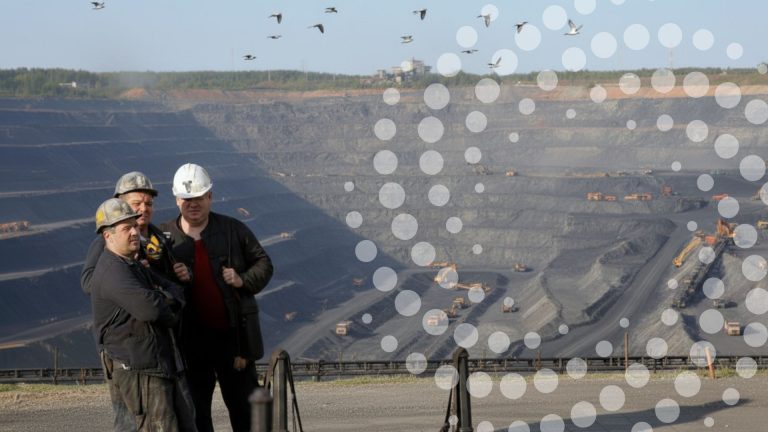
    Balamir Makhanov, Chairman of the Board of JSC “AK Altynalmas”, has visited the Maikainzoloto site as part of a working trip, where he met with the company’s workforce to present a roadmap for future development.

    Altynalmas, one of Kazakhstan’s top three gold producers, continues to invest in modernization and expansion across five key regions. The Maikainzoloto asset, recently integrated into the company’s strategic portfolio, is now a focal point for comprehensive growth.

    “Maikainzoloto is a valuable asset within our company structure. We see significant potential here and are committed to ensuring its sustainable development through modernization, new technologies, and resource base expansion,” said Makhanov during the meeting.

    To extend operational life and boost production, five new exploration licenses have been acquired. Among the most promising sites is the Alpys deposit, where exploration is already planned. Additionally, the company aims to construct a processing plant to treat historic tailings, accumulated since the deposit was first developed.

    Altynalmas continues to emphasize corporate social responsibility, focusing on occupational safety, modern personnel and equipment tracking systems, working conditions, and professional development programs. The company also actively supports local communities, investing in social infrastructure, education, and sports initiatives.

    As part of the visit, Altynalmas officially introduced Daniyal Nabiev as the new General Director of Maikainzoloto. With extensive management experience in industrial enterprises, Nabiev’s appointment reflects Altynalmas’ commitment to robust and dynamic growth.

    The outlined development strategy and leadership transition underscore Altynalmas’ determination to strengthen its position in the mining sector while contributing to the socio-economic growth of the Pavlodar region.

  • Kazakhstan to Auction 50 Gold, Copper, Coal, and Rare Metal Deposits in June

    Kazakhstan to Auction 50 Gold, Copper, Coal, and Rare Metal Deposits in June

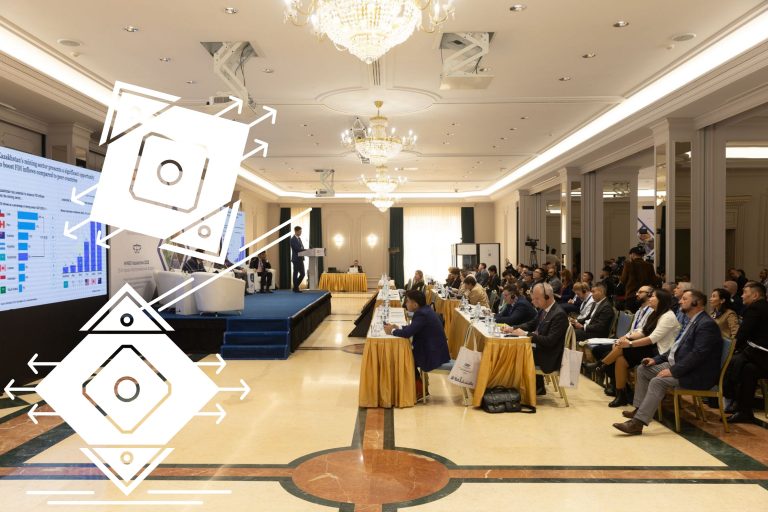
    Kazakhstan will auction 50 deposits of gold, copper, coal, and rare metals in June via its Unified Subsoil Use Platform, representatives from the Ministry of Industry and Construction announced at the 15th MINEX mining and geological forum.

    These deposits, which already have confirmed mineral reserves, will be offered for extraction under licenses valid for up to 25 years. Participating companies must develop a mining plan and specify the development timeline for each site.

    According to the ministry, companies from the United States, the European Union, and China have already applied to participate in the auction.

    Almas Kushumov, Director of the Subsoil Use Department at the Ministry of Industry and Construction of Kazakhstan:
    “These are deposits with proven reserves. We will auction them for extraction — gold, coal, rare and polymetallic deposits. Soon we will publish detailed information on the Unified Subsoil Use Platform. All interested parties will be able to submit documents online and take part in the auction.”

    Experts say that such auctions play a key role in attracting foreign investment to Kazakhstan’s resource sector — especially since some mineral-rich areas have yet to be announced due to incomplete documentation.

    Kushumov noted that in 2024 alone, 23 new deposits of solid minerals were officially added to the national register for the first time.

    “In terms of gold alone, state reserves increased by 20 tonnes. Every year, based on geological exploration results, new reserves are confirmed, added to the state balance, and then made available for extraction.”

  • Uzbekistan Aims to Boost Critical Mineral Production with $2.6 Billion Investment

    Uzbekistan Aims to Boost Critical Mineral Production with $2.6 Billion Investment

    President Shavkat Mirziyoyev of Uzbekistan has unveiled an ambitious plan to expand the country’s critical mineral resources and produce high-value-added products. During a presentation on March 7, the president emphasized the untapped potential of Uzbekistan’s mineral wealth, which includes deposits of over 30 metals such as tungsten, molybdenum, magnesium, lithium, germanium, graphite, vanadium, and titanium.

    Historically, this sector has been underdeveloped due to a lack of investment in mineral exploration, waste processing, and value-added production. However, recent organizational reforms have laid the groundwork for significant progress. Over the next three years, Uzbekistan plans to implement 76 projects focused on 28 rare minerals, with a total investment of $2.6 billion. These projects aim to enhance the country’s resource base through increased funding for geological exploration and scientific research.

    A key focus of the initiative is the application of modern technologies to extract valuable raw materials directly from ore, improve mineral purity, and produce high-value-added goods. For example, the enrichment of tungsten concentrate from the Ingichka deposit is expected to double its added value. Currently, 18 similar projects have been developed.

    To strengthen the resource-processing-science-production chain, the government has proposed establishing technoparks in the Tashkent and Samarkand regions, which are rich in molybdenumand tungsten. President Mirziyoyev also emphasized the importance of technology transfer, the establishment of modern laboratories, and the creation of training centers to build a robust foundation for Uzbekistan’s participation in the global critical minerals market.

    The president highlighted that, in the era of the Fourth Industrial Revolution, Uzbekistan must secure a strong position in this competitive market.

  • Strickland Metals Discovers Significant Gold Potential at Jezerska Reka Prospect in Serbia

    Strickland Metals Discovers Significant Gold Potential at Jezerska Reka Prospect in Serbia

    Australian mining company Strickland Metals has announced a major breakthrough at its Jezerska Reka prospect, part of the Rogozna gold and base metals project in southern Serbia. The company reported drilling through over 490 metres of porphyry-related veining, alteration, and gold anomalism, signaling promising potential for a large-scale discovery.

    The results from the second drill hole at Jezerska Reka revealed a 493-metre intercept grading 0.14 grams of gold per tonne, starting at a depth of 223.6 metres. Strickland’s Managing Director, Paul L’Herpiniere, described the findings as “highly encouraging,” emphasizing the prospect’s potential to significantly enhance the already substantial resource inventory of the Rogozna project.

    Earlier drilling at Jezerska Reka also yielded positive results, including a 94-metre intercept grading 0.4 grams of gold per tonne from a depth of 484 metres. The company plans to conduct additional drilling in early April to further explore the target area.

    This development follows Strickland’s recent announcement of a maiden mineral resource estimate (MRE) for the Medenovac prospect, which increased the Rogozna project’s total MRE to 6.69 million ounces of gold equivalent, up from 5.41 million ounces. Strickland believes the Rogozna site, currently comprising four prospects, could become one of the world’s largest undeveloped gold deposits.

    In a related move, Strickland finalized a $37 million agreement in April 2024 with Ibaera Capital Fund’s subsidiary ISIHC to acquire Betoota Holdings, the owner of Serbia’s Zlatna Reka Resources, which holds 100% of the Rogozna project.

  • Brother Gold Plans Mineral Exploration at Kerimbek Deposit in Zhetysu Region

    Brother Gold Plans Mineral Exploration at Kerimbek Deposit in Zhetysu Region

    Brother Gold, a company owned by Chinese citizen Huang Ling, has announced plans for geological exploration of solid minerals at the Kerimbek deposit in Kazakhstan’s Zhetysu region. Scheduled from 2025 to 2027, the work will involve cleaning old mine workings and drilling 2,000 meters of wells during the warm season from April to October.

    The exploration area spans 29 square kilometers in the Kerbulak district, with wells targeting depths of 50 to 100 meters to assess ore potential. Power for operations will be supplied by diesel generators, consuming approximately 54.2 tons of fuel.

    Brother Gold, founded in 2023 and based in Almaty, focuses on precious and rare metal mining. The exploration aligns with broader efforts to reduce Europe’s dependence on China for critical materials, as the EU works to diversify its supply chain through partnerships in Central Asia.

    EU programs aim to decrease reliance on China for resources like lithium and cobalt, critical for electric vehicles and dual-use goods. By partnering with Kazakhstan and neighboring countries, the EU seeks to cut China’s share in its material needs to 50% by the coming years.

  • Mundoro Advances Exploration on Trstenik Project with BHP, Targets Five Prospective Sites for Drilling

    Mundoro Advances Exploration on Trstenik Project with BHP, Targets Five Prospective Sites for Drilling

    Mundoro Capital Inc., partnering with BHP Exploration, has made strides in its exploration of the Trstenik project in Serbia’s Timok Magmatic Complex, identifying five potential porphyry copper sites. Each site shows promising geophysical and geochemical indicators for copper, molybdenum, and gold deposits. Drill permits for all targets are anticipated in Q4 2024. Among the key areas are the SouthWest Zone, with significant copper mineralization close to the Majdanpek deposit, and the North-Central Zone, where a magnetic anomaly suggests a potential sulfide-rich porphyry. Mundoro and BHP’s integrated approach emphasizes the potential mineral wealth of the Timok region.

  • National Atomic Company Granted License for Mineral Exploration at Budenovskoye Deposit

    National Atomic Company Granted License for Mineral Exploration at Budenovskoye Deposit

    The National Atomic Company has been granted a license to explore mineral deposits at Site No. 5 of the Budenovskoye field in the Turkestan region, according to the press center of Kazatomprom. This site is located to the northeast of the southern flank of the field and is considered a promising area for further exploration.

    The company will conduct geological exploration in this part of the Mynkuduk ore district for the next six years. Kazatomprom’s Chairman, Meirzhan Yusupov, emphasized that this new site plays a key role in the company’s strategy to increase uranium reserves.

    Experts anticipate long-term exploitation of the area due to favorable geological conditions and the well-developed transportation and energy infrastructure. Site No. 5 effectively extends the Inkai deposit southward. Preliminary estimates suggest the area holds over 18,000 tons of uranium. Kazatomprom expects a significant increase in resources following the exploration results.

    The company highlighted the high productivity of the ore in this region. Last month, Kazatomprom announced joint projects with Tajikistan’s TajRedMet in the uranium and rare-earth sectors.

  • Avrupa Minerals Closes $350,000 Private Placement to Fund Exploration Projects

    Avrupa Minerals Closes $350,000 Private Placement to Fund Exploration Projects

    Avrupa Minerals Ltd. has successfully closed a private placement as announced in mid-August, raising $350,000 through the sale of 10,000,000 Units at $0.035 per Unit. Each Unit consists of one common share and one common share purchase warrant, which allows the holder to purchase an additional share at $0.10 until September 5, 2027. The warrants are non-transferable, and all securities issued are subject to a four-month hold period ending on January 6, 2025. No finders’ fees were paid.


    A director of the company acquired 371,429 Units, making this transaction a related party transaction under TSX Venture Exchange policies. However, the company relied on exemptions under Multilateral Instrument 61-101 (MI 61-101) since the transaction value did not exceed 25% of the company’s market capitalization.

    The proceeds from this placement will primarily be used for drilling and exploration programs in Finland, ongoing operations in Portugal and Kosovo, and for general corporate purposes. None of the funds will be used for investor relations or paid to non-arms-length parties. Avrupa Minerals, a junior exploration company, focuses on mineral discovery in politically stable regions of Europe, with projects in Portugal, Finland, and Kosovo.

  • Norway to Launch Seabed Mineral Exploration Amid Environmental Concerns

    Norway to Launch Seabed Mineral Exploration Amid Environmental Concerns

    Two companies announced on Wednesday their intentions to acquire offshore seabed acreage on the Norwegian continental shelf for mineral exploration, marking the potential inception of a controversial new mining industry. Norway is poised to become the first nation to commence commercial production of metals like copper, cobalt, zinc, and rare earth elements (REE) from its continental shelf, which are crucial for transitioning away from oil and gas.

    Nominations for seabed acreage, submitted by the May 21 deadline, will set the stage for Norway’s inaugural seabed mineral exploration licensing round later this year, according to Norwegian authorities. The country’s energy ministry has yet to comment on the process.

    Loke, a startup backed by TechnipFMC, Wilhelmsen, and Kongsberg Gruppen, revealed that it had nominated numerous blocks rich in polymetallic crusts containing cobalt and rare earth elements. “We are encouraged by the significant resource potential and are looking forward to the first licensing round,” Loke’s CEO Walter Sognnes said in an email to Reuters.

    Oslo-listed Green Minerals has also nominated four areas, each consisting of multiple blocks, and anticipates beginning pilot production by 2028, as per a recent investor presentation.

    Environmental organizations, including Greenpeace, have urged a global moratorium on seabed mineral mining, citing the risk of irreversible harm to little-studied marine life. In response, the Norwegian government asserts that the exploration phase will help assess the environmental impact and enhance knowledge of seabed ecosystems.

    Norwegian oil firm Aker BP AKRBP has not disclosed whether it submitted nominations but has previously expressed interest in exploring the resource potential. The government plans to issue the first licenses in 2025, but companies will need additional approvals to start production. Furthermore, the Norwegian parliament, which decided in January to open extensive areas in the Norwegian and Greenland Seas for potential mining, must approve the initial projects.

  • ERG Exploration Granted Exploration Rights in Mughalzhar District

    ERG Exploration Granted Exploration Rights in Mughalzhar District

    ERG Exploration, a subsidiary of ERG, has been authorized to conduct geological exploration for solid minerals across 8.9 thousand hectares in the Mughalzhar district of Aktobe region. According to a decree by Darhan Yermagambetov, the district’s akim, a public easement will be established on land plots in the Kayyndy rural district without removing land users. The exploration rights are valid until May 6, 2030. The public discussion of the decree will continue until May 30, and it will be published on the district akimat’s website.

    The company received a license for solid mineral exploration, numbered 2633-EL, on May 6. Last October, ERG Exploration began geological work on 2.8 thousand hectares in the Aktogay district of Karaganda region, focusing on areas predominantly within the district’s land fund and two farming estates.

    ERG Exploration’s CEO, Azamat Shalabayev, revealed plans to digitize geological data and explore for various metals, including chromium, manganese, copper, and rare metals. The company recently secured the right to explore a copper site in North Pribalkhash, having paid over 420 million tenge. Initial studies, conducted during the Soviet era and later by Rio Tinto with Kazgeology, estimated the site contains up to 200 thousand tons of copper with low ore concentration. ERG plans to extend exploration to a depth of 700 meters to locate more minerals.

    ERG has acquired 43 licenses for mineral exploration, focusing on cobalt, lithium, and copper. ERG’s Board Chairman, Serik Shakhazhanov, emphasized the company’s dedication to exploring future-critical metals. ERG recently inaugurated the ERG GeoHub core storage in Rudny, and plans to invest around $6.5 billion in Kazakhstan over the next five years, significantly boosting production across various divisions.

    The ultimate owners of ERG include the Ministry of Finance with a 40% stake, Alexander Mashkevich and the Ibragimov family each holding 20.7%, and Patokh Shodiev with 18.6%. These stakeholders were the first Kazakh billionaires according to Forbes in 2005. Mashkevich and Shodiev have since changed their citizenships to Israeli and Belgian, respectively. Mashkevich ranked sixth among the wealthiest Israelis in Forbes 2022 with a net worth of $3.7 billion. The Ibragimov family’s net worth is currently estimated at $1.5 billion.