Tag: mineral exploration

  • Tethyan Belt Emerges as Exploration Hotspot as ASX Juniors Target Underexplored Eastern Europe

    Tethyan Belt Emerges as Exploration Hotspot as ASX Juniors Target Underexplored Eastern Europe

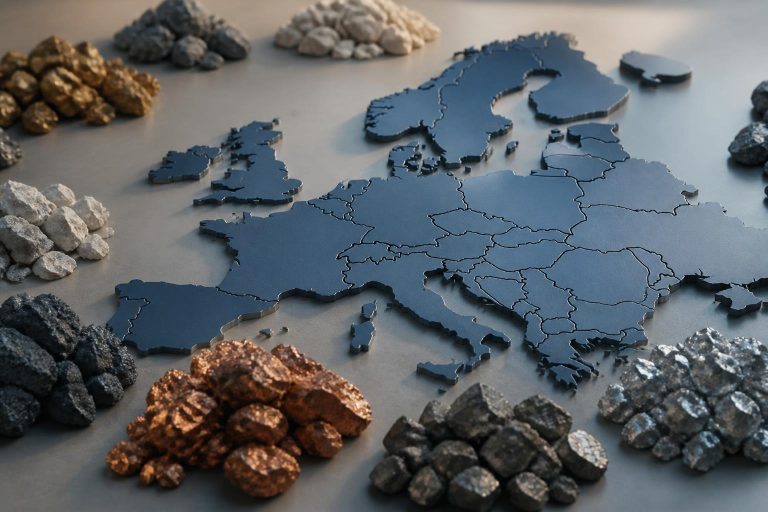
    The Tethyan Belt, one of the world’s most prospective mineral regions, is attracting renewed attention from exploration companies as activity accelerates across its underexplored eastern European segment.

    Stretching across 34 countries from Western Europe to Southeast Asia and covering approximately 7.7% of the Earth’s land area, the belt hosts a significant share of global mineral wealth. According to MinEx Consulting, around 685 major deposits have been identified along the belt, representing 6.6% of known global deposits. These include an estimated 555 million ounces of gold, 293 million tonnes of copper, 16.6 million tonnes of nickel, 245 million tonnes of zinc-lead and 470000 tonnes of uranium.

    Despite its scale, the Tethyan Belt remains relatively underexplored. Over the past two decades, it has attracted $9.8 billion in exploration spending—just 3.4% of global expenditure—yet delivered 143 new discoveries, accounting for 7% of global finds during that period.

    The western end of the belt, particularly across Eastern Europe, has proven to be the most fertile area for discoveries. The region has seen 99 significant deposits identified over the past 40 years, including nine in the last decade alone. Countries across this segment collectively host substantial resources, including 216 million ounces of gold and 63.9 million tonnes of copper.

    Serbia has emerged as a leading jurisdiction within this trend, supported by strong exploration success and active investment from major players such as Zijin Mining. The country has also attracted Australian-listed explorers seeking to replicate recent successes, including Strickland Metals, which has defined an 8.6 million ounce gold equivalent resource at its Rogozna project.

    A wave of ASX-listed junior companies has entered the region in recent months. Regener8 Resources has acquired the Srebrenica North project in Bosnia and Herzegovina, targeting polymetallic mineralisation including silver, copper, zinc and antimony in a historically productive district that has seen little modern exploration since the 1970s.

    Bindi Metals has secured a majority stake in the Ravni gold project in Serbia, where high-grade surface mineralisation and porphyry copper-gold potential have been identified. The company is advancing drilling plans following recent approvals and is targeting multi-million-ounce discoveries.

    Meanwhile, MinRex Resources is progressing a merger with Electrum Discovery Corp to create a well-funded explorer focused on Serbian assets, including the Tlamino gold project and the Timok East copper-gold project. Planned drilling campaigns aim to expand resources and test new targets identified through geophysical surveys.

    Middle Island Resources has also expanded its footprint in Serbia through the acquisition of Konstantin Resources, securing a large prospective land package. Early drilling and soil sampling programs have identified encouraging gold, silver and base metal anomalies, with further exploration planned for the 2026 field season.

    Industry analysts note that declining discovery rates globally have increased the attractiveness of underexplored regions such as the Tethyan Belt. With favourable geology, existing mining infrastructure and growing investor interest, Eastern Europe is increasingly viewed as a key frontier for future mineral discoveries.

  • Kazakhstan at PDAC 2026: The Next Major Frontier for Mineral Discoveries?

    Kazakhstan at PDAC 2026: The Next Major Frontier for Mineral Discoveries?

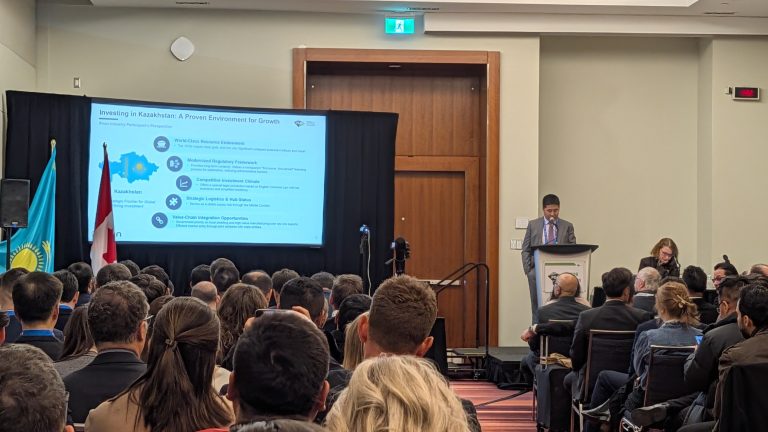
    This year marked a significant milestone as the Kazakhstan Chamber of Mines took the lead as the official organiser of Kazakhstan Day — and what a resounding success the debut turned out to be!

    Despite a packed PDAC schedule, the session drew an impressive crowd of over 130 industry leaders, investors, and exploration experts. The atmosphere in the room confirmed one thing: the global mining community is paying very close attention to Central Asia.

    MINEX Forum was proud to support the event as the Official Media Partner, capturing the insights that are shaping the next wave of exploration in the region.

    Key Highlights from the Plenary Session: The tone was set by Ruslan Baimishev, President of the Kazakhstan Chamber of Mines:

    “Kazakhstan is entering a new era of exploration — driven by robust reforms, international partnerships, and the soaring global demand for copper and critical metals.”

    We also heard high-level perspectives from H.E. Dauletbek Kussainov, Ambassador of Kazakhstan to Canada, and Iran Sharkhan, Vice-Minister of Industry and Construction.

    Expert Insights & Project Showcases: The technical session, “Unlocking New Discovery Potential in Kazakhstan,” featured a stellar line-up including Tim Barry (Arras Minerals), Charlie Liu (Zijin Mining), Simon Cooper (Pallas Resources), and world-renowned experts Anna Fonseca and Professor Jeffrey Hedenquist.

    The afternoon shifted to tangible opportunities, with project presentations from AMG Ltd, Kogadyr Gold, Taskora, and Muzbel. As Tim Barry aptly put it: “Kazakhstan offers unique opportunities for Canadian juniors to enter new jurisdictions — and the future looks bright.”

    Kazakhstan is no longer just a “prospective” jurisdiction; it is rapidly becoming the territory where the next big copper success stories are being written.

    Special thanks to the Kazakhstan Day partners:

    • General Sponsors: Aurora Minerals Group, NAC Kazatomprom, Pallas Resources.

    • Sponsors: Arras Minerals, TauGold Copper.

    Missed the session?  📺 Watch the session recordings and download expert presentations at:

  • Kazakhstan Advances Detailed Geological Mapping to Boost Investment Potential

    Kazakhstan Advances Detailed Geological Mapping to Boost Investment Potential

    On 13 February 2026, acting Chairman of the Committee of Geology Kanat Yerubayev presented progress on Kazakhstan’s state geological exploration program at a scale of 1:50,000, marking a strategic shift toward more precise subsurface mapping.

    According to Yerubayev, geology has become a key instrument for economic development amid growing global demand for copper, gold, rare earth elements and other critical minerals. Kazakhstan is moving from a 1:200,000 mapping scale to a more detailed 1:50,000 standard aligned with international practices to enhance data accuracy and attract investors.

    In 2025, detailed survey projects were prepared covering 100 thousand square kilometers. As a result, 29 prospective areas containing gold, copper, lead, zinc and other minerals were identified.

    Hydrocarbon basin exploration is also ongoing. In the Aral region, more than 20 promising blocks have been discovered and are expected to be offered at auction.

    Digital transformation remains a central component of the strategy. Through the Unified Subsoil Use Platform, 22 public services are now provided, and access has been granted to 66 thousand geological reports. Some 97.5% of primary geological data has already been digitized, with full completion expected in 2026.

    Over the next three years, approximately 240 billion tenge will be allocated to state geological exploration. The first newly identified promising sites are planned to be auctioned as early as 2027.

    “We are transitioning from the stage of data accumulation to deep analytics and investment implementation,” Yerubayev emphasized.

  • Success Minerals Kazakhstan Plans Resource Evaluation in Aktogay District

    Success Minerals Kazakhstan Plans Resource Evaluation in Aktogay District

    Private company Success Minerals Kazakhstan Ltd plans to carry out a resource assessment of solid minerals at a 9.35 sq km site in Kazakhstan’s Aktogay district, according to a planned activity notice published on the country’s Unified Environmental Portal.

    The subsoil user intends to evaluate reserves and resources at the Akkuduk East and Akkuduk West deposits, as well as conduct geological exploration at known mineralisation points, geophysical anomalies, and ore occurrences identified within the licence area. The work is aimed at defining targets suitable for potential industrial development. Detailed prospecting across halo fields is also planned.

    Exploration activities are scheduled to begin in spring or early summer 2026 and continue through the end of 2030. The programme includes geophysical surveys, trenching over an area of 10,800 sq m, and the drilling of 140 exploration boreholes with a combined length of 35,000 metres. Collected samples will undergo laboratory testing, including chemical and geological analyses with a focus on copper content.

    As a result of the exploration campaign, the company plans to prepare geological maps of the deposits and ore occurrences, delineate ore zones and ore bodies, and calculate reserves and resources within the licensed area.

    The exploration licence was granted to Success Minerals Kazakhstan Ltd in January 2025. According to data from Kazakhstan’s eGov system cited by qazba.kz, the company is registered at the Astana International Financial Centre and is owned by Jinyu Sheng.

  • Kazakhstan to invest $500 million in high-resolution geological mapping to boost mineral exploration

    Kazakhstan to invest $500 million in high-resolution geological mapping to boost mineral exploration

    Kazakhstan’s government is launching a new phase of subsoil exploration aimed at significantly expanding geological coverage using modern prospecting methods, in line with instructions from President Kassym-Jomart Tokayev.

    As part of this effort, 20 projects were developed last year to carry out geological mapping at a scale of 1:50,000 across a total area of 100,000 square kilometres, with plans to cover an additional 30,000 square kilometres of the most prospective areas each year. This represents a major increase in detail compared with the Soviet-era standard of 1:200,000 mapping.

    Over the next three years, the government plans to allocate 240 billion tenge, or around $500 million, to implement these projects, conduct seismic surveys in poorly studied sedimentary basins, and build modern geological infrastructure. By comparison, total investment in the sector over the past 15 years amounted to $469 million.

    The programme includes analysis of remote sensing data, aerogeophysical and geochemical surveys, and extensive fieldwork. Areas were selected based on factors such as reserve depletion, the absence or minimal presence of subsoil users, and potential for priority minerals. The identified zones show high prospects for discoveries of copper, gold, lead, zinc, rare earth elements, barite and bauxite.

    Seismic exploration is also planned in underexplored oil and gas basins, including the North Torgai, Shu-Sarysu and Syrdarya regions. In parallel, Kazakhstan intends to modernise its laboratory and analytical base and continue the digitalisation of geological data.

    According to the government, the shift to detailed geological mapping at this scale will significantly improve the accuracy of geological forecasts and align Kazakhstan with international best practice seen in the European Union, Canada, Australia and China. Detailed regional mapping is viewed as a foundation for identifying promising areas, reducing geological and investment risks, and attracting private investment into exploration and mining.

  • C29 Metals Withdraws from Kazakhstan After Denial of Rights to Uranium Project

    C29 Metals Withdraws from Kazakhstan After Denial of Rights to Uranium Project

    Australian geological company C29 Metals has announced it is ending its operations in Kazakhstan after regulators rejected its applications to obtain rights for geological exploration (GER) at the Ulutau uranium project in the Zhambyl region. The company had previously sought a stake in the project and had secured environmental approval for exploratory drilling on one block, while considering additional exploration on three more areas of the deposit, whose historical resources are estimated at 3,800 tonnes of uranium.

    To acquire 100% of the rights for exploration, C29 Metals issued additional shares worth 3 million Australian dollars, but their value has since dropped by more than half. According to the company’s report, total losses exceeded 4.9 million Australian dollars.

    Kazakhstan’s regulator rejected both the initial and repeat applications, the latter submitted in March 2025. Local media attributed the decision to national security concerns. As a result, C29 Metals has suspended exploration activities that were to be carried out in partnership with Volkovgeology, a subsidiary of Kazatomprom.

    Under current legislation, licenses for uranium production in Kazakhstan are issued only to companies in which Kazatomprom holds at least a 51% stake. Previously, such restrictions did not apply to exploration, but the Mazhilis is now reviewing amendments that would grant the national company priority rights for exploration in areas containing strategic uranium reserves. Analysts suggest that both administrative hurdles and the prospect of legislative changes may have pushed the Australian investor to abandon the project.

  • Kazakhstan Registers Five New Mineral Deposits Following 2025 Exploration Campaign

    Kazakhstan Registers Five New Mineral Deposits Following 2025 Exploration Campaign

    Kazakhstan has added five new deposits to its state mineral register based on geological exploration conducted in 2025, Vice Minister of Industry and Construction Iran Sharkhan announced during a government meeting on the development and digitalization of the country’s geological sector.

    The newly identified deposits—Altyn-Shoko, Samombet, Studenchesky, Takyr-Kaldzhir and Kok-Zhon at the Bolattobe site—have expanded the national mineral base by approximately 98 tonnes of gold, 36,000 tonnes of copper, 11 million tonnes of manganese and more than 1.3 million tonnes of phosphorites.

    Kazakhstan currently holds 103 types of mineral resources and around 10,000 deposits on the state balance. More than 2,900 licenses have been issued to subsoil users, along with 250 contracts for the development of solid minerals.

    From 2026 to 2028, geologists plan to survey an additional 100,000 square kilometers, followed by annual exploration covering 30,000 square kilometers through 2030. The government has allocated 240 million tenge to form a portfolio of 20 potential investment projects, aiming to improve early-stage discovery and increase overall efficiency of geological works.

    To support advanced scientific methods in exploration, the government approved the creation of a specialized laboratory within a geological cluster in Astana. Construction is scheduled to begin in 2026, enabling comprehensive mineral-geochemical and analytical research.

  • Pallas Resources Unveils Thick Copper Outcrop at Merke and Launches Drilling at Glubokoe

    Pallas Resources Unveils Thick Copper Outcrop at Merke and Launches Drilling at Glubokoe

    London, 3 September 2025 — Pallas Resources has announced the discovery of a substantial outcropping copper zone at its Merke and Lugovoe licences in southern Kazakhstan, alongside the commencement of first drilling at the Glubokoe Project in the western Chu-Sarysu Basin. Both developments mark significant milestones in the company’s strategic alliance with Ivanhoe Mines.

    Fieldwork at Merke has revealed a 20-metre-thick copper-bearing horizon within fractured carbonate rocks, exposed in a historic pit. The discovery confirms visible surface mineralisation, including malachite and azurite, and strongly supports the structural model guiding exploration. According to the company, the mineralisation is thought to be structurally controlled, with fractures and faults serving as conduits for copper-bearing fluids.

    The Lugovoe licence, recently granted to the Pallas–Ivanhoe partnership, extends prospective stratigraphy by a further 40 kilometres to the west. Early reconnaissance has already identified surface copper mineralisation, with fold zones appearing to act as structural traps. Upcoming work will focus on detailed structural mapping, complemented by high-resolution magnetic surveys to trace mineralisation beneath cover.

    Meanwhile, drilling has commenced at Glubokoe, a 2,500 km² project in the western Chu-Sarysu Basin. The programme will comprise five diamond drill holes, each between 800 and 1,000 metres deep, totalling around 4,200 metres. The first hole is targeting extensions of mineralisation first recorded by Soviet geologists in the 1980s, where three copper-bearing intervals were intersected over a total of 26 metres, with grades ranging from 0.12% to 3% copper.

    Simon Cooper, Chief Executive of Pallas Resources, described the start of drilling as a “key milestone,” coming less than a year after the partnership with Ivanhoe Mines was formalised. Results from the current campaign are expected by late December and will help inform a planned 15,000-metre drilling programme in 2025.

    The Chu-Sarysu Basin is recognised as the world’s third-largest sediment-hosted copper province, already hosting more than 27 million tonnes of discovered copper, with the US Geological Survey estimating a further 25 million tonnes yet to be found.

    Pallas holds over 16,000 km² in the basin, making it the leading explorer in this emerging copper district. Under the terms of the alliance, Ivanhoe Mines will sole-fund $18.7 million during the initial phase, with the option to invest up to $115 million over four years.

  • Online Auction for Gold-Bearing Pirali Site in Navoi Region Closes with Record Bid

    Online Auction for Gold-Bearing Pirali Site in Navoi Region Closes with Record Bid

    Tashkent, Uzbekistan — An online auction for the right to conduct geological exploration at the gold-bearing Pirali site in Navoi region has concluded with a record-breaking bid, according to the official website of the E-auksion platform.

    The bidding process, which began on the morning of August 21, lasted 23 hours and 29 minutes, with a total of 461 bids placed. The winning bid was submitted by NBK 111, offering 99.09 billion soums—24 times higher than the starting price.

    Winner and Company Background

    According to the Unified State Register of Enterprises and Organizations (EGRPO), NBK 111 was registered in Tashkent in May 2024 and specializes in the mining of non-ferrous metal ores. The company’s charter capital stands at 1.005 billion soums. A 40% stake in NBK 111 is owned by Chinese citizen Zhang Qian, while the remaining 60% is controlled by Nurmahmad Pulatov. Pulatov also holds significant stakes in other enterprises, including a 90.7% share in Quwwatt Group (glass production in Jizzakh) and a 100% stake in BEEK Electro (electrical appliance manufacturing). All three companies share the same contact phone number, indicating potential business ties.

    Site Details and Gold Reserves

    The Pirali site covers an area of 484 hectares and is located in the Navbahor district, approximately 20.5 kilometers northwest of Zafarabad settlement and 38.5 kilometers north of the city of Navoi. Preliminary estimates suggest that the site contains gold reserves of around 2.4 tons.

    Recent Auction Activity

    This week has seen significant activity in the auctioning of major gold deposits in Uzbekistan. The Temirchi site in Navoi region was sold for 67.78 billion soums, while the Terekli site near Almalyk saw its price surge nearly 20-fold to 81.8 billion soums.

    The successful auction of the Pirali site underscores the growing interest in Uzbekistan’s mineral resources and the competitive nature of the country’s mining sector.

  • Uzbekistan and Türkiye Reaffirm Strategic Partnership in Geology and Mining

    Uzbekistan and Türkiye Reaffirm Strategic Partnership in Geology and Mining

    On 26 May 2025, Uzbekistan’s Deputy Minister of Mining Industry and Geology, Rakhim Yusupov, held official talks with a Turkish delegation headed by Ramazan Sarı, Deputy Director of Türkiye’s General Directorate of Mineral Research and Exploration (MTA). The meeting underscored the enduring and productive cooperation between the two nations in the fields of geology and mining.

    Both sides praised the strength and strategic nature of their bilateral relations and expressed a shared commitment to deepening collaboration further. The discussions highlighted Uzbekistan’s ongoing sectoral reforms, which aim to modernize geological research and attract foreign investment to the mining industry.

    A key focus of the talks was Uzbekistan’s “E-auksion” electronic platform—an open-access system designed to provide entrepreneurs and investors with transparent opportunities to explore and develop newly identified mineral-rich sites. The initiative aligns with the government’s broader goals of enhancing transparency, boosting investor confidence, and unlocking the country’s geological potential.

    The meeting concluded with a mutual interest in expanding technical exchange, knowledge-sharing, and joint exploration projects between the two countries.