Tag: mineral exploration

  • Neo Performance Materials Finalises Transfer of Sarfartoq Interest to Greenland Mines

    Neo Performance Materials Finalises Transfer of Sarfartoq Interest to Greenland Mines

    Neo Performance Materials Inc. has successfully completed the transfer of its interest in the Sarfartoq Project to Greenland Mines Ltd., following the approval from the Government of Greenland. The transaction, valued at US$35 million, includes US$20 million in cash and US$15 million in shares of Greenland Mines. Neo retains a significant equity stake and offtake rights for up to 60% of the ore or mineral concentrate produced from the Sarfartoq Carbonatite Complex, located in Southwest Greenland.

    The merger, involving Neo’s wholly-owned subsidiary Neo North Star Holdings LLC and other shareholders of NNSR Holdings Inc., allows Greenland Mines to advance its leadership and investment in the Sarfartoq Project. Rahim Suleman, President and CEO of Neo, expressed confidence in the project’s future, highlighting Neo’s commitment as both a shareholder and an offtake partner. This strategic move aligns with Neo’s broader midstream and downstream growth strategy, ensuring that capital is effectively allocated to generate maximum value for customers and shareholders.

    Neo Performance Materials is known for manufacturing advanced industrial materials that are essential for various technologies, particularly those aimed at enhancing efficiency and sustainability. The company’s product portfolio includes magnetic powders, rare earth magnets, specialty chemicals, and alloys, which are critical for the performance of many everyday products and emerging technologies. With operations spanning multiple countries, including Canada, Estonia, China, Germany, Thailand, and the UK, Neo is well-positioned to contribute to the global transition towards net-zero technologies.

    This transaction marks a significant step for both Neo and Greenland Mines, as they look to leverage the potential of the Sarfartoq Project, which is expected to play a crucial role in the supply of critical minerals. The completion of this deal not only strengthens Neo’s position in the mining sector but also underscores the growing importance of sustainable practices in mineral extraction and processing. As the industry evolves, partnerships like this will be vital in meeting the increasing demand for rare earth elements and other critical materials necessary for modern technologies.


  • Australia and Europe: A Collaborative Approach to Critical Minerals Supply Chains

    Australia and Europe: A Collaborative Approach to Critical Minerals Supply Chains

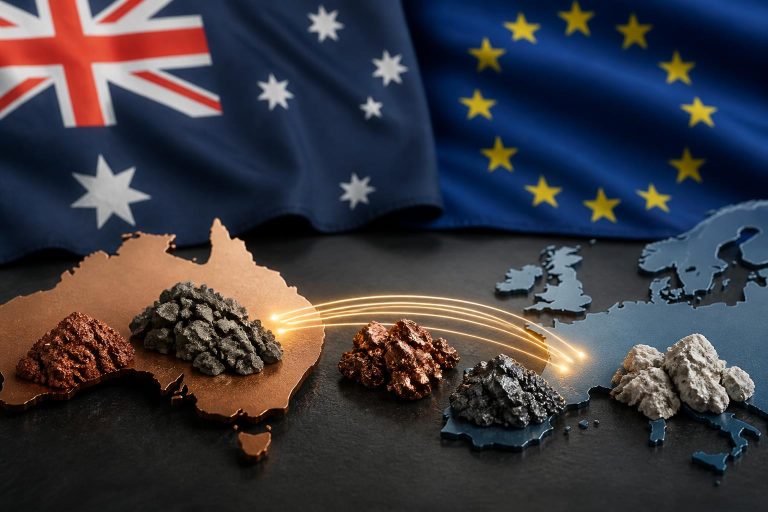
    In 2026, two significant reports highlight the escalating challenges Europe faces regarding raw materials. The European Investment Bank indicates that the EU must ramp up its annual mineral exploration budget from approximately €200 million to €2 billion to meet the objectives of the Critical Raw Materials Act, marking a tenfold increase. Currently, the EU accounts for a mere 3% of global mineral exploration budgets, while Australia and Canada contribute 16% and 20%, respectively. Additionally, the International Energy Agency’s Global Critical Minerals Outlook reveals a 9% decline in global critical minerals investment in 2025, alongside a more than 10% drop in exploration spending, all while processing capacity becomes increasingly concentrated.

    The rising prices of base metals, with copper and tin increasing by one-third and lithium prices more than doubling, underscore the urgency of the situation. This is no longer just a mining issue; it is a matter of Europe’s industrial competitiveness and economic security, particularly in the context of the energy transition.

    Australia’s role in this scenario is pivotal. Beyond financial investment, Europe requires experienced management teams, geologists, engineers, and companies willing to navigate the complexities of project development. Australia has cultivated a robust ecosystem for resource exploration and development, with the Australian Securities Exchange (ASX) being a leading market for financing junior resource companies. This expertise is increasingly being leveraged in Europe.

    A notable example is Vulcan Energy, which is developing its Phase One Lionheart lithium and renewable energy project in Germany. The company has successfully produced battery-quality lithium hydroxide from geothermal brine, marking a significant milestone in European lithium production. Vulcan has secured a €2.2 billion financing package, including €250 million from the European Investment Bank, to fund its ambitious project.

    Other Australian companies are also making strides in Europe. GreenX Metals is exploring the Tannenberg copper project in Hesse, Germany, while EQ Resources operates the Barruecopardo tungsten mine in Spain. These projects highlight the potential of revisiting historic mining regions with modern techniques and international capital.

    The collaboration extends beyond Europe, with Australian companies like St George Mining developing projects in Brazil while partnering with Spanish firms to enhance processing technologies. This tri-lateral approach exemplifies the interconnected nature of global resource supply chains.

    As European investors increasingly seek opportunities in early-stage exploration, the potential for collaboration between Australian and European entities grows. The relationship between these regions could be crucial in building resilient critical minerals supply chains that are essential for future industrial demands. Matthew Reynolds, a key figure in fostering these connections, emphasises the importance of international partnerships in addressing the global raw materials challenge.


  • Digitisation of Historic Mineral Exploration Reports Boosts UK Mining Potential

    Digitisation of Historic Mineral Exploration Reports Boosts UK Mining Potential

    The Mineral Exploration and Investment Grants Act 1972 (MEIGA) has historically stimulated mineral exploration in the UK by providing grants for non-ferrous metals, fluorspar, barium minerals, and potash through the Government’s Department of Trade and Industry. Reports compiled during the 1970s and 1980s contain a wealth of information, including geological mapping, soil and stream sediment geochemistry, geophysical surveys, drillcore logs, and assay data. Until recently, these reports were only accessible in hard copy through the British Geological Survey’s (BGS) National Geoscience Data Centre (NGDC).

    In 2023, a digitisation programme, in collaboration with the UK Critical Minerals Intelligence Centre (CMIC), released an initial batch of over 200 mineral exploration reports. The ongoing digitisation efforts have now added an additional 660 reports to the accessible collection, making data collected over forty years ago relevant for identifying critical and precious metal resource potential within the UK. This initiative is particularly significant for the Ardlochan area in south-west Scotland, where Western Gold Exploration completed a shallow drilling programme at the end of 2025, discovering a large breccia pipe system rich in gold. The company utilised MEIGA materials generated by Noranda Mining Limited and Phelps Dodge in the 1970s to complement their own surveys and target other areas of interest.

    The MEIGA dataset is proving crucial in refining exploration targets, especially those associated with gold-rich porphyry-breccia systems. The historical reports provide insights into exploration concepts and decision-making processes used by major operators decades ago, allowing for a more confident reconstruction of Ardlochan’s geological story. By integrating these historic insights with modern techniques, companies can accelerate target development and reduce the uncertainty and costs associated with exploration.

    The digitisation of BGS archive documents represents a significant effort to valorise legacy datasets, which can greatly impact the exploration sector at minimal cost. The BGS, through CMIC and the NGDC, aims to enhance accessibility to these documents by employing machine learning methods for data extraction and developing large language models for personalised interactions with the archives. The renewed impact of the MEIGA archive underscores the importance of long-term stewardship of geoscience data, ensuring that historic materials can inform modern exploration efforts and unlock new scientific and economic opportunities. The success seen at Ardlochan exemplifies how well-curated archives can facilitate contemporary discoveries, proving that the past can indeed inform the future of mineral exploration in the UK.


  • Critical Elements Lithium Expands Rose West Discovery in Québec

    Critical Elements Lithium Expands Rose West Discovery in Québec

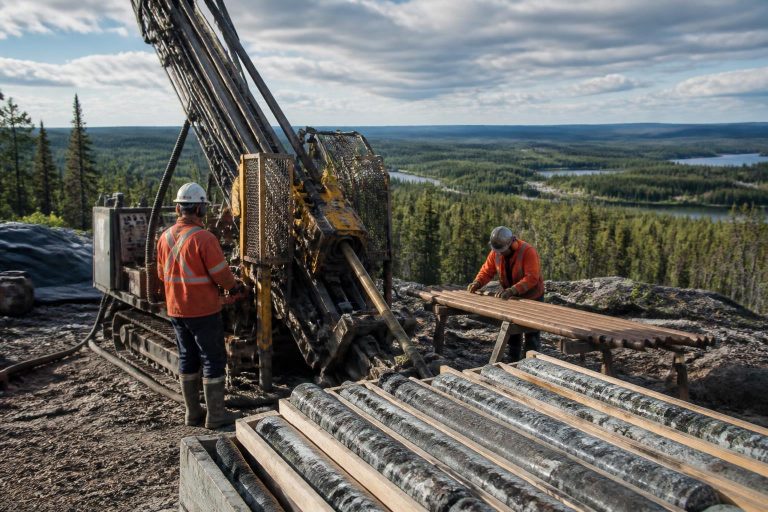
    Critical Elements Lithium (TSX-V:CRE) has announced significant advancements in its phase two summer drilling program at the Rose West Discovery, located in Eeyou Istchee, Québec, Canada. The latest drilling results indicate a substantial increase in the mineralised footprint, now measuring 1,250 metres by 800 metres. This expansion is part of a systematic drilling initiative that aims to cover a total of 10,000 metres around the wholly owned discovery site.

    The company has successfully completed 18 drill holes, amounting to approximately 3,000 metres, with promising assay results emerging from the recent explorations. Notably, hole RW-26-36 revealed an impressive 2.05% lithium oxide (Li2O) and 221 parts per million (ppm) tantalum pentoxide (Ta2O5) over a 7.70-metre interval through Pegmatite 5. Additionally, the same hole also intersected 1.46% Li2O and 176 ppm Ta2O5 over 23.35 metres through Pegmatite 3, which included a peak of 2.12% Li2O and 147 ppm Ta2O5 over a 6-metre section.

    Further drilling results from hole RW-26-37 showed 1.32% Li2O and 157 ppm Ta2O5 over 13.25 metres through Pegmatite 5, alongside 0.94% Li2O and 258 ppm Ta2O5 over 22.40 metres through Pegmatite 3. The phase two drilling program has successfully expanded the mineralised footprint by an additional 300 metres by 300 metres, enhancing the thickness of Pegmatites 5, 3, and 2, which now range from 10 to 30 metres.

    Critical Elements has received assay results for 11 previously drilled holes, with an additional seven holes currently being prepared for assaying. The Rose West Discovery is situated approximately 10 kilometres west of the Rose Lithium-Tantalum Project, which was initially intercepted in winter 2024 over a footprint of 450 metres by 370 metres. As a Canadian critical minerals explorer, Critical Elements Lithium is advancing a diverse portfolio of properties across the Nemaska Belt, including its flagship Rose Lithium-Tantalum Project and the newly expanded Rose West discovery.


  • Kyrgyzaltyn Secures Exploration Rights for Iron and Titanium at Bala-Chichkan Deposit

    Kyrgyzaltyn Secures Exploration Rights for Iron and Titanium at Bala-Chichkan Deposit

    Kyrgyzaltyn OJSC has been officially granted the rights to conduct geological exploration for iron, titanium, and vanadium at the Bala-Chichkan deposit, following a resolution signed by the Chairman of the Cabinet of Ministers, Adylbek Kasymaliev. This development marks a significant step in the exploration of mineral resources in Kyrgyzstan, particularly in the Talas region, where the deposit is located.

    The Bala-Chichkan area spans approximately 4,361 hectares and is estimated to contain around 1 million tons of iron reserves. This discovery could potentially enhance the country’s mining sector and contribute to the local economy. The exploration rights are part of a broader initiative to tap into Kyrgyzstan’s rich mineral resources, which have remained underutilised for years.

    Before commencing exploration activities, Kyrgyzaltyn is required to consult with the relevant state authority responsible for cultural heritage to ensure that no historical or cultural sites are affected by the exploration. This precaution underscores the importance of balancing economic development with the preservation of cultural heritage in the region.

    The granting of these rights is expected to attract further investment into Kyrgyzstan’s mining industry, which has been identified as a key area for economic growth. As the country seeks to modernise its mining practices and increase production, the focus on sustainable and responsible exploration will be crucial in ensuring long-term benefits for the local communities and the environment.

  • Exploring the Future of Mineral Discovery in Kazakhstan’s Sayak District

    Exploring the Future of Mineral Discovery in Kazakhstan’s Sayak District

    In a recent visit to the Globmine Resources gold project located in the Sayak district of Northern Balkhash, a team of geologists, including two of Kazakhstan’s most esteemed exploration experts, Yerlan Nabiev and Daulet Muratbekov, highlighted the importance of experience and innovation in mineral exploration. Major mineral discoveries are seldom the result of luck; they stem from decades of accumulated knowledge, disciplined exploration, and a synergy between experience, capital, and cutting-edge technology.

    Yerlan Nabiev, a veteran geologist with over fifty years of experience in the Sayak region, has played a pivotal role in the discovery and evaluation of numerous mineral deposits. His extensive knowledge has earned him recognition as a ‘Discoverer of Mineral Deposits’ in Kazakhstan. Alongside him, Daulet Muratbekov brings decades of field experience across Northern Balkhash, contributing to a rich understanding of the area’s geology.

    During the site visit, the team engaged in discussions about mineralisation, structural controls, and future exploration phases. A notable remark from Nabiev resonated with the team: ‘I have worked in this region for fifty years. At best, we have explored only about thirty percent of it. There are still many discoveries waiting to be made.’ This statement underscores the vast potential that remains untapped in the region, serving as a roadmap for future exploration efforts.

    Aurora, the company behind the project, is committed to building a world-class exploration enterprise by preserving and transferring geological knowledge across generations. This commitment goes beyond traditional methods of documentation; it involves hands-on engagement in the field with seasoned geologists who have significantly contributed to Kazakhstan’s mineral discovery landscape.

    By integrating the expertise of local geologists with modern techniques such as geophysics, remote sensing, 3D modelling, and adherence to CRIRSCO reporting standards, Aurora aims to enhance its exploration capabilities. The Sayak copper-gold district has already yielded some of Kazakhstan’s most significant mineral discoveries, and Aurora believes that this is just the beginning of a new chapter in the region’s geological narrative. With a focus on innovation and collaboration, the company is poised to uncover further valuable resources in the Sayak district.


  • Europe’s Critical Raw Materials Strategy: From Regulation to Implementation

    Europe’s Critical Raw Materials Strategy: From Regulation to Implementation

    In the latest edition of the Critical Matters Newsletter, the focus is on the evolving landscape of critical raw materials in Europe, particularly in light of the Critical Raw Materials Act (CRMA). This legislation aims to enhance the continent’s competitiveness and resilience by securing a reliable supply of essential raw materials necessary for the transition to a sustainable economy. The CRMA sets ambitious targets for 2030, including increasing domestic extraction, processing, and recycling of critical raw materials, while reducing dependence on single suppliers. However, as Europe transitions from setting these goals to actual implementation, significant challenges remain.

    One of the primary hurdles is the lengthy and complex process of mineral exploration and mine development, which can take over a decade in Europe. Despite the CRMA’s provisions to expedite permitting for strategic projects, the reality is that many critical mineral resources have yet to be discovered. The article highlights the need for substantial investment in exploration, with estimates suggesting that the EU requires around €2 billion annually over the next five years to rebuild its exploration capacity. Currently, Europe accounts for only 3% of global exploration budgets, lagging significantly behind leaders like Canada and Australia.

    The newsletter also underscores that investment alone is insufficient; a coordinated approach involving policies, institutions, and industry collaboration is essential for building a resilient critical raw materials ecosystem. Examples from countries like Ireland and Canada illustrate how long-term investment and supportive policies can enhance exploration and development capabilities. Ultimately, Europe’s success in securing critical raw materials will depend on how effectively it can integrate policy, investment, and innovation to create sustainable and circular value chains.


  • Europe’s Critical Raw Materials Strategy: From Regulation to Implementation

    Europe’s Critical Raw Materials Strategy: From Regulation to Implementation

    The latest edition of the Critical Matters Newsletter highlights the evolving landscape of critical raw materials in Europe, emphasising the need for a comprehensive approach beyond mere regulation. The European Union’s Critical Raw Materials Act (CRMA) aims to enhance supply chain resilience and strategic autonomy, setting ambitious targets for domestic extraction, processing, and recycling by 2030. Key benchmarks include achieving at least 10% of annual consumption for extraction, 40% for processing, and 25% for recycling, while limiting dependence on single external suppliers to 65% for any strategic material.

    However, the implementation of these goals faces significant challenges. The lengthy timelines for mine development, often extending 10 to 20 years, underscore the difficulty of discovering and developing new mineral resources. While the CRMA seeks to streamline permitting processes for strategic projects, the reality remains that legislative measures cannot hasten the exploration and development phases. Furthermore, the EU’s exploration investment lags significantly behind global leaders, with only 3% of global exploration budgets allocated to the region. To rebuild its exploration capacity, the EU is estimated to require around €2 billion annually over the next five years, a tenfold increase from current levels.

    The newsletter also highlights successful examples from countries like Ireland and Canada, which demonstrate how long-term investment, supportive policies, and collaboration between government and industry can strengthen the critical raw materials ecosystem. Ireland, for instance, has become a leader in exploration drilling within the EU due to its transparent licensing system and fiscal incentives. The report concludes that achieving Europe’s critical raw materials ambitions will necessitate a coordinated effort involving investment, innovation, and policy alignment to create resilient and circular value chains across the entire ecosystem.


  • Unlocking Europe’s Geological Potential for Critical Raw Materials

    Unlocking Europe’s Geological Potential for Critical Raw Materials

    As Europe strives to secure its future in critical raw materials, a recent study underscores the urgent need for increased investment in mineral exploration. Currently, the European Union attracts a mere 3% of global mineral exploration investment, a stark contrast to Canada’s 20% and Australia’s 16%. This disparity highlights the challenges Europe faces in meeting its strategic objectives for the green and digital transitions, which are heavily reliant on a stable supply of critical raw materials.

    To align with these objectives, the study indicates that annual mineral exploration spending in the EU must surge from approximately €0.2 billion to €2 billion over the next five years. This tenfold increase is essential for Europe to enhance its role in securing the necessary resources for clean technologies, energy security, and industrial competitiveness. The geological potential within Europe is promising, with countries like Finland and Sweden already demonstrating that increased exploration activity is feasible and beneficial.

    However, unlocking this potential will necessitate a concerted effort involving long-term investments, supportive policies, and a collective commitment to establishing resilient and sustainable value chains. By fostering a more robust exploration environment, Europe can not only meet its current demands but also position itself as a leader in the global market for critical raw materials, essential for the future of its economy and environmental goals.


  • Kazakhstan’s Junior Mining Sector Poised for Growth but Held Back by Red Tape, Industry Forum Hears

    Kazakhstan’s Junior Mining Sector Poised for Growth but Held Back by Red Tape, Industry Forum Hears

    Kazakhstan’s junior exploration sector has the geological foundations and regulatory momentum to become a significant driver of new mineral discoveries, but excessive bureaucracy, inadequate targeted support and a one-size-fits-all regulatory framework continue to constrain smaller companies, according to participants at a roundtable held on the sidelines of the Geoscience and Exploration Central Asia 2026 forum in Astana.

    The roundtable — titled “Junior Companies: New Discoveries and the Investment Potential of Central Asia” — brought together investors, junior exploration firms and senior industry experts to assess both the opportunities and the obstacles facing early-stage explorers in Kazakhstan. Presentations were delivered by the chief executives of East Star Resources, QazAurum, Palace Resources, Kogodai and Elementa, as well as the chief geologist of Aurora Minerals Group.

    Opening the session, Kazakhstan Mining Chamber president Ruslan Baimishev said that the subsoil use reforms launched in 2018 had created more favourable conditions for new market entrants, and that junior companies — willing to operate at the earliest, riskiest stages of exploration — were uniquely positioned to generate the new discoveries the country and the global market urgently needed. He noted that a global shortage of major new mineral finds was increasingly directing attention toward the junior sector as the primary source of future resource growth.

    Kogodai CEO Bolat Kabaziyev offered a frank assessment of the structural challenges. Junior companies, he said, differ fundamentally from large producers: they hold no operating assets, are almost entirely dependent on external financing, and typically spend years moving a prospect from initial identification through risk reduction and resource confirmation before it can attract institutional capital. Yet in Kazakhstan, small explorers are largely subject to the same regulatory requirements as major mining companies, despite operating at a fraction of the scale. He argued that commercial success among junior explorers remains rare precisely because access to financing, data quality and decision-making flexibility — the three critical enablers — remain insufficiently developed.

    Participants acknowledged a number of genuine improvements in Kazakhstan’s investment environment: updated legislation, broader access to geological information, simplified licensing procedures and rising investor interest in early-stage exploration. The country’s substantial archive of Soviet-era geological data was highlighted as a strategic asset that, if made more practically accessible, could serve as a foundation for new project generation and foreign investment attraction.

    At the same time, the roundtable identified persistent barriers. Lengthy approval and permitting processes, complexity around land use and environmental requirements, and the absence of dedicated support mechanisms for small exploration companies were all cited as structural weaknesses. Participants called for continued legislative refinement, purpose-built support frameworks for junior operators, and a better-calibrated balance between state oversight and the commercial conditions needed to attract risk capital.

    The consensus was clear: Kazakhstan’s combination of geological endowment, reform momentum and technical expertise creates genuine conditions for junior sector growth — but realising that potential will require the state to treat small explorers as a distinct category deserving tailored policy rather than a scaled-down version of a major mining company.