Tag: Kazakhstan

  • Kazakhstan Advances National Geological Digitalisation Programme

    Kazakhstan Advances National Geological Digitalisation Programme

    Kazakhstan continues the implementation of a national programme aimed at accelerating the digitalisation and systematisation of geological information, in line with the instruction of the Head of State. The initiative is designed to increase the level of geological exploration of the country’s territory, enhance investment attractiveness, and ensure open access to geological data.

    The scanning and digitisation of geological materials form the foundation for the introduction of modern digital and analytical tools, including artificial intelligence-based solutions. The programme is expected to significantly improve transparency and accessibility of geological information for government bodies, investors, and the professional community.

    To date, 66,180 secondary geological reports have been structured, with access to their first volumes available through the Unified Subsoil Use Portal. This enables users to review the general sections of materials online and free of charge, without the need to visit physical geological archives. Work on digitising secondary reports began in the early 2000s.

    Overall, nearly 4.7 million units of geological information have been digitised, representing 97.5% of the total volume of primary geological data. Of this amount, 2,728,620 units were digitised in 2023–2024, and 1,969,216 units in 2025.

    The total volume of priority primary geological information stored in geological archives amounts to approximately 5 million units. These materials are currently held in paper format, graphic appendices, magnetic tapes, and cartridges.

    The full cycle of geological data digitisation is scheduled for completion by the end of 2026, ensuring 100% coverage of archival materials.

  • Development Bank of Kazakhstan Transfers Aktogay Project Financing to Halyk Bank Under New Investment Model

    Development Bank of Kazakhstan Transfers Aktogay Project Financing to Halyk Bank Under New Investment Model

    The Development Bank of Kazakhstan (DBK), a subsidiary of Baiterek Holding, has completed a landmark refinancing transaction for the Aktogay mining and processing complex, demonstrating a new model for attracting private capital into large-scale industrial projects.

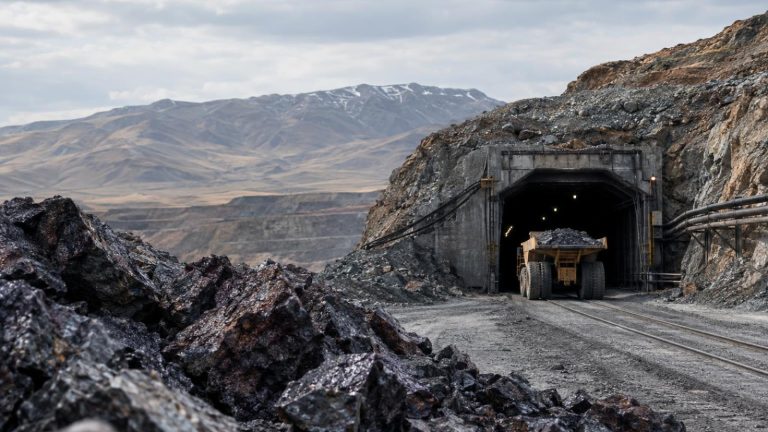
    KAZ Minerals Aktogay LLP operates one of Central Asia’s крупнейших open-pit copper mines in the Abai Region. The complex includes two sulphide concentrators with a combined capacity of 50 million tonnes of ore per year, along with a cathode copper plant processing oxidised ore. The facility employs advanced mining and beneficiation technologies, including automated process control systems.

    DBK first financed the Aktogay project in 2016 during the high-risk construction and commissioning phase. With the Bank’s support, a second concentrator was built, doubling sulphide ore processing capacity from 25 million to 50 million tonnes annually and creating more than 2,100 permanent jobs. The initial financing facility has since been fully repaid, and the first phase of the project has reached its planned payback.

    In a significant next step, Halyk Bank refinanced the company’s outstanding debt to DBK, assuming responsibility for servicing the now operational and financially stable project. The transaction reflects a structured approach in which DBK assumes early-stage project risks, while commercial banks step in once operational performance and cash flows become predictable.

    According to Marat Yelibayev, Chairman of DBK’s Management Board, the refinancing frees up state development funds for new capital-intensive industrial projects, reinforcing an investment cycle in which DBK supports projects from inception to stability before transferring them to private lenders.

  • Kazakhstan Reviews 2025 Industrial Performance and Sets Ambitious Digital and Infrastructure Targets for 2026

    Kazakhstan Reviews 2025 Industrial Performance and Sets Ambitious Digital and Infrastructure Targets for 2026

    Kazakhstan’s Ministry of Industry and Construction has reviewed its 2025 performance and outlined strategic priorities for the coming years during a Board meeting chaired by First Deputy Prime Minister Roman Sklyar.

    Opening the session, Industry and Construction Minister Yersayin Nagaspayev said the sector had entered a new phase of development, supported by rising industrial output, record housing completions, major investment projects, and reforms in subsoil use.

    Manufacturing output grew by 6.4% in 2025, driven by gains in metallurgy, mechanical engineering, chemicals, construction materials, and rubber and plastics production. A total of 190 projects worth approximately 1.5 trillion tenge were commissioned, creating more than 22,000 permanent jobs. Three new special economic zones were established, and 13 major investment agreements were signed.

    The construction sector also delivered record results, with 20.1 million square metres of housing commissioned, exceeding the planned target. A new Construction Code was adopted to support long-term sector stability.

    In subsoil use, the updated Subsoil Code introduced legislative and institutional reforms to strengthen the country’s mineral resource base. Seventeen new deposits were registered, and detailed geological mapping at a 1:50,000 scale will cover 100,000 square kilometres this year.

    Digital transformation featured prominently in the review. The Unified Subsoil Use Platform now provides 22 online public services and has issued more than 700 licences. Approximately 4.6 million geological reports have been digitised. AI-based construction monitoring and a digital project management system for energy and utilities modernisation were also launched.

    Looking ahead to 2026–2027, the ministry plans large-scale digital reforms in construction, mandatory digital twins for industrial enterprises from 2027, expanded smart utility metering, and broader use of Big Data and AI in geological exploration. Around 200 industrial projects worth 1.7 trillion tenge are scheduled for launch in 2026, with nearly 19,400 new jobs expected.

    Concluding the meeting, Sklyar stressed the Ministry’s heightened accountability under Kazakhstan’s evolving constitutional framework and instructed officials to accelerate investment planning, expand geological exploration to 2.2 million square kilometres, strengthen rare earth and rare metal strategies, and advance nationwide digitalisation initiatives.

  • TMK Expands Industrial Cooperation with Kazakhstan’s Ulba Metallurgical Plant

    TMK Expands Industrial Cooperation with Kazakhstan’s Ulba Metallurgical Plant

    TMK has held high-level talks with representatives of Ulba Metallurgical Plant to expand industrial and technological cooperation in Central Asia. The meeting, which took place at TMK’s head office, focused on strengthening bilateral partnerships and exploring opportunities for joint projects in both Uzbekistan and Kazakhstan.

    Discussions centred on advancing deeper processing of critical raw materials, increasing production of high value-added products, and enhancing the integration of regional industrial value chains. Both sides emphasized the strategic importance of developing downstream capabilities in critical minerals to improve competitiveness and reinforce regional supply chain resilience.

    Ulba Metallurgical Plant is a key industrial enterprise in Kazakhstan, specializing in the production of uranium, beryllium, tantalum and niobium, as well as finished products based on these metals. The potential collaboration is expected to contribute to broader industrial development across Central Asia.

  • Arras Minerals and Teck End Strategic Alliance as Kazakhstan Copper Targets Advance to 2026 Plans

    Arras Minerals and Teck End Strategic Alliance as Kazakhstan Copper Targets Advance to 2026 Plans

    Canada-based Arras Minerals Corp. has provided an update on its Strategic Alliance with Teck Resources Limited and outlined its exploration plans for 2026 across its licence portfolio in Kazakhstan, following Teck’s decision to exit the staged option phase of the agreement.

    The two companies entered into the alliance in December 2023 to explore for copper across approximately 1,900 square kilometres of Arras’ licence package in Kazakhstan’s Pavlodar region. Under the agreement, Teck funded around $5 million in generative exploration over a two-year period, with Arras acting as project manager. Teck had the option to select up to four designated properties for further investment of up to $47.5 million per project to earn up to a 75% interest, but has elected not to proceed to this second phase.

    Despite the decision, the alliance delivered extensive exploration results. Over two years, the program identified three new porphyry systems along a 54-kilometre trend parallel to the operating Bozshakol copper-gold mine, defined a large hydrothermal system at the Besshoky project, and generated a substantial geochemical and geophysical dataset. Work included nearly 40,000 soil samples, airborne magnetic surveys, Heli-EM and induced polarization surveys, 479 top-of-bedrock drill holes, and 18 diamond drill holes totaling more than 5,200 metres.

    Drilling returned multiple mineralized intercepts across several targets, confirming porphyry-style alteration and mineralization at Shirderty, Bozshakol South and Tort Kuduk. At Tort Kuduk, one hole intersected 34 metres grading 0.25 g/t gold, highlighting precious-metal upside alongside copper potential.

    Teck said that while the results did not meet its threshold to advance to the next phase, it remains positive on Kazakhstan and will continue as a supportive shareholder. Arras management described the alliance as successful in narrowing a large land package into a focused set of high-priority targets and said many warrant further follow-up.

    For 2026, Arras plans additional geophysical surveys, including magnetotelluric and gravity work, followed by targeted diamond drilling at several copper porphyry prospects. The company also intends to advance precious metals-focused targets that were not drilled during the alliance period and could reach drill-ready status with additional fieldwork.

    Arras said the work completed with Teck’s funding has significantly de-risked its portfolio and strengthened the pipeline of drill targets, supporting continued exploration of its Elemes copper-gold project and other priority areas across its Kazakhstan licences.

  • Kazakhstan to Invest Over 8 Trillion Tenge in Expanding Coal Power Generation by 2030

    Kazakhstan to Invest Over 8 Trillion Tenge in Expanding Coal Power Generation by 2030

    Kazakhstan plans to invest more than 8 trillion tenge in expanding its coal-fired power generation capacity by 2030, the country’s Ministry of Energy of Kazakhstan said during a recent roundtable outlining the main areas of planned spending.

    Under a national project to develop coal-based power generation, Kazakhstan intends to construct five new thermal power plants in Kurchatov, Kokshetau, Semey, Ust-Kamenogorsk, and Zhezkazgan, as well as build Ekibastuz GRES-3. In parallel, the existing Ekibastuz GRES-2 and Aksu GRES power stations are set to undergo modernization.

    The national project focuses on introducing technologies that reduce atmospheric emissions from coal combustion. It предусматривает a gradual replacement of worn-out generation assets with modern, high-efficiency power units designed to minimize environmental impact. According to the ministry, the new coal-fired plants are expected to strengthen Kazakhstan’s energy security while meeting environmental standards.

    Investors for the construction of new power facilities will be selected through competitive tenders. For the modernization of existing plants, project operators will sign investment agreements directly with the Ministry of Energy. These mechanisms are intended to ensure transparency and provide investors with guaranteed returns, as electricity tariffs will be fixed under long-term contracts.

    To integrate the new generating capacity into the national energy system, the ministry also plans to increase coal production and further develop railway infrastructure. The proposals will be coordinated with other relevant government agencies before being incorporated into the final version of the national project.

  • Success Minerals Kazakhstan Plans Resource Evaluation in Aktogay District

    Success Minerals Kazakhstan Plans Resource Evaluation in Aktogay District

    Private company Success Minerals Kazakhstan Ltd plans to carry out a resource assessment of solid minerals at a 9.35 sq km site in Kazakhstan’s Aktogay district, according to a planned activity notice published on the country’s Unified Environmental Portal.

    The subsoil user intends to evaluate reserves and resources at the Akkuduk East and Akkuduk West deposits, as well as conduct geological exploration at known mineralisation points, geophysical anomalies, and ore occurrences identified within the licence area. The work is aimed at defining targets suitable for potential industrial development. Detailed prospecting across halo fields is also planned.

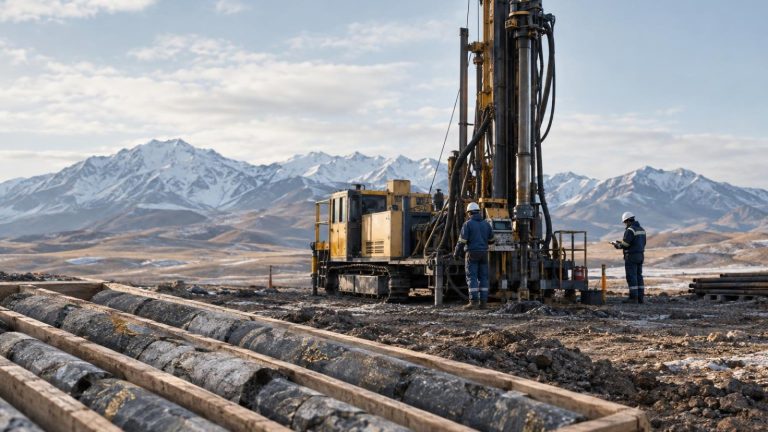
    Exploration activities are scheduled to begin in spring or early summer 2026 and continue through the end of 2030. The programme includes geophysical surveys, trenching over an area of 10,800 sq m, and the drilling of 140 exploration boreholes with a combined length of 35,000 metres. Collected samples will undergo laboratory testing, including chemical and geological analyses with a focus on copper content.

    As a result of the exploration campaign, the company plans to prepare geological maps of the deposits and ore occurrences, delineate ore zones and ore bodies, and calculate reserves and resources within the licensed area.

    The exploration licence was granted to Success Minerals Kazakhstan Ltd in January 2025. According to data from Kazakhstan’s eGov system cited by qazba.kz, the company is registered at the Astana International Financial Centre and is owned by Jinyu Sheng.

  • Illegal Gold Mining Uncovered in Kazakhstan’s Turkestan Region

    Illegal Gold Mining Uncovered in Kazakhstan’s Turkestan Region

    Kazakh authorities have uncovered an illegal gold mining operation in the Sozak district of the Turkestan Region, where a group of individuals was found to be unlawfully exploiting gold-bearing sites.

    According to investigators, 12 people carried out mining activities without the required permits, in violation of environmental regulations and industrial safety standards. As a result of the illegal operations, the group is believed to have extracted around 451 grams of gold.

    A pre-trial investigation has been launched under Parts 1 and 3 of Article 295-1 of the Criminal Code of the Republic of Kazakhstan, which covers offences related to the illegal extraction of mineral resources. Law enforcement agencies have conducted the necessary investigative procedures, and five of the suspects have been placed under house arrest as a preventive measure.

    Prosecutors stressed that unlawful mining poses a serious threat to the environment, undermines the country’s economic security, and carries criminal liability. Authorities said enforcement efforts will continue to deter illegal exploitation of mineral resources.

  • United States Strengthens Rare Earth Supply Chains Through Partnership With Kazakhstan

    United States Strengthens Rare Earth Supply Chains Through Partnership With Kazakhstan

    The United States is moving to reinforce its supply of rare earth elements through cooperation with Kazakhstan, following the signing of non-binding long-term partnership agreements between US-based  and Kazakh mining company .

    The agreements were disclosed by , which is currently in the process of combining its business with REAlloys. Further details of the cooperation were reported by Mining Technology.

    The partnership is aimed at securing Kazakh raw materials for REAlloys’ processing facilities. The two companies plan to jointly explore and develop rare earth element deposits in Kazakhstan, with extracted material to be processed and refined before being shipped to REAlloys’ production sites in North America.

    Following around six months of negotiations, the partners identified several promising sites. A central element of the agreement relates to offtake from Altyn Group’s Kokbulak project. More than 350 million tonnes of iron ore are located across an area of roughly 127,000 square kilometres in Kazakhstan’s Karaganda and Kostanay regions. Processing of iron ore tailings is expected to yield concentrates rich in both light and heavy rare earth elements, including terbium and dysprosium.

    To support future deliveries, Altyn Group plans to invest in expanding REAlloys’ processing capacity in the United States, including the country’s only rare earth metallisation facility. The plant supplies a number of government-linked customers and supports demand from high-technology industries.

    Altyn Group Qazaqstan is registered in Kurchatov, Abai Region, and is a subsidiary of UK-based . The company is active in the exploration and mining of gold, silver and rare metal ores.

    From 2025, Altyn Group has also planned to begin development of the Ulken-Karashoky gold-copper deposit in the Abai Region, alongside reported plans to extract gold-silver ores at the Mailikara deposit in Pavlodar Region.

  • A Strategic Assessment of Promise vs. Reality in Central Asia’s Mineral Development

    A Strategic Assessment of Promise vs. Reality in Central Asia’s Mineral Development

    Central Asia’s role in global critical minerals took a decisive turn at the 4 February 2026 Critical Minerals Ministerial in Washington, where officials from more than 50 countries acknowledged the region as a strategic hub rather than a geopolitical buffer.

    While Washington presented an ambitious framework to advance mineral sovereignty, analysts caution that the region—not the U.S.—must drive implementation to avoid becoming a passive arena for major‑power competition.

    U.S. Strategy: A Vertical Integration “New Order”

    The U.S. vision, centred on the FORGE initiative and the concept of “Pax Silica,” positions minerals and energy as shared strategic assets among trusted partners and offers an alternative to dependency on China.
    Washington differentiates its value proposition in three areas:

    1. Market Stability Through Price Floors
      Proposed tariff‑backed price floors aim to counter predatory market dumping and protect investments in assets such as Kazakhstan’s rare earth reserves.
    2. Vertical Value Integration
      The U.S. framework prioritises domestic processing and refining over raw‑ore exports, enabling Central Asian states to capture more value across the supply chain.
    3. Connectivity Autonomy
      By incorporating the Middle Corridor into initiatives like TRIPP, the West presents routes that bypass Russia and China, reducing geopolitical transit pressures.

    Kazakhstan and Uzbekistan have responded quickly—Kazakhstan has declared critical minerals the “new oil” and joined the Abraham Accords to strengthen supply‑chain integration, while Uzbekistan has pursued strategic MOUs to modernise mining and secure battery‑metal supply chains.

    Reality Check: Gaps Between Intent and Implementation

    Despite strong rhetoric, Western engagement has largely taken the form of frameworks and MoUs—not operational projects.

    Three challenges persist:

    • Operational Disparity – China continues to deliver turnkey, financed projects backed by contractors and long‑term offtake agreements, while Western partners emphasise declarations.
    • U.S. Inward Focus – Washington’s drive for techno‑economic sovereignty favours selective, de‑risked engagements rather than proactive industrial development in the region.
    • Execution Gaps – Uzbekistan’s $2.6bn program covering 76 projects illustrates regional ambition, but real progress requires partners capable of building at scale.

    Strategic Imperative: Central Asian Agency

    Experts argue that relying on future U.S. demand is a strategic mistake.
    To convert high‑level dialogue into economic gains, Central Asia must prioritise:

    1. Midstream Capabilities

    Refining and producing intermediary products offer higher margins and reduce reliance on long‑distance transport of low‑value raw ore.

    2. Direct Private‑Sector Engagement

    Regional firms should proactively present project‑ready opportunities to U.S. companies rather than depending on government‑to‑government frameworks.

    Conclusion

    The U.S. “New Order” provides Central Asia with a potential pathway to diversify away from Beijing and Moscow while improving price stability and long‑term sovereignty.
    But success hinges on regional execution. Astana and Tashkent must convert diplomatic signals into tangible midstream capacity—and do so quickly—to secure their strategic autonomy before the current window closes.