Tag: Kazakhstan

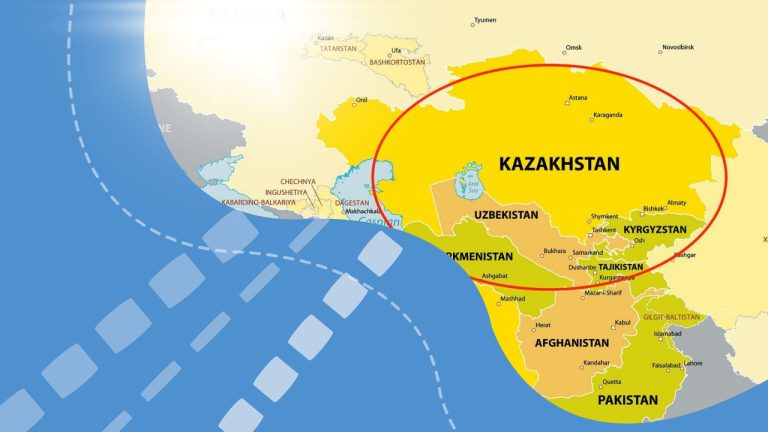
  • Kazakhstan plans to increase uranium exports to 71% by the end of the year via the TITR

    Kazakhstan plans to increase uranium exports to 71% by the end of the year via the TITR

    During an interview at the esteemed 2023 World Nuclear Symposium, Dastan Kosherbayev, the Chief Commercial Officer of “NAC Kazatomprom,” eloquently delved into the company’s operational performance, elucidating its anticipated expectations and logistics routes. Representatives hailing from Kazatomprom also provided updated information regarding the current status of uranium deliveries via the Trans-Caspian International Transport Route (TITR).

    It was duly noted that as of the conclusion of the first half of 2023, an impressive 58% of all uranium deliveries from Kazakhstan to Western countries were successfully transported through the TITR. Furthermore, it is projected that by the culmination of 2023, the share of Kazatomprom’s uranium deliveries to Western countries via the TITR will ascend to a staggering 71%.

  • Geological exploration only online

    Geological exploration only online

    From the upcoming month, the issuance of licenses for metal detection shall solely be processed in an electronic format.

    Commencing in October, applications for licenses to explore solid minerals can only be submitted online. Erlan Akbarov, the head of the geological committee, confirmed this development during discussions at the geologists’ congress on the industrial platforms in Astana, as reported by inbusiness.kz.

    “The regulatory framework has already been signed for the electronic format, and licenses will be exclusively provided in electronic form from October 1,” affirmed the official in response to inquiries about the launch of a fully digital system for license applications.

    Towards the end of August, the Department of Subsoil Use for Solid Minerals of the Ministry of Industry revealed its plans to introduce an electronic format for receiving documents related to the issuance of mineral exploration licenses. To facilitate this, the platform www.minerals.gov.kz was launched, tested, and prepared during the summer. Inbusiness.kz had previously reported on its intended launch in February, expressing concerns that its implementation might not be adequately executed, leaving bureaucratic loopholes that worried major investors. However, in this instance, the government successfully resisted corrupt temptations, which is commendable.

    During the discussion, Akbarov also confirmed that the temporary transition from the system of calculating and accounting for reserves according to the standards of the State Commission on Reserves (GKZ) to the Kazakh version of the CRIRSCO family template (KAZRC) should be completed by the following year. This transition was initiated with the introduction of the Subsoil Code in 2018.

    “In accordance with the Subsoil and Subsoil Use Code, the state commission on reserves will be abolished effective January 1, 2024,” the government official informed journalists.

    By the way, in the diagnostic report on the mining sector in Kazakhstan published by the World Bank earlier this year, it was previously stated that the geological committee allegedly expressed doubts about meeting the 2024 deadline due to the risk of reducing the tax base. Currently, the mineral production tax is calculated based on the depletion of reserves accounted for by the GKZ system.

    The adoption of international reporting standards for the certification of mineral reserves should not be delayed. Reporting on non-combustible mineral reserves, overseen by the United Committee for International Reporting Standards for Mineral Reserves and Resources (CRIRSCO), is based on international standards developed by Australia, Canada, and Chile. The new Subsoil Code stipulates that all such reporting should be prepared in accordance with CRIRSCO standards. However, until January 2024, new project reports were given a temporary period to prepare in accordance with CRIRSCO standards or the State Commission on Reserves (GKZ standards) under the Committee on Geology, which were inherited from the Soviet era. The transition to the internationally recognized CRIRSCO system for mineral reserve certification was introduced to standardize the description of mineral resources for both the private and public sectors. The Committee on Geology and tax authorities are still discussing a delay in this transition, which contradicts existing advanced international practices and delays much-needed updates to the tax regime in the mining sector, as reported in the study by the World Bank.

    Large Reserves in Words

    In a conversation with inbusiness.kz correspondent after the congress, Georgiy Freiman, the head of the Professional Association of Independent Mineral Experts (PONEN) in Kazakhstan, who has long advocated for the transition to new geological reporting standards, explained that there is currently no legislative obstacle to replacing GKZ.

    “As of today, no amendments that would repeal this provision in the Subsoil and Subsoil Use Code have been made. According to the current Code, yes, there is a transition, but a very large package of amendments is being prepared, and we do not know what parliamentarians will ultimately decide when these amendments are finalized and in what form they will be included in the Code… These amendments should be adopted this year, by the end of the year,” the expert said in the dialogue.

    In his opinion, making a large number of changes within five years of the Subsoil Code’s implementation is a normal process.

    “There were improvements, there were shortcomings, there were some positions that were simply unclear, and the practice of its (Subsoil Code’s) application over five years shows that adjustments need to be made, some things are good, some not very, some bad – but this is an inevitable, normal process because the criterion of truth is practice. You can develop any Code you want, but when it starts to take effect, what was not considered, what was not right, what should be excluded, all of this is done for any Code, more or less frequently. But since it was quite radical compared to the Law on Subsoil and Subsoil Use, yes, many changes were made, so amendments are proposed every two years,” the specialist believes.

    At the same time, he is confident that transitioning to international reporting standards from GKZ is beneficial for a sober understanding of the country’s extractable metal reserves.

    “The problem is that the reliability of historical information often does not correspond to the requirements that ensure the quality of assessing the quantity of mineral resources. We always say that transitioning from the GKZ standard to the international KAZRC standard, as a representative of the CRIRSCO family, actually improves the quality and reliability of geological information about the object. We say that our state reserves balance, which exists for many objects even from the 50s and 60s, does not correspond to any modern requirements, and it is not objective. Different figures are often called from high platforms regarding what we have in terms of individual positions, saying that we have great potential. But this potential has been accumulated over decades of exploration and assessment according to Soviet standards. And if we re-evaluate it according to international standards now, it will generally be much smaller,” he emphasized.
    “Ineffectual Department”

    Olga Petrova, the leader of Rio Tinto Exploration Kazakhstan’s mineral utilization division, shared during the conference that the Anglo-Australian company Rio Tinto is currently engaged in 11 geological projects in the Kostanay, Karaganda, and Zhambyl regions of Kazakhstan. They are also exploring the potential for geological exploration in Eastern Kazakhstan, highlighting the promising prospects for the mining industry in Kazakhstan.

    However, the corporation’s experts are encountering difficulties when submitting applications for exploration licenses and when communicating with relevant government agencies. For instance, it often takes weeks or even months to reach the personnel of the Ministry of Industry’s mineral utilization department.

    “We are testing the electronic submission system (minerals.gov.kz). They have stated that it is a pilot project, so we do not anticipate it to function flawlessly. Nevertheless, it is disheartening that there is a lack of communication. Although there is technical support on the website, the system itself is not functioning properly. It does not fully align with the Mining Code. The deadlines specified in the Mining Code are not being met due to the system’s lack of smooth operation. Furthermore, there is almost no opportunity for clarification or to determine the appropriate point of contact. It takes a considerable amount of time to reach out to individuals regarding our inquiries or applications. When we file complaints with the Ministry of Industry, we receive responses from the individuals who are the subjects of our complaints, in other words, the executors. The communication aspect of the system is currently misconfigured,” lamented the representative of the foreign mining company.

    During her presentation at the conference’s question-and-answer session, Olga Petrova directly addressed Vice Minister of Industry Iran Sharkan, who oversees mineral utilization, and requested special attention to be given to the communication between mineral users and the mineral utilization department of the agency. Prior to this, a dedicated Telegram chat in a technical support format was created to address issues with the minerals.gov.kz website, but responses stopped coming. Meanwhile, the agency’s officials insist that everything should be conducted electronically, yet the website is not functioning correctly, and it is unclear whom to contact for clarification. Rio Tinto’s representative emphasized the need for someone within the Ministry of Industry to be responsible for interacting with mineral users on the minerals.gov.kz platform, be it an employee or a department, to address all problematic issues, as requested in her appeal to the company’s management.

    Furthermore, in her speech, she highlighted that applicants for exploration licenses still have questions regarding the document flow of the Subsoil Fund Management Program (PUFNP), which has been in effect since 2018.

    “When an area is included in the PUFNP by order and published on the website in PDF format, the document with coordinates is in Excel. We have encountered a situation where we submit an application – at the time of submission, the territories are available, but when we receive a response and check the Excel document, the territories have already been modified. The coordinates in the document itself are changed, and additional ones are added in the order, making it a dynamic application with evolving coordinates. The question arises as to why we apply based on blocks while the territories are presented in coordinates. This issue pertains to human error and is a technical matter,” explained Olga Petrova.

    It is worth noting that, according to Erlan Akbarov, apart from restricted access territories, such as nature conservation zones, water bodies, and populated areas, 100% of territories available for mineral users to apply for exploration licenses have been made accessible. Moreover, PUFNP will undergo updates, as stated by Akbarov in an interview with inbusiness.kz during the sidelines of the conference.

    Incidentally, the challenges in communication with the relevant mineral utilization department were also addressed in his speech at the conference by Nikolai Kamensky, the head of the geological exploration company “Dva Key.”

    “Unfortunately, it seems that the Ministry (of Industry) is more inclined towards mineral users and is evading geologists. Iran Sharkanovich, it is extremely difficult to reach you and your department (of mineral utilization). Resolving certain matters also proves challenging, as your employees are formally unavailable. Instead of calling and requesting missing documents, if any, they simply issue refusals. This creates additional work for us, as all the documents have to go through the process again, wasting time and impeding progress in investments. Therefore, I believe there are purely organizational issues that need to be addressed. Well, it is not the most significant problem in our country,” expressed the renowned geologist in his address to the Vice Minister.
    “In Pursuit of the Positive”

    It is intriguing to observe that domestic industry leaders are not trailing behind their foreign counterparts in the quest for valuable metals.

    “On August 1st, we emerged victorious in an auction for a specific area. To my knowledge, several other companies also participated in the bidding process for this area. It turned out to be one of the most sought-after lots, and we secured it for a sum of approximately 424 million tenge. This area, situated in the northern Pribylkhashye, holds promise for copper exploration. Geological surveys were conducted in this region during the Soviet era. Apart from us, Rio Tinto, in collaboration with ‘Kazgeology,’ also conducted a study of this area. The exploration extended to a depth of 200 meters. There are prospects and estimated resources of up to 200,000 tons of copper, albeit with a relatively low content of around 0.2-0.3%. Our primary focus is to delve deeper into this area. It remains unexplored at significant depths. Our geologists have identified potential and indications that these ore deposits continue at greater depths, and we plan to conduct thorough investigations up to approximately 700 meters,” stated Azamat Shalabayev, the CEO of ERG Exploration, a subsidiary of the Eurasian Group, during an informal discussion at the conference.

    Previously, inbusiness.kz reported on the successful bidders of the exploration license auction held in early August. It is worth recalling that since 2015, Rio Tinto had been conducting geological surveys in search of substantial copper reserves in the Korgantas and Balkhash-Saryshagan areas of the Karaganda region. Unfortunately, the geological examination of Korgantas did not yield significant results for the Anglo-Australian company, resulting in the termination of their mineral use contract.

    “Active exploration activities are being carried out in the South-Kempirsai area. Over the past six years, in collaboration with ‘Kazgeology,’ we have drilled approximately 100,000 linear meters in this area. We have recently renewed our exploration contract, which required nearly a year of work… and in the coming three years, we plan to drill an additional 100,000 linear meters in search of chrome deposits,” added the senior executive of ERG Exploration.

    He further clarified that the company is open to the possibility of acquiring promising mineral use licenses.

    “We also intend to utilize this approach. We receive proposals from junior companies, and we evaluate their projects. However, thus far, we have not come across any promising ventures with confirmed reserves and resources,” explained Azamat Shalabayev when asked about the company’s stance on the junior market.

    He also mentioned that the company does not restrict itself to specific types of minerals.

    “We have a comprehensive program in place for digitizing geological data repositories. We have established dedicated teams for different areas of focus. Each team is responsible for exploring core metals such as chrome and manganese, while other teams handle various metals, including copper, polymetals, as well as rare earth elements (REEs) and rare earth metals (REMs). Thus, we will continue to explore in these directions, as per the management’s directive to discover new metals that are atypical for our group,” stated the head of ERG Exploration.

    Coordination and Human Resources

    Overall, most conference participants expressed their appreciation for the organization of the Ministry of Industry and the Committee on Geology.

    “Today, it has been repeatedly emphasized that this conference is a momentous event. This is absolutely true; such a large-scale gathering has never taken place before. The geological community of Kazakhstan has demonstrated its readiness to unite and address common challenges. It is understandable that a conference held for the first time in 33 years cannot instantaneously resolve all accumulated issues. Nevertheless, specialists have reached an agreement to lead, coordinate tasks, and act in unison. The conference covered a wide range of both general and applied topics. Resolving some of these challenges will necessitate a considerable amount of time, while others can be tackled through concerted efforts,” commented geologist Mahmud Muradov in an electronic statement to inbusiness.kz.

    However, he also emphasized that addressing the challenges facing the geological industry will require time and a skilled workforce.

    “The esteemed geologist, Kanys Imantaevich Satpaev, possessed the unique ability to recognize people’s talents, discern and guide young individuals in the right direction. As a talented organizer, he could select associates in specific scientific fields, and each of them subsequently brought glory to Kazakhstani science through their work and discoveries. I believe that we must continue Kanys Imantaevich’s legacy. We must dedicate significant attention to filling the personnel gap. The post-Soviet era created a 30-year void in terms of skilled professionals. Hence, it is necessary to foster the professional growth of specialists. We need to attract individuals to the industry who possess a fervent passion and a burning desire to contribute. The greater the number of brilliant minds, the more exceptional ideas will”In Search of the Positive”

    It is intriguing to note that domestic industry giants are not falling behind their foreign counterparts in the pursuit of valuable metals.

    “On August 1st, we emerged victorious in an auction for a specific area. To the best of my knowledge, several other companies were also vying for this area. It turned out to be one of the most sought-after lots, and we acquired it for approximately 424 million tenge. This area, located in the northern Pribylkhashye, holds promise for copper exploration. Geological surveys were conducted in this region during the Soviet era. In addition to us, Rio Tinto, in collaboration with ‘Kazgeology,’ has also examined this area. The exploration extended to a depth of 200 meters. There are prospects and estimated resources of up to 200,000 tons of copper, albeit with a relatively low content of around 0.2-0.3%. Our primary focus is to delve deeper into this area. It remains unexplored at significant depths. Our geologists have identified potential indications that these ore deposits continue at greater depths, and we plan to conduct thorough investigations up to approximately 700 meters,” stated Azamat Shalabayev, the CEO of ERG Exploration, a subsidiary of the Eurasian Group, during an informal discussion at the conference.

    Previously, inbusiness.kz reported on the successful bidders of the exploration license auction held in early August. It is worth recalling that since 2015, Rio Tinto had been conducting geological surveys in search of substantial copper reserves in the Korgantas and Balkhash-Saryshagan areas of the Karaganda region. Unfortunately, the geological examination of Korgantas did not yield significant results for the Anglo-Australian company, resulting in the termination of their mineral use contract.

    “Active exploration activities are being carried out in the South-Kempirsai area. Over the past six years, in collaboration with ‘Kazgeology,’ we have drilled approximately 100,000 linear meters in this area. We have recently renewed our exploration contract, which required nearly a year of work… and in the coming three years, we plan to drill an additional 100,000 linear meters in search of chrome deposits,” added the senior executive of ERG Exploration.

    He further clarified that the company is open to the possibility of acquiring promising mineral use licenses.

    “We also intend to utilize this approach. We receive proposals from junior companies, and we evaluate their projects. However, thus far, we have not come across any promising ventures with confirmed reserves and resources,” explained Azamat Shalabayev when asked about the company’s stance on the junior market.

    He also mentioned that the company does not restrict itself to specific types of minerals.

    “We have a comprehensive program in place for digitizing geological data repositories. We have established dedicated teams for different areas of focus. Each team is responsible for exploring core metals such as chrome and manganese, while other teams handle various metals, including copper, polymetals, as well as rare earth elements (REEs) and rare earth metals (REMs). Thus, we will continue to explore in these directions, as per the management’s directive to discover new metals that are atypical for our group,” stated the head of ERG Exploration.

    Coordination and Human Resources

    Overall, most conference participants expressed their appreciation for the organization of the Ministry of Industry and the Committee on Geology.

    “Today, it has been repeatedly emphasized that this conference is a momentous event. This is absolutely true; such a large-scale gathering has never taken place before. The geological community of Kazakhstan has demonstrated its readiness to unite and address common challenges. It is understandable that a conference held for the first time in 33 years cannot instantaneously resolve all accumulated issues. Nevertheless, specialists have reached an agreement to lead, coordinate tasks, and act in unison. The conference covered a wide range of both general and applied topics. Resolving some of these challenges will necessitate a considerable amount of time, while others can be tackled through concerted efforts,” commented geologist Mahmud Muradov in an electronic statement to inbusiness.kz.

    However, he also emphasized that addressing the challenges facing the geological industry will require time and a skilled workforce.

    “The esteemed geologist, Kanys Imantaevich Satpaev, possessed the unique ability to recognize people’s talents, discern and guide young individuals in the right direction. As a talented organizer, he could select associates in specific scientific fields, and each of them subsequently brought glory to Kazakhstani science through their work and discoveries. I believe that we must continue Kanys Imantaevich’s legacy. We must dedicate significant attention to filling the personnel gap. The post-Soviet era created a 30-year void in terms of skilled professionals. Hence, it is necessary to foster the professional growth of specialists. We need to attract individuals to the industry who possess a fervent passion and a burning desire to contribute. The greater the number of brilliant minds, the more exceptional ideas will emerge. It is imperative

  • The distinguished head of state of Kazakhstan had the honor of receiving Jacob Stausholm, the Chief Executive Officer of Rio Tinto

    The distinguished head of state of Kazakhstan had the honor of receiving Jacob Stausholm, the Chief Executive Officer of Rio Tinto

    The meeting provided an opportunity to discuss the implementation of joint investment projects within the realms of geological exploration, mining, and metallurgical industries.

    During the fruitful exchange, Kassym-Jomart Tokayev was apprised of Rio Tinto’s plans to expand its operations in Kazakhstan. Jacob Stausholm also provided an update on the progress of projects related to the exploration of copper deposits in the Kostanay and Karaganda regions.

    The President acknowledged Kazakhstan’s substantial reserves of vital minerals and raw materials that are currently in high demand for the advancement of cutting-edge technologies. Kazakhstan is actively undertaking measures to expand the scope of geological exploration work while embracing globally recognized best practices that contribute to significant geological discoveries.

    Rio Tinto, with a market capitalization of $99 billion USD, stands as the largest Anglo-Australian mining and metallurgical company. Its diverse portfolio encompasses assets primarily located in Australia (35%), Canada (34%), Europe (13%), and the United States (11%). The company’s business segments encompass various commodities, including iron ore, aluminum, copper, bauxite, diamonds, uranium, and industrial minerals.

    This meeting between the head of state of Kazakhstan and the Chief Executive Officer of Rio Tinto underscores the mutual interest in fostering fruitful partnerships and capitalizing on the vast potential of Kazakhstan’s mineral resources. It sets the stage for further collaboration and the realization of shared objectives in the realm of sustainable economic development.

  • Kazakhstan, a land rich in natural resources, is set to put up 12 plots containing rare earth metal deposits for auction

    Kazakhstan, a land rich in natural resources, is set to put up 12 plots containing rare earth metal deposits for auction

    The Department of Subsoil Use of the Ministry of Industry and Construction, under the guidance of Chairman Erlan Akbarov, announced this exciting development. Akbarov clarified that the plots currently do not hold any reserves of rare earth metals. The selection of these plots was based on a comprehensive analysis conducted by the government in 2016, and exploration work is currently underway. Once the exploration is completed, an auction will be held, allowing interested parties to become subsoil users.

    Private companies, supported by state funding, have been responsible for carrying out the exploration work. The 12 plots, including Rzhavaya Sopka, Aktobe Quartz, Kuneoy, Mirolyubovsky, Bokay, Brusilovsky, Kuyrektykol, Khorgos, Kenkuduk, Chulaktau, Keltemshatsky, and Akbulak, are predominantly located in eastern Kazakhstan.

    Akbarov also pointed out that Kazakhstan does not have purely rare metal or rare earth deposits. Instead, these metals are found in combination with other solid minerals. The chairman cited Ahmirovo, Novo-Ahmirovo, and Bakenno as examples of such deposits, where the primary useful mineral is accompanied by secondary rare earth metals.

    The Bakenno rare metal deposit, situated in the Ulan district of the East Kazakhstan region, is expected to resume underground mining operations. The project aims to extract the maximum possible reserves over a 25-year period, with an estimated annual ore processing capacity of 350 thousand tons. The tantalum-rich deposit, located 60 km from Ust-Kamenogorsk, is owned by Dinara Ospanova, Zhalyin Kabiken, and Ayaulym Kasymkhan.

    Another notable rare earth deposit, Novo-Akhmirovo, is located near Ust-Kamenogorsk. CREADA CORPORATION, owned by Erlan Issekesh and Daniar Aubakirov, is engaged in the exploration of this deposit. The company plans to drill eight vertical wells from 2022 to 2026, covering an area of 4.42 square kilometers. The extracted rare metals will be processed at the Ulbinsky Metallurgical Plant, a subsidiary of “Kazatomprom.”

    Furthermore, German company HMS Bergbau AG has expressed a keen interest in lithium mining in Kazakhstan. With an investment of $700 million, they have partnered with a private company to exploit lithium resources at two deposits. This collaboration will enable the Kazakh partner to acquire valuable expertise, and the success of lithium-ion battery production will depend on the availability of lithium resources.

    The European Union is also actively seeking alternative sources of critical materials, including lithium, to reduce its dependence on China. As part of this effort, the EU has entered into an agreement with Kazakhstan, aiming to replace some of its Chinese imports with products from the Republic.

    President Tokayev has emphasized the importance of expanding geological studies in Kazakhstan, particularly in the search for rare and rare-earth metals. The government aims to increase the area of geologically studied land to 2.2 million square kilometers by 2026. Currently, 1.25 million square kilometers are available for subsoil use, and state-funded geological exploration receives an annual budget of approximately 7.5 billion tenge, significantly less than countries like Uzbekistan, Australia, and Canada.

    To facilitate geological research, Kazakhstan has launched the unified subsoil use platform minerals.gov.kz. This platform allows potential investors to access geological reports and submit applications for plots and licenses electronically. The platform initially focuses on uploading secondary geological reports, with the primary reports expected to be digitized and uploaded by 2026. Additionally, the National Geological Service plans to obtain unique geological reports on Kazakhstan’s areas from Rosgeolfond, which were previously sent to Moscow during the Soviet era.

    In light of the decreasing reserves of various solid minerals over the past three decades, the Committee on Geology has proposed measures such as abolishing the value-added tax on geological exploration work and allocating a portion of the mineral extraction tax for state geological exploration.

    Kazakhstan’s commitment to exploring and harnessing its natural resources, particularly rare earth metals, paves the way for economic growth and potential partnerships with international investors.

  • Kazakhstan cancels contracts for gold and titanium deposits development

    Kazakhstan cancels contracts for gold and titanium deposits development

    The Ministry of Industry and Infrastructure Development in Kazakhstan has recently shared information regarding the termination of 107 subsoil use contracts. The data, provided by LS in response to an editorial request, sheds light on the reasons behind these cancellations, with 29 contracts ending due to the expiration of subsoil use rights, four through mutual agreement, and 74 being terminated ahead of schedule due to non-compliance with obligations. It is worth noting that all these companies are residents of Kazakhstan.

    In the Akmola region, 15 contracts have been terminated, with seven expiring naturally and eight being terminated ahead of schedule. These contracts involved the exploration and extraction of various resources, including gold, iron, manganese, and solid mineral formations.

    The Karaganda region witnessed the premature termination of 16 contracts. Among them were deposits such as Koktenkol, Kaskyrkazgan, Itmurindy, Kozhattauskoye ore field, Mystobe, and others. Subsoil users in this region were engaged in the search for and extraction of resources such as tungsten, molybdenum, copper, gold, silver, coal, chrysoprase, jadeite, and more. Additionally, 11 contracts have expired in this region, including those related to deposits like Aktas-1 and 2, Tamdy-Sainbulak, Northern and Southern squares, Kyzyl Kazan-1, Borsheuken Akkens, Tesiktas, Borly, and Atbas.

    The document for the East Balkhash-1 deposit, located in the Karaganda and East Kazakhstan regions, has also expired.

    In the East Kazakhstan region, one contract for the Khamir square was mutually terminated, while 12 contracts were terminated ahead of schedule. These contracts pertained to the exploration and extraction of polymetals, gold, copper-molybdenum ores, coal, and other resources.

    The Kostanay region saw the premature termination of agreements for the Mayatas (gold, silver, platinum, copper, lead, zinc, yttrium, and rare metals), Eltay-4 (iron), Kutukhinskoye (gold), and Shevchenkovskoye (nickel, cobalt) deposits.

    In the Pavlodar region, three contracts were terminated ahead of schedule, involving coal and gold.

    The Aktobe region witnessed agreements with subsoil users on three documents, while another six contracts were terminated. These contracts were associated with the exploration and extraction of resources such as gold, bauxite, copper-porphyry ores, and phosphorites.

    The premature termination of the subsoil use contract for the Shugul deposit (potassium salts) occurred in the West Kazakhstan region. Similar actions were taken against subsoil users of four deposits (mineral salts) in the Mangystau region.

    In the Almaty region, the terms of three contracts for the Predgorny Ketmen, Dalabai, and Utegen-2 deposits have expired, and three more contracts were terminated ahead of schedule. Gold, silver, and copper were among the resources being searched for and extracted in this region.

    In the Zhambyl region, 12 contracts have been terminated, with five expiring naturally and seven being terminated ahead of schedule. These contracts involved the exploration and extraction of resources such as gold-bearing and barite ores, silver, gold, polymetals, iron, alluvial gold, coal, titanium, gold, and lead-zinc ores.

    Furthermore, four contracts were terminated ahead of schedule in the Kyzylorda region, where subsoil users were working on deposits such as Jaxi-Klychskoye 2 and 3 (sodium sulfate), Koskol (copper-gold-bearing ores), and Ak-Espe area (titanium-zirconium).

    In the Turkestan region, six subsoil use contracts have been terminated ahead of schedule since the beginning of 2022. Two of them expired naturally, and the remaining three were terminated prematurely. The resources being explored and extracted in these contracts included iron-copper ores, polymetals, barites, and iron.

    Additionally, two contracts were prematurely terminated in the Ulytau region.

    The Ministry of Energy has also shared that since 2022, 35 subsoil use contracts have been terminated across various regions, namely Aktobe, Atyrau, West Kazakhstan, Mangystau, Kyzylorda, Zhambyl, and Almaty. The main reasons behind these terminations were the expiration of subsoil use contracts and the failure of subsoil users to fulfill their contractual obligations.

    Minister of Energy Almasadam Satkaliyev has previously highlighted that, since 2022, 29 contracts have been terminated, with debts amounting to 1.9 billion tenge being repaid for nine of them. The returned subsoil plots areput up for auction to attract investments, and electronic auctions have proven successful in this regard. In fact, in July, 11 subsoil plots were sold, fetching a signature bonus of 3.4 billion tenge. These auctions encompassed both exploration and production contracts, as well as production contracts alone.

  • The First Congress of Geologists of Kazakhstan took place in Astana

    The First Congress of Geologists of Kazakhstan took place in Astana

    Today, in the esteemed capital of Kazakhstan, the inaugural and momentous gathering of domestic geologists took place under the esteemed auspices of the Ministry of Industry and Infrastructure Development of the Republic of Kazakhstan.

    The congress, aptly titled “Geological Service of Kazakhstan in the 21st Century: Status, Challenges, and Prospects,” provided a platform for the earnest discussion of pressing issues within the field. The primary objective of this esteemed event was to devise a collaborative plan of action, aimed at replenishing and advancing the nation’s mineral and raw material reserves, thereby propelling the national economy to new heights by 2029, while simultaneously securing a robust industrial foundation for the republic.

    During the grand opening ceremony of this prestigious congress, Iran Sharhan, the Acting Vice Minister of Industry and Infrastructure Development, underscored the vital role that the geological sector plays in comprehensively studying Kazakhstan’s environment and resources. Sharhan further emphasized that Kazakhstan’s mineral and raw material reserves must be meticulously developed to meet the long-term requirements of the nation’s economy.

    Distinguished individuals who graced the event with their presence included Galym Nurzhanov, the CEO of KAZAKHMYS BARLAU LLP; Serikbek Daukeev, an Academician of the National Academy of Sciences of the Republic of Kazakhstan and a Doctor of Geological and Mineralogical Sciences; Georgiy Freyman, a representative from the Academy of Mineral Resources of Kazakhstan; and Heroi Zholtaev, the esteemed Director of the K.I. Satpaev Institute of Geological Sciences.

    In his insightful address, Galym Nurzhanov shed light on the new challenges confronting the geology community today and passionately called for immediate participation and concerted efforts to address the industry’s issues. He underscored the imperative for collaborative endeavors between relevant authorities and the business community, as he firmly believed that such synergy would yield breakthroughs in geological exploration and foster a profound and positive impact.

    Fayaz Abytov, in a captivating presentation, unveiled an ambitious project to establish an International Center for Advanced Experience in Sustainable Natural Resource Management. This visionary project seeks to contribute to the realization of ecological and energy balance, as well as the sustainable management of resources.

    Notably, the congress identified prospective directions for the advancement of geological science and technology. Engaging presentations on geological exploration and digital technologies were thoughtfully discussed, alongside topics pertinent to fortifying interregional ties and fostering fruitful business cooperation.

    As a momentous outcome of this esteemed congress, a memorandum of understanding was signed between the British Geological Survey and the revered Kazakhstani National Geological Service. Through this agreement, both parties express their intent to exchange invaluable experiences in implementing cutting-edge technologies within the realm of geology, conducting regional geological research, and creating comprehensive geological maps and databases, thereby fostering a collaborative and mutually enriching relationship.

  • Orano wants to assist Kazakhstan in the development of uranium deposits

    Orano wants to assist Kazakhstan in the development of uranium deposits

    The joint venture between Orano Mining, a French company holding 51% of the shares, and Kazakhstani company Kazatomprom, holding 49% of the shares, known as KATCO, has announced its plans to commence operations at the South Tortkuduk uranium deposit in Kazakhstan by the end of 2023.

    According to Gwenaël Thomas, the spokesperson for the company, this information was shared on Wednesday and reported by Trend. He stated that the agreement for this development was reflected in an amendment to the existing subsoil use contract in August 2022. The commencement of operations at the South Tortkuduk deposit is expected to secure uranium extraction for KATCO for a period of approximately fifteen years.

    Thomas further highlighted additional agreements that have been reached between Kazakhstan and Orano. He mentioned that in November 2022, during the visit of Kazakhstan’s President Kassym-Jomart Tokayev to France, Orano and Kazatomprom signed a memorandum of cooperation. Through this memorandum, the two companies express their intention to support and strengthen their collaboration in the uranium mining industry, building upon their existing successful partnership.

    Thomas explained that the memorandum includes various collaborative initiatives, such as the implementation of a joint roadmap for technical research and development, exploring solutions to address carbon emissions resulting from the companies’ activities, and laying the foundation for discussions on the long-term development of their partnership.

    Established in 1996, KATCO was formed to develop and operate uranium deposits in Muynakum and Tortkuduk, located in the Turkestan region, approximately 300 kilometers north of Shymkent. Currently, the company employs around 1,200 individuals and operates an In-Situ Recovery (ISR) mine with an annual capacity of approximately 4,000 tons of uranium. Over the past 20 years, the operation of these two deposits has enabled KATCO to extract over 40,000 tons of uranium.

  • Without restrictions and penalties: Kazakh subsoil users will be endowed with new rights

    Without restrictions and penalties: Kazakh subsoil users will be endowed with new rights

    In a recent development reported by Orda.kz, it has been announced that a bill has been adopted in the Majilis on September 13th, granting subsoil users in Kazakhstan the right to refuse unproductive drilling of wells without facing any penalty sanctions. This provision is part of the draft law “On Amendments and Additions to the Code of the Republic of Kazakhstan on Subsoil and Subsoil Use,” which aims to enhance the field of subsoil use and increase the investment attractiveness of projects in geological exploration and hydrocarbon extraction.

    One of the key innovations of this bill is the empowerment of subsoil users to decline unproductive drilling based on the results of seismic surveys, without facing any penalties imposed by the state. Additionally, the bill introduces an expedited transition to geological exploration work, incorporating a notification procedure for project development and streamlining administrative procedures for subsoil operations, including state examinations of project documents in the hydrocarbon sector. Deputy Duysenbai Turganov elaborated on these changes, highlighting their significance in optimizing the subsoil use sector.

    The bill, as a whole, aims to achieve the following objectives:

    Reducing the duration of various examinations by 8-12 months.
    Decreasing administrative costs for procedures by more than two times, from 120 to 50 days.
    Enhancing investment attractiveness.
    President Kassym-Jomart Tokayev previously emphasized that the subsoil use sector in Kazakhstan has been plagued by systemic issues accumulated over the past decades. The insufficient volume of geological exploration work hinders the realization of the mining industry’s full potential, while the pace of replenishing the mineral and raw material base has been slowing down. These challenges have emerged alongside the depletion of exploited subsoil resources.

  • The volume of geological exploration work will increase in Kazakhstan

    The volume of geological exploration work will increase in Kazakhstan

    Over the past 6 years, geological exploration has been conducted on 9 sites in the Kostanay region, funded from the budget. The total area of the surveyed territory exceeds 38 thousand square kilometers. In the country, there are plans to increase the volume of work in this direction by at least 1.5 times, as reported by the correspondent of “Khabar 24,” Artem Grapov.

    Artem Grapov, correspondent: “Currently, in the Kostanay region, 35 types of valuable minerals are known and have been studied to varying degrees. About 400 deposits have been explored. The region is a unique iron ore and bauxite base of the republic. By the way, 4% of the world’s iron ore reserves are concentrated in the Kostanay region. Kostanay geologists conduct exploration work continuously. In addition to iron and bauxite, the region also has significant reserves of cobalt, nickel, titanium, and gold. This year, a geological hub was launched in the region. Its main area is a core storage facility – a complex where primary rock samples taken during drilling are analyzed.”

    Darkhan Makatov, Head of Field Research Department: “Materials are sent to the cutting workshop. After that, they undergo sampling. Then certified samples are sent to laboratories located both in Kazakhstan, in the city of Karaganda, and abroad, in Ireland. The analysis results are then entered into the database. The obtained data are then systematized and digitized in accordance with international geological survey standards.”

    Dastan Makat, Project Geologist, PhD: “We enter the field data we’ve obtained into the database. Then, using this data, we create a deposit model. After that, we develop ore body models. You could say this is the final task of our geological exploration. The materials are then handed over to miners, who, in turn, develop a mining plan for the deposit.”

    Continuous geological exploration allows for the identification of promising areas for further development. Maya Ospanova, Head of the Kostanay Regional Inspection of Geology and Subsoil Use: “As a result of the work carried out, estimated resources have been calculated for 12 types of valuable minerals. The main volume is accounted for by coal, which amounts to 14 billion tons. We have also discovered 31 kilograms of gold, as well as molybdenum, lead, zinc, nickel, tungsten, titanium, copper, and other valuable minerals. In 2023, geologists continue to develop 3 objects. The work is funded by the republican treasury. Two sites are for underground waters, and one is for the search for rare earth metals. Geologists will summarize the results of this work next year.”

  • Research and development projects of subsoil users will go through a single center

    Research and development projects of subsoil users will go through a single center

    The expertise for it will be stipulated in the new science law.

    Research and development projects (R&D) of subsoil users will undergo assessment at the National Center for State Scientific and Technical Expertise (NCSTEE) under the Ministry of Education and Science. This was announced by its head, Arman Kashkinbekov, during his speech at the Second Kazakhstan-China Conference on Renewable Energy and Science in the capital.

    “There are aggregators, 1% of subsoil users, like PIT Alatau with the Tech Garden brand, and with KIN G – the Kazakh Institute of Oil and Gas – we work with all of them… In the new science law, which will be enacted by the end of the year, NCSTEE is designated as the sole authorized organization in Kazakhstan for conducting these activities. Thus, after the law takes effect at the beginning of the new year, all projects of all subsoil users will be required to undergo state expertise in our center,” he said.

    As reported two years ago, according to the Subsoil Code, subsoil users in Kazakhstan were required to allocate 1% of their expenditures on mining for research and development projects (R&D). Companies could independently choose accredited scientific institutes or autonomous educational organizations for funding. Subsoil users also had the right to allocate R&D funds to the Tech Garden autonomous cluster fund and use these funds for digitalization.

    In 2021, the Ministry of Energy announced a phased transition: in 2022 – 50%, in 2023 – 75%, in 2024 – 100% towards centralizing subsoil users’ contributions to R&D through the republican budget by creating a separate budget program. Thus, the government intended to independently allocate the received funding for scientific activities in Kazakhstan.

    According to Kashkinbekov, the center is already working with the Samruk-Kazyna group of companies.

    “Our company has signed a cooperation agreement with Samruk-Kazyna, the Samgau center for scientific and technical initiatives. This is a new unified window for all R&D developments of all national companies in Kazakhstan. The essence of the agreement is that state expertise and state accounting of all projects of national companies are now being carried out by our center. Prior to this, there was no such state expertise, national companies could choose where they wanted to have their projects evaluated and invested, there was no government oversight, interaction, or synergy in state policy in the field of scientific activities. Now the agreement is in effect, the first projects have passed. The large package from Kazatomprom is next,” the head of NCSTEE noted.

    At the same time, he did not rule out that the center may establish cooperation with investors in renewable energy.

    “There is a dilemma because, according to the law, all subsoil users will come to us, but in Kazakhstan, there will still be “sacred cows” that are protected by production sharing agreements (PSAs) – these are oil companies, operators, how many of them are there – three or four licensees, and Tengiz. National legislation does not apply to them, so they are not required to come to us and undergo official state expertise. We will think about this. At the same time, investors in renewable energy – they are not subsoil users, they do not dig the land, but they invest in Kazakhstan in the energy sector. This work also awaits us – where to place them – they are not subsoil users, but they use solar and wind energy, they invest in Kazakhstan in the energy sector. We will work on this,” Kashkinbekov assured.

    In his speech, he reminded that his center is the only authorized organization conducting technical expertise of scientific programs and projects as well as applications for funding fundamental scientific research. Moreover, NCSTEE is responsible for organizing the work of national scientific councils. The center is also involved in state accounting and monitoring of projects and programs in science funded by the state budget in Kazakhstan, digitizing scientific works, and creating an index of citation of Kazakhstani scientists.