Tag: Kazakhstan

  • Independent expert Telman Shuriev: Increasing the area of geological and geophysical exploration is a strategic task

    Independent expert Telman Shuriev: Increasing the area of geological and geophysical exploration is a strategic task

    Telman Shuriev, the head of the Industrial Asset Management Department at “NAC Kazatomprom” and a Doctor of Business Administration in Industrial Technology, sheds light on the key directions outlined in President Tokayev’s address to Kazakhstan regarding the development of the geological exploration and water sectors, as reported by inbusiness.kz.

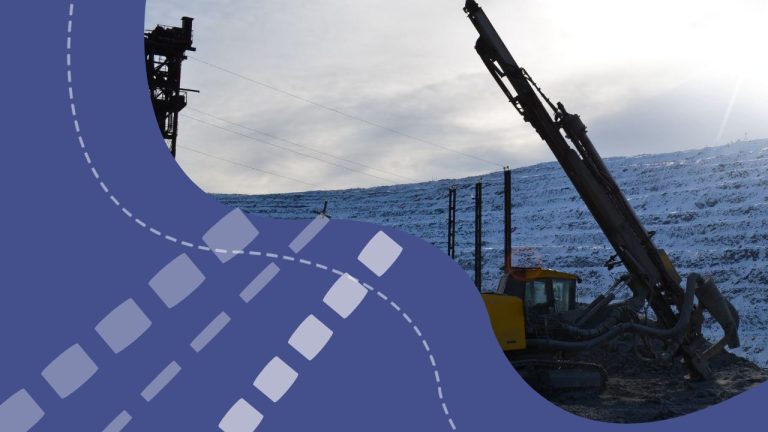
    The President’s address to the nation demonstrates a forward-thinking approach towards a new economic model and takes into account the opinions of experts and the public. Notably, the development of geological exploration stands out as a strategically important decision. The President emphasizes the need to modernize the management system of the mining sector promptly. I find it particularly significant that the Head of State has set an ambitious goal of expanding the area of geological and geophysical exploration to a minimum of 2.2 million square meters within the next three years. This emphasis on the development of rare and rare-earth metal deposits is well-founded, considering Kazakhstan’s abundant reserves. It is expected that this sector will attract both domestic and foreign investors, especially as the country moves towards economic decarbonization, actively reducing greenhouse gas emissions and carbon intensity in its industries.

    President Tokayev also highlights the crucial role of water resources in Kazakhstan, placing them on the same level of importance as oil, gas, and metals. The establishment of an independent ministry dedicated to overseeing water issues signifies a significant step forward. This decision aligns with the practices of developed countries, where specialized agencies are created to focus on key areas of national development. Additionally, the re-establishment of the National Hydrogeological Service in Kazakhstan is of great importance. This institution will address water resource challenges and can be structured to operate independently of the state budget. By collaborating with investors and natural resource users, the National Hydrogeological Service can create a competitive environment and become a promising avenue for investment in Kazakhstan’s economy.

    Notably, experts in the field of ecology and hydrogeology in Kazakhstan have also expressed the need for a national company dedicated to managing groundwater. They emphasize the importance of transforming existing state-authorized enterprises into a unified entity that includes specialists from geology, hydrogeology, ecology, and the industrial sector. This approach, coupled with adequate state budget allocation, can pave the way for comprehensive work in this sector. For example, focusing on the underground Kokzhida deposit, located in the Aktobe Region’s Temir District, which has significant reserves capable of providing drinking water to the western region of the country.

    President Tokayev’s address sets a clear vision for the development of the geological exploration and water sectors, emphasizing the importance of these industries for Kazakhstan’s economy. With the implementation of modernized management systems and the reorganization of government agencies, the country is well-positioned to capitalize on its abundant reserves and address critical challenges in these sectors, attracting investment and driving sustainable development.
    The issue of accessibility and quality of water resources in Kazakhstan is a matter of great significance. Currently, Kazakhstan ranks 70th in terms of access to quality water supply, making it one of the most water-deficient countries in the Eurasian continent. Within Asia, it stands at the 8th position in terms of water deficiency, with only 2.8% of its territory covered by water, while arid zones comprise two-thirds of the land. In essence, Kazakhstan is heavily reliant on water. This situation primarily arises from excessive regulation in the upper reaches of rivers, such as the construction of reservoirs and extensive water usage. Furthermore, the costs associated with irrational water consumption in these river basins, such as limited utilization of water-saving technologies, lack of automated water accounting, and underdeveloped agricultural cooperation, exacerbate the problem. Experts express concern that if these trends persist, Kazakhstan will face severe water supply challenges in the future, as natural surface water resources have been steadily declining in recent years. Additionally, climate change projections indicate a 14% to 40% decrease in water flow by 2030. It is evident that there is a lack of comprehensive policy for the development of the water supply sector, with previous programs focused more on restoring existing systems. Despite significant budget allocations and the adoption of state programs, many villages and regions still lack access to drinking water.

    Undoubtedly, the quality of governance significantly impacts the effectiveness of water policy. The deficiencies in ensuring the population’s access to drinking water can largely be attributed to the frequent reorganization of state bodies, resulting in the transfer of responsibilities of the Committee on Water Resources from one department to another. The management of water resources has been marred by wastefulness, as indicated by Kazakhstan’s assessment as the least efficient in terms of water governance according to the Global Water Partnership UN Water Governance and State of the World’s Water index. Another challenge stems from the absence of a single authorized body responsible for coordinating the implementation and management of policies related to providing the population with drinking water. Previously, these functions were divided between two ministries that did not effectively collaborate. Furthermore, local representative bodies (maslikhats) in the regions have played a limited role in monitoring the use of budget funds.

    To improve the situation in the water sector, several measures need to be taken. It is imperative to establish a unified monitoring system that tracks the availability of centralized water supply and the quality of drinking water in both urban and rural areas. This system should be entrusted to a single independent authority to avoid conflicts of interest. The normative and legal framework, as well as terminology, should be regulated. External specialists with expertise in water resource management should be engaged in developing goals, intentions, and efficiency indicators for each level of government. Priority attention must be given to training and capacity building of specialists in water resource management. Attracting investments for the construction of new pipelines and equipment types should be accompanied by strict consumption control.

    In his address, President Tokayev emphasized the responsible and prudent use of resources, including water. I wholeheartedly support this notion. The industrial sector, which accounts for approximately 25-30% of total water intake, deserves greater attention from government bodies. Of this proportion, 92% is sourced from surface water, while 8% comes from groundwater sources. Regrettably, only about 20% of industrial enterprises utilize water recycling technologies. Projections indicate that by 2030, industrial water intake will increase by another 10%, accounting for 35-40% of total water resources, while the overall quantity of water resources in the country is expected to decline. Assessing losses reveals that industrial consumers experience an average water loss of about 40% during transportation.

    To address these concerns, authorized bodies should collaborate with industrial companies to conduct accurate studies on losses and develop solutions for their reduction. Timelines for implementing these measures, along with appropriate funding, should be established. Initiating loss indicators and subsequently setting Key Performance Indicators (KPIs) for their reduction is crucial. Currently, precise indicators in this regard are lacking. To commence this effort, allocating funds within the 1% for Research and Development (R&D) for subsoil users would be a prudent step.

    It is also worth noting that there is a deficiency in adequate and quality water consumption metering equipment, both at the inlet and outlet stages of production. Metering should be implemented at all stages, and it is essential to ensure that metering devices are in working order. Accurate data is indispensable for a comprehensive understanding of water management.

    Kazakhstan has already approved a Low Carbon Development Strategy until 2060, which encompasses clear indicators and potential tools for reducing greenhouse gas emissions, particularly in the industrial sector. Similarly, it is imperative for the country to develop a similar strategy for effective water resource management until 2050. This strategy should encompass indicators for water resources, with a high level of implementation. Such a strategy would provide industrial enterprises with guidance for their environmental policies, fostering a more coherent and systematic approach rather than chaotic“`
    I believe that it is a very timely decision to determine the current status of water for our country. Government bodies insufficiently pay attention to the consumption of the industrial sector, where about 25-30% of the total water intake is accounted for by industry, of which 92% is surface water and 8% is groundwater sources. It should be noted that only about 20% of industrial enterprises use water recycling technologies. Meanwhile, there is a forecast that by 2030, industrial water intake will increase by another 10% and will account for 35-40% of the total volume of water resources, while the quantity of water resources in the country will decrease. The assessment of losses shows us that water losses during transportation average about 40% for industrial consumers.

    In this regard, I would recommend that authorized bodies, in conjunction with industrial companies, conduct studies on accurate losses, develop solutions for their reduction, determine the timelines for the implementation of measures with the allocation of appropriate funds, establish the starting point for loss indicators, and then set KPIs for their reduction. Currently, there are no exact indicators in this direction. To start with, we can determine the funds allocated within the 1% for R&D for subsoil users.

    It is also worth noting that at the moment there is a lack of adequate and quality water consumption metering equipment at the inlet and outlet, not to mention the need for metering at all stages of production; on some enterprises, metering devices do not work at all, as a result, we do not have accurate data and, accordingly, do not see the full picture of water management.

    Kazakhstan has approved a Low Carbon Development Strategy until 2060, which includes clear indicators and possible tools for reducing greenhouse gas emissions, including in the industrial sector. By analogy, our country needs to develop a similar strategy for effective water resource management until 2050, reflecting indicators for water resources, with a high status of implementation. This will provide industrial enterprises with guidance on the general direction of their environmental policy, rather than working in a chaotic manner.

  • Kazakhstan Energy Transition

    Kazakhstan Energy Transition

    Steppes to Net Zero

    This report provides a comprehensive perspective on Kazakhstan’s energy transition pathway, striking a delicate balance between energy costs, supply reliability, and environmental sustainability. It sheds light on the economic risks associated with continued support for coal-fired generation and highlights the need for international funding to assist the country in its just transition. While Kazakhstan’s individual contribution to global emissions may be limited, similar to that of Spain or France, its emissions intensity relative to GDP remains alarmingly high, with the energy sector being the primary source of greenhouse gas emissions, accounting for 82.4% of the country’s total emissions. Fuel combustion alone is responsible for 70.5% of Kazakhstan’s overall greenhouse gas emissions. Additionally, the Central Asian region is highly vulnerable to the impacts of climate change, further emphasizing the urgency of taking action.

    It is important to note that there is currently no political commitment to phase out coal due to concerns over potential disruption to the socio-spatial and economic balance. Political support for coal-fired technologies is driven by the inflexibility of the energy system and the legacy of district heating. However, maintaining support for coal in the long term poses significant economic risks and hinders investment in activities that could diversify Kazakhstan’s economy and facilitate a just transition.

    The upcoming decade or so will be crucial in laying the groundwork for the new economy. Failing to do so will result in economic stranding, as legacy revenue streams and traditional jobs dwindle without the offset from new, clean revenue streams and employment opportunities.

    Kazakhstan’s current low carbon price fails to incentivize energy transformation and proves to be an ineffective policy tool, especially considering the availability of free quotas. To facilitate Kazakhstan’s energy transition, it is imperative to establish a higher carbon price through reduced free quotas and government auctions.

    By 2030, the integration of renewable energy sources will necessitate the implementation of storage at scale to ensure system flexibility. Governmental planning and support for the rollout of storage infrastructure will be vital during this decade.

    Financial aid is essential for Kazakhstan to expedite its transition to clean energy. Blended concessional financing should be made available to facilitate the just transition from coal to clean power, contingent upon the existence of a credible coal phaseout plan.

    Current political and technological commitments run the risk of perpetuating the fossil fuel infrastructure and impeding the growth of renewables. Power prices are expected to rise significantly with the addition of new coal plants or retrofitting of existing ones. However, the inclusion of renewables, which have demonstrated declining price trends in renewable energy auctions, will lower power prices for end users. New coal plants are twice as expensive as new renewables with storage, and breaking even would require a doubling of power tariffs. Under our base scenario, new renewables will outcompete existing coal units within one year, while renewables with storage will be cost competitive within five years. It is crucial to accelerate and expand the deployment of renewables on a larger scale than currently envisioned.

  • “To Punish the Guilty Is Not Enough”: AMANAT Deputies Put Forward Demands to the Leadership of AMT”

    “To Punish the Guilty Is Not Enough”: AMANAT Deputies Put Forward Demands to the Leadership of AMT”

    According to Nikita Shatalov, society does not believe that the truly responsible parties will be held accountable. Deputies from the AMANAT faction once again raised the issue of the responsibility of the leaders of ArcelorMittal Temirtau (AMT) for accidents at the company’s facilities that have resulted in the deaths of Kazakhstanis during a plenary session of the Majilis, as reported by Azattyq Rýhy.

    “Over a month ago, an accident occurred at the Kazakhstan mine. During the fire, which is still not extinguished, 5 people died, and 16 others were injured. The enterprise will not be operating for a year. We awaited the results of the government commission’s work, and they were announced last week. The investigation found that the full blame lies with the employer. 28 people who should be subject to criminal prosecution have been identified,” said Deputy Nikita Shatalov, addressing a request to Prime Minister Alihan Smailov and Prosecutor General Berik Asylov.

    He emphasized that this is not the first accident at ArcelorMittal Temirtau’s facilities.

    “The AMANAT faction has repeatedly raised issues of equipment operation violations, safety issues, and inadequate labor protection. Unfortunately, society does not believe that the truly responsible parties will be held accountable. Often, in such incidents, the blame was placed on the performers, while major managers made decisions that led to accidents.

    This time, too, it is obvious that the accident, which resulted in the loss of our compatriots, occurred due to the fault of the enterprise’s leaders. They decided that they could save money by purchasing unsuitable equipment and not complying with all technical requirements for coal mining. For example, it became known that a belt that, according to Kazakhstani legislation, should have been fire-resistant, caught fire. This is a blatant disregard for the fate of our people. If it were not for someone’s greed, Steshin, Khalikov, Burgun, Slyunkov, and Starovoit would still be alive,” the deputy said.

    Nikita Shatalov stated that the deputies of the AMANAT faction were at the scene of the tragedy.

    “We talked to colleagues of the deceased miners, saw the deplorable state of the mines, met with the families. People, unfortunately, cannot be brought back, but society expects justice.

    Firstly, we demand that you do not weaken control. The results of the investigation must lead to fair punishment. Those responsible for the accident, for the deaths of miners, must bear full responsibility for what happened. No one, especially the leaders of the enterprise, including foreigners, should be removed from the orbit of criminal prosecution. Those who made criminal decisions should be punished several times more severely than involuntary performers.

    Secondly, punishing the guilty is not enough. The accident at Kazakhstan mine is far from the first in recent years. And the reason for all of them is the same – the investor squeezed everything out of Soviet technologies, did not modernize, and did not monitor working conditions in the mines. This is the reason for all the deaths of miners, and there have been more than 100 during Mittal’s work in Kazakhstan. We demand that those who have earned hundreds of billions on the lives and health of Kazakhstanis fulfill their investment obligations in full. The Government of Kazakhstan has all the necessary legal levers for this,” the deputy said.

  • Gold miner may revive London listing after Russian asset sale

    Gold miner may revive London listing after Russian asset sale

    Polymetal International’s CEO, Vitaly Nesis, has expressed the possibility of reviving the company’s London listing once its sanctioned Russian unit has been sold. Polymetal, a gold miner that derives approximately 70% of its sales from Russia and the remaining from Kazakhstan, recently re-domiciled from Jersey to Astana as a preliminary step towards spinning off its Russian business in compliance with Moscow’s restrictions. This move, however, made it impossible to maintain its London listing. Nevertheless, the Russian unit was put up for sale after being included in a US sanctions list in May. Once the sale is finalized, Polymetal will reconsider listing alternatives.

    Nesis revealed that there has been significant interest in the Russian business from over ten potential buyers, including investors from China who are willing to take on sanctions risks. At present, the two parts of the company operate as separate entities, with independent funding and management decisions. Nesis, as the CEO, receives periodic reports on the activities of the Russian unit. While sales in Russia were temporarily halted due to sanctions, they have now resumed.

    Due to restrictions on developing Russian assets, Polymetal is exploring alternative options. Nesis mentioned that they are evaluating opportunities in Uzbekistan and Kyrgyzstan, considering potential acquisitions in those regions.

    Regarding the company’s future listing, Nesis stated that once the Russian assets are divested, they may consider a London listing over Dubai or Abu Dhabi. This decision reflects their strategic considerations and aligns with their future plans.

  • The company Polymetal has become a resident of Kazakhstan

    The company Polymetal has become a resident of Kazakhstan

    In a historic move, Polymetal, one of the world’s leading gold mining companies, has officially relocated its operations to Kazakhstan. This decision marks a significant milestone for the country’s stock market, as it is the first instance of a company making such a move. Furthermore, Polymetal has also shifted its primary trading platform from the London Stock Exchange to the Kazakhstan Stock Exchange. The reverberations of this decision within the stock market are examined in a report by a correspondent from “Habar 24.”

    Polymetal has successfully transitioned its jurisdiction and now stands as a proud resident of Kazakhstan. Already, approximately 4,000 shareholders from the United Kingdom, the United States, and Europe have transferred their shares to the AIX Exchange, signaling the beginning of a promising new chapter.

    Vitaly Nesis, the CEO of Polymetal International, expressed his satisfaction with the extensive efforts made over the past nine months. During this period, the company engaged in meetings with over 500 institutional and retail investors. Nesis believes that these interactions played a pivotal role in shifting sentiment. Ultimately, when the final vote on sequential listing and delisting from London took place, more than 90 percent of voting shareholders supported these decisions.

    Within the Astana International Financial Centre (AIFC), there is a shared anticipation that the influx of large investors brought about by Polymetal’s relocation will create fresh opportunities for other Kazakhstani companies.

    Renat Bekturov, the Managing Director of the AIFC, emphasized that Polymetal has not only moved its operations but has also established itself as a resident and a Kazakhstani company within the AIFC. With substantial assets in Kazakhstan, including the two largest gold mining companies in the country, Polymetal’s transition to the jurisdiction of the AIFC also involved transferring its primary trading platform from the London Stock Exchange to AIX, situated within the AIFC. Consequently, global custodians have recognized AIX as a platform and regard Kazakhstan as an attractive investment market.

    Over the next two years, Polymetal aims to enhance its liquidity indicators. Although meticulous work lies ahead, the company has already made strides, with the average daily trading volume for the month reaching approximately $150,000 USD

  • C5+1 Critical Minerals Dialogue with Central Asian countries

    C5+1 Critical Minerals Dialogue with Central Asian countries

    U.S. President Joe Biden met with the leaders of Kazakhstan, Kyrgyzstan, Tajikistan, Turkmenistan, and Uzbekistan at the United Nations General Assembly on 19 September 2023.

    Perhaps the most surprising point of discussion was the proposed launch of a C5+1 Critical Minerals Dialogue. Critical minerals like chromium, copper, and lithium are needed for manufacturing clean energy technology.

    Central Asian countries – especially Kazakhstan and Uzbekistan – have great potential to leverage their mineral resource bases for geopolitical gain, especially as the United States is eager to shed its dependence on China for minerals. China currently dominates the global critical minerals market, and it is the largest source of imports to the U.S. for 26 critical minerals. A C5+1 dialogue focused just on mineral wealth stands to be mutually beneficial for all participants.

    “We are committed to deepening cooperation to develop the capacity to meet growing global clean energy demands, including by potentially providing the world with safe, secure, and sustainable nuclear fuel supplies.  Our attention to energy security in the region includes building diverse, resilient, and secure critical minerals supply chains; developing new technologies for the extraction and processing of raw materials; and adding value through regional industrial cooperation to reduce strategic dependencies and meet our respective economic, energy security, and climate goals.  Demand for critical minerals, which are essential for clean energy and other technologies, will expand significantly in the coming decades.  To further develop Central Asia’s vast mineral wealth and advance critical minerals security, we will launch a C5+1 Critical Minerals Dialogue.  It will provide a forum in which the C5+1 can share information about critical minerals challenges and opportunities, promote connections between government officials and private sector industry, catalyze investment, and collaborate on critical minerals supply chains.”

    However, it’s not a done deal yet. Biden noted only that “we are also discussing the potential for a new critical minerals dialogue.” Given the importance China also attaches to the critical minerals sector, close cooperation with the United States may be politically difficult for Central Asian states.

  • Korean companies are interested in projects related to engineering, mining, and nuclear energy

    Korean companies are interested in projects related to engineering, mining, and nuclear energy

    The President of Kazakhstan recently engaged in negotiations with the President of the Republic of Korea, Moon Jae-in, as reported by the Akorda press service. The discussions centered around the future prospects of the strategic partnership between Kazakhstan and South Korea.

    Kassym-Jomart Tokayev, the President of Kazakhstan, emphasized the friendly relations shared between the two nations and highlighted the significance of the dynamic development of their economic ties. The President noted that bilateral trade turnover has consistently shown growth, surpassing 6 billion dollars last year. Furthermore, Korean companies have made substantial investments in Kazakhstan’s economy, totaling over 8 billion dollars, positioning them as one of the top 10 major investors in the country.

    The President also drew attention to the presence of more than 700 Korean companies and joint ventures currently operating in Kazakhstan, including prominent names such as KIA, Hyundai, Samsung, LG, and others. During the negotiations, Kassym-Jomart Tokayev outlined promising areas of economic cooperation, particularly in the extraction of rare earth metals and the development of nuclear energy.

    President Moon Jae-in of Korea expressed his country’s keen interest in further enhancing mutually beneficial cooperation with Kazakhstan. He emphasized that Korean companies exhibit a special interest in expanding existing projects and undertaking new ventures in machinery manufacturing, mining, and nuclear energy sectors.

  • How much gold is left at the largest Vasilkovsky deposit in Kazakhstan

    How much gold is left at the largest Vasilkovsky deposit in Kazakhstan

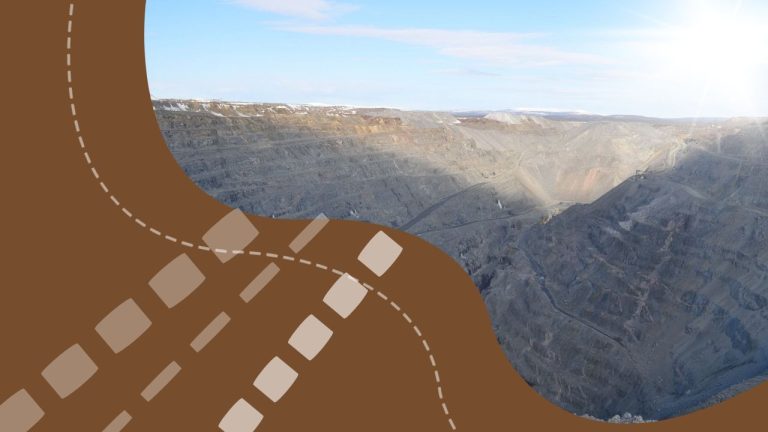
    According to information presented by the “Mining Industry. Central Asia” magazine through inbusiness.kz, the Vasilkovsky deposit in Kazakhstan is a significant source of gold. After the completion of open-pit mining operations in 2026, the company, specifically the “Kazzinc” division of Altyntau Kokshetau, plans to process off-balance ores from its stockpiles. This new project for gold extraction from the Vasilkovsky deposit has been posted for discussion on Kazakhstan’s Unified Environmental Portal.

    The company’s mining operations are expected to reach a depth of 540 meters by 2026, with a horizon of -305 meters. It is worth noting that a considerable portion of the Vasilkovsky deposit’s reserves has already been mined. In 2022, experts conducted a reevaluation of the resources and included them in the state balance. The documented reserves indicate that the subsoil contains 37.38 million tons of gold-bearing ores with 73.77 tons of gold at an average content of 1.97 g/ton. Additionally, there are 6.58 million tons of ore and 12.08 tons of gold categorized as presumed.

    The enterprise has a designed capacity of processing 8 million tons of ore annually. The existing gold processing plant, which has been operational since 2009, will handle the raw material. The processing method will remain the same, utilizing a gravity-flotation beneficiation scheme followed by sorption cyanidation of the finely ground flotation concentrate.

    Furthermore, the report highlights that the Vasilkovsky and Bakyrchik deposits are the largest gold assets in Kazakhstan. The Vasilkovsky deposit alone boasts approximately 370 tons of proven reserves, with a gold content of 2.8 g per ton. On the other hand, the Bakyrchik deposit holds around 326 tons of precious metal, with a higher gold content in the ore, at 7.7 g per ton.

    Gold-bearing ore from the Vasilkovsky deposit undergoes multi-stage processing at the company’s ore-processing plant to produce doré. The resulting doré alloys are then sent to the Ust-Kamenogorsk Metallurgical Complex’s refining plant. Additionally, the company is involved in gold refining into bars.

    Altyntau Kokshetau contributes significantly to Kazakhstan’s gold production, bringing in up to 400,000 troy ounces of gold to the country each year.

    Overall, Kazakhstan is home to approximately 300 gold deposits, spread across all regions of the republic, with a concentration in the East Kazakhstan and Akmola regions. As of June 2022, Kazakhstan’s gold reserves stood at 373.4 tons, ranking the country 14th among the world’s largest “gold” countries. Notably, in the first quarter of 2022, Kazakhstan held the highest gold reserves among Central Asian countries.

    In 2021, the country produced approximately 33 million tons of ore and 66 tons of refined gold, as reported by Marat Karabaev, Deputy Minister of Industry and Infrastructure Development, at the Third Forum of Gold Miners of the Republic of Kazakhstan.

    Kazakhstan’s gold mining enterprises also export a portion of the extracted metal to other countries, with primary destinations being Kyrgyzstan, Russia, Uzbekistan, and Italy. According to the National Statistics Bureau of Kazakhstan, gold exports in bars and other unprocessed forms witnessed an 18% increase in the first nine months of 2020 compared to the same period in 2019. Notably, Kyrgyzstan received the largest amount of precious metal, totaling $4.6 million, followed by Russia with $235.6 thousand, Uzbekistan with $34 thousand, and Italy with $12.5 thousand.

  • Kazatomprom Plans to Increase Uranium Exports via Middle Corridor

    Kazatomprom Plans to Increase Uranium Exports via Middle Corridor

    Kazatomprom, a prominent player in the uranium industry, has revealed its plans to increase uranium exports by utilizing the Middle Corridor. In a recent interview published on the Bloor Street Capital YouTube channel on September 15th, Kosherbayev, a representative of Kazatomprom, discussed the company’s operational performance, forecasted expectations, and the logistics routes involved.

    Kosherbayev mentioned that a significant volume of uranium is currently being transported through the Trans-Caspian International Transport Route (TITR). While there may be certain implications related to infrastructural limitations, he assured that all expected deliveries through this route will be fulfilled in accordance with the agreed terms.

    During a symposium, Kazatomprom representatives provided an update on the progress of TITR shipments. The company reported that from January to June, 58% of all uranium shipments from Kazakhstan to Western countries were conducted via TITR. It is projected that by the end of the year, the proportion of TITR shipments in Kazatomprom’s overall uranium deliveries to Western countries will rise to 71%.

  • The first geological cluster construction project in Kazakhstan is being implemented in the Ulytau region

    The first geological cluster construction project in Kazakhstan is being implemented in the Ulytau region

    In the year 2024, a momentous development is set to unfold in the Ulytau region—the inaugural geological cluster will commence its operations. This visionary project, which amalgamates technical expertise and skilled personnel dedicated to geological endeavors, is diligently being brought to life through substantial private investments totaling approximately 7 billion tenge. Once the construction reaches its completion, this remarkable facility will serve as the workplace for 150 specialists, bolstering employment opportunities in the region. The construction efforts are presently underway on the grounds of the former geological expedition of ‘Zhezkazgangeologiya,’ a distinguished company deeply involved in geological exploration within the region. Meticulous planning has been undertaken by the company, encompassing the demolition of antiquated and dilapidated structures. Furthermore, an allocation of over 11 billion tenge has been earmarked for geological undertakings in the Zhezkazgan region from 2022 to 2025, with the primary aim of augmenting the mineral reserves. Presently, geological exploration is being conducted in 19 areas of the Ulytau region, entrusted to the capable hands of regional geologists.

    The forthcoming geological complex is poised to bestow not only upon the Ulytau region but upon the entirety of Kazakhstan a multitude of benefits, as it stands as the nation’s inaugural and momentous geological cluster. The construction endeavors are anticipated to culminate in the first quarter of the current year, effectively generating 150 employment opportunities. The region, with its abundance of valuable minerals, particularly copper, will be further empowered through the establishment of this center. This newfound hub will undoubtedly contribute to the advancement and application of novel scientific methodologies, as astutely emphasized by Berik Abdygaliuly, the esteemed Akim of the Ulytau region.

    The successful realization of this pioneering project holds the promise of fostering positive progress in the development of the Kabanbai Batyr microdistrict. With the steadfast support of investors, both significant and minor concerns are already being diligently addressed. Notably, in this small town, which boasts a population of over 1,000 residents, a substantial proportion of households are now connected to the invaluable resource of natural gas. Additionally, the construction of a contemporary educational institution under the auspices of the ‘Comfortable School’ program has recently commenced, heralding a new era of educational excellence.

    It is imperative to acknowledge that the vast resources within the region are either deeply entrenched underground or intricately intertwined with other elements. The extraction of these valuable resources necessitates the utilization of cutting-edge scientific technologies. Thus, the advancement of scientific endeavors assumes paramount importance for the region of Zhezkazgan. With the creation of this geological cluster, this very notion is being wholeheartedly embraced. The premises of the cluster will encompass educational edifices, employee dormitories, a state-of-the-art geophysical laboratory, and a core storage warehouse. Furthermore, esteemed scientists from other regions and foreign nations will be extended invitations to partake in the collaborative pursuit of knowledge within this remarkable establishment.