Tag: Jadar project

  • Rio Tinto CEO Addresses Public Concerns Over Jadar Project

    Rio Tinto CEO Addresses Public Concerns Over Jadar Project

    In an op-ed published today in Politika, Rio Tinto’s CEO, Jakob Stausholm, acknowledged the public’s concerns about the controversial “Jadar” project. Stausholm emphasized that the company respects and understands the worries of Serbian citizens and is ready to address any questions that may arise.

    He pointed out that there is a significant amount of misinformation and misinterpretation circulating about both the Jadar project and Rio Tinto, claiming that this is part of a well-coordinated campaign to spread disinformation. “This is the first time in our long history that the company has faced such a situation,” Stausholm remarked. He added that the project is causing confusion, concern, and division among the public, with employees even receiving threats and online harassment.

    Stausholm reaffirmed his commitment to ensuring that the project will be developed in a safe manner, in line with the highest standards of environmental protection, social responsibility, and corporate governance. He also emphasized that all environmental impact studies will be subject to public review, allowing citizens to provide feedback, questions, and suggestions to improve the studies.

    He further mentioned that Rio Tinto is advocating for more public debates, similar to the one held last Saturday in Ljubovija, which was broadcast by local media.

  • Serbia Faces Escalating Protests Over Rio Tinto’s Jadar Lithium Mine Project

    Serbia Faces Escalating Protests Over Rio Tinto’s Jadar Lithium Mine Project

    Mining giant Rio Tinto is facing increasing opposition in Serbia over its proposed Jadar Lithium Project, which has sparked widespread protests due to concerns about environmental pollution and public health risks. The project, located near Loznica, aims to produce large quantities of lithium carbonate, boric acid, and sodium sulphate to meet 90% of Europe’s lithium needs.

    The protests, spearheaded by farmer Zlatko Kokanovic and supported by thousands of demonstrators, have been fueled by fears that the mine would release harmful substances like arsenic and sulphuric acid, contaminating the land and air. Kokanovic has warned that the mine would devastate the region, describing it as a threat to Serbia’s health and environment in exchange for Europe’s lithium supply.

    Additionally, cultural heritage sites such as the Paulje Necropolis and the Church of St George the Great Martyr are located near the project, raising further concerns among local communities. Protesters have vowed to resist the mine’s construction, with some prepared to take radical action to protect their homes and land.

    A recent scientific study revealed elevated levels of boron, arsenic, and lithium in nearby rivers, indicating the environmental impact of Rio Tinto’s exploration efforts. Protesters across Serbia have declared their determination to block the project, citing the environmental damage as outweighing any potential economic benefits.

  • Eko Straža Protests Against Lithium Mining Arrests in Serbia

    Eko Straža Protests Against Lithium Mining Arrests in Serbia

    The environmentalist group Eko Straža held a protest outside Serbia’s public broadcaster RTS in response to the arrests and criminal charges against several dozen activists opposing the exploration and mining of lithium and boron ores. Activists, many of whom participated in nationwide protests, demand a ban on lithium mining. Over the past two and a half months, as many as 60 activists have been apprehended, with the largest arrests occurring on August 17, according to Nina Ciganović from Eko Straža.

    Some activists face serious charges, including inciting ethnic and religious hatred and calling for violent constitutional change. In addition, many have experienced property fires, sudden tax inspections, and threats on social media. Arrests were reported across towns and villages where protests occurred, involving various environmental initiatives and opposition parties such as Kreni-promeni, Serbia Center – SRCE, and others.

    Tensions have escalated over the Jadar lithium mining project since Rio Tinto resumed its campaign to open a disputed mine, prompting more protests. Earlier this year, Serbia’s government had banned the project but has now reinstated itafter the Constitutional Court reversed its earlier decision. In response, Eko Straža is demanding prime-time coverage on RTS to raise awareness about the arrests and their impact on activists.

    During the rally, Bojan Simišić, founder of Eko Straža, accused the government of fabricating criminal charges and stressed that “everyone has the right to a healthy environment” as per the constitution. Simišić urged all citizens to become eco-activists to help preserve Serbia’s environment.

  • Rio Tinto’s Jadar Lithium Project Faces Two-Year Permit Delay in Serbia

    Rio Tinto’s Jadar Lithium Project Faces Two-Year Permit Delay in Serbia

    Serbia’s Energy Minister, Dubravka Djedovic Handanovic, announced on Friday that it could take Rio Tinto up to two years to obtain the necessary permits to begin construction on its Jadar lithium project. This comes after Serbia reinstated Rio Tinto’s license last month, two years after the previous government halted the process following protests by environmental groups.

    Handanovic highlighted that the mining giant must secure approvals based on the project’s environmental impact studybefore moving forward. The Jadar project, located in western Serbia, is considered one of the largest lithium reserves in Europe, with 158 million tonnes, equating to 17% of the continent’s total lithium reserves.

    “If completed, the Jadar project could produce 58,000 tonnes of refined battery-grade lithium carbonate annually,” Handanovic said, noting that this would be sufficient to power one million electric vehicles and meet 90% of Europe’s current lithium demand. This would also position Rio Tinto among the top 10 global lithium producers.

    Despite the potential benefits, Serbian President Aleksandar Vučić has emphasized that no mining operations will commence until guarantees from the world’s top experts are secured. Vučić stated, “There will be no digging, no changes in the field, nor will there be. Until we get all the guarantees ourselves, nothing will happen in the next 12 to 18 months.”

    Last month, Serbia signed agreements with the European Union and Germany to provide EU members and key car manufacturers with exclusive access to Serbian lithium. These agreements followed a ruling by Serbia’s top court declaring the 2022 decision to revoke the Jadar project’s license unconstitutional.

    Despite these developments, thousands of Serbians have taken to the streets to protest the project, with another major demonstration planned for Saturday in Belgrade. Handanovic questioned the protesters’ motives, suggesting that their arguments are more focused on challenging the government rather than genuine environmental concerns. She added that the project would help Serbia tap into its mineral wealth, including copper, zinc, lead, gold, and lithium, and gain access to valuable technical expertise.

  • Thousands Protest in Serbia Against Rio Tinto’s Controversial Lithium Mining Project

    Thousands Protest in Serbia Against Rio Tinto’s Controversial Lithium Mining Project

    In a significant display of public dissent, thousands of protesters rallied on Monday in Sabac, Serbia, voicing strong opposition to the proposed Rio Tinto lithium project. The project, located in Serbia’s lush western region of Jadar, aims to extract lithium—a critical material essential for the batteries used in electric vehicles and mobile devices. Despite its importance, the project has sparked widespread concern among environmental activists and local residents, who fear it could cause irreparable environmental damage.

    The demonstrations in Sabac, a city situated about 50 kilometers northeast of the proposed mine site, were part of a broader wave of protests sweeping across the country. Activists, including Biljana Stepanovic from the Proglas (Proclamation) rights organization, addressed the crowd, emphasizing the importance of environmental preservation over technological advancement. “We cannot live without clean air and water, but we can live without lithium batteries and electric cars,” Stepanovic proclaimed, echoing the sentiments of many who attended the rally.

    The opposition to the Jadar project is not new. Last week, similar protests were held in several towns across Serbia, and the movement is expected to continue growing. On the same day as the Sabac rally, protests were also organized in three other towns in central Serbia. Demonstrators are demanding the cancellation of the project, citing concerns over air and water quality and the broader ecological impact.

    Earlier this month, the Serbian government reinstated Rio Tinto’s license to develop what could become Europe’s largest lithium mine, reversing a decision made over two years ago following intense protests by environmental groups. This decision has reignited public outcry, with many questioning the motives behind the government’s reversal. On July 19, a significant development occurred when Serbian President Aleksandar Vucic, German Chancellor Olaf Scholz, and EU energy chief Maros Sefcovic signed an agreement regarding access to raw materials mined in Serbia. Despite reassurances from Scholz that the project would proceed only if it meets EU environmental standards, skepticism remains high among the public.

    In response to growing concerns, President Vucic announced that a referendum on the project’s future would be organized by the end of 2025. However, at the Sabac rally, protesters expressed deep distrust in these assurances, with one protester, Sinisa Todorovic, a 52-year-old salesman, stating, “With this project, there will be no future… This means death for the people.” Various green groups have issued a stern warning that they will escalate their actions, potentially blocking major railroads and junctions in August if the government does not halt the project.

    The controversy surrounding the Rio Tinto lithium project highlights the tension between economic development and environmental preservation, a debate that is increasingly coming to the forefront in global discussions about sustainable practices and climate change.

  • Rio Tinto Affirms Commitment to Jadar Project Amid Environmental Concerns

    Rio Tinto Affirms Commitment to Jadar Project Amid Environmental Concerns

    Rio Tinto’s Country Head for Serbia, Marijanti Babic, expressed unwavering confidence in the Jadar project, emphasizing its potential to meet the highest environmental standards. In an interview with Novosti, she stressed the project’s significance, positioning it as one of Europe’s most promising lithium deposits, poised to elevate Serbia’s role in the global green transition. Babic underscored the necessity of adhering to Serbian laws and European Union regulations, particularly highlighting the introduction of a “battery passport” in Europe to ensure the sustainability of materials used in electric vehicle batteries. Addressing investment and job creation prospects, Babic revealed that the planned investment for the project amounts to 2.55 billion euros, with potential to create 3,500 jobs based on 2011 data. Moreover, she estimated that the state could earn approximately 180 million euros annually from taxes and mining rent, constituting about one percent of state budget revenues. While Babic clarified that no agreement on the project’s realization has been signed yet, only a memorandum of 2017 exists, outlining a framework for cooperation in its implementation.

  • Jadar and Rađevina Appraisal: Revealing the Valuation of Strategic Resources and Future Outlook

    Jadar and Rađevina Appraisal: Revealing the Valuation of Strategic Resources and Future Outlook

    The answer to the question of how much Jadar and Rađevina cost has not been provided, nor will it be given as long as the destruction of the landscape and the relocation of the population are considered inevitable damage that has not been assessed, and lithium, known as “white gold,” is considered more valuable than anything else. When something is not assessed, it is considered trivial, or until it is assessed, it has no value (price). This question was raised at a meeting at the Serbian Academy of Sciences and Arts (SANU) titled “Jadar Project – What is known?” Even then, no answer was given, or it was avoided as if Jadar were located on another lifeless planet.

    What was known then, and still remains unclear today, is the approximate technology for obtaining lithium carbonate and borates from the Jadarite ore through leaching with concentrated sulfuric acid. The assessment includes the cost of production, the planned duration of exploitation, and likely the company’s profits from the exploitation. Additionally, it is probable to consider the mining royalty that the state will collect according to existing regulations, which is approximately five percent of the foreign company’s realized profit.

    If we were to elaborate on the initial question, it would be about the value of natural and human-made biological resources on the surface of the mineral deposit, as well as surface and even more so underground water resources that would be extensively used in the lithium extraction process. This value is in comparison to the “white gold” that will primarily benefit the profit of the foreign mining company. The fact that water, as a natural resource, is vital for the future of any society is neglected. Finally, not least, the population that lives and earns a livelihood from these resources is also overlooked.

    Indeed, the complete disregard for the value of biodiversity, ecosystem services provided by natural vegetation, especially forest ecosystems, and agricultural land is concerning, especially at a time when climate disruptions (climate change) are evident as a global problem with increasing challenges for any human community.

    Paradoxically, by ignoring the significance of nature in mitigating the effects of climate disruptions, mega-projects that lead to increasingly visible negative consequences are favored. The problem of accumulating carbon dioxide in the atmosphere, which enhances the greenhouse effect and global warming, cannot be effectively addressed by technologies like carbon dioxide vacuum cleaners or by depositing waste biomass in anoxic parts of the sea (e.g., the Black Sea), which are offered as salvation. Meanwhile, the assimilation potential, which is the only means capable of binding and/or depositing excess carbon dioxide in biomass and soil, continues to be ruthlessly destroyed.

    Not to mention the oceans, which perform this function more efficiently than terrestrial ecosystems, thanks to the enormous surface they occupy. It is now time to recognize that forests, as the most productive part of terrestrial ecosystems, cannot be valued solely based on the quantity of wood mass, but also through functionality. Even from an anthropocentric perspective, considering ecosystem services crucial for every human community whose survival ultimately depends on these services. It is imperative that in the future, they must be comprehensively evaluated, taking into account multiple benefits, and that the practice of belittling, neglecting, and trivializing them must cease.

    Whether we like it or not, human communities at any spatial scale depend on nature, whether it be original or modified over thousands of years of human civilization, primarily through artificial selection of wild plant and animal species for various human needs, especially for sustenance. Not to mention the enormous potential that biological diversity holds. American ecologist Leopold compared biodiversity to a vast library that remains unread, and every day, books are deteriorating and disappearing from its unique collection. Whether the idea of preserving biodiversity and valuing it will become an obligation and prove effective is a big question mark.

    The care for the preservation of nature and biodiversity as its foundation cannot be solely the concern of biologists, ecologists, and nature enthusiasts.

    Past experiences indicate that the idea of sustainability and sustainable development, which is prevalent in various international and domestically adopted documents, is often just a dead letter on paper. The preservation of biodiversity is fundamentally part of the sustainability agenda. In practice, everything goes against this idea – from the exploitation of natural resources as quickly and extensively as possible, with a lack of restraint when it comes to the profit of those who use resources in an uncontrolled manner.

    In that context, the idea of building mines in the Jadar region, as well as all projects that envision and prepare the territory of Serbia as a state for mining and dirty technologies, should be considered. It is not surprising that foreign companies are rushing to Serbia when they see how the state and a significant part of the population treat their own environment. The excuse that this is necessary and that all countries have gone through this Machiavellian phase of natural resource destruction, and that they will only realize later, as society becomes wealthy, that the “devil has taken the joke,” simply does not hold water.

    Advocates for building mines in the Jadar region attempt to minimize environmental damage by pledging adherence to the highest ecological standards in mining, often using the catchphrase “green mining.” Systematically labelling something as “green” when, figuratively speaking, only chlorophyll in plants is green, creates the illusion that the problem either is or will be solved, and this is far from making sense. A more accurate term would be “environmentally responsible mining.” Such practices are rarely implemented globally, and they involve minimizing all damages to the greatest extent possible. For instance, in environmentally responsible mining, the waste material (tailings) generated from processing ore is returned to the exploited part of the mine after treatment. It is clear that such practices significantly increase the costs of exploitation, making it less and less profitable.

    The issues surrounding the construction of mines in the Jadar region cannot be isolated from the behavior of foreign mining companies towards natural resources in other countries, typically former colonies or developing nations. What is happening in Serbia in this regard closely resembles the conduct of foreign mining companies, aided by the stance of the state that everything is up for sale. One only needs to look at the environmental conditions in Bor and Majdanpek and the projected future for the Žagubica area to clearly see the approach of foreign mining companies, especially Chinese ones, regarding environmental protection in Serbia.

    Indeed, such companies often behave as if they are a state within a state. It is worth mentioning that Chinese companies hold around 14% of shares in Rio Tinto. These are all examples of environmentally irresponsible but highly profitable mining practices, the consequences of which will be evident for hundreds of years after exploitation. The remediation or masking of these consequences is not easy, quick, or inexpensive.

    Can someone imagine the environment of Bor and Majdanpek after the completion of exploitation, and the first association not be, looking at the abandoned surface mines, that everything resembles the landscape of a lifeless planet? Or, let’s not consider such massive devastations, but the quarries that sprout in Serbia like mushrooms after rain, and after exploitation, nature is left to revitalize them on its own, which will be a very long and slow process. Behind all these mentioned mining endeavours stands the Big Brother called profit, where what is being destroyed has a price only in the raw material being exploited with the prior consent of the guardian or host, which is the state.

    What’s the reason for such a rush towards Serbia’s mineral wealth?

    The fundamental question naturally arises: why such a rush for Serbia’s mineral wealth? For what reasons do foreign mining companies come to Serbia, and what is it that attracts them so much? I believe the answer is quite simple and boils down to the fact that the state’s attitude toward environmental preservation is the last “missing piece” and is evident at nearly every turn, from air pollution and wastewater, which serves as waste collectors, to garbage dumps and waste scattered in various locations, destruction of nature, lack of law enforcement, poorly conducted environmental impact studies, various projects that exist only on paper, the population’s attitude towards the environment in which they live, and the list goes on, as it would indeed be quite extensive.

    On the other hand, the noticeable dysfunctionality and incompetence of institutions, the lack of transparency in decisions and finances, and the corruption that plagues this society make Serbia a severely ill patient.

    In a nutshell, Serbia is a country where non-transparent agreements often lead to hasty and ill-considered projects. Speaking about the Jadar project with the residents of Gornje Nedeljice, the President of Serbia stated that “we do not have the right to ruin the lives of a greater number of people than originally planned,” directly highlighting how uncritically and thoughtlessly the Jadar project was approved and handed over to Rio Tinto to begin resettlement and persuade the population with neatly packaged propaganda and irresistible offers.

    On the other hand, it is clearly demonstrated what a neglectful attitude the state has towards the environment and natural resources, including the population that lives and earns a living there. In short, everything started haphazardly, as is often the case when there is no clear insight into the technological process and its consequences, except for the declaration that everything will be according to the latest standards, which is a commonplace in Rio Tinto’s propaganda portfolio. The meeting at the Serbian Academy of Sciences and Arts (SANU) highlighted all the deficiencies and ambiguities of this project, especially those involving the actors engaged by Rio Tinto in the preparation of the study, related to the projection of the industrial-mining process and facilities, the disposal of mining waste left after the production of lithium carbonate, as well as the infrastructure of the complex, water borrowing for the process, and so on.

    The experts from the Mining and Geological Faculty and the “Jaroslav Černi” Institute, as expected, unequivocally gave the green light for the mining project, while those from the Biological and Forestry Faculty, who assessed the biodiversity and natural and human-made values on the surface of the mining deposit, gave a negative assessment of this project.

    Serbia must put an end to such thoughtless and superficially assessed projects and consider how it will progress further. In any case, the practice of selling off resources and planning excessive and oversized projects, as is currently happening, should cease. Serbia’s developmental opportunity lies in organizing and improving many aspects of society. To begin with, one of the secure developmental opportunities could be the restoration of the neglected environment, as there is a significant and long-term task ahead in that regard, given the prolonged negligence. At least, let our air and waterways become cleaner, and let’s stop the reckless conversion of agricultural and forest land into construction and industrial areas.

    The case of the planned mine in Jadar is a paradigm of environmentally and socially irresponsible behaviour, which, if realized, would be evidence that the old practice of selling off and managing natural resources continues to the detriment of the harmonious and balanced life of the population that has inhabited and endured in that part of Serbia for centuries, in a beautiful, gentle, and fertile region. Therefore, the value of the Jadar region far exceeds the money from lithium carbonate that Rio Tinto will reap, and which, as is often the case, will leave devastation in its wake after exploitation.

  • Rio Tinto filed nine lawsuits against Serbia

    Rio Tinto filed nine lawsuits against Serbia

    Rio Tinto’s Serbian subsidiary Rio Sava has filed nine lawsuits against the country’s government in connection with the abolishment of its Jadar project.
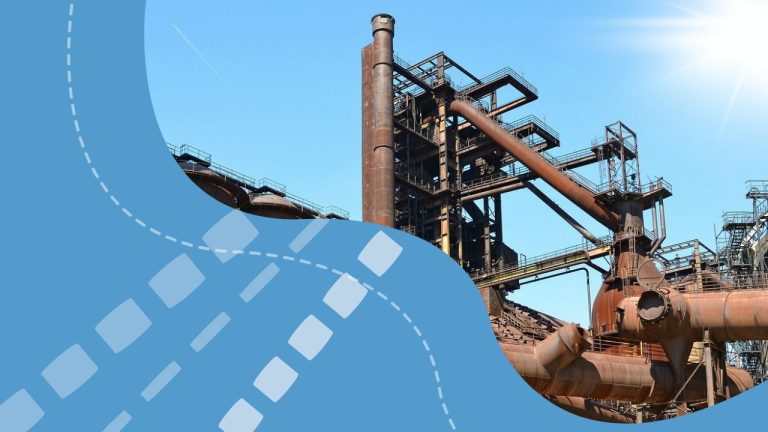
    News of a legal dispute between Rio Tinto and the state of Serbia is a new twist regarding the company’s lithium mining and processing project. Serbia halted it in January 2022, but environmental activists and residents of the Jadar area believe that both Rio Tinto and Serbia’s authorities have not given up on the investment.

    Information about the lawsuits emerged two weeks after a media report that Serbia and the European Commission signed a letter of intent in September to initiate a strategic partnership for batteries and critical raw materials including lithium.

    The Nova news outlet learned that under the jurisdiction of the Administrative Court, there are four cases against the decision of the Government of Serbia to abolish the project, two suits against the Ministry of Agriculture, Forestry and Water Management, and three against the Ministry of Finance.

    Of note, Rio Tinto said on several occasions that it plans to sue Serbia.

    With two lawsuits, Rio Tinto is disputing the government’s decision to annul the approval of environmental impact assessments, issued by the Ministry of Environmental Protection, the court revealed.

    The state Administrative Commission has rejected Rio Sava’s appeals, which resulted in the two remaining cases, the report reads.

    Since the beginning of October, Rio Sava fired about 80% of its employees

    Two lawsuits concern the Ministry of Agriculture’s inspection measures, according to the article. The cases that the Anglo-Australian mining giant launched against the Ministry of Finance are related to tax issues, it adds.

    In addition, Nova.rs reported, without identifying its source, that Rio Sava fired 80% of its workers since the beginning of October.

    The plan is to keep twenty employees only until the administrative procedure for the layoffs is completed and then to close the firm, which means Jadar project is finished, the website wrote.

  • Serbia and Jadar lithium mines: will the project resume?

    Serbia and Jadar lithium mines: will the project resume?

    Serbia’s Minister of Mining and Energy Dubravka Đedović Handanović said on Thursday that it is necessary to “responsibly consider” how to approach her country’s critical natural resources – which includes lithium – in the future.

    “If we want to develop, then we should use natural potentials, but also do everything to minimise risks, especially in the area of ​​the environment,” Minister Đedović Handanović said. “It is important that we do not look at this issue exclusively through the exploitation of mineral wealth, but also as the possibility of obtaining a value chain, which would also mean factories for the production of batteries and electric vehicles. The world is moving towards a new industrial order and it is up to us to see if we want to be part of that order, and we have all the prerequisites for that.”

    The Mining and Energy made a similar point on Tuesday: when asked about the potential exploitation of lithium in Serbia, she responded by saying that her country needs to consider how to utilise such resources in terms of closing the value chain.

    “Serbia is extremely rich in mineral resources that are also on the EU’s list of critical mineral resources. We stopped the ‘Jadar’ project before we had a chance to see the results of the Environmental Impact Assessment. We should consider how we can utilise the wealth we possess in terms of closing the value chain, which would mean factories for battery and electric vehicle production,” Minister Đedović Handanović said on Tuesday.

    The Jadar deposit is estimated to be one of the largest lithium deposits in the world, according to the think-tank Blue Europe. The Jadar mining project, located in western Serbia, had been started by British-Australian mining company Rio Tinto before the company’s license was revoked in 2022 due to environmental concerns about the project.

    However, a report by German tabloid Hadensblatt in December 2022 on a confidential list of investments under the EU’s “Global Gateway” initiative – including a lithium mine in Serbia – has led to speculations that the Jadar project may be revisited in the future.


  • Serbia and Jadar lithium mines: will the project resume?

    Serbia and Jadar lithium mines: will the project resume?

    Serbia’s Minister of Mining and Energy, Dubravka Đedović Handanović, emphasized the need for a responsible approach to the country’s critical natural resources, including lithium, during a recent statement. Minister Đedović Handanović highlighted the importance of considering not only the exploitation of mineral wealth but also the establishment of a value chain that encompasses battery and electric vehicle production. Recognizing the global shift towards a new industrial order, she emphasized Serbia’s potential to become a part of this transformative movement.

    Minister Đedović Handanović reiterated this viewpoint when discussing the potential exploitation of lithium in Serbia. She emphasized that Serbia possesses abundant mineral resources, some of which are classified as critical by the EU. Referring to the suspended “Jadar” project and the importance of the value chain, she emphasized the need to explore ways to capitalize on Serbia’s wealth, including the establishment of factories for battery and electric vehicle production.

    The Jadar deposit, identified as one of the largest lithium deposits globally by the think-tank Blue Europe, had been the focus of the mining project initiated by British-Australian mining company Rio Tinto. However, due to environmental concerns, the company’s license was revoked in 2022.

    Although the Jadar project was halted, speculations have arisen following a report by German tabloid Hadensblatt in December 2022, which revealed a confidential list of investments under the EU’s “Global Gateway” initiative, including a lithium mine in Serbia. This has sparked speculation about the potential revisiting of the Jadar project in the future.