Tag: Glencore

  • Kazzinc Loses Tajik Raw Material Supply Contract Amid Customs Controls

    Kazzinc Loses Tajik Raw Material Supply Contract Amid Customs Controls

    Kazakhstan’s largest gold producer Kazzinc, in which Swiss commodities group Glencore holds a 70.2 percent stake, has reportedly lost a key raw material import contract from Tajikistan following stricter customs controls imposed by Kazakhstan’s State Revenue Committee.

    According to Kazakhstan’s Ministry of Industry and Construction report for 2025, the contract was affected by the application of the “red corridor” customs inspection regime on imported raw materials. Kazzinc relies on imported feedstock for roughly 40 percent of its production needs, and the lost contract involved approximately 40,000 tonnes of raw materials — representing about 20 percent of the company’s imports.

    The material had been supplied from Tajikistan by a company linked to Chinese mining group Zijin Mining. The loss of the contract highlights supply chain challenges facing Kazakhstan’s mining and metallurgical sector.

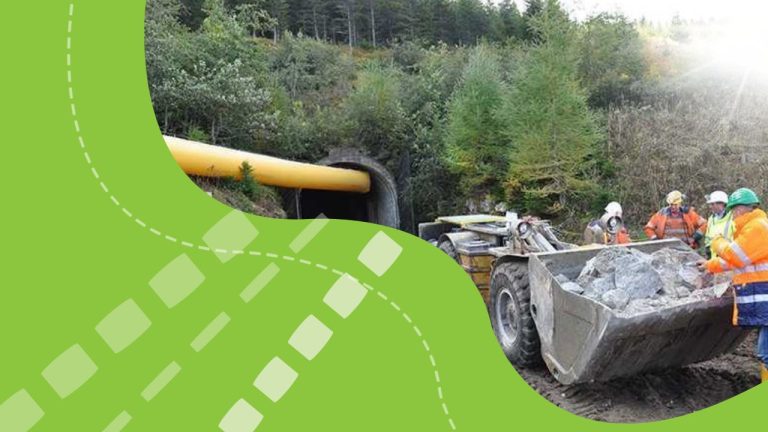
    Industry data in the report indicate that production of metallic ores, excluding iron ore, declined by 0.7 percent in 2025. The drop was partly attributed to operational changes at the Vasilkovskoye deposit in Akmola region, the country’s largest gold mine operated by Kazzinc, which is transitioning from open-pit to underground mining.

    Resource depletion at several zinc and lead deposits in East Kazakhstan — including the Maleevsky, Tishinsky and Dolinny mines — has also contributed to declining output. As a result, forecasts for 2026 suggest growth in most major metals such as steel, pig iron, rolled products and copper, while production of refined gold and metallic zinc is expected to fall.

    Gold output is projected to decline from 29.45 tonnes to 21.27 tonnes due to depletion at the Vasilkovskoye mine. Zinc production is also expected to drop from 259,600 tonnes to 239,000 tonnes because of declining ore grades and uncertainty surrounding planned zinc concentrate supplies from Russia.

    Overall, production in 2025 declined across several refined metals. Output of metallic zinc fell by 6.6 percent, refined silver by 10.4 percent, refined gold by 1.1 percent and refined lead by 29.6 percent.

    These developments come as Glencore reportedly considers selling its majority stake in Kazzinc as part of a broader portfolio restructuring. Market analysts estimate the value of the asset at around $5 billion.

    Media reports have suggested that Kazakh businessman Shakhmurat Mutalip is in discussions to acquire the stake for approximately $4–4.5 billion. In early 2026, Mutalip registered two new mining companies at the Astana International Financial Centre — KazZinc Group Ltd. and Central Asia Resources Holding Ltd. — both focused on copper, lead and zinc mining and processing.

  • KazZinc Reports $5.1 Billion Revenue in 2025 as Profit Surges on Higher Metal Prices

    KazZinc Reports $5.1 Billion Revenue in 2025 as Profit Surges on Higher Metal Prices

    Kazakhstan-based KazZinc generated $5.1 billion in revenue in 2025, according to preliminary financial results published by its main shareholder, the Anglo-Swiss commodity group Glencore, which owns nearly 70% of the company. The remaining stake is largely held by state mining holding Tau-Ken Samruk.

    In addition to revenue, the report disclosed key performance indicators for KazZinc in 2025, including adjusted EBITDA of $1.642 billion, depreciation of $666 million and adjusted EBIT of $976 million.

    For comparison, in 2024 KazZinc recorded revenue of $4.2 billion, adjusted EBITDA of $1.185 billion, depreciation of $725 million and adjusted EBIT of $460 million.

    Operating costs in 2025 amounted to $4.333 billion, resulting in net profit of $774 million for the year. Of this, approximately $540 million was attributable to Glencore as the controlling shareholder. Dividends paid to the non-controlling shareholder, primarily Tau-Ken Samruk, reached $242 million. In 2024, KazZinc’s net profit stood at $308 million with costs of $3.9 billion.

    The improved financial performance was largely driven by higher prices for key metals produced by the company, including zinc, gold and copper. In its annual presentation, Glencore reported that adjusted EBITDA for its metals and minerals segment rose 18% year-on-year to $7 billion, supported by stronger zinc margins, gold-related investments at Altyntau Kokshetau and increased copper volumes and prices in the second half of the year.

    Glencore also recorded a non-cash balance sheet capitalisation of $249 million related to the extension of KazZinc’s lease of the Bukhtarma hydropower plant. The group noted expectations of closures of several smaller Kazakh mines.

    According to Interfax-Kazakhstan, Glencore’s net profit in 2025 amounted to $363 million on revenue of $247.54 billion, while its net debt at year-end stood at $11.17 billion.

    Earlier reports indicated that as part of its portfolio restructuring, Glencore may announce in the coming weeks the sale of its 70% stake in KazZinc. Analysts estimate the asset’s value at approximately $5 billion.

  • Glencore Shifts Focus to Asset Sales After Failed Merger Talks With Rio Tinto

    Glencore Shifts Focus to Asset Sales After Failed Merger Talks With Rio Tinto

    Following another breakdown in merger talks with Rio Tinto, Swiss mining major Glencore is turning its attention to asset sales as part of a strategy to strengthen its copper portfolio, Reuters reported.

    Discussions aimed at creating a global mining giant valued at around $240 billion collapsed this week due to disagreements over valuation and ownership structure. The failed talks mark the third unsuccessful attempt to merge the two companies, following earlier efforts in 2014 and 2024.

    As part of its portfolio reshaping, Glencore is expected to announce the sale of a 70% stake in KazZinc in the coming weeks. Analysts estimate the value of the asset at around $5 billion. KazZinc is a major producer of zinc, lead, and gold in Kazakhstan.

    Glencore Chief Executive Gary Nagle has repeatedly spoken in favour of industry consolidation, arguing that combining assets can unlock value and make the mining sector more attractive to investors.

    The company has also set a long-term goal of increasing copper production to 1.6 million tonnes by 2035, up from 852,000 tonnes produced in 2025, through a combination of new mine development and the restart of existing operations.

    In the near term, investors expect Glencore to prioritise divestments to create a more focused copper mining and metals trading business. Talks are reportedly under way to sell a 40% stake in Glencore’s copper and cobalt operations in the Democratic Republic of Congo to a consortium led by Orion Critical Minerals, with backing from the United States.

    Separately, Glencore is exploring potential cooperation with Brazil’s Vale on the joint development of copper deposits in Canada.

    Since the collapse of the Rio Tinto talks, Glencore shares have fallen by more than 10%, although they remain up 19% year-to-date. The company is also reviewing its coal portfolio and has not ruled out a partial spin-off of coal assets to raise additional capital.

    In Kazakhstan, Glencore continues to invest in gold production. In December 2025, the company allocated nearly $500 million to extend the life of the Vasilkovskoye gold mine in the Akmola Region, operated by Altyntau Kokshetau, the main gold supplier for KazZinc.

    Industry expert Nurlan Zhumagulov noted that Altyntau Kokshetau ranked thirteenth among Kazakhstan’s largest taxpayers in 2025, contributing 142 billion tenge, a year-on-year increase of 47%.

    It was also reported that Kazakh businessman Shakhmurat Mutalip is in talks to acquire a 70% stake in KazZinc. In January 2026, he registered two new companies at the Astana International Financial Centre: KazZinc Group Ltd and Central Asia Resources Holding Ltd.

  • Kazakh MP questions state support for KazZinc and Glencore over exporter financing

    Kazakh MP questions state support for KazZinc and Glencore over exporter financing

    A debate over the allocation of state export financing has flared up in Kazakhstan’s parliament, after MP Erlan Sairov sharply criticized the national holding Baiterek and Swiss commodities giant Glencore, which owns around 70% of KazZinc.

    Speaking at a Mazhilis session on business support measures, Sairov said that about 35% of nearly 1 trillion tenge allocated under the exporter financing program went to KazZinc. He questioned why a company exporting semi-finished metal products and operating largely on a prepayment basis required state-backed loans. According to the MP, export support should primarily help domestic high-tech products enter international markets, not finance a multinational corporation.

    Sairov argued that during Glencore’s two decades of presence in Kazakhstan, the company had failed to create high-value, high-tech domestic production, raising concerns about the use of public funds to support foreign-controlled enterprises. His remarks were directed at Baiterek chief executive Rustam Karagoishin.

    In response, Karagoishin stressed that KazZinc is legally registered in Kazakhstan and therefore qualifies as a domestic client for Baiterek. He said the holding is obliged to assess and approve financing applications that meet its criteria, noting that exports remain a key source of foreign currency inflows and budget revenues. While acknowledging the priority given to high-tech sectors, Karagoishin said traditional exporters still play a crucial role, particularly as Kazakhstan’s metallurgical sector faces growing challenges on global markets.

    The discussion comes amid renewed uncertainty around KazZinc’s ownership. Bloomberg reported in mid-2024 that Glencore was considering selling its stake in the company, including the Vasilkovskoye gold asset, before later shelving the plan. Talks reportedly resumed in 2025, with Bloomberg sources naming businessman Shakhmurat Mutalip as a potential buyer. Mutalip is also said by the Financial Times to be pursuing a major stake in Eurasian Resources Group, despite not appearing on Kazakhstan’s Forbes rich list.

  • Vulcan Energy Signs Eight-Year Lithium Supply Deal with Glencore

    Vulcan Energy Signs Eight-Year Lithium Supply Deal with Glencore

    Vulcan Energy Resources has announced a major supply agreement with mining and commodities giant Glencore, under which it will deliver 36,000 to 44,000 tonnes of lithium hydroxide monohydrate from its Lionheart Project over an initial eight-year period.

    The deal represents roughly 20% of Vulcan’s planned output from the Lionheart Project during that timeframe and marks a key milestone for the company’s Phase One project financing.

    The agreement with Glencore adds to Vulcan’s growing roster of high-profile partners, which already includes Stellantis, Umicore, and LG Energy Solution. Vulcan said the Glencore deal will be the final offtake contract needed for its first project phase, while negotiations with additional European automakers are ongoing.

    “Vulcan has now achieved a good mix of offtake partners for Phase One lithium production: an automaker, a battery maker, a cathode manufacturer, and a commodities trader, all with a strong European focus,” said Cris Moreno, CEO and managing director of Vulcan Energy.

    Located on the French-German border, the Lionheart Project is regarded as Europe’s largest lithium resource. Vulcan’s development strategy focuses on producing climate-neutral lithium to support the region’s fast-growing electric vehicle and battery industries.

  • Glencore Rejects US Move, Will Keep Primary Listing in London

    Glencore Rejects US Move, Will Keep Primary Listing in London

    In a rare win for the London Stock Exchange, commodities giant Glencore has confirmed it will retain its primary listing in the UK, scrapping a potential move to New York despite months of speculation.

    CEO Gary Nagle announced on Wednesday that the company had conducted an in-depth global review and determined that relocating its primary listing to the United States would not deliver added value for shareholders at this time. “Having done that thorough analysis, we will remain listed in London for the moment,” Nagle said, adding the situation would remain under review.

    The decision is a boost for London’s capital markets, which have struggled with sluggish IPO activity and a wave of departures from high-profile firms like TUI, Just Eat Takeaway, and BHP. London’s equity market has been shrinking amid concerns about undervaluation and a more favorable investor base overseas.

    Nagle also addressed recent speculation that a US move could help boost Glencore’s stock, which is down 26% over the past year. He attributed the decline largely to falling coal prices, not the listing venue. He also noted that inclusion in the S&P 500 – a key appeal for many firms considering a US move – was unlikely in Glencore’s case, diminishing the potential upside of relocating.

    While London’s financial ecosystem welcomed the news, some investors were left disappointed, with Glencore shares falling 4% following the announcement. Legal & General CEO Antonio Simoes urged the UK government to accelerate listing reforms to ensure the country remains an attractive hub for global investment.

    Meanwhile, other major firms such as Shell and Pearson remain under pressure to consider transatlantic moves, amid growing competition between financial centres.

  • Glencore Considers Selling Its Assets in Kazakhstan

    Glencore Considers Selling Its Assets in Kazakhstan

    Glencore, the Swiss multinational with a 70% stake in Kazakhstan’s Kazzinc, is again exploring options to sell its assets in the country, according to Bizmedia.kz.

    The Financial Times reported that Glencore has held informal talks with potential buyers in recent weeks regarding the future of its assets in Kazakhstan.

    This news comes after a series of reports in June 2024 by Bloomberg that Glencore was planning to sell its stake in Kazzinc to Chinese investors, as well as considering the sale of the Vasilkovskoye gold mine, which is operated by Kazzinc. However, in July 2024, Bloomberg reported that the company had abandoned the deal.

    It remains to be seen whether Glencore will be able to reach an agreement this time. The company has not commented publicly on the reports.

    If Glencore does sell its assets in Kazakhstan, it would be a major shake-up for the country’s mining industry. Kazzinc is one of the largest zinc producers in the world, and the Vasilkovskoye gold mine is a significant gold producer. A sale of these assets would likely lead to significant changes in the ownership and operation of these mines.

    Glencore has been under pressure from investors to streamline its operations and focus on its core business. The sale of its assets in Kazakhstan would be in line with this strategy.

  • Glencore Fined $152 Million by Swiss Authorities for Bribery Case in Congo

    Glencore Fined $152 Million by Swiss Authorities for Bribery Case in Congo

    Glencore Plc has been fined $152 million by Swiss authorities for failing to prevent a business partner from bribing a Congolese public official in 2011. The Swiss attorney general’s office (OAG) announced on Monday that prosecutors determined Glencore did not take sufficient measures to prevent the bribery.

    The incident pertains to the business partner’s acquisition of minority stakes in two mining companies in the Democratic Republic of the Congo (DRC) from a state-owned enterprise. Glencore stated that it does not admit the findings but has agreed not to appeal the penalty order to resolve the matter.

    “Glencore is pleased to have resolved these investigations relating to past matters that occurred over 13 years ago,” said group chairman Kalidas Madhavpeddi. “This resolves the last of the previously disclosed government investigations into historical misconduct.”

    The OAG mentioned in the summary penalty order that it did not find evidence of any Glencore employees having knowledge of the bribery by the business partner, nor did Glencore benefit financially from the business partner’s actions. A parallel investigation by the Dutch Prosecution Service has also been concluded and dismissed.

    In 2022, the company agreed to pay the DRC government $180 million to settle other alleged corruption claims in the country between 2007 and 2018. With the latest fine, Glencore will have paid at least $1.7 billion to resolve various investigations into bribery and corruption worldwide.

    In 2022, the company pleaded guilty to corruption and market manipulation cases in the US and UK, admitting to paying bribes to win business in eight countries, from Brazil to South Sudan.


  • Glencore Retains 70.2% Stake in Kazakh Mining Business Amid Price Disagreement

    Glencore Retains 70.2% Stake in Kazakh Mining Business Amid Price Disagreement

    Glencore, the global trading company, has decided to retain its 70.2% stake in the Kazakh mining business after failing to agree on a sale price, according to “Kursiv” citing Bloomberg. Glencore has been simplifying its operations by divesting smaller or non-core assets. The decision to sell its Kazakh assets was made in early summer when Chinese buyers showed interest. This included the Vasilkovsky gold mine, managed by KazZinc.

    Potential investors were unable to meet Glencore’s price expectations, which Bloomberg estimates to be several billion dollars. As a result, the company opted not to proceed with the sale. Under existing rules, investors can acquire a part of the enterprise only if the other partner declines the purchase. The co-owner of KazZinc, Tau-Ken Samruk (holding a 29.8% stake), has not commented on the potential deal.

    KazZinc is a major producer of non-ferrous metals. According to Glencore, last year the enterprise produced 173,900 tons of zinc, an increase of 27,500 tons from the previous year. Additionally, in 2023, KazZinc produced 35,600 tons of lead, 14,800 tons of copper, and 598,000 ounces of gold.

  • Glencore Abandons Sale of Kazzinc Stake After Unmet Valuation

    Glencore Abandons Sale of Kazzinc Stake After Unmet Valuation

    Glencore Plc has abandoned plans to sell its stake in the Kazakh mining company Kazzinc after potential buyers failed to meet its valuation, sources familiar with the situation reported. Glencore, holding a 70% stake in Kazzinc, had been contemplating an exit from the business amid interest from Chinese buyers. The company has now issued a termination letter to the bidders, the sources said, requesting anonymity due to the private nature of the discussions. A Glencore spokesperson declined to comment on the matter.

    Kazzinc, established in 1997 through the merger of eastern Kazakhstan’s three main non-ferrous metals companies, comprises a sprawling network of mines, concentrators, and metal finishing plants. This setup allows the company to transition from digging ore to producing finished zinc metal and products.

    Glencore’s Chief Executive Officer, Gary Nagle, has continued the strategy of his predecessor, focusing on simplifying the business by selling off smaller or more challenging assets. The company has previously sold zinc assets in Peru and some of its smaller copper operations.

    While zinc prices have surged this year due to supply constraints, the long-term outlook remains uncertain. The metal’s future is clouded by its heavy reliance on the struggling construction sector and its limited applications in rapidly growing industries like renewable energy and electric vehicles.