Tag: Glencore

  • British Prosecutors to Charge Former Glencore Employees Over Bribery Allegations

    British Prosecutors to Charge Former Glencore Employees Over Bribery Allegations

    British prosecutors are set to bring criminal charges against former Glencore employees in connection with bribery allegations, marking a significant development in a long-running investigation. More than 18 months after revealing that up to 11 ex-staffers were under scrutiny, the Serious Fraud Office (SFO) informed a London judge on Monday that it had sought governmental approval to proceed with charges against individuals. This announcement represents the first commitment by the SFO to pursue individual criminal convictions following Glencore’s guilty plea in 2022.

    While the SFO did not specify the number of individuals to be charged, it indicated that some could appear in court as early as September. The commodity trading sector has faced anti-corruption probes for years, but prosecutions of individual traders or executives have been rare until now. The SFO has previously described the investigation into the Glencore employees as involving allegations of serious criminality.

    Glencore faced a £276-million fine from a London judge after admitting to orchestrating an extensive bribery scheme to gain access to oil cargoes across Africa. Prosecutors targeted the firm’s London trading desk, highlighting that Glencore’s traders and executives paid over $28 million in bribes between 2011 and 2016 to secure access to oil cargoes. The investigation revealed that these payments were made for preferential access to oil, including increased cargo volumes, valuable grades of oil, and favorable delivery dates.

  • Glencore Considers Selling Stake in Kazakh Mining Company Kazzinc

    Glencore Considers Selling Stake in Kazakh Mining Company Kazzinc

    Glencore is considering selling its stake in the Kazakh mining company Kazzinc amid interest from potential buyers in China, according to sources familiar with the matter. The deal could value Glencore’s nearly 70% holding in Kazzinc at several billion dollars, the sources said, requesting anonymity due to the private nature of the discussions.

    Glencore is also in the process of selling the Kazzinc-operated Vasilkovskoye gold mine, having scrapped a previous sale over seven years ago. The gold mine and Kazzinc’s core zinc operations could be sold to separate buyers or a single party, depending on the offers received. However, the deliberations are preliminary and may not lead to a transaction. A representative for Glencore declined to comment.

    Kazzinc is composed of an extensive network of mines, concentrators, and metal finishing plants across Kazakhstan, enabling the company to process ore and produce finished zinc metal and products. The company was established in 1997 through the merger of three main non-ferrous metals companies in eastern Kazakhstan, which were mostly government-owned.

    Glencore CEO Gary Nagle has continued his predecessor’s strategy of simplifying the business by selling off smaller or more challenging assets. The company has already sold zinc assets in Peru and some of its smaller copper operations. Zinc prices have rallied this year due to supply constraints, but the long-term outlook remains uncertain because of the metal’s heavy exposure to the struggling construction sector and its limited uses in fast-growing industries like renewable energy and electric vehicles.

    Prices were 1.6% lower at $2,888.00 on Wednesday on the London Metal Exchange, reducing zinc’s yearly gain to 8.6%. Kazzinc’s zinc production rose by 27,500 tons in 2023 to 173,900 tons, while lead production totaled 35,600 tons, copper was 14,800 tons, and gold reached 598,000 ounces, according to Glencore’s annual report.

  • Kazzinc Declines to Classify Buhtarminskaya Hydropower Plant’s Generation as Renewable

    Kazzinc Declines to Classify Buhtarminskaya Hydropower Plant’s Generation as Renewable

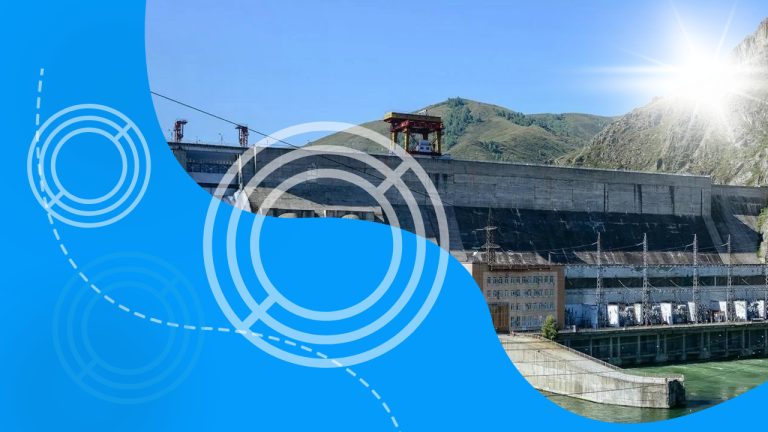
    The Kazakhstan-based mining company “Kazzinc,” which is controlled by the Swiss-British trader Glencore, has reviewed its emissions data related to electricity consumption. According to a report from inbusiness.kz, the company is revising its Scope 2 emission metrics following an analysis of Glencore’s annual report for 2023. This review aims to align with the Greenhouse Gas Protocol’s definition of direct and indirect energy sources and renewable energy targets under the Emissions and Energy Reporting Procedure (EERP). The revision includes recalculating direct and indirect energy use and associated emissions for “Kazzinc,” including power generation at the Buchtarma Hydroelectric Power Station. Previously, this station was considered a fully integrated direct source of energy, but due to changes in reporting procedures, it will now be classified as an indirect source, potentially increasing the company’s reported emissions.

    The rationale behind this decision is based on the fact that the hydroelectric station utilizes water resources, which are subject to regulation and cannot be classified as renewable energy sources. Consequently, this move has sparked discussions within the energy sector, particularly regarding the classification of hydroelectric power and its eligibility for renewable energy incentives.
  • The UK’s major miners face multiple challenges.

    The UK’s major miners face multiple challenges.

    For the former, adjusted EBITDA fell by 50 per cent year-on-year to $17bn in 2023 while Anglo American saw a net profit fall of 94 per cent.

    Glencore is really struggling to reckon an attempted exit of its legacy coal business, one that delivered $17.9bn EBITDA in 2022 – more than the groups entire return in that metric for 2023.

    The problem across the board for miners, not just Anglo and Glencore, is that this isn’t the good old days.

    It is instead putting down a roadmap towards essential metals for the energy transition; nickel, cobalt and zinc.

    Anglo is also trying to dial in on battery metals but remains heavily tied to another poorly-performing asset class – Platinum Group Metals (PGM), used in the diesel and petrol car industry.

    Alongside a wheezing diamond market, PGMs cost Anglo around $5.5bn in revenue in 2023.

    The problem across the board for miners, not just Anglo and Glencore, is that this isn’t the good old days.

    Miners had rarely been as profitable in recent history as they were in the immediate aftermath of the pandemic, which effectively ignored individual market permutations and sent all commodities skywards.

    Now, mining sub-sectors are off the ride and are starting to reconfigure individual supply-demand dynamics and that is where the underlying issues are coming to the fore.

    The nickel market, for example, has dramatically over-estimated short-term demands resulting in a market flood and pain for those with exposure.

    Exacerbated by a supply monopoly from Indonesia, miners with exposure like Glencore are struggling to sell the metal at a lower market price, and further hampered by dramatic increases in operational costs versus what they were a decade ago.

    The firm has firmly felt the nickel bite, announcing the sell-off of its stake in the Koniambo mine in New Caledonia after a profitless decade.

    The head of French metal mining group Eramet said last week that Indonesia would effectively render “old traditional players structurally non-competitive” for the foreseeable future.

    Nevertheless, the firm’s chief executive Gary Nagle is determined to spin off Glencore’s coal businesses to the U.S in favour of making UK-based operations more green metal focused – an uphill battle for the foreseeable future.

    China is continuing to weigh on miners too as its copper-hungry property business remains subdued despite state efforts to wake it up.

    Firms like Anglo are sitting on ageing assets and analysts know that major projects need to be found pretty quickly to avoid slipping further into the mooted steep production deficits.

    But Anglo faces a challenge not shared as acutely by its competitors like Glencore, Rio Tinto or Vale in that its portfolio is attempting to cater for two inversely expanding ends of the motoring market.

    The costly revenue shortfalls from its PGM group in 2023 are in large part attributable to stalling petrol and diesel vehicle demand. And with battery metal demand bottoming out too, the firm is stuck between a rock and a hard place.

    Glencore and Anglo are not Shell and BP. In market cap terms at $45bn and $23bn, they might look like they hold relatively comparable positions within the London-listed market.

    But miners are far more exposed to market volatility owing to the demand in sectors they feed.

    For now, both Glencore and Anglo can weather instability through manageable debt piles and the resources to try and pivot in whatever way possible to drive profitability.

    But investors should strap in for a bumpy ride.

  • Glencore to publish updated climate transition plan in March

    Glencore to publish updated climate transition plan in March

    Diversified miner Glencore plans to publish an updated Climate Action Transition Plan, as well as to report on its progress against its industrial emission reduction targets and ambitions, in March.  The group on December 13 revealed that 30.25% of shareholders voted against the approval of the company’s 2022 Climate Report, while only 29.2% voted in favour of its next Climate Action Transition Plan, during the miner’s last annual general meeting (AGM) on May 26.
    The company has undertaken a review of its Climate Action Transition Plan, following the commitment made at the 2021 AGM. Glencore sought investors’ views on expected changes in the updated plan during the consultation period.

    “This process . . . has given us valuable insights into the evolution of shareholders’ views and voting approach on our progress and updated transition plan, representing a wide cross-section of shareholders who voted in different ways on these climate-related resolutions.

    “We have reflected carefully on the feedback received and will continue to engage with shareholders and other stakeholders, as well as monitor external developments. Insights from this engagement have been and will continue to be factored into our internal deliberations,” Glencore said.

    The company said its climate strategy was an important area of focus for its shareholders, and that there continued to be broad support for its climate strategy, which seeks to maintain resilience to the risks and opportunities of the evolving energy transition while maintaining focus on progressing towards the ambition of achieving a net-zero total industrial emissions footprint by 2050, assuming a supportive policy environment.

    Glencore said the principal areas of interest for its shareholders included a comparison of its targets and ambition to all relevant International Energy Agency scenarios, including net-zero scenarios; understanding progress on industrial emissions reduction between Glencore’s short-term target of 2026 and medium-term target of 2035; and integration of the recently announced acquisition of 77% of Teck’s Elk Valley Resources (EVR) steelmaking coal assets into the climate strategy.

    In response to the constructive recommendations received, Glencore said it would maintain its commitment to reducing its total industrial emissions footprint and report on progress against its targets and ambitions.

    Additionally, the company said it would update its assessment of the resilience of its portfolio and expand its analysis of its targets and ambitions against a range of climate policy scenarios.

    Glencore also said that it would address the climate-related aspects of the proposed acquisition of EVR.

  • Coal imports from Colombia rise as Germany bolsters supply substitutes for Russia

    Coal imports from Colombia rise as Germany bolsters supply substitutes for Russia

    Clean Energy Wire
    Colombia has become an important supplier of hard coal to Germany, substituting for Russia, the government has said in an answer to a parliamentary inquiry by the Left Party. Between January and May, the South American country’s share in imports rose to 15.6 percent, making it one of the most important suppliers together with the U.S. and South Africa. In total, Germany imported some 2.6 million tonnes of coal from Colombia in the first five months of 2023. Already in 2022, imports had tripled compared to the previous year, reaching around 5.7 million tonnes. Imports from Russia previously accounted for about half of hard coal supplies to the country but were abruptly ended due to sanctions imposed following Russia’s invasion of Ukraine.

    The Left Party criticised imports from Colombia on grounds of allegations against operators of the El Cerrejon mine. This mine that is key to the country’s hard coal exports and is owned by Swiss-based Glencore has been accused of severe environmental damage and human rights violations, said the Left Party.

    Amid the war in Ukraine, Germany re-started some of its old coal-fired power plants to maintain supply security after the loss of Russian fossil fuel imports, particularly gas. The country is still heavily dependent on imported fossil fuels, and ceased mining its own hard coal in 2018. Offically, the country aims to exit coal by 2038 at the latest, although the current government has said it aims to already do so by 2030.

  • The Environmental Impact and Remediation Efforts of Kazzinc in Eastern Kazakhstan

    The Environmental Impact and Remediation Efforts of Kazzinc in Eastern Kazakhstan

    This hefty penalty was imposed due to a significant leak of waste materials into the Philippovka, Tikhaya, and Ulba rivers within the Eastern Kazakhstan region. This unfortunate event has drawn the attention of environmental regulators and raised serious concerns about the ecological repercussions.

    The Cause of the Leak

    The incident was triggered by a rupture in a pulp pipeline at the tailings facility of the Riddar Ore Enrichment Plant, which is operated by Kazzinc. The rupture led to the release of 1350 cubic meters of slurry, a byproduct of ore processing, onto the surrounding terrain. The natural topography allowed these liquid waste materials to flow into the Philippovka River, eventually merging with the Tikhaya River and, subsequently, the Ulba River. This chain reaction significantly deteriorated the quality of surface water and inflicted harm upon the local natural habitat.

    Environmental Violations Detected

    Environmental specialists who conducted investigations in the aftermath of the waste leakage discovered alarming increases in the concentrations of various substances:

    • Nitrate levels surged by a staggering 140 times.
    • Suspended solids showed a fiftyfold increase.
    • Manganese levels skyrocketed by a factor of five.

    These findings underscore the gravity of the environmental impact caused by Kazzinc’s negligence in preventing and addressing the waste leakage.

    Remediation Efforts

    Efforts to rectify the environmental damage were swift and comprehensive. The spilt slurry was promptly collected from the affected riverbanks and terrain. Following this, a thorough cleansing of the affected areas was carried out, including the restoration of the fertile soil layer. As a further step towards environmental restitution, perennial grasses were sown to promote ecological recovery.

    The collected liquid pulp was temporarily stored in an emergency pond at Pumping Station No. 5. It will later be transported to the Talovskoye tailings storage facility for safe and regulated disposal. Importantly, bio testing of the water did not reveal any toxic impact on local biota, providing some assurance regarding the immediate environmental consequences.

    Compensation and Restoration

    Kazzinc has committed to compensating for the environmental damage it caused. By the end of October, the company aims to restore the Shulbinskoye Reservoir by introducing 1400 juvenile fish of the carp family. Additionally, the company is obligated to pay administrative fines totalling 49.6 million Kazakhstani Tenge.

    In response to the incident, the Riddar Police Department has submitted a formal complaint. If authorities decline to initiate criminal proceedings against Kazzinc, the company could face an additional fine of 6.9 million Kazakhstani Tenge for soil contamination.

    Previous Violations

    It’s worth noting that this is not the first time Kazzinc has been embroiled in environmental controversy. In July of this year, the Philippovka River in Eastern Kazakhstan turned a milky white, a phenomenon attributed to a rupture in a pipeline used for transporting ore or waste from the mining industry (known as a pulp pipeline) at the Riddar Ore Enrichment Complex operated by Kazzinc. This spill of pulp materials also entered the river, causing further environmental distress.

    In a separate incident in 2021, “Kursiv” reported that Kazzinc had discharged polluted water into the Bukhtarma River, resulting in environmental damages exceeding 8 million Kazakhstani Tenge.

    About Kazzinc

    Kazzinc stands as one of Kazakhstan’s major non-ferrous metallurgical enterprises, encompassing the entire production cycle of zinc, lead, copper, gold, and silver ingots. This extensive process begins with ore extraction and culminates in the production of refined metals.

    The company comprises five industrial plants, with its headquarters situated in Ust-Kamenogorsk. The primary shareholder of Kazzinc is the Anglo-Swiss trader Glencore, while the remaining shares are held by the national company “Tau-Ken Samruk.”

    In conclusion, the recent environmental incident involving Kazzinc underscores the importance of robust environmental regulations and oversight in Kazakhstan’s industrial sector. It serves as a reminder of the significant ecological consequences that can result from inadequate waste management practices, emphasizing the need for continuous monitoring and remediation efforts to protect the country’s natural resources and biodiversity.

  • Another Glencore Veteran Departs as Trader Popovic Retires

    Another Glencore Veteran Departs as Trader Popovic Retires

    Popovic, 53, has been at Glencore since 1992 and helped build its sprawling zinc business in Kazakhstan. His departure was announced in an internal memo by Chief Executive Officer Gary Nagle.

    Glencore has experienced a sweeping changing of the guard in recent years, anchored by the departure of longstanding chief executive Ivan Glasenberg, who handed over to Nagle in 2021. One of the world’s biggest commodity merchants and miners, the company vies with rival Trafigura Group as the top metals trader.

    In 2012, Glencore disclosed that Popovic owned a 1.35% stake in the company, worth more than $500 million, making him the eighth-largest shareholder among the top employees — a group that reaped an enormous windfall at the time of the IPO.

    Popovic’s fellow co-head, Jyothish George, will become head of copper trading, according to the memo from Nagle. Inigo Segura and George Tourkolias will be appointed as co-heads of zinc trading, with Segura focusing on concentrates and Tourkolias on metals. Popovic will continue in his role as non-executive chairman of Glencore’s Kazzinc unit.

    Nearly all the the generation of executives that led the company to its 2011 flotation have now left — with Chief Financial Officer Steven Kalmin a notable exception — and have largely been replaced in their roles by internal promotions.

  • Will Swiss Glencore buy Kazakhstan’s Shalkiya mine?

    Will Swiss Glencore buy Kazakhstan’s Shalkiya mine?

    ​In recent years, the old fields of the global trader’s subsidiary, Kazzinc, have been depleted, and new ones may not provide the required level of reserves for a long time.
    In the near future, Kazzinc may buy the Kazakh zinc deposit Shalkiya, developed by the Tau-Ken Samruk mining state holding in the Kyzylorda region. An industry source familiar with the situation told an inbusiness.kz correspondent about this .

    Let us remind you that the main shareholder of Kazzinc is almost 70% of the Anglo-Swiss trader Glencore, and the remaining share mostly belongs to the same Tau-Ken Samruk. To be fair, we note that talk that the Kazakh zinc giant will buy Shalkiya has been circulating for several years without any visible consequences.

    Therefore, in order to verify the information received, the inbusiness.kz correspondent made information requests to Glencore, Kazzinc and Tau-Ken Samruk. The press service of the global trader responded to the publication’s questions asking to confirm the possibility of purchasing the Shalkiya mine with the phrase “no comment,” while its Kazakh subsidiary did not respond to the request.

    “JSC ShalkiyaZinc LTD is included in the list of enterprises proposed for transfer to a competitive environment in accordance with Government Decree of the Republic of Kazakhstan dated December 29, 2020 No. 908. Work is currently underway to implement the Comprehensive Privatization Plan for 2021-2025,” they commented in a letter to Tau-Ken Samruk, an appeal through the e-otinish electronic platform with questions about the possible sale of Shalkiya to Kazzinc.

    Thus, none of the parties to the proposed deal has yet denied its potential.

    A year ago, inbusiness.kz wrote that public hearings were held in the East Kazakhstan region to eliminate the consequences of subsoil use of the Tishinsky and Ridder-Sokolsky Kazzinc deposits. The Tishinsky mine was going to be closed in 2023, Glencore previously reported. The Maleevsky mine was also close to being completely depleted, according to industry observers. In 2022-2024, it was planned to expand zinc production at the Dolinnoye-Obruchevskoye deposit in Eastern Kazakhstan and the Zhairemsky mine in the Karaganda region. However, the expansion of production at Zhairem has been delayed, and it is not entirely clear how much the reserves there will be able to compensate for the dynamic depletion of the old Kazzinc mines. By the way, earlier this week the government expressedconcerns that the country’s zinc reserves are declining despite mineral resource reform. There are no new geological discoveries, although Glencore has been conducting active geological exploration in Kazakhstan in recent years.   

    Previously, inbusiness.kz wrote that last year Kazzinc experienced increased complexity in logistics due to the geopolitical situation. Its trade flows began to line up without the use of transit through the territory of the Russian Federation. However, according to some reports, the company continues to depend on third-party zinc raw materials supplied from the territory of its northern neighbor through intermediaries. 

    “Zinc production from own sources in the amount of 72 thousand tons was comparable to the first half of 2022 (73.9 thousand tons of metal and concentrate – Note), which reflects an increase in volumes at Zhairem, offset by a delay in processing material from its raw materials at metallurgical capacities of Kazzinc in favor of third-party materials,” Glencore said in its report for the first six months of this year.

    For gold, during this period, the Kazakh mining and metallurgical giant’s output from its raw materials was 4% higher year-on-year and reached 288 thousand ounces, or almost 9 tons, the document indicates.

    At the same time, the total production of zinc, taking into account third-party raw materials, at Kazzinc in the first half of the year decreased by 11%, to 125 thousand tons from 140 thousand tons in the same period last year. In contrast, gold processing, including third-party feedstock, increased sharply by 25% to 531 thousand ounces, or 16.5 tons, compared with 426 thousand ounces, or 13.2 tons, a year earlier in the first six months of 2022.

    It should be noted that Kazzinc continues to play the role of a source of funds for Tau-Ken Samruk, as has been the practice for many years.

    “In accordance with the decision of the general meeting of participants of Kazzinc LLP (hereinafter referred to as Kazzinc) dated March 31, 2022, the procedure for distributing Kazzinc’s net income received based on the results of 2021 was approved. The total amount of dividends declared and paid to Kazzinc participants during 2022 amounted to 650,000,000 US dollars, of which 193,843,000 US dollars (equivalent to 88,819,162 thousand tenge) were distributed by the group and were paid in cash.In accordance with the decision of the general meeting of Kazzinc participants dated March 31, 2021 the procedure for distributing Kazzinc’s net income received based on the results of 2020 was approved. The total amount of dividends declared and paid to Kazzinc participants during 2021 amounted to 500,000,000 US dollars,of which 149,110,000 US dollars (equivalent to 63,273,551 thousand tenge) were distributed to the group and were paid in cash,” – according to the consolidated financial statements of Tau-Ken Samruk for 2022.

    At the same time, according to the financial document, the net loss of the mining state holding over the past year reached 16.3 billion tenge.

    Let us recall that in September 2021, Tau-Ken Samruk  updated the terms of the credit line from the EBRD in the amount of $175 million at a six-month LIBOR rate plus 2.5% per annum with repayment of principal and interest in equal semi-annual installments. As security for the loan agreement, the national company provided a guarantee for the full amount of the loan from Samruk-Kazyna for the term of its validity until 2032 as collateral for the EBRD. At the end of last year, the volume of borrowed funds received from the EBRD reached 31.2 billion tenge.

    In 2021, the subsidiary of Tau-Ken Samruk, ShalkiyaZinc, entered into three contracts under a loan from the European Bank for Reconstruction and Development (EBRD). One of them, with the Chinese JCHX and CCECC, was aimed at constructing a mine, the second, with the Danish FLSmidth, was aimed at the selection and supply of technological equipment for the factory, and the third was signed with Deloitte TSF – Kazakhstan to provide project management services.

    According to the annual report of Tau-Ken Samruk for 2022, work was carried out for ShalkiyaZinc to reduce the cost of the contract with FLSmidth. This document also noted that in 2023 it was planned to hold tenders and conclude contracts for the completion of construction and installation work on the processing plant and tailings, and additional delivery of the main technological equipment for crushing, flotation, thickening was also expected.

    By the way, it was previously planned that the processing plant at the Shalkiya mine would be launched in November 2025. The design capacity against the backdrop of its expected service life of 29 years was set at 246 thousand tons of zinc concentrate per year with a zinc content of 55%. For comparison, several years ago Kazzinc’s annual production of this metal from its own raw materials exceeded 200 thousand tons.

  • Glencore Considers Coal Spin-off

    Glencore Considers Coal Spin-off

    [vc_section][vc_row][vc_column][distance desktop_type=”30″][lvs][distance desktop_type=”30″][vc_btn title=”Source – Financial Review” color=”sky” i_type=”material” i_icon_material=”vc-material vc-material-perm_device_information” add_icon=”true” link=”url:https%3A%2F%2Fwww.afr.com%2Fworld%2Feurope%2Fglencore-boss-pushes-on-with-coal-behemoth-20230711-p5dnet|target:_blank”][distance desktop_type=”30″][vc_column_text]Glencore’s CEO, Gary Nagle, is considering spinning off the company’s coal business, a move that would have been unthinkable when he took office two years ago. At the time, Glencore had just expanded its ownership of the Cerrejón thermal coal mine in Colombia, and coal prices were soaring due to geopolitical tensions. However, with growing concerns about climate change and shareholder pressure, Nagle sees the potential for a separate coal company. Glencore is currently in negotiations to acquire Teck Resources’ metallurgical coal business and merge it with its thermal coal business before spinning off the new entity on the New York Stock Exchange.

    Nagle, who began his career in the coal industry, is willing to defend the role of coal in the energy transition, arguing that both thermal coal and metallurgical coal have a place in the world. He acknowledges the need for steam coal to meet current energy demands and highlights the importance of metallurgical coal in steelmaking until alternative technologies become more widely available. However, Glencore’s emissions are significant, with the company emitting 380 million tonnes of carbon dioxide equivalent in 2022, comparable to the emissions of countries like the UK and Spain.

    The proposed spin-off plan has divided shareholders. Some, like Bluebell Capital, have called for Nagle’s resignation, claiming that the coal deal contradicts Glencore’s climate goals. Others support Nagle, believing he has the necessary experience to lead the spin-off successfully. Shareholders and analysts who view coal as a drag on Glencore’s valuation see the potential for increased value in the company’s base and transition metals businesses. Nagle has been expanding these areas, including investments in low-carbon alumina refining and growing the recycling business, which is expected to play a more significant role in the company’s future.

    Glencore, the world’s fourth-largest copper producer, aims to increase its copper production. The company has pursued various deals, including attempts to acquire Teck Resources’ entire business. While those attempts were unsuccessful, analysts predict that Nagle’s focus on metals and recycling, combined with the spin-off of coal, will drive further deals. With a strong balance sheet and favorable market conditions for base metals, Glencore is well-positioned to pursue growth opportunities.

    As Glencore navigates potential deals and discussions with Teck, the company’s future could take a vastly different shape. Nagle acknowledges the uncertainties and states that not everything is within their control. The long-term outlook for Glencore remains uncertain, but the company is actively adapting to changing market dynamics and seeking opportunities for growth while addressing climate concerns.[/vc_column_text][distance desktop_type=”30″][/vc_column][/vc_row][/vc_section][vc_row][vc_column][/vc_column][/vc_row]