Tag: Geological Exploration

  • Azerbaijan’s AzerGold seeks legal assessment of illegal actions by Armenia and some European companies

    Azerbaijan’s AzerGold seeks legal assessment of illegal actions by Armenia and some European companies

    Since its establishment, Azerbaijan’s AzerGold CJSC has been paying special attention to investigating the facts of illegal exploitation in Karabakh and Eastern Zangezur, Chairman of the Board of AzerGold CJSC Zakir Ibrahimov said at a press conference dedicated to the results of 2023 and upcoming tasks, News.Az reports.

    He noted that AzerGold continues its activities to achieve the legal assessment of the illegal actions taken by Armenia and some European companies. “This process, which we began before the Patriotic War, in 2018, acquired wider scope after the liberation of our lands from enemy occupation. Since 2022, AzerGold has been cooperating in this direction with the State Service for Property Issues under the Ministry of Economy,” Ibrahimov said.

    Ibrahimov also noted that since 2022, AzerGold CJSC has begun phased prospecting and exploration work at the Tutkhun precious metals deposit, located in the administrative territory of Kalbajar district.

    “Exploration work is carried out only in areas cleared of mines. Therefore, although we planned to conduct research on an area of 273 square kilometers, by the end of 2023 it was possible to carry out this work on only 57 square kilometers cleared of mines. This year it is planned to allocate another 32 square kilometers for geological exploration. Currently, specialists from the Mine Action Agency are working to clear the territory of mines and other unexploded ordnance,” he added.

  • Participation of Aurora Limited in the Kazakhstan Chamber of Mines conference

    Participation of Aurora Limited in the Kazakhstan Chamber of Mines conference

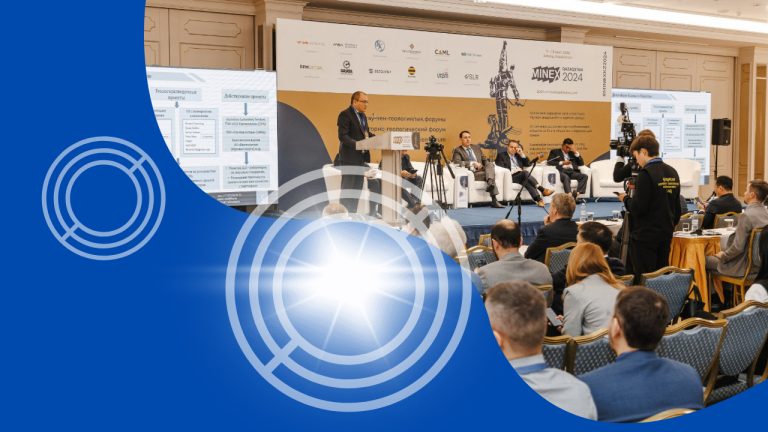
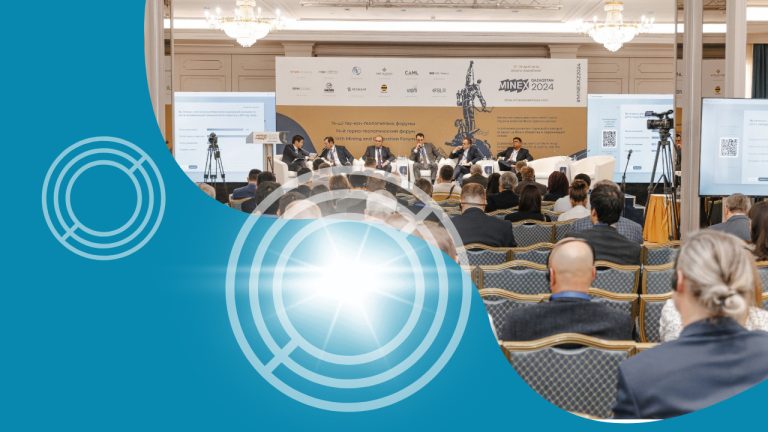
    Aurora Limited, a member of the Kazakhstan Chamber of Mines, actively participated in the conference “Increasing investment attractiveness in Kazakhstan’s mining industry” organized by the Kazakhstan Chamber of Mines. The event brought together leading industry representatives, government officials and diplomatic missions to discuss key aspects of legislation and proposed future policies related to exploration, mining and mineral processing technologies.

    The conference focused on sharing the experiences of key mining companies in dealing with the new Code, as well as discussing recently proposed changes. The conference included a plenary session and two panel sessions with presentations by senior representatives of the industry, government agencies and diplomatic missions.

    The Minister of Industry and Construction of the Republic of Kazakhstan, K.B. Sharlapayev, opened the conference and emphasized the importance of simplifying legislation and procedures to further increase the investment attractiveness of the industry. He also announced a package of upcoming amendments to the Code, which are aimed at improving conditions for investors. The Minister commented, “The package of forthcoming amendments to the Code, including suggestions from stakeholders and the mining industry, includes over 100 changes aimed at improving the conditions for investors. We are committed to further developing and strengthening the mineral resource complex, considering it a cornerstone of Kazakhstan’s economic prosperity.”

    The conference was also attended by the ambassadors of the US, UK and Canada, who support the development, study, cooperation and reform of the new Code. They offered comments and suggestions on maximizing Kazakhstan’s potential to attract investment and reiterated that a stable and transparent judicial and tax regime is necessary to provide certainty to incoming investors and companies. In addition, it was noted that foreign investment should be seen as an engine of economic growth, helping to increase the tax base.

    Mr. Tim Barry, member of the Supervisory Board of Directors of “Kazakhstan Chamber of Mines”, noted the importance of copper exploration in the world and the challenges faced by companies in their development. He emphasized that Kazakhstan has the potential to become an important player in the global copper market, not only by discovering new commercial deposits, but also by creating an enabling environment through government support and policies that encourage discovery. “There are 40 large but undeveloped deposits around the world, with total reserves estimated at about 470 million tons. They could meet global demand were it not for the problems associated with their development. We need to increase copper supply, and Kazakhstan is a very important player in the market in this regard. As an example, the large Aktogay deposit in the East Kazakhstan region, produces more than 200,000 tons of copper per year. But to meet the world’s demand for copper over the next decade and beyond, we need to have several of these large mines being developed every year.”

    The panel sessions focused on the legislative framework affecting investments in subsoil use in Kazakhstan, as well as geological and environmental aspects that influence investment decisions.

    Mr. R.N. Baimishev, President of the “Kazakhstan Chamber of Mines”, speaking at the conference, emphasized that new global investors have arrived: “Today we have several leading global mining companies with market capital measured in billions of dollars investing in mineral exploration in Kazakhstan, such as Rio Tinto, Fortescue, Teck and BHP.” He also noted, “The Chamber’s member companies are conducting exploration works on an area exceeding 25 thousand square kilometers, the volume of investments has exceeded the annual government spending on GIIN and these amounts continue to grow along with the related tax and social payments. In addition, subscription bonuses at the end of 2 auctions exceeded 7.8 million US dollars. Today the specialized ministry is able to solve practically all the issues of investors on the principle of “one window”, because after a long break associated with sectoral divisions and other MPS, it united geologists, subsoil users and industry. That is, by supporting the manufacturing industry at the legislative level it is impossible to destroy the investment climate in geological exploration, it is necessary to minimize the negative consequences, which are even indicated in the draft National Development Plan until 2029. The basis for the changes was the Constitutional Reform held in 2022, which confirmed the right of the people of Kazakhstan to own the subsoil and natural resources of the country. The state realizes this right on behalf of the people. Accordingly, the legal environment will be formed on the basis of this principle”.

    Ms. Bizhanova G.K. Member of the Board, Deputy Chairman of the Board of NPP “Atameken” spoke about the need to develop a Development Strategy of MMC. “Today, the lack of the Industry Strategy creates conditions for frequent changes in legislation, adoption of new regulatory documents, which are not taken into account in the business strategies of subsoil users. The draft National Development Plan of Kazakhstan until 2029 should become the basis of the Strategy. The Agency for Strategic Planning has submitted it for discussion. Our Chamber takes an active part in its finalization”.

    Among the key speakers was Mr. Almas Kushumov, Director of the Department of the Ministry of Industry and Construction of the Republic of Kazakhstan, who drew the attention of participants to the changes to the Code of the Republic of Kazakhstan “On Subsoil and Subsoil Use” announced by the Ministry to improve the investment climate. In his speech Mr. Kushumov also dwelled on the issues of electronic auctions: “In August and December last year, electronic auctions were held for 84 lots for the exploration of solid minerals. Such leading companies as Rio Tinto, Fortescue, Kratos Resources, Cove Capital, Esan Eczacibasi, Kazakhmys Corporation, ERG Exploration, NGK Kazgeologia and others took part in the auction. The subscription bonus of the auction amounted to 3.5 billion tenge”.

    At the end of the meeting, Mr. Alex Walker, CEO of East Star Resources, thanked all participants and noted that while there is still a gap between the intentions of the President and Ministers, as well as the draft changes in the legal framework that need to be constantly considered, Kazakhstan is still an excellent place to conduct research and both companies and the government should continue to work together to find practical solutions in a changing system. The Kazakhstan Chamber of Mines would like to be a source of information and support for all parties in this process.

    The conference attracted more than 160 participants and formed a platform for sharing experiences and discussing strategies for the development of the mining industry. The conference participants confirmed the interest of international investors in Kazakhstan and expressed confidence in its potential to attract investment and further develop the mining industry.


  • Gold Corp will search for metals in the Karaganda region

    Gold Corp will search for metals in the Karaganda region

    Gold Corp  will begin geological exploration work in the Karkaraly district of the Karaganda region. The company intends to explore the Kyzylshoky site, for which it received a license for a period of six years in 2023. We learned about the company’s intentions from the work plan published on the Unified Environmental Portal of Kazakhstan.

    Geological exploration is planned to be completed in the second quarter of 2028. The area of ​​the geological allotment is 23.3 km 2 . There are two ore occurrences in the licensed area: Western and Eastern Kyzylshoki. According to previous studies, the average content of bismuth in ore bodies ranges from 0.04–0.524%, copper – 0.747–2.35%, silver – 8–63 g/t, tin – 0.004%, germanium – 0.0025%.

    Specialists will clarify the results and take samples for the above and other metals. The research will be carried out by the laboratory of VNIITsvetmet.

    The preliminary volume of drilling work was set at 20 thousand linear. m for the entire exploration period. The locations and depths of wells will be determined after receiving the results of the previous stages of exploration work.

  • Orano is investing up to $500 million in uranium mining in Uzbekistan

    Orano is investing up to $500 million in uranium mining in Uzbekistan

    French company Orano has expressed its intention to invest up to $500 million in uranium mining and processing in Uzbekistan, as revealed by the Minister of Mining Industry and Geology, Bobir Islamov. He mentioned the existence of a strategic partnership agreement between Uzbekistan and Orano. Currently, the French company is conducting geological exploration, and by the end of this year, a preliminary technical and economic justification for the project will be prepared.

    Islamov explained that the strategic agreement includes the exploration of two additional sites in the Tamdyn district of the Navoi region. The final decision regarding these sites will depend on the results of the technical and economic analysis. However, Islamov expressed optimism about the progress of the project.

    The minister emphasized that current uranium production volumes have already secured markets. As the production of nuclear fuel increases, Uzbekistan will consider expanding its exports based on market conditions.

    “When it comes to uranium, our prices are tied to global prices. If the price rises, our delivery costs increase as well,” stated the minister.

    Islamov highlighted the growth in uranium exports to various destinations this year, underscoring the importance of diversifying supply sources. In 2022, Uzbekistan increased uranium exports to the European Union by 2.71 times, reaching 441 tons.

    During a visit to Samarkand, French President Emmanuel Macron announced that Orano, in collaboration with the local joint venture Nurlikum Mining, had initiated a pilot project for uranium mining. President Shavkat Mirziyoyev expressed his support for the expansion of geological exploration for uranium deposits with Orano.

    Prior to Macron’s visit, Bloomberg reported that his objective in visiting Uzbekistan and Kazakhstan was to discuss the expansion of uranium supplies, as France considers Central Asia as an alternative to Russian nuclear fuel.

    In November 2022, the State Committee of Geology, Navoi Mining, and Orano signed a tripartite agreement to expand uranium mining and processing. Uzbekistan aims to follow the French model in the “nuclear fuel value chain.” Orano has stated its readiness to invest “several hundred million euros.”

  • Kazakhstan proposes to deduct expenses for unsuccessful geological exploration for tax purposes

    Kazakhstan proposes to deduct expenses for unsuccessful geological exploration for tax purposes

    It was proposed by the First Deputy Executive Director of the Republican Association of Mining and Metallurgical Enterprises (AGMP) Maxim Kononov to deduct the costs of unsuccessful geological exploration in Kazakhstan from the income of the taxpayer company.

    “We propose to introduce a procedure where, in the event of termination of an exploration contract in which there is no commercial discovery, exploration costs would be deducted from the taxpayer’s total income in the tax period when the exploration contract was terminated,” Kononov said, speaking at the government hour in Senate on Friday.

    According to him, there are a number of problems in the field of geological exploration, including those related to taxation.

  • Tulegen Mukhanov: “The future of geological exploration is our national priority”

    Tulegen Mukhanov: “The future of geological exploration is our national priority”

    In the Address to the people of Kazakhstan “The Economic Course of a Fair Kazakhstan,” the Head of State identified the development of geological exploration as one of the key tasks. In the strategic document, the President noted that in 2018, in order to replenish the mineral resource base, new legislation was adopted on the management of the mining sector. However, it did not work fully. As a result, there have been no significant geological discoveries in our resource-rich country for a long time.

  • ERG’s subsidiary will engage in geological exploration in the Karaganda Region

    ERG’s subsidiary will engage in geological exploration in the Karaganda Region

    The ERG Exploration Company (a subsidiary of ERG) will be engaged in geological exploration on 2,800 hectares in the Aktogay District of the Karaganda Region.

    “The Akimat (local government) of the Aktogay District resolves: 1. To establish a public servitude (limited right to use someone else’s land) until August 23, 2029, without expropriating the land from the owners and land users of the limited liability company ‘ERG Exploration’ for a land plot with a total area of 2,813.7667 hectares for mineral exploration, as specified in the annex to this resolution,” states the draft resolution of the Aktogay District Akimat in the Karaganda Region, posted for public discussion.

    The majority of the land is part of the district’s land fund – 1,232.5 hectares, while the remaining lands belong to the “Dauletbek” farm – 712.3 hectares and the “Beksultan” farm – 868.9 hectares.

    The General Director of ERG Exploration, Azamat Shalabayev, informed journalists at a geologists’ congress about plans for exploring new areas in the republic.

    “We have a large program for digitizing geological material archives. We have created separate groups for specific directions, which are separately searching for our profile metals – searching for chrome, manganese, and there are groups dealing with other metals, including copper, polymetals, as well as RM (rare metals) and REM (rare earth metals). So, we will be searching in this direction, and the management sets us the task of finding new metals that are not typical for our group,” he said.

    Shalabayev reminded that on August 1, the company won the right to explore a copper area in Northern Pri-Balkhash at an auction, paying more than 420 million tenge. Geological research was carried out there during the Soviet era, and later jointly by Rio Tinto and “Kazgeology.” The area was studied to a depth of 200 meters. The study showed estimated resources of up to 200,000 tons of copper, but with a low metal content in the ore – 0.2-0.3%. ERG plans to study the area to a depth of 700 meters in hopes of finding valuable minerals.

    The British-Australian company Rio Tinto conducted geological exploration, searching for copper in the Korgantas and Balkhash-Saryshagan areas in the Karaganda Region since 2015. However, the geological exploration of Korgantas did not yield significant results, so the subsoil use contract was terminated.

    ERG’s ultimate owners are the Ministry of Finance – 40%, Alexander Machkevitch and the Ibragimov family – 20.7% each, and Patokh Shodiev – 18.6%. Alexander Machkevitch, Patokh Shodiev, and the family of the late Alijan Ibragimov (the spouse of Mukadas Khan Ibragimov and four sons, Dostan, Davron, Shukhrat, and Furkhat) became the first dollar billionaires in Kazakhstan according to Forbes in 2005 with a capital of $1 billion each. Later, Alexander Machkevitch and Patokh Shodiev changed their citizenship from Kazakhstani to Israeli and Belgian, respectively. The Chairman of the Board of Directors and a major shareholder of Eurasian Resources Group, Alexander Machkevitch, was ranked sixth among the richest Israelis with $3.7 billion in Forbes’ rating last year.

  • Independent expert Telman Shuriev: Increasing the area of geological and geophysical exploration is a strategic task

    Independent expert Telman Shuriev: Increasing the area of geological and geophysical exploration is a strategic task

    Telman Shuriev, the head of the Industrial Asset Management Department at “NAC Kazatomprom” and a Doctor of Business Administration in Industrial Technology, sheds light on the key directions outlined in President Tokayev’s address to Kazakhstan regarding the development of the geological exploration and water sectors, as reported by inbusiness.kz.

    The President’s address to the nation demonstrates a forward-thinking approach towards a new economic model and takes into account the opinions of experts and the public. Notably, the development of geological exploration stands out as a strategically important decision. The President emphasizes the need to modernize the management system of the mining sector promptly. I find it particularly significant that the Head of State has set an ambitious goal of expanding the area of geological and geophysical exploration to a minimum of 2.2 million square meters within the next three years. This emphasis on the development of rare and rare-earth metal deposits is well-founded, considering Kazakhstan’s abundant reserves. It is expected that this sector will attract both domestic and foreign investors, especially as the country moves towards economic decarbonization, actively reducing greenhouse gas emissions and carbon intensity in its industries.

    President Tokayev also highlights the crucial role of water resources in Kazakhstan, placing them on the same level of importance as oil, gas, and metals. The establishment of an independent ministry dedicated to overseeing water issues signifies a significant step forward. This decision aligns with the practices of developed countries, where specialized agencies are created to focus on key areas of national development. Additionally, the re-establishment of the National Hydrogeological Service in Kazakhstan is of great importance. This institution will address water resource challenges and can be structured to operate independently of the state budget. By collaborating with investors and natural resource users, the National Hydrogeological Service can create a competitive environment and become a promising avenue for investment in Kazakhstan’s economy.

    Notably, experts in the field of ecology and hydrogeology in Kazakhstan have also expressed the need for a national company dedicated to managing groundwater. They emphasize the importance of transforming existing state-authorized enterprises into a unified entity that includes specialists from geology, hydrogeology, ecology, and the industrial sector. This approach, coupled with adequate state budget allocation, can pave the way for comprehensive work in this sector. For example, focusing on the underground Kokzhida deposit, located in the Aktobe Region’s Temir District, which has significant reserves capable of providing drinking water to the western region of the country.

    President Tokayev’s address sets a clear vision for the development of the geological exploration and water sectors, emphasizing the importance of these industries for Kazakhstan’s economy. With the implementation of modernized management systems and the reorganization of government agencies, the country is well-positioned to capitalize on its abundant reserves and address critical challenges in these sectors, attracting investment and driving sustainable development.
    The issue of accessibility and quality of water resources in Kazakhstan is a matter of great significance. Currently, Kazakhstan ranks 70th in terms of access to quality water supply, making it one of the most water-deficient countries in the Eurasian continent. Within Asia, it stands at the 8th position in terms of water deficiency, with only 2.8% of its territory covered by water, while arid zones comprise two-thirds of the land. In essence, Kazakhstan is heavily reliant on water. This situation primarily arises from excessive regulation in the upper reaches of rivers, such as the construction of reservoirs and extensive water usage. Furthermore, the costs associated with irrational water consumption in these river basins, such as limited utilization of water-saving technologies, lack of automated water accounting, and underdeveloped agricultural cooperation, exacerbate the problem. Experts express concern that if these trends persist, Kazakhstan will face severe water supply challenges in the future, as natural surface water resources have been steadily declining in recent years. Additionally, climate change projections indicate a 14% to 40% decrease in water flow by 2030. It is evident that there is a lack of comprehensive policy for the development of the water supply sector, with previous programs focused more on restoring existing systems. Despite significant budget allocations and the adoption of state programs, many villages and regions still lack access to drinking water.

    Undoubtedly, the quality of governance significantly impacts the effectiveness of water policy. The deficiencies in ensuring the population’s access to drinking water can largely be attributed to the frequent reorganization of state bodies, resulting in the transfer of responsibilities of the Committee on Water Resources from one department to another. The management of water resources has been marred by wastefulness, as indicated by Kazakhstan’s assessment as the least efficient in terms of water governance according to the Global Water Partnership UN Water Governance and State of the World’s Water index. Another challenge stems from the absence of a single authorized body responsible for coordinating the implementation and management of policies related to providing the population with drinking water. Previously, these functions were divided between two ministries that did not effectively collaborate. Furthermore, local representative bodies (maslikhats) in the regions have played a limited role in monitoring the use of budget funds.

    To improve the situation in the water sector, several measures need to be taken. It is imperative to establish a unified monitoring system that tracks the availability of centralized water supply and the quality of drinking water in both urban and rural areas. This system should be entrusted to a single independent authority to avoid conflicts of interest. The normative and legal framework, as well as terminology, should be regulated. External specialists with expertise in water resource management should be engaged in developing goals, intentions, and efficiency indicators for each level of government. Priority attention must be given to training and capacity building of specialists in water resource management. Attracting investments for the construction of new pipelines and equipment types should be accompanied by strict consumption control.

    In his address, President Tokayev emphasized the responsible and prudent use of resources, including water. I wholeheartedly support this notion. The industrial sector, which accounts for approximately 25-30% of total water intake, deserves greater attention from government bodies. Of this proportion, 92% is sourced from surface water, while 8% comes from groundwater sources. Regrettably, only about 20% of industrial enterprises utilize water recycling technologies. Projections indicate that by 2030, industrial water intake will increase by another 10%, accounting for 35-40% of total water resources, while the overall quantity of water resources in the country is expected to decline. Assessing losses reveals that industrial consumers experience an average water loss of about 40% during transportation.

    To address these concerns, authorized bodies should collaborate with industrial companies to conduct accurate studies on losses and develop solutions for their reduction. Timelines for implementing these measures, along with appropriate funding, should be established. Initiating loss indicators and subsequently setting Key Performance Indicators (KPIs) for their reduction is crucial. Currently, precise indicators in this regard are lacking. To commence this effort, allocating funds within the 1% for Research and Development (R&D) for subsoil users would be a prudent step.

    It is also worth noting that there is a deficiency in adequate and quality water consumption metering equipment, both at the inlet and outlet stages of production. Metering should be implemented at all stages, and it is essential to ensure that metering devices are in working order. Accurate data is indispensable for a comprehensive understanding of water management.

    Kazakhstan has already approved a Low Carbon Development Strategy until 2060, which encompasses clear indicators and potential tools for reducing greenhouse gas emissions, particularly in the industrial sector. Similarly, it is imperative for the country to develop a similar strategy for effective water resource management until 2050. This strategy should encompass indicators for water resources, with a high level of implementation. Such a strategy would provide industrial enterprises with guidance for their environmental policies, fostering a more coherent and systematic approach rather than chaotic“`
    I believe that it is a very timely decision to determine the current status of water for our country. Government bodies insufficiently pay attention to the consumption of the industrial sector, where about 25-30% of the total water intake is accounted for by industry, of which 92% is surface water and 8% is groundwater sources. It should be noted that only about 20% of industrial enterprises use water recycling technologies. Meanwhile, there is a forecast that by 2030, industrial water intake will increase by another 10% and will account for 35-40% of the total volume of water resources, while the quantity of water resources in the country will decrease. The assessment of losses shows us that water losses during transportation average about 40% for industrial consumers.

    In this regard, I would recommend that authorized bodies, in conjunction with industrial companies, conduct studies on accurate losses, develop solutions for their reduction, determine the timelines for the implementation of measures with the allocation of appropriate funds, establish the starting point for loss indicators, and then set KPIs for their reduction. Currently, there are no exact indicators in this direction. To start with, we can determine the funds allocated within the 1% for R&D for subsoil users.

    It is also worth noting that at the moment there is a lack of adequate and quality water consumption metering equipment at the inlet and outlet, not to mention the need for metering at all stages of production; on some enterprises, metering devices do not work at all, as a result, we do not have accurate data and, accordingly, do not see the full picture of water management.

    Kazakhstan has approved a Low Carbon Development Strategy until 2060, which includes clear indicators and possible tools for reducing greenhouse gas emissions, including in the industrial sector. By analogy, our country needs to develop a similar strategy for effective water resource management until 2050, reflecting indicators for water resources, with a high status of implementation. This will provide industrial enterprises with guidance on the general direction of their environmental policy, rather than working in a chaotic manner.

  • Without restrictions and penalties: Kazakh subsoil users will be endowed with new rights

    Without restrictions and penalties: Kazakh subsoil users will be endowed with new rights

    In a recent development reported by Orda.kz, it has been announced that a bill has been adopted in the Majilis on September 13th, granting subsoil users in Kazakhstan the right to refuse unproductive drilling of wells without facing any penalty sanctions. This provision is part of the draft law “On Amendments and Additions to the Code of the Republic of Kazakhstan on Subsoil and Subsoil Use,” which aims to enhance the field of subsoil use and increase the investment attractiveness of projects in geological exploration and hydrocarbon extraction.

    One of the key innovations of this bill is the empowerment of subsoil users to decline unproductive drilling based on the results of seismic surveys, without facing any penalties imposed by the state. Additionally, the bill introduces an expedited transition to geological exploration work, incorporating a notification procedure for project development and streamlining administrative procedures for subsoil operations, including state examinations of project documents in the hydrocarbon sector. Deputy Duysenbai Turganov elaborated on these changes, highlighting their significance in optimizing the subsoil use sector.

    The bill, as a whole, aims to achieve the following objectives:

    Reducing the duration of various examinations by 8-12 months.
    Decreasing administrative costs for procedures by more than two times, from 120 to 50 days.
    Enhancing investment attractiveness.
    President Kassym-Jomart Tokayev previously emphasized that the subsoil use sector in Kazakhstan has been plagued by systemic issues accumulated over the past decades. The insufficient volume of geological exploration work hinders the realization of the mining industry’s full potential, while the pace of replenishing the mineral and raw material base has been slowing down. These challenges have emerged alongside the depletion of exploited subsoil resources.

  • The volume of geological exploration work will increase in Kazakhstan

    The volume of geological exploration work will increase in Kazakhstan

    Over the past 6 years, geological exploration has been conducted on 9 sites in the Kostanay region, funded from the budget. The total area of the surveyed territory exceeds 38 thousand square kilometers. In the country, there are plans to increase the volume of work in this direction by at least 1.5 times, as reported by the correspondent of “Khabar 24,” Artem Grapov.

    Artem Grapov, correspondent: “Currently, in the Kostanay region, 35 types of valuable minerals are known and have been studied to varying degrees. About 400 deposits have been explored. The region is a unique iron ore and bauxite base of the republic. By the way, 4% of the world’s iron ore reserves are concentrated in the Kostanay region. Kostanay geologists conduct exploration work continuously. In addition to iron and bauxite, the region also has significant reserves of cobalt, nickel, titanium, and gold. This year, a geological hub was launched in the region. Its main area is a core storage facility – a complex where primary rock samples taken during drilling are analyzed.”

    Darkhan Makatov, Head of Field Research Department: “Materials are sent to the cutting workshop. After that, they undergo sampling. Then certified samples are sent to laboratories located both in Kazakhstan, in the city of Karaganda, and abroad, in Ireland. The analysis results are then entered into the database. The obtained data are then systematized and digitized in accordance with international geological survey standards.”

    Dastan Makat, Project Geologist, PhD: “We enter the field data we’ve obtained into the database. Then, using this data, we create a deposit model. After that, we develop ore body models. You could say this is the final task of our geological exploration. The materials are then handed over to miners, who, in turn, develop a mining plan for the deposit.”

    Continuous geological exploration allows for the identification of promising areas for further development. Maya Ospanova, Head of the Kostanay Regional Inspection of Geology and Subsoil Use: “As a result of the work carried out, estimated resources have been calculated for 12 types of valuable minerals. The main volume is accounted for by coal, which amounts to 14 billion tons. We have also discovered 31 kilograms of gold, as well as molybdenum, lead, zinc, nickel, tungsten, titanium, copper, and other valuable minerals. In 2023, geologists continue to develop 3 objects. The work is funded by the republican treasury. Two sites are for underground waters, and one is for the search for rare earth metals. Geologists will summarize the results of this work next year.”