From October 25 to 26, 2023, Vice Minister of Industry and Construction of the Republic of Kazakhstan Iran Sharkhan and Chairman of the National Geological Survey JSC Erlan Galiyev took part in the Global Gateway forum in Brussels (Belgium).
The event, which focused on green energy, education and research, critical raw materials, transport corridors, healthcare manufacturing and digital infrastructure, was opened by European Commission President Ursula von der Leyen.
During the visit, the Kazakh delegation took part in a panel session dedicated to the problem of rare earth metals and discussed issues of joint cooperation with the parties. Also, I. Sharkhan and E. Galiyev held a number of bilateral meetings with the heads of European organizations.
The largest business federations in the United States and the European Union have jointly called upon leaders convening for a summit on Friday to swiftly resolve an ongoing dispute regarding the metals tariffs imposed during the Trump administration. Additionally, they emphasized the need for increased cooperation in the realm of critical minerals, which are vital for facilitating the green transition.
The U.S. Chamber of Commerce and BusinessEurope issued this call to action on Monday, in anticipation of President Joe Biden’s meeting with European Commission Chief Ursula von der Leyen and European Council President Charles Michel in Washington. The European Union aims to prevent the reinstatement of import tariffs on steel and aluminum, as imposed by former President Donald Trump, and to establish a mutually beneficial agreement that supports EU exporters of critical minerals to the United States.
Highlighting their concerns, the two business groups underscored the risks posed by protectionist policies, citing anemic economic growth and misguided narratives surrounding industrial decline. They cautioned that such policies could hinder innovation and impede prosperity. Consequently, the groups urged officials from both the EU and the U.S. to reach a lasting agreement that prevents any reimplementation of metals tariffs by the U.S., while also addressing the challenges posed by global excess capacity and carbon emissions in metals production.
Furthermore, the business federations stressed the importance of transatlantic collaboration with countries that possess significant reserves of critical minerals. This collaborative approach seeks to reduce reliance on any single country, particularly China, which currently holds a dominant position. In order to advance the green transition, the groups emphasized that global mining companies must substantially increase their production of critical minerals, such as lithium, cobalt, copper, nickel, and rare earths, by 500% over the next decade. This ambitious goal is crucial for driving the necessary advancements in sustainable technology.
In a display of strong commitment to ambitious climate policies, the European Union’s new climate commissioner, Wopke Hoekstra, has affirmed his support for a 90% reduction in net greenhouse gas emissions by 2040. This declaration, made during a Parliament hearing earlier this week, has garnered backing from the Parliament’s environment committee and has led to Hoekstra’s formal confirmation in his new role.
The 2040 target for greenhouse gas reductions will have a significant impact on the supply of CO2 allowances in the EU’s emissions trading scheme, which imposes limits on carbon emissions from large industrial emitters. Financial analysts predict that a 90% reduction target for 2040 will push EU carbon prices above €400 by that time, according to researchers at the London Stock Exchange Group (LSGE).
Currently, carbon prices on the EU ETS stand at €81 per tonne, reaching a peak of €100/t in February of this year. LSGE’s analysis suggests that with the current 2030 decarbonisation target of -55%, the EU’s carbon price is expected to rise to €160/t by the end of the decade. However, if the 90% decarbonisation target is met, the carbon price could soar to €400/t by 2040.
Paula VanLaningham, the director of LSEG Carbon Research, emphasizes that the €400/t price is not the cost of decarbonisation itself, but rather the potential cost faced by businesses that fail to decarbonize under the 90% scenario. Achieving the 90% target would result in near full-decarbonization across various industries, such as power, manufacturing, transportation, and construction.
The European Commission is set to present its 2040 climate target plan in early 2024. This proposal will undergo scrutiny and approval by EU member states and the European Parliament. Hoekstra assures that the Commission’s 2040 plan will be informed by the recommendations of the European Scientific Advisory Board on Climate Change, which supports a 90-95% target range. Hoekstra pledges to act in line with the Board’s advice and utilize all available instruments to facilitate the EU’s achievement of the minimum recommended target of 90% net reductions.
Maroš Šefčovič, the Slovak EU commissioner overseeing the coordination of Europe’s green policies, also backs the 90% target, emphasizing that it will provide clarity and predictability to economic actors and citizens. While the responses from Hoekstra and Šefčovič are not binding decisions, they indicate a clear direction from the commissioners on this issue. The European Union’s carbon market underwent significant reforms this year to align with the EU’s decarbonization objectives for 2030.
The United States expresses optimism regarding the possibility of reaching an agreement with the European Union (EU) that would enable critical minerals mined or processed in Europe to qualify for U.S. clean vehicle tax incentives. This encouraging statement was made by a senior U.S. official on Monday.
Negotiations between the transatlantic partners are underway to determine the eligibility of EU critical minerals, such as lithium and nickel, for green subsidies under the U.S. Inflation Reduction Act. This act specifically promotes products manufactured in North America. Jose Fernandez, the Under Secretary for Economic Growth, Energy, and the Environment at the State Department, shared during a briefing in Brussels that intense negotiations are being conducted.
Fernandez expressed hope and optimism, stating that negotiations are progressing well. Acknowledging the need for collaborative efforts, he expressed confidence in reaching an agreement between the United States and the European Union.
He also clarified that there are no plans to link the critical minerals agreement to the resolution of the separate transatlantic negotiations addressing U.S. import tariffs on EU steel. It is important to note that the United States has already signed a minerals agreement with Japan in March. Currently, both the EU and the United Kingdom are seeking similar agreements.
Additionally, Fernandez mentioned that he is engaging in discussions with EU officials to establish an agenda for the upcoming joint Trade and Technology Council, which the United States will host before the end of the year.
He emphasized that both sides are committed to establishing safeguards for artificial intelligence and moving beyond general statements to concrete actions. While there is no specific timetable for reaching an agreement, there is a shared understanding that it should occur sooner rather than later. Furthermore, both parties agree that any technological advancements should uphold democratic values, human rights, and individual freedoms.
The United States remains positive about the ongoing negotiations with the European Union, recognizing the importance of collaboration and the need to promote sustainable and innovative solutions.
A paper prepared for EU leaders has raised concerns about the potential dependency of the European Union on China for lithium-ion batteries and fuel cells by 2030, similar to its past dependence on Russia for energy prior to the conflict in Ukraine. This issue will be a focal point of discussions on Europe’s economic security during the EU leaders’ meeting in Granada, Spain, on October 5th.
Given China’s increasing assertiveness and economic influence on the global stage, the leaders will evaluate the European Commission’s proposals to mitigate the risk of excessive reliance on China and explore diversification opportunities towards Africa and Latin America.
The paper emphasizes that due to the intermittent nature of renewable energy sources such as solar or wind, Europe must develop energy storage solutions to achieve its goal of net-zero carbon dioxide emissions by 2050. As a result, the demand for lithium-ion batteries, fuel cells, and electrolyzers is expected to surge between 10 and 30 times in the coming years, according to the paper prepared by the Spanish presidency of the EU.
While the EU holds a strong position in the intermediate and assembly stages of electrolyzer production, boasting over 50% of the global market share, it heavily relies on China for crucial components like fuel cells and lithium-ion batteries, particularly for electric vehicles.
Without implementing robust measures, the paper warns that by 2030, the European energy ecosystem could face a different but equally concerning dependence on China, akin to the dependency on Russia before the invasion of Ukraine.
Before the Russian invasion, the EU sourced over 40% of its total gas consumption, 27% of its oil imports, and 46% of its coal imports from Russia, according to the European Commission’s data. The abrupt cessation of energy purchases from Russia caused an energy price shock in the EU, leading to a surge in consumer inflation. This necessitated the European Central Bank to raise interest rates significantly, ultimately dampening economic growth.
However, the vulnerability of the EU extends beyond lithium-ion batteries and fuel cells. The paper highlights the potential for a similar scenario in the digital-tech sector, as the demand for digital devices such as sensors, drones, data servers, storage equipment, and data transmission networks is projected to rise sharply in the coming decade.
While the EU maintains a relatively strong position in certain aspects of the digital-tech sector, notable weaknesses exist in other areas, as stated in the document.
By 2030, this foreign dependency could severely hinder the productivity gains urgently required by the European industry and service sector. Furthermore, it could impede the modernization of agricultural systems necessary to address the challenges posed by climate change, the paper concludes.
In a proposal brought forth on Monday, Poland has put forth suggestions for new European Union sanctions against Russia in light of its invasion of Ukraine. The proposal, obtained by Reuters, advocates for a ban on Russian diamonds and Liquid Petroleum Gas as part of the sanctions. Additionally, Poland calls for aligning the sanctions against Belarus with those against Moscow.
According to the proposal, Poland recommends prohibiting the importation of Russian diamonds, which accounted for a substantial $4.5 billion in revenue for the Russian budget in 2021. The document further suggests implementing individual sanctions specifically targeting the Russian diamond company, Alrosa (ALRS.MM). The Polish paper highlights that Alrosa has been providing support to the Russian military forces and facilitating their engagement in the war in Ukraine, both directly and indirectly, over an extended period.
The proposal also emphasizes the need for the European Union to expand the scope of sanctions beyond diamonds and Liquid Petroleum Gas. Poland suggests that the EU should impose a ban on Information and Communication Technology (ICT) services provided to entities from Russia. This would encompass computer software, cybersecurity services, and other ICT/IT services. By restricting these services, the EU would exert additional pressure on Russia and send a clear message regarding its actions.
It is worth noting that the European Union has already implemented eleven sanctions packages against Russia since the invasion of Ukraine in February 2022. The proposal from Poland seeks to further strengthen these measures and ensure a coordinated approach in dealing with both Russia and Belarus.
As discussions continue within the European Union, the outcome of this proposal remains to be seen. However, the proactive stance taken by Poland underscores the commitment of member states to address the ongoing crisis and hold those responsible accountable for their actions.
In her annual address to the European parliament, President Ursula von der Leyen announced that the European Union will initiate an anti-subsidy investigation into Chinese electric vehicles. She expressed concern over the flood of cheaper Chinese electric cars in global markets, which are sustained by substantial state subsidies, leading to market distortion. Von der Leyen specifically highlighted the predicament faced by European car manufacturers who are often undercut by competitors benefiting from these subsidies. Given the high stakes and the challenging outlook, particularly for German mass market automakers like Volkswagen, it seems inevitable that measures such as tariffs or restrictions on Chinese carmakers’ access to Europe will be imposed.
Although European carmakers already have successful joint ventures in China and ownership restrictions for foreign carmakers have been lifted, it remains unclear how China could further open up its market to the EU. The concerns raised by the European Commission regarding Chinese electric vehicles are justified, as China’s growing success in the European car market may be attributed to predatory practices and significant investments from Beijing into its industrial champions. However, the response from the EU, represented by the Inflation Reduction Act (IRA) and the European Green Deal (EGD), may be perceived as delayed, considering China’s rapid dominance in the global electric vehicle supply chain over the past decade.
China has already captured a fifth of Europe’s electric vehicle market, which raises concerns within Europe. Data from Adamas Intelligence reveals that in the first half of 2023, 19% of all gigawatt-hours delivered to electric vehicle buyers in Europe originated from China-made electric vehicles and battery packs. The absolute amount of battery power exported from China to Europe has grown by more than 51% this year, totaling 14 gigawatt-hours. Chinese automakers showcased their products at the recent Munich auto expo, impressing even the most fervent European car enthusiasts.
The potential response from the European Commission, which may lead to higher electric vehicle prices and reduced variety, may not be well-received by European car buyers. Notably, the best-selling Chinese electric car, the BYD Song Plus DM-i plug-in hybrid, offers advanced features and an impressive range at an affordable price. With a range of 1,000 km, including 150 km in fully electric mode, it is available in China for just $27,000. The availability of such vehicles, along with their cutting-edge technology, presents a tempting proposition for European consumers.
It is worth noting that the majority of Chinese electric vehicle exports to Europe this year consisted of non-Chinese brands, including vehicles manufactured by BMW and Dacia in China. However, the presence of a significant number of Teslas among these shipments further complicates the situation, as imposing tariffs on the American electric car pioneer may not be well-received by Washington.
In terms of battery metals, China’s dominance in the EV supply chain has led to the export of significant quantities of lithium, graphite, nickel, manganese, and cobalt to Europe. These materials are essential for battery production. The EU-China electric vehicle dispute is likely to disrupt the flow of battery materials from China to Europe. China’s position in the supply chain gives it influence over battery metal prices, acting as a monopsony in certain raw material markets. This development brings miners closer to their long-held dream of commanding a premium for their products in Western markets with stricter environmental, social, and governance regulations. Von der Leyen’s remarks about artificially low prices further highlight this reality.
Both the Polish government and the ruling Law and Justice (PiS) party have confirmed that they do not intend to accelerate the phase-out of hard coal production in Poland, according to Jacek Sasin, the Polish state assets minister. Sasin emphasized that there is a social agreement in place, outlining the gradual reduction of coal mining by 2049. He also stated that there are no plans to expedite the country’s transition away from coal.
Sasin’s remarks came after a meeting with a group of signatories of the social contract related to the future of hard coal in Poland. He clarified that the government is committed to fully implementing the social agreement and aims to address any doubts or questions that have arisen.
Poland remains heavily reliant on fossil fuels, particularly coal, and is opposed to accelerating the EU’s green agenda. The country argues that it needs more time to transition to green energy sources due to the legacies of the pre-1989 communist regime, which promoted coal mining and coal-fired power plants.
In April, the European Parliament approved key legislation as part of the Fit for 55 in 2030 package, aiming to reduce greenhouse gas emissions by at least 55 percent by 2030 compared to 1990 levels and achieve climate neutrality by 2050.
The Polish coal mining industry employs approximately 75,000 people, and powerful mining unions exert significant influence on energy policy in the country.
Additionally, Poland’s development minister, Waldemar Buda, expressed hope that the current lower house of parliament would address a bill to establish a new state-owned company that would take ownership of coal-fired assets from energy firms after the upcoming general election. This new state agency, the National Energy Security Agency (NABE), is intended to free energy companies from their polluting assets, making them more attractive to investors. The country is set to hold elections on October 15, and Buda hoped that the lower house could overrule an upper house veto on state guarantees for NABE before the new post-election parliament convenes.
On September 7, the Senate, the upper house, voted against a bill related to state guarantees for NABE.
Europe has been effective in driving sector trends necessary for the energy transition through strong investment, target setting and policy employment. Prime examples include the ‘Fit for 55’ deal in electric vehicles (EV), the Renewable Energy Directive and European Green Deal in renewable power. Such policies and strategies have instigated governments to set their own strategies to meet or exceed EU targets as a result.
Efforts to source and refine CRMs on European soil need to be a focus
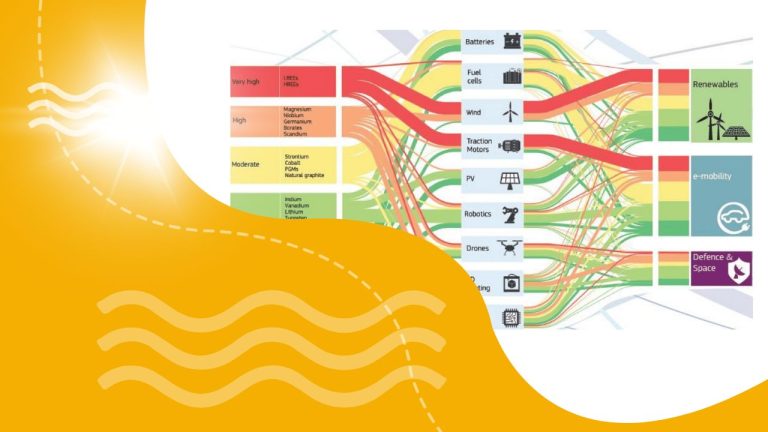
Whilst these are arguably the most crucial sectors to tackle, Europe’s progress in these sectors is heavily reliant on the supply of critical raw materials (CRMs) which are largely sourced and refined abroad over geographically restricted areas. For example, the Democratic Republic of the Congo mines more than 70% of the world’s cobalt, and China is unchallenged in its dominance over rare earth element (REE) production – in addition to its worldwide dominance in processing for a whole suite of CRMs.
Consequently, Europe’s ability to deliver an Energy Transition is potentially vulnerable to geopolitical tensions and supply chain volatility in these regions, not to mention the potential for shortages in these CRMs, which will occur without significant upscaling in mining.
Map of primary material production.
Europe is a leader in the renewable power and electric vehicle rollout, but for how long?
Europe’s accelerated investment towards net-zero targets is predicted by GlobalData to drive continued growth in renewable power generation over the next decade. Still, power generation is Europe’s largest source of emissions despite an 18% reduction in associated emissions being achieved from 2010-2017, as well as a reduction of 10% in overall emissions in the continent.
Strict EU targets have been implemented in line with the UN Paris Agreement and as part of the established campaign, ‘Europe Beyond Fossil Fuels’. Incentivisation for renewable energy development, the decommissioning of fossil fuel power plants, and a fall in the cost of renewable power production should continue the increasing renewable power generation share from 51% in 2022 to almost 75% by 2035.
This is expected to largely be achieved by increasing wind and solar generation capacity, the largest players in each being Orsted (wind), and Iberdrola SA (both), with pipeline capacities of over 35GW each.
The other sector in which Europe is leading the way in terms of development is EVs. Strong EU and government targets, funding, and policies have guided the phasing out of internal combustion engine vehicles and resulted in a tripling of EV registrations in 2020 from 2019 (right car registrations).
Lawmakers have endorsed a 55% reduction in automobile emissions by 2030 when compared to 2021. Development of charging infrastructure that facilitates the increase in EVs on roads has been encouraged by subsidies, and major companies are now involved with EV rollout in Europe including Volkswagen, Tesla, and Stellantis.
Can Europe source its own minerals?
Progress in the power and EV sectors demands a need for Lithium, Cobalt, REEs, and other CRMs, thereby increasing the need to upscale the production of these resources within the EU. The slow response by Europe to source and refine such resources locally has only been recognised recently. According to the UK government, as of November 2022, 89% of lithium processing occurred in East Asia, and no lithium refineries existed in Europe.
Recently the UK government provided a £600,000 grant to Green Lithium to open a refinery in Teesside. Considering that lithium is crucial to both the power and EV sectors and is not particularly scarce, more European governments should follow suit. Similarly, the geology of Europe may be favourable for novel sources of cobalt (Horn et al 2021), with a 2018 EU report on cobalt highlighting that existing nickel mines on the continent could provide up to half the cobalt necessary for European lithium-ion battery plants.
Only as recently as March this year, the European Commission released its Critical Raw Materials Act, permitting reduced timeframes for mining projects and setting clear priorities to futureproof Europe’s supply chains. This comes after the US Inflation Reduction Act with similar aims, illustrating the recent trend towards regionalised supply chains as powers recognise the need to escape dependency on China’s mineral monopolies. China’s recent restrictions on its exports in gallium and germanium highlight the risks of such dependency.
Whilst the CRMs Act is a step in the right direction, the timeline for prospecting and setting up an operational mine is around a decade, and in addition to Europe’s reluctancy to harm the environment through mining, it might be too little and too late to meet energy transition demand for CRMs – putting Europe’s strong growth thus far in key energy transition sectors at severe risk.
The move comes as the EU tries to re-shore clean technology from the US and China to meet its climate goals amid growing geopolitical tensions.
[/vc_column_text][/vc_column_inner][/vc_row_inner][vc_empty_space height=”10px”][vc_row_inner][vc_column_inner width=”2/3″][widget-SocialWidget][/vc_column_inner][vc_column_inner width=”1/3″][link url=”https://www.straitstimes.com/world/europe/eu-courts-further-controversy-by-adding-mining-to-green-rulebook” content_text=”News source”][/vc_column_inner][/vc_row_inner][vc_empty_space][vc_column_text]The European Union will include the mining of critical raw materials in its green investment rulebook as a “priority” to ensure the bloc isn’t left behind on resources needed to boost clean technologies.
Ms Mairead McGuinness, the bloc’s financial services commissioner, acknowledged that such a move is likely to draw more controversy for the EU’s so-called taxonomy that aims to spur investment in climate-friendly economic activities. It has already been criticised for previous inclusions such as gas and nuclear.
She did not put a timeline on when the commission might propose incorporating mining in the rulebook or detail what kind of criteria might be used.
“We are going to have to do more mining in Europe,” she said at a Bloomberg media roundtable in Brussels on Tuesday.
“We do not want to create other harms, but we also have to be able to say there isn’t a world where there aren’t some challenges. Everything won’t be 100 percent perfect, but it will be an awful lot better to live without fossil fuels.”
The bloc wants to boost domestic mining of critical raw materials, so they meet at least 10 percent of its needs by the end of the decade. The need for lithium – key for electric vehicles and energy storage – could jump 12 times over that period.[/vc_column_text][vc_empty_space][epic_post_tag compatible_column_notice=”” font_size=”17px”][/vc_column][vc_column width=”1/6″][vc_text_separator title=”LATEST NEWS” color=”juicy_pink”][vc_empty_space height=”10px”][widget-LatestPosts post_number=”4″][vc_empty_space height=”10px”][vc_text_separator title=”MOST POPULAR” color=”juicy_pink”][vc_empty_space height=”10px”][widget-popular-posts post_count=”4″][vc_empty_space][vc_wp_search title=”Search”][vc_empty_space][lvs display_like=””][/vc_column][vc_column width=”1/6″][/vc_column][/vc_row][/vc_section][vc_section][vc_row][vc_column][distance desktop_type=”50″][/vc_column][/vc_row][vc_row][vc_column width=”1/2″][epic_block_28 compatible_column_notice=”” number_post=”6″ post_offset=”0″ first_title=”You may also like”][/epic_block_28][vc_empty_space][/vc_column][vc_column width=”1/2″][epic_hero_5 compatible_column_notice=”” hero_margin=”0″ content_filter_number_alert=”” post_offset=”0″][/vc_column][/vc_row][/vc_section]