Tag: European Union

  • Greenland’s Kvanefjeld rare earth project highlights Europe’s late scramble for strategic minerals

    Greenland’s Kvanefjeld rare earth project highlights Europe’s late scramble for strategic minerals

    On Greenland’s southern tip, the Kvanefjeld mining project has become a symbol of both vast opportunity and prolonged paralysis. Beneath its icy terrain lies one of the world’s most significant deposits of neodymium and praseodymium, rare earth elements essential for wind turbines, electric vehicles and advanced military technologies. If developed, Greenland, a semi-autonomous territory within the Kingdom of Denmark, would become the first European source of these critical materials.

    The project is led by Energy Transition Minerals, which has long signaled readiness to move into production. However, progress stalled after the Greenlandic government imposed a ban on uranium mining in 2021, citing environmental and public health concerns. Because rare earths at Kvanefjeld are geologically associated with uranium, the ban effectively froze the project, triggering legal disputes that continue to delay development.

    Former Danish foreign minister Jeppe Kofod, now a strategic adviser to Energy Transition Minerals, said the case illustrates how regulatory uncertainty, geopolitics and high capital requirements can obstruct even strategically vital projects. Despite Greenland holding rare earth resources estimated to cover up to a quarter of global demand, alongside substantial oil, gas and other mineral potential, only two small mines are currently operating on the island.

    European interest has increased only recently. In 2023, the European Union signed a memorandum of understanding with Greenland to cooperate on mining projects, followed by the adoption of the EU Critical Raw Materials Act, which explicitly recognizes Greenland’s strategic importance. The European Commission has since committed funding to Greenland’s Malmbjerg molybdenum project to support defense-related supply chains.

    Analysts warn, however, that Europe may have moved too slowly. With the United States and China intensifying their focus on Greenland’s resources and U.S. President Donald Trump openly signaling aggressive ambitions toward the island, European policymakers risk being sidelined. Greenland’s harsh climate, limited infrastructure, small population and strict environmental rules further complicate development, even as climate change gradually improves access to previously icebound regions.

    While Brussels maintains that the future of Greenland’s resources rests solely with its people and elected authorities, growing geopolitical pressure suggests that external powers may play an increasingly decisive role in shaping the island’s mining future.

  • EU carbon border tax could give Canadian nickel a competitive edge in Europe

    EU carbon border tax could give Canadian nickel a competitive edge in Europe

    The European Union’s Carbon Border Adjustment Mechanism (CBAM), which entered its full phase this month, has begun imposing a carbon price on imports of carbon-intensive goods such as steel, iron, aluminum and cement from non-EU countries. Importers must now pay a levy equivalent to the cost of carbon allowances under the EU’s Emissions Trading Scheme, currently close to €90 per tonne.

    In December, the European Commission proposed expanding CBAM to cover around 180 downstream products with a high steel or aluminum content, including car parts, machinery and construction equipment. While nickel was not included in this round, the Commission has left the door open to adding it in future updates, potentially from 2028, when the next legislative proposal is due.

    Such a move could significantly benefit Canadian nickel exporters. Canada’s nickel production is relatively low-carbon, largely because of the country’s clean electricity mix, making it more competitive under CBAM compared with higher-emission producers such as Indonesia, where coal-fired power dominates.

    Mark Selby, chief executive of Canada Nickel, said the company already expects to benefit indirectly from CBAM through steel and alloy exports, and would gain further if nickel itself is covered. Canada Nickel is advancing the Crawford sulphide nickel project in Ontario, targeting construction by the end of 2026 and initial production of around 30,000 tonnes of nickel per year, rising to 50,000 tonnes. Europe is expected to be a key export market.

    Nickel is classified as a critical raw material for the EU, essential for electric vehicles, batteries and defence applications. Europe remains highly dependent on imports, with all of its mined nickel production in 2024 coming from just two sulphide mines in Finland. Canada, the world’s sixth-largest nickel producer, already supplies the EU and could expand its market share if CBAM favours low-carbon producers.

    Photinie Koustavlis of the Mining Association of Canada said a well-designed CBAM that accurately measures embedded emissions would tend to favour responsible producers. Independent analysis consistently shows Canadian nickel among the lowest in carbon intensity globally, in contrast to significantly higher emissions from some Indonesian operations.

    With CBAM’s full rollout next year set to test compliance systems and reporting, exporters and importers alike will be watching closely. For Canadian nickel producers, a future expansion of CBAM could strengthen their position in a market increasingly shaped by carbon costs.

  • Deep beneath Kiruna, Sweden pushes forward in Europe’s race to mine rare earths

    Deep beneath Kiruna, Sweden pushes forward in Europe’s race to mine rare earths

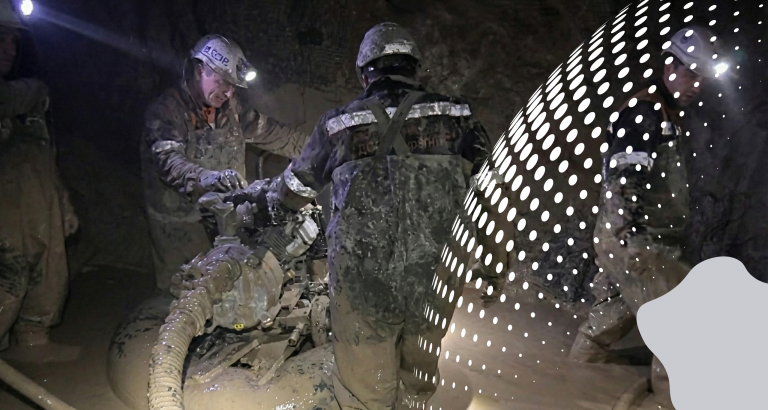
    In the depths of Arctic winter, with temperatures plunging to minus 20 degrees Celsius and daylight reduced to a few hours of twilight, a team of miners is advancing one of Europe’s most strategically important resource projects beneath the Swedish town of Kiruna. Around 900 metres underground, workers at the state-owned LKAB are tunnelling toward the Per Geijer deposit, regarded as one of the continent’s largest known concentrations of rare earth elements.

    Europe currently has no operating rare earth mines, despite rising demand for materials critical to electric vehicles, renewable energy systems, consumer electronics and defence technologies. The push to develop domestic supply has intensified as geopolitical tensions grow and China maintains near-total dominance over rare earth processing and magnet production.

    At Kiruna, the rare earths occur alongside iron ore in a magnetite-hematite-phosphate formation identified more than a century ago. Teams work at depths of up to 1.3 kilometres, drilling, blasting and reinforcing tunnels that will eventually link the existing iron ore mine with the Per Geijer resource roughly two kilometres away. Progress is incremental, averaging about five metres per day, reflecting both the technical complexity and environmental sensitivity of the operation.

    LKAB’s strategy differs from earlier mining approaches. Rather than exposing the entire deposit at once, the company plans phased development, gradually integrating rare earth extraction into the established iron ore system. Chief executive Jan Moström has said this approach is essential to manage risk, control costs and accelerate learning as Europe rebuilds lost mining and processing capabilities.

    To shorten timelines, LKAB has invested €80 million in a demonstration plant in Luleå to test separation technologies ahead of full-scale mining. The company has also taken a stake in Norway-based REEtec to develop cleaner refining methods, aiming to meet strict European environmental standards.

    Industry experts note that even with favourable geology, moving from resource discovery to refined rare earth products can take a decade or more. Still, Kiruna is widely viewed as Europe’s strongest near-term opportunity to reduce dependence on Chinese supply chains, which currently account for around 85% of global rare earth processing and virtually all heavy rare earth refining.

    European officials, including EU industry commissioner Stéphane Séjourné, have visited the site, underlining its strategic importance as the bloc seeks greater resource autonomy. While China is expected to retain dominance for years, projects like Kiruna are seen as critical first steps toward a more resilient European supply chain.

  • Mozambique Smelter Shutdown Set to Tighten Global Aluminum Supply in 2026

    Mozambique Smelter Shutdown Set to Tighten Global Aluminum Supply in 2026

    The planned shutdown of Mozambique’s Mozal aluminum smelter is expected to weigh heavily on global aluminum supply next year, forcing European Union buyers to seek alternative sources, analysts say.

    Mining group South32 confirmed that the Mozal smelter, with an annual capacity of 560000 metric tons, will be placed on care and maintenance from mid-March after negotiations with power utilities and the Mozambican government failed to secure a new electricity supply agreement.

    Trade Data Monitor figures show that in the first 10 months of 2025, Mozal shipped nearly 430000 tons of aluminum to the EU, making Mozambique the bloc’s largest supplier of primary aluminum with close to one fifth of total imports.

    ING now expects a global aluminum deficit of around 600000 tons in 2026, according to analyst Ewa Manthey. The bank had previously forecast a deficit of 200000 tons, following a shortfall of about half that size in 2025. Manthey said Europe is likely to compensate for the loss of Mozal supply through increased imports from Canada and the Middle East.

    European demand for primary aluminum is estimated at about 9 million tons per year, according to industry group European Aluminium. The impact of Mozal’s shutdown is being compounded by reduced output at Century Aluminum’s Iceland smelter, where production has fallen by roughly two thirds following an electrical failure. Iceland has been the EU’s second-largest aluminum supplier this year.

    Supply pressures are also being intensified by regulatory and trade factors. From January, the EU’s Carbon Border Adjustment Mechanism will impose a carbon tax on aluminum imports, while permitted imports of Russian aluminum will be capped at 50000 tons between February 26 and December 31.

    Prices have responded accordingly. Three-month aluminum on the London Metal Exchange was trading about 0.5% higher at around $2880 per ton, close to the more than three-year high of $2920 recorded in early November and again in early December. The European duty-paid premium rose to a 10-month high of $340 per ton at the start of December and was last seen at $326.

    According to consultancy CRU, a full closure of Mozal would turn its forecast of a roughly 200000-ton aluminum surplus in 2026 into a deficit. CRU’s head of aluminum raw materials, Ross Strachan, said producers in the Gulf region are well positioned to increase shipments to Europe, attracted by elevated premiums.

  • Portugal Emerges as Potential Hub for Critical Minerals as Exploration Intensifies

    Portugal Emerges as Potential Hub for Critical Minerals as Exploration Intensifies

    Europe is closely monitoring developments in Portugal as private companies carry out preliminary studies to assess the presence of critical minerals beneath the country’s surface. The growing interest is driven by the need to secure supplies of rare earths and other strategic elements essential for modern technologies, amid efforts by the European Union to reduce its dependence on China.

    Brussels has already fast-tracked several extractive projects linked to critical raw materials, and new geological data suggest that Portugal’s resource potential may be broader than previously assumed. According to Luís Martins, a geologist at Portugal’s National Laboratory for Energy and Geology (LNEC), the country is on the verge of a new mining-driven transformation. He noted that Portugal has strong expertise in mining and environmental management compared with many other European states.

    Exploration activities, including test drilling, are currently underway in parts of the Alentejo and the Northwest Transmontano regions, such as Moncorvo, an area with a long mining history. Martins stressed, however, that commercial extraction remains a distant prospect, explaining that rare earth elements are often associated with iron deposits, as seen in Moncorvo.

    In the Alentejo, areas including Monforte-Tinoca, Assumar, Crato-Arronches, and Penedo Gordo have already revealed the presence of highly sought-after elements. These include zircon, hafnium, titanium, niobium, tantalum, yttrium, and scandium. While not all of these minerals fall strictly within the rare earth category, many are classified as strategic or critical, heightening EU interest.

    Martins explained that rare earth elements comprise 17 chemical elements, including the 15 lanthanides as well as scandium and yttrium, which share similar chemical properties and often occur in the same deposits. These materials are vital for a wide range of industrial and technological applications due to characteristics such as magnetism, luminescence, and electrical resistance.

    The prospect of expanded mining activity raises concerns about environmental impacts, landscapes, and traditional rural livelihoods. Resistance has already been seen in northern Portugal, where communities have opposed lithium mining projects. Despite this, Martins believes economic considerations are likely to prevail. He pointed to two major untapped gold deposits in Montemor and Jales/Gralheira, which together could yield up to one million ounces of gold, currently valued at approximately 3.6 billion euros.

  • Serbia Zijin Copper Cleans Up Bor’s Legacy Pollution Through Smelter Modernisation and Dust Control

    Serbia Zijin Copper Cleans Up Bor’s Legacy Pollution Through Smelter Modernisation and Dust Control

    A new phase in Kazakhstan–European Union cooperation on critical raw materials was formally launched with the inauguration of the Kazakhstan–EU Gateway’s cooperation platform and its first flagship event, Strategic Partnership on Critical Raw Materials.

    The event, attended by Eureflect, was hosted at the Brussels headquarters of TÜSİAD, one of Turkey’s leading business associations, underscoring the Eurasian dimension of the initiative and its relevance for both European and regional industrial stakeholders. The choice of venue reflected the high-level political and business focus of the platform.

    Held on December 9, 2025, at Av. des Gaulois 13 in Brussels, the conference brought together policymakers, industry leaders and subject-matter experts from across Europe and Central Asia. Discussions centred on strengthening cooperation along the full critical raw materials value chain, from geological exploration and mining to processing, refining and downstream industrial integration.

    The Kazakhstan–EU Gateway is intended to serve as a structured platform to align Kazakhstan’s vast mineral resource base with Europe’s growing demand for secure, diversified and responsibly sourced critical raw materials. The initiative comes as the EU accelerates efforts to reduce strategic dependencies and deepen partnerships with resource-rich, politically aligned countries.

    Participants highlighted the importance of long-term frameworks, transparent governance and investment-friendly conditions to translate political alignment into tangible projects. The launch event marked an initial step toward building sustained collaboration between Kazakh institutions, European policymakers and industrial players seeking resilient supply chains.

  • Kazakhstan–EU Gateway Launches New Platform for Strategic Critical Raw Materials Cooperation

    Kazakhstan–EU Gateway Launches New Platform for Strategic Critical Raw Materials Cooperation

    A new chapter in Kazakhstan–European Union cooperation on critical raw materials opened on 9 December 2025 with the inauguration of the Kazakhstan–EU Gateway’s cooperation platform and its first flagship event, titled “Strategic Partnership on Critical Raw Materials.”

    The event was hosted in Brussels at the premises of TÜSİAD, one of Turkey’s leading business associations, underscoring the Eurasia-focused and high-level nature of the initiative. Located in the EU quarter at Avenue des Gaulois 13, the venue provided a strategic setting for discussions at the intersection of European policymaking, industry and international cooperation.

    The launch brought together policymakers, industry executives, analysts and experts to explore avenues for strengthening collaboration between Kazakhstan and the EU in the sourcing, processing and integration of critical raw materials into European value chains. Participants discussed supply security, investment frameworks, governance standards and the role of Central Asia in supporting Europe’s industrial resilience amid growing geopolitical pressures.

    The Kazakhstan–EU Gateway platform is intended to serve as a permanent forum for dialogue and project development, positioning Kazakhstan as a key strategic partner for Europe as it seeks to diversify supply chains and reduce dependence on dominant external suppliers of critical minerals.

  • EU Unveils New Raw-Materials Security Doctrine to Cut Foreign Dependence

    EU Unveils New Raw-Materials Security Doctrine to Cut Foreign Dependence

    The European Union has unveiled a new raw-materials security doctrine that marks a significant shift in its industrial and geopolitical strategy, moving from high-level policy guidance to execution-focused industrial governance.

    The doctrine sets quantified targets to reduce Europe’s reliance on foreign raw-material supplies by 50% within the next decade, acknowledging that full self-sufficiency is unrealistic but stressing the need for redundancy, diversification and domestic capacity. The strategy prioritises critical and strategic materials across extraction, processing and recycling, aligning Europe more closely with approaches taken by the United States and parts of Asia, while accounting for Europe’s stricter environmental and permitting frameworks.

    A central pillar of the doctrine is the recognition that Europe’s main vulnerability lies not only in limited mining, but in weak midstream capabilities. Insufficient refining, metallurgical transformation and component production have left European industry exposed to supply disruptions. The new approach seeks to strengthen these segments through financial incentives for processing plants, expanded recycling infrastructure and the creation of coordinated industrial clusters spanning automotive, aerospace, energy and defence sectors.

    Implementation speed is expected to be decisive. EU institutions acknowledge that lengthy permitting processes, local opposition and regulatory complexity have historically delayed strategic projects. To meet the doctrine’s ambitions, Brussels is expected to prioritise critical-project designation, streamline approvals and deploy stronger investment de-risking tools to accelerate development timelines.

    The doctrine underscores a broader shift in EU thinking, framing raw materials as a frontline industrial and security issue rather than a background commodity concern. By reinforcing domestic processing, recycling and midstream integration, the EU aims to position itself as a more resilient and competitive hub for strategic materials amid an increasingly contested global resource landscape.

  • REsourceEU Puts Europe’s Critical Minerals Strategy Into Action With Early Molybdenum and Lithium Backing

    REsourceEU Puts Europe’s Critical Minerals Strategy Into Action With Early Molybdenum and Lithium Backing

    Europe’s newly launched €3-billion REsourceEU funding package marks a decisive shift in the continent’s approach to securing resilient, competitive supply chains for critical and strategic raw materials. The first wave of support targets a select group of molybdenum and lithium projects, signalling that Brussels is moving beyond policy blueprints toward tangible industrial capacity.

    As reported by euromining.news, these early selections demonstrate that the EU’s critical raw materials agenda is entering an execution phase, focused on easing bottlenecks in alloy production, battery manufacturing and clean-technology deployment.

    Molybdenum moves into the strategic spotlight
    While it attracts far less attention than battery metals, molybdenum is essential to Europe’s industrial backbone. As a key alloying element in high-performance steels, it underpins defence manufacturing, energy infrastructure, petrochemicals and advanced engineering.

    Europe’s heavy reliance on imported molybdenum leaves these sectors exposed to geopolitical risk and price volatility. By prioritising European molybdenum projects under REsourceEU, the Commission is acknowledging that strategic vulnerability extends well beyond lithium and rare earths. Industrial resilience depends on securing the full spectrum of critical alloying materials that modern manufacturing requires.

    Lithium funding reinforces battery-chain ambitions
    Lithium remains central to Europe’s push to build a competitive battery ecosystem. Conversion plants across Germany, France, Portugal and the Nordic region are racing to scale production of battery-grade lithium chemicals, aiming to establish domestic midstream hubs in a market still dominated by fragmented and geopolitically sensitive global supply chains.

    REsourceEU funding is expected to reduce financing risk, unlock delayed investments and accelerate project timelines. This support is arriving at a critical moment, as European gigafactory capacity expands rapidly and automakers seek stable, low-carbon lithium supply.

    From policy vision to industrial reality
    The broader ambition of REsourceEU is to translate Europe’s raw-materials strategy into operational infrastructure. As highlighted in recent euromining.news analysis, long-term industrial competitiveness now hinges on secure, diversified and environmentally responsible material flows.

    By backing early leaders in molybdenum and lithium development, the EU is sending a clear signal: Europe intends to anchor strategic materials production at home rather than rely on volatile external suppliers. The challenge now lies in delivery. Projects must still overcome permitting hurdles, secure long-term offtake agreements and reach commercial scale.

    As construction advances and policy support deepens, euromining.news will continue to track both progress and remaining gaps to assess whether Europe’s strategic-materials ambitions translate into lasting industrial strength.

  • EU Reaches Provisional Deal to Strengthen Foreign Investment Screening Rules

    EU Reaches Provisional Deal to Strengthen Foreign Investment Screening Rules

    The Council of the European Union and representatives of the European Parliament have reached a provisional political agreement to revise the EU’s foreign direct investment (FDI) screening regulation, reinforcing the bloc’s ability to identify and mitigate security and public-order risks linked to foreign investments.

    The updated framework builds on the existing FDI screening system introduced in 2020 and responds to growing geopolitical, technological and supply-chain vulnerabilities. Under the agreement, all EU member states will be required to operate national screening mechanisms with a common minimum scope, ensuring that sensitive investments are assessed consistently across the bloc. Foreign investments made through EU-based subsidiaries will also fall within scope.

    The revised rules target a clearly defined set of sensitive sectors, including dual-use and military items, artificial intelligence, quantum technologies, semiconductors, critical raw materials, energy, transport and digital infrastructure, as well as key elements of electoral and financial market infrastructure. The aim is to harmonise approaches, reduce fragmentation between national regimes and lower administrative burdens for investors, while safeguarding cross-border security interests.

    While cooperation between member states and the European Commission will be strengthened, final decisions on whether to approve, condition or block an investment will remain the exclusive responsibility of the host member state. Where comments or opinions are issued by other member states or the Commission, the host country will be required to explain how these were taken into account.

    Operational improvements include plans for a shared EU database to prevent circumvention of screening rules, an optional single electronic filing portal for investors if requested by at least nine member states, and clearer risk assessment criteria.

    Denmark’s Minister for Industry, Business and Financial Affairs Morten Bødskov said the agreement strikes a balance between security and openness, focusing on the most sensitive technologies and infrastructure while keeping Europe attractive to global investors.

    The provisional deal now requires formal endorsement by both the Council and the European Parliament. Once adopted, the revised regulation will apply 18 months after its entry into force.