Tag: environmental impact

  • EU Criticised for Backing Portugal’s Barroso Lithium Mine Despite “Grave Environmental and Safety Risks”

    EU Criticised for Backing Portugal’s Barroso Lithium Mine Despite “Grave Environmental and Safety Risks”

    Environmental lawyers and community groups have sharply condemned the European Commission for refusing to remove the controversial Barroso lithium mine in northern Portugal from its list of strategic projects under the Critical Raw Materials Act (CRMA). The mine, located in Boticas, has become a flashpoint in national and international debates over the social and environmental costs of Europe’s push for domestic critical minerals.

    The Commission on Thursday rejected a joint request by Associação Unidos em Defesa de Covas do Barroso (UDCB), MiningWatch Portugal and ClientEarth to revoke the mine’s strategic designation. Critics argue that the label sidesteps mounting evidence that the project poses severe environmental, safety and social risks — and provides political cover for fast-tracking a project that local communities have opposed for nearly eight years.

    According to NGOs, the Commission largely dismissed concerns related to water scarcity, biodiversity loss and tailings safety, insisting these fall under Portuguese national responsibility. In a statement, the Commission stressed that its role under the CRMA “does not include verifying full compliance with EU environmental law,” prompting accusations that the Act is being used to override normal scrutiny through a “legal presumption” that the mine serves the public interest.

    ClientEarth lawyer Ilze Tralmaka warned that the CRMA should not be used to accelerate projects “that science shows are unsafe, environmentally destructive and unnecessary,” stressing that the green transition “cannot come at the cost of community safety.” She added that independent evidence suggests lithium demand should be reduced wherever possible, with a stronger emphasis on recycling to limit new mining.

    NGOs cite expert studies showing that Barroso’s waste storage and water management systems could fail during heavy rainfall, potentially contaminating farmland, local water sources and even affecting the Douro Valley’s world-famous Port wine region downstream. Another analysis highlighted major flaws in the project’s air-quality assessment.

    MiningWatch Portugal’s Nik Völker said the Commission’s decision “shows that the EU is willing to trade rural lives and irreplaceable landscapes for a political headline,” adding that calling the mine “strategic” does not make it safe or sustainable. “The Mina do Barroso offers minimal benefits and enormous risks: a textbook example of how not to do a green transition,” he said.

    Local opposition to the mine has been exceptionally strong, with farmers and residents warning the project threatens their land, water and livelihoods. Their activism has gained global attention, including a Cannes-premiered documentary about the community’s efforts to resist the development.

    Aida Fernandes of UDCB said the mine’s approval prioritises Europe’s interests at the expense of the people who live in Covas do Barroso. “Our springs, our soil and our farms are what keeps this community alive. Once they are gone, they are gone forever,” she said. “Europe cannot build a green future by destroying the places that are already living sustainably.”

    NGOs caution that while securing critical mineral supplies is a legitimate objective, the CRMA and the strategic project label are being misused to gain access to financing and expedited permitting for projects with major unanswered environmental and social questions.

  • Kyrgyzstan Unveils Critical Minerals Strategy at MINEX Eurasia Conference in London

    Kyrgyzstan Unveils Critical Minerals Strategy at MINEX Eurasia Conference in London

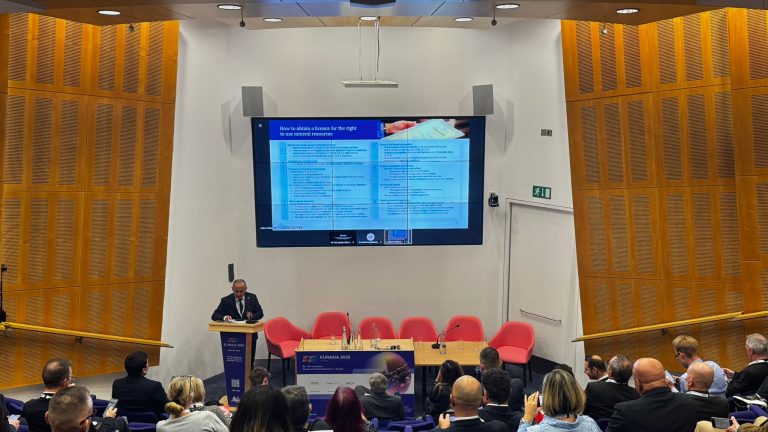
    London, 1 December 2025 – The MINEX Eurasia conference in London hosted a keynote address by H.E. Meder Mashiev, Minister of Natural Resources, Ecology, and Technical Supervision of Kyrgyzstan, outlining the country’s strategic vision for its critical minerals sector.

    Kyrgyzstan’s Strategic Minerals Vision

    The Minister outlined Kyrgyzstan’s methodical approach to prioritising and developing its critical minerals sector, identifying 21 key minerals based on global demand, local deposits, and resource concentrations. Kyrgyzstan’s analysis resulted in the selection of 4 priority projects, 5 promising deposits, and 16 prospective areas for further study and development. These assets, spread across antimony, beryllium, rare earths, molybdenum, bismuth, zinc, silver, and others, offer significant commercial and strategic potential for investors and end-users in energy, electronics, and high-value manufacturing.

    Investment and Development Framework

    State companies, notably Kyrgyzgeology, are driving exploration and project development, supported by government incentives and openness to international partnership. Strategic sites are being actively promoted for joint ventures or direct investment. Major domestic and international firms manage several large sites, while more than 100 mining enterprises operate in the country—spanning gold, copper, and polymetallic ores.

    Tax and Licensing Regime

    The session detailed Kyrgyzstan’s tax policy, which includes a mix of one-time bonuses for mining rights, royalties, profit tax, and VAT. The overall effective tax burden stands between 25–30%, complemented by social and environmental levies such as waste disposal, emissions, and water usage fees. Procedures for subsoil use licensing are harmonized with those in neighbouring countries, with initiatives being considered to simplify the processes and make it more transparent.

    ESG, Transparency, and Sustainable Mining

    Kyrgyzstan’s evolving strategy strongly emphasizes environmental, social, and governance (ESG) standards, aiming to foster responsible mineral development, minimize ecological impact, ensure transparency, and maximize benefits for local communities. The new strategy promotes the deployment of advanced technologies, environmental sustainability, and transparent investment processes, aligning with best practices to attract reliable, long-term partners.

    Opportunities for International Partnership

    Kyrgyzstan welcomes active collaboration with global investors and mining enterprises, seeking to leverage modern mining technologies, improve environmental outcomes, and maximize economic benefits. The country’s critical mineral strategy is closely linked to green growth targets and broader Eurasian supply chain integration.

  • Rio Tinto Mothballs Controversial $2.95bn Jadar Lithium Project in Serbia

    Rio Tinto Mothballs Controversial $2.95bn Jadar Lithium Project in Serbia

    The Rio Tinto Group has placed its contested $2.95-billion Jadar lithium project in Serbia into “care and maintenance”, according to an internal memo this week. The move, confirmed by a company spokesperson, effectively halts active development on what was slated to be Europe’s largest lithium mine, capable of supplying an estimated 90% of the continent’s current lithium demand.


    Key Takeaways and Context

    The decision is a direct consequence of a “lack of progress in permitting” and sustained fierce local opposition and political volatility in Serbia. CEO Simon Trott’s focus on simplifying the company’s sprawling portfolio and cutting spending also played a role, especially given the project’s high capital allocation with no immediate production in sight.

    What does “Care and Maintenance” mean for Jadar?

    “Care and maintenance” is a mining industry term for a temporary suspension of operations. It means that while the site is not actively being developed, it is being managed to ensure it remains in a safe, stable, and environmentally compliant condition so that operations could be recommenced at a later date if regulatory, economic, or social conditions improve.

    Rio Tinto reiterated that it “remains in Serbia” and continues to view Jadar as an “exceptional quality” deposit with the potential to play a “significant role in the energy transition” of Serbia and Europe. Their immediate focus will be on supporting employees and fulfilling legal obligations as responsible landowners in the Jadar valley.


    🇪🇺 Critical Hit to EU’s Raw Materials Strategy

    The mothballing of Jadar is a significant setback for the European Union’s ambitions for self-sufficiency in key battery metals, as outlined in the Critical Raw Materials Act (CRMA).

    • Strategic Project Loss: Jadar was designated as one of the EU’s few Strategic Projects outside of its borders, specifically for lithium. At its estimated full capacity of 58,000 tonnes of lithium carbonate annually, it was considered a cornerstone for establishing a secure, diversified, and domestic European battery supply chain, reducing reliance on dominant suppliers like China.
    • A Warning on Governance: The project’s failure underscores a critical dilemma for the EU. As Peter Tom Jones highlights, attempts to increase self-sufficiency through projects in third countries must not lead to “uncritical support for autocratic regimes”. The sustained local opposition, environmental concerns, and political instability in Serbia—an EU candidate country—demonstrate that effective governance and a democratization process are as critical as the resource itself.
    • Alternative Lithium Projects: The focus will now intensify on accelerating other European lithium projects, such as those in Portugal, France, and Finland, to meet the CRMA’s targets.

    This situation calls for the EU to demand robust ecological and social standards—potentially through collaboration with third-party verification bodies like the Initiative for Responsible Mining Assurance (IRMA)—to rebuild confidence in such projects in the Western Balkans and beyond.

  • Rio Tinto’s Oyu Tolgoi Mine Exposes the Gap Between Ethical Investment and Reality

    Rio Tinto’s Oyu Tolgoi Mine Exposes the Gap Between Ethical Investment and Reality

    The controversy surrounding Rio Tinto’s Oyu Tolgoi (OT) copper and gold mine in Mongolia has once again drawn global attention to the disconnect between ethical investment claims and corporate accountability. While the mining giant recently paid US$139 million (AU$211 million) to settle a lawsuit with U.S. investors over cost overruns, local Mongolian herders continue to suffer from the project’s long-standing environmental impacts.

    For over a decade, herding families in southern Mongolia have raised alarms over water contamination and soil degradation linked to the mine’s tailings seepage, which Rio Tinto has acknowledged since 2013. According to environmental audits, the leak migrated off-site into a nearby riverbed, threatening groundwater resources critical to local communities and livestock.

    Despite the severity of the issue, Rio Tinto only met with affected herders a year after admitting the leak, and no effective measures have been taken to halt the seepage. Experts say the company’s response has focused on monitoring and containment rather than preventive measures, such as improving tailings storage design or reducing water content in waste materials.

    Auditors and independent assessors have flagged multiple safety and environmental failures, including inadequate seepage collection systems, missing cutoff trenches, and a lack of reliable indicators to monitor contamination. Meanwhile, Rio Tinto has not disclosed the full list of chemicals present in the seepage, nor provided medical screening or compensation for affected herders.

    Critics argue that the cost of these design flaws has been externalised onto local communities and ecosystems, while investors have received swift settlements. “Rio Tinto’s willingness to pay investors but ignore local harm highlights a troubling double standard,” wrote Caitlin Daniel and Julio Castor Achmadi of Accountability Counsel, who have worked with affected communities.

    The Oyu Tolgoi mine, expected to operate for another 30 years, is one of the largest copper projects in the world and a key asset for Rio Tinto’s global portfolio. However, the company’s handling of the project has raised reputational concerns for investors and financiers, including the International Finance Corporation (IFC) and the European Bank for Reconstruction and Development (EBRD), which helped arrange new funding for OT last year despite ongoing environmental disputes.

    The authors argue that ethical investors must demand greater transparency and accountability from Rio Tinto, warning that the company’s pattern of delayed responses and unfulfilled promises could pose both financial and moral risks.

    “If Rio Tinto won’t uphold its environmental and social standards,” they conclude, “investors must ask whether this is a company worth backing — or a liability in the making.”

  • Historic Swedish Church Completes Epic Relocation by LKAB

    Historic Swedish Church Completes Epic Relocation by LKAB

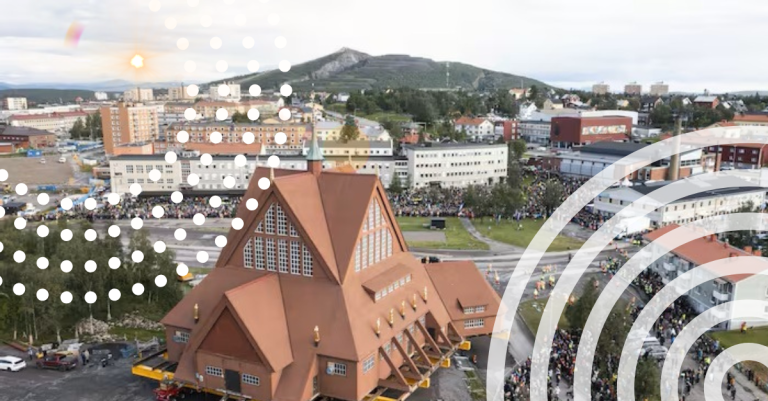
    In a meticulously orchestrated feat of engineering, the iconic Kiruna Kyrka, a 1912 red wooden church weighing 672 tonnes, arrived at its new location in the Arctic town of Kiruna on Wednesday after a two-day, five-kilometre (three-mile) journey. The relocation was necessitated by the expansion of Europe’s largest underground mine, operated by LKAB.

    The church, which began its journey on Tuesday, inched forward at a pace of half a kilometre per hour on two remote-controlled flatbed trailers. Its arrival around 2:30 pm (1230 GMT) was celebrated with a musical fanfare, marking the culmination of a complex logistical operation.

    Kiruna’s entire town centre is being relocated due to the LKAB iron ore mine’s deepening excavations, which have compromised the stability of the ground. The church’s new location, chosen to preserve its character and connection to its surroundings, has been rotated 180 degrees, positioning the altar to face west—a symbolic gesture towards the town and its residents.

    The relocation has captivated widespread attention, with large crowds gathering along the route to witness the historic event. Lisa Weber, a 26-year-old real estate agent from Germany, travelled to Kiruna specifically to see the relocation, describing it as a “historical” moment. “It’s something that you do once in your life, or see once in your life,” she told AFP.

    King Carl XVI Gustaf of Sweden participated in the festivities, engaging with the Argentinian driver, Sebastian Druker, who remotely controlled the trailers using a joystick. The king also joined an attempt to set a world record for the largest “kyrkkaffe” (a coffee break following a church service).

    The town’s relocation process, which began nearly two decades ago, is expected to continue for years. The new town centre was inaugurated in September 2022. LKAB has offered financial compensation or rebuilding services to those affected by the relocation, with 23 historic buildings already moved before the church.

    Despite the meticulous planning, not all residents are satisfied. Critics, including local podcast hosts Alex Johansson and Magnus Fredriksson, have expressed dissatisfaction with LKAB’s handling of the relocation. “LKAB maybe didn’t read the room so well when they destroyed the whole town and then they stage this huge street party for the people,” Fredriksson remarked to broadcaster SVT.

    LKAB’s discovery of Europe’s largest known deposit of rare earth elements near the Kiruna mine in 2023 has added another layer of complexity to the situation. These elements are crucial for the green transition, particularly in the manufacturing of electric vehicles. However, activists argue that mining operations are detrimental to the region’s pristine forests, lakes, and traditional Sami reindeer herding practices.

    The relocation of the church alone is estimated to cost LKAB 500 million kronor ($52 million). Designed by Swedish architect Gustaf Wickman, the church features a blend of architectural influences, including designs inspired by the Indigenous Sami people. The church’s handblown glass windows were removed before the move and replaced with painted plywood. The separate belltower will be relocated next week.

    As Kiruna continues to adapt to the demands of modern industry, the relocation of the Kiruna Kyrka stands as a testament to the town’s resilience and the intricate balance between progress and preservation.

  • Rio Tinto Pushes Forward with Serbia’s Jadar Lithium Project Amid Environmental Debate

    Rio Tinto Pushes Forward with Serbia’s Jadar Lithium Project Amid Environmental Debate

    Rio Tinto is actively seeking regulatory approvals to revive its Jadar lithium project in western Serbia, a venture that could become one of the largest greenfield lithium mines globally. Speaking to SeeNews, Chad Blewitt, Managing Director of the Jadar Project, confirmed that the company is awaiting approval for a revised Environmental Impact Assessment (EIA) study and other critical permits, including an exploitation field license.

    “If we secure all necessary regulatory approvals and public consultations go smoothly, we could begin construction within the next few years,” Blewitt said. The company previously planned to start production in 2027 following the mine’s completion in 2026.

    The Serbian environmental protection ministry has yet to comment on the status of the EIA review. Once the scope is approved, Rio Tinto will have one year to complete the updated study.

    Discovered in 2004, the Jadar deposit contains jadarite, a unique lithium- and boron-rich mineral. If developed, the mine is expected to produce 58,000 tons of battery-grade lithium carbonate annually over a 40-year lifespan, potentially placing Rio Tinto among the world’s top ten lithium producers.

    However, the project has sparked significant backlash. Environmentalists, local residents, and scientists warn that mining in a fertile and densely populated valley could have catastrophic ecological consequences. Activist group Ne Damo Jadar points out that the mine’s projected footprint affects 17 villages, with five located near the planned landfill zone—home to nearly 19,500 people.

    Blewitt rejected these criticisms, calling them “reckless” and based on misinformation. “Scientific facts confirmed by independent experts show the project is safe,” he said, emphasizing that the Jadar mine has passed the most rigorous environmental studies ever conducted in Serbia.

    The European Commission recently added Jadar to its list of strategic raw materials projects outside the EU, a move Blewitt says proves the project can meet the highest environmental and human rights standards.

    Originally estimated at €2.55 billion, the project’s capital cost is now under review to incorporate new technical developments. Economic benefits touted by Rio Tinto include an estimated €695 million annual contribution to Serbia’s GDP and over €180 million in yearly state revenues from taxes and royalties. The operational phase is expected to create 1,300 permanent jobs, with additional economic ripple effects potentially generating over 20,000 new roles in associated sectors like battery and EV production.

    Blewitt, who returned to lead the Jadar project in 2023 after advancing Rio Tinto’s operations in Guinea and Mongolia, remains focused on finalizing the EIA and ensuring full regulatory compliance before breaking ground.

  • Zijin’s Shadow: Villagers in Serbia and Tajikistan Bear Brunt of Chinese Mining Expansion

    Zijin’s Shadow: Villagers in Serbia and Tajikistan Bear Brunt of Chinese Mining Expansion

    In the hills of eastern Serbia and the valleys of western Tajikistan, villagers say they’re paying the price for China’s global mining ambitions. The Chinese-owned Zijin Mining Group, operating major copper and gold projects in both countries, stands accused of polluting the air, poisoning rivers, and displacing communities—while receiving strong political backing under the umbrella of Beijing’s Belt and Road Initiative (BRI).

    In Bor, Serbia, residents near Zijin’s Cukaru Peki copper mine complain of worsening air quality, arsenic, and fine particulate matter still lingering in the atmosphere despite the company’s reported $259 million investment in environmental improvements.

    “You used to see the smoke,” says Violeta, a Bor resident. “Now you don’t—but it still stinks.”

    In Krivelj, just outside Bor, Milos Bozic says the dust has made farming impossible. Professor Snezana Serbula of the Bor Technical Faculty confirms that PM particles and arsenic persist in the air. Meanwhile, residents like Dragoslav Stanculovic in nearby Ostrelj refuse to sell their properties. “What am I supposed to do—sell my dignity?” he asks.

    Despite environmental alarms, the Serbian government has doubled down on its support for Zijin, with Chinese companies now Serbia’s top exporters, surpassing $1 billion in trade by 2024.

    In Tajikistan, the story echoes Serbia’s. In Khumgaron and Shing, villagers say Zijin’s Zarafshon gold mine, where the company owns a 70% stake, has brought choking air and poisoned water. “Thick smoke covers the village in the morning,” says Abutolib Mukhtorov.

    Local residents in both countries report broken promises of relocation, inadequate compensation, and police intimidation of those who speak out. In Tajikistan, women who protested in Panjakent were detained. Firuza Kahorova recalls collapsing during the protest and being mocked by authorities: “They said, ‘Don’t give her water—give her dirt.’”

    Zijin claims 98% of Serbian land was acquired voluntarily and insists its projects meet environmental laws, branding Cukaru Peki as Serbia’s first “green mine.” In Tajikistan, Zijin has been fined, but continues operating with 20-year plans and strong support from the government, which highlights tax revenues and economic benefits.

    But for many residents, those benefits are illusory. “Peaches don’t grow. Cucumber flowers fall off. The river’s poisoned,” says Asadulo Rahmonov in Tajikistan. “It’s not progress. It’s survival.”

  • North Macedonia’s ESM Plans to Open New Coal Mine Near Greek Border

    North Macedonia’s ESM Plans to Open New Coal Mine Near Greek Border

    North Macedonia’s state-owned power utility, Elektrani na Severna Makedonija (ESM), has announced plans to open a new coal mine in Zivojno, close to the Greek border, according to the Ministry of Environment and Physical Planning.

    The ministry is currently seeking public feedback on the environmental impact assessment study for the project, with submissions open until May 15.

    ESM intends to begin operations at the Zivojno mine in 2026, following a three-year preparatory phase. Despite its ambitious start, the mine is projected to have a relatively short operational life of just four years, local broadcaster Telma reported.

    The announcement comes amid North Macedonia’s broader strategy to phase out coal-fired energy production. The government has committed to closing its two existing coal plants, REK Bitola and Oslomej, by 2030, as part of its efforts to transition towards cleaner energy sources.

  • Europe’s Lithium Mining Debate: Environmental Costs vs. Green Transition

    Europe’s Lithium Mining Debate: Environmental Costs vs. Green Transition

    Europe is believed to hold vast but unexploited lithium reserves in Germany, Czechia, Serbia, Spain, Portugal, and Austria. However, efforts to tap into these resources have faced strong resistance from local communities and environmental groups.

    Since July 2024, Serbians have staged protests against Rio Tinto’s lithium project in the Jadar Valley, a populated rural region in the country’s northwest. In Portugal’s Barroso region, opposition has been ongoing since May 2023, while in Spain’s UNESCO-listed city of Cáceres, resistance to lithium mining has persisted for over six years.

    In a recent episode of Tech Talks, Euronews examined this divisive issue with two experts presenting contrasting views. Lindsey Wuisan, a campaigner at Friends of the Earth Europe, warns that lithium mining carries irreversible environmental and societal consequences. She highlighted concerns about water and energy consumption, chemical pollution, and threats to biodiversity, arguing that mining profits often benefit multinational companies rather than local communities.

    Conversely, Peter Tom Jones, director of the KU Leuven Institute for Sustainable Metals and Minerals, maintains that while mining has negative impacts, these can be mitigated through responsible practices. He advocates for renewable energy in mining operations, dry-stacking waste materials, and local community involvement. Jones also stressed that lithium and other metals are crucial for Europe’s transition to a climate-neutral economy and that relying on imports shifts environmental burdens abroad.

    The debate continues as Europe grapples with the balance between sustainability, local opposition, and the need for critical raw materials.

  • Serbia’s Environmental Ministry Sets Terms for Rio Tinto’s Jadar Mining Project Amid Criticism

    Serbia’s Environmental Ministry Sets Terms for Rio Tinto’s Jadar Mining Project Amid Criticism

    The Ministry of Environmental Protection of Serbia has defined the scope and content of the required environmental impact assessment (EIA) for the mining section of the controversial Jadar project, spearheaded by Rio Tinto. The multinational mining company is now obligated to address cumulative environmental impacts and propose mitigation measures as part of its EIA study.

    The decision has sparked backlash from environmentalist groups, including Marš sa Drine, which claim it violates public participation rules, neglects key safeguards, and prioritizes corporate interests. The group alleges that the Ministry’s approval bypassed crucial regulations, calling for a public lawsuit to challenge the legality of the move.

    Rio Tinto’s Serbian subsidiary, Rio Sava Exploration, submitted its request on September 17 to outline the EIA scope for an underground lithium and boron mining operation in western Serbia. The project encompasses several municipalities in Loznica and is part of a broader initiative to exploit the Jadarite mineral, a rare source of lithium and boron.

    Environmental watchdog RERI has criticized the fragmented approach, accusing Rio Tinto of “salami slicing” the project to sidestep a comprehensive assessment. RERI argues that dividing the project undermines transparency and diminishes adherence to European Union environmental standards.

    Following an analysis of 149 public comments, the Ministry has required Rio Tinto to explicitly list mitigation measures and adopt best available technologies in the EIA. The company has one year to submit the finalized study, which must detail all cumulative impacts, proposed solutions, and monitoring mechanisms.

    Critics remain unconvinced, warning that the decision favors Rio Tinto at the expense of public and environmental well-being. Marš sa Drine has urged citizens to mobilize against what it calls a breach of Serbian and international laws.