Tag: critical minerals

  • TETHYS and Hartree Announce Life‑of‑Mine Offtake Agreement for the Cataltepe Polymetallic Project in Türkiye

    TETHYS and Hartree Announce Life‑of‑Mine Offtake Agreement for the Cataltepe Polymetallic Project in Türkiye

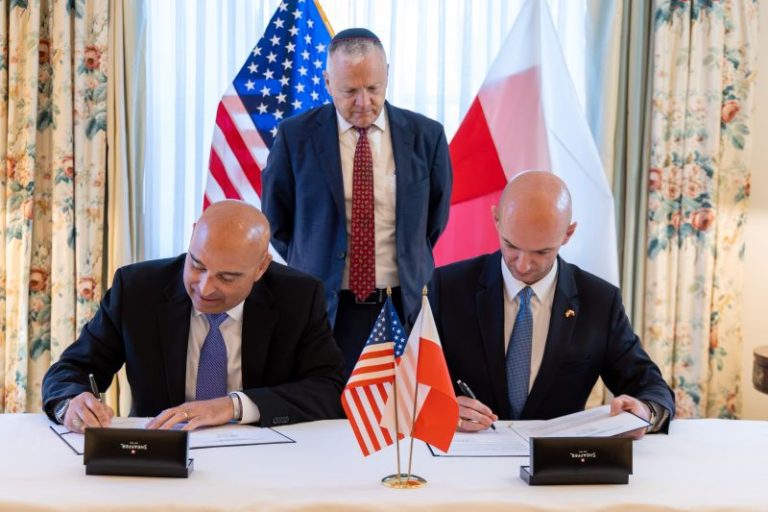
    TETHYS, a Turkish-incorporated critical minerals and strategic infrastructure platform with projects across Eurasia, and Hartree Metals LLC, a subsidiary of the global commodities firm Hartree Partners LP — a leading independent commodities trading and asset management company — have entered into a life-of-mine offtake and commercial prepayment arrangement to support concentrate exports from the Cataltepe polymetallic mining project in north-western Türkiye.

    The agreement establishes a long-term commercial partnership between the two companies, anchored on the Cataltepe operation. Production from the mine is expected to be processed at the Kalkım flotation facility, generating zinc, lead, and copper concentrates for export to international smelting markets.

    Under the arrangement, Hartree Metals has provided a commercial advance payment to support the restart of operations and ongoing production activities, and will purchase and export 100% of the zinc, lead, and copper concentrates produced for the life of the operation. Production at Cataltepe is expected to commence shortly, with monthly shipments increasing progressively as operations ramp up.

    The transaction demonstrates a shared commercial understanding of the project and a mutual commitment to establishing reliable concentrate supply chains in Türkiye. For TETHYS, the agreement represents the commercial activation of its flagship Turkish operation and a significant milestone in its broader strategy to develop a multi-country portfolio of critical mineral assets across Eurasia. For Hartree Metals, it signifies a deepening of its commercial engagement with Türkiye’s expanding mining sector.

    Prof. Dr Leyla Keser, Chairperson of TETHYS Gateway Trading LLC, said: “The Cataltepe offtake agreement is a landmark transaction for TETHYS and a strong endorsement of the project’s commercial potential. We are delighted to be partnering with Hartree Metals as our long-term trading partner and look forward to building on this relationship as TETHYS continues to develop its portfolio of mineral assets across the region.”

  • Uzbekistan–Turkey Business Forum: A Key Opportunity for MINEX Forum Partners

    Uzbekistan–Turkey Business Forum: A Key Opportunity for MINEX Forum Partners

    The MINEX Forum team is delighted to participate in the upcoming Uzbekistan–Turkey Business Forum on 5 May at the Hilton Hotel. This event serves as a vital precursor to our broader regional discussions, focusing on concrete industrial proposals and joint investment ventures.

    The forum is a collaborative effort between OSTIM, the Ministry of Mining Industry and Geology of Uzbekistan, and TMK. It offers a deep dive into Uzbekistan’s ambitious industrial roadmap, specifically focusing on critical minerals and deep processing.

    Key highlights include presentations on:

    • The R&D Park for critical minerals.

    • Technopark initiatives for high-value metal processing.

    • Graphtech’s latest mining developments.

    Our representatives will be on the ground to discuss how these initiatives align with the broader goals of value creation and regional connectivity that we champion at MINEX. We invite our colleagues and partners to join us for a day of high-level networking and strategic planning.

  • MINEX Kazakhstan 2026 Calls for Second Wave of Mining Reforms as Legal Fragmentation Holds Back Investment

    MINEX Kazakhstan 2026 Calls for Second Wave of Mining Reforms as Legal Fragmentation Holds Back Investment

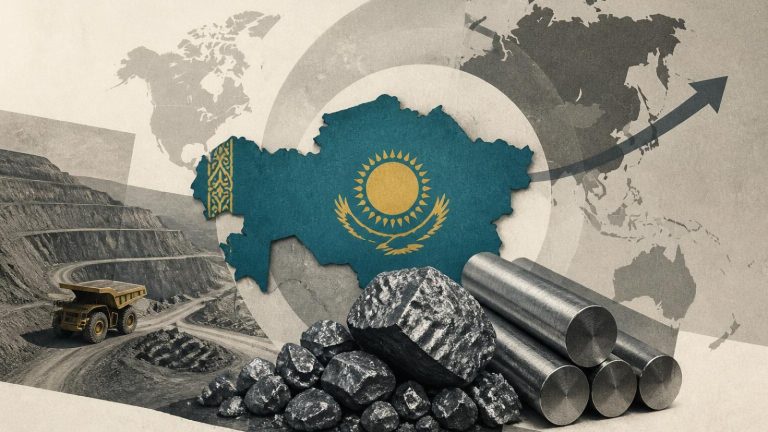
    Kazakhstan’s XVI MINEX Kazakhstan 2026 forum in Astana delivered a clear verdict: the country’s first wave of mining sector reform has laid important foundations, but a deeper, systemic second phase is now urgently needed if Kazakhstan is to realise its ambition of becoming a global critical minerals hub rather than simply remaining a large raw material exporter.

    The forum’s central thesis — articulated by speakers from government, industry and the expert community — is that mineral resources must no longer be viewed purely as export potential, but as the foundation for value creation, technological modernisation and industrial sovereignty. MINEX executive chairman Artur Polyakov set the tone in his opening remarks, noting that Kazakhstan’s endowment of more than 9,500 deposits and significant global reserves of uranium, tungsten, copper, rare earth metals, lithium and graphite, combined with its location between Europe and Asia, gives the country the potential to become one of the world’s most important critical minerals centres. “But geology alone is not enough,” he said. “The key question is not whether Kazakhstan has resources, but how the country can turn them into long-term prosperity, industrial capacity and international partnerships.”

    Vice minister of industry and construction Iran Sharkhan outlined the practical reform agenda: a transition to a royalty-based tax system replacing the mineral extraction tax, the introduction of a strategic investor status granting preferential conditions tied to domestic processing commitments, and 2025 amendments to the Subsoil Code aimed at simplifying regulation, attracting investment and digitalising procedures. Geological survey coverage has reached 2.038 million square kilometres against a 2026 target of 2.2 million square kilometres, and 17 new deposits were placed on the state register in 2025 alone.

    The most pointed intervention came from Nikolai Radostovets, executive director of the Republican Association of Mining and Metallurgical Enterprises, speaking at the forum’s strategic session on the balance between regulatory control and investment. He acknowledged that the 2018 Subsoil Code was a landmark modernisation — introducing the first-application licensing principle, new approaches to geological data management and improved investor access to exploration. But in practice, he said, the code cannot be fully implemented because it was never synchronised with the Land, Water, Environmental and Tax codes. The result is a web of administrative barriers: difficulties obtaining land rights, contradictory water legislation requirements, excessive environmental procedures and misaligned tax norms that collectively slow both exploration and production projects and erode investment attractiveness.

    The Association is calling for the second phase of subsoil reform to focus specifically on amending the adjacent codes that obstruct the Subsoil Code’s implementation. Concrete proposals include a land reservation mechanism for subsoil use purposes, simplified land allocation procedures for exploration and extraction, streamlined regulation of works in water protection zones, reduced bureaucracy in environmental permitting, and adjustments to royalty calculation methodology, processing taxation and the taxation of technogenic mineral formations.

    The forum’s conclusion was unambiguous: for Kazakhstan to secure stronger positions on the emerging global critical minerals market, it requires modern legislation, quality geological data, predictable regulation, advanced technology and sustained investor confidence — and all of these must advance together.

  • Deep Processing Emerges as Kazakhstan’s Core Economic Strategy at MINEX as Industry Calls for Systemic Transformation

    Deep Processing Emerges as Kazakhstan’s Core Economic Strategy at MINEX as Industry Calls for Systemic Transformation

    The transition from raw material extraction to deep mineral processing dominated discussions at the MINEX Kazakhstan forum in Astana, where business representatives and industry experts argued that the shift requires not isolated investment projects but a fundamental restructuring of the economy.

    Priority sectors identified by participants include the processing of copper, polymetallic, rare and rare earth metals — materials whose strategic value is rising rapidly in global markets. But forum speakers were clear that the ambition goes far beyond building individual facilities.

    “When processing emerges, the entire structure of the economy changes — new industries appear, supply chains form, jobs are created and the technological level rises,” said Artur Polyakov, managing director of Advantix and chairman of the MINEX Forum. He argued that creating the right conditions for investors is as important as the physical infrastructure itself. “It is not simply a matter of building plants — you need to create conditions where an investor understands how they will work, how their investments are protected, what the project economics will be. This is a comprehensive task — from legislation to technology,” he said.

    The forum has previously noted growing interest from foreign investors in Kazakhstan, a trend Polyakov attributed in part to the country’s reform momentum and the global scramble to secure critical mineral supply chains outside China. Participants concluded that the processing question has become not merely a sectoral concern but a strategic national priority on which Kazakhstan’s long-term economic resilience and competitiveness depend.

  • Kazakhstan Shifts Focus to Critical Minerals as Exploration Accelerates

    Kazakhstan Shifts Focus to Critical Minerals as Exploration Accelerates

    Kazakhstan is intensifying its geological exploration efforts as it adapts to shifting global demand and prepares for a gradual decline in oil production. While the country has long relied on its vast natural resources, current priorities are increasingly focused on rare and critical minerals, which are emerging as key drivers of future economic growth.

    Over the past year alone, 17 new deposits have been discovered, underscoring the continued potential of the country’s subsoil. Exploration activity has expanded significantly, with geological survey coverage reaching more than 2 million square kilometres. Authorities plan to extend mapping across an additional 100 thousand square kilometres this year, supported by 20 approved project initiatives involving national and industry stakeholders.

    Kazakhstan’s mineral base remains substantial, with approximately 10 thousand deposits identified across the country. Proven reserves include gold, silver, copper, and phosphorites, while total reserves across major resources exceed 2369 tonnes of gold, 4.3 billion tonnes of oil, 3.8 trillion cubic metres of gas, 33.5 billion tonnes of coal, and 26.7 billion tonnes of iron ore.

    A key development is the creation of a certified laboratory complex under the National Geological Service, scheduled for completion by 2028. The facility, valued at 14 billion tenge, will enhance analytical capabilities and support more precise geological data processing.

    According to officials, rising global demand for copper, gold, and rare earth elements is driving a strategic shift in the sector. Greater emphasis is now being placed on improving data accuracy, increasing transparency, and strengthening the investment climate. Over the next three years, the government plans to allocate approximately 240 billion tenge to geological exploration, while also preparing to auction new перспективные участки starting in 2027.

    This renewed focus is partly driven by declining oil output in certain regions, where production has dropped significantly due to resource depletion. In response, exploration is expanding into underexplored sedimentary basins such as the Aral and Syrdarya regions.

    Kazakhstan is also attracting growing private investment, with around 280 billion tenge injected into exploration over the past three years. Rare earth and rare metals are becoming central to this strategy, including deposits such as Kuyryktikol, discovered in 2025, which contains significant reserves of cerium, neodymium, and yttrium.

    More than 100 known deposits across the country contain critical minerals such as tungsten, molybdenum, lithium, beryllium, niobium, tantalum, germanium, and gallium. These materials are essential for high-tech industries, including electric vehicles, electronics, and energy systems, further boosting Kazakhstan’s export potential.

    The evolving structure of the mining sector reflects a broader transformation. Unlike in the past, when extraction often focused on individual elements, modern development requires integrated approaches and advanced technologies. This shift is increasing the sector’s reliance on innovation and international collaboration, as Kazakhstan positions itself as a key supplier in the global critical minerals market.

  • Central Asia Advances Geological Reforms to Boost Investment and Resource Development

    Central Asia Advances Geological Reforms to Boost Investment and Resource Development

    Central Asian countries are intensifying efforts to modernise their geology and subsoil use sectors, positioning natural resources as a key driver of economic growth, technological development, and regional cooperation.

    In Kazakhstan, large-scale reforms are being implemented under the direction of President , aimed at improving investment conditions, increasing transparency, and accelerating digital transformation across the sector. Authorities have introduced a Unified Subsoil Use Portal, enabling streamlined access to licensing and geological data, while also aligning reporting standards with international frameworks.

    The country continues to expand its geological exploration coverage, which has now reached over 2 million square kilometres. Funding for geological research has increased significantly and is expected to total around 500 million dollars over the next three years. Kazakhstan’s mineral base remains substantial, with approximately 10 thousand deposits and large reserves of gold, hydrocarbons, coal, and iron, alongside growing attention to rare earth elements.

    Minister of Industry and Construction  noted that the sector is undergoing a structural shift as global demand evolves and resources become more difficult to access. In response, the government is prioritising advanced exploration technologies, including remote sensing, geophysical surveys, and geochemical analysis, as well as deeper institutional reforms to strengthen governance and efficiency.

    Digitalisation is also emerging as a central pillar. A unified platform now supports a full digital cycle from application to licence issuance, integrating electronic auctions and online payment systems. These measures are designed to improve transparency and create a more attractive environment for investors.

    Beyond Kazakhstan, similar reforms are underway across the region. In Uzbekistan, Deputy Minister  highlighted a shift toward investor-led exploration models, supported by legislative updates, tax incentives, and simplified licensing procedures. The country is also prioritising the development of critical minerals, including lithium, tungsten, and rare earth elements, with major investment programmes planned through 2028.

    Tajikistan is likewise advancing its geological strategy, focusing on expanding exploration, increasing resource efficiency, and attracting foreign investment. According to Ilkhomjon Oymuhammadzoda, the country has identified over 70 elements and is preparing hundreds of deposits for industrial development, while promoting joint ventures and domestic processing capabilities.

    Across Central Asia, governments are increasingly viewing geology not only as a source of raw materials but as a foundation for broader economic and technological transformation. Emphasis is shifting toward sustainable resource management, deeper exploration, and regional coordination, including shared geological data, joint studies of cross-border structures, and the development of integrated digital platforms.

    This coordinated approach reflects a wider recognition that future competitiveness in the global minerals market will depend on both resource availability and the ability to manage those resources efficiently, sustainably, and collaboratively.

  • Spain Emerges as Europe’s Critical Minerals Frontier as EU Races to Break Free From Chinese Supply Dominance

    Spain Emerges as Europe’s Critical Minerals Frontier as EU Races to Break Free From Chinese Supply Dominance

    As global demand for digital technologies and electric mobility accelerates, the competition for critical minerals has intensified, placing Spain at the forefront of Europe’s resource strategy. With growing geopolitical tensions over supply chains, the European Union is increasingly looking inward, identifying Spain as a key player due to its significant geological potential.

    Historically, Spain’s mining sector has contributed substantially to the national economy, generating nearly 3.5 billion euros annually. Today, attention has shifted to the Variscan Massif, a vast mineral-rich belt stretching from Galicia to Andalusia. This region holds promising deposits of rare earth elements and critical minerals, essential for modern technologies yet notoriously difficult to extract due to their low concentrations.

    Experts highlight the geopolitical weight of these resources. With China dominating the rare earth market and supplying the majority of key materials such as magnesium to the EU, Europe’s dependence has raised strategic concerns. Recent warnings from the European Court of Auditors underline that progress in reducing this reliance remains insufficient.

    Against this backdrop, Spain is positioning itself as a cornerstone of Europe’s mineral independence. The country holds 15% of global strontium reserves and is the sole producer of this mineral within the EU. It is also the continent’s second-largest copper producer. Notably, 20 of the 34 raw materials classified as critical by Brussels have been identified in Spain, including lithium, cobalt, and nickel.

    To capitalise on this potential, the Spanish government approved the National Mining Exploration Program (2026–2030), allocating 182 million euros to assess and expand extractable resources. Simultaneously, the European Commission has endorsed a portfolio of strategic projects, seven of which are located in Spain, aimed at boosting domestic extraction, processing, and recycling capacities by 2030.

    However, the development of these projects faces strict regulatory, technical, and environmental requirements. Authorities stress that operations must be sustainable, economically viable, and beneficial at a cross-border level. Public concern over environmental impacts remains significant, with local communities and watchdog organisations increasingly scrutinising mining activities.

    In response, attention is also turning to innovative approaches such as recycling mining waste. Spain hosts over 21,000 mining ponds and dumps, presenting opportunities to recover valuable materials while reducing environmental harm. Research initiatives, including projects in the Río Tinto basin, are exploring methods to extract rare earth elements from mine drainage, offering a potential pathway toward more sustainable resource management.

    While still in early stages, these efforts reflect a broader shift toward balancing economic opportunity with environmental responsibility. As Europe seeks to secure its supply of critical minerals, Spain’s role is set to become increasingly pivotal in shaping the continent’s industrial and geopolitical future.

  • Bosnia’s “Green Transition” Dilemma: International Mining Companies Move In as Communities Fight to Protect Land, Water and Livelihoods

    Bosnia’s “Green Transition” Dilemma: International Mining Companies Move In as Communities Fight to Protect Land, Water and Livelihoods

    In the gentle hills of Majevica, a low mountain range in northeastern Bosnia and Herzegovina where farmers grow strawberries, keep bees and distil rakija, a battle is unfolding that mirrors conflicts playing out across much of the developing world: the collision between the European Union’s hunger for critical minerals and the communities whose land sits above them.

    Since September 2023, when residents learned by chance that Swiss prospecting company Arcore was preparing to drill for lithium on the mountain, a grassroots anti-mining movement has taken root across the region. Local activist Andrijana Pekić and her neighbours in Lopare founded an informal organisation to educate their community about the dangers of lithium extraction, collaborating with established environmental groups including Bijeljina-based Eko Put and Tuzla’s Karton Revolucija. Their core argument is unambiguous: “There is no such thing as clean lithium mining.” Tailings from extraction processes containing sulphuric acid and hazardous chemicals contaminate streams, groundwater and soil; rock dust pollutes the air for miles. Majevica’s waterways feed the Drina and Sava rivers, meaning environmental damage would ripple across a vast surrounding region encompassing Tuzla, Bijeljina, Brčko and Zvornik.

    Activists have conducted two petition drives, in 2024 and 2025, calling for a ban on lithium mining and the establishment of a nature reserve across most of the mountain. Both were dismissed by the Republika Srpska parliament. Arcore, meanwhile, has already conducted drill tests on private land — in some cases without the knowledge of landowners — with documented consequences. After the company drilled on the property of Jovan Krsmanović in the village of Vukosavci, both his well and a neighbour’s dried up entirely.

    Majevica is far from an isolated case. Lithium, magnesium, copper, nickel, cobalt and other minerals featured on the EU’s 2024 critical raw materials list have been identified across Bosnia and Herzegovina, and international mining companies have been awarded concessions across the country in circumstances activists and legal experts describe as opaque and frequently unlawful. A central grievance concerns a long-standing legal prohibition on the sale or change of use of state-owned property — a restriction rooted in unresolved property succession disputes following Yugoslavia’s dissolution — which both entities have repeatedly violated when doing so serves favoured investors.

    The most prominent example is the Vareš municipality in central Bosnia, where a concession was granted to Eastern Mining in 2018 and later acquired and expanded by Adriatic Metals, covering silver, zinc, lead and barite deposits. A significant portion of the land falls on state property. The company has been found guilty of clear-cutting forested land, while mining at the Rupice mine has contaminated drinking water supplies for the downstream town of Kakanj. In July 2024, Bosnia’s Constitutional Court ruled that the Federation’s granting of state-owned land use was unconstitutional — yet excavation was permitted to continue regardless.

    Federation Prime Minister Nermin Nikšić has shown little sympathy for conservationists. He dismissed those seeking to protect land around Vareš, suggesting it was irrational to allow “scrubland they call state property to lie useless rather than become a valuable investment.”

    The contradiction at the heart of the crisis is captured bluntly by Snežana Jagodić-Vujić of Eko Put: “Our entire country is being attacked. The green transition is clean there, but dirty here.” Campaigners point out that significant lithium deposits exist within the EU itself — in Portugal and Spain — where stricter environmental laws and stronger rule of law have at least slowed the pace of extraction following mass public protests. Bosnia and Herzegovina, riven with corruption and institutional dysfunction dating to the Dayton constitutional settlement, has so far offered mining companies a far more permissive environment.

  • Kazakhstan’s Karaganda Region Bets on Digital Upgrades and New Investment to Revive Its Mining Heartland

    Kazakhstan’s Karaganda Region Bets on Digital Upgrades and New Investment to Revive Its Mining Heartland

    Karaganda Region, long the industrial backbone of Kazakhstan, is pushing to modernise its mining sector through digital technology and a wave of new investment projects, even as the industry grapples with volatile commodity prices, ageing infrastructure and a growing shortage of skilled workers.

    Speaking to news agency NewTimes.kz, Alibek Moldakarimov, deputy head of the Region’s Department of Entrepreneurship and Industry, said the extractive sector remains a cornerstone of the regional economy, employing more than 40,000 people across 109 enterprises. The sector produced goods worth 81.1 billion tenge in January alone — up 2% on the same period last year — with total output forecast to reach 850 billion tenge for the year.

    The region’s resource base spans coal, copper, iron, manganese, lead and zinc, and the mining and metallurgical complex accounts for approximately 70% of all industrial output in the area. Sixteen mining projects have been included in Kazakhstan’s national investment pipeline, with the potential to create nearly 2,000 new jobs. Two additional copper extraction and processing projects are also expected to launch this year.

    Several major enterprises are already active in the region, including Qarmet, Kazakhmys, Altynalmas, Asia FerroAlloys, Shubarkol Komir and Nova Zinc. Companies are increasingly turning to digital solutions to improve both efficiency and workplace safety. Qarmet has deployed an electronic system that automates occupational health and safety processes and monitors worker welfare in real time. Altynalmas, meanwhile, has introduced a fleet management system to oversee mining transport operations, alongside a seismograph — the Zetl 7156 — to monitor blasting activity, and an automated pre-shift medical screening system called ESMA that checks workers’ physical condition before they begin work.

    On the investment front, a new open-pit coal mine operated by Saryozen Komir has been launched in the Nurinsky District, with planned annual output of around 300,000 tonnes. Eurasian Land has also commissioned a manganese ore extraction project with capacity of approximately 80,000 tonnes per year. Later in 2025, a copper extraction and processing operation at the Tesiktassk deposit in the Aktogai District is expected to come online.

    Despite the optimism, Moldakarimov acknowledged that the sector faces significant structural challenges. Global commodity price instability and intensifying international competition are pressing concerns, as is the need for energy-efficient and environmentally sustainable technology upgrades. Most acutely, the industry is confronting a critical shortage of qualified personnel and young specialists — a problem companies are attempting to address through closer partnerships with educational institutions and dedicated training programmes.

  • Australia and EU Seal Free Trade Deal After Eight Years, With Critical Minerals and Agricultural Quotas at Its Heart

    Australia and EU Seal Free Trade Deal After Eight Years, With Critical Minerals and Agricultural Quotas at Its Heart

    Australia and the European Union have signed a landmark free trade agreement, ending eight years of on-and-off negotiations in a deal shaped as much by geopolitical urgency as by economics — with China’s dominance of critical mineral supply chains and the shadow of US tariffs under the Trump administration providing the final impetus to close talks.

    The agreement, signed on Tuesday, will eliminate more than 99% of tariffs on EU goods exports to Australia, saving European companies an estimated €1 billion ($1.2 billion) annually, while Australian Prime Minister Anthony Albanese said the deal would add approximately A$10 billion ($7 billion) per year to the Australian economy. EU exports to Australia are projected to grow by up to 33% over the next decade.

    At the strategic core of the agreement is a critical minerals partnership. The scrapping of almost all import tariffs on Australian critical minerals entering the EU was hailed by both sides as a vital step toward diversifying Western supply chains away from China, which currently dominates global rare earth production and processing. European Commission President Ursula von der Leyen, addressing Australia’s parliament, said the two parties “cannot be over-dependent on any supplier for such crucial ingredients,” framing the partnership as a strategic imperative for both Europe and Australia.

    The two sides also signed a separate agreement deepening security and defence cooperation, underscoring the deal’s broader geopolitical character. The accord adds to Europe’s expanding footprint in the Indo-Pacific, following trade agreements concluded with Indonesia in September and India in January.

    Agriculture, however, proved the deal’s most contentious terrain. While Australian tariffs on European wine, sparkling wine, fruit, vegetables, chocolates and — over three years — cheeses will fall to zero from day one, the EU has maintained quotas on key Australian agricultural exports. For beef, a sticking point significant enough to derail talks in 2023, the EU has agreed to open two tariff-rate quotas totalling 30,600 metric tons, with around 55% of that volume entering duty-free. Sheep meat will also face restrictions.

    The outcome satisfied neither side of the farming divide. Australian agricultural groups, led by National Farmers Federation president Hamish McIntyre, said they were “extremely disappointed” that the deal had concluded without commercially meaningful market access gains. Meanwhile, French farmers — already mobilised against beef import provisions in the EU-Mercosur agreement — argued that even the agreed quotas were too generous, with France’s National Bovine Federation accusing Von der Leyen of continuing to undermine the domestic beef industry.

    On other terms, Australia agreed to raise its luxury car tax threshold for EU-made electric vehicles to A$120,000 ($83,600), effectively exempting around 75% of European EVs from the tax. Some EU geographical indication names, including Pecorino Romano and Ouzo, will receive full protection after a short transition period, though producers of goods such as feta may continue using the name provided the product’s origin is clearly labelled.

    EU industry groups including BusinessEurope, SpiritsEurope and the European Services Forum welcomed the agreement. EU firms exported €37 billion of goods to Australia in 2025 and €28 billion in services in 2023. The EU is Australia’s third-largest two-way trading partner and its second-largest source of foreign investment.