Tag: China

  • Europe’s Raw Materials Strategy Under Pressure as China Tightens Supply Control

    Europe’s Raw Materials Strategy Under Pressure as China Tightens Supply Control

    Europe’s security of supply for critical raw materials is deteriorating, according to a new International Energy Agency report, raising serious questions about the effectiveness of the European Union’s Critical Raw Materials Act launched two years ago. The continent remains heavily dependent on a small number of countries, particularly China, which dominates the market for cobalt, lithium, manganese, and raw material processing, while Indonesia leads in nickel production. Together, these nations accounted for more than three-quarters of global refining growth between 2023 and 2025.

    The vulnerability became apparent when Chinese export restrictions on magnets forced some European car manufacturers to cut production last year, while the number of Chinese products requiring export licenses tripled. Compounding these challenges, global investments in critical minerals fell by 9 percent in 2025, further jeopardizing Europe’s raw materials security.

    Peter Tom Jones, Director of the Institute for Sustainable Metals and Minerals at KU Leuven, argues the strategy is fundamentally flawed. He contends that Europe’s approach of dividing the raw materials chain into separate components is inadequate in a world where China actively restricts exports and expands its monopoly. Jones advocates for comprehensive European investment across the entire value chain—from mining and processing to refining and manufacturing batteries and electric vehicles—requiring billions in state-backed funding.

    The bankruptcy of Swedish battery manufacturer Northvolt in 2025 has deterred private investment, underscoring the need for major government intervention. Jones also recommends implementing an export ban on metal and battery waste to keep high-quality materials within Europe for recycling rather than shipping them to China.

    Andor Lips, strategic advisor on critical raw materials at TNO, suggests Europe should pursue resilience through diversification and partnership rather than complete independence. He recommends building relationships with countries like Australia and Canada, which produce critical materials like rare earth ores for wind turbine magnets. While acknowledging that new European mines and recycling infrastructure require time to develop, Lips believes the Critical Raw Materials Act represents progress, though Europe must absorb supply shocks in coming years before the strategy fully materializes.


  • EU Forms Emergency Task Force to Mitigate Risks of China Rare Earths Trade Disruption

    EU Forms Emergency Task Force to Mitigate Risks of China Rare Earths Trade Disruption

    The European Commission is establishing a cross-departmental emergency task force to prepare for potential disruptions in rare earths supply from China, as current export arrangements are set to expire in October. This proactive measure underscores the EU’s growing concern over strategic dependencies on critical materials essential for manufacturing, including rare earths, chips, and other industrial inputs. China dominates the global rare earths market, supplying 66% of mined and 88% of refined supply, leaving European industries highly vulnerable to any trade restrictions. The task force, which will bring together staff from departments covering industry, trade, financial services, development aid, and the economy, aims to improve the EU’s ability to identify problems early and respond swiftly. Its work will include finding alternative supply sources and potentially deploying EU funding to maintain access to critical materials. The first meeting is expected in September, coinciding with the Commission’s anticipated proposal on supply chain dependencies. This proposal may include an export tax on aluminium scrap to boost domestic recycling, measures to expand rare earth magnet recycling within the EU, and a diversification law requiring companies to reduce reliance on single suppliers for key inputs. The move comes amid broader trade tensions with China, as EU Trade Commissioner Maroš Šefčovič has warned Beijing that the bloc will act unless progress is made in reversing the EU’s €1 billion-a-day trade deficit. The EU’s dependence on Chinese suppliers extends beyond rare earths to semiconductors used in automotive and other sectors, with a recent chip supply squeeze forcing temporary sanctions adjustments. While officials remain hopeful that the current one-year truce on rare earth exports, agreed after a meeting between Chinese President Xi Jinping and U.S. President Donald Trump, will be renewed, the licensing system imposed by China adds uncertainty. The task force represents a strategic shift toward greater resilience and self-sufficiency in critical mineral supply chains, aligning with broader EU efforts to decarbonize industry and secure raw material access.

  • China Eyes Coal Waste as New Source of Critical Minerals

    China Eyes Coal Waste as New Source of Critical Minerals

    China is exploring the recovery of critical minerals from coal waste, with researchers highlighting fly ash and coal gangue as potential sources of strategic metals including germanium, gallium, lithium and aluminum.

    According to a new report, China’s extensive coal mining and power generation infrastructure could be leveraged to recover valuable metals from by-products that have traditionally been treated as industrial waste.

    “The coal refuse contains a variety of metal elements and could become an important source of critical metal supply,” said Dai Shifeng, a member of the Chinese Academy of Sciences and professor at the China University of Mining and Technology-Beijing.

    Coal gangue refers to the rock separated from coal during mining, while fly ash is the fine mineral residue left after coal combustion. Although typically disposed of or used in construction materials such as cement, both materials can contain economically valuable concentrations of critical minerals and rare earth elements.

    Researchers argue that China’s integrated coal industry provides a strong foundation for resource recovery. Existing coal washing, chemical processing and power generation facilities could potentially be adapted to extract strategic metals from waste streams, reducing the need for additional mining.

    The approach could support China’s growing demand for critical minerals used in semiconductors, batteries, electric vehicles, renewable energy technologies and defence applications, while also improving resource efficiency and reducing industrial waste.

    However, the report notes that commercial recovery remains technically challenging. Metal concentrations vary significantly depending on the geological characteristics of individual coal deposits, and fly ash from different coal sources is often blended during power generation, resulting in inconsistent feedstock quality that can affect the economic viability of extraction.

    Researchers nevertheless believe rising demand for critical minerals will continue to improve the prospects for recovering metals from coal waste, building on China’s existing experience in extracting germanium from coal-related resources.

  • EU Warns Critical Raw Materials Race Is Becoming a Global Power Struggle

    EU Warns Critical Raw Materials Race Is Becoming a Global Power Struggle

    The global competition for critical raw materials is increasingly becoming a geopolitical battle for economic and industrial power, a senior European Commission official warned on Wednesday, as the European Union seeks to reduce its heavy dependence on China.

    Speaking at the EIT RawMaterials Summit in Brussels, Koen Doens, head of the European Commission’s department for international partnerships, said control over critical minerals now extends far beyond mining and includes refining, processing, transport, financing, and industrial manufacturing capacity.

    Doens argued that minerals such as lithium, cobalt, graphite, and rare earth elements now hold the same strategic importance that oil and gas carried during the 20th century. He described investment in secure supply chains as essential to Europe’s long-term economic resilience and strategic autonomy.

    The comments come as the EU continues efforts to diversify supplies of critical raw materials needed for clean technologies including batteries, solar panels, and wind turbines. Recent warnings from EU auditors suggested the bloc’s energy transition could be jeopardised by its continued dependence on China for key materials and processing capacity.

    Under legislation adopted in 2024, the EU set targets to meet 10% of its extraction, 40% of refining, and 15% of recycling needs domestically by 2030. However, the bloc still relies heavily on foreign partners for access to many strategic minerals, particularly rare earth elements not available within Europe.

    To reduce vulnerabilities, the EU has signed 16 international partnerships with countries including the Democratic Republic of Congo, South Africa, Zambia, and the United States through its Global Gateway initiative, which aims to strengthen Europe’s global infrastructure and resource ties while competing with China’s Belt and Road Initiative.

    Doens warned that Europe can no longer rely solely on market forces to guarantee secure access to raw materials and stressed that the bloc must also develop refining, processing, and manufacturing capabilities rather than focusing only on extraction.

    China currently dominates the global critical raw materials supply chain, accounting for around 60% of production and approximately 90% of refining capacity worldwide. According to European Parliament research, the EU depends on China for roughly 90% of its raw materials supply and 98% of its rare-earth magnets. Beijing has repeatedly imposed restrictions on rare earth exports in recent years, including in 2025.

    A recent paper by the European Union Institute for Security Studies proposed forming an “allied industrial bloc” with non-rival countries such as Malaysia, Brazil, Indonesia, India, and the Democratic Republic of Congo to reduce exposure to Chinese leverage. The study also called for major investment in European refining infrastructure and strategic mineral reserves similar to emergency oil stockpiles.

    The debate has intensified around proposals to speed up mining and processing approvals within Europe. The European Commission recently suggested reopening parts of the EU Water Framework Directive as part of a broader strategy to accelerate critical raw materials projects and reduce supply risks.

    The move triggered criticism from environmental groups and lawmakers concerned that weakening water protections could worsen water stress, environmental degradation, and climate-related risks. In a letter to Commission President Ursula von der Leyen, 27 lawmakers warned that reopening core environmental legislation could undermine public confidence and legal certainty.

    Despite the criticism, the Commission signalled it intends to continue simplifying regulations to boost industrial competitiveness and accelerate strategic projects across the bloc.

  • Europe Warned of New “China Shock” as Industrial Dependence Deepens

    Europe Warned of New “China Shock” as Industrial Dependence Deepens

    Europe is facing growing concerns over a new “China shock” that analysts warn could accelerate deindustrialisation across the continent, threaten local manufacturing, and deepen dependence on Chinese imports.

    Trade experts and industry representatives say the combination of heavily subsidised Chinese production, low-cost exports, and currency imbalances is placing severe pressure on European factories and supply chains. The concerns echo the original “China shock” experienced in the United States after China joined the World Trade Organization, a period linked to the loss of millions of industrial jobs due to rising imports.

    Jens Eskelund, president of the European Chamber of Commerce in Beijing, warned that the issue extends far beyond finished goods such as electric vehicles. According to Eskelund, Europe is becoming increasingly dependent on Chinese-made industrial components embedded throughout the continent’s manufacturing sector.

    The growing reliance on Chinese suppliers has prompted fresh discussions within the European Union over industrial resilience and supply chain security. European commissioners are expected to hold urgent talks later this month on possible measures to reduce strategic dependence, including proposals requiring companies to source critical components from multiple suppliers.

    Industry groups argue that Chinese state subsidies and exchange rate distortions are allowing Chinese products to undercut European competitors. German economist Jürgen Matthes suggested that the yuan may be significantly undervalued against the euro, making Chinese imports dramatically cheaper for European buyers.

    Oliver Richtberg, head of foreign trade at the European machinery and equipment manufacturing association VDMA, said European companies are increasingly choosing Chinese suppliers because they offer products at lower prices while approaching European quality standards. He warned that the trend is already damaging Europe’s industrial base and contributing to substantial job losses.

    Recent data cited by trade analysts highlights Europe’s growing dependence on Chinese chemical and industrial products. In sectors such as amino acids and polyhydric alcohols, Chinese imports account for the overwhelming majority of EU supply volumes, raising concerns that domestic production may eventually become economically unviable.

    Trade figures also show China’s surplus with the European Union continuing to expand. Analysts argue that tariffs imposed by the EU on Chinese electric vehicles in 2024 have been largely offset by exchange rate shifts and continued Chinese export growth.

    Germany has been particularly affected, with estimates suggesting that around 250,000 industrial jobs have disappeared since 2019. The automotive sector has experienced some of the sharpest declines, while China recently overtook the United States as Germany’s largest trading partner.

    Andrew Small, director of the Asia programme at the European Council on Foreign Relations, said existing EU measures are insufficient to address the scale of imports and industrial pressure facing Europe. He noted that while Brussels is preparing legislation such as the Industrial Accelerator Act and updates to cybersecurity rules aimed at limiting strategic dependence, most of the measures are unlikely to take effect before 2027.

    Analysts say the EU now faces mounting pressure to introduce faster support mechanisms for European industry while balancing concerns over trade retaliation from Beijing. Environmental, industrial, and geopolitical debates surrounding Europe’s economic relationship with China are expected to intensify in the coming months.

  • China’s East Hope Group Advances $12.6 Billion Aluminium Megaproject in Kazakhstan

    China’s East Hope Group Advances $12.6 Billion Aluminium Megaproject in Kazakhstan

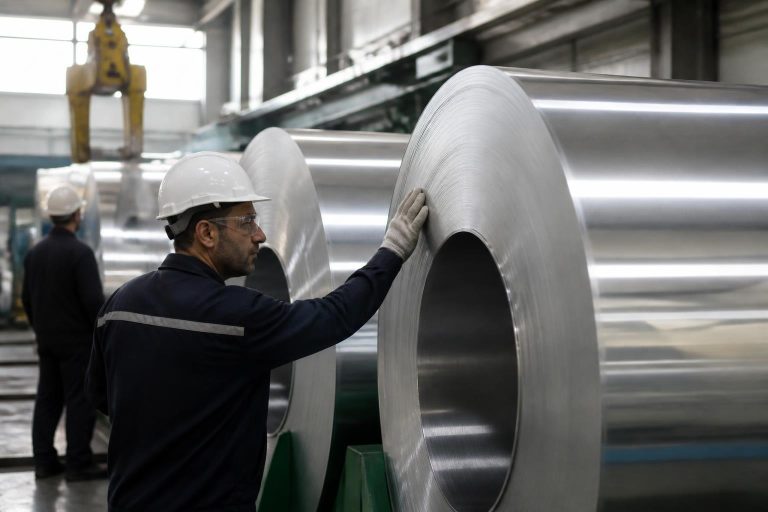
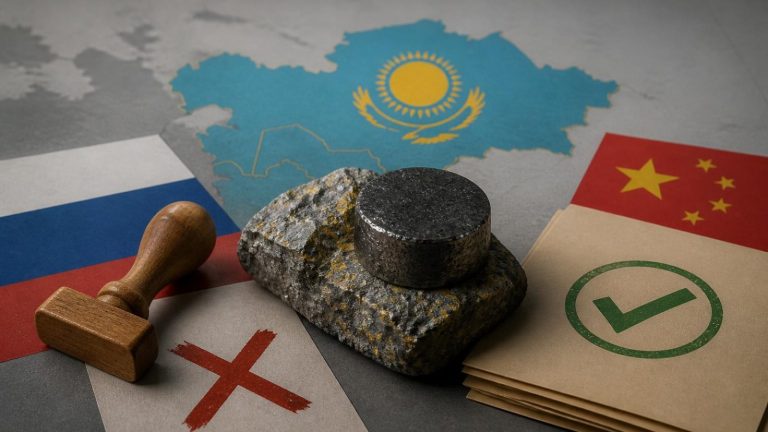
    China’s East Hope Group, one of the world’s largest producers of electrolytic aluminium and alumina, is progressing plans for a colossal $12.6 billion investment in Kazakhstan’s aluminium sector, according to the country’s Ministry of Industry and Construction.

    Kazakhstan’s Industry and Construction Minister Yersayin Nagaspayev held discussions with Chen Lei, East Hope Group’s Director for Strategic Investments. The two sides discussed establishing a full-cycle aluminium cluster within Kazakhstan, spanning the entire process from bauxite extraction through to primary aluminium output.

    Nagaspayev emphasised that full-cycle production projects are in keeping with Kazakhstan’s state industrial policy, which is geared towards deeper processing and the manufacture of high-value-added goods.

    The talks also covered the project’s current status, the formation of a raw materials base, and the development of production capacity and industrial cooperation. The company is currently undertaking geological exploration across multiple blocks in the Aktobe and Kostanay regions. The broader vision encompasses the development of 11 bauxite and coal deposits across the Kostanay and Aktobe regions, with the project expected to generate approximately 10,000 jobs once fully operational. KursivThe Times Of Central Asia

    The initiative has been gathering momentum since February 2025, when East Hope registered a subsidiary in Kazakhstan to serve as the project’s principal operational centre. An investment framework agreement was subsequently signed between East Hope and the Kazakh government. The Times Of Central AsiaMysteel

    As part of the scheme, East Hope Group intends to construct a 1-gigawatt coal-fired power station in the Kostanay region, whilst also exploring potential renewable energy ventures. The project is designed around circular economy principles, with the aim of creating a complete production cycle for green aluminium products. Qazaqgreen

    Both parties reaffirmed their commitment to advancing the project and strengthening investment cooperation.

  • EU Moves to Forge Critical Minerals Partnership with US to Counter China’s Dominance

    EU Moves to Forge Critical Minerals Partnership with US to Counter China’s Dominance

    The European Union is preparing to propose a formal critical minerals partnership with the United States, seeking to align with the Trump administration’s renewed push to secure global supply chains and reduce reliance on China.

    According to sources familiar with the discussions, Brussels is ready to sign a memorandum of understanding with Washington that would launch work on a “Strategic Partnership Roadmap,” with a draft framework expected within three months. Negotiators on both sides are aiming to conclude initial talks within 30 days, with a joint statement by the European Commission and the US expected this week.

    The proposed partnership is designed to coordinate sourcing, pricing and market safeguards for critical minerals that underpin modern technologies ranging from clean energy systems to defence equipment. Both the EU and the US remain heavily dependent on Chinese production and processing, a concentration that has given Beijing significant leverage over global supply chains.

    Under the proposal, the EU and US would explore joint mining and processing projects, develop secure transatlantic supply chains, and consider price-support mechanisms to protect Western producers from cheaper imports. The draft also highlights tools to prevent market manipulation and manage oversupply, including coordinated stockpiling and shared response mechanisms in the event of disruptions.

    Notably, EU officials insist the partnership explicitly include respect for territorial integrity. This provision follows recent strains in transatlantic relations after Donald Trump publicly floated the idea of acquiring Greenland, an autonomous territory within the Kingdom of Denmark and part of the EU.

    The initiative coincides with a US-led ministerial meeting this week, bringing together foreign ministers and senior officials from allied countries to advance agreements aimed at cutting dependence on Chinese critical minerals. A draft statement seen by Bloomberg indicates the EU, the US and partners are considering a broader plurilateral trade initiative involving like-minded nations.

    Potential measures under discussion include coordinated trade policies such as standards-based markets, price-gap subsidies, border-adjusted price floors and long-term offtake agreements. While the text remains subject to change, it reflects Washington’s interest in shielding domestic producers from undercutting by Chinese exports.

    China’s role looms large in the background. Beijing dominates both mining and refining of many critical minerals, and its export restrictions on rare earths last year elevated the issue to the top of Washington’s strategic agenda. Although some restrictions were temporarily eased following talks between Trump and Chinese leader Xi Jinping, US officials remain focused on accelerating diversification.

    In parallel, the Trump administration has placed renewed emphasis on stockpiling. Earlier this week, the US announced a $12 billion critical minerals reserve aimed at protecting manufacturers from sudden supply shocks, a move closely aligned with elements of the EU proposal.

    The European Commission has described the talks as essential to reducing dependence on any single supplier, though officials privately caution that reaching a comprehensive agreement on complex pricing and trade mechanisms within weeks will be challenging. Still, the EU’s willingness to table a detailed proposal signals momentum toward closer transatlantic coordination on one of the most strategically sensitive areas of the global economy.

  • EU to Offer US Critical Minerals Partnership to Counter China’s Dominance

    EU to Offer US Critical Minerals Partnership to Counter China’s Dominance

    The European Union is set to offer the United States a critical minerals partnership designed to curb China’s influence over global supply chains, according to people familiar with the matter.

    Brussels is preparing a memorandum of understanding to create a “Strategic Partnership Roadmap” within three months, which would guide joint efforts to source and refine essential materials for modern technologies—ranging from batteries to semiconductors—without heavy reliance on Beijing.

    The proposal includes initiatives such as joint mineral projects, price support mechanisms, and safeguards against market manipulation. It also encourages building reciprocal supply chains between the two economies while maintaining mutual respect for territorial integrity—a pointed reference after tensions rose when U.S. President Donald Trump signaled interest in purchasing Greenland, an autonomous territory of Denmark.

    The renewed cooperation effort comes ahead of a major U.S.-led meeting of foreign ministers and senior officials this week aimed at forming global alliances to reduce Chinese mineral dominance. Washington’s sense of urgency follows Beijing’s export restrictions on rare earth elements last year, temporarily eased under a deal between Trump and Chinese President Xi Jinping.

    Underlining its seriousness, the Trump administration this week launched a $12 billion national critical mineral stockpile. The EU’s draft mirrors this approach, suggesting both sides could coordinate stockpiling and rapid response measures to supply disruptions.

    Key pillars of the EU proposal include cooperation on securing supply chains, developing international premium markets, and sharing information to boost market transparency. It also envisions exemptions from mutual export restrictions, collaboration on innovation and research, and the creation of a joint EU-U.S. response group to manage potential shortages.

    Despite concerns over the pace of negotiations, EU officials called the talks “vital to diversify our supplies away from any single country,” indicating that the transatlantic allies are increasingly aligned in reshaping critical mineral dependencies.

  • EU steps up critical minerals policy but risks falling behind the US and China

    EU steps up critical minerals policy but risks falling behind the US and China

    The European Union has intensified efforts to strengthen critical mineral supply chains that underpin the energy transition, but analysts warn that Europe is moving more slowly and offering weaker support than the United States, leaving it exposed to China’s dominant position in global markets.

    China already controls much of the global supply of solar power components and dominates processing capacity for key battery and clean energy materials, including lithium, nickel, cobalt, manganese, graphite, rare earths and permanent magnets. According to Eurostat, 95% of EU rare earth imports in 2024 came from just three countries: China, Malaysia and Russia. Data from Wood Mackenzie shows China accounts for 32% of global lithium production and controls a further 18% through overseas projects, while holding 81% of global critical minerals processing capacity.

    This concentration creates significant risks for European clean energy developers, as over-reliance on a small group of suppliers increases exposure to licensing delays, export controls and sudden supply disruptions. Industry experts note that despite growing awareness among policymakers, Europe’s response remains fragmented and underpowered.

    To accelerate investment, the EU adopted the ResourceEU action plan in December 2025. Backed by €3 billion from the Critical Raw Materials Act, the plan aims to expand domestic extraction and refining, promote recycling, reduce dependence on dominant suppliers, speed up permitting and restrict scrap exports. The EU has set targets to extract 10% of its critical minerals needs domestically, host 40% of processing capacity within the bloc and reach a 15% recycling rate by 2030.

    However, analysts say the funding and policy tools fall short of a fully fledged industrial strategy. Investment momentum has weakened amid low commodity prices, and existing regulations have not yet made most European projects sufficiently bankable. Several high-profile projects, including the Chvaletice manganese project in the Czech Republic, have stalled due to permitting delays and grid access issues, despite being labelled strategic.

    By contrast, the United States has adopted a more aggressive, security-driven approach. Through measures such as the Inflation Reduction Act, the One Big Beautiful Bill and the use of the Defense Production Act, Washington offers tax credits, grants, loans, price guarantees and offtake support to accelerate mine-to-battery and mine-to-magnet supply chains. As a result, the US is advancing diversification faster than Europe.

    While projects such as LKAB’s rare earth and phosphorus processing plant in Sweden signal progress, experts caution that Europe’s public tools for de-risking investments remain limited compared with those of the US and China. Without stronger financial instruments, streamlined permitting and a greater focus on processing and recycling, Europe risks remaining vulnerable in the global race for critical minerals.

  • Battery storage boom lifts lithium demand outlook for 2026 despite lingering oversupply risks

    Battery storage boom lifts lithium demand outlook for 2026 despite lingering oversupply risks

    Rapid growth in battery energy storage is strengthening the outlook for lithium demand in 2026, raising expectations of a faster recovery for an industry that has struggled with oversupply since late 2022. Analysts say reforms in China’s power sector and surging global investment in data centres have driven stronger-than-expected demand for lithium used in stationary storage systems.

    China’s energy storage market expanded sharply in the second half of 2025, supported by policy changes and rising power system needs. According to analysts, demand growth from energy storage has already exceeded earlier forecasts, helping to offset weaker momentum in electric vehicle sales. Battery storage systems have become China’s most valuable clean-tech export, generating nearly $66 billion in sales in the first ten months of 2025, ahead of EV exports.

    Major banks now expect a tightening lithium market next year. Morgan Stanley forecasts a deficit of 80,000 tonnes of lithium carbonate equivalent (LCE) in 2026, while UBS projects a smaller shortfall of 22,000 tonnes, compared with a surplus of 61,000 tonnes expected in 2025. Global lithium demand is projected to grow by 17% to 30% in 2026, broadly in line with supply growth of 19% to 34%, according to analysts.

    Prices rebounded sharply in the second half of 2025 after hitting multi-year lows earlier in the year, aided by Beijing’s pledge to rein in overcapacity and a temporary production halt at a major Chinese mine operated by CATL. Lithium carbonate prices on the Guangzhou Futures Exchange rose to their highest level since November 2023 by the end of December. Analysts expect prices to range between 80,000 and 200,000 yuan per tonne in 2026.

    Energy storage is forecast to account for 31% of total lithium demand next year, up from 23% in 2025, gradually reducing the dominance of electric vehicle batteries. However, analysts caution that faster adoption of sodium-ion batteries for storage and a slowdown in EV sales could cap demand growth and limit further price increases.