Tag: Central Asia.

  • Kazchrome Recognized as Central Asia’s Best Social Partner

    Kazchrome Recognized as Central Asia’s Best Social Partner

    Kazchrome, a subsidiary of ERG, has been named the “Best Social Partner” in Central Asia by the Council of Trade Unions of Central Asia (CTSCA). This award reflects Kazchrome’s exemplary efforts in fostering social responsibility, workplace safety, and community development.

    The award was announced during the CTSCA’s VI meeting in Dushanbe, with Kazchrome CEO Sergey Prokopiev receiving the honor. Prokopiev credited the recognition to the company’s dedication to creating favorable employee conditions and supporting regional communities. As a key employer, Kazchrome has been pivotal in advancing socio-economic development in its operational areas.

    In 2024, Kazchrome allocated approximately 9 billion tenge for employee welfare programs, including professional development, corporate culture initiatives, and comprehensive social support. The company also invested significantly in community projects such as public space enhancements, cultural center construction, and procurement of healthcare and educational resources.

    Kazchrome’s ongoing initiatives are part of a broader ERG effort to uphold sustainability and social responsibility principles, ensuring long-term growth and community well-being.

  • U.S. Economic Security Hinges on Strategic Minerals from Central Asia and Beyond

    U.S. Economic Security Hinges on Strategic Minerals from Central Asia and Beyond

    The future of America’s economic and political security heavily depends on securing a stable supply of strategic minerals. These minerals are crucial for modern technologies, including smartphones, jet engines, and wind turbines. According to the World Economic Forum, strategic minerals are poised to become the “new oil” of the 21st century. The International Energy Agency predicts that demand for these minerals in the energy sector alone could triple by 2030.

    Currently, the People’s Republic of China (PRC) dominates this critical sector, controlling 60% of global productionand 85% of processing capacity. This dominance poses a significant risk to future U.S. access to these essential resources. To mitigate this risk, the United States is exploring the potential of Central Asia, the Caucasus, and Ukraineas sources for strategic minerals. These regions are rich in largely unexploited natural resources that could be key to reducing reliance on China.

    An aggressive pursuit of these resources could provide the United States with a secure supply of strategic minerals. Additionally, it would offer the broader Caspian region and Ukraine an opportunity for greater global market integration and economic sovereignty. By participating more meaningfully in the global strategic mineral supply chain, these regions could reduce their own dependence on Russia and China, thereby enhancing regional stability and economic growth.

  • Central Asia’s Untapped Rare-Earth Reserves Spark Global Interest

    Central Asia’s Untapped Rare-Earth Reserves Spark Global Interest

    The seven countries of Central Asia—Kazakhstan, Kyrgyzstan, Tajikistan, Turkmenistan, Uzbekistan, plus Afghanistan and Mongolia—hold some of the world’s largest but largely untapped reserves of rare-earth minerals. Three major developments have significantly heightened the importance of these reserves. Firstly, the increasing role of rare earths in modern technology and their crucial part in the clean energy transition have brought these minerals to the forefront of international focus. Secondly, China’s decision to reduce or cut off rare earth supplies following Moscow’s expanded invasion of Ukraine and subsequent Western sanctions has forced the West to seek alternative sources, spotlighting Central Asia. Lastly, Central Asian countries view Western involvement in their rare-earth sectors as a means to further diminish Russian control and prevent Beijing from becoming the dominant power in the region.

    All Central Asian governments are keen to develop their rare-earth sectors to diversify their economies, traditionally reliant on oil and gas revenues. However, lacking the necessary resources, these countries have turned to external powers for investment, igniting a diplomatic contest involving China, Russia, and the West. This intense competition has been dubbed the “Great Game of the 21st century,” reflecting the historical rivalry between Russia and Great Britain for influence in the region.

    The involvement of external powers is crucial in this new “Great Game.” Over the past year, senior officials from these powers have frequently visited the region and invited Central Asian representatives to discuss rare-earth development. China’s proactive approach has seen it dominate rare-earth leases in Kyrgyzstan and Tajikistan, aligning with its strategy to control rare-earth markets. However, this has occasionally backfired, prompting opposition in Central Asia and compelling the West to respond.

    Increased Western interest has led the European Union, the United Kingdom, and Western allies like South Korea to ramp up their engagement and investment in the region’s rare-earth sectors. Diplomatic activities have intensified, with rare earths now featuring prominently in foreign policy documents. Conversely, Russia’s involvement is conflicted; it supports Chinese activities to limit Western influence but fears that new market participants could depress prices, impacting the Russian economy.

    The competition presents Central Asian governments with opportunities to leverage external rivalries to their advantage, though it also brings significant risks. Potential threats from outside, such as aggressive interventions by China or Russia, loom large. More pressing, however, are internal challenges. Uneven development of rare-earth sectors could create new elite classes and regional power imbalances, potentially leading to instability, particularly in Tajikistan.

  • Polymetal Int Recommends Dividend Waiver and Name Change to Solidcore Resources plc

    Polymetal Int Recommends Dividend Waiver and Name Change to Solidcore Resources plc

    Polymetal Int’s management has proposed that shareholders refrain from receiving dividend payments for the previous year and has suggested approving a change in the organization’s name to Solidcore Resources plc, as reported by the gold miner’s press center. The disposal of the company’s assets in Russia facilitated debt reduction and increased liquidity. However, it is highlighted that further investments of over $1 billion will be required for prospective projects in Kazakhstan and Central Asia, such as the construction of the Irtysh Hydrometallurgical Plant and M&A activities. Despite these initiatives, challenges remain as geopolitical and macroeconomic conditions are unstable, and access to key sources of debt financing is limited. It is worth noting that Polymetal was officially registered in Kazakhstan in the summer of 2023 following the sale of its Russian business in early spring of the same year. In the 12 months of 2023, the Kazakh metals producer witnessed a 10% decrease in gold equivalent output to 15,116 tons (486 thousand ounces).
    Excerpt: Polymetal Int suggests shareholders forgo dividends and approve a name change to Solidcore Resources plc for strategic reasons.
  • International Conference Addresses Water Deficit in Central Asia

    International Conference Addresses Water Deficit in Central Asia

    The city of Bishkek hosted an international conference titled “Water Deficit in Central Asia: Ways to Address Water Issues at Regional and International Levels.” Participants delved into pressing issues surrounding water scarcity in the region and explored prospects for resolution through interstate cooperation. Marat Imankulov, Secretary of the Security Council of the Kyrgyz Republic, highlighted the grim consensus among experts and international organizations, projecting a global water scarcity crisis within the next 25-30 years. By 2050, the planet may possess adequate hydro resources to sustain a population of nine billion, but their distribution will be uneven. Excessive environmental degradation and climate change will diminish water availability in many developing nations. According to UN reports, failure to conserve water resources promptly could leave over 5 billion people water insecure by 2050. World Bank analysts predict that by 2050, amidst a population surge in Central Asia to 90 million, water deficit may reach 25-30%. Moreover, the demand for water resources in agriculture could surge by 30% by 2030. Currently, Kyrgyzstan grapples with key challenges, including the reduction of accessible clean drinking water, significant wear and tear of water infrastructure, transboundary water management issues, and incomplete reforms in water governance.

  • Uzbekistan’s Ambitious Rare Earth Investment Plans

    Uzbekistan’s Ambitious Rare Earth Investment Plans

    Uzbekistan is set to make a bold move into the rare earth market with plans to invest $500 million in rare earth projects, aiming to position itself as a major producer in Central Asia. President Shavkat Mirziyoyev unveiled this ambitious endeavor, emphasizing the country’s commitment to developing existing deposits and exploring new ones.

    The mining industry in Uzbekistan has already demonstrated significant economic potential, reaching a production volume of nearly $11 billion last year, primarily driven by precious and non-ferrous metals. However, the focus now shifts towards tapping into the untapped potential of critical minerals, including rare earths. A 2018 study by the U.S. Geological Survey identified 87 deposits of rare earths and rare metals within the country, laying the foundation for Uzbekistan’s strategic investment in this sector.

    The European Union emerges as a potential key market for Uzbekistan’s rare earth exports, aiming to reduce its reliance on rare earth imports from China. Just over a month ago, Uzbekistan signed a memorandum of understanding with the EU on critical raw materials, signaling a promising avenue for future collaboration and trade partnerships.

    Meanwhile, neighboring Kazakhstan, linked to the EU through its own raw materials agreement, has also announced a significant expansion of its rare earth industry. With 15 deposits of rare earth metals and 160 rare earth element-bearing mineral occurrences, Kazakhstan presents formidable competition in the regional rare earth market.

  • Central Asia’s Green Energy Revolution: Unveiling Turkmenistan’s Potential

    Central Asia’s Green Energy Revolution: Unveiling Turkmenistan’s Potential

    Central Asia is experiencing a surge in green energy investments, with recent weeks marking a significant turning point in the region’s renewable energy landscape. ACWA Power, a prominent Saudi Arabian energy company, made headlines in early March by announcing plans to invest in two wind power plants in Uzbekistan’s Karakalpakstan and Bukhara regions, totaling over 1GW of power capacity. Following suit, Kazakhstan inked agreements for 1GW of wind power development in its Jetisu region, signaling a concerted effort towards sustainable energy initiatives.

    However, it’s the realm of critical raw materials that has garnered the most attention in Central Asia’s green energy transition. Kazakhstan, hailed as a lithium powerhouse, secured agreements worth $500 million from German stakeholders for lithium extraction, with keen interest also emanating from South Korea and China. These investments underscore the pivotal role of the extractives industry in facilitating the global shift towards renewable energy sources and energy storage solutions.

    While Kazakhstan takes center stage, neighboring Turkmenistan emerges as a potential powerhouse in the green energy ecosystem. Acknowledging its rich reserves not only in oil and gas but also in renewables, Turkmenistan is positioning itself as a key player in the transition towards sustainable energy. The recent Turkmen Investment Forum in Paris highlights the nation’s efforts to attract international attention and investment, signaling its readiness to follow Kazakhstan’s trajectory in resource development.

    Despite Turkmenistan’s vast potential, challenges persist, particularly regarding the lack of comprehensive data on reserves, posing risks to investors and hindering investment opportunities. However, Western Turkmenistan, notably the Karabogazgol Bay area, shows promising signs of abundant lithium deposits, along with substantial reserves of iron, copper, and rare earth metals. Geological formations in Southern Turkmenistan also hold significant potential for copper and rare earth materials, essential for electricity grids and digital technologies.

    Approach Recommendations – Stakeholder Map: To unlock Turkmenistan’s potential as a champion in renewable energy and digital materials, several policy recommendations are proposed:

    • Align regulatory frameworks for non-fuel mining with hydrocarbons mining to streamline permit procedures and encourage long-term leasing options.
    • Foster international collaboration with neighboring countries like Uzbekistan and Afghanistan to leverage shared geological formations for critical raw materials.
    • Establish financing mechanisms for sustainable development projects, such as green bonds, to attract investments aligned with economic, environmental, and societal goals.
    • Develop a transparent database of Turkmenistan’s mineral reserves accessible to investors and scientific explorers to enhance investment transparency and promote informed decision-making.
  • Central Asia’s Geological Resources Poised for Global Impact

    Central Asia’s Geological Resources Poised for Global Impact

    Recent developments in geological resource exploration have brought Central Asia to the forefront of global attention. With abundant mineral deposits lying beneath its surface, the region is set to play a pivotal role in the economic and geopolitical landscape. Nations like Kazakhstan and Uzbekistan, long overlooked on the international stage, are now emerging as key players in the supply chain for critical raw materials crucial for the energy transition. The United States has notably extended support to facilitate mineral development in these countries, recognizing their significance in the global shift towards cleaner energy technologies. Rare earth elements, vital components across various industries, have been unearthed in substantial quantities, positioning Central Asia as a crucial hub for future resource extraction. Collaborative efforts between Central Asian governments and organizations like the United States Geological Survey are underway to map out and exploit these diverse mineral deposits. While Kazakhstan leads the region in rare earth reserves, other nations like Tajikistan and Uzbekistan are yet to fully explore and harness their geological potential.

  • Experts Assess Future of US Relations with Central Asian Countries

    Experts Assess Future of US Relations with Central Asian Countries

    American experts have shared their assessments on how the relationship between the United States and Central Asian countries, which already collaborate in various formats, will develop. The opinions of these experts are detailed in a report by a correspondent of the Kazinform agency.

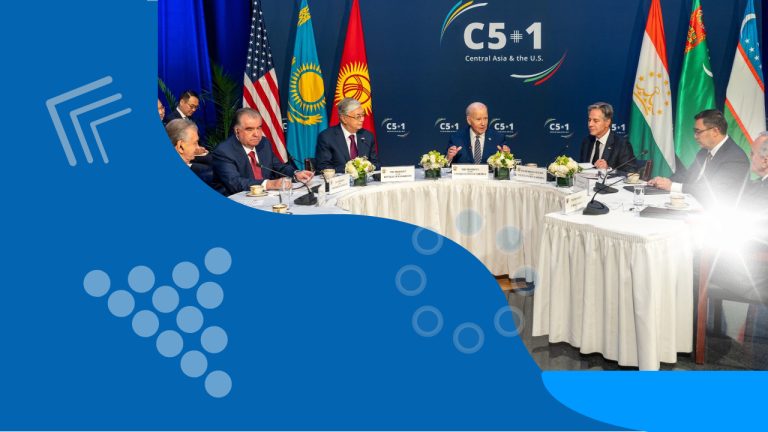
    A new impetus to strengthen political ties between the US and Central Asian countries was gained in September 2023 at the inaugural “C5+1” summit during the UN General Assembly in New York. During this summit, President Joe Biden met with the leaders of Kazakhstan, Kyrgyzstan, Tajikistan, Turkmenistan, and Uzbekistan. Further development occurred in the economic sphere with the involvement of both public and private sectors at the first “B5+1” Forum held in Almaty from March 13 to 15, aiming to improve the business environment between the US and Central Asia. Key experts from influential American analytical centers provided assessments on this event and the future prospects of US relations with Central Asian countries.

    Given Helf, a Senior Expert on Central Asia at the US Institute of Peace, positively evaluated the “B5+1” Forum as a result of a successful meeting between US presidents and Central Asian leaders in New York the previous year. The expert believes that all Central Asian countries are keen on attracting American investments. However, the question remains as to how Central Asian countries will create the conditions for this, what laws will be enacted to provide guarantees and stimulate American business interest in the region. According to Helf, the next stage in the development of the political “C5+1” and economic “B5+1” formats will involve expanding US cooperation with the five Central Asian countries in the security sphere, which includes a wide variety of cooperation forms ranging from protecting the interests of participant countries and companies to logistics and climate change.

    The transit corridor holds significant importance not only for sustainable economic growth in Central Asia but also for the transit of goods between Europe and China.

    Ralph Winnie, Vice President of the Eurasia Center, believes that the US and Central Asian countries are moving in the right direction. Developed American business will contribute to the development of small and medium-sized enterprises, job creation, and become an engine for economic growth in the region. “B5+1” serves as a unique platform for establishing contacts in the business environment, seeking partnerships between companies in Central Asia and the United States. According to the expert, professional contacts will develop from personal relationships.

    In Central Asia, there must be a strong security component for any kind of business in the region. In this regard, the rule of law, tax incentives, and other stimuli will be a key factor in advancing economic ties and attracting foreign investments.

    In these directions, the US will focus its attention as part of the development of multi-format cooperation with Central Asian countries.

    Ariel Cohen, Managing Director of the Energy, Economic Growth, and Security Program at the International Tax and Investment Center, noted that it is important to fill the relationship between the United States and Central Asia with substantial content and value. While the development of the economic aspect is crucial, doing business with Western companies may face some challenges. The expert reminded that the Central Asian region lacks access to the sea and is far from international markets. Consequently, this affects the cost of imported or exported goods and resources, making them less competitive. However, rare earth elements, abundant in the region, remain in demand as they do not require large volumes. Kazakhstan’s Geological Survey is highly advanced in digitizing information and ensuring its availability to potential Western investors. According to the expert, for the successful development of the “B5+1” format, measures should be taken to improve container transportation speed, reduce bureaucracy for transporting goods across multiple borders, and increase logistics capacity.

  • Uzbekistan expects to attract $7.2 billion in foreign investment

    Uzbekistan expects to attract $7.2 billion in foreign investment

    In the first quarter of 2024, Uzbekistan plans to utilize foreign investments worth $7.2 billion. The government of the republic adopted a resolution to this effect on February 14. Out of this amount, approximately $1.7 billion may be attracted by the Ministry of Energy, AGMK — $331 million, and Uzbekneftegaz JSC — $254.1 million. Among the regions, Tashkent leads with $428 million, followed by Namangan and Fergana regions with $329.4 million and $327 million respectively. According to the Central Bank of Uzbekistan, in 2023, foreign investors invested $7.2 billion in the economy of our country. Foreign investments in the republic doubled in one year. Earlier, “Kursiv” reported that last year, Uzbekistan attracted international loans worth $2.8 billion.