Tag: Australia

  • Germany Seeks Deeper Partnership With Australia on Critical Raw Materials

    Germany Seeks Deeper Partnership With Australia on Critical Raw Materials

    Germany is looking to strengthen its cooperation with Australia on the supply and development of critical raw materials, German Foreign Minister Johann Wadephul said on Thursday during an official visit to Canberra.

    Following talks with Australian Foreign Minister Penny Wong, Wadephul described Australia as a key partner for Germany in diversifying global supply chains. He highlighted the strategic importance of minerals extracted in Australia, particularly lithium, and said Berlin is keen to expand collaboration in the raw materials sector.

    Australia hosts some of the world’s most significant mineral resources, including the largest hard-rock lithium mine, located near the town of Greenbushes south of Perth. The site spans more than 2000 hectares and is responsible for roughly 20% of global lithium production. Lithium is a crucial component in lithium-ion batteries used in consumer electronics and electric vehicles.

    In addition to lithium, Australia holds substantial reserves of rare earth elements such as neodymium and terbium, which are essential for manufacturing permanent magnets used in electric motors and other advanced technologies.

    Wadephul acknowledged that closer cooperation in developing and exploiting mineral resources would require significant financial investment. He noted that extraction and processing of critical raw materials can be costly, but emphasised that Germany’s economy is particularly reliant on secure access to these resources.

  • EU and Australia Deepen Cooperation on Critical Raw Materials Amid Western Push to Reduce Reliance on China

    EU and Australia Deepen Cooperation on Critical Raw Materials Amid Western Push to Reduce Reliance on China

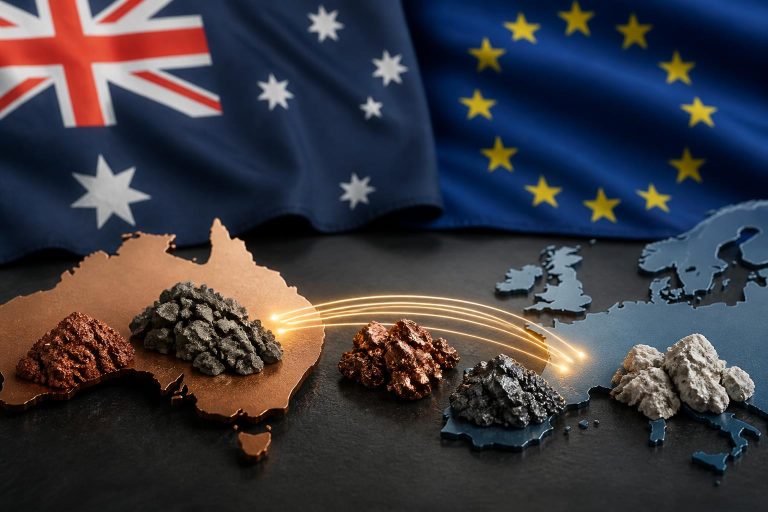
    The European Investment Bank (EIB) and the Australian government announced on Monday that they will expand their collaboration on critical raw materials, marking a significant move as Western nations accelerate efforts to reduce dependence on China.

    According to their joint statement, the initiative aims to strengthen financing and development across the entire critical minerals value chain—from exploration and extraction to processing, recycling, and innovation. The announcement comes as the European Union prepares to unveil a broad economic security package on December 3, reflecting growing concern over supply-chain vulnerabilities.

    Despite longstanding recognition of the issue, European officials and industry representatives say that financing continues to be a major obstacle in securing stable access to strategic minerals. Even projects listed as strategic by the EU currently receive no special financial advantages.

    The EIB has already taken steps by forming a dedicated task force earlier this year to boost support for critical materials projects, with plans to double its financing capacity. The new declaration is described as a key step toward enabling the bank to fund mineral projects in Australia, one of the world’s most resource-rich nations.

    International efforts are also intensifying. The G7, chaired by Canada in 2025, has established a Critical Minerals Production Alliance to mobilize public and private investment in fast-tracking production of graphite, scandium, and rare earth elements. Australia has offered G7 members the opportunity to purchase shares in its new strategic mineral stockpile.

    In parallel, the United States and Australia pledged $3 billion last month to support mining and processing projects, while also introducing a price floor for critical minerals—a measure long requested by Western mining companies. Additionally, Canada has secured offtake agreements for scandium and graphite with Australian producer Rio Tinto and Quebec-based Nouveau Monde Graphite, further reinforcing global attempts to diversify supply chains.

  • China’s Mineral Export Curbs Could Shave Over $1 Billion from US GDP — Macquarie

    China’s Mineral Export Curbs Could Shave Over $1 Billion from US GDP — Macquarie

    China’s export restrictions on a handful of critical minerals could cost the United States more than $1 billion annually in GDP losses, according to new research by Macquarie Group.

    The analysis, led by chief economist Ric Deverell, modeled the potential impact of Beijing’s export controls on four rare earth elements — samarium, lutetium, terbium, and dysprosium — along with gallium, all of which appear on the US government’s updated list of 60 critical minerals, which now also includes copper and silver.

    While the direct trade exposure may appear limited, Macquarie’s study highlights how supply disruptions to these small but indispensable materials could ripple through the defense, semiconductor, and clean-tech sectors, amplifying the economic impact far beyond their raw import value.


    The Numbers Behind the Risk

    In 2024, the US mined $17.5 billion worth of minerals domestically but imported $65 billion, Macquarie reported. Although China accounted for just $2 billion, or 3% of total US mineral imports, the concentration of value-added processing and material specialization in China means even a limited export ban could have disproportionate effects.

    Macquarie found that the US was:

    • 100% import reliant on 12 critical minerals, and

    • over 50% dependent on imports for another 33.

    For rare earths, the dependency is especially acute. The US relies on imports for around 80% of its rare earth compounds and metals, and about 70% of that supply originates from China.

    While the nominal import value of these materials is small — around $170 million in 2024, with $120 million sourced from China — the knock-on effects of an export halt could dent US GDP by over $1 billion in a single year, Macquarie estimated.

    The report also flagged gallium — a key input in semiconductors, LEDs, and defense electronics — as another potential choke point.


    Strategic, Not Just Economic, Damage

    Beyond direct losses, Macquarie warned that the strategic cost of supply disruption would be significant. Rare earths and gallium underpin advanced manufacturing, defense systems, and energy technologies, sectors that are difficult to substitute or reshore quickly.

    “Even a temporary interruption in these supply chains would carry lasting industrial and strategic repercussions,” the report noted.


    Australia’s Emerging Role

    Macquarie analysts also pointed to Australia as a potential replacement source for US critical mineral imports currently coming from China.

    Australia, which recently signed a Critical Minerals Framework agreement with the US, holds over 15% of the world’s critical mineral reserves and already produces nearly half of the minerals on Washington’s critical list.

    Although Australian exports currently account for just 2% of US critical mineral imports, investment in the sector is accelerating. As of October 2024, more than $50 billion in new projects were in the pipeline, positioning Australia to play a much larger role in diversifying Western supply chains.

    “Over time, Australia could feasibly replace all Chinese-origin critical minerals in the US import mix,” Macquarie said.

  • Rio Tinto Targets Strong Q4 Finish to Meet Iron Ore Shipment Goals Amid China Demand Surge

    Rio Tinto Targets Strong Q4 Finish to Meet Iron Ore Shipment Goals Amid China Demand Surge

    Rio Tinto said on Tuesday that it will need a robust fourth-quarter performance to hit its 2025 iron ore shipment target, as Chinese demand strengthens on the back of infrastructure-driven stimulus and front-loaded global investment ahead of potential new tariffs.

    The world’s largest iron ore miner reported 84.3 million tonnes of iron ore shipped from its Western Australia operations during the third quarter, slightly below the Visible Alpha consensus estimate of 85.5 million tonnes. Despite the shortfall, iron ore prices have climbed to their highest levels since February, fuelled by Beijing’s targeted infrastructure programs that have spurred steel production.

    China’s iron ore imports reached a record high in September, according to Rio, reflecting renewed industrial momentum despite ongoing economic challenges such as deflation, weak manufacturing, slow exports, and persistent property market struggles.

    Rio reaffirmed its annual shipment guidance of 323–338 million tonnes, but noted that four cyclones earlier this year disrupted output, meaning results are likely to fall near the lower end of the range.

    “A strong Q4 performance is required as the system remains tightly balanced and has limited ability to mitigate further losses,” the company said.

    Shares of Rio Tinto (ASX: RIO) jumped 3.6% in early trading to their highest since late September, tracking gains across major iron ore producers. BHP and Fortescue Metals Group also rose more than 2% each.

    Under its new CEO Simon Trott, who restructured Rio into three main divisions — iron ore, aluminium and lithium, and copper — the company continues to focus on safety and diversification. Rio confirmed that shipments from its Simandou project in Guinea remain on track to begin before year-end, despite a recent fatality at the site.

    Beyond iron ore, Rio reported record copper production at Oyu Tolgoi in Mongolia, forecasting a more than 50% increase in copper output this year as demand surges for energy transition metals. The miner also logged a second consecutive record quarter for bauxite production, prompting an upward revision of its full-year forecast to 59–61 million tonnes, supported by strong performance at the Amrun mine in northern Australia.

  • Australia and EU Sign Agreement to Enhance Supply of Critical Minerals and Technology

    Australia and EU Sign Agreement to Enhance Supply of Critical Minerals and Technology

    A new agreement between Australia and the European Union (EU) aims to bolster the supply of critical minerals and technology, marking a significant step toward comprehensive free trade negotiations. Signed by Australian Trade Minister Don Farrell and Resources Minister Madeleine King, alongside EU Trade Commissioner Valdis Dombrovskis and Internal Market Commissioner Thierry Breton, the memorandum of understanding (MoU) focuses on several key areas of collaboration.

    The agreement outlines the establishment of talks between officials from both sides and enhanced information sharing, with a roadmap to be developed within six months. One of the primary goals is to attract European investment into Australian renewable energy projects. Senator Farrell emphasized the need for international capital to help Australia extract, process, and add value to its mineral resources.

    Key objectives include identifying and developing projects together, enhancing business links in the critical minerals sector, and fostering closer cooperation on research. The partnership is designed to strengthen Australia’s domestic critical mineral sector and help the EU diversify its suppliers for materials necessary for the green and digital transition.

    A significant aspect of the agreement is its aim to reduce over-reliance on China, aligning with broader efforts by the United States, Australia, and Europe to increase domestic manufacturing and reduce dependency on China, which currently dominates the critical minerals supply chain. Critical minerals such as lithium, nickel, and cobalt are essential for producing batteries and renewable energy technologies, crucial for achieving net-zero emissions by 2050. These minerals are also vital for manufacturing microchips and advanced technologies, including defense capabilities.

    Australia holds significant deposits of critical minerals, including 52% of global lithium production, making it a key player in the global supply chain for low-emission technologies.

    The MoU is seen as a positive step towards resuming free trade agreement negotiations, which had stalled over agricultural product discussions. Senator Farrell noted that this agreement reflects the EU’s understanding of the importance of the Australia-Europe relationship, particularly concerning the decarbonization of economies. The agreement underscores the pivotal role of Australia’s critical minerals in the clean energy transition, helping both Australia and its export partners meet climate commitments.

  • Germany Eyes Australian Lithium to Reduce Dependency on Chinese Imports

    Germany Eyes Australian Lithium to Reduce Dependency on Chinese Imports

    Germany is poised to emerge as a significant buyer of Australian lithium in efforts to reduce its reliance on Chinese imports. During a recent visit to Australia, German Foreign Minister Annalena Baerbock emphasized the need to diversify the nation’s lithium supply chain, particularly in light of past political tensions stemming from reliance on Russian fuel during the Ukraine conflict. Baerbock highlighted the current circuitous route of lithium, originating in Australia, then exported to China for processing before being re-imported, advocating for direct importation from Australia to strengthen ties between democracies and free markets. Australian Federal Resources Minister Madeleine King echoed similar sentiments, advocating for Australia’s dominance in the international critical minerals sector and urging European markets to prioritize ethical and sustainable sources for critical minerals. The Federal Government’s ‘Resources and Energy Quarterly’ (REQ) for March 2024 projected a substantial increase in Australia’s lithium mine production by 2029, driven primarily by the growing demand for electric vehicles (EVs). With Europe leading the EV market expansion, Germany’s initiative to diversify its supply chain with Australian lithium sets a precedent for other international markets, paving the way for a promising future for the commodity.

  • Federal Government’s $11 Billion Investment Sparks Debate Over Rare Earth Mining in Australia

    Federal Government’s $11 Billion Investment Sparks Debate Over Rare Earth Mining in Australia

    The Federal Government’s bold investment of $11 billion to expand the Critical Minerals Facility, overseen by Export Finance Australia and the Northern Australia Infrastructure Facility, has reignited discussions surrounding rare earth mining in Australia. Despite scientific concerns, the government aims to bolster the nation’s position in the critical minerals market, tapping into the vast potential of rare earth elements crucial for various technologies including renewable energy, defense systems, and telecommunications.

    Australia, boasting approximately one-fifth of the world’s potential rare earth supply, has seen a surge in exploration endeavors supported by a $225 million fund allocated by Geoscience Australia. This initiative has spurred significant interest, leading to the establishment of 419 new exploration tenements by 49 companies. Proponents of mineral sand mining predict a prosperous future, with Professor Susan Park highlighting Australia’s advantageous position to capitalize on the impending mining boom.

    Federal Minister for Trade and Tourism Don Farrell underscored the government’s commitment to unlocking new critical minerals projects, envisioning Australia as a renewable energy powerhouse while emphasizing job creation in emerging industries. Collaborations with international partners such as the Republic of Korea and Germany are also sought to diversify global supply chains and enhance economic resilience.

    However, not all stakeholders share the government’s enthusiasm for a new mining era. Concerns voiced in the Harvard International Review highlight environmental risks associated with rare earth extraction, including the release of toxic chemicals and radioactive residues. The potential impact on agricultural land and water sources has drawn criticism, particularly regarding proposed mineral sand mines in Victoria’s Murray Basin and the Northern Territory.

    China’s recent ban on rare earth extraction and separation technologies has further underscored the global significance of Australia’s rare earth reserves. While aiming to mitigate environmental degradation and bolster national security, China’s dominance in the rare earth market has left a legacy of pollution and ecological damage, as evidenced by the devastating effects of mining activities in Bayan Obo.

    In Australia, the debate over rare earth mining continues to intensify, with proposed projects facing scrutiny over their potential impact on agricultural livelihoods and environmental sustainability. The government’s investment signals a strategic push towards economic growth and technological advancement, yet the ensuing environmental and social implications warrant careful consideration and public discourse.

  • EU and Australia Nearing Strategic Partnership on Raw Materials for Green and Digital Transitions

    EU and Australia Nearing Strategic Partnership on Raw Materials for Green and Digital Transitions

    The European Union (EU) and Australia are on the brink of forging a strategic partnership aimed at securing the essential raw materials crucial for their respective green and digital transitions. According to a spokesperson from the European Commission, negotiations have been underway for a memorandum of understanding (MoU) that will lay the groundwork for this partnership. Commission spokesperson Johanna Bernsel disclosed to POLITICO on Monday that they anticipate signing this pivotal agreement as early as May. Sources close to the discussions revealed that both parties have reached a substantial consensus on the content of the MoU, which is nearing its final form. An official, speaking on condition of anonymity due to the confidential nature of the talks, suggested that the announcement of the deal could be expected in the upcoming weeks or months.

  • Raiden Resources advances its exploration projects in Pilbara, Australia, and Bulgaria

    Raiden Resources advances its exploration projects in Pilbara, Australia, and Bulgaria

    Raiden Resources Limited has made significant strides in its exploration projects, both in Pilbara, Australia, and Bulgaria, heralding a potentially fruitful future in mineral exploration. The company recently completed an Induced Polarisation orientation survey at the Mt Sholl Project, revealing optimistic signs for mineralization. Concurrently, Raiden has advanced its Zlatusha Joint Venture in Bulgaria, setting the stage for a drilling program later this year.

    Exploration Breakthroughs and Future Plans

    Under the guidance of Managing Director Dusko Ljubojevic, Raiden Resources has undertaken a comprehensive geophysical orientation survey at the Mt Sholl Project. This endeavor has not only showcased the project’s potential but has also laid down a roadmap for future exploration activities. The survey’s promising results have steered the company towards planning an extensive drilling program in the Pilbara region for the remainder of 2024. In parallel, Raiden’s permit-wide targeting exercise over the Zlatusha Joint Venture in Bulgaria signifies a leap forward, with drilling activities scheduled to commence later in the year.

    Strategic Expansion in the Mining Sector

    The company’s proactive approach in both Australian and Bulgarian territories underlines its commitment to expanding its mining portfolio. This strategic expansion is not just about exploring new territories but also about strengthening Raiden Resources’ position in the global mining sector. The meticulous planning and execution of geophysical surveys, coupled with the upcoming drilling programs, underscore the company’s determination to explore and exploit potential mineralization zones.

    Implications for the Future

    The advancements made by Raiden Resources in its exploration projects are poised to have significant implications for the mining industry. The successful completion of the Induced Polarisation orientation survey and the detailed targeting exercise in Bulgaria are indicative of the potential for substantial mineral discoveries. These developments not only enhance Raiden’s portfolio but also contribute to the broader mining sector by potentially uncovering new resources. As the company moves forward with its drilling programs in Pilbara and Bulgaria, the industry watches closely, anticipating the outcomes that may redefine the landscape of mineral exploration.

  • Australia wants more from the EU in exchange for its minerals

    Australia wants more from the EU in exchange for its minerals

    [vc_section][vc_row][vc_column][distance desktop_type=”30″][lvs][distance desktop_type=”30″][vc_btn title=”Source – euractiv.com” color=”sky” i_type=”material” i_icon_material=”vc-material vc-material-perm_device_information” add_icon=”true” link=”url:https%3A%2F%2Fwww.euractiv.com%2Fsection%2Feconomy-jobs%2Fnews%2Faustralia-wants-more-from-the-eu-in-exchange-for-its-minerals%2F|target:_blank”][distance desktop_type=”30″][vc_column_text]Negotiations for a free trade agreement (FTA) between the EU and Australia are stalling as Australia wants to leverage its wealth in critical raw materials to get more market access for its meat and sugar industry.

    On Tuesday (11 July), Australian Trade Minister Don Farrell broke off what many hoped to be the final round of negotiations for an FTA between Australia and the EU. Having travelled to Brussels on short notice, Farrell was left unimpressed by the EU’s market access offers for Australian beef, sheepmeat, and sugar producers.

    “We’ve made it very clear right from the start that we won’t simply accept any agreement,” he told journalists on Tuesday afternoon.

    An EU Commission spokesperson said the EU executive regrets that “it was not possible to conclude our talks with Australia this week,” arguing that the EU had “made every effort to arrive at a balanced agreement that meets our mutual strategic interests, while also protecting the interests of our stakeholders”.

    EURACTIV understands that the EU presented Australia with a new market access offer that the Australian trade minister could not accept without first consulting with his colleagues in Canberra.

    “We note there were several issues on which the Australian side required further internal consultations,” the Commission spokesperson said.

    Both parties agreed to keep negotiating in the hope of getting towards an agreement before the end of the year.

    Collaborate in critical raw materials

    While the EU just signed an FTA with New Zealand, Australia seems to be a tougher nut to crack. It is not only the Australian economy that is more than six times larger than New Zealand’s, Australia also has something that the EU desperately needs: critical raw materials.

    In its vast and sparsely inhabited territory, Australia finds most of the materials that will be crucial to transition the world economy towards a greener model.

    For example, Australia is the world leader in lithium extraction, producing more than the world number two (Chile) and three (China) combined, according to the United States Geological Survey.

    Although Australia has started to scale up its lithium refining capacities, most of the lithium still goes to China for processing. China currently accounts for about 60% of lithium processing capabilities.

    As both the EU and Australia have professed their intention to “de-risk” and diversify their supply chains away from China, the opportunity for collaboration seems clear.

    “If [the Europeans] want to do what we want to do, which is diversify our trading relationships, then Australia is the perfect country to do it with,” the Australian trade minister said on Tuesday.

    But the details are difficult.

    Double pricing: Industrial policy vs free trade

    For example, the EU would like to have access to Australian raw materials under the same conditions as Australian consumers. It wants Australia to commit to a policy that would prohibit so-called double pricing that disadvantages EU companies compared to Australian ones.

    One of these policies is the regional government of Western Australia’s policy of reserving 15% of liquified natural gas production from each LNG export project for the domestic market, which reduces prices for domestic gas consumers.

    The EU’s push for Australia to refrain from such policies is understandable from a European perspective, especially since the EU tries to build up its own raw materials processing supply chain in Europe.

    However, this push might undermine Australian efforts at being more than just a raw materials exporter.

    Australia has long struggled to establish businesses further down the value chain despite the availability of abundant energy. This is partly due to its wealth in natural resources.

    The highly profitable raw materials sector attracts talent with highly competitive wages, which raises labour costs for industries across the board. Add to that the fact that raw materials exports push up the value of the Australian dollar, and it gets even harder for any downstream manufacturers to be competitive in the global market.

    Double pricing could therefore be one of the few policy options for Australia to help establish some more sophisticated industries next to its mining giants.

    Agricultural market access

    While critical raw materials might be the most important aspect of the FTA from a strategic point of view, agriculture, as usual, is the most contentious one.

    Take the Australian dairy industry, for example. Seeing its biggest market is in China and other Asian countries, it has little to gain from an FTA with the EU. It does, however, have something to lose as the EU pushes for the respect of its geographical indications (GI) for several food products, specifically Feta, Parmesan, and Romano cheese.

    If Australia subscribed to these GIs, producers of Australian goat cheese, for example, could no longer call their product “Feta”, as the GI would restrict the use of this name to products made in Greece, an issue of great contention for the large group of Australians with Greek heritage.

    With the dairy industry having nothing to gain but much to lose, support from the Australian agricultural sector would have to be secured in another way, for example by significantly increasing the EU import quotas for Australian beef, sheepmeat, and sugar.

    “The agreement has to achieve meaningful agricultural access to European markets,” Don Farrell said. He is under pressure from the National Farmers’ Federation (NFF), whose chief executive Tony Mahar said in a statement that it was “better to walk away than to agree to a dud deal.”

    Australian farmers want to have a slice of the market of more than 440 million EU consumers, but this hurts the interests of EU farmers, especially in France and Ireland. As farmers have proven to be politically very influential in trade matters, it will be difficult for EU countries to agree to open their market for agricultural products.

    For the EU, it is thus also a question of whether the industries needing an assured supply of critical raw materials or the agricultural sector will see their interests better defended.

    Negotiations in August

    Both the EU and Australia still profess to be optimistic about the FTA negotiations, even though EU negotiators seem to be taken aback by the Australian trade minister’s brusque departure.

    “We rely on our Australian partners to work with us to get this over the line soon. Our door remains open,” an EU Commission spokesperson said.

    Don Farrell said that there was goodwill on both sides. “In August, we will meet again with the aim of trying to resolve an agreement as quickly as possible,” he said.[/vc_column_text][distance desktop_type=”30″][/vc_column][/vc_row][/vc_section]