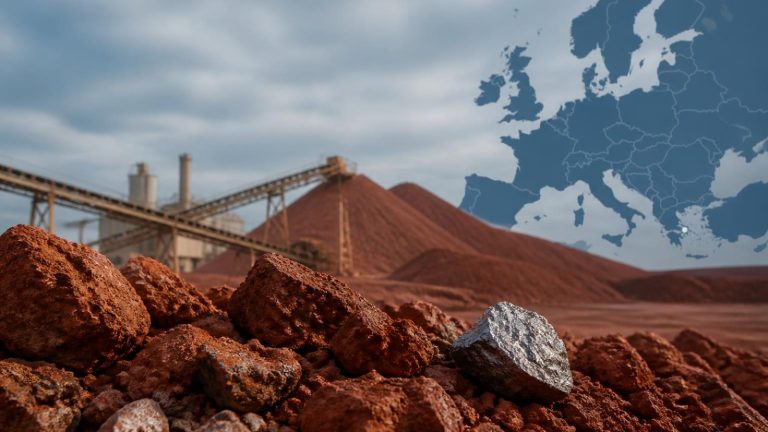
Savannah Resources (LON: SAV) will immediately restart fieldwork and drilling at its Barroso lithium project in Portugal after the government lifted a temporary suspension order.
The British company had paused work earlier this month following a precautionary injunction filed by landowners challenging the government’s approval for Savannah to access land it does not own. However, authorities issued a “reasoned resolution” stating that delays would be costly and harmful to the public interest, according to Savannah’s statement.
Despite the news, Savannah’s stock fell 1.02% to £4.36 per share in London on Friday, giving the company a £95 million ($120 million) market capitalization.
Barroso’s spodumene deposit is Europe’s largest, with recent prospecting results indicating it could exceed the previously estimated 28 million tonnes of high-grade lithium. However, the project has faced strong local opposition, including protests, legal battles, and refusals to sell land. Approximately 24% of the required land is privately owned, while 75% consists of common land (“baldios”).
First Lithium Output in 2027
Savannah aims to build four open-pit mines to supply lithium for 500,000 to 1 million electric vehicle batteries annually. The company is targeting first production by 2027.
Once operational, Barroso is expected to produce 1.5 million tonnes annually over a 14-year mine life, based on a 20.5-million-tonne resource at 1.05% lithium oxide.