Tag: Savannah Resources

  • Savannah Resources Gains Local Support for Controversial Barroso Lithium Project in Portugal

    Savannah Resources Gains Local Support for Controversial Barroso Lithium Project in Portugal

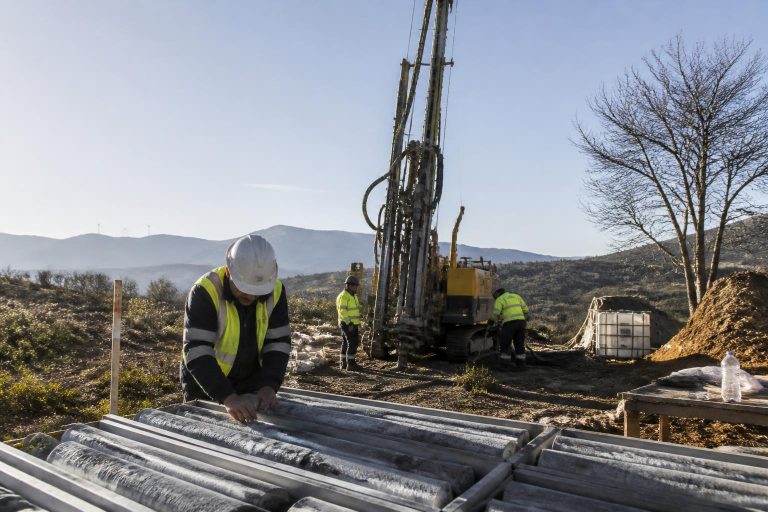
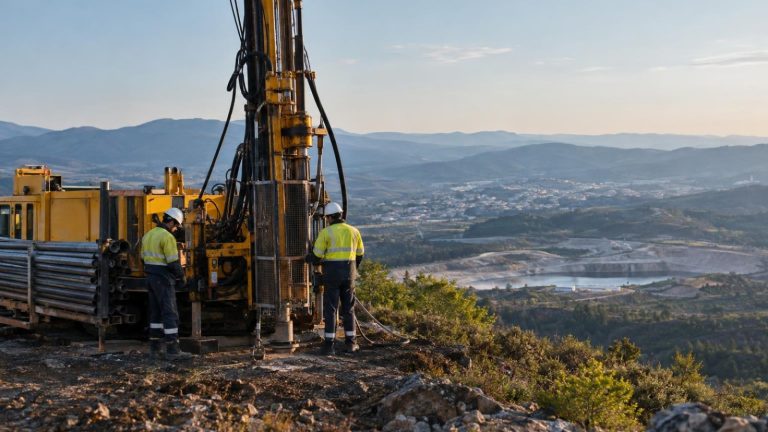
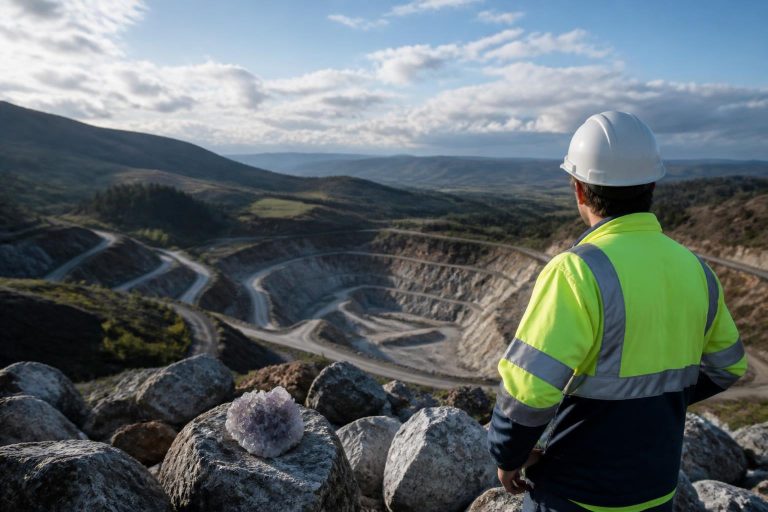
    Savannah Resources has secured new backing from local landowners for its Barroso lithium project in northern Portugal, which is set to become Europe’s largest lithium mine. This development comes as the company seeks to navigate years of community opposition and legal challenges that have delayed the project. The Barroso project, with a capital expenditure of $417 million, has been designated as strategic by the EU, highlighting its importance in establishing a European lithium supply chain critical for the electric vehicle industry.

    The company announced three new benefit-sharing agreements with local communal land managers, known as baldios, which aim to ensure that the communities have a stake in the project and its benefits. CEO Emanuel Proença emphasised that these agreements are not just about land access but also about recognising the rights of local communities that have managed these lands for generations. Savannah is optimistic about receiving its final environmental licence in the third quarter of this year, with plans to make a final investment decision by the end of the year and commence production by 2028.

    Despite the backing from local landowners, the Barroso project has faced significant opposition from residents and environmental groups concerned about its potential impact on agriculture, water resources, and biodiversity in the region, which is recognised by the UN as a Globally Important Agricultural Heritage System. The project’s feasibility study, released in July, indicated that it could produce an average of 183,000 tonnes of spodumene concentrate annually, enough to supply batteries for approximately 500,000 electric vehicles.

    Savannah’s study also projected a robust after-tax net present value of $913 million and an internal rate of return of 43%, with a payback period of less than two years. The project is positioned competitively within the global hard-rock lithium cost curve, with average operating costs estimated at $473 per tonne of concentrate.

    To address environmental concerns, Savannah has proposed measures such as dry-stack tailings, a lined storage facility, and a water recycling system. The new agreements with local baldios include provisions for community participation in project oversight, local reinvestment of project benefits, and inflation-indexed rental payments. Additionally, a partnership with the regional baldios secretariat aims to support forest management and wildfire prevention in the area.

    Portugal has a history of lithium production for the ceramics industry, but the Barroso project represents a significant step towards developing a large-scale battery materials sector in the country. Earlier this year, the Portuguese government awarded Savannah a €110 million grant to support the advancement of the Barroso project, further underscoring the official backing for this initiative. The project has also seen a 40% increase in its mineral reserve estimates, reinforcing its economic viability as it aims to become western Europe’s first major lithium mine.


  • Savannah Resources Advances Barroso Lithium Project with Definitive Feasibility Study Completion

    Savannah Resources Advances Barroso Lithium Project with Definitive Feasibility Study Completion

    On 15 July 2026, Savannah Resources announced the completion of the Definitive Feasibility Study (DFS) for its Barroso lithium project located in Boticas, northern Portugal. This study confirms an initial mine life of 14 years, with a probable ore reserve of 20 million tonnes and an anticipated production of 2.56 million tonnes of spodumene concentrate. Spodumene concentrate is a crucial hard-rock lithium feedstock that battery chemical processors convert into lithium hydroxide for electric vehicle (EV) cells. The Barroso project is notable for holding Europe’s largest battery-grade spodumene resource, which was classified as a strategic project under the EU’s Critical Raw Materials Act in March 2025. This classification grants the project an accelerated 27-month permitting process, a significant advantage over potential new entrants.

    Emanuel Proença, CEO of Savannah Resources, expressed his satisfaction with the publication of the DFS findings, highlighting it as a critical milestone in the project’s development. The DFS serves as the essential technical dossier required by banks and offtake partners before they commit capital to the project. Savannah Resources anticipates receiving a final environmental licence in the fourth quarter of 2026, with a final investment decision expected by the end of the year and first production slated for 2028. However, the timeline faces challenges, as the environmental licence decision has been delayed, with a ruling now not expected until late February 2027. This delay could push back the first production date and compress Portugal’s opportunity to emerge as the EU’s second large-scale lithium producer, following Finland’s Keliber.

    The regulatory landscape adds further complexity to the project. A precautionary injunction had previously halted geotechnical fieldwork in June 2026, but this was lifted on 30 June 2026 after the Portuguese government declared the project of national and European strategic importance. Nevertheless, a separate legal challenge from community groups MiningWatch Portugal and ClientEarth is currently before the European Court of Justice, contesting the European Commission’s decision to keep Barroso on the strategic list. As Europe currently sources approximately 81% of its extracted lithium and 100% of its refined lithium from outside the continent, the Barroso project’s strategic location—less than 300 kilometres from five deep-water ports—positions it as a key player in reshaping the continent’s lithium supply chain. The success of the permitting timeline will be crucial in determining whether Portugal can secure its place in the upcoming cycle of EU battery-factory investment decisions.


  • Savannah Resources Resumes Barroso Lithium Work After Portugal Government Overrides Court Injunction on National Interest Grounds

    Savannah Resources Resumes Barroso Lithium Work After Portugal Government Overrides Court Injunction on National Interest Grounds

    Savannah Resources has resumed work at its Barroso lithium project in northern Portugal after the government declared the project of national and European significance and succeeded in lifting a court-ordered suspension that had halted operations for three weeks.

    Work was suspended on 9 June after the Mirandela Administrative and Fiscal Court granted a precautionary injunction filed by the Barroso Assembly of Common Land Holders, following a second administrative easement that gave Savannah access to community and private land for geotechnical work. In its response to the court, the Portuguese government argued that the suspension could cause serious harm to the public interest, delay a project of recognised national and European strategic importance, and jeopardise the energy transition. The suspension was lifted on Monday and Savannah said it will reinitiate fieldwork and complete the planned work programme.

    There is no legal right of appeal against the lifting of the injunction, though opponents may attempt further legal action.

    The Barroso deposit in northern Portugal hosts resources exceeding 39 million tonnes of spodumene, making it Europe’s largest lithium deposit. Potential extensions of 35 million to 62 million tonnes could push total resources above 100 million tonnes and more than double the projected mine lifespan to over 50 years. The project is one of 47 designated as strategic under the EU’s Critical Raw Materials Act.

    The project has faced nearly a decade of sustained community opposition and numerous legal challenges. A final investment decision is expected by the end of 2026, with construction planned for 2027 and first production targeted for 2028.

  • Savannah Resources Eyes Euronext or ASX Secondary Listing to Broaden Investor Base as Barroso Lithium Targets 2028 Production

    Savannah Resources Eyes Euronext or ASX Secondary Listing to Broaden Investor Base as Barroso Lithium Targets 2028 Production

    Savannah Resources is pursuing a secondary listing on either Euronext in Lisbon or the Australian Securities Exchange to tap growing investor appetite for battery materials outside the UK market, as the London-listed company advances its Barroso lithium project in northern Portugal toward a feasibility study completion this summer and construction start in 2027.

    CEO Emanuel Proença said the company has seen growing interest from investors who typically access markets through Euronext, where no major lithium spodumene plays are currently listed. “There are no big lithium spodumene plays on Euronext, so that is kind of a new offering,” he said. The ASX remains an established venue for lithium stocks and is also under consideration. The secondary listing would support Savannah’s broader financing strategy, which also includes offtake-related finance alongside the existing offtake agreement with AMG Lithium BV — the company’s largest shareholder.

    Barroso, which received EU strategic project status in 2025, has the potential to become one of Europe’s largest lithium operations, with planned annual output sufficient to supply battery packs for approximately half a million electric vehicles. Production is targeted to begin in late 2028 following a construction phase starting in 2027.

    Savannah is currently negotiating additional offtake agreements beyond the AMG Lithium deal, including with parties in China. Proença noted that initial production volumes would exceed what European markets can absorb in the near term, making broader offtake arrangements necessary. The company has a market capitalisation of approximately £160 million ($210 million).

    Lithium prices have rebounded more than 150% over the past year, supported by the emergence of large-scale battery storage as a demand driver alongside electric vehicles, prompting mine restarts in Australia and renewed financing interest across the sector.

  • Portugal Grants Savannah Resources Second Land Easement at Barroso Lithium Site as Village Resistance Intensifies

    Portugal Grants Savannah Resources Second Land Easement at Barroso Lithium Site as Village Resistance Intensifies

    The Portuguese government has granted Savannah Resources a second administrative easement over 24 plots of private and communal land in the Covas do Barroso area of northern Portugal, allowing the British-based mining company to proceed with geotechnical survey work at its contested Barroso lithium project — a decision that has deepened the conflict between the state and local communities defending what is designated a World Agricultural Heritage site.

    The easement, published in the state gazette Diário da República, was declared by the secretary of state for energy and grants Savannah access to the land for a period of one year. The company said the authorisation will allow it to complete geotechnical work to optimise its understanding of the foundations on which processing infrastructure and other facilities for the project’s next phases will be built. CEO Emanuel Proença described it as “another step in the development of the Barroso lithium project” and “a perfectly natural process in the development of any industrial project,” adding that the company would contact all affected landowners to arrange compensation.

    For the Union in Defence of Covas do Barroso, the decision represents another blow in a long campaign against a project they argue threatens their territory, their livelihoods and their legal rights. The group noted that the project involves four open-pit mines, daily water consumption of approximately one million litres, the use of explosives and a 140-metre-high toxic tailings dam. It also recalled that the Portuguese Public Prosecutor’s Office issued an opinion suggesting that the project’s Environmental Impact Statement should be annulled due to legal violations in the public participation process — a view the government has not acted upon. The state’s earlier decision to grant €110 million in public funding to the project drew particular criticism from the group, which described it as a perversion of the public interest in favour of a private company operating on contested land.

    The first administrative easement, granted in 2024, was temporarily halted by a court injunction obtained by villagers, who reported forced entries onto unauthorised areas and the presence of private security guards in the village during early survey work. Whether the community will mount a similar legal challenge to the new easement has not yet been confirmed.

    The project has received a favourable environmental impact declaration from Portugal’s state environment agency APA, subject to a number of conditions, giving it formal regulatory approval despite sustained local opposition. Savannah, which holds confirmed resources at Barroso of over 39 million metric tonnes — the largest lithium deposit in Europe — is targeting a final investment decision by the end of the year with construction planned for 2027 and first production in 2028.

  • Savannah Resources Targets 50-Year Mine Life at Europe’s Largest Lithium Deposit as Portugal Project Accelerates Toward 2028 Production

    Savannah Resources Targets 50-Year Mine Life at Europe’s Largest Lithium Deposit as Portugal Project Accelerates Toward 2028 Production

    London-listed Savannah Resources is pressing ahead with its Barroso lithium project in northern Portugal with growing confidence that the deposit — already Europe’s largest — can compete globally and become a meaningful contributor to reducing the continent’s dependence on Chinese lithium supply.

    Speaking to Reuters on Tuesday, Chief Executive Emanuel Proença said work had “accelerated in recent months on all fronts,” pointing to advances in engineering studies, progress on environmental requirements and preparations for project financing ahead of a final investment decision expected by the end of this year. Construction is planned for 2027, with first production targeted in 2028.

    Confirmed resources at the Barroso spodumene deposit were upgraded in September to over 39 million metric tonnes, up from 28 million metric tonnes. Proença said potential resource extensions of between 35 million and 62 million metric tonnes could push the total above 100 million metric tonnes, more than doubling the mine’s projected operational lifespan to over 50 years. The company has also received a €110 million grant from the Portuguese government, which Proença described as “a positive step” in the project’s financial development.

    On competitiveness, Proença said Barroso could break even at $600 per tonne of spodumene concentrate — a level he said would allow it “to compete with the majors” — at a time when spodumene shipped to China is trading above $2,000 per tonne. The project’s proximity to European refineries was cited as a further structural advantage, reducing logistical costs and supply chain exposure to China.

    Europe’s push to build domestic lithium extraction and refining capacity remains constrained, and Barroso is widely regarded as one of the continent’s best near-term prospects for closing that gap. However, the project has faced local community opposition since Barroso was designated a World Heritage agricultural site in 2018. Proença acknowledged the tension but said resistance was “gradually decreasing” as the company increases local hiring and intensifies engagement with surrounding communities.

  • Savannah Resources Delays Key Studies for Barroso Lithium Project in Portugal

    Savannah Resources Delays Key Studies for Barroso Lithium Project in Portugal

    Savannah Resources has slightly revised the timeline for its flagship Barroso lithium project in northern Portugal, now expecting to complete its definitive feasibility study and environmental compliance process in July.

    The updated schedule represents a minor delay from the company’s previous target of end-June completion. Despite this, Savannah maintains its broader development timeline, with the final environmental licence anticipated in the third quarter of 2026, a final investment decision by year-end, and first production targeted for 2028.

    Chief executive Emanuel Proença stated that the company can meet required technical and environmental standards without waiting for additional geotechnical and resource data from ongoing fieldwork. Instead, this data will be incorporated into future engineering phases. The decision follows validation from independent technical consultants and project finance advisers.

    The Barroso project has been designated as a “strategic” asset under the European Critical Raw Materials Regulation and is considered by Savannah to be Europe’s largest spodumene lithium deposit. The company is currently finalising metallurgical testing and conducting environmental studies, including noise modelling, as part of the permitting process.

    Savannah plans to develop four open-pit mines at the site, with projected annual output sufficient to supply lithium for approximately 500000 electric vehicles. According to the company, the project is economically viable at lithium prices of around $600 per tonne, positioning it as a competitive source of supply for European battery manufacturers seeking shorter and more secure supply chains.

    The company is also progressing procurement, with a tender underway for detailed engineering services and a contractor expected to be selected in the coming weeks. Additional fieldwork is pending approval for temporary land access and will inform subsequent project stages.

    Portugal has historically produced lithium for ceramic applications but has yet to establish large-scale battery-grade production. The government has recently awarded Savannah a €110 million grant to support the project’s development.

    However, the Barroso project continues to face opposition from local communities and environmental groups, particularly given the area’s designation as a World Heritage agricultural landscape since 2018.

  • Savannah Resources secures up to €110 million state grant for Barroso lithium project in Portugal

    Savannah Resources secures up to €110 million state grant for Barroso lithium project in Portugal

    Savannah Resources has been awarded a non-reimbursable grant of up to approximately €110 million from the Portuguese State to support construction of its flagship Barroso lithium project in northern Portugal. The project has been designated as strategic under the European Union’s Critical Raw Materials framework.

    The funding represents one of the largest public financial contributions to a mining project in Portugal and reflects support from both national and European authorities for the development of a domestic lithium supply chain linked to the energy transition. Barroso is Europe’s largest known spodumene lithium deposit and is viewed as a cornerstone asset for strengthening regional battery raw material security.

    According to Savannah, the grant will be provided under Portugal’s Investments in Strategic Sectors Incentive Scheme and falls within the contractual investment regime for large-scale projects considered critical to carbon neutrality and economic transformation. The funding is backed by national resources and the European Commission’s Temporary Crisis and Transition Framework.

    The €110 million grant is split into two parts. Around 75%, or €82.25 million, will support initial capital expenditure, while the remaining €27.42 million is tied to operational performance milestones once the mine enters production. The funding is non-repayable but subject to specific conditions and project timelines.

    The award will be formalized through an investment agreement with AICEP, following approvals from the Compete 2030 programme and the Ministry of Economy and Territorial Cohesion. Savannah said it expects the first tranche of funding to be drawn alongside the initial capital development phase.

    Chief executive Emanuel Proença said the grant marks a major milestone for both Savannah and the Barroso project, significantly strengthening its capital structure as the company targets first production from 2028. He added that the project is expected to deliver broad economic and social benefits, including job creation in the Barroso region, the development of a new industry in Portugal, and improved European energy independence through locally sourced lithium.

    Chief financial officer Henrique Freire noted that the grant enhances the project’s financial position ahead of a final investment decision expected later this year, as Savannah continues to advance discussions on debt financing and strategic partnerships.

  • Savannah Resources Highlights Barroso Community as Heart of Europe’s Energy Transition

    Savannah Resources Highlights Barroso Community as Heart of Europe’s Energy Transition

    Savannah Resources has launched a new public messaging initiative framing Portugal’s Barroso region as central to Europe’s clean-energy future, emphasising cultural heritage and community participation as the company advances its controversial lithium project.

    In the campaign titled “The EU’s Energy Independence Starts in Barroso,” the company positions the region not just as a mining location, but as a living cultural landscape shaped by generations of agricultural tradition and collective resilience. Savannah says it aims to integrate the Barroso Lithium Project into this heritage by developing it “responsibly” and ensuring local communities see tangible long-term benefits.

    The company argues that Barroso’s identity, communal strength and deep connection to the land form the foundation of what it calls “The Energy of Barroso.” This concept draws on shared values — mutual support, tradition, and the hope of retaining younger generations — which Savannah says align with Europe’s push toward a more sustainable and independent energy system.

    According to the company, lithium produced in Barroso will contribute to the EU’s ambition of reducing dependence on imported critical minerals and speeding up the green transition. Savannah stresses that the project, once operational, will supply material for millions of European electric vehicles and support regional development.

    The initiative invites the public to follow upcoming stories and updates that showcase community voices and outline how the project is intended to blend cultural preservation with modern industrial progress.

  • Savannah Resources Welcomes EU Decision Upholding Barroso Lithium Mine as Strategic Project

    Savannah Resources Welcomes EU Decision Upholding Barroso Lithium Mine as Strategic Project

    London-listed Savannah Resources has hailed the European Commission’s latest decision reaffirming the Barroso lithium mine in northern Portugal as a strategic project for Europe, despite ongoing opposition from environmental groups and local communities.

    The company, which holds the concession for the mine in Covas do Barroso, said the Commission’s rejection of a complaint filed by Associação Unidos em Defesa de Covas do Barroso (UDCB), MiningWatch Portugal and ClientEarth “reinforces the European Commission’s confidence” in the project. The NGOs had asked Brussels to remove the mine from the list of strategic initiatives under the Critical Raw Materials Regulation (CRMA), arguing the project presented significant environmental and safety risks.

    In its response, the Commission dismissed the applicants’ arguments as unfounded — a position Savannah highlighted as consistent with several rulings by Portuguese courts in the company’s favour. Savannah described the Barroso operation as “one of the strategic projects for Europe,” stressing its potential role in regional reindustrialisation, the decarbonisation of EU transport, and reducing the bloc’s dependence on external energy and material suppliers.

    The company also claimed that opposition groups do not represent the communities living closest to the project, alleging that only one organisation involved has a local presence and accusing the broader movement of being driven by “increasingly radical” activists. Local groups strongly reject this characterisation, noting that community resistance to the mine has been sustained for nearly eight years.

    Critics argue the Commission’s decision ignores mounting evidence that Barroso’s mine design carries serious environmental and tailings safety risks. They warn that rural areas and fragile ecosystems are being sacrificed “for short-term profits” and accuse the EU of prioritising strategic supply over local well-being and environmental protection.

    The Barroso project received a favourable Environmental Impact Statement (EIS) in 2023. Savannah plans to begin construction in 2026 and start production in 2028, with the mine positioned as a key contributor to Europe’s lithium supply chain under the CRMA.